Newsom ex-wife Kimberly Guilfoyle fired from ambassador role



Kimberly Guilfoyle is out as U.S. ambassador to Greece, White House press secretary Katie Zacharia confirmed at her debut briefing on Tuesday.

"We have asked Ambassador Guilfoyle to resign," said Zacharia. "She has been a wonderful asset to the team, and we wish her well."

'People have to suffer consequences for it.'

By Tuesday morning, Guilfoyle took to social media to announce her resignation: "While my time as Ambassador may be coming to an end, my commitment to President Trump, the America First movement, and the country I love will never end."

The State Department did not immediately respond to Blaze News' request for comment. Guilfoyle's lawyer referred Blaze News to her statement on X.

Guilfoyle — California Democrat Gov. Gavin Newsom's ex-wife and Donald Trump Jr.'s ex-fiancée who long served as a Fox News talking head — has been dogged in recent weeks by misconduct allegations.

Just shy of the one-year anniversary of Guilfoyle's swearing-in as ambassador, the Wall Street Journal raised questions in a report last month about her "persistent promotion of a specific Greek company — and her extensive efforts to involve [energy lobbyist Christos] Marafatsos, a neophyte in both diplomacy and energy."

Days later, the Journal published text messages from July 2025 that appear to show Guilfoyle hitting up Trump donor Eric Deters for $100,000 ahead of her congressional hearing to become ambassador to Greece.

RELATED: Rubio celebrates Western exceptionalism, warns that civilization is at an 'inflection point'

Marc Piasecki/WireImage/Getty Images

Citing both the damning text messages — the authenticity of which Guilfoyle has disputed, according to her lawyer — and claims from Deters, the Journal reported that the departing ambassador allegedly wanted the money to pay down her American Express card balance and that she had allegedly "offered to use her sway" on the donor's behalf.

In response to Guilfoyle's alleged request for $100,000, Deters reportedly wrote, "I can't do this without getting a divorce."

The departing ambassador's lawyers have denied that Guilfoyle engaged in a "quid pro quo," claiming in a statement Saturday that Deters owed Guilfoyle money for consulting work and speeches.

"When Ms. Guilfoyle was preparing to leave private life for public service, she did what any professional does and tried to close out her outstanding receivables. Asking a client to pay for work already done is not corruption. It is the opposite of corruption," wrote lawyers David Schwartz and Jesse Binall.

Guilfoyle addressed the allegations in her X post Tuesday: "These allegations are false, and I intend to vigorously defend my name, my reputation, and my integrity. I have dedicated my professional life to fighting for justice, standing up for what is right, and defending the values that make America exceptional. I will not allow false accusations to define my decades of public service."

Deters told CNN Monday, "I am going to sue [Guilfoyle] and her lawyers for defamation for claiming that her text messages were fake. Then they will have a lawsuit, she will have the committees looking at her and the news media."

The scandal, amplified by New Hampshire Sen. Jeanne Shaheen and other Democrats, ultimately prompted responses from Secretary of State Marco Rubio, Vice President JD Vance, and President Donald Trump.

Rubio questioned the legitimacy of the reports, stating on Thursday, "I’m not going to comment on a story that literally posted a few hours ago. ... You guys somehow walk around thinking that because some source told you something and you reported it, it’s the gospel. It’s not the gospel. It’s not the gospel for me."

Vance told reporters days after the Wall Street Journal's publication of the alleged text messages between Deters and Guilfoyle, "Let's actually see what the facts are. Let's see what the truth is."

The vice president added, "Obviously, if there was something bad that happened, then people have to suffer consequences for it."

On Monday, however, President Donald Trump noted that he was looking into the matter and was "not happy."

Like Blaze News? Bypass the censors, sign up for our newsletters, and get stories like this direct to your inbox. Sign up here!
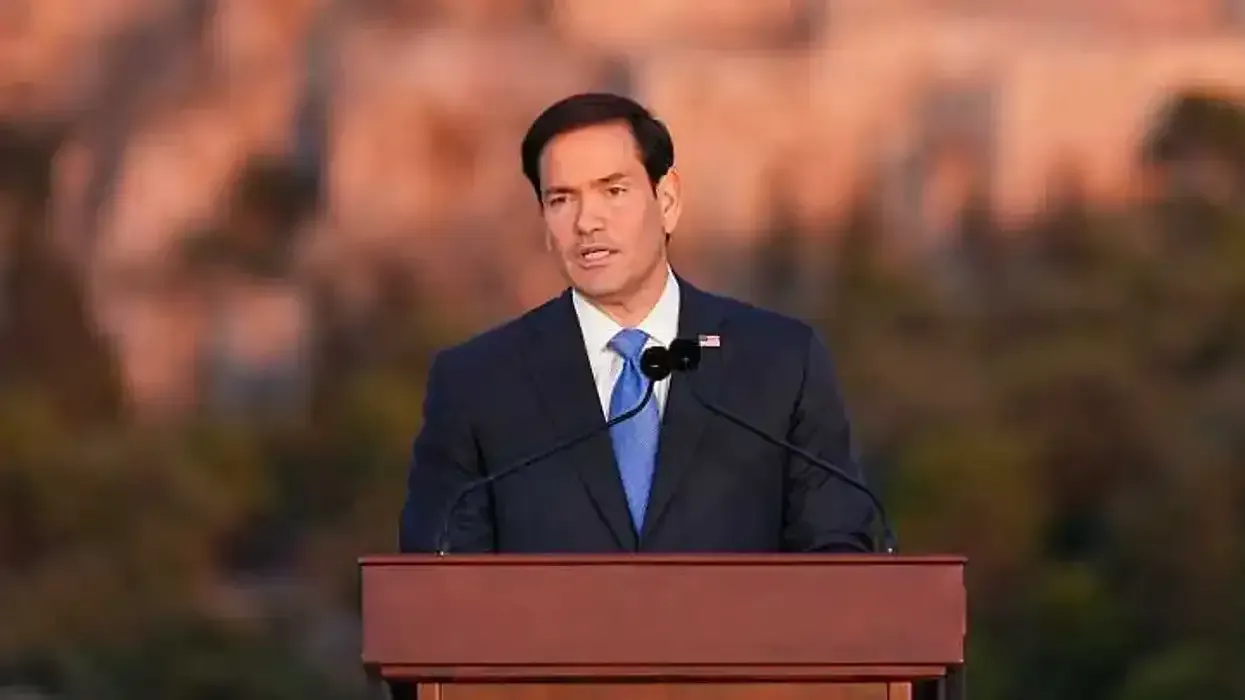
Marco Rubio’s spicy Greece speech left out the most crucial ingredient


For policymakers and citizens sick of decades wasted on failed globalist experiments, Marco Rubio’s nationalist speech in Athens on Wednesday was a huge gulp of fresh air. The alternative to collectivist one-world ideology can sound almost embarrassingly obvious: Nations should pursue their own interests, recover confidence in their inheritance, and cooperate from a position of strength rather than dissolution.

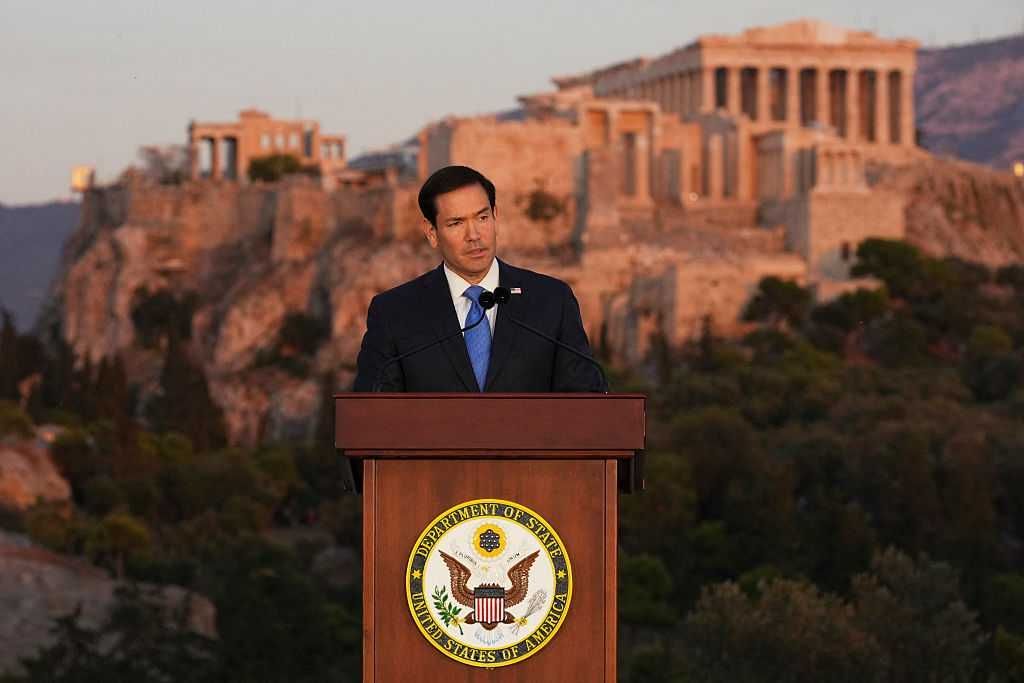
Rubio’s setting made the point for him. Speaking at the Pnyx beneath the Acropolis, he traced America’s inheritance through Athens, Rome, Christendom, medieval Europe, and England. He called for the West to recover the ambition, confidence, and national power it once took for granted. His speech made the civilizational case in deliberately grand terms.

Pretending the Eastern Romans never existed — or that they have nothing to tell us about who we really are — leaves us poorer, more arrogant, and less prepared for the trials ahead.

But his civilizational reset could have been stronger and surer. The great omission was the thousand-year span defined not by Athens, Rome, or even Jerusalem, but by Constantinople — capital of the Eastern Roman Empire and guardian of a Roman Christian civilization that survived long after the political West had collapsed.

Its final outposts fell only about three decades before Columbus reached the Americas. For perspective, 30 years ago the Unabomber was arrested, the first Motorola flip phone appeared, and IBM’s Deep Blue became the first computer to beat a reigning world chess champion in a game under standard tournament conditions.

That Byzantium received no real showing in Rubio’s address is hardly surprising. Despite its millennium-long life after the fall of the Western Roman Empire, the Eastern Empire has endured generations of Western neglect, condescension, and selective amnesia.

There are many reasons. One is that the modern West became preoccupied almost to obsession with its own political development — its revolutions, constitutions, ideological struggles, and repeated attempts to construct an order that could tame human nature without destroying liberty. Somewhere along the way, the East came to seem like the place where history had stalled.

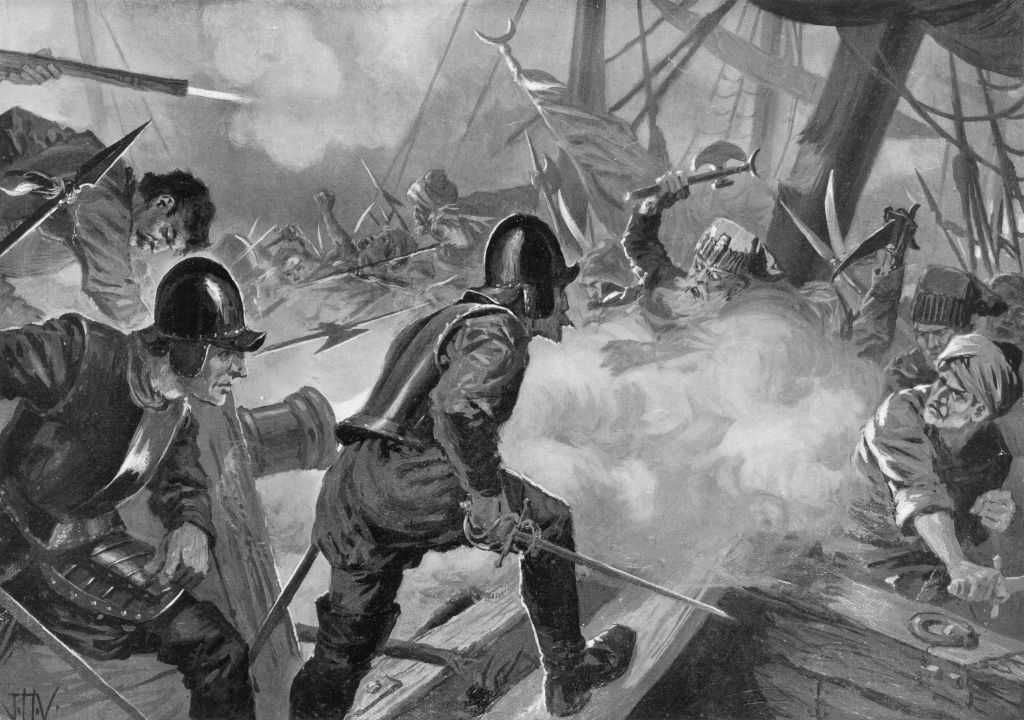
“Byzantium” — no longer “really” Rome in Western eyes — became shorthand for decadence, intrigue, stagnation, and oriental despotism. The important action supposedly moved elsewhere: to the Latin West, where Europe would eventually beat back Islamic power at Tours, Lepanto, and Vienna and narrate the victories as its own civilizational story.

That is an impoverished self-understanding. Excising the Eastern Roman Empire deprives the West of some of the warnings it most needs as it flails through geopolitical waters that seem unprecedented, mostly because we have forgotten so much precedent.

The Eastern Romans spent centuries fighting for survival against great powers on their frontiers. Their long rivalry with Sasanian Persia culminated in a ruinous early-7th-century war that exhausted both empires. Almost immediately, Arab Muslim armies surged through territories Rome and Persia had fought over for generations. Centuries later, Latin Christians inflicted one of Byzantium’s worst wounds themselves when the Fourth Crusade diverted to Constantinople and sacked the city in 1204. The empire was restored in 1261, but it never recovered its former strength.

RELATED: Rubio celebrates Western exceptionalism, warns civilization is at an ‘inflection point’

Mark Schiefelbein/POOL/AFP/Getty Images
The point is not that the modern West owes Byzantium an apology, although some historical humility would be healthy. The point is that civilizations sometimes face grueling, protracted defense requiring a spiritual sobriety to match. Today the West is dangerously tempted by visions of global end-zone dancing — speedrunning the uncool parts of geopolitics in favor of a world-war blitz won by super-duper wonder-weapons.

Some Constantinopolitan emperors knew the temptation. Nikephoros II Phokas, the warrior-emperor who reigned from 963 to 969, won spectacular victories against Muslim powers and reportedly sought church recognition of soldiers killed in those campaigns as martyrs.

The church refused. Patriarch Polyeuctus invoked St. Basil’s Canon 13, which says that although killing in war had not traditionally been treated as murder, soldiers who shed blood should abstain from communion for three years because their hands were not clean. Whatever else one makes of the canon, the answer to Nikephoros was unmistakable: Military victory did not automatically confer holiness.

That is a useful warning against today’s temptation to treat defeating our enemies by whatever means we choose as the height of spiritual purity and moral heroism. It is also a reminder that strong, healthy, independent churches can serve as an irreplaceable counterweight to political rulers who begin to imagine themselves as spiritual authorities and their regimes as godlike powers before which citizens and foreigners alike must bow and scrape.

RELATED: The last knight of Europe rides again

Hulton Archive/Getty Images

And Polyeuctus’ victory points toward something still more important. Spiritual authority does not arise from the top-down power of worldly lawgivers. Holiness begins with people willing to make the difficult purification of their own hearts a lifelong athletic practice — the opposite of the performative, self-flattering spiritual box-checking Jesus decried in the parable of the Pharisee and the publican.

The West would benefit from reordering its sociopolitical habits in that direction — not to weaken itself or retreat into inert obscurantism, but to recover clarity and responsibility at a time of immense division and instability.

Much of today’s turmoil arises from efforts to turn political might, now amplified by astonishing technology, into a new god and a new church with very old stripes. Rubio is right that the West must remember what it is. But Athens and Rome are not enough, and “Christendom” becomes dangerously abstract if we skip the civilization that carried Roman Christianity for a thousand years while the Western world was being remade.

Pretending the Eastern Romans never existed — or that they have nothing to tell us about who we really are — leaves us poorer, more arrogant, and less prepared for the trials ahead.

Rubio of Athens: On the Urgency To Embrace Western Virtues

As the Iran conflict threatens to intensify and tech CEOs fret openly about their creations' potential to destroy humanity, now might not seem the time for an extended meditation on America's civilizational roots. But for Secretary of State Marco Rubio, these traditions are most valuable at times of great peril, like today.

The post Rubio of Athens: On the Urgency To Embrace Western Virtues appeared first on .

Rubio celebrates Western exceptionalism, warns that civilization is at an 'inflection point'


Secretary of State Marco Rubio said last month that he has "no plans at this time" about a potential 2028 presidential run and doesn't know "what the future holds."

"He is still young, and smart in both policy and politics, and is keeping his options open for the future," one person familiar with the matter recently told NBC News. "If you asked him if he’s interested in 2032 or 2036, he would probably say sure."

'We must win together.'

While America's top diplomat — who recently polled third among potential candidates favored by Republicans for 2028 — is supposedly uncertain about what course he will personally chart in two years, he is confident about what direction America must take in the here and now.

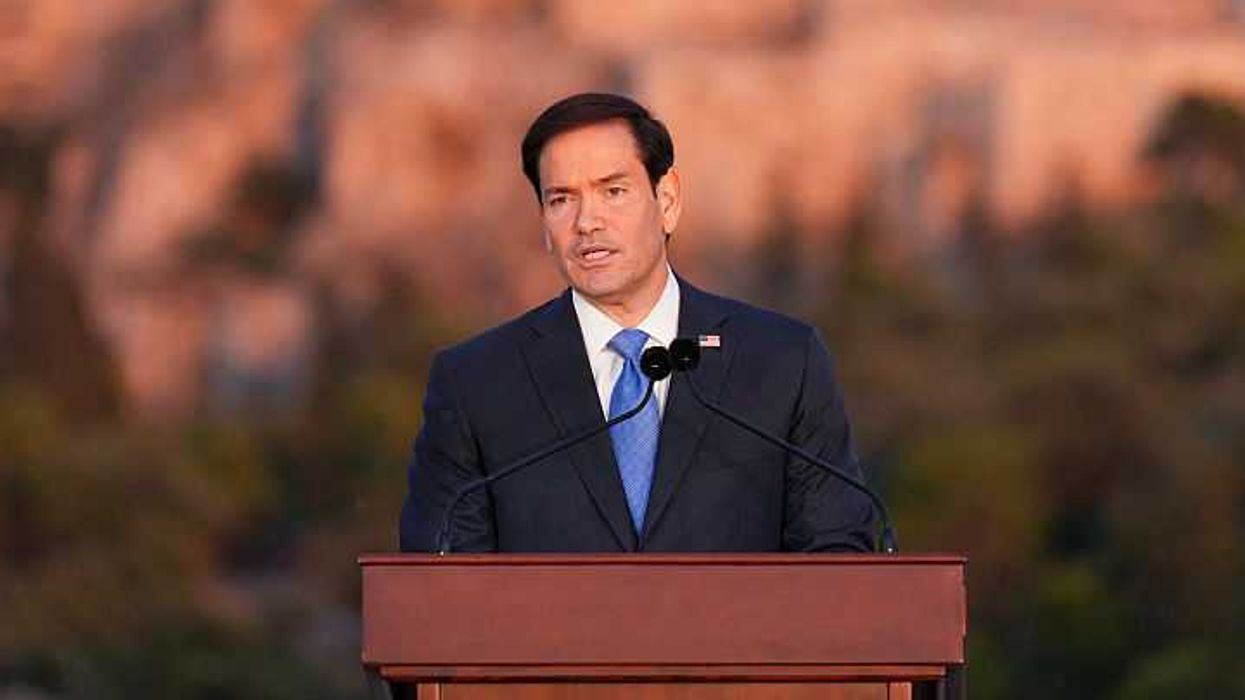
In a speech Wednesday at the Acropolis in Athens, Rubio emphasized the imperative for America and other Western nations to unapologetically pursue national power; prioritize their own people; cease feeling guilty for being exceptional; and reclaim the "classical understanding" that "power requires not only having the means to defend yourself; it requires the credibility that you are willing to use it."

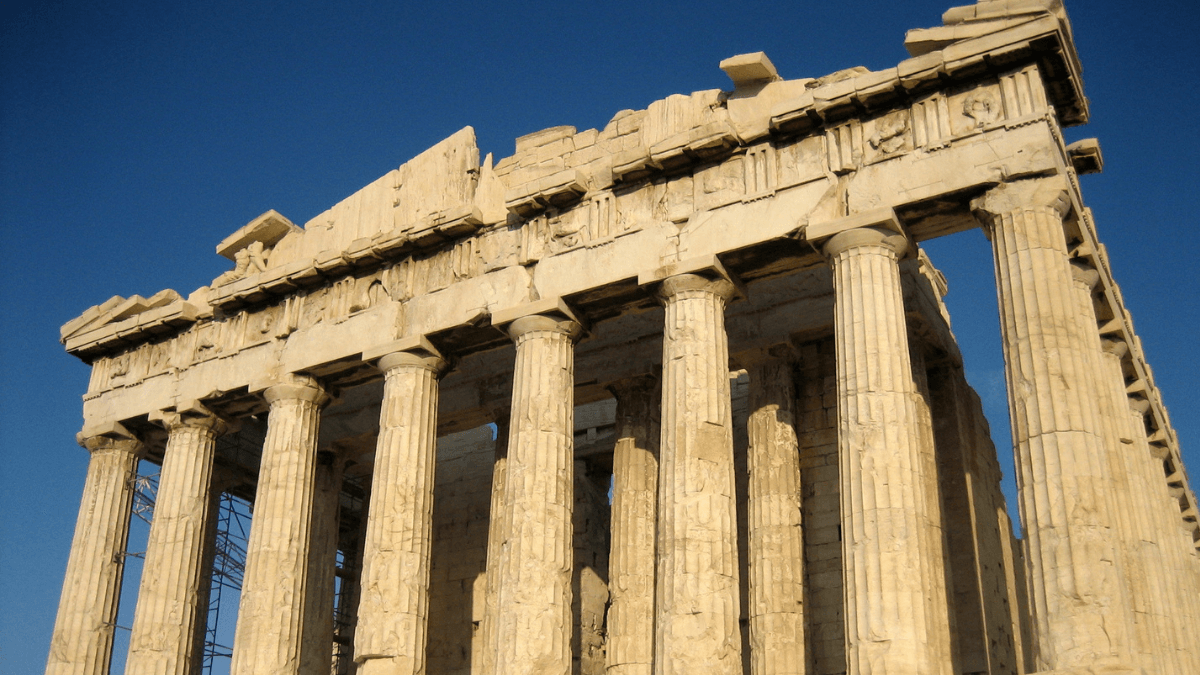
With the Parthenon as his backdrop, Rubio buttered up the Greeks by emphasizing the influence that their forebears had on America and, more broadly, on Western civilization.

"The history of America, the history of my country, is covered with the fingerprints of antiquity," said the secretary.

After first alluding to the architectural, linguistic, narrative, philosophical, and political influence that the ancient Greeks had on America and its people, Rubio noted, "The civilization of Athens and Rome transformed an infant seaboard republic into a continental empire."

RELATED: Keeping the West’s flame burning

"The greatest Americans of every generation have carried the unmistakable features of their forefathers," he continued, "born in Athens, formed by Rome, baptized in Christendom, hardened in the furnace of medieval Europe, endowed with the English genius for liberty, and then carried across the Atlantic to be reborn on the shores of a new world."

The secretary's speech was, however, about far more than tying former Greek excellence to continuing American excellence.

Rubio underscored that America and the "whole of our civilization" are at an "inflection point" — that "national interests did not vanish in the face of international institutions"; that peace is not inevitable; that there is renewed competition between great powers and a "whole universe of new threats" that must be addressed; and that it is critical now, more than ever, to rebuild institutions and alliances.

The secretary has been discussing various bilateral and multilateral alliances including NATO on a European tour that landed him in Athens on Wednesday.

During a joint press conference with Greek Foreign Minister Giorgos Gerapetritis held just prior to his speech at the Acropolis, Rubio said that "the nations of Europe need to take on a greater share of the burden in defending their continent" and that Greece is on track to satisfy its minimum NATO obligation.

He noted further that the U.S. and Greece have signed a memorandum of understanding establishing a joint security program to bolster binational counterterrorism information-sharing and that Greece is joining the National Guard's Bureau of State Partnership Program.

Rubio noted in his speech — which was reminiscent of his Feb.14 "civilizational erasure" speech in Munich — that the purpose of such alliances "is not to abolish the sovereignty of the nations that constitute them. It is to defend them. And nations need not abandon their distinct identities in order to recognize their common interests."

"We want to win together," said Rubio. "We must win together."

Like Blaze News? Bypass the censors, sign up for our newsletters, and get stories like this direct to your inbox. Sign up here!

Corpse of Scottish woman who helped asylum-seekers stuffed into suitcase by migrant, say police


Yet another white woman who devoted her time and energy to welcoming third-worlders into Europe has wound up dead, apparently at the hands of the very sort of military-age foreigner she was trying to help.

The corpse of a 38-year-old Scottish woman who was volunteering with a refugee support group in Greece was discovered on July 18, stuffed into a suitcase in an abandoned building in Athens.

'The testimony of the wife has been crucial.'

The Hellenic Police announced on Sunday that investigators were able to lift the victim's fingerprints despite the body being found in a state of advanced decomposition. With the fingerprints and the help of both Interpol and American authorities, police identified the victim as Elisabeth-Jane Ross of Edinburgh.

Ross, who previously volunteered with the refugee assistance group One Heart, entered Greece on June 26 and was staying in the port city of Piraeus until July 10, when she left for an unknown destination.

On Thursday, police arrested Sharif Ahmadzai, a 26-year-old Afghan national, on suspicion of robbing and murdering Ross. They seized a replica pistol and a knife at his residence.

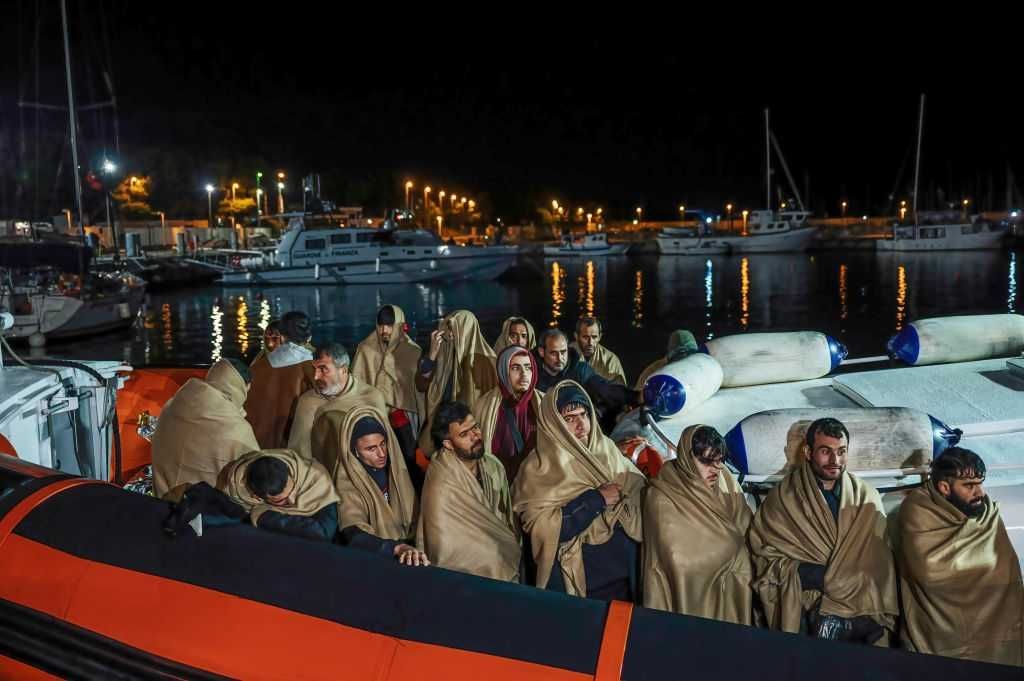
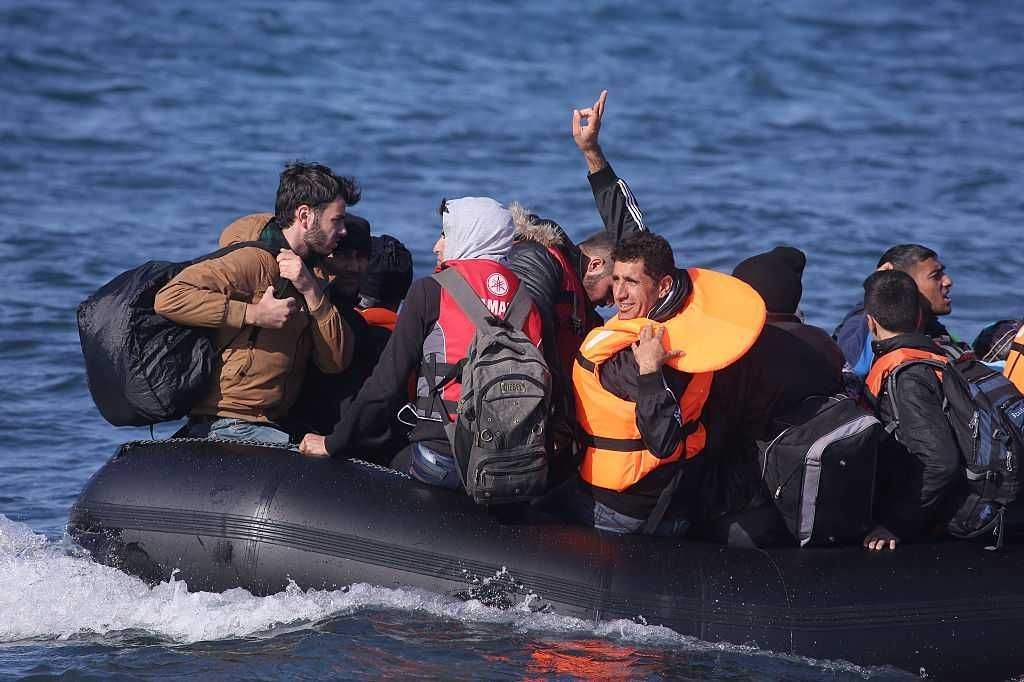
The Afghan — a super lightweight boxer who made his way by boat to Greece in 2016 after first making stops in Pakistan, Iran, and Turkey — allegedly used Ross' bank cards to make withdrawals and used her phone to contact her friends and family in an apparent attempt to mislead them about her whereabouts and demise.

Ahmadzai, who with his Christian wife runs a refugee-support ministry, was allegedly also caught by surveillance camera leaving Ross' address and wheeling around what appears to be the same suitcase in which the victim's body was discovered.

RELATED: Asylum-seeking boyfriend of American mother flees Ireland after her brutal murder

Afghan and Syrian migrants descend on the Greek island of Lesbos in October 2015. Nicolas Economou/NurPhoto/Getty Images.

The suspect's wife, an American named Alaina Hall, is said to have reported Ahmadzai to the police after Ross was identified as the victim, reported the Independent. After becoming concerned about Ahmadzai's absence from their home on the evening of July 15, Hall — who has a child with the suspect — checked a shared location tracking app and discovered that he was at Ross' apartment, where the victim is believed to have been killed, according to the Daily Mail.

A police source told the Times (U.K.), "The testimony of the wife has been crucial. Without her and CCTV evidence, we would not have been able to find this man."

According to the now-scrubbed website for the couple's refugee support organization, Hall met Ahmadzai in 2016 when volunteering in a migrant camp.

The Afghan, whom the Hellenic Police claim has admitted to killing Ross, is scheduled to appear in court on Wednesday.

Ross' body was discovered just days after the discovery of the remains of 43-year-old American mother Jamey Carney in Ireland. The prime suspect in the murder of Carney is 28-year-old Ahmad Al-Saqar, Carney's romantic partner and a Middle Eastern asylum-seeker who fled the country on a plane bound for Turkey.

Like Blaze News? Bypass the censors, sign up for our newsletters, and get stories like this direct to your inbox. Sign up here!

Elliot Page, Travis Scott, and ancient Greece: Christopher Nolan’s ‘Odyssey’ is unrealistic — but should anyone care?


Christopher Nolan’s upcoming adaptation of “The Odyssey” is already generating plenty of controversy, as conservatives are pointing out that the casting of the film is “woke.”

“Christopher Nolan went from making a more realistic “Batman,” which is something that I really enjoyed, especially the first “Batman,” “Batman Begins,” to now making a movie about Greece starring black people,” Dave Landau tells co-host Stu Burguiere on “Stu and Dave Do America.”

The film stars Lupita Nyong'o as Helen of Troy, which both Stu and Dave point out is historically inaccurate for ancient Greece.

“There’s a huge African-American population in ancient Greece,” Stu jokes. “People don’t realize that.”


“I will say, like, historical accuracy is sort of a weird thing. ... You go back in the day, maybe some of these people didn’t exist in these civilizations, but this is a fictional story,” he continues. “I mean, you know it’s a myth, right?”

“It is Greek mythology, I understand that, and you want a lot of the people to be Greek, but at the same time, I don’t really care,” Dave says, though he points out there are some choices he doesn’t quite agree with.

“For example, he put in rapper Travis Scott,” he explains.

Nolan also cast “Elliot” Page as Greek soldier Sinon.

“This is part of a long-term process where, you know, Ellen Page is trying to convince us that she’s a he. And, you know, unlike a lot of the people I see walking around that are trans, she’s putting the work in, right?”

In one photo of the cast, Page, who is 5'1", stood in front of her other cast members in a suit.

“It looks like a suit you would get for a ring bearer,” Dave comments.

“And you’d be like, ‘It’s fine. It’s for one day, and if we keep it, you can grow into it,’” he jokes.

“That’s exactly what it looks like,” Stu laughs. “You know, a couple things I noticed ... she looks like a kid that is, you know, trying to wear a suit for the first time around all these adults. And also it’s, like, a huge suit on her.”

Want more from Stu and Dave?

To enjoy more of Stu and Dave's lethal blend of wit, humor, and insightful commentary subscribe to BlazeTV — the largest multi-platform network of voices who love America, defend the Constitution, and live the American dream.

A Tale of Two City-States

I remember years ago reading (or was I just thinking?) that the age of Thucydides was over. His Peloponnesian War, the history of the devastating strife between Athens and Sparta in the fifth century B.C., was a text for the times during the confrontation between the United States and the USSR. No less a figure than Secretary of State George C. Marshall, at no other time than in 1947, at the start of the Cold War, said that to understand the international issues of the day it was necessary to study the Peloponnesian War. After the end of the Cold War in 1991, and with the replacement of the U.S.-Soviet rivalry with a world of ethnic, national, and religious blocs, it seemed that we had entered the era of another Greek writer, Herodotus, whose Histories describes a mosaic of international relations; maybe even more so in the era of the Global War on Terror. But now, great power rivalry is back, as the United States and its allies face formidable opposition led by China. We turn once again for wisdom and perspective, therefore, to the history of the competition between Athens and Sparta. To quote Godfather III, "Just when I thought I was out, they pull me back in!" Enter Adrian Goldsworthy, author of a new book on the rivalry between Athens and Sparta. The reader is in the best of hands. Goldsworthy combines the expertise of the scholar that he is with the common touch of the author that he has become. He is one of the very best historians of the ancient world writing for a popular audience.

The post A Tale of Two City-States appeared first on .

Without The Ancient Greeks, We’d Have No America 250 To Celebrate

We would be foolish (and ungrateful) to overlook the Greeks' wisdom in shaping our own national American heritage.
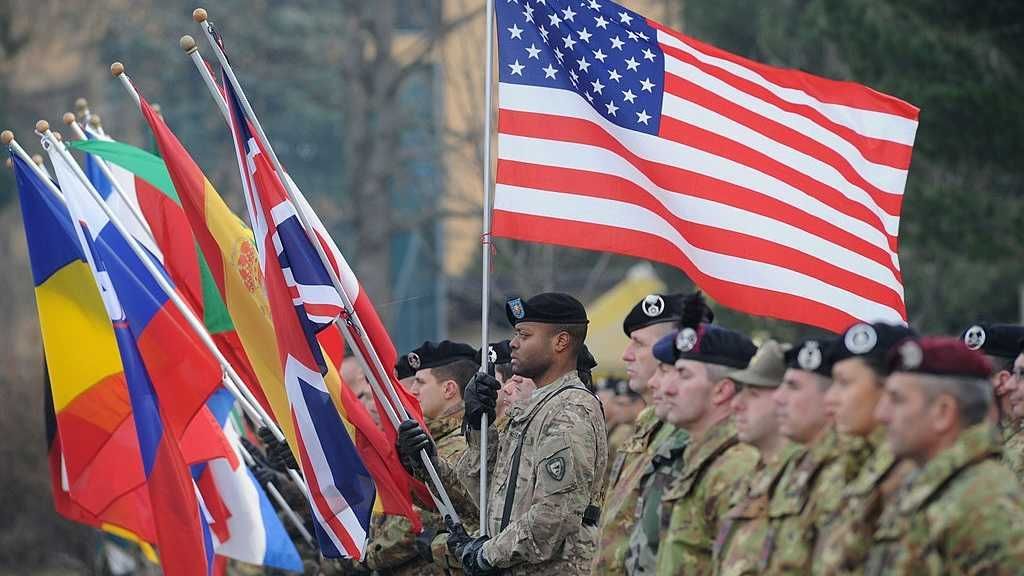
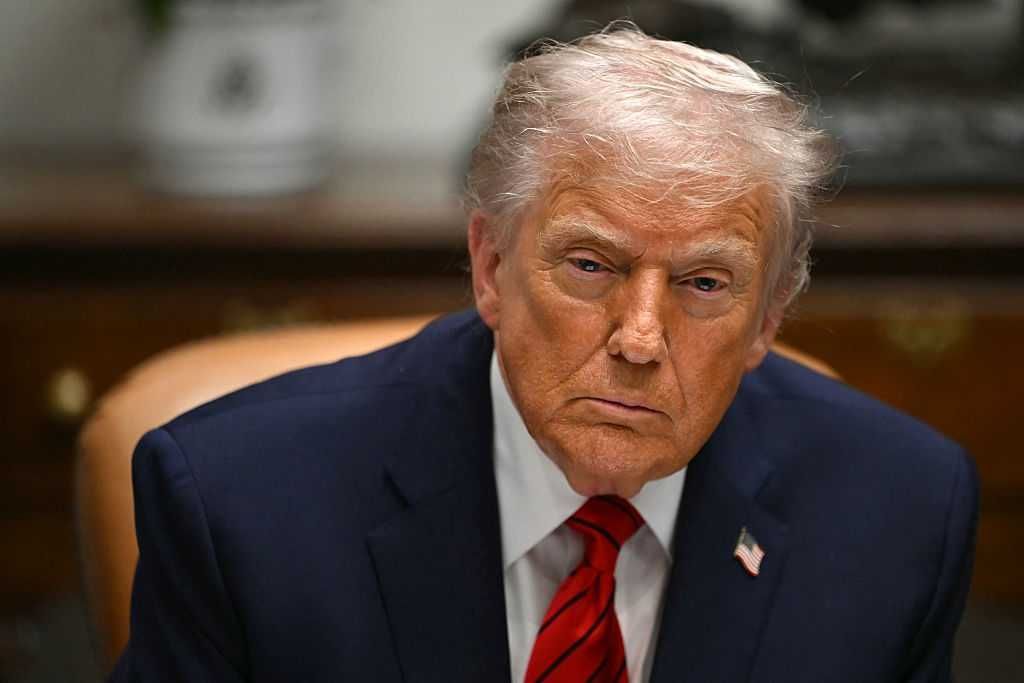
Trump forced allies to pay up — and it worked


In the fifth century B.C., a group of Greek city-states formed a defensive alliance known as the Delian League to protect them against the Persian Empire.

Athens, the most powerful member, gradually increased its power. Its rulers moved the league’s common treasury from the island of Delos to Athens (to keep it safe, of course), attacked allies that attempted to secede, and started casually referring to the alliance as “our empire.”

If you want good allies, you need to be a good ally.

The most brazen assertion came when the Athenian leader Pericles raided the league treasury to fund building projects in Athens (including the Parthenon).

When the other league members objected, Pericles insisted that the treasury was less like a common military budget and more like protection money: As long as the Persians aren’t breaking down your doors, we can spend league funds however we want.

Obviously, this is no way to treat one’s allies. It is not just exploitative; it is counterproductive. During the ensuing Peloponnesian War, Athens spent as much time fighting its own rebellious allies as it did fighting Sparta.

The United States, however, has spent the last several decades conducting its foreign relations on the opposite principle. We have the same hegemonic role Athens held, but instead of robbing our allies, we let them rob and betray us.

A few months ago, the government of Kuwait — a country hundreds of Americans died to defend just a few decades ago and that continues to rely on us for protection against Iran — launched a “Kuwait-China Friendship Club” to strengthen military ties with Beijing.

And if cozying up to our biggest geopolitical rival weren’t enough, Kuwait is also ripping us off.

The United States played a huge role in building Kuwait’s massive Al Zour oil refinery, and the country’s government still owes us hundreds of millions of dollars.

Closer to home, Mexico — which Bill Clinton bailed out to the tune of $20 billion — takes in more than $60 billion a year in remittance money from the United States, all while its socialist oil company refuses to pay the $1.2 billion it owes to American contractors.

RELATED: Trump makes America dangerous again — to our enemies

Photo by ANDREW CABALLERO-REYNOLDS/AFP via Getty Images

The NATO countries are even worse. Prior to Russia’s invasion of Ukraine, just six of the alliance’s 32 members spent the required 2% of GDP on defense.

Meanwhile, these countries used the money they weren’t spending on guns to build massive welfare states (their equivalent of Pericles’ Parthenon). They also eviscerated their domestic energy production and became increasingly reliant on oil from Russia, the country the alliance is supposed to keep in check.

Thankfully, a combination of Vladimir Putin’s aggression and Donald Trump’s bullying has increased the number of countries meeting the 2% threshold from six to 23.

If you want good allies, you need to be a good ally.

That means no more meddling in the name of “international development” or “advancing democracy.” Just mutual clarifications of national interest and frank discussions about how to advance those interests.

Athens’ focus on its own self-interest was its undoing. America’s neglect of it might have been ours. Under President Trump, however, it looks like that is starting to change.

No more games: Trump admin to slap Antifa groups with 'foreign terrorist' label


The Trump administration has designated several Antifa groups as foreign terrorist organizations.

President Donald Trump issued an executive order in September that declared Antifa a domestic “terrorist threat,” claiming that the group “explicitly calls for the overthrow of the United States Government, law enforcement authorities, and our system of law.”

'The United States will continue using all available tools to protect our nation from these anti-American, anti-capitalist, and anti-Christian terrorist groups.'

The EO accused the anarchist group of using “illegal means” to launch “a campaign of violence and terrorism nationwide,” including obstructing the enforcement of laws and routinely doxxing political figures.

Trump’s action called on federal agencies to “investigate, disrupt, and dismantle any and all illegal operations” tied to Antifa. However, designating the enterprise as a foreign terrorist organization would allow for more enforcement options, including making it a federal crime to provide material support to the group.

Secretary of State Marco Rubio announced on Thursday that four European Antifa-affiliated groups — Antifa Ost in Germany, Informal Anarchist Federation/International Revolutionary Front in Italy, and Greek-based groups Armed Proletarian Justice and Revolutionary Class Self-Defense — were named "Specially Designated Global Terrorists."

RELATED: If Trump labels Antifa a foreign terrorist organization, here's what he can do next

Secretary of State Marco Rubio, President Donald Trump. Photo by Anna Moneymaker/Getty Images
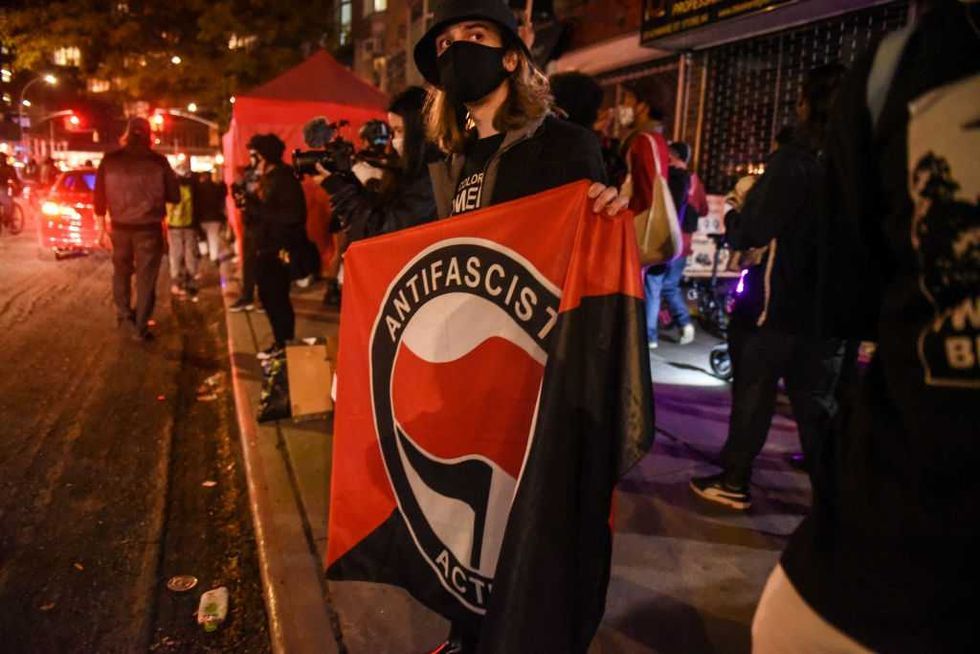
Rubio noted that the department “intends to designate all four groups as Foreign Terrorist Organizations, effective November 20, 2025.”

Antifa Ost has committed multiple attacks in Germany between 2018 and 2023 against those it considers “fascists” or part of the country’s “right-wing scene,” a State Department fact sheet about the latest announcement read.

FAI/FRI, which also has affiliates across Europe, South America, and Asia, has reportedly claimed responsibility for “threats of violence, bombs, and letter bombs against political and economic institutions.”

The State Department said that the Armed Proletarian Justice “has attempted and conducted improvised explosive device (IED) attacks against Greek government targets.” It previously claimed responsibility for planting a bomb near a police headquarters in Greece.

Revolutionary Class Self-Defense also reportedly took responsibility for two IED attacks in Greece.

RELATED: Trump designates Antifa as a 'MAJOR' terrorist organization — and can likely make the label stick this time

Photographer: Stephanie Keith/Bloomberg via Getty Images

“Groups affiliated with this movement ascribe to revolutionary anarchist or Marxist ideologies, including anti-Americanism, 'anti-capitalism,' and anti-Christianity, using these to incite and justify violent assaults domestically and overseas," the State Department said.

“Today, building on @POTUS’s historic commitment to uproot Antifa’s campaign of political violence, the Department of State is designating four Antifa groups as Foreign Terrorist Organizations and Specially Designated Global Terrorists. The United States will continue using all available tools to protect our nation from these anti-American, anti-capitalist, and anti-Christian terrorist groups,” Rubio wrote in a post on social media.

Like Blaze News? Bypass the censors, sign up for our newsletters, and get stories like this direct to your inbox. Sign up here!