How atheism created a terrorist — but his bomb shattered secularism's illusions



Last month, a 25-year-old named Guy Edward Bartkus set off a bomb at American Reproductive Centers, an IVF clinic in Palm Springs, California. Four people were injured, and the FBI said that Bartkus was killed in the blast that tore through the building.

Akil Davis, assistant director of the FBI Los Angeles field office, called it “the largest bombing scene that we’ve had in Southern California.”

Without any standard, we should not be surprised when man begins to act like the animal that secular atheism claims he is.

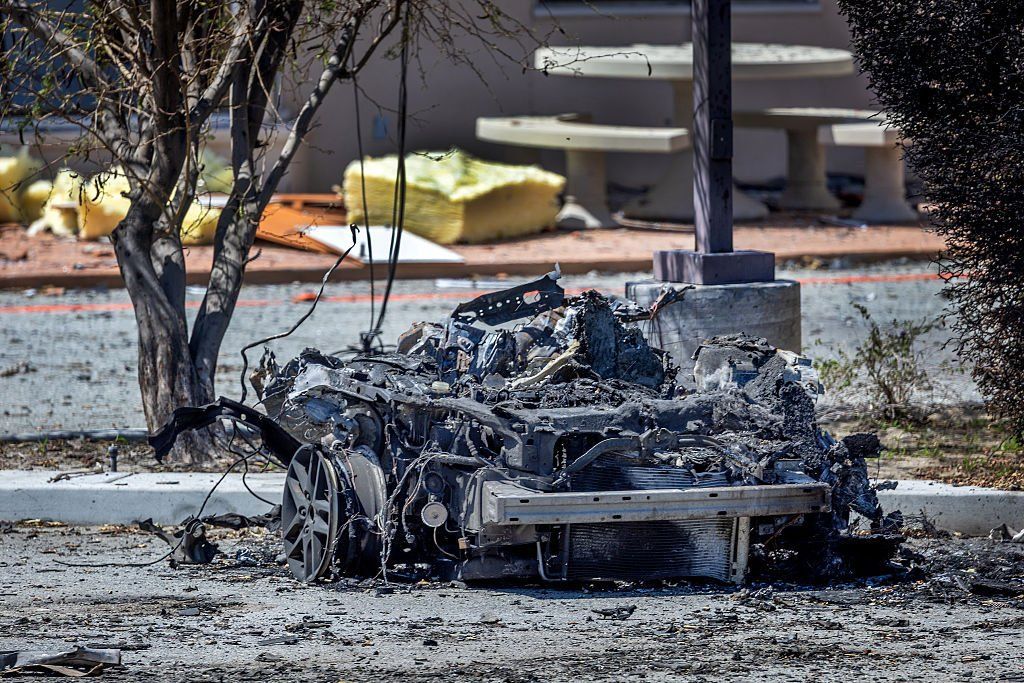
Though the clinic endured heavy damage and a nearby car was crumpled in a burned heap, Dr. Maher Abdallah, who leads the clinic, said that no eggs or embryos were harmed.

“Thank God today happened to be a day that we have no patients,” said Abdallah. “We are heartbroken to learn that this event claimed a life and caused injuries, and our deepest condolences go out to the individuals and families affected. Our mission has always been to help build families, and in times like these, we are reminded of just how fragile and precious life is. In the face of this tragedy, we remain committed to creating hope — because we believe that healing begins with community, compassion, and care.”

Abdallah’s view of life stands in stark contrast to the bomber’s, as the FBI has confirmed this was an intentional act of terrorism spurred by his ideological position.

In an online manifesto, Bartkus said he was a “pro-mortalist.” Pro-mortalism is the belief that death is better than life and is supposedly motivated by the desire to end suffering.

It is related to anti-natalism, or efilism, as Bartkus called it, which is the belief that it is morally evil to have children.

His manifesto shows that Bartkus viewed humans as parasitic to the planet and other life forms. He also showed a hatred toward religion and God, stating that he preferred Satan over God.

Though he is being called a nihilist, Bartkus saw a difference between his views and nihilism, saying that “religion is retarded but there is objective value in the universe and it lies in the harm being experienced by sentient beings.”

Bartkus also said that “we need a war against pro-lifers.”

He referred to a friend he called “Sophie,” who allegedly had recently committed suicide, and that the two of them had agreed that if one died, the other would also die soon after. He claimed that they both had borderline personality disorder.

In an audio recording, he said that he was committing the attack because “it just comes down to I’m angry that I exist and that, you know, nobody got my consent to bring me here” and “I’m very against [IVF], it’s extremely wrong. These are people who are having kids after they’ve sat there and thought about it. How much more stupid can it get?”

How did we get here?

Though the philosophies to which Bartkus ascribed are not commonly known, they are gaining popularity, even being taught in university courses and recently being platformed by outlets such as the New Yorker.

I believe that these philosophies are not new, but are the logical progression of secular atheism and a society that increasingly is entitled, despises religion, and sees no meaning in life.

Our culture has been systematically stripped of its religious and moral values and our very foundation for what makes life meaningful.

When you tell people from the time they are children that the universe is an accident, life is hopeless, and that man, who is no different from animals, is a parasite destroying the planet, you cannot then expect that they will grow into happy and fulfilled people.

When you lie to people daily that we are in imminent peril of a man-made climate cataclysm that will destroy ourselves and all life on Earth because we are selfish and use fossil fuels, you should expect that at least some of them will begin to believe you.

When you champion the idea that the only life that has value is one free of suffering and promote euthanasia as a solution, you should not be shocked when young people act on such an idea and seek not only to kill themselves and the unborn but to harm those who would bring life into the world.

The reality is that secular atheism — with its desire to eliminate God and any objective morality and meaning grounded in religion — has effectively doomed mankind. All secularism has to offer is: “Eat, drink, and be merry, for tomorrow we die.”

Unfortunately, that isn’t enough, as most people will still seek meaning and purpose. And many will still find that all the supposed fun to be had doesn’t outweigh the hardships and suffering in life.

Without any standard, we should not be surprised when man begins to act like the animal that secular atheism claims he is.

What is the answer to the questions of life, meaning, and suffering?

In short, thankfulness — not thankfulness alone, but thankfulness to God.

G.K. Chesterton — the great author, philosopher, and apologist of the 19th and early 20th centuries — discussed this idea throughout his life, but I want to focus on what he said near the end of his life in his autobiography. You can read the book for free here.

In the final chapter, entitled “The God with the Golden Key,” Chesterton wrote that the “chief idea of my life” was “the idea of taking things with gratitude, and not taking things for granted.”

From his childhood, Chesterton said he had an almost “violently vivid sense of those two dangers; the sense that the experience must not be spoilt by presumption or despair.”

"To take a convenient tag out of my first juvenile book of rhymes, I asked through what incarnations or prenatal purgatories I must have passed, to earn the reward of looking at a dandelion," he wrote. "But in substance what I said about the dandelion is exactly what I should say about the sunflower or the sun, or the glory which (as the poet said) is brighter than the sun. The only way to enjoy even a weed is to feel unworthy even of a weed."

Chesterton noted two other perspectives on the dandelion: that of the pessimist, who saw the dandelion as meaningless, and the “offensive optimist,” who complained by comparing the dandelion to what one may find elsewhere.

He reasoned that such comparisons are “ultimately based on the strange and staggering heresy that a human being has a right to dandelions; that in some extraordinary fashion we can demand the very pick of all the dandelions in the garden of Paradise; that we owe no thanks for them at all and need feel no wonder at them at all; and above all no wonder at being thought worthy to receive them. Instead of saying, like the old religious poet, ‘What is man that Thou carest for him, or the son of man that Thou regardest him?’ we are to say like the discontented cabman, ‘What’s this?’ or like the bad-tempered Major in the club, ‘Is this a chop fit for a gentleman?’”

Chesterton said that younger generations had developed a sense of entitlement to their “right to happiness” and “right to life,” all while claiming that there was no divine source for those rights.

Chesterton responded by saying that rights “came from where the dandelion came from; and that they will never value either without recognizing its source.”

Life includes suffering, but that doesn’t mean it is without meaning or that it isn’t worth living.

He added, “And in that ultimate sense uncreated man, man merely in the position of the babe unborn, has no right even to see a dandelion; for he could not himself have invented either the dandelion or the eyesight.”

Secular atheism, he argued, logically leads to the types of despairing philosophies that Bartkus ascribed to, which undermine the beauty of life.

“When first it was even hinted that the universe may not be a great design, but only a blind and indifferent growth, it ought to have been perceived instantly that this must for ever forbid any poet to retire to the green fields as to his home, or to look at the blue sky for his inspiration,” Chesterton stated.

"There would be no more of any such traditional truth associated with green grass than with green rot or green rust; no more to be recalled by blue skies than by blue noses amputated in a freezing world of death," he wrote. "When there is no longer even a vague idea of purposes or presences, then the many-colored forest really is a rag-bag and all the pageant of the dust only a dustbin. We can see this realization creeping like a slow paralysis over all those of the newest poets who have not reacted towards religion. Their philosophy of the dandelion is not that all weeds are flowers; but rather that all flowers are weeds. Indeed it reaches to something like nightmare; as if Nature itself were unnatural."

Chesterton did not mean that everything in life is always pleasant or beautiful, but that overall, life is a gift from God.

Life includes suffering, but that doesn’t mean it is without meaning or that it isn’t worth living.

But the only way for life to have meaning, or to make sense of the troubles in life, is through God.

The way forward

I sympathize with those who have been failed by the secular philosophers, teachers, politicians, and other “experts” who have given them nothing to look forward to but suffering.

I am a man who has suffered little but does not suffer well. I understand why people like Bartkus feel as though they wish they had never been born. In their worldview, there truly is nothing to give them hope through life’s toils and tribulations.

But for the Christian, there is always meaning, purpose, and hope.

And when one becomes a Christian, it is with the knowledge that we do not deserve anything but God’s wrath for eternity. The key to life is understanding this and knowing that every good thing we experience is the result of God’s grace.

I share with you an anecdote from the 18th-century preacher Matthew Henry that has helped me when I have been suffering.

Henry was on his way home one night when he was robbed. That night Henry wrote in his journal:

I thank Thee first because I was never robbed before; second, because although they took my purse, they did not take my life; third, although they took my all, it was not much; and fourth, because it was I who was robbed and not I who robbed.

As a Christian, there is always something to be thankful to God for — even if in the moment it doesn’t seem like it.

To avoid future tragedies like that of Guy Edward Bartkus, let us endeavor even more to counter the lies of secularism and our pro-death culture with the truth and hope of Jesus Christ and to teach people that peace and happiness will only come from humbly thanking God for every good gift He chooses to bestow on us.

This article is adapted from an essay originally published at Liberty University's Standing for Freedom Center.

FBI arrests alleged accomplice in Palm Springs fertility clinic bombing — and he shares suspected terrorist's hatred


Guy Edward Bartkus, the 25-year-old suspected terrorist killed in the May 17 bombing of a fertility clinic in Palm Springs, California, allegedly left behind a nihilistic manifesto acknowledged by the FBI that equated human life to a disease gripping the planet, condemned religion, championed Satan over God, and called for a "war against pro-lifers."

"Basically, I'm anti-life," Bartkus allegedly said in a 30-minute audio recording explaining why he apparently decided to bomb a fertility clinic. "And IVF is like kind of the epitome of pro-life ideology."

The suspect appears to have been neither alone in his hatred for life nor alone in his plot to bomb the American Reproductive Centers in Palm Springs.

The FBI arrested Daniel Jongyon Park on Tuesday night at the John F. Kennedy International Airport in New York in connection with the bombing.

Park, a 32-year-old from Washington state, fled the country two days after the bombing. He was arrested by Polish authorities on May 30, despite an alleged attempt to "harm himself." Attorney General Pam Bondi reportedly helped ensure that he was deported to the United States on June 2, where he was charged with providing and attempting to provide material support to terrorists.

RELATED: Why a fatherless man bombed a fertility clinic — and the dark truth it exposes

GABRIEL OSORIO/AFP via Getty Images

"This defendant is charged with facilitating the horrific attack on a fertility center in California," Bondi said in a statement. "Bringing chaos and violence to a facility that exists to help women and mothers is a particularly cruel, disgusting crime that strikes at the very heart of our shared humanity."

Bondi expressed gratitude to America's "partners in Poland who helped get this man back to America."

According to the Department of Justice, Park allegedly provided the suspected terrorist with the explosive precursor materials ultimately used in the attack, approximately 270 pounds of ammonium nitrate — 90 pounds of which he allegedly shipped just days before the Palm Springs bombing, which destroyed the clinic, damaged surrounding buildings, injured numerous people, and flung the bomber's remains as far as the rooftop of a hotel a block away.

The suspect, who the FBI indicated filmed the attack and the events leading up to it, appears to have assembled the bomb at his home in Twentynine Palms, where federal agents reportedly found massive quantities of explosive materials, including pentaerythritol tetranitrate — a chemical compound used in commercial detonators.

'Would you press the button to end their suffering and speed up the process of extinction of life on Earth?'

After allegedly sending Bartkus the first shipment, Park — who allegedly made six separate online purchases totaling 275 pounds of ammonium nitrate between October 2022 and May 2025 — stayed at the suspected terrorist's house from Jan. 25 to Feb 8., during which time he told people his name was "Steve."

Citing records from an AI chat application, the DOJ indicated that Bartkus researched how to make powerful explosions using ammonium nitrate and fuel three days before Park came to visit him.

The criminal complaint against Park indicates that federal agents discovered "explosive precursor chemicals and multiple recipes for explosives, including recipes for explosive mixtures containing ammonium nitrate and fuel" at his house. One of the recipes apparently corresponded with the explosive mixture used in the 1995 Oklahoma City bombing.

RELATED: New evidence could blow open the Oklahoma City bombing case

Guy Edward Bartkus. Image Source: FBI. American Reproductive Centers. Photo by GABRIEL OSORIO/AFP via Getty Images


Bartkus' family members allegedly told investigators that he and Park were "running experiments" in the suspected bomber's detached garage, where FBI agents later discovered chemical precursors and laboratory equipment as well as packages listing Park's home address.

The duo apparently bonded over their anti-natalism and their "pro-mortalism" — the belief that non-existence is always preferable to life.

'Those who aid terrorists can expect to feel the cold wrath of justice.'

The criminal complaint indicates that Park made numerous social media posts expressing such views, allegedly writing, for instance, in 2016 in response to the question, "What have you actually done to not have children?" that "a better question is what did you do to make other people not have children."

In April 2025, Park allegedly wrote "yes" in response to the question, "If you had the technology to wipe out a tribe of people on an isolated island and no one would know about it after the tribe's life was gone, would you press the button to end their suffering and speed up the process of extinction of life on Earth?"

U.S. Attorney Bill Essayli for the Central District of California said of Park's arrest, "Domestic terrorism is evil and unacceptable. Those who aid terrorists can expect to feel the cold wrath of justice."

Park could face up to 15 years in federal prison if convicted.

Like Blaze News? Bypass the censors, sign up for our newsletters, and get stories like this direct to your inbox. Sign up here!

Why a fatherless man bombed a fertility clinic — and the dark truth it exposes


On May 17, 2025, a 25-year-old named Guy Edward Bartkus detonated a bomb outside the American Reproductive Centers fertility clinic in Palm Springs, California. Four individuals in the blast periphery were injured, but since the clinic was closed, no staff were harmed. Thankfully, neither were any embryos. The only casualty was Guy Bartkus himself.

But he had already been a victim of a different kind of blast — the one that destroyed his family.

When a man doesn’t believe his own life matters, he’ll start to believe no life does.

Investigators quickly learned that Bartkus was an anti-natalist, an ideology that sees human existence as inherently painful and thus worth ending — both for the individual and others. That he chose an IVF clinic, where life is manufactured into existence, as his target aligns well with a pro-mortalist mindset.

KNBC-TV recently interviewed Guy’s father, who said he didn't recognize the man who committed the murderous act. The elder Bartkus talked about how his son used to protect the vulnerable.

“If bigger kids were picking on smaller kids, he would stand up for the smaller kid and make the big kid leave him alone,” he told NBC News.

Yet his son had turned from protecting the smallest to targeting them.

Guy's father continued, saying his son used to be a “good kid who liked hiking, mine hunting, rock hunting, his computer. He liked Xbox — kid things. ... Something changed in him.”

Something did indeed change. And while the father, who had not seen his son for 12 years, doesn't know what that could've been, statistics do: Boys who grow up without their dad are often dangerous — to themselves and to others.

The impact of father loss in boys is tragically predictable. Princeton’s Sara McLanahan found that children raised without both biological parents are significantly more likely to suffer from depression, drop out of school, and engage in violent crime. Fatherless boys, in particular, are more prone to substance abuse, aggression, and nihilism.

The Justice Department reports that over 70% of long-term prison inmates come from father-absent homes.

Sociologist Brad Wilcox has noted that boys who grew up without fathers are more likely to go to prison than graduate from college.

That's because, as sociologist David Popenoe explains, fathers play a unique and irreplaceable role in child development: “Fathers are far more than just ‘second adults’ in the home. Involved fathers bring positive benefits to their children that no other person is as likely to bring.”

One of those positive benefits is this: Boys are less inclined to hate themselves and express that hatred in ways that harm others.

We see this not just in run-of-the-mill crime statistics but also in mass shootings. Almost every major mass shooting or public school rampage was carried out by a young man who lacked a loving connection with his dad.

The details change, but the family structure does not.

Guy didn’t shoot up a school. He bombed a fertility clinic. But the impulse was the same: Destroy life because you no longer see its value. And when a man doesn’t believe his own life matters, he’ll start to believe no life does.

Would that have changed if his father was in his home every day through adulthood? There during puberty and high school, for his son’s first heartbreak, for his first brush with the dark corners of the internet? There as a living response to his questions about identity, worth, or purpose? There to talk through why, despite the pain, life is still worth living? The stats, and what we all instinctively know to be true, say yes.

Pro-mortalism may be a fringe belief, but it grows in the soil of despair — and despair grows in homes without fathers.

Guy's target, an IVF clinic, is disturbingly symbolic. These outlets may create life, but they often bring that life into a world intentionally void of one or both adults responsible for their existence. Babies born without their genetic parents. Starting life with the kind of deprivation that changed Guy from “good kid” to bomber.

This wasn’t just a tragedy. It was a warning.

Our culture is baffled by the kind of violence, numbness, and fatalism displayed in acts like this. But we shouldn’t be. We’ve spent decades hacking at the trunk of children's home life, devaluing fatherhood, and insisting that “love makes a family” — aka endorsing mother or father loss. Of course that tree is going to topple. When it does, it crushes innocents in the process.

A fatherless boy grew into a fatherless man. That man, filled with pain he could not name, lashed out at the very idea of life itself.

There will be more like Guy. Not just because of ideology, politics, or even mental illness — but because the place where he was made to receive love, identity, and protection was destroyed. And from that rubble, Guy built a bomb.

'Anti-natalist' bombing suspect kept secret explosives lab inside home: Report


Law enforcement authorities reportedly uncovered an explosives lab in the home of Guy Edward Bartkus, the FBI's sole suspect in the Palm Springs, California, fertility clinic car bombing on Saturday.

Agents discovered "huge quantities of highly explosive materials," including PETN, or pentaerythritol tetranitrate, the New York Post reported, citing law enforcement sources. PETN, a chemical compound used in commercial detonators, has been utilized for decades in terrorist attacks across the globe.

'Basically, it just comes down to, I'm angry that I exist and that nobody got my consent to bring me here.'

Thomas Bickel, Bartkus' neighbor, told the Post that FBI agents evacuated his Twentynine Palms neighborhood after the bombing attack.

"Five FBI agents came knocking on my door. ... They told me, 'The house behind you has suspected bomb-making materials,'" Bickel told the news outlet. "I talked about it with agents. There was a full-blown bomb lab in this guy's house."

Bickel, a father and Army veteran, stated, "I know how powerful and destructive IEDs can be."

He added, "Sitting here with my kids, knowing that this guy was 50 feet away — a bomb of that magnitude could have destroyed our house. Just knowing that he was working on that right here while I was hanging out with my kids — it was pretty insane."

RELATED: Fertility clinic bombing suspect declared war on 'pro-lifers' in alleged manifesto

Photo by GABRIEL OSORIO/AFP via Getty Images

The FBI did not immediately respond to a request for comment from Blaze News.

Saturday's bombing targeted the American Reproductive Centers, a fertility clinic, resulting in severe damage to the building and other nearby structures.

Bartkus, 25, died in the blast, and at least four others were injured. According to the fertility clinic, no embryos were destroyed.

"DNA testing of the decedent's remains found at the scene of the Palm Springs vehicle explosion is a positive match to Guy Edward Bartkus, the suspect in the clinic attack," the FBI stated.

Akil Davis, the assistant director of the FBI's Los Angeles field office, confirmed that the attack was an "intentional act of terrorism" motivated by "nihilistic ideations."

Bartkus was described as an "anti-natalist" who was active online, including online forums such as Reddit.

His alleged online manifesto read, "The end goal is for the truth (Efilism) to win, and once it does, we can finally begin the process of sterilizing this planet of the disease of life."

"Life can only continue as long as people hold the delusional belief that it is not a zero sum game causing senseless torture, and messes it can never, or only partially, clean up," it continued. "I think we need a war against pro-lifers."

The alleged manifesto encouraged viewers to "download the recorded stream of my suicide & bombing of an IVF clinic."

RELATED: Wyoming abortion ban blocked hours after suspect arrested in connection to clinic fire

— (@)

The suspect allegedly shared a 30-minute audio recording explaining why he decided to "bomb an IVF building."

"Basically, it just comes down to, I'm angry that I exist and that nobody got my consent to bring me here," he allegedly stated.

He noted that he was "very against" IVF, citing that it is not possible to obtain consent from those who are not yet born, according to the recording.

"Basically, I'm anti-life," Bartkus allegedly said. "And IVF is like kind of the epitome of pro-life ideology."

Bartkus' estranged father told KTLA that his son had a history of setting fires as a child, including burning down their family home at 9 years old.

The anti-natalist movement

Simone and Malcolm Collins with the Pronatalist Foundation, an initiative dedicated to raising awareness about demographic collapse, detailed the anti-natalist movement and its growing popularity across online forums.

They told Blaze News, "Antinatalism is a negative utilitarian philosophy, meaning they either believe positive emotional states have no value or are trivial experiences and the core goal of all life should be the eradication of suffering."

They noted that the fertility clinic bombing was not the first suicide attack motivated by the anti-natalist movement, citing the Sandy Hook shooting.

'Their ultimate goal is to see all of us dead and human civilization snuffed out in its infancy.'

Simone and Malcolm Collins explained that antinatalism "has always been the logical end state of the urban monoculture that dominates progressive culture."

"However, we would be remiss to not mention that antinatalism appeals disproportionately to individuals who have unusually high amounts of narcissism, Machiavellianism, psychopathy as has been confirmed in multiple academic studies," they added.

"Their ultimate goal is to see all of us dead and human civilization snuffed out in its infancy," Simone and Malcolm Collins stated.

Like Blaze News? Bypass the censors, sign up for our newsletters, and get stories like this direct to your inbox. Sign up here!