Criminal Illegal Alien Who Led Des Moines Schools Looking To Make Plea Deal
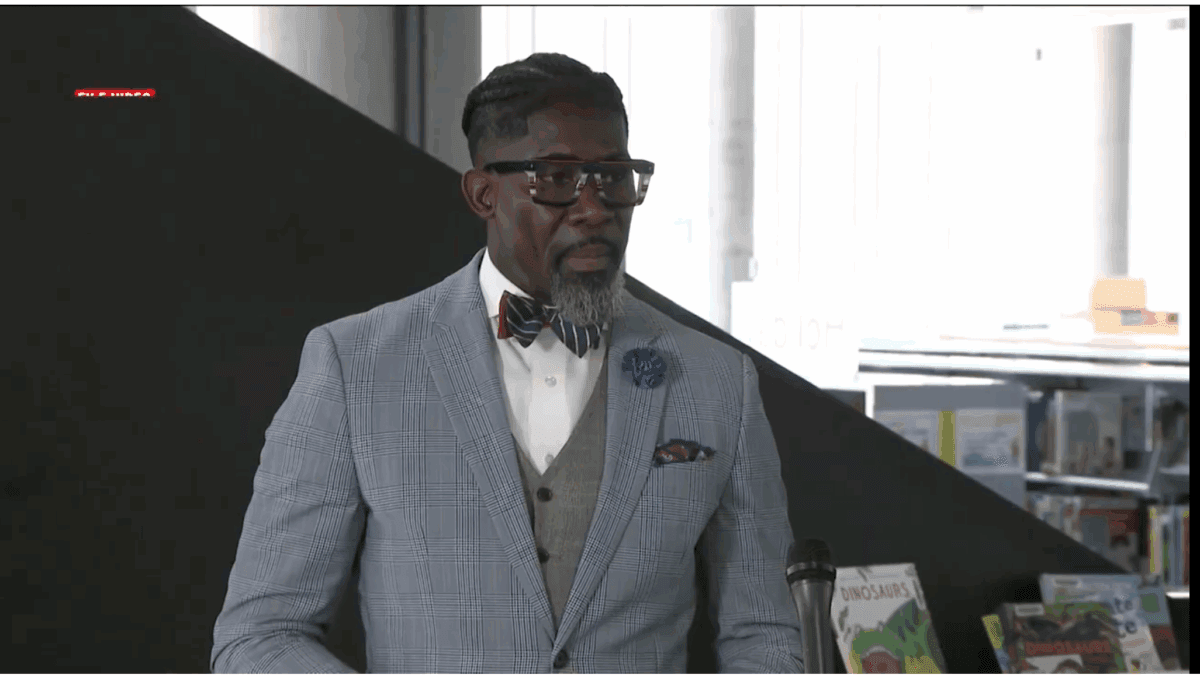 Ian Roberts remains in the Polk County Jail facing a March 2 trial on a charge of possessing a firearm as an illegal immigrant
For decades, we’ve been told America’s wars are about drugs, democracy, or “defending freedom.” But look closer at what’s unfolding off the coast of Venezuela, and you’ll see something far more strategic taking shape. Donald Trump’s so-called drug war isn’t about fentanyl or cocaine. It’s about control — and a rebirth of American sovereignty.
The aim of Trump’s ‘drug war’ is to keep the hemisphere’s oil, minerals, and manufacturing within the Western family and out of Beijing’s hands.
The president understands something the foreign policy class forgot long ago: The world doesn’t respect apologies. It respects strength.
While the global elites in Davos tout the Great Reset, Trump is building something entirely different — a new architecture of power based on regional independence, not global dependence. His quiet campaign in the Western Hemisphere may one day be remembered as the second Monroe Doctrine.
Venezuela sits at the center of it all. It holds the world’s largest crude oil reserves — oil perfectly suited for America’s Gulf refineries. For years, China and Russia have treated Venezuela like a pawn on their chessboard, offering predatory loans in exchange for control of those resources. The result has been a corrupt, communist state sitting in our own back yard. For too long, Washington shrugged. Not any more.
The naval exercises in the Caribbean, the sanctions, the patrols — they’re not about drug smugglers. They’re about evicting China from our hemisphere.
Trump is using the old “drug war” playbook to wage a new kind of war — an economic and strategic one — without firing a shot at our actual enemies. The goal is simple: Keep the hemisphere’s oil, minerals, and manufacturing within the Western family and out of Beijing’s hands.
Just east of Venezuela lies Guyana, a country most Americans couldn’t find on a map a year ago. Then ExxonMobil struck oil, and suddenly Guyana became the newest front in a quiet geopolitical contest. Washington is helping defend those offshore platforms, build radar systems, and secure undersea cables — not for charity, but for strategy. Control energy, data, and shipping lanes, and you control the future.
Moreover, Colombia — a country once defined by cartels — is now positioned as the hinge between two oceans and two continents. It guards the Panama Canal and sits atop rare-earth minerals every modern economy needs. Decades of American presence there weren’t just about cocaine interdiction; they were about maintaining leverage over the arteries of global trade. Trump sees that clearly.
RELATED: A war on Venezuela would be a war on reality
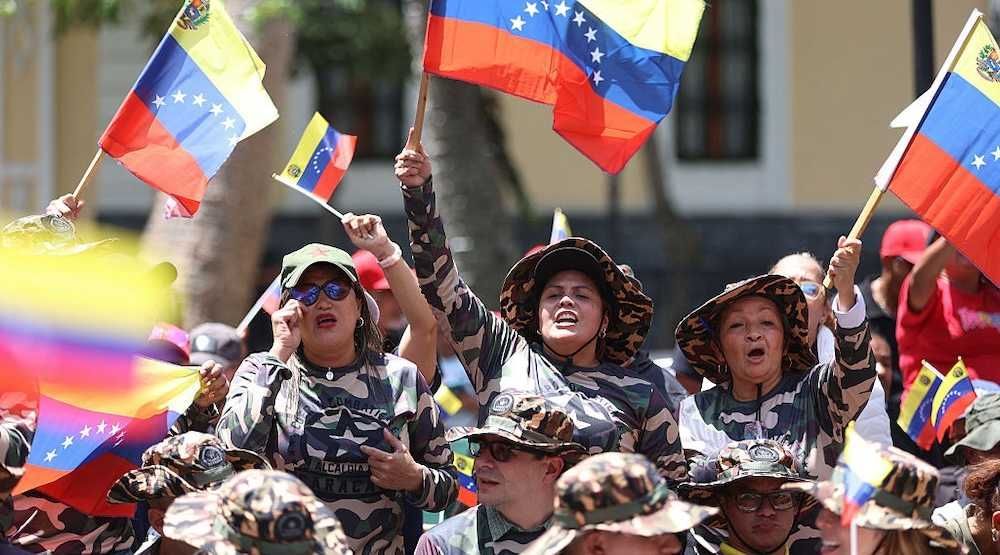
All of these recent news items — from the military drills in the Caribbean to the trade negotiations — reflect a new vision of American power. Not global policing. Not endless nation-building. It’s about strategic sovereignty.
It’s the same philosophy driving Trump’s approach to NATO, the Middle East, and Asia. We’ll stand with you — but you’ll stand on your own two feet. The days of American taxpayers funding global security while our own borders collapse are over.
Critics will call it “isolationism.” It isn’t. It’s realism. It’s recognizing that America’s strength comes not from fighting other people’s wars but from securing our own energy, our own supply lines, our own hemisphere. The first Monroe Doctrine warned foreign powers to stay out of the Americas. The second one — Trump’s — says we’ll defend them, but we’ll no longer be their bank or their babysitter.
Historians may one day mark this moment as the start of a new era — when America stopped apologizing for its own interests and started rebuilding its sovereignty, one barrel, one chip, and one border at a time.
Want more from Glenn Beck? Get Glenn's FREE email newsletter with his latest insights, top stories, show prep, and more delivered to your inbox.
Guyana President Mohamed Irfaan Ali is going viral for shutting down a BBC journalist who tried to lecture him about climate change.
Just a decade ago, nearly half of Guyana's population lived in poverty. But the country's economic fortunes changed in 2015 when significant deposits of oil — billions of barrels' worth of oil, in fact — were discovered off the coast of the South American country. Now, Guyana's economy is one of the fastest-growing in the world.
But in a recent interview with Ali, BBC journalist Stephen Sackur tried to scandalize Guyana's economic prosperity by invoking climate change. He said:
Let's take a big-picture look at what's going on here: Over the next decade, two decades, it is expected that there will be $150 billion worth of oil and gas extracted off your coast. It's an extraordinary figure. But think of it in practical terms. That means, according to many experts, more than 2 billion tons of carbon emissions will come from your seabed from those reserves and be released into the atmosphere.
President Ali, however, refused to be the subject of Sackur's virtue-signaling.
"Let me stop you right there," Ali said.
"Do you know that Guyana has a forest, forever, that is the size of England and Scotland combined? A forest stores 19.5 gigatons of carbon, a forest that we have kept alive?" he continued.
"Does that give you the right to release all of this carbon?" Sackur interjected.
But Ali wasn't playing games.
"Does that give you the right to lecture us on climate change?" he shot back. "I am going to lecture you on climate change because we have kept this forest alive that stores 19.5 gigatons of carbon that you enjoy, that the world enjoys, that you don't pay us for, that you don’t value, that you don't see a value in, that the people of Guyana has kept alive.
"Guess what? We have in the lowest deforestation rate in the world. And guess what? Even with our greatest exploration of the oil and gas resource we have now, we will still be net zero, Guyana will still be net zero with all our exploration," Ali continued.
At that point, Sackur still tried to interrupt, but Ali was not finished speaking.
"This is a hypocrisy that exists in the world," he said. "The world — in the last 50 years — has lost 65% of all its biodiversity. We have kept our biodiversity. Are you valuing it? Are you ready to pay for it? When is the developed world going to pay for it? Or are you in the pockets of those who have damaged the environment? Are you and your system in the pockets of those who destroyed the environment through the Industrial Revolution and now lecturing us? Are you in their pockets? Are you paid by them?"
Sackur never answered any of Ali's questions. Instead, he shifted the interview to a new topic.
— (@)
Like Blaze News? Bypass the censors, sign up for our newsletters, and get stories like this direct to your inbox. Sign up here!
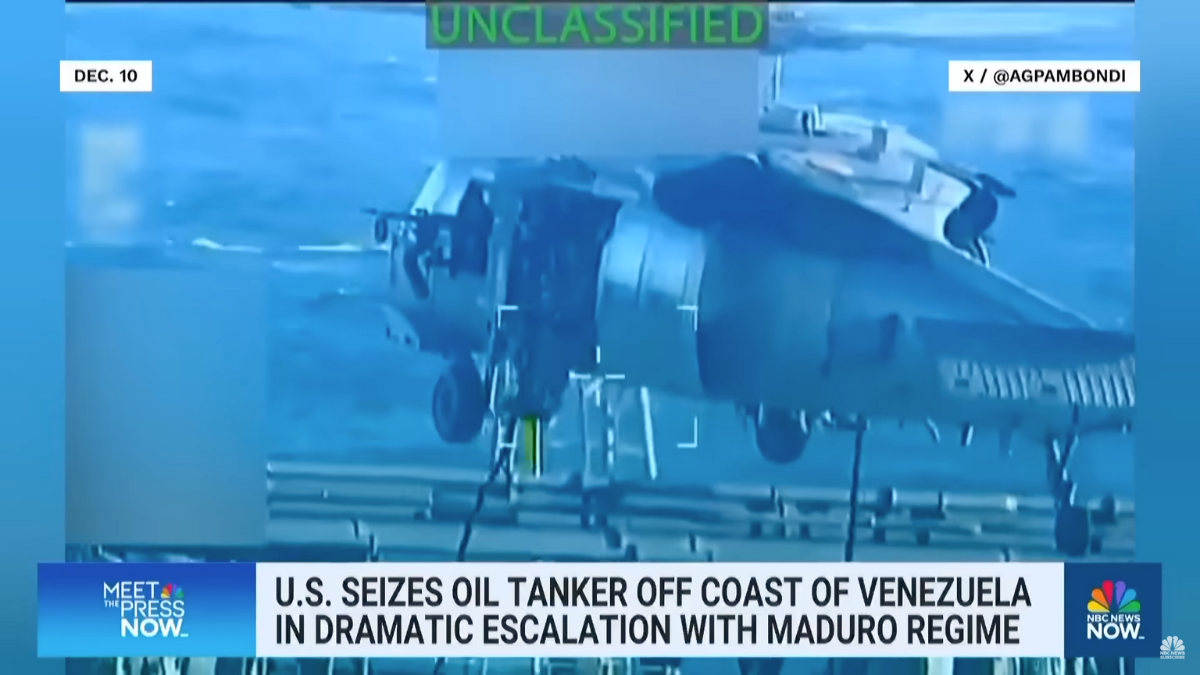 The seizure of a stateless oil tanker carrying Maduro’s oil is aggressive, but it isn’t clearly reckless or an act of 'sleepwalking.'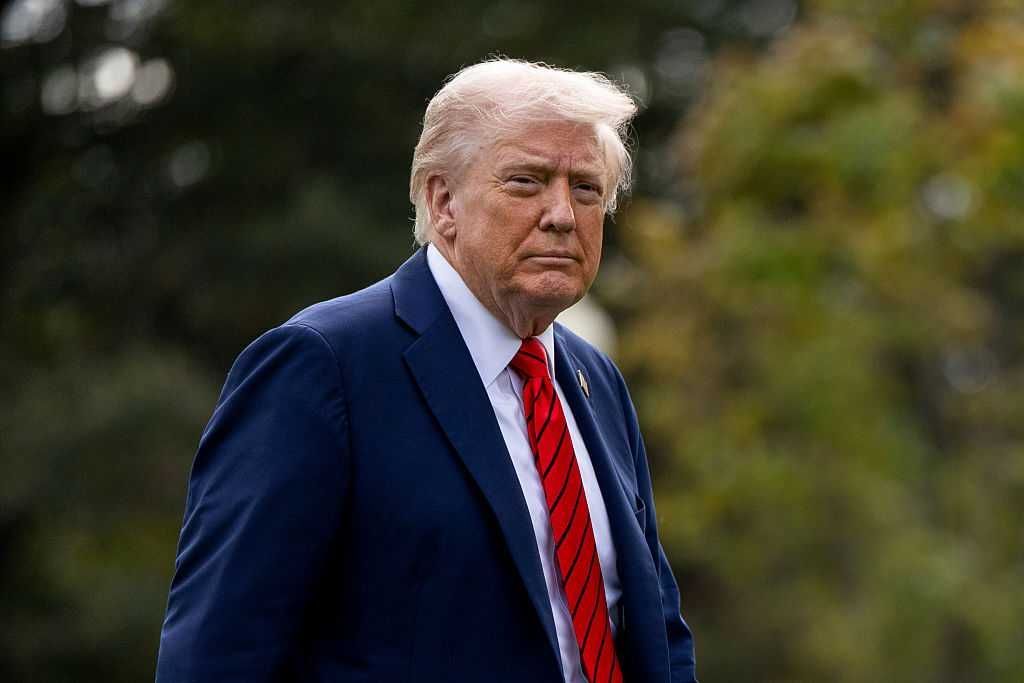
 DOJ says investigators will be looking into whether Iowa’s largest public school system is employing discriminatory DEI in hiring practices.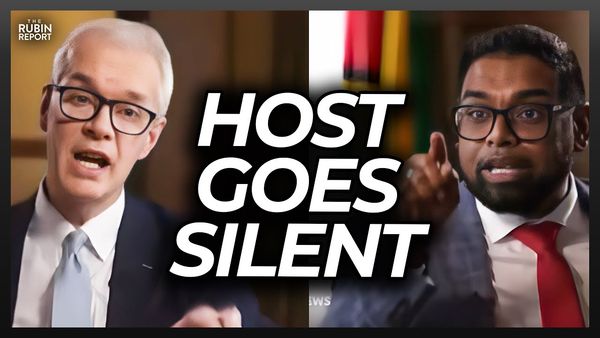

 www.theblaze.com
 www.theblaze.com
 freebeacon.com
 www.washingtonexaminer.com
 www.theblaze.com