Pets of Springfield, rejoice! DHS is coming for suspended-status Haitians after Biden judge takes 'the L'



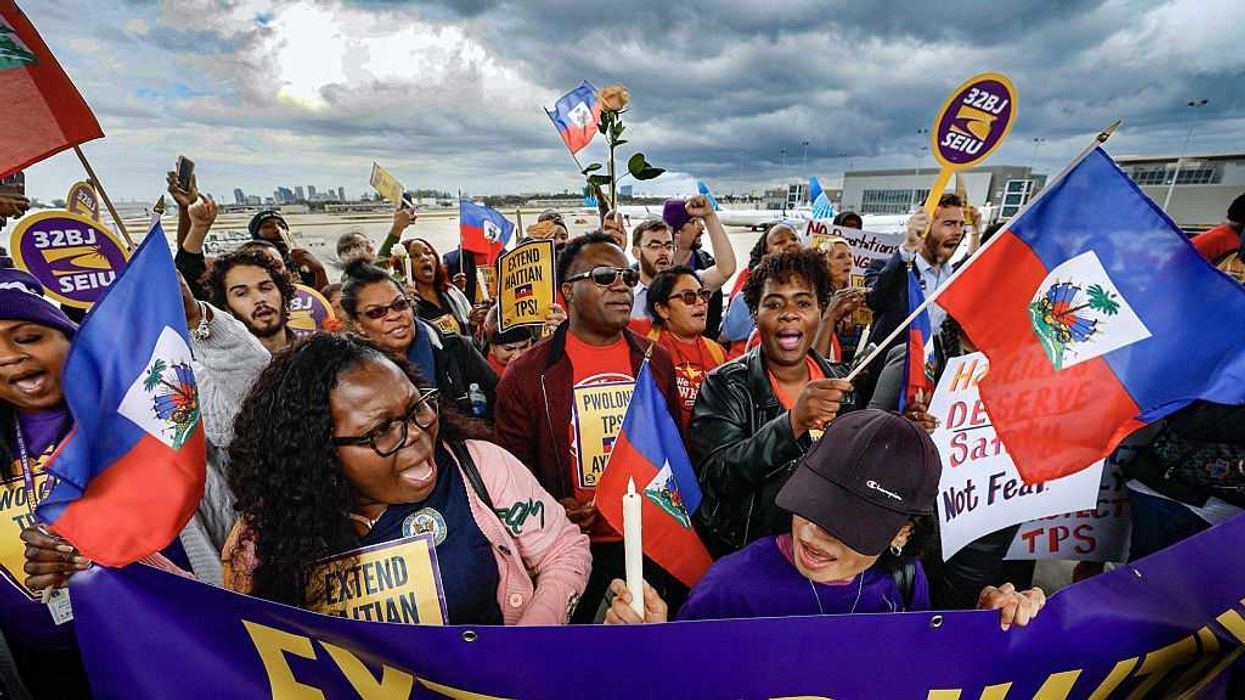
Owing to their nation's Temporary Protected Status, hundreds of thousands of Haitian migrants have avoided deportation despite greatly adding to the strain on American resources in places such as the blue-collar city of Springfield, Ohio, where they were accused by then-presidential candidate Donald Trump of "eating the pets of the people that live there."

After a protracted legal battle that went all the way to the U.S. Supreme Court, the activist judge who initially held up the process has finally conceded that the Trump administration can start giving Haitian migrants the boot.

How it started

The Trump administration announced last summer that Haiti's TPS was, after 16 years, finally coming to an end, having determined that the Caribbean nation no longer meets the conditions for special status, owing largely to significant improvements in domestic safety and stability.

'You don't have status inside this country any more.'

The revocation was, however, held up in the courts.

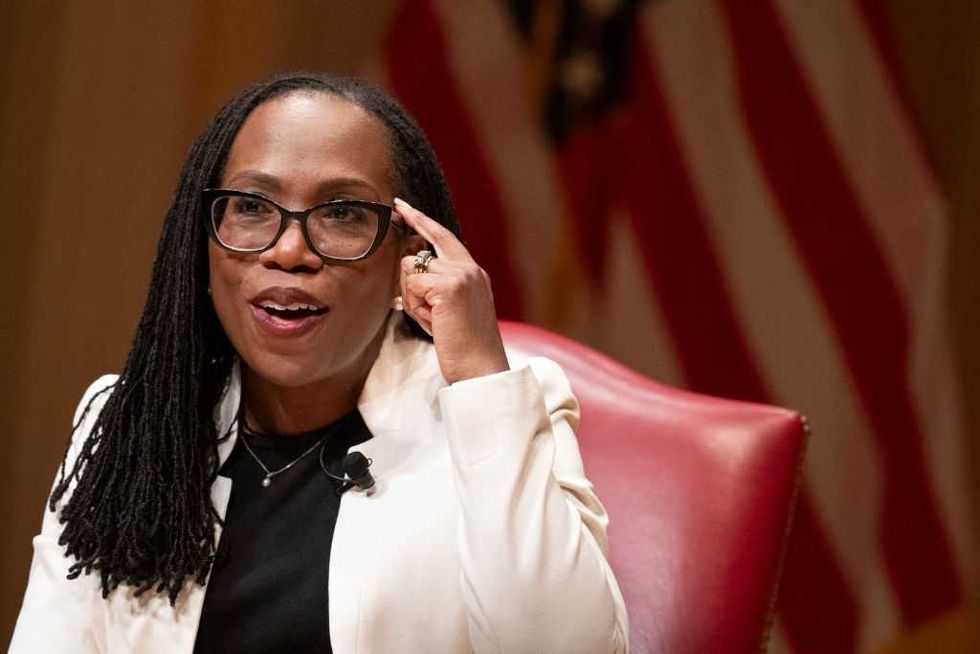
In Washington, D.C., U.S. District Judge Ana Reyes — a foreign-born, Biden-appointed, lesbian judge who previously worked as a lawyer to fight the first Trump administration's immigration policy and helped the U.N. secure asylum for so-called refugees — gave her fellow immigration activists cause to hope on Feb. 2, blocking the revocation of Haiti's TPS.

Reyes, originally from Uruguay, claimed that former DHS Secretary Kristi Noem not only violated the Administrative Procedure Act and the Fifth Amendment's Due Process Clause when terminating the TPS designation for Haiti but had likely done so "because of hostility to non-white immigrants."

RELATED: Trump-hating Republican governors conspire with Democrats to smuggle in even more migrants
Chip Somodevilla/Getty Images

After the U.S. Court of Appeals for the District of Columbia declined in March to block Reyes' ruling and kept Haiti's special status in place, the government kicked the matter up to the nation's highest court.

In late June, the U.S. Supreme Court delivered the Trump administration a huge victory, overturning the lower court's ruling.

In the majority opinion, Justice Samuel Alito rejected the suggestion that race was a motivating factor behind the TPS revocation and emphasized that the "TPS statute plainly bars consideration of respondents' non-constitutional claims."

How it's going

In the wake of the Supreme Court making mincemeat out of her ruling, Reyes issued an order on Wednesday acknowledging the reversal of her judgment and what it necessarily entails.

The foreign-born judge, who previously had a great deal to say about the matter, kept her admission of defeat brief, noting that her stay of termination "is no longer in effect."

Despite Reyes' insinuation that the government was waiting on her say-so, James Percival, general counsel of the Department of Homeland Security, noted, "Haiti TPS ended when the Supreme Court mandate issued on July 27. I will give Judge Reyes kudos though for taking the L with grace and not doing something bonkers like many of her colleagues."

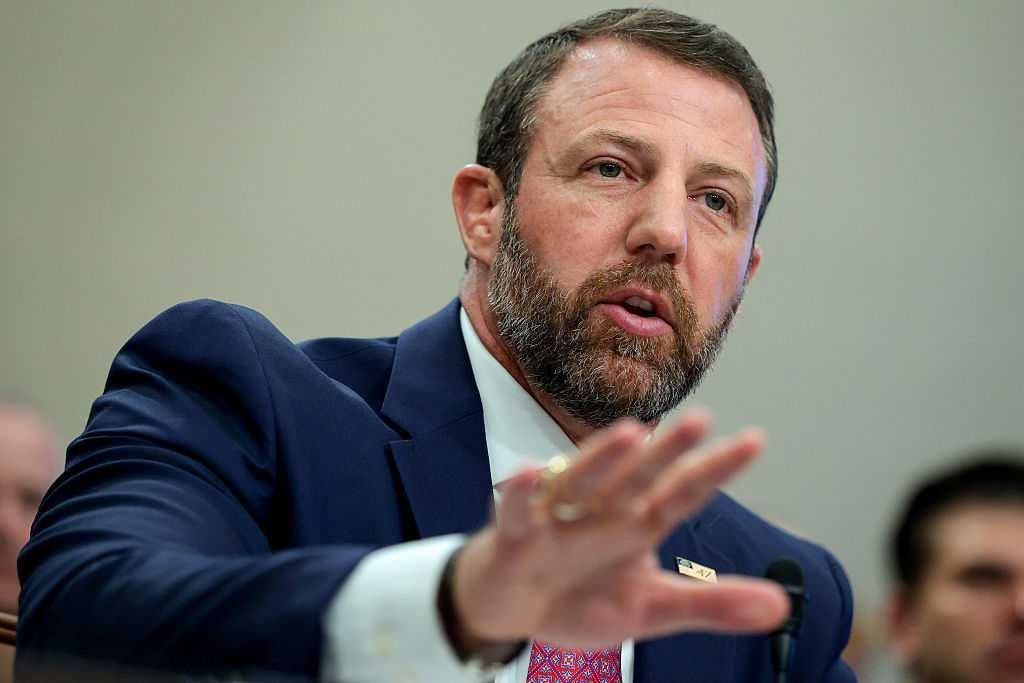
DHS Secretary Markwayne Mullin issued a message to Haitians with suspended special statuses: "We're going after them right now. We are giving them an opportunity to either leave on their own, and we'll help you, or we'll arrest you and send you back."

"Either way, you don't have status inside this country any more," continued Mullin. "That has been litigated. The courts spoke very clearly. We knew that we were going to win this because in its name itself it says, 'Temporary Protected Status.'"

Steve Foster, the immigration policy coordinator for the Institute for Justice and Democracy in Haiti, told ABC News, "Haitians with TPS, regardless of whether they have a pending asylum claim, have gotten a 'DHS Call-In Letter' to appear at ICE offices in person."

Foster said that some Haitians have reportedly been assigned future court dates and given ankle monitors.

These efforts are reportedly under way in Springfield — an Ohio city that has in recent years heard allegations of Haitians eating pets and wildlife and seen a significant spike in Haitian-caused traffic accidents.

In 2024, Springfield Mayor Rob Rue admitted that the tens of thousands of Haitians who had recently poured into his city — a city that had a population of just over 58,000 in 2020 — "taxed" the "infrastructure of the city, our safety forces, our hospitals, our schools." According to the city, there were more than 15,000 migrants presently residing in Clark County alone.

Viles Dorsainvil, the head of a Haitian support group in Springfield, confirmed the government's efforts to get the ball rolling on Haitian migrants' ouster.

"We are just helping these folks to go to this appointment, and when they get there, they interview them and eventually put [an] ankle monitor on them," said Dorsainvil.

Like Blaze News? Bypass the censors, sign up for our newsletters, and get stories like this direct to your inbox. Sign up here!

SCOTUS Win For Trump Admin Should Motivate Us To Eliminate TPS Completely

The only way to ensure we don’t witness abuses of TPS once again is to shut down the questionable program completely.

TPS Has Always Been A Giant Scam

Nothing better demonstrates that TPS was a scam than the Haitians who left South America to file bogus asylum claims in the U.S.

Dems Call For Court Packing After SCOTUS Rules ‘Temporary’ Really Means Temporary

Democrats are once again calling for the Supreme Court to be “expanded” and “reformed” after the high court affirmed Thursday in a 6-3 decision that “temporary” means “temporary.” The Supreme Court upheld President Donald Trump’s efforts to revoke temporary protected status for foreigners in the country. The ruling came in Mullin v. Doe and Trump […]
Supreme Court hands Trump a MAJOR victory on TPS status for Haitian and Syrian migrants


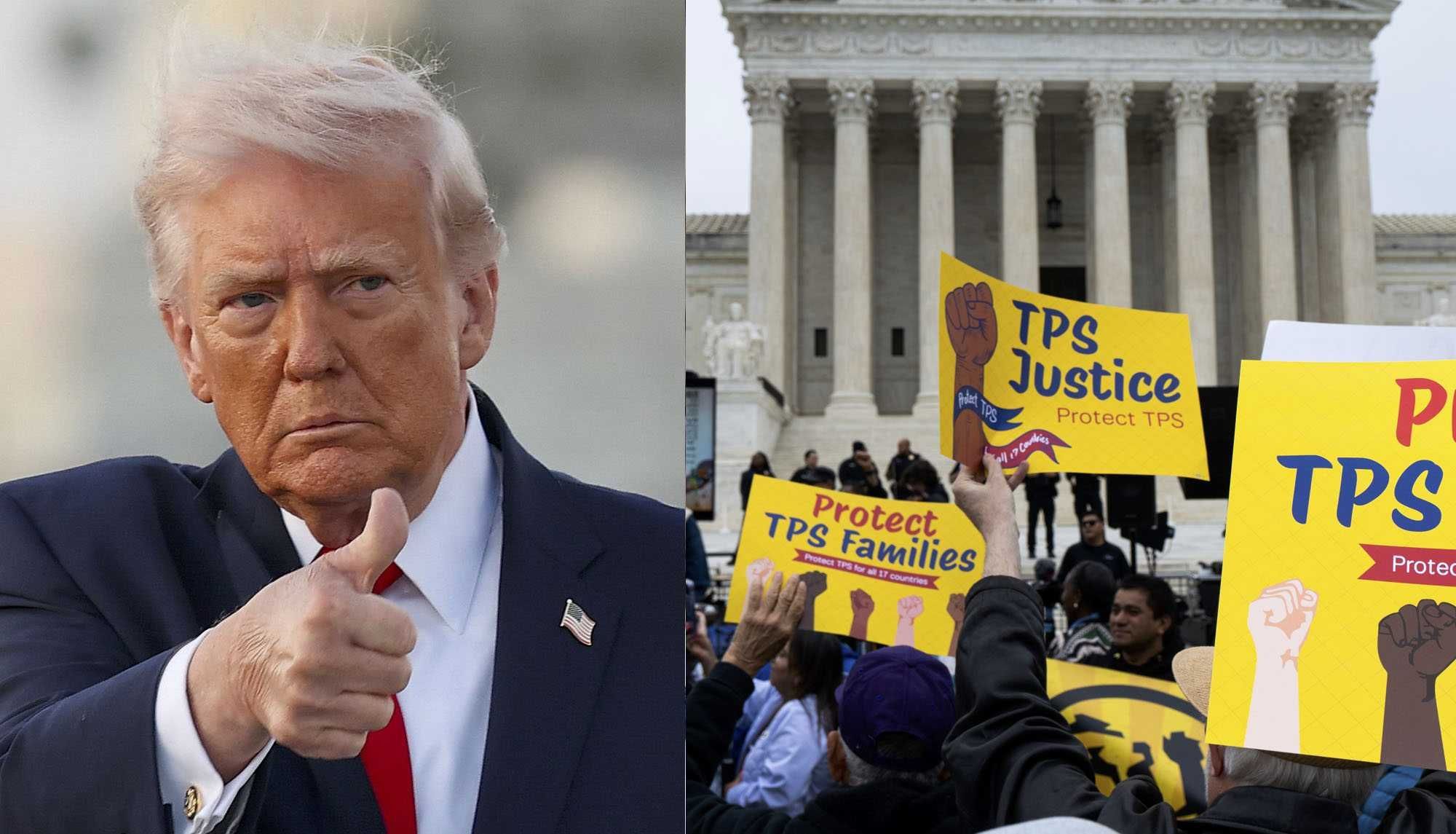
The U.S. Supreme Court has given President Donald Trump a major victory in his mission for mass deportations of migrants from the U.S.

SCOTUS ruled Thursday that the Trump administration was within its power to strip Temporary Protective Status from hundreds of thousands of Haitians and Syrians. The 6-3 ruling overturned a lower court ruling that had postponed the termination of TPS for 6,000 migrants from Syria and 350,000 migrants from Haiti.

'The Trump administration continues to lawfully end the egregious abuses to our immigration system that have hurt Americans for years.'

"The TPS statute plainly bars consideration of respondents' nonconstitutional claims," wrote Justice Samuel Alito in the majority opinion.

While the defendants' attorneys had argued that the administration had acted out of racial animus, Alito noted that "the current administration, which has terminated every TPS designation that has come up for renewal, simply opposes the TPS program, at least as it has been implemented in the past."

Justices Sonia Sotomayor and Ketanji Brown Jackson joined the dissent written by Justice Elena Kagan, who wrote that the plaintiffs "deserve better" than the decision made by the majority.

"True enough that TPS is a temporary program, and that it did not promise the plaintiffs never-ending humanitarian protection," wrote Justice Elena Kagan.

"But the law prevents the program from ending as it likely did here — without the required consultations about country conditions and, as to Haiti, with impermissible race-based considerations tainting the decision."

Abigail Jackson, a spokesperson for the White House, praised the ruling and reiterated the administration's claim that previous Democratic presidents had misused the TPS program to grant de facto amnesty to migrants.

"It was never intended to be a pathway to permanent status or legal residency, and it is committed to the discretion of the Secretary of Homeland Security," she said. "The Trump administration continues to lawfully end the egregious abuses to our immigration system that have hurt Americans for years."

RELATED: Springfield officials, Ohio activists brace for end to TPS protection for Haitian migrants

Ahilan Arulanantham, a UCLA law professor who argued on behalf of the Syrian plaintiffs, called on Congress to vote to pass legislation in favor of TPS protections.

"Without TPS, millions of individuals who are part of our communities are at risk of being sent back to countries in crisis," he said.

Senate Minority Leader Chuck Schumer of New York responded that Democrats are eager to intervene on behalf of the migrants affected.

"In a cruel and inhumane decision, the Supreme Court just turned its back on more than 300,000 Haitians and thousands of Syrians who have worked and raised families here because they faced violence and instability back home. TPS exists for exactly this reason," he said in a statement on social media.

"I have introduced legislation to extend TPS for Haitians and will keep fighting to protect Haitian and Syrian families from being forced back into danger," he added. "America should not turn its back on people who came here seeking safety."

Like Blaze News? Bypass the censors, sign up for our newsletters, and get stories like this direct to your inbox. Sign up here!

Trump’s Decision To End Deporation Protections Is Not Racist, Supreme Court Rules

The court ruled the goverment's move was not 'overtly racial'

'Trump is racist' arguments seem to fall on deaf ears at SCOTUS TPS hearing about Haiti and Syria


Congress created the temporary protected status program, often abbreviated TPS, in 1990 to bar the removal of foreign nationals who hail from countries roiled by civil unrest, violence, or natural disaster, regardless of their immigration status. Under the program, the secretary of the Department of Homeland Security can designate a certain country for TPS for periods of up to 18 months.

While supposedly "temporary," these status designations — presently extended to a dozen countries and shielding millions of foreigners — have in many cases been extended for decades.

Recognizing that the conditions previously cited as justification for TPS have materially changed for the better in some countries, the Trump administration has taken steps to revoke numerous TPS designations. This initiative has, of course, enraged liberal activists and beneficiaries of the program, who have mounted various legal challenges.

The U.S. Supreme Court — which cleared the Trump administration last year to strip Venezuelan migrants of TPS — heard oral arguments on Wednesday in the consolidated cases Mullin v. Doe and Trump v. Miot regarding the revocation of TPS for Haitians and Syrians.

Ahead of the hearing, Democratic Reps. Ayanna Pressley (Mass.) and Debbie Wasserman Schultz (Fla.) joined Democratic Sens. Edward Markey (Mass.) and Lisa Blunt Rochester (Del.) in demanding the high court defend TPS for Syrians and Haitians, stating, "Do your job, uphold the law, save lives, and protect our communities."

Given conservative justices' questions and remarks during the lengthy hearing, these Democrats and the hordes of foreign squatters who've long been shielded from removal may be headed for disappointment.

Quick background

TPS has covered Haitian migrants since January 2010 and covers nearly 350,000 citizens from the Caribbean today. Syria was designated for TPS in March 2012 and has received several extensions over the past 14 years. Roughly 6,000 Syrians presently enjoy protected status.

RELATED: SCOTUS issues shocking ruling about 'racial gerrymander' map

JACQUELYN MARTIN/POOL/AFP/Getty Images
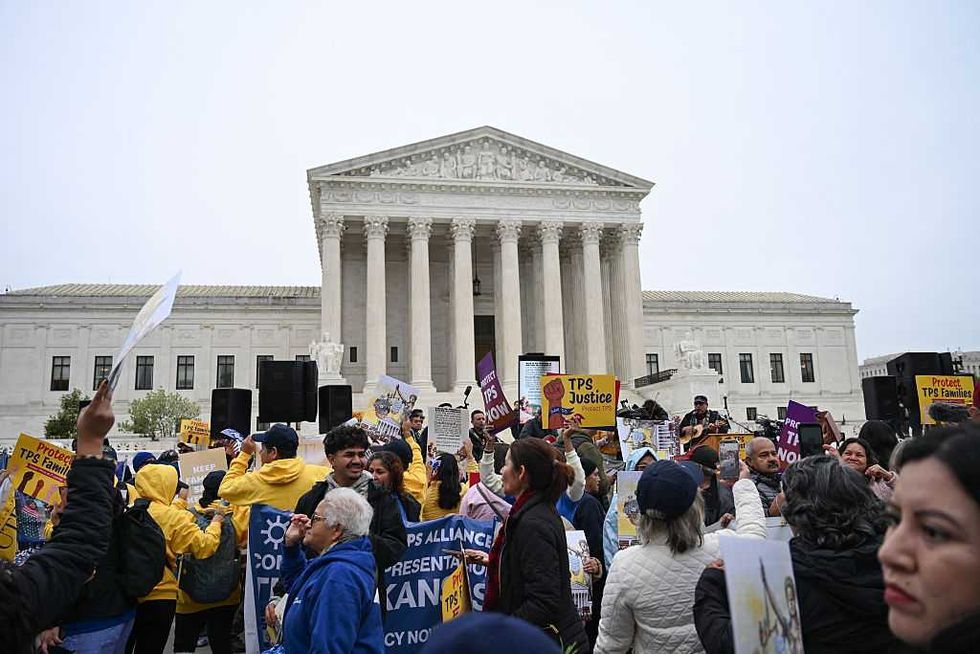
Having determined that neither country still meets the conditions for special status owing largely to significant improvements in domestic safety and stability, Trump's DHS announced the termination of Haiti's TPS in July and the termination of Syria's status in September.

These revocations, which were supposed to take effect months ago, have been held up in the courts.

In Washington, D.C., U.S. District Judge Ana Reyes — a foreign-born, Biden-appointed, lesbian judge who previously worked as a lawyer to fight the first Trump administration's immigration policy and helped the U.N. secure asylum for so-called refugees — obliged her fellow immigration activists on Feb. 2, blocking the revocation of Haiti's TPS.

'That's what you got?'

Reyes, a Uruguayan native, claimed that former DHS Secretary Kristi Noem not only violated the Administrative Procedure Act and the Fifth Amendment's due process clause when terminating the TPS designation for Haiti but had likely done so "because of hostility to nonwhite immigrants."

The U.S. Court of Appeals for the District of Columbia Circuit refused on March 6 to block Reyes' ruling, thereby keeping the special status for Haitians in place while the litigation moved forward.

In New York, U.S. District Judge Katherine Polk Failla, an appointee of former President Barack Obama, granted an injunction in November against the government's termination of TPS for Syrians. The U.S. Court of Appeals for the Second Circuit denied the government's motion for a stay pending appeal on Feb. 17, prompting the Trump administration to ask the Supreme Court to weigh in.

Divided court

U.S. Solicitor General D. John Sauer, who defended the administration's revocation of the special statuses, sparred at the outset with liberal Justices Ketanji Brown Jackson and Sonia Sotomayor over whether a TPS termination is open to judicial review, especially when the relevant statute makes expressly clear that there is to be no judicial review of any determination with respect to the TPS designation or termination or extension of a designation.

When asked by Justice Brett Kavanaugh why Congress would have barred judicial review as broadly as the administration now contends, Sauer pointed to the possible foresight that protracted legal review would inevitably undermine the temporary nature of the program and hinder the executive's ability to conduct foreign policy in a timely and confident manner.

Sotomayor and Brown proceeded to dwell on the suggestion advanced by the plaintiffs in the Haiti case and by Judge Reyes in February that "discriminatory intent" played a role in the termination of that nation's TPS designation, alluding to President Donald Trump's derisive remarks about third-world nations such as Somalia, which he characterized last year as "filthy, dirty, disgusting, ridden with crime."

While Sauer made clear that the government defended its decisions on non-discriminatory grounds, the liberal justices nevertheless appeared keen to read into extraneous comments by members of the administration, which were the primary focus of Geoffrey Pipoly, the attorney who argued on behalf of Haitian TPS beneficiaries.

RELATED: Illegal alien activists are furious at Trump administration after 'cruel' new 'Dreamer' policy drops

Alex WROBLEWSKI/AFP/Getty Images

Neither Justice Samuel Alito nor Justice Neil Gorsuch posed questions during Sauer's arguments, perhaps signaling understanding of or even agreement with them, but spent considerable time poking holes in those posed by the challengers.

Ahilan Arulanantham, a lawyer for Syrian TPS beneficiaries, emphasized that the issue is whether the DHS secretary adequately followed procedure when arriving at her decision to revoke TPS status, not whether her assessment was correct that the conditions previously justifying TPS had in fact changed.

Justice Alito did not appear to be buying what Arulanantham was selling. Instead, Alito echoed Sauer's concern that if the challengers' argument regarding the government's supposedly insufficient level of consultation with agencies was accepted, "it will create a hole in the judicial review bar that you could drive a convoy of trucks through," and that it will always be possible to second-guess the DHS secretary's decisions and process.

Pipoly, who piped up after Arulanantham's time elapsed, desperately tried to make the case that the Haitian TPS designation was based on a "sham" of a review, not grounded by empirical support but by President Donald Trump's "racial animus towards nonwhite immigrants."

Justice Alito countered, however, that "TPS was terminated for quite a list of countries," many of which are home to individuals who are or could be construed as white.

"If you put Syrians, Turks, Greeks, and other people who live around the Mediterranean in a lineup, you think you could say those people are, all of them, are they all nonwhite?" Alito said, prompting an acknowledgment from Pipoly that Syrians "may be classified as white."

After Alito nuked the notion that TPS revocation is solely bound up with race, Justice Gorsuch pressed Pipoly to disentangle the DHS secretary's determination — which is not subject to judicial review — from the DHS' ultimate termination of the TPS status.

"How can it not be judicial review of the determination if you're postponing the determination?" Gorsuch asked.

"The final agency action here that was postponed is ... the termination, not the determination, which is not subject to judicial review," Pipoly responded.

Pipoly does not appear to have won over Gorsuch with his tortured attempt to strike a distinction between the two since Gorsuch replied, "That's what you got?"

Like Blaze News? Bypass the censors, sign up for our newsletters, and get stories like this direct to your inbox. Sign up here!