​Red, white, and boo: Almost two-thirds of Americans now believe in ghosts


"I ain't afraid of no ghost."

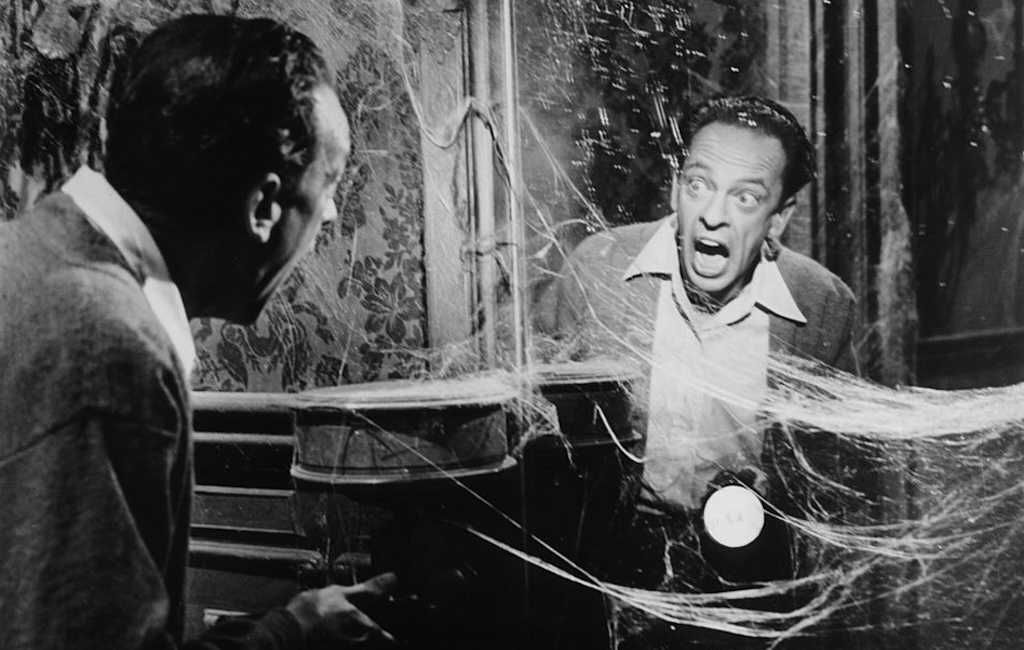
Easy enough to say 40 years ago, when audiences delighted to the spectral pest control antics of Bill Murray, Harold Ramis, and Dan Aykroyd. You can't fear what isn't real, after all.

The show pioneered a tactic known as 'provocation.' This is when an investigator attempts to goad a spirit into manifesting by insulting it.

Things have changed. Since then, the proportion of Americans who believe in ghosts has surged 400%. Surveys indicate that nearly two-thirds of the population now hold supernatural beliefs, and 20% have reported seeing a ghost.

Entrepreneurial spirits

With roughly 50 million Americans purportedly having encountered a haunting, the business of ghost hunting has evolved into a profitable enterprise. It would appear that the invisible hand of the market really does exist.

As proof that even the ethereal cannot escape the iron law of supply and demand, paranormal tourism is booming. Millions of Americans now spend over $300 million on haunted attractions each year. You can satiate your gruesome desires by visiting Iowa’s Villisca Axe Murder House, where eight people, including six children, were murdered in 1912. For $430, anyone brave enough to take a whack at it can try to spend the night.

Ghost-hunting shows are scaring up unprecedented interest as well. YouTube, for example, has hundreds of paranormal-themed channels. One of the biggest is "Sam and Colby." With an average of 10 million views per video, the kids are among the most popular ghost hunters online. The two film themselves while visiting haunted locales across the United States. Freed from the limitations of conventional television, the videos are lengthy and typically unedited, offering a more immersive experience for their audience of 15 million subscribers.

There are compilation channels for those who don’t want to endure the deferred gratification of 90 minutes of shaky handheld videos and constant cries of, "What was that?"

Then there are channels like "Mind Junkie" and "Nuke’s Top 5," which brazenly monetize our endless appetite for not-so-carefully-vetted supernatural slop. One wonders if these shrewd content creators are also behind the "debunking videos" they attract. Nice business model, if so.

Tales from the clip

"Paranormal Caught on Camera," now in its ninth season on Discovery+ and the Travel Channel, can best be described as a reality show. From poltergeist activity to mysterious shadows roaming the woods, a panel of experts weighs in on supposed paranormal footage from around the world. Imagine "Ghostbusters" meets "America’s Funniest Home Videos" — with the approximate scientific rigor of both.

Psychologists say a prior belief in ghosts makes a person more inclined to perceive unexplained sounds and events as paranormal. The show’s presenters are clearly familiar with the research. They frequently use the term "energy" (which appears to function as a noun, verb, and adjective) and attribute every sound or camera jiggle to the spirit realm.

Ghost roast

"Ghost Adventures" is one of the longest-running and best-known of these types of shows. While the experts on "Paranormal Caught on Camera" are content to remain armchair investigators, aging goth heartthrob Zak Bagans and his crew actually go out into the field. Since 2008, they have traveled around the United States looking for paranormal phenomena. The format is simple: They arrive at an alleged haunted location, turn off the lights, hit record, and explore the building. What we get is a well-curated, finely edited spectacle.

The show pioneered a tactic known as "provocation." This is when an investigator attempts to goad a spirit into manifesting by insulting it. While this demonstrates a fortitude worthy of Ray Parker Jr. himself, it has never once worked over 300 episodes. The only scary thing that appears to be happening is a group of middle-aged men screaming in the dark about nothing in particular.

The truckload of pseudoscientific equipment these guys bring to the task separates them from your average amateur. A truckload of pseudoscientific instruments is used to add an element of objectivity. Particularly prized is the EMF meter, used to detect the electromagnetic fields ghosts apparently emit. This essential prop emits clicks and pings reminiscent of the motion trackers used to detect xenomorphs in the movie "Aliens." Unsurprisingly, there is no James Cameron-level tension here. Ninety-nine times out of 100, they’ve probably just found the fuse box.

RELATED: Halloween costumes for old people: 6 surefire rules for dressing up

Matt Himes

Phantom itch

Slick, polished, and carefully choreographed. It’s all very Hollywood. It comes as no surprise that the massive increase in belief in ghosts over the last 50 years coincides with the golden era of horror. Art imitates life. Many of these shows use the same strategies as your typical Hollywood special effects department.

So why are we watching these shows? "Ghost Adventures," now in its 28th season, has perfected the art of selling us fear. These shows give us what we want. We love to be afraid. A horror movie grants us the chance to live vicariously through the characters on the screen. A way to experience and navigate terror from the comfort of our couch.

Then there's another, more poignant, explanation. We believe in ghosts for the same reason that we believe in God. In the end, both ghost hunters and Christians are motivated by the same persistent yearning that has dogged us since the dawn of humanity: There's got to be something more than this.

Satan or saints? The spiritual tug-of-war over Halloween


Halloween was never something I thought that deeply about until recently. If I’m being honest, for years I rolled my eyes at the rigid Christian parents — holier-than-thou stick-in-the-muds — who refused to let their kids participate in any Halloween traditions, especially costume-wearing and trick-or-treating.

I grew up in a Christian home with parents who had strong convictions about darkness but still allowed me and my siblings to enjoy Halloween festivities. Our parameters were simple: no horror movies, no haunted houses, no costumes that represent evil, and no trick-or-treating at homes with macabre decorations.

‘So many people think Halloween is about candy and it’s about dress-up, but they don’t question the meaning behind it.’

Some of my favorite childhood memories are from Halloween.

When she could find the time, my mom, a skilled seamstress, would handmake our costumes. One year, she hand-stitched me a sequin and tulle fairy dress. Another year, she made my little brother Larry the Cucumber from "VeggieTales." He looked like Shrek’s awkward cousin, and I was forced to let him tag along for trick-or-treating — a total vibe kill when you’re 11 years old and going as a fierce leopard queen of the savanna. Twenty years later, my family still howls in laughter at the image of the two of us, a majestic jungle cat trailed by a strange pickle.

After returning home with pillowcases bursting with candy, my brother and I would stay up late sorting through our plunder and making valuable trades. He liked the fruity stuff; I was a chocoloholic, so it worked out. We made these exchanges while we watched “It’s the Great Pumpkin, Charlie Brown” and “Casper.”

When I grew older, I would help my mom get my little sister ready for trick-or-treating. I’d curl her hair, paint her nails, and delicately apply sparkly eyeshadow until she was the best princess in the neighborhood.

By all measures, Halloween at my childhood home was sweet and fun.

In my early adult years before my husband and I had a child, we kept the same guidelines. Our front porch was decorated exclusively with pumpkins and orange string lights. If we went to a costume party, we dressed as something benign, like Peter Pan and Wendy (he’s still salty with me about the green tights). We handed out candy and hyped up every princess and Power Ranger who came to our door. If our friends invited us to see a horror movie or go to a haunted house, we politely declined.

For years, this is how we did Halloween, and I always arrogantly assumed that we were doing it right — threading the needle perfectly so that no darkness got into our bubble.

But everything changes when you have a child. The second your doctor places that perfect baby in your arms, the lens through which you see the world morphs. Suddenly, there is danger lurking around every corner. Your mind is incessantly flooded with bone-chilling what-ifs. Your spirit gets more sensitive and begins picking up on things — lyrics, innuendos, hidden agendas — it never noticed before.

The weight of responsibility gets 1,000 times heavier as you realize: I am not only responsible for protecting this human being physically, I’m also charged with nurturing and guarding their soul.

And so when Halloween rolls around, you start asking questions you never asked before.

Questions like: What if my toddler sees a scary costume or yard display and has nightmares? What if allowing him to trick-or-treat exposes him to terrors he otherwise would’ve remained ignorant of? What if I start traditions I regret later?

These questions gave way to deeper spiritual inquiries: Is there an uptick in demonic activity on Halloween (even in well-lit suburban neighborhoods)? Am I sending my son out onto demon-infested streets by allowing him to trick-or-treat? By participating in Halloween in any capacity, am I attempting to whitewash a day that glorifies darkness? Is it possible for Christians to partake in Halloween and still glorify God? At what point have we crossed the threshold from innocence to fraternizing with evil? Is there such a threshold when it comes to Halloween?

These queries then birthed a whole different set: By only partaking in the innocuous parts of Halloween (granted those exist), might we be a positive example for others who don’t know Jesus? Could setting parameters around Halloween teach my child how to be light in the darkness — in the world but not of it? Might the plastic monsters in people’s yards eventually be a tool to introduce our son to the real monsters? Are candy and costumes wholesome practices 364 days of the year but grave moral evils just on October 31? If that’s the standard I hold to, am I not being a bit legalistic?

RELATED: Why Christians should stop running scared from Halloween

kajakiki/Getty Images Plus

Full transparency: I’m not sure where I fall on this issue. I am struggling because I think my parents did an exceptional job protecting us from darkness while still allowing us to have fun and make awesome memories.

If possible, I would like to re-create the same experiences for my children.

However, we were kids in the 1990s. We didn’t have access to global information in the palm of our hands. My mom wasn’t privy to the dark pagan origins of trick-or-treating and costume-wearing.

But today, we can find the answers to literally anything in mere seconds thanks to high-speed internet, smart devices, and artificial intelligence — another big moral question mark. Many discerning Christians have begun looking into the origins of things they thoughtlessly engaged in for years, including Halloween. They’re deeply disturbed by what they’re finding.

Social media has also given everyone who wants it a platform. Practicing witches are all over Instagram and TikTok. They’ve busted the myth that witches wear pointy hats and concoct bubbling potions in the dark forest. Turns out, they’re sitting next to you at the coffee shop, browsing grocery store aisles in your hometown, and creating spreadsheets in the cubicle next to yours.

Halloween is a frequent subject on “WitchTok,” a virtual community that has amassed billions of views. Oct. 31 is a day when modern witches revive the ancient pagan rituals that influenced Halloween. And they’re doing it boldly — consulting with demons, worshipping at satanic altars, and casting curses and spells. One can only guess what they’re doing off camera.

This is all going on while children stuff themselves with Snickers and Skittles.

On the flip side, social media has also given voice to ex-occult members who are exposing the dark art’s sinister secrets. These Christian converts pull no punches about Halloween: It’s a hard no.

Many of them describe personal experiences with rituals, hauntings, and “demonic weddings” on Oct. 31. They almost unanimously implore believers to abstain from the holiday to avoid opening spiritual doors to evil.

I recently saw this Instagram post from Christian music artist Forrest Frank:

In the video, ex-occultist and former satanic church leader Riaan Swiegelaar warns that Halloween is “the highest day on the satanic calendar” and “the night of the year where there is the most human sacrifice on the whole planet.”

“So many people think Halloween is about candy and it’s about dress-up, but they don’t question the meaning behind it,” he said.

Swiegelaar went on to suggest that anyone who participates in Halloween by opening their doors and engaging in the traditions will be “affected” by the darkness.

An ex-satanic priest turned evangelist named John Ramirez, who spent over two decades engaging in unspeakable horrors on Halloween, warns that participation in any capacity is like having a one-night stand with Satan. He even goes so far as to claim that pumpkins, not even Jack-o’-lanterns, outside our doors are an invitation for demons to enter.

Do I take their word for it? Even though my childhood memories don’t align?

Do I lean harder into the Christian or pagan roots of Halloween? Can I participate in some traditions given they were shaped by All Hallows’ Eve, the vigil before All Hallows’ Day, a Christian feast established by the early church to honor saints and martyrs?

Or do I turn my porch light off and barricade my family indoors because Halloween was also influenced by the pagan fire festival of Samhain, a night steeped in death and the demonic? Ancient Celtic peoples made offerings and sometimes even sacrifices to the dead, practiced divination and necromancy, and danced around great bonfires to keep evil spirits at bay. Samhain is where costume-wearing and trick-or-treating got their start.

However, both traditions are a bit of a mixed bag. Ancient pagan practices blended with medieval Christian traditions to eventually become the candy-driven, costume-obsessed hallmarks of modern Halloween. Samhain was the night Celts believed the veil between the living and the dead was thin. Spirits that crossed the barrier needed appeasement, so people offered gifts, usually food, to quell their wrath — a precursor to passing out candy.

One could argue that Christians, by turning demonic practices into veneration and community-oriented festivities, brought light where there was darkness.

However, British and Irish Christians then put their own spin on these practices with “souling,” where the poor went door-to-door on All Hallows’ Eve, offering prayers for the dead in return for food, which further shaped the trick-or-treating we know today.

The tradition of costume-wearing has a similar trajectory.

During Samhain, Celts would disguise themselves using animal skins or masks to confuse or ward off malevolent spirits. By the medieval period, after Christianity had spread across Ireland and Scotland, these practices were reshaped into what became known as “guising.” Children dressed up and went door-to-door, performing songs, poems, or tricks for food or coins. This was widely accepted by Christians as part of All Hallows’ Day festivities.

So while Samhain birthed the concepts of trick-or-treating and dressing in costumes, Christians had the final say. The early church redirected pagan impulses of worshipping and fearing the dead to honoring them as part of the “communion of saints.” Or did they merely sanitize sin? I guess it depends on how you look at it.

Many Christians who condemn Halloween today point back to the pagan origins of these traditions as evidence of why believers should abstain. They’ve definitely got a point. Samhain was — is — dedicated to the demonic.

However, one could argue that Christians, by turning demonic practices into veneration and community-oriented festivities, brought light where there was darkness. Again, it depends on how you look at it.

I do find it interesting that the majority of Christians who are bent on seeing the entirety of Halloween as irredeemably evil don’t bat an eye when December rolls around and Christmas trees go up. Christmas trees have the exact same history as Halloween’s favorite traditions: It began as a pagan practice of worshipping nature spirits, and then Christians adapted it into a “holy” holiday tradition.

I asked a close friend of mine who falls in this category (no Halloween but Christmas trees are fine) her thoughts on this. She told me Halloween in general is a celebration of darkness, whereas Christmas is not.

It’s a fair point, but I still wonder if mainstream Christmas is not a celebration of a different kind of darkness — greed and materialism.

“It’s just the whole Halloween vibe. It doesn’t sit well with my spirit,” she told me.

There, I think, is where everyone should find their answer: in the Spirit, which convicts us all differently. I’m reminded of the apostle Paul’s words to the early Gentile Christians in Romans 14, who were arguing over disputable matters of conscience, like consuming food offered to idols and observing certain holidays. He told them, “Each one should be fully convinced in his own mind.” Perhaps the same wisdom applies here.

This year, my husband and I have decided to abstain from Halloween and use this time when our son is still too young to remember anything to pray about what our future Octobers should look like.

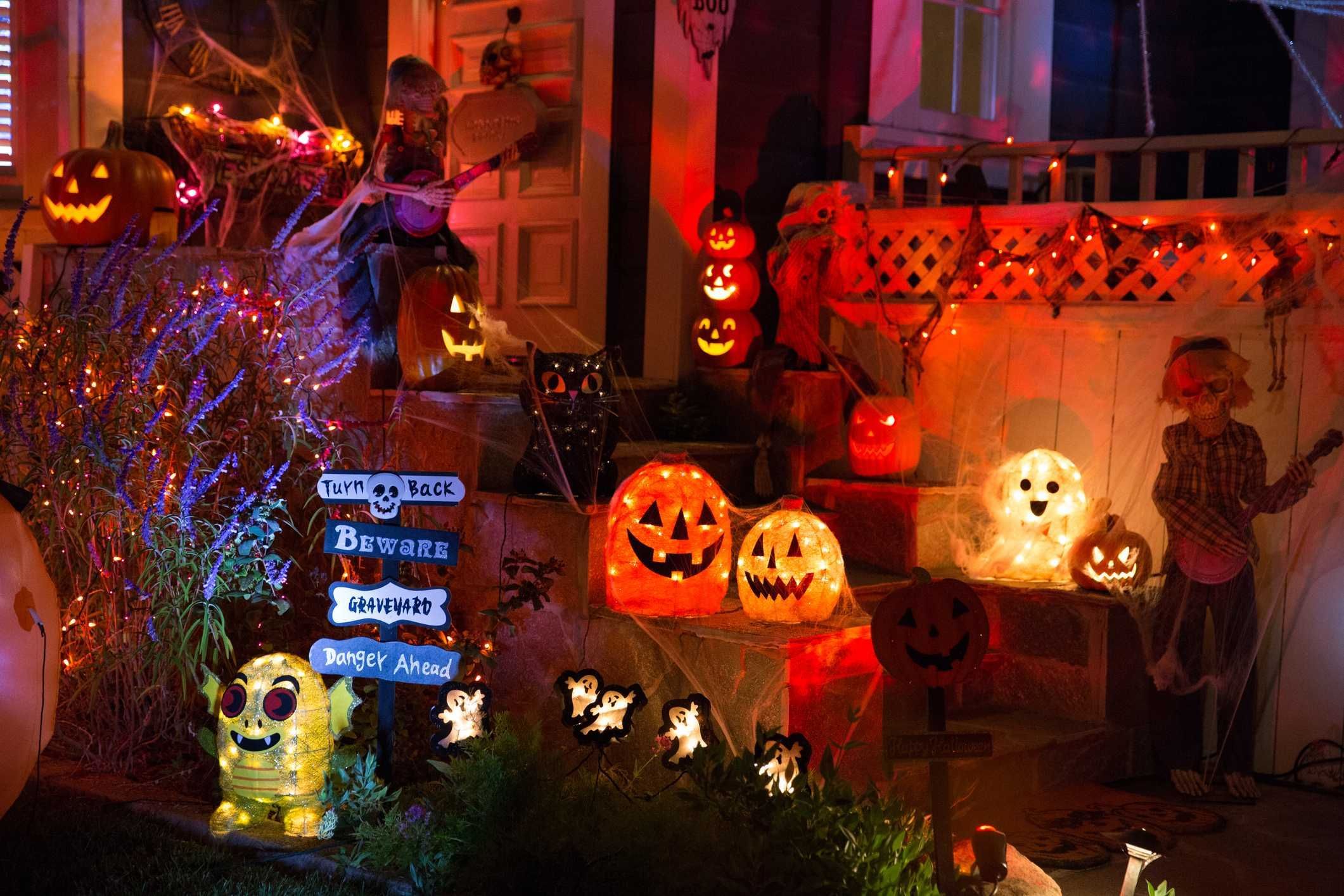
My spirit is certainly disturbed when I see our next-door neighbor turning his yard into what I can only describe as a temple of darkness — monsters and fiends of all varieties awash in a sickly red glow. I then look over at the cluster of pumpkins on my own front porch and wonder: Are he and I guilty of the same crime?

Until I have my answer, I’ll keep pondering, praying, and letting the Spirit — not the season or even my cherished memories — tell me what belongs in our home.


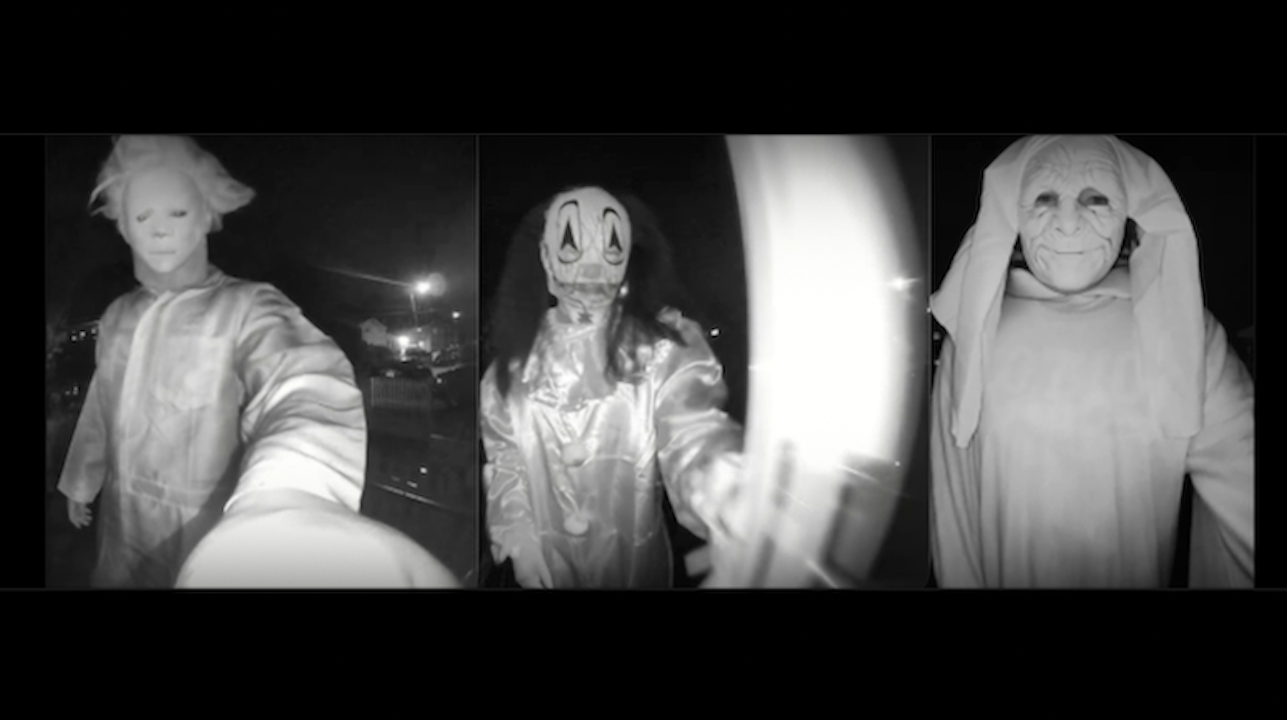
Horror-costumed trio banged on home's front door late at night and 'threatened to kill us,' woman says. Then cops intervened.


A trio dressed in Halloween horror costumes were caught on doorbell video banging on the front door of a Northern Virginia home late at night and threatening those inside earlier this month.

"It's either you coming out or we coming in!" one voice can be heard on the video, WUSA-TV reported, adding that another shouted, "Open the door!"

'My heart dropped when they said that they were gonna take a chair and break down the door.'

A woman named Shayla — who told the station she was staying with her mother in her Alexandria home — added that "they kept, like, knocking on the door. The knocks would get harder and harder."

Shayla told WUSA she called 911 and warned the group that police were on the way, but she said that didn't deter them, and they continued shouting and trying to force their way in.

Worse still, Shayla told the station the trio "threatened to kill us."

Plus, she added to WUSA that when they couldn't get in through the front door, they moved to the back of the house.

"This whole thing they broke down, as you can tell," Shayla explained to the station in the aftermath as she showed damage to the backyard fence.

"They hopped up on here and went through there," she added to WUSA as she showed a now-damaged screen-in back porch.

Shayla also told the station that the intruders still ramped things up: "They were just hitting the window. My heart dropped when they said that they were gonna take a chair and break down the door. That is just too much."

RELATED: NYPD vehicle trashed while cops respond to domestic violence call on Halloween: 'Trick or treat, motherf**kers'

She added to WUSA that "they tried to enter into the home." Shayla explained to the station that other factors made the ordeal worse, especially for her mother: "My dad recently just died, so it's just, like, I'm just glad I was there. But now [my mother's] in fear. She don't wanna stay there by herself."

Fortunately, the ordeal ended after 10 minutes, as she remarked what could have happened — to the intruders.

"It could have been bad," Shayla told WUSA. "Our Second Amendment right was not used and could have been, like being very transparent."

She added a message to the perps, the station said: "The time frame alone, 10 o'clock at night to knock on someone's door in costume is never OK. Halloween, not Halloween, it's never OK."

By Oct. 17, police said they were investigating the case as an attempted burglary.

"This is a very serious matter," Alexandria Police Chief Tarrick McGuire said in a news conference, WUSA noted in a follow-up story. "They began to make threatening and alarming comments to the family ... specifically, they said, 'If you do not come out, we will come in,' and also threatened to do bodily harm, stating that they would ultimately kill them."

Well, police eventually got to the bottom of it — and considering what could have happened, the revelations were disturbing to say the least.

It turns out relatives of the victims in the home were responsible and had been recording video of what they called a prank, WRC-TV reported.

McGuire in a Monday update told WRC that the prank “could have been deadly," especially considering that one of the victims called her brother for help prior to calling police — and he arrived with a gun.

RELATED: Missouri town's residents are finding creepy dolls everywhere, and police warn someone might get hurt

What's more, McGuire added to the station that several officers dedicated over 100 hours to the investigation.

Several tips from the community led to the suspects — and a female relative confessed, saying that she, her two teenage sons, and a teen nephew approached the home as two adults and a child stood in the background recording video, McGuire noted to WRC.

In the end, the victims didn't press charges, and neither will police, the chief added to the station — with the following caveat: “This will hopefully be a learning experience for this family."

McGuire added to WRC that the adults were guilty of a “moral failure” since they "were engaging in this behavior but also encouraging this behavior."

Like Blaze News? Bypass the censors, sign up for our newsletters, and get stories like this direct to your inbox. Sign up here!

Why Christians should stop running scared from Halloween


As October comes to a close, "spooky season" is in full form. Stores are packed with Halloween candy, costumes, and decorations.

Some Christians reject Halloween as synonymous with evil. But why is that? And what is the best way for Christians to respond to Halloween?

Make no mistake: Every day on the calendar belongs to God, and none of them belong to anyone else, including the devil.

How it started

The pagan Celts of ancient Ireland celebrated the new year on Nov. 1. So, much like we celebrate the night before New Year's Day, they celebrated the night before (Oct. 31), too.

They called it "Samhain" — a night when they believed the dead in the form of ghosts could return to walk the earth. The Celts built huge bonfires, dressed in costumes to disguise themselves from the ghosts, and made lanterns out of gourds (like pumpkins, although they likely used different gourds). The fires attracted many insects, which attracted bats.

When the influence of the Catholic church began extending into pagan lands, sometimes the two cultures influenced each other. The Catholics celebrated All Saints' Day on Nov. 1 — also known as "All Hallows Day" — which was an occasion to remember the dead, who are supposedly now in heaven.

So Samhain eventually came to be known as "All Hallow's Eve" or Halloween. And the bats, ghosts, costumes, and jack-o-lanterns made of gourds — the trappings of Samhain — continued to be part of the celebration.

Trick-or-treat origin story

In medieval Britain, a practice called “souling” emerged, where the poor would go door-to-door on Nov. 1 or Nov. 2, offering prayers for the dead in exchange for food, often “soul cakes.”

In Scotland and Ireland, a parallel tradition called “guising” developed in which children and young adults disguised themselves in costumes or masks, supposedly to mimic or hide from wandering spirits, and went door-to-door performing songs, poems, or tricks in exchange for food, nuts, or coins.

The term “guising” comes from “disguise,” reflecting the costume element in modern trick-or-treating.

How it’s going

History is important. But so is understanding what is happening now.

In the U.S., Halloween is primarily about one thing: trick-or-treating. Kids love dressing up in costumes and getting free candy, which is why we start seeing Halloween candy displays about 10 minutes after school starts in the fall — if not earlier.

Trick-or-treating is, of course, driven by commercial candy manufacturers, who make a significant portion of their profit from Halloween-related sales of their highly processed, terrible-for-everyone, garbage candy, which is full of dyes and additives (save us, MAHA!). That’s an “evil” we don’t hear enough about.

But there are those who see evil in every Halloween nook and cranny. Those who proclaim it "Satan's day" and a peak time for witchcraft and other evil doings. This seems to be based in great part on alleged comments from satanists and witches that I see posted on social media every October — comments thanking Christians for allowing their children to worship Satan one day a year by trick-or-treating.

That’s stupid. Why would we believe or listen to anything self-proclaimed devil worshippers say?

Make no mistake: Every day on the calendar belongs to God, and none of them belong to anyone else, including the devil. I don't deny people could choose Oct. 31 in particular to celebrate evil. However, for the vast majority of Americans, Halloween is about strolling the neighborhood in costume and collecting candy.

What should Christian families do?

Our highest calling is to love God and love our neighbor. And Halloween brings those neighbors to our door, literally. What if we prayerfully and thoughtfully considered how we can bless those neighbors on Halloween with an eye toward building relationships?

I'm not talking about handing out Christian tracts instead of candy. Don't be that person. But I am talking about eagerly seeking opportunities to connect with at least one if not more families in your neighborhood with whom you can begin to build relationships.

This, in fact, is why God has you where you live.

Let me tell you about what one family did for Halloween. They set up a pole tent in the driveway, hung lights from it, and under the tent placed their BBQ grill on which they cooked hot dogs. A table held buns and condiments, a bowl of Halloween candy, and jello shots for the adults. They publicized this on the neighborhood webpage a day or two before Halloween.

To be clear, they weren't Christians seeking to love their neighbor. They were seeking to promote the father's business. But how might we promote our heavenly father's business similarly?

Here are some ideas:

  1. If you have access to one, a pole tent in the driveway with lights strung on it is very welcoming on a dark night!
  2. Grilling hotdogs is a good idea. Another might be a big crock-pot filled with chili, with paper cups and plastic spoons for serving.
  3. A hot drink station with cocoa, cider, tea, etc.
  4. Fresh-made pumpkin bread or oatmeal cookies in little treat bags as an alternative to commercial candy.
  5. Set out lawn chairs and invite people to sit down and rest for a moment — and if they do, introduce yourselves and get to know their family.
  6. Let your kids dress up and pass out the goodies. If you also allow your kids to trick-or-treat, one of you can hold down the fort while the other takes the kids around the neighborhood.
  7. Let people know a day or two ahead that you welcome them to come by and "sit a spell," as the saying goes.

This will cost you time, effort, and money. But it's a ministry investment in the lives of precious people God has placed in your neighborhood. You can't love them if you don't make an effort to know them, and you can't know them if you never even meet them.

You could also just set out lawn chairs toward the end of the driveway where you will be able to actually see and converse with the adults as you pass out candy. Compliment the kids' costumes. Ask the adults where they live in the 'hood. They won't linger long without a reason to stop at your house, but at least you'll physically meet some of them.

A few do's and don'ts, by way of suggestion

  1. DO wear a costume. Bible costumes are fun. So are a lot of others. Don't be anything that will scare children. Don't be a witch. Don't be the devil (duh).
  2. DON'T hand out Christian literature that talks about how evil Halloween is. In fact, don't hand out Christian literature. I heard someone say once that if you feel you absolutely must hand out some kind of Christian tract, you should be handing them out with full-size candy bars!
  3. DON'T make it all about your kids and their candy. Recruit them to be part of your family blessing the neighborhood, whatever you end up doing.

If you think Halloween is evil, don't hunker down in your house with all the lights out. Unless you live somewhere with no trick-or-treaters, get out there and redeem it.

Halloween is an opportunity for your family to bless others and begin forging relationships with lost people in need of Jesus, all by being a good neighbor.

This article was adapted from an essay originally published on Diane Schrader's Substack, She Speaks Truth.

Halloween triggers psychiatric disturbances — especially in alleged satanic ritual abuse survivors


Halloween may be marketed as a harmless night of costumes and candy — but mental health experts have been warning for decades that the holiday can unleash very real psychological trauma.

“We need to understand that Halloween can actually amplify some of the psychiatric disturbances of people who were either victims of satanic ritual abuse or who were just traumatized by the fear and the just depravity that some people like to showcase on Halloween,” BlazeTV host Allie Beth Stuckey explains.

A 1991 Washington Post article documents how Halloween has historically triggered emotional breakdowns, suicidal episodes, and violent behavior among patients suffering from multiple personality disorder (now classified as dissociative identity disorder).

Many of those patients linked their trauma to childhood abuse — and in some highly disturbing cases, alleged satanic ritual activity.


“Patients with multiple personality disorder (MPD) exhibit bizarre behavior in which personalities with distinct histories and voices — called ‘alters’ — emerge from a ‘host’ personality under the influence of severe stresses. The illness is believed to arise most often as a defense against child abuse that is typically sexual and physically painful,” the article reads.

“Of the 12 patients in the hospital today, six are having trouble with memories related to Halloween," said Bruce Leonard, a psychiatrist who treats child abuse victims at the Columbine Psychiatric Center outside Denver, the article continues.

In the article, Leonard explained that a former patient of his was flying to Colorado from her home in Michigan to spend Halloween in the hospital, after “physically threatening her psychiatrist in Michigan” for the weeks leading up to it.

Another psychiatrist, Bennett G. Braun, told the Washington Post that “patients become increasingly suicidal, increasingly agitated” around Halloween.

Five of Braun’s hospitalized patients were “reliving Halloween trauma,” while one of his patients “with a history of satanic cult abuse” was being kept in the hospital until the holiday was over.

Another patient of his attempted suicide on Halloween the year prior and claimed to have been a childhood participant in “rites involving human sacrifice.”

“About 20% of MPD patients ... claim that their childhood abuse involved organized satanic rites. Although few psychiatrists treating these patients today deny that their patients have a history of child abuse, there is great debate about whether the ‘satanic’ events actually occurred or are fantasy grafted onto recollections of more conventional abuse,” the article reads.

“So we don’t actually know if they actually endured satanic ritual abuse or if it had something directly to do with Halloween, although some of them seem to be able to cite specifically what happened to them on Halloween, or if this is a symptom of their psychiatric problems,” Stuckey says.

“But I think it’s an interesting phenomenon, and I do think that we should give more weight to presenting very scary, gruesome, morbid things to children before they have the ability to be able to understand it,” she continues.

“I don’t think it’s lighthearted to scare children and to present them with things that celebrate death and darkness and fear. I do think that you are setting them up for some kind of trauma. ... And I think we do need to take that seriously,” she adds.

Want more from Allie Beth Stuckey?

To enjoy more of Allie’s upbeat and in-depth coverage of culture, news, and theology from a Christian, conservative perspective, subscribe to BlazeTV — the largest multi-platform network of voices who love America, defend the Constitution, and live the American dream.

How to keep the faith (and the fun) this Halloween


Every October, some Christians wrestle with how to handle the season of ghosts and goblins. The evening before All Hallows’ Day — meant to honor the saints — has long since been hijacked by darker themes.

As the Babylon Bee recently joked, the parental mood this time of year can swing between cautious curiosity and comic dread. Its headline read: “Mom Can’t Decide Between Allowing Her Kids to Dress Up for Halloween or Having Them Get to Heaven.”

Plenty of kids and parents still favor clever over creepy — even if most Halloween events these days lean more toward horror-movie grotesque than good-natured fun.

Halloween may have gone off the rails since my childhood, but families can still enjoy the “scary stuff” without getting cozy with the occult.

Between church services that mark the feast of All Saints and wholesome fall festivities, there’s room for fun without flirting with the demonic. I’ve seen it firsthand.

A nod to more innocent times

When I was growing up in Pittsburgh, my siblings and I spent many happy hours at the Sarah Heinz House, a youth club sponsored by the H.J. Heinz Company. Think of it as a hometown version of the YMCA — a place where kids could swim, play, and learn, without a screen in sight. Sadly, the complex was turned into apartment loft space in the early 2000s after more than a century of serving the community.

Every Halloween, the club hosted a costume party. Back in the mid-1960s, devil horns and fake blood were still frowned upon, so creativity mattered. One year, I cut arm and neck holes in a 13-gallon black trash bag, slipped it on, and topped it with a bamboo rice hat.

I went as a “Chinese Garbage Bag.” Somehow, I won “Most Original Costume.” (No, the prize wasn’t a bottle of Heinz ketchup.) Today, that outfit would probably get me thrown out before I reached the door for “cultural appropriation.”

Even so, the spirit of ingenuity survives. Plenty of kids and parents still favor clever over creepy — even if most Halloween events these days lean more toward horror-movie grotesque than good-natured fun.

Some families simply skip the whole thing. They hand out candy at the door and call it a night. That’s fine too.

New York’s Halloween capital

Here in my current corner of the world — Tarrytown, New York — avoiding Halloween takes real effort. The town goes all in. It’s bigger than Christmas.

Washington Irving, America’s first literary celebrity, rests behind the Old Dutch Church in Sleepy Hollow Cemetery, made famous by “The Legend of Sleepy Hollow.” The story comes alive every October with parades, tours, and re-enactments.

At the end of the annual parade, the Headless Horseman rides through town, pumpkin in hand, to the crowd’s delight. The celebration owes more to folklore than witchcraft — this isn’t Salem, after all — and it gives locals a fun, spooky way to honor a beloved American story.

Not everything hits the right note, though. Some newer attractions in the nearby Rockefeller Preserve have turned too gruesome, especially in 2023, when organizers displayed gore-soaked scenes just weeks after the October 7 terrorist attacks in Israel. Even Halloween should have limits.

Scary, but silly

For families who prefer their frights with a laugh, I recommend a few old-school classics. Start with Disney’s 1949 animated “Legend of Sleepy Hollow,” narrated by Bing Crosby. It’s a perfect mix of charm and chills.

My personal favorite — any time of year — is “The Ghost and Mr. Chicken” (1966), starring Don Knotts. It’s delightfully corny and just spooky enough. “Atta boy, Luther!

And if you’re in the mood for something truly obscure but delightful, you can find my own 1992 amateur film “The Chartreuse Goose” in two parts on YouTube. Think of it as my humble homage to Don Knotts, made with more enthusiasm than budget.

RELATED: Vampires, werewolves, and the very real evil stalking our souls

Photo by FREDERIC J. BROWN/AFP via Getty Images
Books for the brave

For those who like their autumn reading with a hint of the supernatural, Jonathan Cahn’s “The Avatar” fits the season. It builds on his earlier book “The Return of the Gods” and offers a sobering look at modern spiritual forces disguised as politics.

For little ones wrestling with nighttime fears, my children’s book “Hamster Holmes: Afraid of the Dark?” might be a gentler companion — no ghosts required.

The light beyond the lanterns

Whatever your family’s approach, October doesn’t have to be a tug-of-war between faith and fun. You can honor the saints, roast a few marshmallows, and maybe laugh at Don Knotts along the way.

Then, as Halloween fades and November begins, we move toward the true seasons of joy — Thanksgiving and Christmas — where the light always wins out.

Editor’s note: A version of this article appeared originally at American Thinker.

Demons in the dark: The terrifying experience that permanently ended a radio show’s horror series


Ghost stories are all fun and games until they’re not.

Years ago, when Calvin “Speedy” Wilburn, Rick Burgess’ longtime co-host and producer, traveled around the country visiting haunted sites for a popular October series on the now-retired “Rick and Bubba Show,” he had no idea he’d encounter actual demons.

Dubbed “13 Days of Horror,” the well-intentioned Halloween series was supposed to be a lighthearted way to enjoy October festivities. Rick describes it as a “Scooby-Doo ... Ghostbusters kind of thing.”

But it wasn’t long before the crew discovered that there’s no such thing as lighthearted horror.

On this episode of “Strange Encounters,” Speedy shares the harrowing story of a demonic encounter that shook him so deeply, the team shut down the series forever.

“13 Days of Horror” focused primarily on visiting purportedly haunted historical landmarks. Speedy and the camera crew often teamed up with paranormal groups armed with infrared cameras and EMF meters to venture into the country’s dark corners.

However, one “very cold Alabama night,” the team broke with tradition when, instead of visiting another landmark, they met up with a lady and her young daughter at their house, which they claimed was haunted.

The crew immediately knew they were dealing with something different when the child showed them bloody scratches on her body where a demon had allegedly attacked her in her sleep. The mother told bone-chilling stories of her daughter waking up with braids in her hair that weren’t there before she went to sleep and candles being blown out en masse around the house.

Speedy recounts how upon entering the home, he could feel that “the vibe was different.” There was a “heaviness” and a “darkness” that “weighted on [his] shoulders.”

The paranormal hunters they were with then began “asking questions for the spirit to appear.” They even had the young girl, who was “horrified,” ask her spiritual tormentor questions about why it was attacking her.

That’s when Speedy and the team shut it down and left the house, knowing that what they were involved with was no laughing matter.

On the car ride back, one of the staff members who had been taking pictures in the home pulled out his camera to look over the images.

The photos he had taken were completely black except for numerous “orbs” hovering everywhere.

That’s when the crew knew for certain that what they had experienced was “not a spooky, funny, let's go have a good time, Mystery Machine, Scooby-Doo, bring back a funny bit for the show” situation.

“This was a demonic heaviness, a serious situation we were in, and looking back on it and knowing what we were doing and what we were asking, you just feel so foolish,” Speedy tells Rick.

While that experience shut down the series permanently, there had already been other experiences that had made the crew wary about their “13 Days of Horror” segment. There was another time when the crew was left quaking in their boots after visiting the children’s wing of an abandoned mental institution.

Speedy also shares wild stories from his dad’s days of going door-to-door sharing the gospel that will make your blood run cold. From a woman who “roared like a lion” at the sound of Jesus’ name to a sick patient who spoke in a voice that was not her own, these moments confronted Speedy with a spiritual reality far beyond the playful scares the crew had set out to chase.

To hear the details of each harrowing demonic encounter and Rick’s biblical response, watch the episode above.

Want more from Rick Burgess?

To enjoy more bold talk and big laughs, subscribe to BlazeTV — the largest multi-platform network of voices who love America, defend the Constitution, and live the American dream.

Joe Biden did WHAT to the children at the White House Halloween event?!


President Joe Biden has an odd history when it comes to his interactions with children. Besides kids jumping on his lap, he also apparently enjoys biting them.

At the White House’s 2024 Halloween event, Joe Biden was filmed several times playfully biting little babies in their mothers’ arms.

Sara Gonzales plays the clips that have since gone viral on social media.

“Didn’t they call JD Vance weird?” asks actor and BlazeTV contributor Matthew Marsden.

“They did call JD Vance weird. I’ve never seen JD Vance try to bite an infant,” says Sara.

Blaze Media’s digital strategist Logan Hall says in addition to perhaps being “a little creepy,” the timing of Biden’s odd interactions with children couldn’t have come at a better time for Republicans.

“You have to think about the optics. Yesterday Trump sets the internet on fire with his garbage man stunt ... instant viral sensation. That compared to Joe Biden biting a baby — I mean the contrast could not be more clear,” he says.

“He's actually been doing this sniffing and getting way too inappropriate with children for a very long time,” adds Sara, playing a video compilation of Joe Biden touching children in ways that can only be described as wildly inappropriate.

“Oh, Secret Service would be pulling me off him,” says Marsden.

To hear more of the conversation, watch the full segment above.

Want more from Sara Gonzales?

To enjoy more of Sara's no-holds-barred take to news and culture, subscribe to BlazeTV — the largest multi-platform network of voices who love America, defend the Constitution, and live the American dream.