How Europe turned illegal immigration into a 5-star vacation package


Welcome to the golden age of "illegal immigration tourism,” a truly perverse hospitality trend sweeping the European continent. In this upside-down world, guests don’t pay, hosts can’t say no, and room service is billed directly to someone else.

The author and academic Steven Pinker argues there has never been a better time to be alive. That is certainly true if you happen to be living on the receiving end of Western Europe’s taxpayer-funded generosity.

In Ireland, where I was born and raised, village hotels that once sustained regional tourism now operate as full-time reception facilities for Africans.

The Brussels package

There was a time when getting to Europe from North Africa was difficult, if not impossible. It required real planning and actual savings. Not anymore. Brussels bureaucrats streamlined the process entirely. Today, a person needs only a dinghy and a willingness to let the German state handle the reservation details — complete with complimentary linen changes and a buffet breakfast.

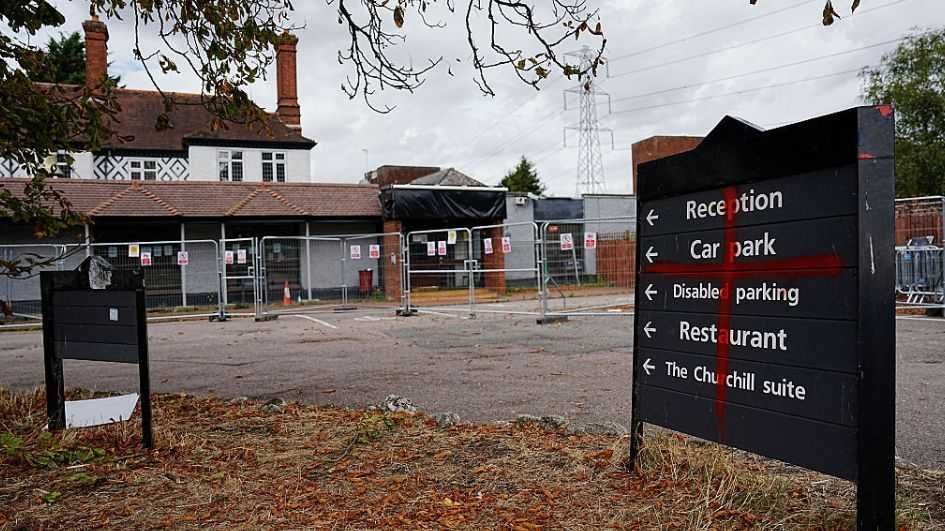
The recent real estate pivot in Hamburg-Harburg’s Inner Harbor perfectly illustrates the absurdity. Developers recently spent €60 million in combined public and private funds to transform a postindustrial harbor into a sleek waterfront destination. The crown jewel of this urban renewal project is the Niu Quay, a charming hotel aimed at middle- and upper-class visitors. It was supposed to transform the neighborhood’s dining, tourism, and nightlife. Instead, it opened with plenty of fanfare, enjoyed a remarkably brief run as a business, and then promptly shut its doors to paying guests.

Hamburg’s municipal housing agency, Fördern & Wohnen, then stepped in with taxpayer money, leasing all 340 rooms through at least the end of the year. The hotel’s primary function shifted overnight from hosting respectable tourists to serving as an all-inclusive sanctuary for incoming asylum seekers. The city’s public housing system is currently at 102.8% capacity, with hotel suites serving as an administrative workaround to avoid the optics of encampments in public parks.

Seasonal depression

There is plenty of dark humor in this arrangement. A Hamburg native, hamstrung by inflation and stagnant wages, faces an immediate dilemma. He hands over his hard-earned money that funds the municipal lease, only to be priced out of the very city his taxes are supposed to support. He buys the train ticket to the district. Upon arrival, he finds he cannot book a room at the newest hotel because the state outbid him using his own paycheck. If he wishes to enjoy a luxury staycation in his own city, he is out of luck. The state has monopolized the reservation desk and effectively nationalized the local leisure economy.

This situation is dire, and it’s not limited to the banks of the Elbe River. Across Europe, the traditional hospitality sector has morphed into a state-subsidized sanctuary network. In Britain, former Victorian seaside resorts and historic country houses have seen their traditional guest books replaced by lucrative, state-funded government contracts, effectively gutting the high streets and seasonal economies of beautiful coastal towns.

Five-star accommodations, complete with full spa access, state-of-the-art gyms, saunas, and heated indoor swimming pools, are now routinely repurposed to house one-star guests. In Ireland, where I was born and raised, village hotels that once sustained regional tourism now operate as full-time reception facilities for Africans, leaving local pub owners and shopkeepers to wonder where the actual tourists went.

RELATED: 'The ship is already sinking': Why the 'Citizen Vigilante' director wants to shock you

bollfilms.com

5-star fandango

The daily economics highlight the insanity. Last year, Hamburg spent an average of €82 ($95) per person per day just on hotel placements for migrants. Combined, the city-states of Hamburg and Berlin dump approximately €4 billion annually into housing and processing costs. That sum buys a staggering amount of high-end lodging.

While local residents cancel their own vacation plans to save money for winter heating bills, the government operates as Europe’s most aggressive luxury travel agent, booking out entire floors of freshly renovated properties without ever asking for a credit card pre-authorization.

City officials in Hamburg recently announced plans to dial back their reliance on expensive hotel leases. Directly after making that public pledge, they signed the lease for the Niu Quay.

Municipal negotiators insist they push for below-market rates, yet city agencies routinely sign off on premium room rates when state-run facilities close suddenly. A major processing center on Schlachthofstrasse shuts down this autumn, and the state's immediate solution is to upgrade the occupants to a trendy harbor hotel — proving that in public administration, failure simply buys you a better view of the marina.

Holding the bag

Everyday citizens are left holding the bag. The chairman of the local parliamentary group pointed out that small restaurants, family-run cafes, and retail shops built their entire financial models around a steady influx of tourists with plenty of disposable income. Now, the district's primary commercial center is occupied by a population being housed at the taxpayer’s expense. These men and women don't dine out on corporate expense accounts. They don’t order local services or buy goods from nearby stores. Why would they, when everything is taken care of?

This asinine arrangement shapes a migrant’s first impression of their host nation. Arriving directly into this level of comfort fosters an immediate sense of entitlement. It instills the expectation that the government will never stop providing luxury accommodations and daily provisions and that the rewards will come without any personal effort, financial contribution, or integration into local society.

European governments have created a system where the easiest way to secure a mid-tier luxury room in a major city is to abandon your documentation at the border. The working class finances the hospitality. The business class loses its customers, and the state acts as the master concierge, ensuring every stylish guesthouse stays filled at public expense.

German judge lets 8 men who gang-raped girl walk free


A German court delivered its verdict Tuesday concerning those responsible for the barbaric September 2020 gang-rape of a 15-year-old German girl in the northern city of Hamburg.

Of the eleven men initially charged in relation to the gang-rape of the minor — only four of whom were technically German — two were acquitted. Nine were found guilty. Eight got probation, not exceeding two years. Only one is headed to prison.

There has been significant backlash following the release of eight convicted rapists, prompting officials to condemn critiques of the judgment, particularly those of an "anti-migrant" nature.

What's the background?

Spiegel reported that the victim attended a party on the festival lawn in Hamburg's over 350-acre city park on Sept. 19, 2020. Four of the men dragged the girl, then intoxicated, into a bush and raped her. One of the rapists added insult to grievous injury and stole her phone and wallet.

Two other men then joined in, raping the victim.

After the initial series of attacks, the victim reportedly began stumbling away, right into the arms of yet another rapist from the pack. The rapist who intercepted her near the festival meadow was then joined by three additional rapists, who are suspected to have all similarly sexually assaulted the victim. Owing to the uncertainty about whether the final three all raped the victim, one rapist was acquitted.

The brutal gang rape lasted nearly three hours.

According to German newspaper Süddeutsche Zeitung, after her violent dehumanization, the victim managed to get onto a train. However, her aggressors, understanding that she was traveling alone, followed her. Fortunately, she fled to a group of people who "recognized her condition and called the police."

DNA evidenced implicated nine of the rapists. There was also video evidence, but Spiegel indicated that the footage was "irretrievably deleted shortly after the crime" such that neither investigators nor the court could confirm what genetic evidence made abundantly clear.

An eleventh defendant charged with aiding and abetting and filming the rape was acquitted earlier this year.

While four of the rapists were allegedly of German nationality, another four reportedly had Afghan, Kuwaiti, Armenian, and Montenegrin nationalities. The Morgenpost Verlag GmbH indicated one was born in Iran, another in Libya, and a third in Egypt. The court has not indicated the nationality of two of the rapists.

Trial

Although the rapists were ages 17 to 21 at the time of the horrific crime, they were tried in a youth court. The trial, where the court prohibited media coverage, began in May 2022 and lasted 68 days.

Ninety-six witnesses and several experts ultimately gave testimony.

Among the so-called expert witnesses was psychiatrist Nahlah Saimeh. Saimeh intimated that the gang rape may have been a means to let off some of the "frustration" that supposedly comes with "migration experiences and socio-cultural homelnessness."

Saimeh said rapists "who live on the margins of society, completely uprooted culturally, linguistically and socially" might face a "mix of emotions of anger, sadness, powerlessness, depression, fantasies of grandeur as a compensation attempt to cope with one's own misery, and drug use."

"Disordered, unprepared migration experiences and socio-cultural homelessness increase the risk of addiction and psychosis," said the so-called expert. Sex, she continued, could serve as a "means of releasing frustration and anger."

The psychiatrist further suggested that gang rape fosters identity and strengthens group feeling.

The rapists' lawyers called for acquittals, suggesting that the traces of their semen on the victim's clothing did not prove the sex was forced.

While presiding Judge Anne Meier-Goering acknowledged that "none of the defendants uttered a word of regret" during the trial, she nevertheless sentenced eight of the rapists to probation, of no more than two years.

Only one rapist, a 19-year-old, received prison time. He was sentenced to two years and nine months in prison without parole.

Matthias Jahn from the Goethe University Frankfurt told ZDFHeute that the court took into account the fact that none of the rapists had previously been sentenced to a youth prison or had been convicted of sexual offenses.

The court's decision can still be appealed.

Apparently Germany has previously been willing to lock up gang rapists. Ten migrants — eight Syrians, an Iraqi, and a Algerian who similarly said their victim had consented — were sentenced to prison in July 2020 for gang-raping an 18-year-old woman in Freiburg. The maximum prison sentence dished out was five years and six months.

Backlash

Spiegel indicated that those involved in the trial have been subjected to overwhelming criticism and hostilities since the rapists were set free.

"We are observing the hostility in connection with the proceedings and the verdict with great concern," said Kai Wantzen, a spokesman for the court.

Wantzen suggested that the hateful messages targeting Meier-Goering and others have both crossed the line into criminal offenses and "reached a new, worrying level in terms of intensity and mass."

The Hamburg Judges Association noted it was concerned over the "unbearable agitation against a colleague who had fulfilled the task assigned to her under the Basic Law in this difficult case."

Heike Hummelmeier, chairwoman of the association, said, "The calls for violence against the judge – which also have an anti-migrant background – are completely unbearable."

Arne Timmermann, a criminal defense attorney on the board of the Hamburg Working Group for Criminal Defense Lawyers, suggested that in the case of outrage over Saimeh's controversial remarks to Spiegel, she was being taken out of context.

"The psychiatrist creates a general profile of perpetrators (perpetrators who live on the fringes of society, completely uprooted culturally, linguistically and socially) and argues with racist stereotypes," said Timmermann. "The reader gets confirmation of what he always thought about 'gang rapists.'"

While the perception that Saimeh meant to write off gang rape as an opportunity to vent migrant frustrations generated outrage, it did not seem to register nearly as much anger as the court's decision to set the rapists free.

Like Blaze News? Bypass the censors, sign up for our newsletters, and get stories like this direct to your inbox. Sign up here!

'Brutal act of violence': Gunman slaughters 7 including unborn baby in German church, wounds 8


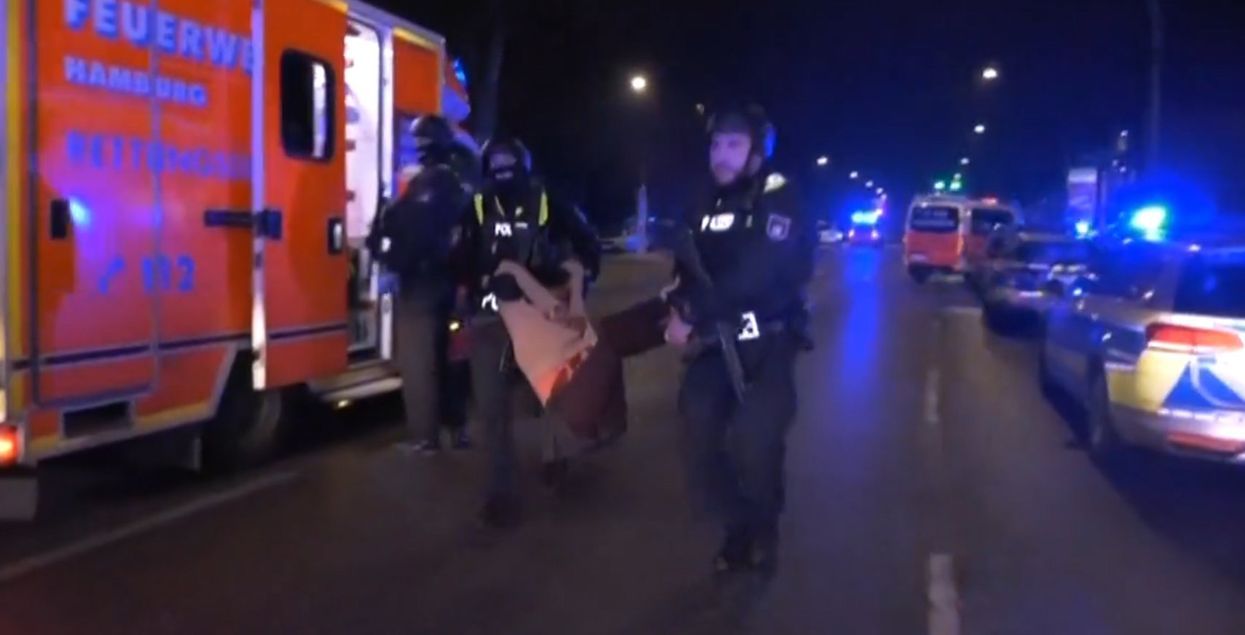
A gunman opened fire inside a Jehovah's Witnesses parish hall Thursday night in Germany's second-largest city, killing at least seven and injuring eight people.

The gunman reportedly broke into the north Hamburg church around 9:00 p.m. during a religious service that had around 50 people in attendance. Equipped with two magazines, each containing 15 bullets, and carrying an additional 20 loaded magazines in a backpack, the gunman fired over 100 rounds using a handgun, reported DW.

Police indicated that an unborn child died in the attack, but did not elaborate on whether the mother was similarly among the dead.
None
— (@)

Four men and two women between ages 33 and 60, all German citizens, are among the dead, reported DW.

Four of the injured victims have life-threatening wounds, said police.

Footage shows police taking wounded parishioners to safety (warning: graphic):

None
— (@)

Hamburg Police noted on Twitter Thursday night that they found the suspected perpetrator among the dead. He reportedly killed himself after his "rampage."

According to Andy Grote, Hamburg's state interior minister, a "large contingent" of law enforcement officers including special forces were reportedly deployed in response to the first emergency call at 9:04 p.m.

The special forces arrived at the church five minutes later and "interrupted the crime," separating the shooter from the congregation.

The Telegraph indicated the shooter may have fled upstairs to kill himself after police busted in.

A police spokesman note that upon arrival, officers found several people grievously injured and some dead, reported Reuters.

"Then they heard a shot from above, they went upstairs and found one further person," said the spokesman.

Grote underscored that the actions taken by law enforcement "saved many people’s lives."

"We heard shots," one witness told reporters. "There were 12 continuous shots. ... Then we saw how people were taken away in black bags."

The Washington Post reported that one witness, Gregor Miesbach, told a German news outfit that he had heard over 25 shots and saw a person enter the building through a window, before opening fire inside.

Officials suggested the gunman, identified as Philipp Fusz, was a 35-year-old German resident.

The Telegraph reported that Fusz was a "business coach" with no criminal history. According to his website, he was "a self-confessed European and feels comfortable in a global mindset."

Fusz was allegedly a former member of the Jehovah's Witnesses congregation.

According to DW, police received an anonymous tip alleging that Fusz was mentally deranged and should not be in possession of firearms. While authorities reportedly paid him an unannounced visit, they reportedly did not see any cause for concern.

The city's former mayor, Chancellor Olaf Scholz, described it as a "brutal act of violence."

Peter Tschentscher, mayor of Hamburg, said, "My deepest sympathy goes out to the relatives of the victims. The emergency services are working at full speed to prosecute the perpetrators and to clarify the events."

In a statement, the church said that its religious community was deeply affected by the terrible killing of their members of the faith in a Kingdom Hall in Hamburg after a church service. The statement underscored how the faithful were praying for all concerned and wishing them the power of the God of all comfort.

There are roughly 170,000 Jehovah's Witnesses in Germany and nearly 9 million worldwide. David Semonian, a U.S.-based spokesman for Jehovah’s Witnesses, stated Friday morning that members "worldwide grieve for the victims of this traumatic event."

Jehovah's Witnesses endeavor to keep separate from the world. Accordingly, they refuse to bear arms, accept blood transfusions, salute national flags, or participate in secular government. Additionally they forbid premarital sex, homosexuality, transsexuality, adultery, and drug abuse.

Government data revealed that anti-Christian hate crimes rose in Germany by nearly 150% in 2020, reported the Daily Mail. A 2021 human rights watch dog report indicated that attacks on Christians and church property have been on the rise in Europe, skyrocketing by 70% in 2019-2020.

Like Blaze News? Bypass the censors, sign up for our newsletters, and get stories like this direct to your inbox. Sign up here!