America’s Obsession With Mental Illness Is A Mental Illness
 Thank You For Sharing exposes how the mental health industry thrives off of telling people that their worst behaviors can be excused because of 'illness.'
Abdul El-Sayed, the Islamic Democrat hoping to win an open U.S. Senate seat in Michigan, has mounted a bizarre defense of a barbaric practice that he wants American taxpayers to fund: sex-rejection mutilations for children.
On "Jesse Watters Primetime" on Fox News Monday, El-Sayed — who holds a medical degree but has seemingly never put it to clinical use — repeatedly dodged when the eponymous host pressed him with difficult questions, especially regarding medical care.
'Abdul, Michigan's not going for that.'
Growing visibly frustrated with El-Sayed's evasiveness during their nearly half-hour exchange, Watters asked the Democrat flatly, "Sex changes for minors. Do you support that?"
"Look, you know, I remember having great conversations with my conservative friends about Right to Try legislation — the idea that the government shouldn't tell you what kind of health care you should have," said El-Sayed. "I just think the government shouldn't tell you what kind of health care you should have, and if you're a minor, it's between you, your doctor, and your parents."
"You want to 'try' on kids?" said the revulsed host.
El-Sayed responded, "If you disagree with that, if you disagree that health care decisions need to be made by a doctor and their parents and a patient, then I just think we agree to disagree," neglecting to mention that under Medicare for all, which he supports, the taxpayer would effectively be made complicit in any such decision.
"But you want to put government inside a clinic or a hospital selectively," El-Sayed told Watters.
RELATED: Sacrificing body parts and informed consent to the sex-change regime
Watters pressed the issue, asking El-Sayed whether he, as a doctor, "thinks it's OK for a parent to slash his kid's ding-a-ling off. You think that's OK?"
"Do you really want to have this conversation?" responded El-Sayed. "Are you circumcised?"
Watters confirmed that he was indeed circumcised, then noted that "circumcision is different than castration."
"It's a problem that you think that you get to decide what happens between a parent, a doctor, and a patient," said El-Sayed. "I'm just saying that yes, circumcision is a surgery on a kid's ding-a-ling, so if you really want to bring that up, you can. I just think you guys are really selective."
"That's wacky. Abdul, Michigan's not going for that. That is sick stuff," said Watters.
Monday night, Michigan GOP senior communication adviser Greg Manz retweeted a clip of the exchange between El-Sayed and Watters along with a statement previously given to Blaze News: "Michigan taxpayers footing the bill for abortions and irreversible gender reassignment surgeries, even for children — it doesn't get more extreme than that."
The "war room" account for Republican candidate Mike Rogers called opponent El-Sayed a "conman" who "is too extreme for Michigan."
Despite El-Sayed's insinuation that circumcision and sex-rejection surgeries are in the same ballpark, they are worlds apart.
Male circumcision simply involves the removal of the foreskin covering the tip of the penis, but so-called feminizing genital surgery — the sex-rejection procedure performed on confused male victims' genitals — is a complicated and horrific procedure.
RELATED: El-Sayed's mom worked for designated terror group that financed bin Laden ahead of 9/11: Report

According to the American Society of Plastic Surgeons, in this procedure,
The sex-rejection procedure that is performed on females is also a complicated affair that requires multiple mutilations, including the removal of skin, fat, nerves, arteries, and/or veins from other parts of the body and a lengthening of the urethra to construct a fake and nonfunctioning penis.
El-Sayed won't take a stand against such procedures, but most Americans think they're unconscionable.
According to a nationwide Gallup poll conducted in May, 57% of U.S. adults believe that "changing one's gender" is morally wrong. A 2026 SLU/YouGov Poll conducted in Missouri found that 67% of voters opposed sex-rejection medications for minors and 73% opposed sex-rejection surgeries.
A February 2025 Pew Research Center survey found that 56% of American adults want to make it illegal for health care professionals to provide minors with sex-rejection "medical care." A Washington Post-KFF poll found in 2023 that 68% of Americans oppose puberty blockers for trans-identifying kids ages 10 to 14, and nearly 60% opposed hormonal treatments for teens ages 15 to 17.
El-Sayed has repeatedly vowed to "fight to expand Medicare to cover all necessary health care" and "extend it to every single American from cradle to grave without premiums, copays, or deductibles." He has acknowledged that this scheme will not only require higher taxes but would pay for so-called "reproductive rights" and "gender-affirming care."
El-Sayed's campaign did not immediately respond to Blaze News' request for comment.
Like Blaze News? Bypass the censors, sign up for our newsletters, and get stories like this direct to your inbox. Sign up here!
The foundation created and led by Prem Reddy is in a bit of hot water.
Reddy's Prime Healthcare Foundation owns and operates a hospital in Mission, Texas, called Mission Regional Medical Center. On July 7, Republican Gov. Greg Abbott directed the Texas Health and Human Services Commission to launch an investigation into Mission Regional over allegations that it engaged in a birth tourism scheme.
'Federal prosecutors have been directed to "bring illegal birth tourism to an end" by prosecuting both those who engage in such conduct and those who solicit it.'
Abbott accused Mission Regional of advertising "BIRTH PACKAGES IN SOUTH TEXAS" in foreign countries in "an apparent effort to profit from securing United States citizenship for their children."
"American citizenship is not for sale, and Texas will not permit our health care system to be used as a magnet for birth tourism," stated the governor.
In its subsequent letter to Texas Attorney General Ken Paxton, the Texas Health and Human Services Commission highlighted reports that billboards promoting the alleged scheme were spotted in Mexico. The billboards reportedly referred would-be birth tourists to "havemybabyinTexas.com."
While the website appears to have been taken down, an archived version lists two hospitals as participants in the alleged scheme: Mission Regional and Knapp Medical Center in Weslaco — another Texas-based hospital owned by Reddy's foundation.
RELATED: Justice Department STRIPS citizenship from female migrant who helped run DISTURBING business
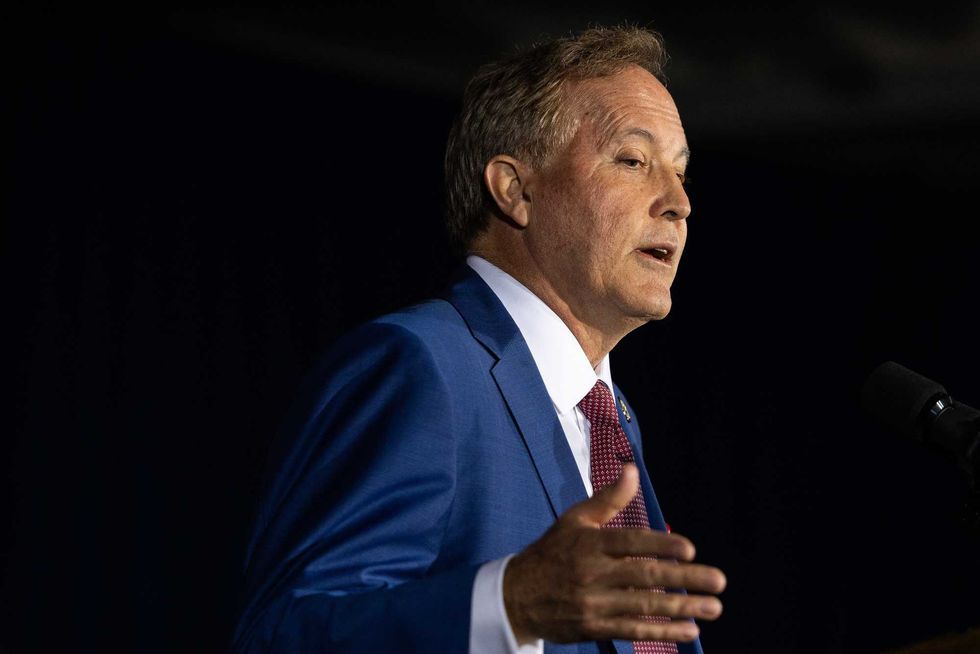
Karen Ray, chief counsel for the Texas Health and Human Services Commission, said in the letter to Paxton, "Such birth tourism schemes not only exploit the extraordinary privilege of American citizenship, but also frequently involve 'lies about the purpose or duration of one’s travel to the United States.'"
"Accordingly, federal prosecutors have been directed to 'bring illegal birth tourism to an end' by prosecuting both those who engage in such conduct and those who solicit it for visa fraud, wire fraud, money laundering, misuse of identification, identity theft, and health care fraud," continued Ray. "While the allegations concerning Mission Regional Medical Center and Knapp Medical Center may not be identical to the schemes described above, they are equally troubling."
The HHSC referred the matter to Paxton, who confirmed on July 29 that he was investigating the two hospitals.
"My office will investigate any suspected illegal birth tourism schemes in Texas, including the operations of two South Texas hospitals that appeared to advertise birth tourism on a billboard near the border," said Paxton. "My office will continue to hold accountable any entity that knowingly facilitates fraud in our state."
Mission Regional chalked up the controversy to a misunderstanding.
A spokesman for the hospital said in a statement to Blaze News, "We recognize that a very limited marketing campaign may have caused unintended misunderstanding and was immediately discontinued. The campaign was meant to highlight services available to the communities we serve and was never intended to encourage any unlawful activity."
The spokesman noted that the hospital's supposedly "very limited campaign consisted of only two billboards located near the hospital and a website that generated very little patient volume, produced no financial benefit to the hospital, and was only intended as a service for the community, which is one of the most medically underserved regions of Texas."
"The hospital does not support or facilitate unlawful activity and has never operated its obstetric program with the intent of attracting individuals who are unlawfully present in the United States, promoting birth tourism, or encouraging travel to the United States for the purpose of obtaining U.S. citizenship for a child," said the spokesman.
According to Mission Regional's spokesman, Knapp Medical Center "did not actively participate in this marketing campaign with no involvement since 2024 and only had two elective deliveries of 684 deliveries this year."
Blaze News did not immediately receive a response from Knapp Medical Center or Paxton's office.
On July 21, Abbott issued an executive order tasking relevant state agencies with investigating claims of birth tourism schemes within the Lone Star State's health care industry. His office noted that "enforcement actions include revoking or suspending licenses, prohibiting participation in state contracts, denying state benefits, or pursuing other enforcement action under state law."
The EO references the two Prime Healthcare Foundation hospitals.
The scandal is a bad look for the foundation, as well as for its leadership — particularly for Reddy, its CEO, and Reddy's daughter, Kavitha Bhatia, who serves as president and chair of the Prime Healthcare Foundation.
In addition to receiving the Healthcare Lifetime Achievement Award from the Indo-American Chamber of Commerce, Reddy was presented with the Joseph R. Biden Lifetime Achievement Award in 2024.
Reddy's organization noted at the time that the award, which was part of the President's Volunteer Service Award program and given to certain individuals with a minimum of 4,000 hours of documented volunteer service, "recognizes Dr. Reddy's exceptional commitment and significant and sustained contributions to ensuring that communities have access to quality health care."
Reddy received the award even though he and his organization had in previous years reportedly paid over $100 million to the government as part of three separate federal civil settlements regarding alleged false claims to Medicare.
President and Jill Biden also posed for a photo with Reddy and Bhatia in 2022.
The founder of the scandal-plagued foundation isn't the only one in his family with a tight relationship with Democratic power.
According to Bhatia's bio on the Prime Healthcare website, she is a member of the Democratic Congressional Campaign Committee leadership circle for House Minority Leader Hakeem Jeffries (N.Y.) and California Rep. Ro Khanna (D).
Reddy and Bhatia were both born in India. Neither responded to Blaze News' request for comment.
Like Blaze News? Bypass the censors, sign up for our newsletters, and get stories like this direct to your inbox. Sign up here! A recent KFF story bemoans the fact that states might not get to use the Medicaid program to engage in more questionable cash grabs.
 Democrats inflate spending on government programs without anyone noticing and then attack Republicans for 'cuts' when they attempt to scale back these stealth spending increases.
 A new HHS report details allegations of deceptive billing practices, questionable diagnoses, and financial incentives surrounding so-called transgender 'medicine.'
 Attorney General Todd Blanche has said he will re-examine the law twisted by Biden's DOJ to mail abortion pills.
 The Centers for Disease Control and Prevention (CDC) in October will start recognizing detransitioning — reversing gender “transition” mutilation — in official diagnosis codes for purposes of insurance billing and data collection. Vice President J.D. Vance last week called for the jailing of medical professionals fraudulently using medical billing codes to get insurance to cover […]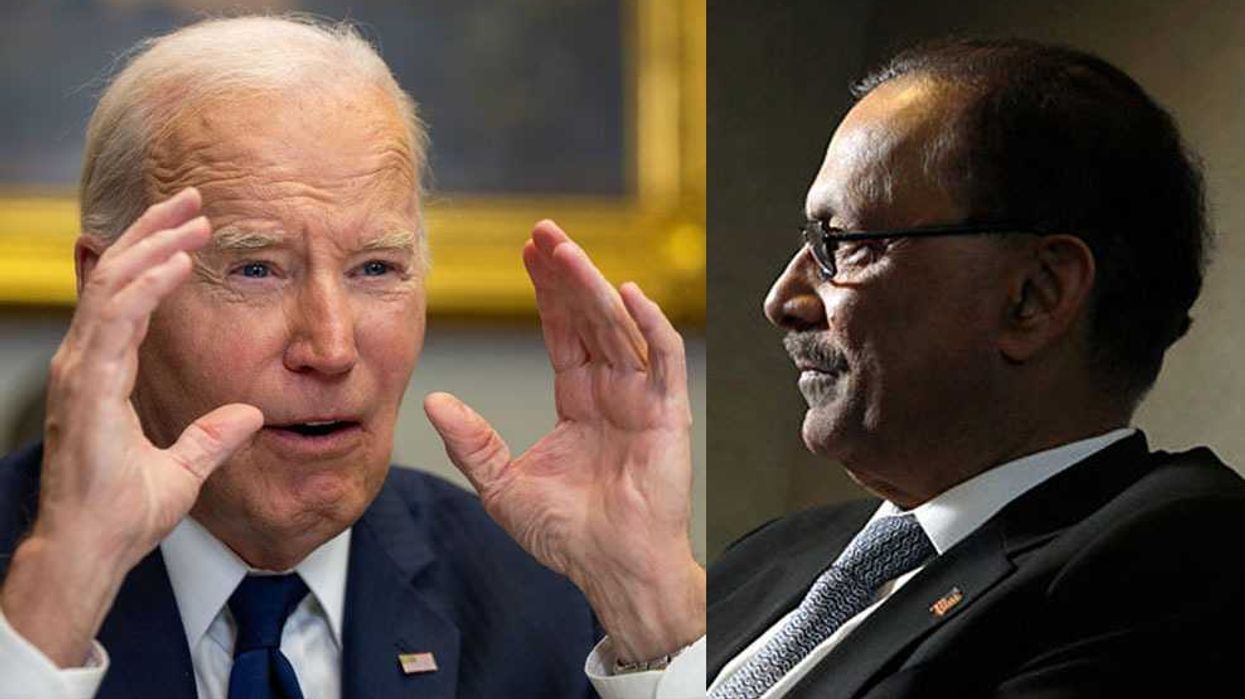
 www.theblaze.com
 thefederalist.com