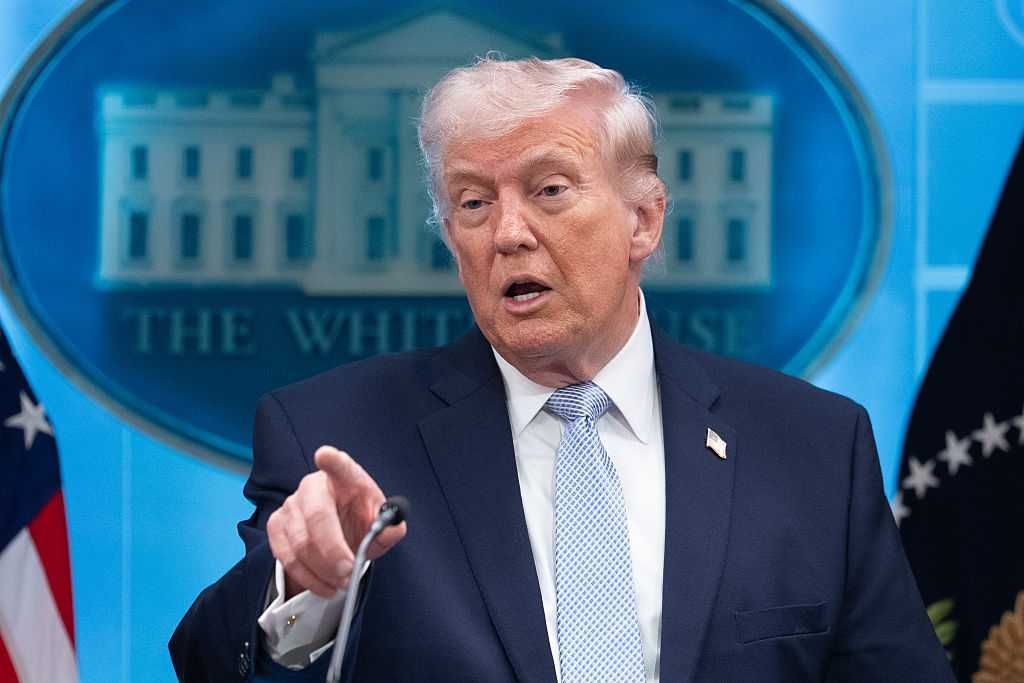
Trump has delivered on rural health care


Rural health care in America faces a host of chronic challenges: high costs, limited access, and aging infrastructure. For millions of families across the heartland, these problems aren’t abstract — they determine whether patients can see a doctor, reach a hospital, or receive timely care close to home.

By expanding flexibility, encouraging innovation, and meeting rural communities where they are, policymakers have begun to confront the unique realities of rural health care.

More than 60 million Americans — nearly one in five — live in rural areas where patients routinely travel long distances only to find fewer doctors, hospitals, and clinics available to serve them.

Under-resourced communities face over-sized health challenges. Nowhere is this more evident than in rural America, where higher rates of chronic disease, premature mortality, and addiction persist compared to the rest of the country.

In recent months, the Trump administration and Congress have advanced a set of reforms — largely overlooked in the national debate — that directly address long-standing disparities and structural weaknesses in rural health care, and they could meaningfully strengthen care delivery in these communities, improve health, and save lives.

The most significant of these efforts is the Rural Health Transformation Program, established last year in President Trump and the Republican Congress’ signature One Big Beautiful Bill Act. This $50 billion program represents the largest investment ever dedicated specifically to rural health, far exceeding the scale of prior grant programs. States that receive awards can use these resources to modernize and stabilize their rural health systems.

The program allows states to invest in innovative care models tailored to rural realities — whether expanding outpatient capacity, strengthening the health care workforce, or upgrading aging facilities. Instead of imposing a one-size-fits-all approach, the program gives states the flexibility to design reforms that reflect local needs and constraints.

Although media attention has shifted elsewhere, the White House and congressional leaders should continue to emphasize the long-term importance of this investment. The program addresses a foundational weakness in America’s health system and delivers tangible support to rural communities that have too often been left behind.

As part of the recently enacted FY 2026 appropriations legislation, Congress also extended Medicare telehealth flexibilities through December 31, 2027, delaying a return to statutory barriers that once limited access to telehealth services. Telehealth allows patients to connect with specialists, receive mental health services, and manage chronic diseases without traveling hours for an appointment.

In communities facing persistent provider shortages, telehealth has become not a convenience but a lifeline — a bridge over miles of empty road, connecting rural patients to care that would otherwise remain out of reach.

The FY 2026 appropriations legislation also reauthorized the Acute Hospital Care at Home initiative, which allows eligible patients to receive hospital-level care in their own homes. This approach reduces costs, eases pressure on rural hospitals with limited capacity, and improves patient satisfaction. For small hospitals struggling to keep beds staffed and doors open, Acute Hospital Care at Home offers a practical way to deliver high-quality care while preserving local access.

RELATED: Trump’s economic numbers look good so far, but you wouldn’t know from reading the news

Douglas Rissing / Getty Images

Finally, although Congress has not yet enacted it into law, lawmakers are working to reauthorize the Rural Health Care Services Outreach Program. This program supports community-based efforts to expand access to care, strengthen coordination among providers, and address persistent service gaps. Its grants help rural health systems collaborate across institutions and tailor solutions for populations that too often fall through the cracks.

Taken together, these reforms do not promise a quick cure — but they do offer a realistic treatment plan. They don’t strengthen rural health care because it’s easy; they make it easier because rural health care must be strong. While these efforts will not eliminate every challenge rural communities face, they are designed to deliver tangible improvements that deserve recognition.

By expanding flexibility, encouraging innovation, and meeting rural communities where they are, policymakers have begun to confront the unique realities of rural health care. Yet as the news cycle moves on, these achievements risk being overlooked. Policymakers in both Congress and the executive branch should resist the urge to rush to the next challenge and instead highlight the significance of these steps in the right direction.

Editor’s note: This article was originally published by RealClearHealth and made available via RealClearWire.

As legislative season begins, lawmakers should be careful about PBM 'reform'


As state lawmakers begin to return to office this week, a number of issues will be clamoring for their attention. One of the most important — but perhaps overlooked due to its technical and less attention-grabbing nature — is pharmacy benefit manager reform.

Reform-minded leaders should work with PBMs, leveraging their market power to achieve lower costs for consumers.

Last year, Arkansas became the first state in the nation to ban PBMs, and other states heavily regulated the industry. These efforts are expected to continue in 2026, even as courts raise constitutional questions about the Arkansas law and regulations in Iowa.

I’m a health care broker, so I know PBMs pretty well. They’re easy targets because of the complex process by which they work, as well as the pharmaceutical industry’s years-long campaign to put blame for drug pricing on the industry.

At its core, PBMs’ basic function is straightforward. Because they represent hundreds of thousands or even millions of patients who cannot negotiate with drugmakers on their own, PBMs are able to use their size as leverage to push for lower prices. When the big players reject a high price, a manufacturer has to decide whether it wants to lose access to those patients.

That negotiating leverage also keeps drugmakers from unilaterally dictating the cost of medications, from commonly used drugs like insulin to newer medications like Zepbound and Wegovy. For example, companies gave consumers a New Year’s present of increasing prices for 350 products — but the final costs to patients won’t be known until PBMs have their say.

U.S. health care pricing can be confusing, with even seasoned observers getting lost amid the jargon of rebates, formularies, and spread pricing. Critics often accuse PBMs of adding unnecessary layers of administrative cost or of exaggerating savings. Some of these concerns are legitimate, and the industry’s lack of transparency makes it easy for critics to portray PBMs as the villains keeping patients from being able to afford the medications they need.

But this criticism is better leveled at the drugmakers. They often insist they cannot lower prices because of research costs or regulatory burdens. Yet when Eli Lilly, the first trillion-dollar drug company, found itself boxed out of the CVS network, it suddenly found a way to make its products available more cheaply.

On December 1, drugmaker Eli Lilly cut the consumer cost of its popular weight-loss injection Zepbound, bringing its prices in line with competitor Novo Nordisk’s popular and recently reduced drug Wegovy.

Lilly’s move should be instructive for state and federal lawmakers because it came after Novo Nordisk agreed to lower prices of Wegovy under pressure from pharmacy giant CVS. CVS — through its PBM division, CVS Caremark — had initially tried to negotiate with Lilly, but the drugmaker refused to budge on its pricing, leading CVS Caremark to stop offering Zepbound to clients. But once Novo Nordisk agreed to reduce the price of Wegovy, Eli Lilly suddenly changed its tune.

RELATED: Taxpayers are funding California’s Medicaid shell game

Photo by Justin Sullivan/Getty Images

Lawmakers looking to reduce prescription drug prices should take note.

Like all industries, PBMs have their flaws, but this case showed CVS forcing a needed price correction. And it should be front of mind for lawmakers who, yes, should insist on greater PBM transparency, but also mustbe aware of both the constitutional limitations on so-called “reforms” and how overregulating PBMs will impact constituents’ drug prices.

As lawmakers look for solutions to Americans’ record-high health care costs, they should realize that any cost-reduction effort must include prescriptions — and that means working with PBMs. Reform-minded leaders should work with PBMs, leveraging their market power to achieve lower costs for consumers while insisting on price transparency and other reforms that reinforce how PBMs are using fundamental market principles to keep drug companies from causing even more harm to Americans’ finances.