The taboo conservatives refuse to confront
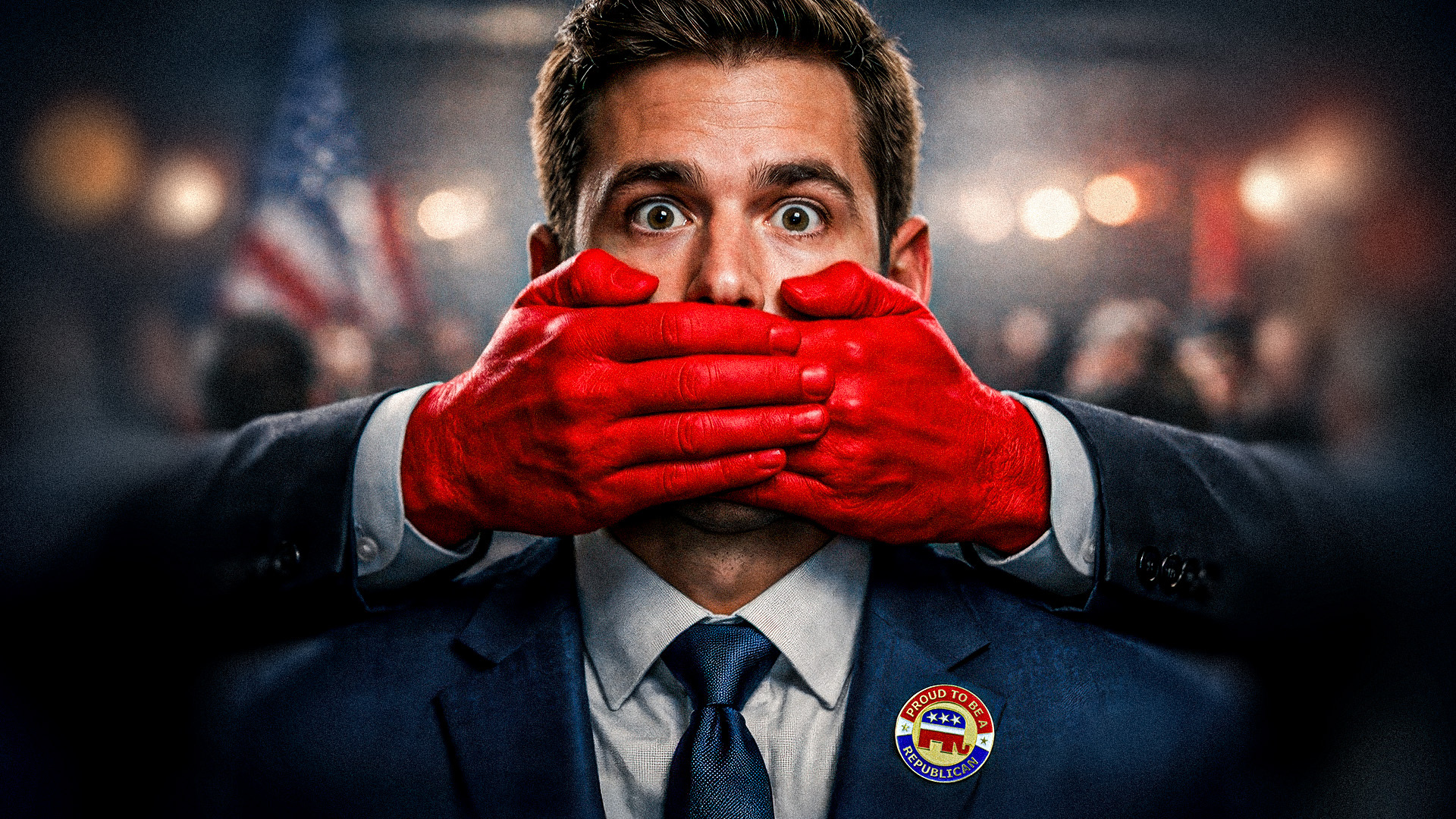


There has been a lot of panic, among the conservative commentariat especially, over the growing desire among younger white Americans to receive representation as a collective political bloc. At some level, that reaction is understandable. Race is not the healthiest fixation when it comes to identity.

But the way conservatives have responded to this trend is deeply misguided.

The only way to lower the salience of race is to stop importing ethnocentric cultures and to eliminate political carve-outs for minority communities already here.

For decades, whites have watched every other group in America successfully demand political action as a bloc from both the left and the right. Democrats build their entire coalition around racial grievance, but even conservatives regularly address the needs of minority communities as collective groups. Despite their hostility to “identity politics,” Republicans eagerly cater to it — just not for their core constituency, white Americans.

If conservatives genuinely worry about the rise of white identitarianism, they should stop lecturing young white Americans and start addressing the behavior of the communities they currently pander to.

First, it helps to define terms. “Race” and “ethnicity” are often treated as interchangeable, but they are not. Race is a broad macro category, while ethnicity operates at a more granular level. Swedes, Italians, Irish, and French are all considered white. Ethiopians, Nigerians, African Pygmies, and Somalis are all considered black.

These categories matter, but ethnos is often a more organic and useful way to understand group behavior.

Ironically ethnocentrism varies widely across populations and tends to be particularly low among white Europeans and their descendants. A society composed primarily of people of European extraction, even with some immigration, tends to be relatively tolerant and open. New arrivals who may initially carry ethnocentric instincts are less able to sustain them when they lack a large co-ethnic base.

Assimilation follows naturally under those conditions.

Identity is also not binary. It consists of nested loyalties that rise or fall in importance depending on scale. In small societies, tribe or ethnos dominates. As civilizations expand and absorb new members, identity shifts toward broader categories — often religion or nationality.

White Americans once lived in sharply defined ethnic enclaves. Irish, Italian, Dutch, and German neighborhoods were common. In some cases, the U.S. government actively broke up German-language communities, forcing children into English-speaking schools. Over time, those European ethnoses dissolved into a shared American identity.

That process breaks down when the government imports large, concentrated populations that share a common ethnicity and have not gone through the same scaling process. These groups face no incentive to abandon ethnocentrism because they can successfully deploy it. Co-ethnics ensure access to jobs, education, marriage, and community without assimilation.

In a system where one group must compete on pure individual merit while others are allowed to operate on collective ethnocentrism, tribalism wins. Once it proves effective, the salience of race explodes. When young whites see every other group using the winning strategy, the question becomes unavoidable: Why are we the only group forbidden from doing so?

The problem is not just that tribalism works. The system has been actively rigged against white males.

RELATED: How anti-fascism became the West’s civil religion

Blaze Media Illustration

Jacob Savage’s recent article “The Lost Generation” detailed the extent to which universities, media institutions, and corporations have systematically excluded white men. The piece gained attention partly because it came from the left, but conservatives like Jeremy Carl and Heather Mac Donald have been warning about the same dynamics for years.

Whites — especially young white men — are barred from advocating as a group. At the same time, they are punished as a group. Telling them identity politics is immoral while allowing explicit anti-white discrimination guarantees a predictable response.

The conservative establishment’s answer has been a vague denunciation of ethnocentrism that somehow applies only to whites. Conservatives pay lip service to opposing identity politics while courting explicitly racial organizations. They speak seriously to black, Indian, Hispanic, and Jewish advocacy groups and treat their leaders as legitimate representatives.

Donald Trump recently hosted the American Hindu-Jewish Congress at Mar-a-Lago to discuss combating bigotry. You will not see a dinner honoring representatives of a “White American Congress” to discuss anti-white discrimination — despite overwhelming evidence that such bias is widespread.

That double standard is too obvious for young whites to ignore forever.

If conservatives were serious about halting the rise of collective white identity politics, they would stop scolding young whites for noticing reality. They would confront systemic bias in academia and corporate hiring. To its credit, the Trump administration has signaled an intent to act — but far more is required.

RELATED: Culture’s great subversion machine has broken down at last

Blaze Media Illustration

A serious response would include an immigration moratorium and aggressive prosecution of ethnic cartels. And yes, every tech department staffed entirely by one ethnic group is not evidence that “there were no qualified white applicants.” Conservatives should lecture blacks, Indians, Hispanics, and Jews about ethnocentrism with the same intensity they reserve for whites.

If for no other reason, whites actually vote Republican. Most of the other groups do not.

If conservatives truly fear the rise of collective white politics, they should reduce the number of ethnocentric populations young whites are forced to compete against on pure merit. The only way to lower the salience of race is to stop importing ethnocentric cultures and to eliminate political carve-outs for minority communities already here.

In short, show young whites they can succeed without tribalism by actually punishing the tribalism practiced by everyone else. Summon the courage to confront the behavior you claim to fear — in the groups already practicing it.

Trump to DC: Crime is a choice


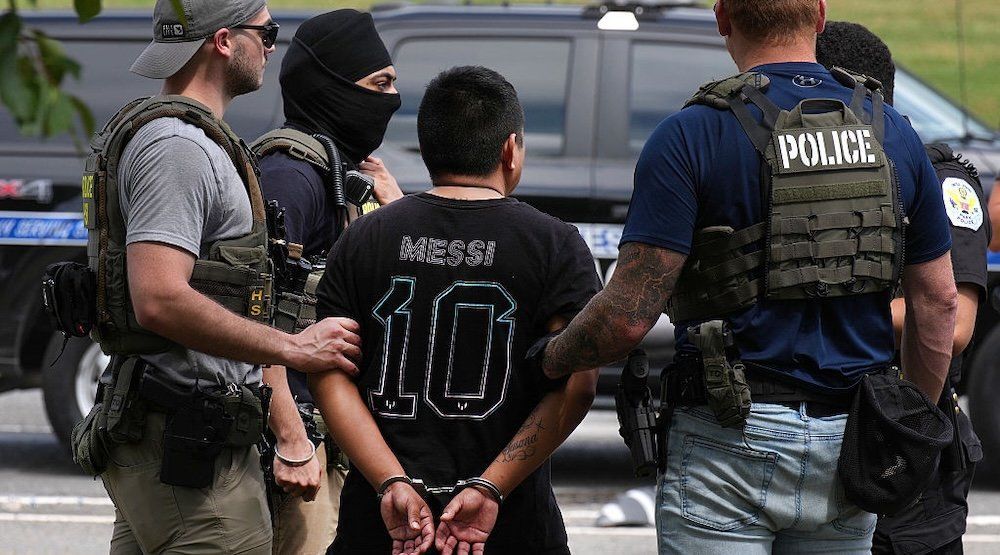
President Trump announced Monday that he will federalize control of law enforcement in Washington, D.C. The move follows his threat to act after a brutal attack on a DOGE staffer who tried to defend a woman during a carjacking. National Guard troops will supplement D.C. Metro Police in an effort to quell violent crime. Americans are tired of excuses for why their cities feel dirty and unsafe when we already know how to fix them. Crime is a policy choice, and Trump has taken decisive action with a promise to restore law and order to the nation’s capital.

The United States is the most powerful nation on earth, and Washington is its imperial capital. History shows the state of the capital often mirrors the health of the civilization. The comparison is not flattering. In Japan or Singapore, a woman can walk alone at night without fear. In Washington, ordinary people are routinely harassed, assaulted, and robbed. Everyone knows why this disparity exists and how to solve it, but political correctness has made the truth unspeakable.

To succeed, Trump must ignore the inevitable accusations of racism and authoritarianism and focus on results.

Ideally, crime declines when a virtuous population maintains strong cultural norms and self-control. When virtue isn’t enough, the state must deliver swift and certain justice. If laws go unenforced, honest people quickly learn they are fools for obeying them, while marginal characters drift toward crime. Arrests must be followed by real penalties. As Rudy Giuliani proved in New York with broken-windows policing, consistent enforcement of even minor laws dismantles a culture of permissibility and encourages respect for the rules.

If we know regular enforcement and strong penalties work, why do Democrats choose the opposite in the cities they run?

Their answer always returns to racism. Crime data shows black Americans commit a disproportionate share of crime. Enforcing the law honestly will result in more black arrests and incarcerations. Neither Democrats nor most Republicans will discuss this fact or ask the black community to confront it. Instead, they declare the system racist by design.

Once the system is branded racist, “criminal justice reform” becomes the only solution. Because the underlying causes go unaddressed, disparities persist. To make the system look less racist, enforcement is scaled back. Heather Mac Donald calls this the “Ferguson effect”: Police who fear becoming national pariahs simply stop policing black neighborhoods. Law enforcement retreats from the areas where crime is highest. Officers are told to overlook minor crimes to lower minority arrest rates. Prosecutors cut deals, and early release programs proliferate to improve incarceration statistics. This is exactly the formula for more crime and less safety.

As a former crime reporter, I’ve had candid conversations with officers about this. Police know where most crime happens and who commits it, but politics make addressing it a nightmare. Officers say they sometimes ignore domestic violence or burglary calls in certain neighborhoods. They want to go home to their families, not become nationally infamous for answering the “wrong” call. The number of incarcerated black Americans may fall, but deaths from traffic accidents to homicides rise. Policies enacted “for” the black community make life more dangerous for them — and for everyone else.

RELATED: DC’s crime problem is much worse than you think

When asked about the chain of command under Trump’s initiative, D.C. Police Chief Pamela Smith, a black woman, replied, “What does that mean?” Not reassuring. It suggests that in many cities, police chiefs are chosen less for competence than for their DEI value to activists. If the officials charged with maintaining public order under the dictates of gay race communism cannot grasp basic law enforcement concepts, they will fail.

Trump has taken on a complicated challenge. Restoring order may be straightforward in theory, but the politics are treacherous. To succeed, he must ignore the inevitable accusations of racism and authoritarianism and focus on results. In an era when most politicians flee responsibility, Trump is embracing it. If he succeeds, he will restore safety and dignity to the capital and create a model that could shame other cities into action.

Some compare Trump’s move to Nayib Bukele’s crackdown in El Salvador. The most important lesson from that comparison is that success speaks for itself. If Trump’s takeover produces a radically safer capital, Americans will demand the same in their own cities.

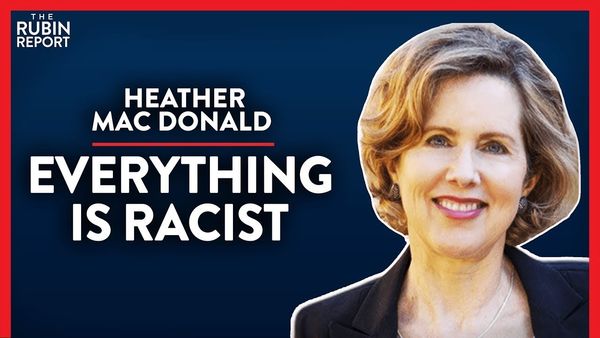
Heather Mac Donald warns felons will use California's 'systemic bias' defense to avoid accountability


Convicted felons may soon be pouring out of prison and onto California's already crime-ridden streets thanks to a law ratified in September 2020 by Democratic Gov. Gavin Newsom.

Manhattan Institute fellow and essayist Heather Mac Donald noted in the Wall Street Journal Monday that because of AB 2542, the so-called California Racial Justice Act, "every felon serving time in the state's prisons and jails can now retroactively challenge his conviction and sentencing on the ground of systemic bias."

"To prevail, the incarcerated prisoner need not show that the police officers, prosecutors, judge or jurors in his case were motivated by racism or that his proceedings were unfair," wrote Mac Donald. "If he can demonstrate that in the past, criminal suspects of his race were arrested, prosecuted or sentenced more often or more severely than members of other racial groups, he will be entitled to a new trial or sentence."

Around the time of its ratification, Newsom suggested that Democratic Assemblyman Ash Kalra's AB 2542 demonstrated that California "is dedicated to leading the nation on confronting and addressing systemic injustice."

The governor's office noted further that AB 2542 was a "countermeasure to address a widely condemned 1987 legal precedent established by the U.S. Supreme Court in the case of McCleskey v. Kemp."

Leftists apparently regard the precedent set in McCleskey as problematic because it "has the functional effect of requiring that criminal defendants prove intentional discrimination when challenging racial bias in their legal process."

The need to cite actual proof, according to the governor's office, amounts to "a high standard ... almost impossible to meet."

California's 2020 law, alternatively "establishes a new state cause of action that simply presumes that the justice system is biased, obviating the need to show individual discriminatory intent," wrote Mac Donald.

AB 2542 amended the state's penal code to enable convicts to challenge a criminal conviction if they can show that

  • Anyone involved in their case, including judges, attorneys, police, and jurors, "exhibited bias or animus towards the defendant because of the defendant's race, ethnicity, or national origin";
  • "Race, ethnicity, or national origin was a factor in the exercise of peremptory challenges," even in the absence of "purposeful discrimination";
  • The defendant received a more serious charge or conviction than similarly situated defendants of other other races or national origins; or that
  • The prosecution "more frequently sought or obtained convictions for more serious offenses against people" of the defendant's race and national origin.

In practice, this will help liberate felons or help suspected criminals dodge greater accountability.

Russell Austin has been accused of fatally slashing a pregnant 25-year-old woman, Erica Johnson, and killing her unborn child. Mosby, the head of a robbery-prostitution ring previously found guilty of multiple murders, is on the hook for the gang-related killing of Darryl King-Divens.

Facing the death penalty in Riverside County, Austin and Mosby both filed challenges under the California Racial Justice Act in order to avoid a "death qualified" jury, claiming black defendants were 14 times more likely to have death sentences brought against them than white defendants in similar cases.

Mac Donald indicated that critical details can be glossed over in the racial comparisons advanced in such challenges.

"If a defense expert seeks to show that defendants from one racial group were sentenced more harshly in the past than defendants of other races, he can ignore criminal history in composing the comparison groups," wrote Mac Donald. "He can ignore the heinousness of the crimes committed by the two groups. As long as they were charged under a similar statute, they will be deemed sufficiently comparable to build a case for prosecutorial racism."

Despite the clear potential for abuse, Claudia Van Wyk, a senior staff attorney at the ACLU Capital Punishment Project suggested in January that cutting suspected killers like Austin and Mosby slack over the perception of "systemic racial bias" is "exactly how the California Racial Justice Act is meant to work."

Mac Donald underscored that this scheme, which defense lawyers have already rushed to exploit "will produce unequal justice for victims as well as offenders."

"Racial disparities in prosecuting and sentencing reflect disparities in criminal offending," noted the Manhattan Institute fellow. "In Los Angeles, blacks are 21 times as likely as whites to commit a violent crime, 36 times as likely to commit a robbery, and 57 times as likely to commit a homicide, according to police department data."

Mac Donald highlighted how this data is the result of reports from victims and witnesses who are disproportionately black.

Ultimately, victims like Erica Johnson and Darryl King-Divens may be denied justice in the name of "racial justice."

Like Blaze News? Bypass the censors, sign up for our newsletters, and get stories like this direct to your inbox. Sign up here!