America Is Still Worth Giving Thanks For

For the frustrated and disillusioned on the right, here are four foundational reasons to give thanks for this great country.

Did science just accidentally stumble upon what Christians already knew?


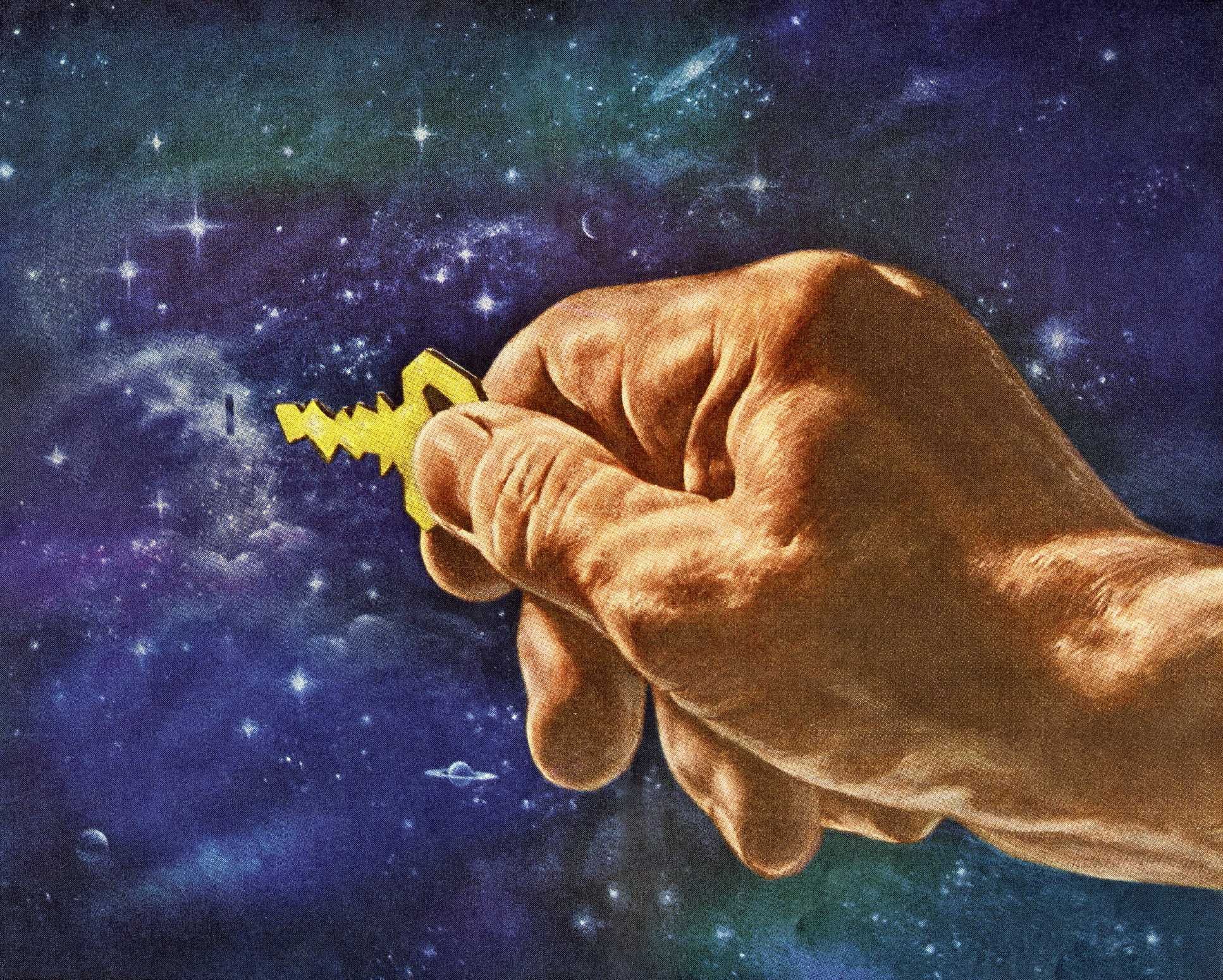
A new study titled “Architecture of Near-Death Experience Spaces” has caught the attention of both the empirics and the eternalists, because it’s not often that a study about dying reads like a map to heaven.

The researchers asked participants who had clinically died and been resuscitated not to describe their near-death experiences in words, but to draw them. What emerged were recurring shapes — cones, ellipses, radiant fields — across people from entirely different cultures.

As the apostle Paul wrote, 'Now we see through a glass, darkly.' And science, for once, seems to glimpse the flicker of eternity.

But here's the kicker: These weren’t the random doodles of oxygen-starved brains. They were geometric symphonies, ordered and elegant. It was as if consciousness, freed from the flesh, had glimpsed the very scaffolding of creation itself.

For a Christian, this is profound. Scripture has long told us that creation is not chaos but design. “The heavens declare the glory of God,” wrote the psalmist (Psalm 19:1), and here, perhaps, the dying do, too. When the heart stops and the veil lifts, what appears before the eyes of the departing may not be fantasy but revelation — a structure that feels deliberate, like architecture drawn by divine hands.

Dr. Jeffrey Long has spent decades collecting such glimpses. An oncologist by trade and founder of the Near-Death Experience Research Foundation, Long has catalogued over 5,000 accounts from people who claim to have died and returned. His findings echo the new study’s quiet suggestion: There’s order here.

Across cultures, creeds, and continents, the same themes recur.

Consciousness separates from the body. A light appears — intelligent, loving, unthreatening. A panoramic life review follows, often described as instantaneous yet complete. Time dissolves and peace floods in. And then, inevitably, a choice or command to return.

These aren’t vague platitudes. They are astonishingly consistent. Whether the subject was Christian, atheist, or vaguely spiritual, the pattern is the same.

RELATED: Science's God-denying narrative just got crushed again

Pobytov/iStock/Getty Images Plus

Long’s data also reveals what happens after the return. Many report their faith deepening not from glimpses of pearly gates, but from meeting something that made sense on a cosmic scale. Others who had never believed before find themselves suddenly convinced that life does not end in nothingness. Across thousands of testimonies, moral clarity re-emerges like a melody.

Long told me his work has been called everything from pseudoscience to prophecy. But to him, the evidence points to something beyond the brain. When the same story emerges from a Buddhist in Nepal and a Baptist in Tennessee, argument starts to feel like denial.

When I reached out for comment about the link between near-death experiences and religious faith, Long directed me to his archive of testimonies — hundreds of raw, personal accounts from people who have stood at the edge of eternity and come back changed. They speak of a presence no doctrine can fully capture and a peace that science could never explain.

It’s the same paradox Christ left us with: The kingdom of heaven, near enough to touch, yet utterly beyond our comprehension.

Long shared with me four short lines from his archive, chosen because they capture what even theology struggles to say.

  • “They said the energy of love is a good reason to return,” wrote Galadriel K, who described her experience with a calm certainty that makes disbelief feel naive.
  • “It’s an unconditional love. I know Him. I met Him. … I met Jesus,” said Sharlene S, her words somewhere between testimony and awe.
  • “When I got close enough to the Light, I felt unconditional love and time stopped,” recalled Judy G, as if describing an emotion too large for language.
  • And then there was Charles T, whose final line needs no interpretation: “I knew what the source of that Light was. … It was Jesus.”

There’s something disarmingly simple in those statements — no grand theories, no intellectual gymnastics. Just awe. They testify to a presence that makes earthly distinctions fade. All melt away before the presence that burns through every pretense.

Critics will, of course, roll their eyes. They’ll talk about cerebral starvation, neural fireworks, the brain’s desperate attempt to comfort itself as it shuts down. But these explanations sound increasingly like the dying gasps of materialism. If consciousness were merely chemical, it shouldn’t behave so coherently at the brink of breakdown. It shouldn’t script the same story in so many minds.

There’s a dark humor in watching science stumble, wide-eyed, into what the faithful have always known. The modern world has spent centuries insisting that heaven is a myth, the soul a silly superstition, and death nothing but a switch flipped off.

In an age when every mystery is monetized and every miracle gets fact-checked by faith-phobic bureaucrats, it’s oddly comforting to know there are still places where no human instrument can reach.

Yet now, with the help of MRI machines and EEG scans, researchers are rediscovering the same truths that Sunday-school children sing. Progress, it seems, has come full-circle — proof that even unbelief can only wander so far before bumping into God.

To the Christian reader, these findings are not a challenge but a confirmation. The consistency of these visions, their moral coherence, their geometrical appeal — all resonate with a faith that has always held the visible world to be only the shadow of the invisible.

As the apostle Paul wrote, “Now we see through a glass, darkly” (1 Corinthians 13:12). And science, for once, seems to glimpse the flicker of eternity.

Of course, it would be wrong to make doctrine out of data. Faith is built in pews, not in peer reviews. But it’s just as foolish to ignore what so many have seen. In an age when every mystery is monetized and every miracle gets fact-checked by faith-phobic bureaucrats, it’s oddly comforting to know there are still places — perhaps the oldest place of all — where no human instrument can reach.

In that space between pulse and paradise, geometry gives way to grace. People describe radiant fields. But what they really mean is radiance itself — love, light, life. The shapes may differ, but the direction is always the same: toward something higher, brighter, unending.

Maybe that’s what the dying have been trying to tell us all along: that death is not the end of knowledge but the beginning of understanding. And no matter how mighty our machines or how certain our reason, humanity — from Maine to Manila — keeps sketching its diagrams of eternity: cones, ellipses, celestial plains.

Each line is a breath from beyond, proof that what we call death is only design, still unfolding.

Trump Is Right: Nothing He Does Will Get Him Into Heaven — But Jesus Can

Trump’s confession, however accidental, touches the one truth that no empire can spin: Eternity in heaven or hell is not negotiable.

Trump's heaven question shocks critics — but they missed the real story


President Donald Trump is no stranger to dropping jaws and turning heads with his rhetoric, bombastic commentary, and sometimes shocking statements.

While these reactions are typically sparked by the comical names he concocts for his opponents, his hot political takes, and other bold moves, the commander in chief has recently made headlines for some of his more theological proclamations and curiosities.

'I'm not sure I can make it, but he's going to make it. He's there. He's looking down on us right now.'

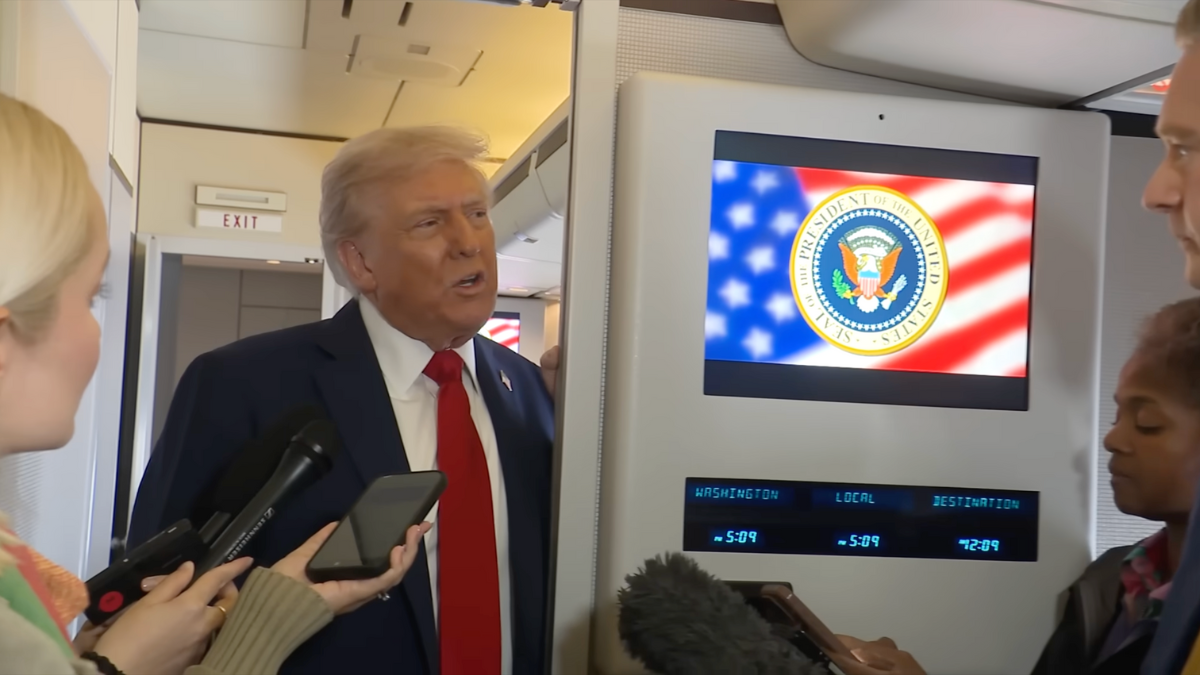
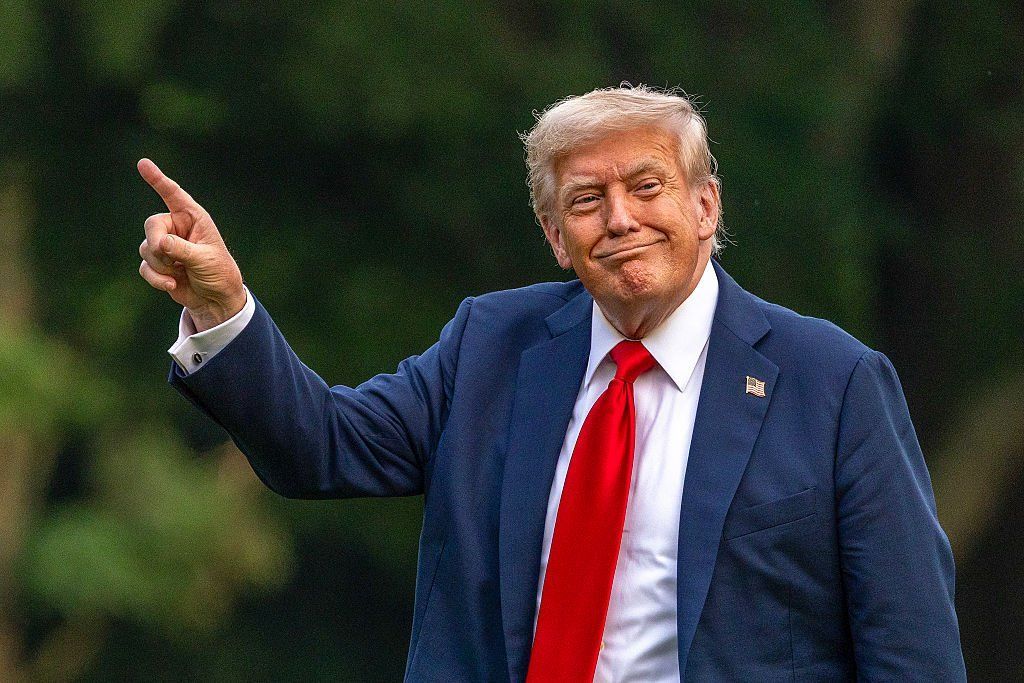
Trump was aboard Air Force One when he told reporters last Sunday that he’s unsure if he’ll make it to heaven. He prefaced his words by noting he was being “a little cute,” but proceeded to drop some thoughts about the afterlife.

“I don’t think there’s anything going to get me in heaven,” he said. “I think I’m not maybe heaven-bound. ... I’m not sure I’m going to be able to make heaven.”

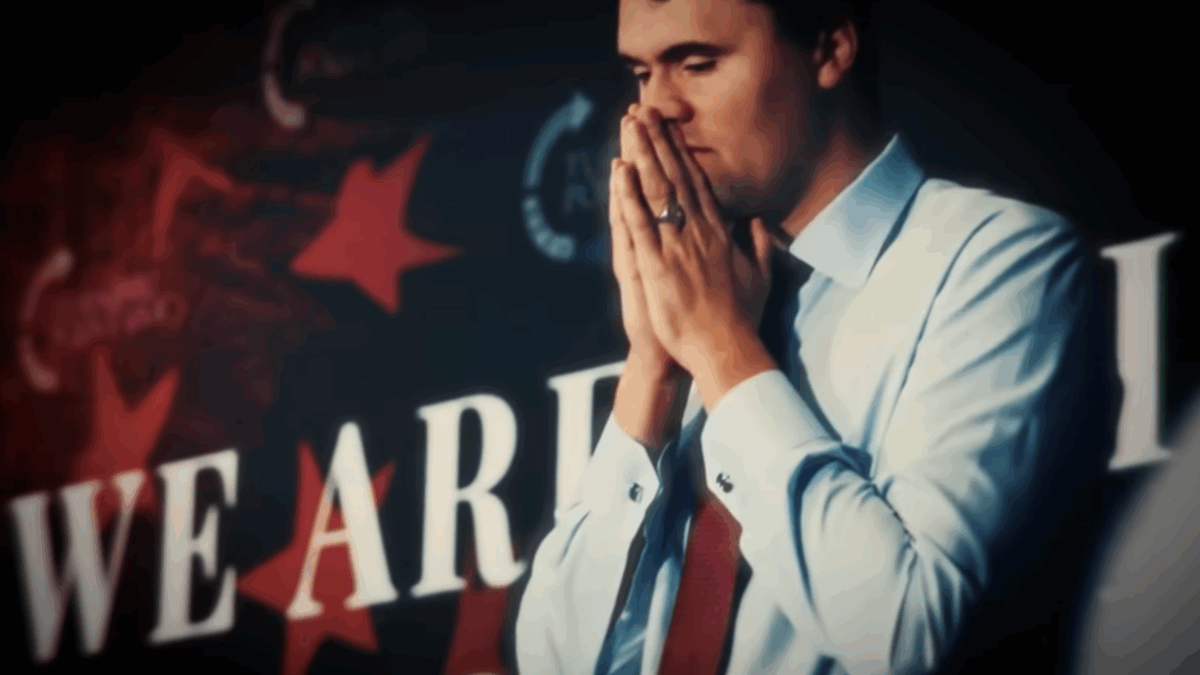
Just a few days later, while giving the late Charlie Kirk a posthumous Presidential Medal of Freedom, the highest civilian honor, Trump again brought up heaven.

“In his final moments, Charlie testified to the greatness of America and to the glory of our Savior, with whom he now rests in heaven,” he said. “And he is going to make heaven. I said I'm not sure I can make it, but he's going to make it. He's there. He's looking down on us right now.”

There have been other similar instances. Trump once pondered whether ending the Ukraine war would help secure his eternal glory. And at Charlie Kirk’s memorial service last month, the president made another headline-grabbing comment. Heralding Kirk’s love for his enemies, Trump painted a disparity between himself and the late Turning Point USA founder.

“[Charlie] did not hate his opponents. He wanted the best for them,” Trump said. “That's where I disagreed with Charlie. I hate my opponent and I don't want the best for them. I'm sorry.”

Responses to these proclamations have been swift and harsh. They have also rightly raised some questions about “earning” eternal salvation and the biblical command to love enemies. While some of those questions are fair, much is being missed in the mix of commentary and conjecture about Trump’s theology.

RELATED: Christian call to action: Pray for President Trump

Joe Raedle/Getty Images

First, it’s often tough to discern when Trump is being facetious or comical, making it almost impossible to know his real intent behind these remarks. Beyond that, the critics lambasting Trump should consider a different approach: prayer.

Anyone can be an armchair critic, but if Trump vociferously continues to bring up heaven, eternal salvation, and other related theological topics, there’s a solid chance it’s something he’s been contemplating personally. This seems incredibly likely in the wake of the attempts against his own life and after Kirk — a staunch friend and ally — was killed so publicly.

Some people seem to have missed the glaring reality that now is the time to move ceaseless critique to the side and double down on prayer for Trump to discern, comprehend, and embrace the fullness of the gospel of Jesus Christ.

But there’s another element being missed amid the mix of reactions.

Some people claim that Trump needs better faith advisers, deriding the Christians who have coalesced around him. The assumption is that these leaders aren’t sharing biblical truth with the president.

But I know for a fact that Trump has heard the gospel. The late Phil Robertson of “Duck Dynasty” fame once personally told me how he shared Jesus’ life, death, and resurrection directly with Trump leading up to the 2016 election.

“[I discussed] God becoming flesh … dying for the sins of the world, and, in his case, I said, ‘Dying for your sins, Donald, all of them, I figure there’s a lot — what do you think?’” Robertson told me. “He didn’t disagree with me.”

Robertson also drew an image of “an arrow coming down out of heaven … God becoming flesh, a cross, where Jesus took away the sins of the world.”

The point is: Trump has heard the gospel, and rather than trashing him, we should be doubling down in prayer that he comes to a place of full repentance and understanding.

Still, we must consider the deeper theological issues at the center of Trump’s remarks.

In the New Testament, James makes it clear that “faith without works is dead.” Interestingly, Trump has been talking a lot about peace deals and good deeds, pondering whether those acts can get him to heaven. The Bible has much to say about this topic.

“What good is it, my brothers, if someone says he has faith but does not have works? Can that faith save him?” James 2:14 reads, with verses 15-17 continuing: “If a brother or sister is poorly clothed and lacking in daily food, and one of you says to them, ‘Go in peace, be warmed and filled,’ without giving them the things needed for the body, what good is that? So also faith by itself, if it does not have works, is dead.”

James’ words are important not because works save us, but because the Holy Spirit, which dwells in us when we accept Christ and live a life for him, sparks in us a quest to live out Jesus’ call to love God and love others.

Simply stated: We do good because we’re guided by the Lord and His heart for others.

This message is boiled down beautifully by Christ himself in John 3. In that chapter, Jesus tells Nicodemus, a religious leader, that “you must be born again” to enter heaven. Nicodemus seems confused, pondering how one could re-enter his mother’s womb after birth.

That’s when Jesus explains that the rebirth in question is a spiritual one — a death to self and a life for the Lord. John 3:16, arguably the Bible’s most famous verse, tackles God sending his son to die for mankind so that people can have eternal life.

But what comes next is often overlooked.

“For God did not send his Son into the world to condemn the world, but in order that the world might be saved through him,” John 3:17 reads, with verse 18 continuing: “Whoever believes in him is not condemned, but whoever does not believe is condemned already, because he has not believed in the name of the only Son of God.”

Ultimately, one must die to self and live for Christ. There’s no action — without this move — that affords anyone eternal life. Trump might be the most powerful person in the world, but he, like all of us, must decide whether he will embrace this reality.

Rather than endlessly lambasting him over his attempts to understand, we should devote ourselves to praying for him while also pondering whether we, too, have fully embraced this truth.

Why Calling Charlie Kirk A Martyr Matters

Charlie Kirk’s murder was not simply the death of a man, but a spiritual assault in a spiritual war between Good and Evil.

Lee Strobel’s top supernatural stories to challenge your atheist friends


Atheists believe the universe is made up of only physical material. Souls, spirits, divinity, the afterlife — it’s all fiction.

But how do they reckon with phenomena — those hair-raising moments that shatter physics and turn our brains inside out? How do they make sense of miracles, like the terminal cancer patient who’s healed after prayer or the clinically dead person who wakes up with knowledge impossible for him to have?

The hardened skeptics will clutch their materialist beliefs even tighter, insisting there must be some scientific explanation. The more curious ones who allow themselves to venture down mystical rabbit holes, however, often find themselves in the position where disavowing the supernatural takes more effort than acknowledging its existence.

That was Lee Strobel — famous Christian apologist and author of the beloved book “The Case for Christ.” He set out to debunk Christianity, but his rigorous investigation into miracles and the veracity of biblical claims shattered his atheist beliefs and led him to the feet of Jesus.

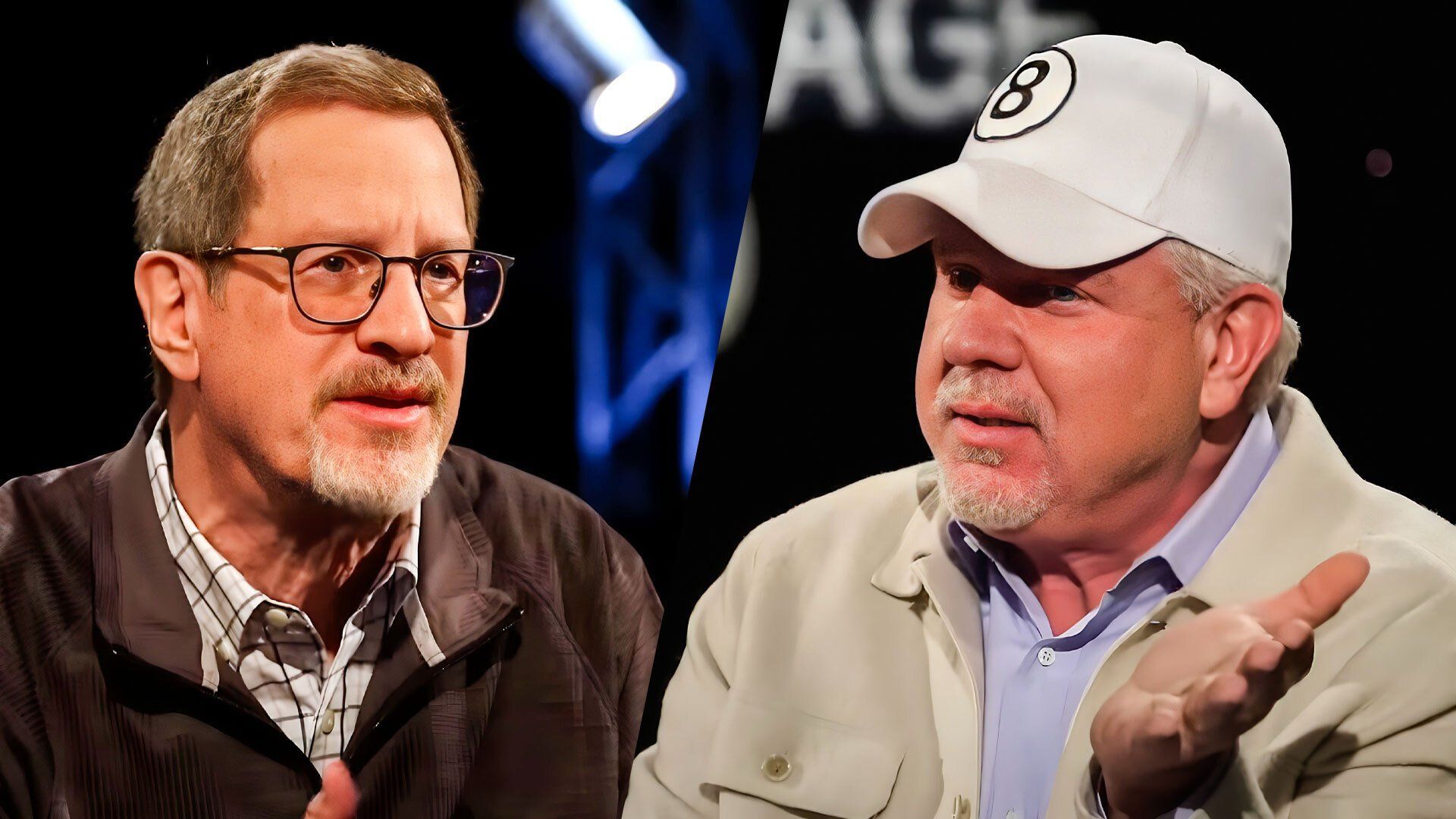
In this fascinating interview with Glenn Beck, Lee shares several documented cases of miracles and wild stories that will challenge even the most committed atheist.

Proof of the soul

“There are 900 scholarly articles published in peer-reviewed medical and scientific journals over the last 40 years on the topic of near-death experiences. These are cases where a person is clinically dead — generally, no brain waves, no respiration, no heartbeat. Some of them have been on the way to the morgue. ... But then they’re revived,” Lee says.

“And when they come back, they say, ‘I was conscious the whole time. I was watching them try to resuscitate my body in the hospital.”’

Glenn and Lee revisit the spine-chilling story of a Hispanic woman named Maria, who suffered a severe heart attack in the 1970s and was resuscitated at a hospital in Seattle. When she regained consciousness, Maria reported having an out-of-body experience, claiming her spirit floated around the emergency room while she was being operated on.

Skeptics dismissed her initially, but then Maria told them there was a sticker on the top of the ceiling fan blade in her hospital room — a detail invisible from the ground. Hospital staff brought in a ladder and beheld the sticker exactly as Maria had described it.

Lee shares another story of a young girl who drowned in a YMCA swimming pool.

“[The doctors] just were keeping her body basically alive until they figured out what to do,” he says.

But three days later, she was miraculously revived. She told hospital staff that she was “conscious the whole time,” Lee recounts. But they scoffed at the girl until she began sharing confirmed details about what her parents were doing at home while she was clinically dead in the hospital.

The girl knew that her mother made chicken and rice for dinner; she knew what specific clothes her family was wearing and that her little brother had played with his G.I. Joe toys while alone in his room — “things she could not have known unless her body, unless her spirit really did follow them home.”

Documented miracles

In his recent book “Seeing the Supernatural,” Lee shares the story of a woman who was blind from birth due to an incurable condition.

“She married a pastor. And one night they’re getting ready to go to bed, and he comes over. ... He puts his hand on her shoulder, and he begins to cry and begins to pray, and he says, ‘God, I know you can heal my wife. I know you can do it, and I pray you do it tonight.’ And with that, she opened her eyes with perfect eyesight,” Lee says, adding that her vision was perfect for the remainder of her life.

“How do you explain that?” he asks.

He then shares another “well-documented case” of a woman named Doris, who had a deathbed vision.

“She sees the heavens open up, and she sees angelic beings, and she sees her father, who had died a couple years earlier. ... And then she gets this puzzled look on her face, and she said, ‘Wait a minute. What’s Vita doing there?”’ Lee recounts.

Vita was Doris’ sister, who had died a couple of weeks earlier. However, Doris’ family hadn’t told her the news for fear that it would worsen her waning condition.

Doris is one of many documented cases of people who “see something in the realm to come that they could not have known about.”

Radical redemption

Evel Knievel — the American daredevil and stunt performer famous for his death-defying motorcycle jumps in the 1960s and 1970s — radically encountered God at the very end of his life.

“He was a drunk. He was a womanizer and once beat up a business associate with a baseball bat and went to jail for assault,” Lee says, retelling the icon’s incredible conversion story.

Just a few months before his death, Knievel was “on the beach in Florida, and God spoke to him and said, ‘Robert ... I’ve saved you more times than you’ll ever know. Now, you need to come to me through my son, Jesus.”’

Freaked out by this profound spiritual encounter, Knievel called Frank Gifford, a renowned sportscaster and Christian, to ask about Jesus and Christianity. Gifford pointed him to Lee’s famous book “The Case for Christ,” and he came to faith in Jesus after reading it.

Knievel had a “180-degree change — more than anybody I’d ever seen in my life,” Lee says, noting that he and Knievel became friends as a result.

He was baptized in California’s Crystal Cathedral, and after he gave his powerful testimony, roughly 700 people spontaneously came forward to be baptized during the same service.

Angelic and demonic encounters

Well-known psychiatrist Dr. Richard Gallagher, who’s also a professor of psychiatry at New York Medical College and a psychoanalyst on the faculty of Columbia University, has a hair-raising story about his first demon encounter that set him on a 25-year journey of studying the demonic.

He and his wife had two cats, who had never had an issue getting along with one another. One night, however, they randomly began to savagely attack each other, shocking Gallagher and his wife, who had to put the cats in separate rooms to stop the fighting.

The very next morning, Dr. Gallagher had an appointment to psychiatrically examine a woman named Julia, who claimed to be the high priestess of a satanic cult.

“She looks up at him, and she sneers, and she says, ‘How’d you like those cats last night?’” Lee says.

Later that day, Dr. Gallagher was speaking to a Catholic priest about Julia on the phone, and during their call, a “satanic voice” interrupted and said, “You let her go. She’s ours.”

After years of studying the demonic, Dr. Gallagher has accumulated many terrifying stories of demon possession. He’s documented a case where “a petite woman ... picked up a 217-pound Lutheran deacon and threw him across a room” and a case where “eight eyewitnesses saw a demon-possessed person levitate off a bed for half an hour.”

But there are just as many stories of angelic encounters too. One, which was documented in a doctoral dissertation, tells the story of a young girl in the hospital asking her mother if she could see the angels. “They’re so beautiful. Listen to their singing,” she told her mother, who was skeptical but played along.

“Oh, yeah, yeah, I see them. Look at their big wings,” she told her daughter, who confusedly responded, “Oh Mommy, you don’t have to lie. They don’t have big wings.”

“She went on to describe these angels in great detail. You would think if this was just something coming from the subconscious mind of a little kid, they would imagine what an angel would look like to them from a cartoon,” Lee says, but “that’s not what they see.”

To hear more documented cases of miraculous occurrences, as well as Glenn and Lee’s personal experiences with the supernatural, watch the interview above.

Want more from Glenn Beck?

To enjoy more of Glenn’s masterful storytelling, thought-provoking analysis, and uncanny ability to make sense of the chaos, subscribe to BlazeTV — the largest multi-platform network of voices who love America, defend the Constitution, and live the American dream.
They won’t admit it: Why Trump’s agenda is guided by a higher calling


For some, politics is about power. For others, it's about service. But for President Donald Trump, recent words and actions suggest it is about something more — a higher calling.

In a recent interview, Vice President JD Vance lightheartedly said the priest who baptized him said he might “put in a word with the big guy” if President Donald Trump could broker peace in Ukraine. President Trump, speaking on Fox News, expressed his own aspirations, saying he “wants to try to get to heaven.”

President Trump is advancing what many see as God’s work: fostering global peace, domestic security, and economic opportunity.

As a Christian, I know that faith in Jesus Christ as Lord is what ultimately secures our eternity, not earthly deeds. Yet, as an American, I'm grateful for leaders like President Trump, whose actions reflect a commitment to grace, truth, and courage — values that align with what I believe God calls us to embody in public service.

President Trump’s pursuit of peace exemplifies this grace in action.

His round-the-clock efforts to end the bloodshed in Ukraine have brought key players to the table, including meetings with Presidents Zelenskyy and Putin, paving the way for security guarantees without deploying U.S. troops. He has backed plans for lasting resolutions, emphasizing European involvement to ease the burden on American taxpayers. He has also secured peace frameworks between Armenia and Azerbaijan, Rwanda and the Democratic Republic of the Congo, and many more.

Many of the nations with which President Trump has worked have in fact nominated him for the Nobel Peace Prize, and it is well deserved. Between his two terms, Trump stands as the only 21st-century president to secure multiple peace deals while avoiding any new wars.

This America First foreign policy echoes the gracious resolve of Ronald Reagan, prioritizing diplomacy over endless conflict and protecting our troops.

Restoring truth to our institutions has been another hallmark of the president’s leadership. By dismantling diversity, equity, and inclusion mandates in federal agencies and protecting religious and economic freedoms, he has countered the leftist corporate bullies and ideologues who once wielded power to silence dissent.

No longer can saying the “wrong” thing — whether rooted in politics or faith — cost Americans their livelihoods through de-banking or cancellation.

America thrives on equality of opportunity, not forced equity; on economic freedom, not government overreach. President Trump understands that dwelling on past scars divides us, while celebrating our shared values unites the nation. Our schools, culture, and even our museums should reflect this forward-looking spirit.

RELATED: The DC nobody talks about — and Trump finally did

Anna Moneymaker/Getty Images

Organizations like the State Financial Officers Foundation, of which I am honored to lead, have been instrumental allies. Comprised of free market-supporting state treasurers, auditors, and comptrollers from across the United States, SFOF fights against environmental, social, and governance criteria, DEI policies, and discriminatory de-banking that stifle innovation and fairness. These state financial officers have helped shape and advance policies that support the president’s agenda, promoting economic freedom and fiscal responsibility to improve lives for all Americans.

In short, we stand with the president because his vision fosters prosperity and American exceptionalism.

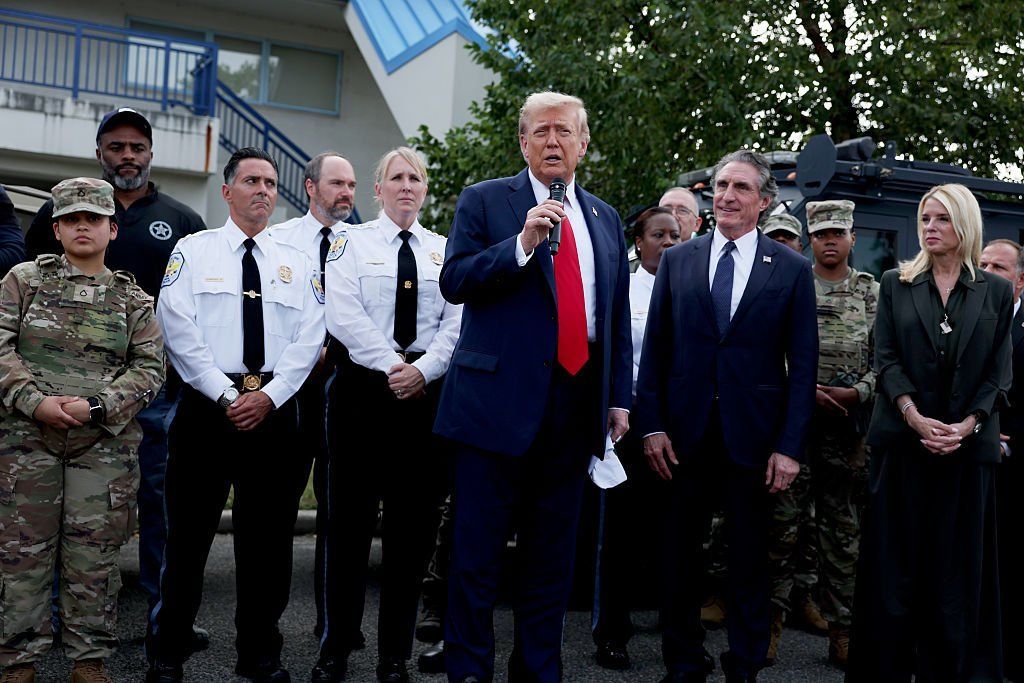
President Trump’s courage shines brightest in his dedication to American safety and workers. By taking decisive action in Washington, D.C. — a majority-black city plagued by crime — he has overseen a significant drop in violent incidents, with rates falling by about 35% since his administration’s interventions.

His crackdown on illegal immigration has slashed border crossings by over 90%, reaching historic lows not seen in decades. Deportations have surged past 300,000, prioritizing public safety and rule of law.

Economically, Trump's policies have attracted trillions in pledged investments from foreign allies, while tariffs have generated over $100 billion in revenue since April alone. These efforts have created hundreds of thousands of jobs, from manufacturing to construction, putting American workers first in a way no president in my lifetime ever had.

President Trump is advancing what many see as God’s work: fostering global peace, domestic security, and economic opportunity. Yet, his critics persist in opposition that often seems politically shortsighted and morally misguided.

I urge them: Do not let disdain for the man overshadow the good for our people. This moment calls for unity, not division.

I believe divine intervention spared Trump's life in Butler, Pennsylvania, last summer, seemingly deepening his faith and resolve. America and the world are stronger for it.

To Donald Trump, I say: Keep leading, Mr. President. Your nation supports you, and history is on your side.

Trump Ending Wars Is Wonderful, But Only One Thing Can Get Him Into Heaven

Trump may have been joking, but it bears repeating: None of your own works, not even saving lives, can earn you a spot in paradise.

Phil Robertson Leaves An Eternity-Focused Legacy That Will Last Well Beyond Duck Dynasty’s Fame

[rebelmouse-proxy-image https://thefederalist.com/wp-content/uploads/2025/05/Screenshot-2025-05-27-at-7.39.04 AM-e1748349631780-1200x675.png crop_info="%7B%22image%22%3A%20%22https%3A//thefederalist.com/wp-content/uploads/2025/05/Screenshot-2025-05-27-at-7.39.04%5Cu202fAM-e1748349631780-1200x675.png%22%7D" expand=1]Life for Robertson was so much more than duck hunting in the swamp. Death for Robertson holds an even bigger promise.

Good Friday Reminds Us Death Isn’t Normal

As you gaze upon the cross of Christ today, take heart that the death we were never designed to experience has been ultimately defeated.