Antifa isn’t ‘anti-fascist’ — it’s anti-freedom and anti-God



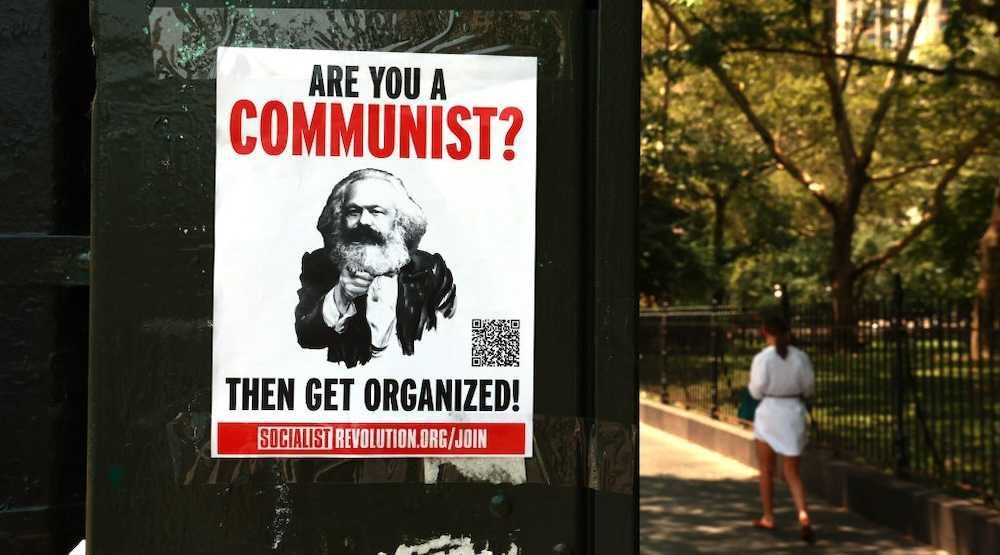
Last week, a Turning Point USA student at Arizona State University found an Antifa recruitment brochure on campus. It looked like a fourth-grader’s art project, leading some to suspect it might have been a class assignment — perhaps an attempt by a sympathetic professor to portray Antifa as “not all that bad.” But the flyer included a real Instagram handle, suggesting a more deliberate effort than a student prank.

So what exactly is Antifa, and why does it still find support among radical professors?

The name sounds noble — until you define it

At first glance, “Antifa,” short for “anti-fascism,” seems harmless or even virtuous. After all, who would oppose being against fascism? But the real question is: What does Antifa mean by “fascism”?

Fascism and communism are rival branches of the same ideological tree — the radical left.

Historically, Italian dictator Benito Mussolini coined the term “fascism,” defining it as the belief that “everything is in the State, nothing outside the State, nothing against the State.” Fascism was a form of totalitarian national socialism that made the state the highest authority in human life. Every other institution — church, family, business, education — was expected to exist only under state control. Far from being a right-wing ideology, as popular myth holds, fascism emerged from the revolutionary left.

Rival totalitarians

Fascists and communists share more than they admit. Both demand total control of society under the pretense of “fixing” human problems. The difference lies in scale. Fascists exalt the nation; communists exalt the world.

The easiest way to spot a communist is to find the professor shouting loudest about “fascism.” The two are rival branches of the same ideological tree — the radical left. Both trace their roots to the French Revolution and Marxism, in sharp contrast to the liberty-born ideals of the American Revolution.

The intellectual roots

Jean-Jacques Rousseau, the philosophical father of modern revolution, claimed humans are born good but “everywhere in chains.” Evil, he said, began with private property. Those who own property define crime, allowing them to oppress everyone else. His cure was the “general will” — the supposed collective will of the people expressed through the state. Every new tyrant since has claimed to know exactly what that will demands.

Georg Wilhelm Friedrich Hegel built on Rousseau with his idea that history advances through conflict, a process he called the “dialectic.” Karl Marx stripped Hegel’s theory of its spiritual elements and turned it into the “materialist dialectic.” To Marx, all history is a struggle over material resources and capital. Religion, morality, and family were mere disguises for economic power.

This logic birthed the Marxist slogan “Workers of the world, unite!” and set the stage for revolutions in Russia and Germany. When fascists in Germany blocked the communist uprising, Antifaschistische Aktion — Antifa — was born.

A revolution against the West

Modern Antifa isn’t formally descended from the 1930s German movement, but its ideology hasn’t changed. The group still defines itself by opposition, not by principle.

Antifa claims to fight “oppression,” yet it chooses its targets selectively. Members denounce slavery from centuries past but ignore the slave markets that still operate in parts of Africa and the Middle East. Their real enemy isn’t tyranny — it’s the West, capitalism, and Christianity.

That’s why Antifa allies with any movement hostile to Western civilization, even those far more oppressive than what Antifa claims to resist. Members excuse such alliances by insisting those groups were “forced” into brutality by Western influence. In Antifa’s worldview, “oppression” means “whiteness,” “heteronormativity,” and Christianity. Belief in personal responsibility, hard work, or the rule of law — the very foundations of ordered liberty — become systems of oppression.

How Antifa operates

Antifa rejects reform in favor of perpetual revolution — viva la revolución! Its adherents champion “direct action,” not dialogue. Their tactics include doxxing, counter-rallies, vandalism, and physical intimidation — all designed to silence opponents by fear, not reason. Logic itself, they argue, is a “tool of oppression.” The result is an ideology that devours itself: incoherent, emotional, and rooted in will, not intellect.

Fascists and communists may fight each other, but they share one deeper hatred — the hatred of God.

A Hispanic Christian friend of mine pursuing a degree in Latin American studies once told me his professor said, “Ché su Cristo” — Ché as Christ. To this professor, revolutionary violence was redemptive. For many radicals, Ché Guevara is the true messiah; salvation comes not through grace but through destruction.

They don’t debate ideas — they annihilate opponents. That’s why they despise people like Charlie Kirk. He represented everything they can’t: clear reasoning, coherent argument, and defense of the American Revolution’s principles — limited government, ordered liberty, and faith in God.

RELATED: Trump praises Blaze News reporting during Antifa roundtable at White House — and slaps down MSNBC, CNN

Photo by Anna Moneymaker/Getty Images

Antifa’s real enemy

The American Revolution recognized that the state is not supreme. It is one institution among others — family, church, and business, each with its own God-given role. The state’s proper duty is limited: to punish wrongdoing and protect the innocent. That vision of ordered liberty is written plainly into the Constitution’s preamble.

America’s founders built a republic — a government under law, lex rex — “the law is king.” They believed that God’s law, revealed in both nature and Scripture, provides the moral order that makes true freedom possible.

At its core, Antifa’s ultimate enemy isn’t any human institution — it is God Himself. Whether its adherents are atheists or occultists, they view God as the oppressor because He gives law. Their rebellion echoes Lucifer’s ancient creed: “Do what thou wilt.” Saul Alinsky, in “Rules for Radicals,” openly admired Lucifer as the arch-rebel. Antifa’s devotion to the sexual revolution and the LGBTQ+ movement flows from the same impulse: the rejection of divine order in favor of self-will.

Fascists and communists may fight each other, but they share one deeper hatred — the hatred of God. Both reject the idea that rights come from a Creator and that moral law defines justice.

America stands in opposition to both. Our republic rests on the conviction that God endows every person with rights and that government exists to protect — not replace — the moral order rooted in divine law. No state can perfect humanity. Salvation from sin and death comes only through Christ.

That makes Christianity, not Marxism or fascism, the true enemy of tyranny.

As we defend Christian truth in public life, we must do so with discernment, knowing that our opponents’ hatred runs deeper than politics. It is spiritual. And when they finally drop the mask of “tolerance” and “niceness,” they reveal exactly what they’ve always been.

When they tell you who they are and what they hate — believe them.
Calling MAGA ‘fascist’ is the smear of the century


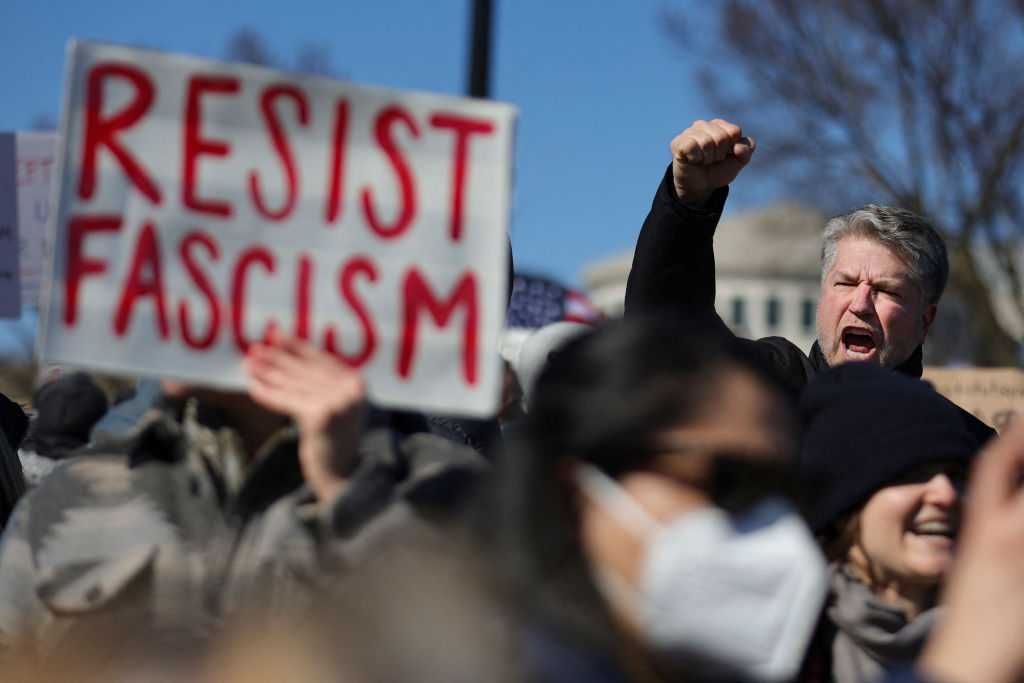
No political insult gets thrown around more recklessly these days than “fascist.” The word has been gutted of meaning, reduced to a club progressives swing at President Trump and people like Stephen Miller and the late Charlie Kirk. Democrats and their media allies casually smear conservatives as extremists who follow the “fascist playbook.”

Joe Biden himself dragged the rhetoric to a new low. In September 2022, standing in front of Liberty Hall in Philadelphia, he declared that “MAGA Republicans” are extremists and enemies of democracy.

“They embrace anger,” Biden thundered. “They thrive on chaos. They live not in the light of truth, but in the shadow of lies.” Weeks earlier, at a fundraiser in Maryland, he even called the MAGA movement “semi-fascist.”

The smear reveals less about conservatives and more about the authoritarian streak buried in the left’s own philosophy.

Say what you want about Trump’s sharp elbows in politics, but he never demonized American voters as enemies of the republic. Biden did — and Democrats have repeated the smear ever since. The question is: What happens to a country when its leaders brand millions of citizens “fascists”?

The goals of the MAGA movement are plain: Protect natural rights, foster prosperity, expand energy access, secure the border, reduce crime, preserve domestic peace, and pursue a foreign policy rooted in prudence. These aims hardly resemble fascism. Yet defenders of liberty now find themselves caricatured as authoritarians.

To see how absurd this charge is, it helps to remember what fascism actually means.

A (very) short history of fascism

The intellectual father of fascism was Giovanni Gentile, an Italian philosopher born in 1875. Following Hegel, he saw the rational state as the end point of history. He defined “true democracy” not as liberty but as the individual’s willing subordination to the state.

For Gentile, public and private interests were one and the same. To serve society was to serve the state. His student, Benito Mussolini, turned this philosophy into doctrine: “All is in the state, and nothing human exists or has value outside the state.”

Contrary to today’s rhetoric, fascism did not begin on the right. Mussolini himself was a Marxist. He and Antonio Gramsci broke with Leninist revolution but retained socialism’s collectivist core. Fascism emphasized nationalism, racial particularity, and the total authority of the state — summed up in the term “blood and soil.” Its very name came from the Latin word fasces, the Roman bundle of rods bound to an axe — symbolizing unity and power.

Fascism arose in the economic chaos of the 1920s and ’30s. Italy and Germany launched massive public-works programs, funded by confiscatory taxes, borrowing, and printing money. As with communism, fascism treated every citizen as an employee and tenant of the party-run state. Force and coercion were essential. Mussolini was blunt: The individual’s “anti-social right” to resist the state did not exist.

In his 1928 autobiography, he wrote:

The citizen in the Fascist State is no longer a selfish individual who has the anti-social right of rebelling against any law of the Collectivity. The Fascist State with its corporative conception puts men and their possibilities into productive work and interprets for them the duties they have to fulfill.

Fascism and the New Deal

The American version of the 1930s response to the Great Depression, of course, was Franklin Roosevelt’s New Deal. Today it’s remembered as democracy’s answer to authoritarianism. But at the time, many noted striking similarities between Roosevelt’s programs and those of Mussolini and Hitler.

John T. Flynn, a leading conservative writer, warned in “As We Go Marching” (1944) that the New Deal looked like a “good fascism” — regulation and planning at home, military adventures abroad, and growing state power. Others saw the same trend: massive public-works projects, charismatic leadership, centralized propaganda, and the creation of a “voluntary compulsion” that blurred the line between civic duty and government coercion.

Wolfgang Schivelbusch’s remarkable 2006 book, “Three New Deals,” compares the era’s regimes. He did not equate Roosevelt with Mussolini or Hitler, but he highlighted the parallels: grand projects like the TVA, monumental architecture, direct appeals from the “leader” to the people, and the constant use of war imagery. Roosevelt even warned that those who resisted his programs were “enemies” of recovery.

The difference, of course, was that America retained constitutional checks that Europe discarded. Yet the centralizing impulse — and the temptation to vest extraordinary authority in a leader — was real.

Progressive roots

The resemblance should not surprise us. European fascism and the New Deal both grew from the same philosophical soil. The American founding drew on John Locke and natural law. “The state of nature has a law of nature to govern it, which obliges every one,” Locke wrote. “And reason, which is that law, teaches all mankind.” The Declaration of Independence, in turn, proclaimed that rights are endowed by the Creator and cannot be erased by government.

European thought took another path, from Machiavelli to Hegel, exalting the state as the source of order and authority. By the late 19th century, American Progressives imported this vision. Woodrow Wilson and other intellectuals trained in German universities rejected the founders’ natural-rights philosophy and embraced statism.

RELATED: The next generation of Marxists is marching through the institutions

Photo by Luiz C. Ribeiro for NY Daily News via Getty Images
Progressives, like their European cousins, placed the state at the center of political life. They taught that rights flow not from God but from government — positive, material entitlements dispensed by bureaucrats. Over the past century, Democrats from Wilson and FDR to Lyndon Johnson and Barack Obama have built a regime that subordinates every aspect of American life to the federal leviathan.

The real irony

Given this history, 21st-century progressives should think twice before flinging “fascism” as a slur. Their own intellectual lineage shares far more with Mussolini and Gentile than anything found in the MAGA movement.

Trump supporters want liberty secured, prosperity restored, and sovereignty defended. Progressives want the state elevated above all. The smear reveals less about conservatives and more about the authoritarian streak buried in the left’s own philosophy.

Mark Levin on the REAL reason behind the LA riots


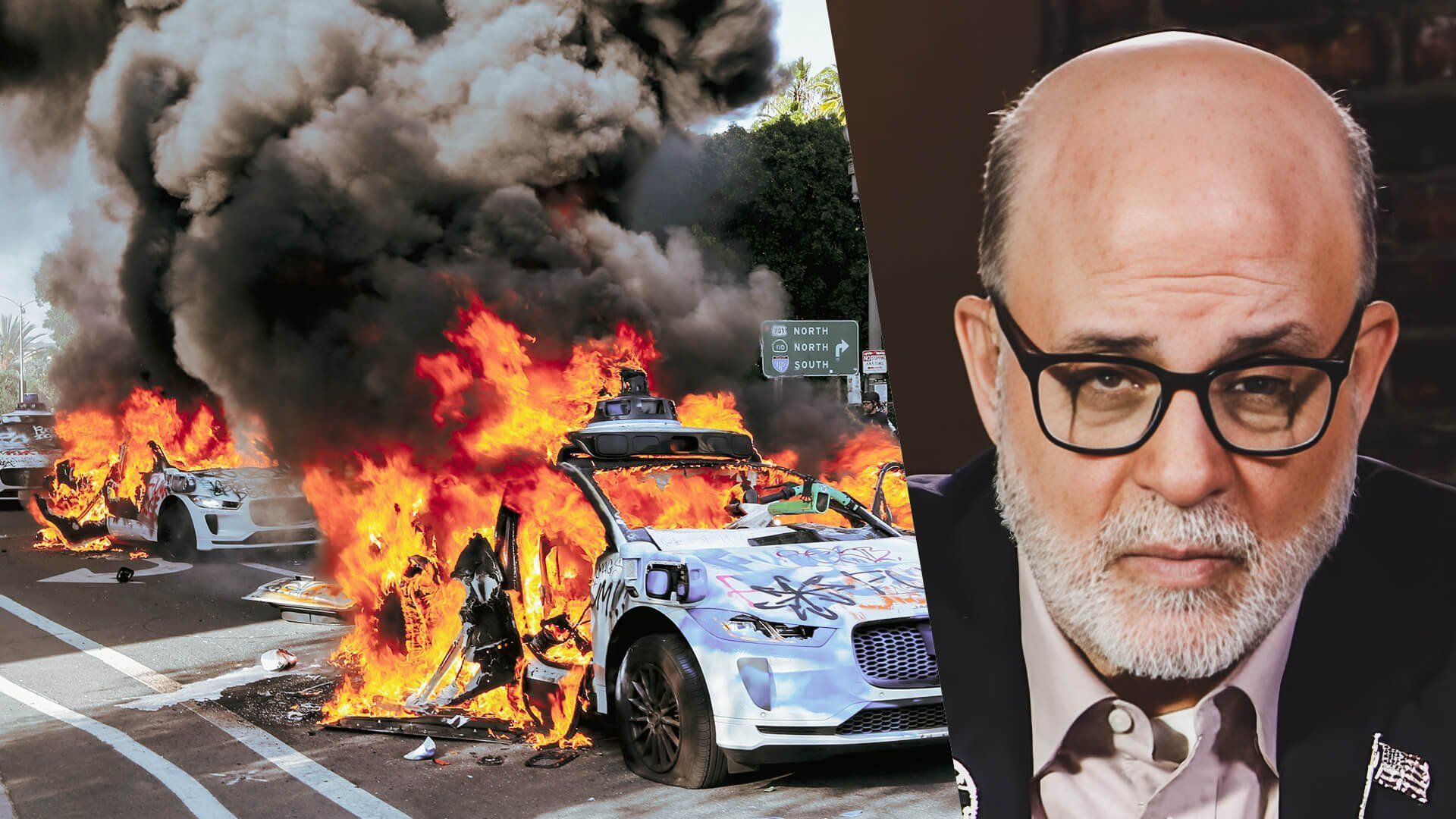
The left’s radical Marxist pursuit of centralized power has manifested itself in many ways, but BlazeTV host Mark Levin of “LevinTV” believes that its latest appearance was at the Los Angeles riots, where Americans waved the flags of another country and lit their own city on fire.

“You see, the Democrat Party operatives, the Democrat Party, has more in common with the Marxists than they do with the founders. Hence, their people tearing down the symbols of America, hence their people attacking the principles of America,” Levin says.

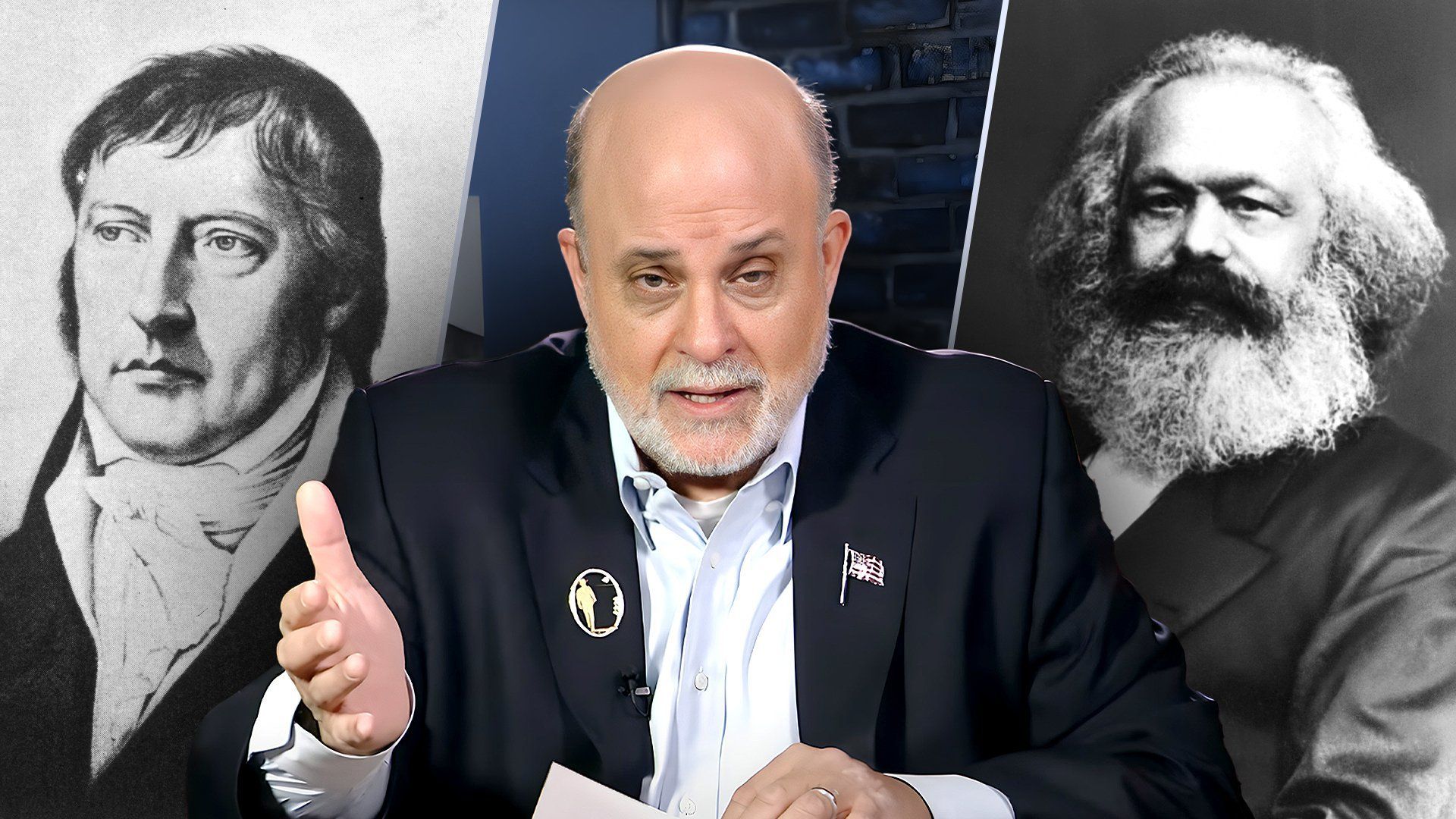
And it’s not just Marxism but rather a combination of Marxism, Hegelianism, and Rousseau’s collectivism that have been combined over the course of history.

“They’ve taken these, the intellectuals have, and they’ve sort of re-imaged them and have Americanized them,” Levin explains. “This goes to an issue related to the word, the principle, the term ‘power.’”


“Power is about force. Power is about coercion. Power can be used in a positive way, and it can be used in a negative way,” he continues, “I want to now apply this to what’s going on in L.A. All these violent activities taking place, the burning of the American flag, the carrying of other flags and so forth.”

“The point is, if your goal is the centralization of power, if your goal is one party rule, if your goal is to have an iron-fisted control over society, and that is their goal,” he explains, “You don’t care if you change the citizenry. You don’t care if there’s violence for a period of time. You don’t care about any of these things.”

Former President Barack Obama called it a “fundamental transformation of America,” and Levin points out that that’s exactly what’s happening.

“These violent acts, these riotous acts, the attacks on Jews, the burning of the American flag, all of these things together and much more are evidence, right in front of our eyes,” Levin says, adding, “This fundamental transformation that’s taking place with the use of power — the evidence is right in front of us.”

Want more from Mark Levin?

To enjoy more of "the Great One" — Mark Levin as you've never seen him before — subscribe to BlazeTV — the largest multi-platform network of voices who love America, defend the Constitution, and live the American dream.

3 radical thinkers who inspired the tyranny we're seeing in America


When the legislature becomes a lawful power that can pass bills for the purpose of plunder, tyranny isn’t far behind.

Mark Levin is well aware and knows exactly who and what inspired it.

“Marxism is the most evil of isms,” Levin begins. “The idea that you can camouflage your agenda in populism, the name of the people, inequality, that is the proletariat overthrowing the bourgeois.”

This was popularized by three major political philosophers: Marx, Hegel, and Rousseau.

“Marx figured out how to popularize tyranny. Hegel figured out how to popularize tyranny,” Levin explains, adding, “Rousseau figured out how to popularize tyranny.”

While these philosophers may be long passed, their ideas live on in our current government.

They’re exhibited and carried out by lobbyists, special interest groups, and those whose purpose is supposed to be helping the country and promoting freedom — but isn’t.

Their real purpose, according to Levin, is “to get laws made” and “regulations in place to make them rich.”

Those in government spend more time getting wealthier at the expense of others, attempting to regulate their competitors out of business, and have Congress pass laws to force people to do things like buy electric vehicles.

And this government is growing.

“The bigger the bureaucracy gets, the more centralized it gets, the more powerful Washington gets vis-à-vis the individual, vis-à-vis towns, vis-à-vis the states, the less your vote matters,” Levin says, noting that the evils of Marxism won’t stop until there’s nearly nothing left to fight for.

“It’s as if everybody has to become impoverished and destitute and punished before there’s a chance to eventually turn it around, because this is a cycle,” Levin says, adding, “it’s like a hamster wheel you can’t get off.”


Want more from Mark Levin?

To enjoy more of "the Great One" — Mark Levin as you've never seen him before — subscribe to BlazeTV — the largest multi-platform network of voices who love America, defend the Constitution, and live the American dream.