Lindsey Graham’s sister enters Senate race following Trump endorsement


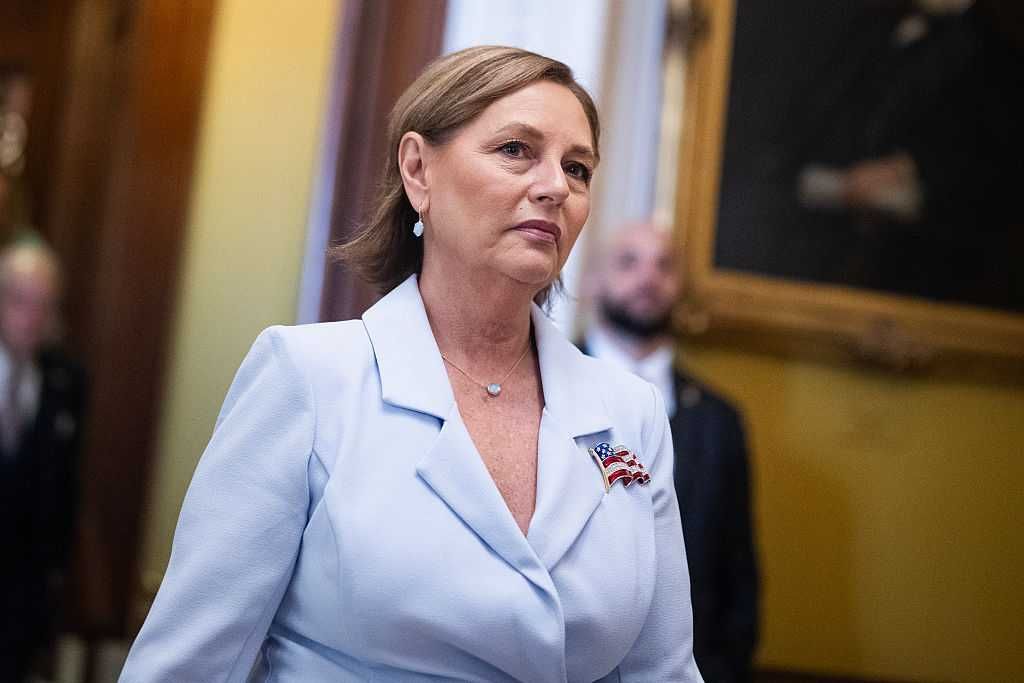
Less than a week after joining the Senate to fill her brother’s seat, the sister of the late Sen. Lindsey Graham has decided she will run for a full term.

“I’ve made a decision,” Sen. Darline Graham (R-S.C.) told Fox’s Sean Hannity in an interview posted to X on Monday. “I’m in.”

'I feel like I can do it.'

Graham said she reached the decision after spending time in prayer and consulting with her family.

“I have been praying a lot, talking to my family. But with the love of my family, with the support of his staff, I know I’m a hard worker. I learned that from Lindsey. He cared about the people of this state. I’ve worked for almost 30 years for the people of this state. I feel like I can do it,” she expressed.

President Donald Trump publicly endorsed Graham on Friday, urging her to enter the race.

“I asked Darline, for the Good of our Nation, to run for the U.S. Senate in the Special Republican Primary on Tuesday, August 11, 2026," Trump wrote.

“Darline, who comes from an absolutely incredible family, has been a WINNER all of her life and, should she accept, has my Complete and Total Endorsement in the Special Election for U.S. Senate in South Carolina,” he added.

RELATED: Glenn Beck warns: Lindsey Graham’s death exposes something very dark in America

Graham was sworn into the Senate Tuesday, a day after she was appointed by South Carolina Gov. Henry McMaster (R) to serve out the remainder of her brother’s term, which concludes in January.

Trump also weighed in on that decision, posting on Truth Social, "I recommended, to Governor Henry McMaster, Lindsey Graham’s wonderful sister, Darline, to serve as interim Senator from the Great State of South Carolina. This would be a fabulous tribute to Lindsey, who loved her dearly!"

Lindsey Graham died on July 11 at age 71 of an aortic dissection, according to a preliminary finding from the medical examiner, after what the late senator's office initially described as a "brief and sudden illness."

The filing deadline for the special election is July 28, with several Republican candidates having already declared their candidacies, including Reps. Russell Fry and Ralph Norman, as well as businessman Mark Lynch.

The Republican nominee will go on to face Democrat Annie Andrews in the November general election.

Like Blaze News? Bypass the censors, sign up for our newsletters, and get stories like this direct to your inbox. Sign up here!

Trump names his pick for Sen. Graham's seat — and it's not who you'd expect


President Trump said Monday he has a pick in mind to fill the late Sen. Lindsey Graham's Senate seat — and it's not a rising Republican star or a familiar name from Congress.

Trump wants South Carolina Gov. Henry McMaster (R) to appoint the late senator's sister, Darline Graham Nordone. Graham became the legal guardian of Nordone in his early 20s after their parents died within months of each other, and the two remained close for the rest of his life.

'This would be a fabulous tribute to Lindsey, who loved her dearly!'

Graham died Saturday night at 71, likely of an aortic dissection, the medical examiner said, following what his office initially described as a "brief and sudden illness." His death prompted a scramble among Republicans for the seat.

Trump posted on Truth Social, "I recommended, to Governor Henry McMaster, Lindsey Graham's wonderful sister, Darline, to serve as interim Senator from the Great State of South Carolina. This would be a fabulous tribute to Lindsey, who loved her dearly!"

Under state law, McMaster has sole authority to name an interim replacement, and that appointee would likely have a leg up in the special primary on Aug. 11 to fill Graham's spot on the November ballot, if he or she decides to run.

RELATED: Lindsey Graham dead at 71

LOGAN CYRUS/AFP/Getty Images

However, Nordone is unlikely to seek the seat herself. So if McMaster selects her, the special primary would be locked in as the real contest for the nomination while still keeping the seat in Republican hands until the new Congress convenes Jan. 3.

McMaster's office has not committed to a pick, saying only that its focus "at this time" is on honoring Graham's life and service. McMaster is expected to hold a press conference at 4 p.m. ET Monday, where he may address the vacancy directly.

Like Blaze News? Bypass the censors, sign up for our newsletters, and get stories like this direct to your inbox. Sign up here!

GOP firebrand Nancy Mace launches gubernatorial bid, vowing to 'flip the tables'


Republicans nationwide are gearing up for 2026 elections, with Rep. Nancy Mace of South Carolina being the latest to announce her candidacy.

Mace, who has spent weeks teasing a gubernatorial campaign, formally entered the race Monday morning. Mace is now the second House Republican to enter the South Carolina governor's race, following Rep. Ralph Norman's announcement in July.

'South Carolina doesn't need another politician who folds when things get tough.'

"God’s not done with South Carolina and neither am I," Mace said in her announcement on X. "You and me. Our mission begins now."

Mace launched her campaign during a speech at her alma mater, The Citadel, a military college in Charleston, where she became the first female graduate in 1999.

RELATED: Democrat grovels after skipping Israel arms votes for Colbert show: 'I owe it to my state'

Photo by Joe Raedle/Getty Images

"South Carolina is tired of politicians who smile for the cameras, lie to your face, and then vanish when it's time to leave," Mace said in her announcement speech. "I'm none of them."

"South Carolina needs a governor who will drag the truth into sunlight and flip the table if that's what it takes," Mace added. "South Carolina doesn't need another politician who folds when things get tough."

RELATED: 'Most conservative' congressman announces bid for South Carolina governor seat

Photo by Anna Moneymaker/Getty Images

Mace will be facing off against Norman as well as state Attorney General Alan Wilson, Lt. Gov. Pamela Evette, and state Sen. Josh Kimbrell to succeed current Gov. Henry McMaster (R).

Like Blaze News? Bypass the censors, sign up for our newsletters, and get stories like this direct to your inbox. Sign up here!

SC Supreme Court Ruling Debunks Planned Parenthood’s Lies About Baby Heartbeats

Planned Parenthood said 'six-week ban' over 300 times before filing this case arguing for nine weeks of abortion access.

Palmetto pretenders push ‘cut’ that costs more for most


South Carolina Republicans aren’t trying to limit government — and they don’t appreciate the Freedom Caucus pressuring them to do so. Instead, they’ve concocted a devious plan to push a bill that sounds like a flat tax but would raise taxes on most residents earning under $115,000. The goal? To trap Freedom Caucus members into opposing a bill GOP leaders intend to promote as a tax cut during campaign season.

House Speaker Murrell Smith Jr. (R) promised voters a tax cut throughout the session but didn’t reveal the bill until last week. Now we know why. The proposal would amount to a net tax increase on 66% of state tax filers, including nearly all who earn less than $115,000. Despite this, Republican leaders still hope to get the bill to Republican Gov. Henry McMaster’s desk by May 8.

Until voters start focusing on primary elections — where the real ideological battles are fought — red states will keep giving us the big government blues.
Currently, South Carolina taxes income above $17,000 at 6.2% — one of the highest rates in the low-tax Southeast. Seeking to catch up with other red states, House leaders, with support from the governor, introduced H. 4216 to implement a 3.9% flat tax. On paper, it looks like a voter-friendly reform.

But buried in the bill is a major shift: It redefines taxable income to include earnings before federal taxes and deductions. Under current law, South Carolina only taxes adjusted income after those reductions. The change would quietly increase the tax burden for most middle-income residents — even as lawmakers pitch it as a cut.

The state Freedom Caucus quickly flagged the problem, releasing an analysis showing how the bill would impact working families. Because of South Carolina’s relatively low income levels, someone earning the state’s median income would pay $716 more per year under the proposal. Lower-income families could see increases of $800 to $1,000 annually.

Even families earning $100,000 — roughly the combined salary of a married teacher and police officer — would face a net increase of $327. Taxpayers wouldn’t break even until they hit $115,000 in income. And even then, a household making $119,000 would only see a modest benefit of $93.

The Office of Revenue and Fiscal Affairs released a distributional analysis showing the percentage of taxpayers at each income level who would pay more under the proposed tax structure:

— (@)

According to the data, between 78% and 90% of those earning $20,000 to $75,000 would see their taxes go up. Even among those earning $100,000 to $150,000, about 60% would end up paying more.

While it’s reasonable to want to broaden the tax base — which any flat tax will do — you can’t call this a tax cut if the overwhelming majority of middle-class families are paying more. To deliver actual relief, lawmakers would either need to drop the flat rate even lower or apply the 3.9% rate only to income after federal taxes and deductions.

Math doesn’t lie. This isn’t a cultural dispute, a philosophical debate, or a regulatory disagreement. State leaders know exactly what the numbers say — so the real question is: Why are they still pushing this bill?

The answer is simple. They don’t want to cut spending to pay for a real tax cut. In fact, the governor is proposing a 3.5% increase in the state budget. That’s why Republicans are promoting a tax plan that isn’t a tax cut at all.

Instead, they’re laying a political trap. By presenting this proposal as tax relief, they aim to paint the Freedom Caucus as anti-tax cut — even though the bill raises taxes on the majority of state residents. A few co-sponsors have already withdrawn their names, slowing the bill’s momentum, but it’s telling that this was the strategy in the first place.

Here’s the bottom line: Once a state adopts a progressive income tax, fixing it within the current framework is almost impossible. A better path would be to follow Mississippi’s lead. It recently joined nine other states — Alaska, Florida, Nevada, New Hampshire, South Dakota, Tennessee, Texas, Washington, and Wyoming — in eliminating its income tax entirely.

South Carolina could do the same by cutting spending to offset lost revenue or transparently pairing income tax repeal with increases elsewhere. But to sell a plan that raises taxes on two-thirds of residents as a “cut” is flat-out dishonest.

Unfortunately, this move by South Carolina GOP leadership is nothing new.

A recent analysis using the Club for Growth’s conservative scorecard found that Republican House members — excluding the South Carolina Freedom Caucus — averaged just 27%. That’s barely above the average Democrat. In contrast, Freedom Caucus members averaged a score of 92%.

In other words, the ideological gap between the Freedom Caucus and the rest of the state GOP is far wider than the gap between Republicans and Democrats.

Until voters start focusing on primary elections — where the real ideological battles are fought — red states will keep giving us the big government blues.
‘No Love For Me’: Nikki Haley Responds To Endorsement Snubs From Home State

'I'm sorry, is that the person I ran against for governor and beat? Just checking'