Nicki Minaj calls music industry a 'satanic cult' where men date 16-year-old girls


Rapper Nicki Minaj has been setting off a social media firestorm since declaring her support for President Trump.

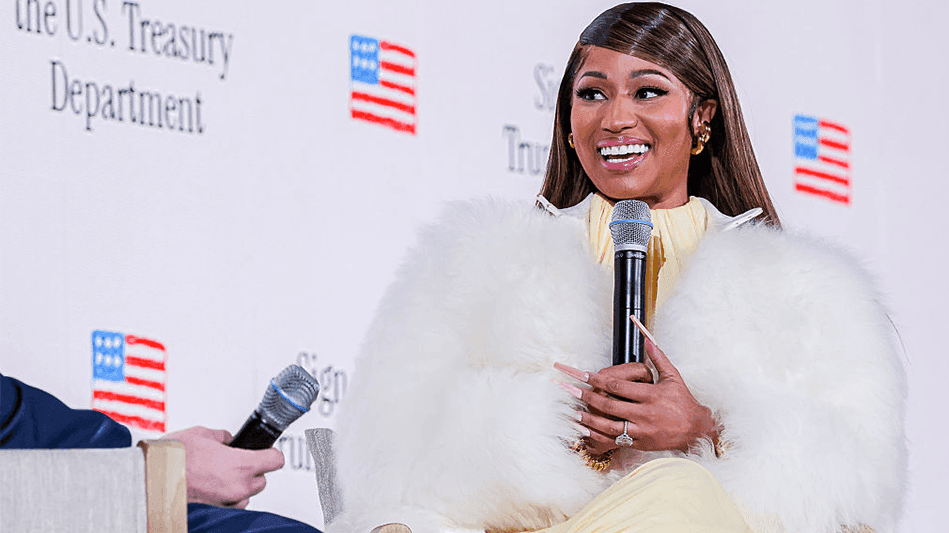
After making a live appearance with the president last week, Minaj — whose real name is Onika Tanya Maraj-Petty — has been steadily accusing the music industry of awful conduct.

'If you ever vote DemonCrat again, you're just as soulless as they are & will perish.'

Particularly Minaj spent some time on Sunday evening accusing the music industry of partaking in satanic rituals and cult-like behavior.

'The jig is up'

"Your favorite artist has been practicing rituals in a satanic cult where they take babies from other countries & mutilate & kill them as a form of a blood sacrifice to their God," she wrote on X. "You see, when your master is satan, you must constantly shed blood. However, the JIG IS UP."

Minaj then took aim at rapper Jay-Z, real name Shawn Carter, posting images purporting to show the artist in his late 20s alongside famous singers while they were teenagers.

RELATED: Trump's 'number-one fan,' Nicki Minaj, praises the president, shreds Gavin 'Newscum'

Your favorite artist has been practicing rituals in a satanic cult where they take babies from other countries & mutilate & kill them as a form of a blood sacrifice to their God. You see, when your master is satan, you must constantly shed blood. However, the JIG IS UP. pic.twitter.com/AFyiiWGATm
— Nicki Minaj (@NICKIMINAJ) February 2, 2026

"Are y'all understanding that these ppl have been sacrificing children as a way of gaining & maintaining power? If you ever vote DemonCrat again, you're just as soulless as they are & will perish," the female rapper wrote.

Photo finish

Attached to the statement were two photos of Carter — one with the late singer Aaliyah and one with Beyoncé Knowles, whom he married in 2008 — each overlaid with labels identifying the alleged year of the photo and the corresponding ages of the people pictured.

The photo with Aaliyah is labeled “1996,” with Carter identified as 26 and Aaliyah as 15. If the photograph were in fact taken in 1996, that age attribution would be accurate: Aaliyah was born on January 16, 1981, and would most likely have been 15 at the time.

However the dating of the image appears to be incorrect.

Multiple photographs archived by Getty Images, as well as reporting from the Hollywood Reporter, show Carter and Aaliyah wearing the same outfits at a Fourth of July party hosted by Sean “Diddy” Combs in East Hampton, New York, on July 2, 2000. If the image dates from that event, Aaliyah would have been 21 and Carter 30.

Destiny's children

A second image, showing Carter with Beyoncé Knowles, is also overlaid with age labels, identifying Carter as 27 and Beyoncé as 16. The image appears to originate from an event at the Prime Time 21 nightclub in North Dallas, Texas, on January 31, 1998, as reported in a 2024 Daily Mail article. While the label misstates Carter’s age — he was reportedly 28 at the time — Beyoncé was indeed 16, having been born on September 4, 1981.

RELATED: Nicki Minaj stuns crowd in surprise appearance at TPUSA conference, praises Trump and Vance

Kevin Mazur via Getty Images

The image posted by Minaj appeared to be a crop of a photo from that evening, in which Jay-Z is pictured with the four members of Beyonce's group, Destiny's Child.

Nevertheless Minaj had commentary to share on the whole ordeal.

"Imagine if a 30 year old rapper was out here with a 16 year old in this day & age — and how y'all would have his head on a platter. The guy was hugging & humping on teens in broad day light," she wrote on X.

The newest Republican supporter said she still has more to reveal about the music industry and will shed light on some of the indiscretions of the biggest hip-hop players.

Like Blaze News? Bypass the censors, sign up for our newsletters, and get stories like this direct to your inbox. Sign up here!
Orthodox saint meets Chicago gang life in gritty crime flick 'Moses the Black'


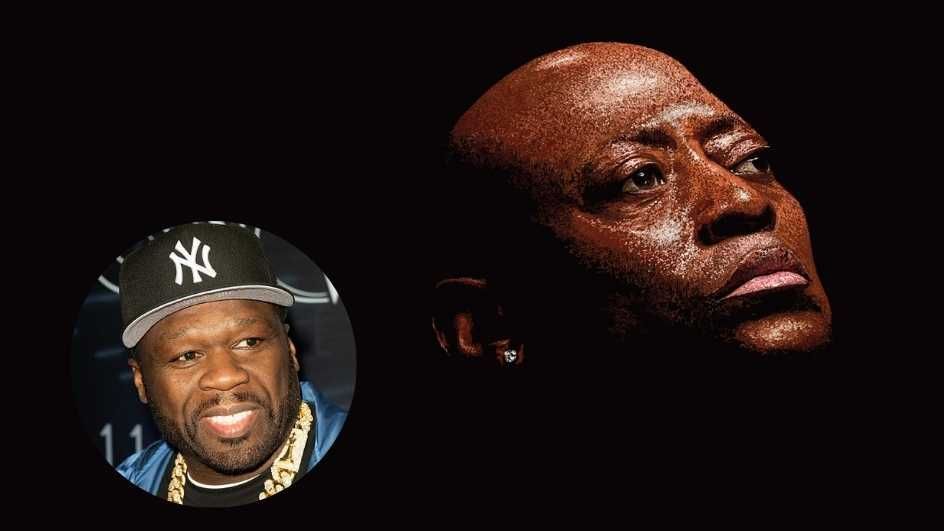
50 Cent is going from sin to sanctity.

Hot on the heels of his recent Netflix documentary on the debauched downfall of hip-hop mogul Sean "Diddy" Combs, the rapper turned producer is set to release an urban crime drama inspired by the life of fourth-century Ethiopian monk Moses the Black.

Even in our compromised state, saints remain scandalous and alluring precisely because they cut against our deepest desires and despair.

Fans of Fox Nation’s "Martin Scorsese Presents: The Saints" will remember the violent bandit turned desert-dwelling ascetic as one of the series' most fascinating subjects. Officially recognized by Pope Leo XIII in 1887, the former slave has long been venerated as the patron saint of nonviolence and is widely praised as a symbol of the power of peace and repentance.

Out for blood

"Moses the Black," a loose retelling of that story set against the backdrop of modern-day Chicago, follows Malik (Omar Epps), a gang leader fresh out of prison and seeking to avenge his murdered friend.

Complicating his quest his is grandmother, an Orthodox Christian who gives him an icon of St. Moses, whom she describes as a "saint who was also a gang member." Haunted by frustration, loss, and a lifetime of sins, Malik starts having visions of the saint, who warns him that the bloody path he has embarked upon is one he will regret.

"Moses" — which also features hip-hop notables Wiz Khalifa and Quavo — makes for an interesting companion piece to director Yelena Popovic’s previous outing, 2021 St. Nektarios biopic "Man of God." Where that film depicts sanctity as something preserved through obedience and suffering, "Moses" imagines it reclaimed from disorder.

Mean streets

Malik navigates an inner city filled with dealers and enforcers locked into violent criminal lives, casually killing rivals or shooting up funerals over petty grudges. These sequences are among the film’s darkest and do not soften their portrayal of brutality or drug use.

"Moses" is clearly a personal project for the platinum-selling artist born Curtis Jackson, whose own background mirrors Malik's. Raised by a single mother in Jamaica, Queens — herself a drug dealer who was murdered when he was 8 — Jackson entered the drug trade at a young age. After barely surviving an attack by a rival in 2000, Jackson released his debut "Get Rich or Die Tryin'" in 2003.

Although that album cemented Jackson's association with the violence and materialism of gangsta rap, its cover found him wearing a jewel-encrusted cross necklace. The tension between survival and transformation is one Jackson understands firsthand.

As he has said:

I believe in God. I didn't survive being shot nine times for nothing. I didn't claw my way out of the 'hood just 'cause it was something to do. I know I've got a purpose, a reason for being on this planet. I don't think I've done everything I'm supposed to do yet. But I do know this: I ain't going nowhere 'til I've done it all.

Redemption song

There is something unsettling and compelling about the lives of saints. Even in our compromised state, they remain scandalous and alluring precisely because they cut against our deepest desires and despair. The film’s greatest strength is its depiction of how Catholics and Orthodox Christians turn to saints during moments of trial, seeking models of repentance and change — models Malik strains toward but does not easily inhabit.

RELATED: Blaze News original: 6 more pro-Trump rappers

Steven Ferdman/GC Images/Getty Images
The film’s ambitions, however, exceed its budget. Extensive handheld camerawork — whether a stylistic or budgetary choice — sits uneasily beside green-screen flashbacks and CGI-heavy desert scenes. The rough Chicago footage clashes with these elements, and the film might have benefited from a tighter focus on Malik’s interior struggle. Exaggerated performances from the supporting cast further push many scenes into melodrama.

Despite its "faith-based" trappings, "Moses the Black" is emphatically not a family film. It includes graphic violence, coarse language, and crude sexual innuendo, narrowing its audience to those inclined to receive its warning. Still, its central claim — that mercy extends even to the gravest sinners — lands with force in a culture starved for hope.

"Moses the Black" will be released through Fathom Entertainment on January 30.

'Baby, It's Cold Outside': The perfect song to drown out 2025's pop dreck


The top songs this Christmas should certainly offend anyone who thought "Baby, It's Cold Outside" was worthy of outrage.

At the height of the woke era, media outlets argued over whether the 1944 Frank Loesser classic should be banned, as radio stations pulled the song because its lyrics allegedly alluded to "date rape."

'Baby, I'm a dog, I'm a mutt.'

The media apparatus sprung into action with parody after cross-dressing parody. Few defended the song — surprisingly, Variety was one of the biggest outliers — and the "Me Too" mantra carried on looking for more scalps to take.

Robin Thicke's "Blurred Lines" soon received similar treatment, despite garnering almost a billion views on YouTube. With featured artist Pharrell saying the song he profited off of was evidence of a prominent "chauvinist culture," that art was not allowed to exist as art.

While offense can be taken in any generation's music, it seems appropriate to note that it seemingly goes one direction, and progressive cookie-cutter sexual content cannot be questioned.

This has not changed in 2025, as slop tops the charts with stereotypical soft-core imagery.

Sombr, 'Back to Friends'

Topping the Billboard charts in the rock and alternative category as of Dec. 17 is "Back to Friends" by Sombr. In this song by New Yorker Shane Michael Boose, he talks about the difficulty of returning to a normal friendship with some one he has slept with.

The song about being forgotten by a presumed love one remains fairly generic until the music video is taken into account, which features multiple gay make-out scenes juxtaposed with explosions of lava.

RELATED: Taylor Swift isn’t a role model — and it’s time for moms to stop pretending she is

Leon Thomas, 'Mutt'

The R&B and hip-hop category is led by Leon Thomas' "Mutt."

Although the song came out in 2024, it is hitting new highs for the 2025 Christmas season, with lyrics about Thomas convincing a woman that there is no need for them to wait to have sex, because, "Baby, I'm a dog, I'm a mutt."

Thomas notes that he wishes for him and his new lady to "break in" his new apartment, while adding that he believes in the Second Amendment, with the lyrics: "Thirty-two, like my pants size 'cause a n***a tried breaking in."

The song is really not offensive, but neither are lyrics from the 1940s saying, "My mother will start to worry."

RELATED: The viral country anthem that has girlboss Twitter melting down and trad women cheering

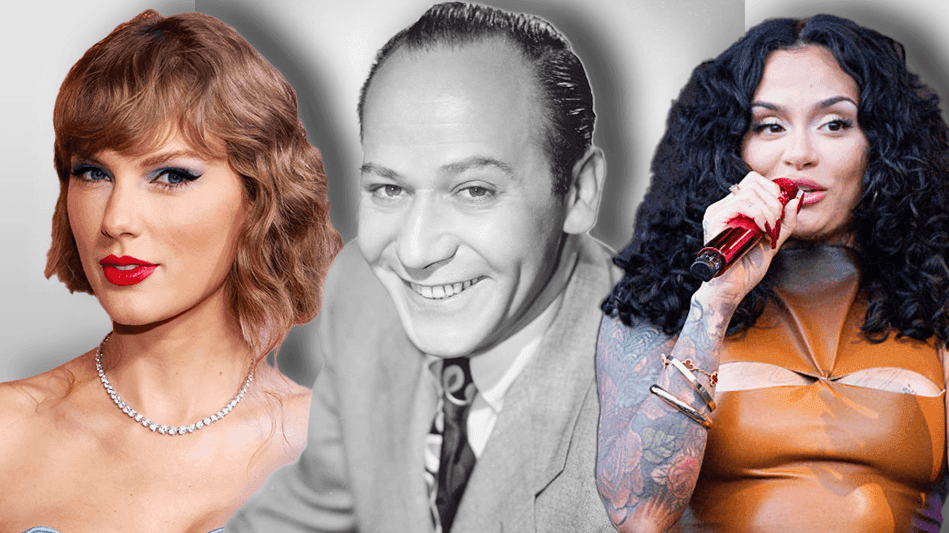
Kehlani, 'Folded'

Not to be forgotten at No. 2 on the R&B list is Kehlani's "Folded."

Kehlani Ashley Parrish, an Oakland-born singer who once aspired to be a Juilliard-trained dancer, shows off her moves in the video, where she sports a completely see-through dress and essentially dances naked alongside women in their underwear.

Again, while this is not a new phenomenon for a music video, it seems extremely egregious when placed next to the 1949 film "Neptune's Daughter" that popularized "Baby, It's Cold Outside."

While Kehlani carries laundry and talks about folding clothes in her music video, the obvious inference is that she is talking about her preferred sexual position.

The lyrics website Genius states, "Here, Kehlani seems to be implying she can 'fold' her body for her lover if they decide they want to become romantic again."

Taylor Swift, 'The Fate of Ophelia'

It comes as no surprise that Taylor Swift is topping the pop charts with "The Fate of Ophelia," even though the music video came out in October. Swift obviously sexualizes herself — maybe Dean Martin did too? — as a 1950s showgirl, but the song centers on Shakespeare's "Hamlet" and has Swift nearly dying from heartbreak in the lyrics.

Some lyrics are almost direct lifts from "Hamlet," but the song as a whole is light-years away in terms of degeneracy in comparison to the other items on this list.

However, it is hard to imagine how it is conceivable that Swift dancing in lingerie and being groped on a pirate ship is less controversial than, "My sister will be suspicious (Gosh, your lips look delicious)."

While music lovers may notice that wild offense-taking now skips the industry unless it serves a political purpose, that equilibrium rarely holds forever. Cultural pendulums do swing.

When they do, the correction sometimes arrives loudly — through provocation, politics, or spectacle. But just as often, it comes quietly, in the form of art that refuses to scandalize at all.

Ella Langley, 'Choosin' Texas'

Which brings us to Ella Langley. Topping the country charts this Christmas with "Choosin' Texas," the Alabama native commits a far subtler transgression: She sings plainly about heartbreak, drinking alone, and the ache of love gone wrong — without sexual exhibitionism, ideological signaling, or manufactured outrage. She even manages to say a few positive things about Texas and Tennessee. In 2025, that kind of restraint may be the most disruptive posture left.

From Puff Daddy to Prison Daddy


Sean “Diddy” Combs — mogul, producer, and architect of a billion-dollar brand — was sentenced Friday to more than four years in federal prison for his despicable crimes against women. The sentence won’t shatter the glossy mythology he’s sold for decades. The headlines will obsess over the punishment and whether justice was done. But the deeper story is the culture he built — and that millions of Americans continue to bankroll.

Let’s stop pretending: No other major American music genre has a criminal record like rap. This isn’t a bad apple. It’s a poisoned orchard.

No other genre has turned crime, misogyny, and hatred for order into cultural virtues.

Tay-K was convicted of murder in 2019 and again in 2020 for a separate shooting. He’s serving 55 years. South Park Mexican is doing 45 years for child sexual assault. C-Murder? Life for killing a teenager. Big Lurch is doing life for murder and cannibalism. B.G. just got out after 14 years for weapons and witness tampering. Chris Brown — who still charts — pled guilty to felony assault of Rihanna and keeps finding trouble. Shyne served nearly a decade for a nightclub shooting that Diddy himself may have committed. Kodak Black, Max B, Crip Mac, Flesh-N-Bone, Big Tray Deee — all convicted felons.

That’s not some obscure playlist. That’s the soundtrack.

Try compiling a similar rap sheet for classical violinists, country balladeers, or pop crooners. Even rock, infamous for its drug excesses, never reached this level of violence or degradation.

Still think this is just about “personal behavior”? Listen closer.

Even when not committing crimes, many hip-hop “artists” glorify them. Anti-police, anti-woman, anti-civilization — these aren’t exceptions but industry standards. “F**k the police” wasn’t a phase. It was a forecast. “Shoot a cop, that’s my solution” isn’t satire. It’s strategy.

You don’t have to dig to find chart-toppers dripping with misogyny, death threats, and celebrations of drug-dealing and street violence. This isn’t fringe content. They’re topping the Billboard charts.

In what other industry could someone openly brag about pimping women, selling narcotics, or “sliding on ops” and still land Super Bowl halftime shows, Sprite deals, and White House invitations?

RELATED: Bad Bunny gets the ball, football fans get the finger

Photo by Kevin Mazur/Getty Images

Defenders call it “storytelling,” “street realism,” or “art.” But these aren’t neutral observations. They’re recruitment ads for a culture of moral rot. Many rappers don’t just depict criminality — they embody it, and their fans reward them for it.

Every stream, download, and ticket sale is a vote for decadence — a few more dollars for the next defense attorney, a little more validation for the notion that responsibility is oppression and chaos is authenticity.

Even academics have noticed. Law journals have dissected the way hip-hop glorifies violence while its corporate enablers polish the packaging. The same elites who decry “toxic masculinity” will nod along to lyrics calling women “bitches” and “hoes.” The same corporations that preach “inclusion” will bankroll artists who sneer at civilization. The same politicians pushing gun control will campaign beside men who made fortunes romanticizing drive-bys.

Yes, hip-hop has artistic power. It grew from hardship and gave voice to the voiceless. But no other genre has turned crime, misogyny, and hatred for order into cultural virtues.

There’s a difference between reflecting reality and selling it — between giving voice to pain and turning pain into product. Today’s rap industry isn’t holding up a mirror to society. It’s pointing a gun at it.

The Diddy sentencing should be a wake-up call. It isn’t just a reckoning for one man. It’s a moment of clarity for a culture that has lost its moral compass.

The question isn’t only who committed the crime. It’s who bought the album.

Rap mogul torches liberal host for claiming Trump is a 'con artist': 'You're just not that smart'


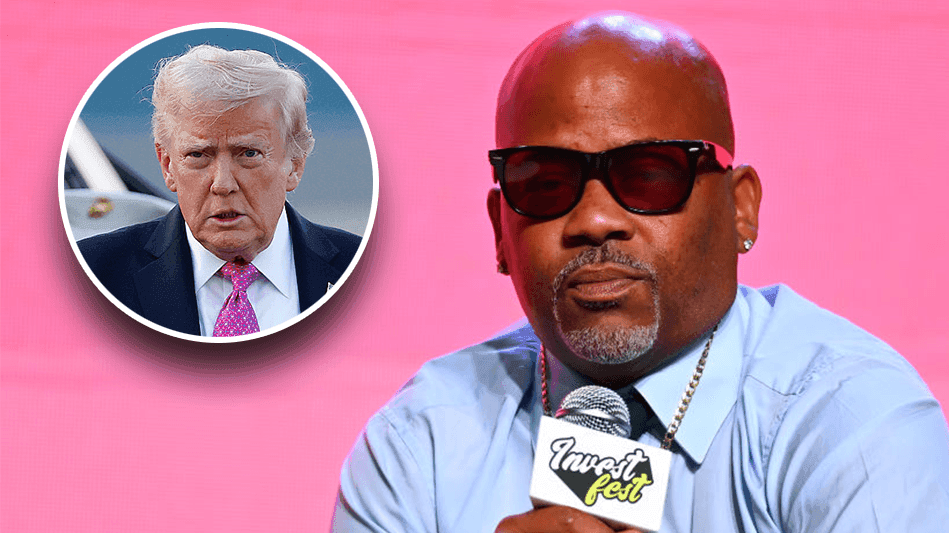
Record executive Damon Dash went scorched-earth on a radio show this week and defended President Trump over what he called "ridiculous" and "dumb" commentary.

Dash was the co-founder of Roc-A-Fella Records with Jay-Z. The company launched their careers and was known as a pioneering independent label.

'Why you think they keep you here? They want y'all to make us dumb!'

Recent reports that claimed that Dash filed for bankruptcy and is strapped for cash sparked several contentious debates when he appeared on "The Breakfast Club" this week.

The Power 105.1 program is known predominantly for its flamboyant host Lenard McKelvey, aka Charlamagne tha God, who was not shy about repeatedly calling Dash "broke" and claiming he is lying about having his assets in order.

When the bankruptcy was brought up, Dash defended himself by saying, "Do you know how many times Donald Trump filed?"

"Oh, a lot," Charlamagne replied. "He's known as a terrible businessman."

Shocked, Dash responded, "He's the president!"

Still, Charlamagne asserted, "He still is known as a terrible businessman. Actually, a con man."

Dash then asked the host, "Do you know how confidently dumb you sound?"

Dumbfounded, the mogul continued. "You're saying it's bad — he went bankrupt six times. He's a billionaire, and he's the president."

RELATED: Charlamagne shocks audience with admission about 'that damn COVID shot'

The host pushed forward with the notion that the president is indeed a "terrible businessman and con artist," but Dash was not having it.

Adamant about clearing his and the president's name on the matter, Dash said he wanted to "go back to how ridiculous" he felt the host was being.

"The president filed for bankruptcy eight times, still a billionaire. He's saying he's a bad businessman. You're just not that smart."

Charlamagne and Dash battled for control of the interview's narrative throughout, with the radio personality continuously calling into question the businessman's claims, which were predominantly about how he has protected unseen wealth and assets by putting them under other names and businesses.

Some of Dash's most pointed comments were aimed at Charlamagne's job, which has kept him cooped up in a radio studio most days for years.

"You've missed the whole world," Dash claimed.

RELATED: The market fired Jimmy Kimmel

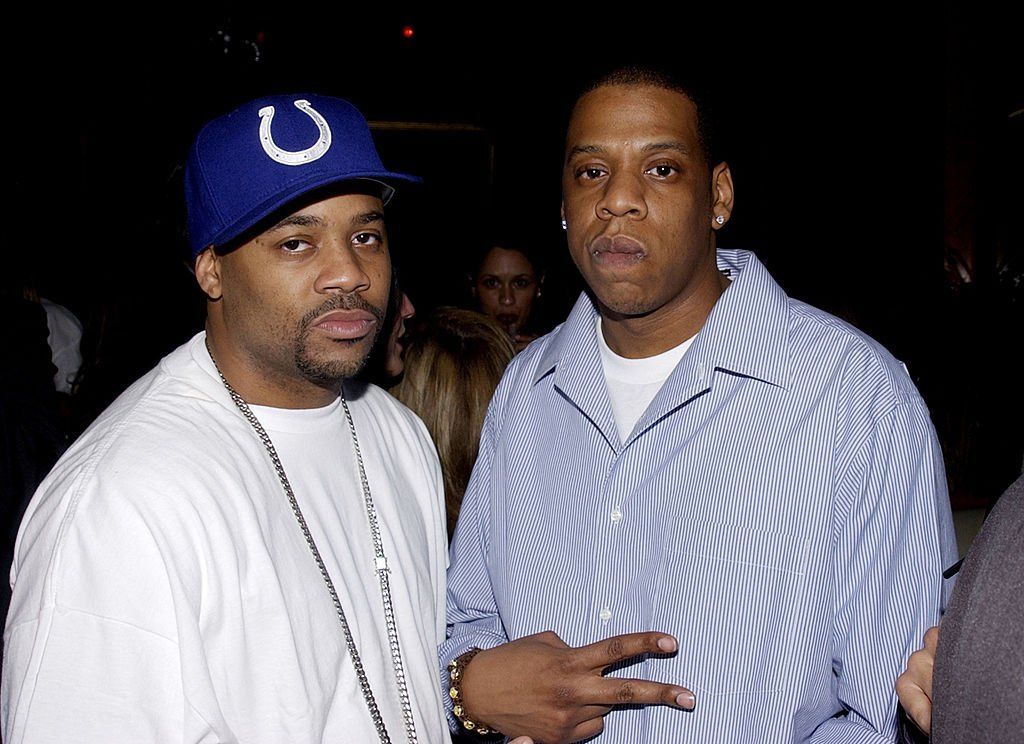
Damon Dash and Jay-Z at the Grammys in 2002. Photo by Ray Mickshaw/WireImage
"You don't know what you're talking about. And you're saying it confidently," Dash said. "And you're in an algorithm where people actually believe you."

Dash then put the nail in the coffin, calling the team of broadcasters a tool for the establishment.

"Why you think they keep you here? They want y'all to make us dumb!"

Like Blaze News? Bypass the censors, sign up for our newsletters, and get stories like this direct to your inbox. Sign up here!

Serena Williams and ‘The View' DEFINE ‘crip walking’ as black culture


When Serena Williams won the gold medal during the 2012 Olympics, the tennis star celebrated with the crip walk — a dance move that was popularized by California gangsters.

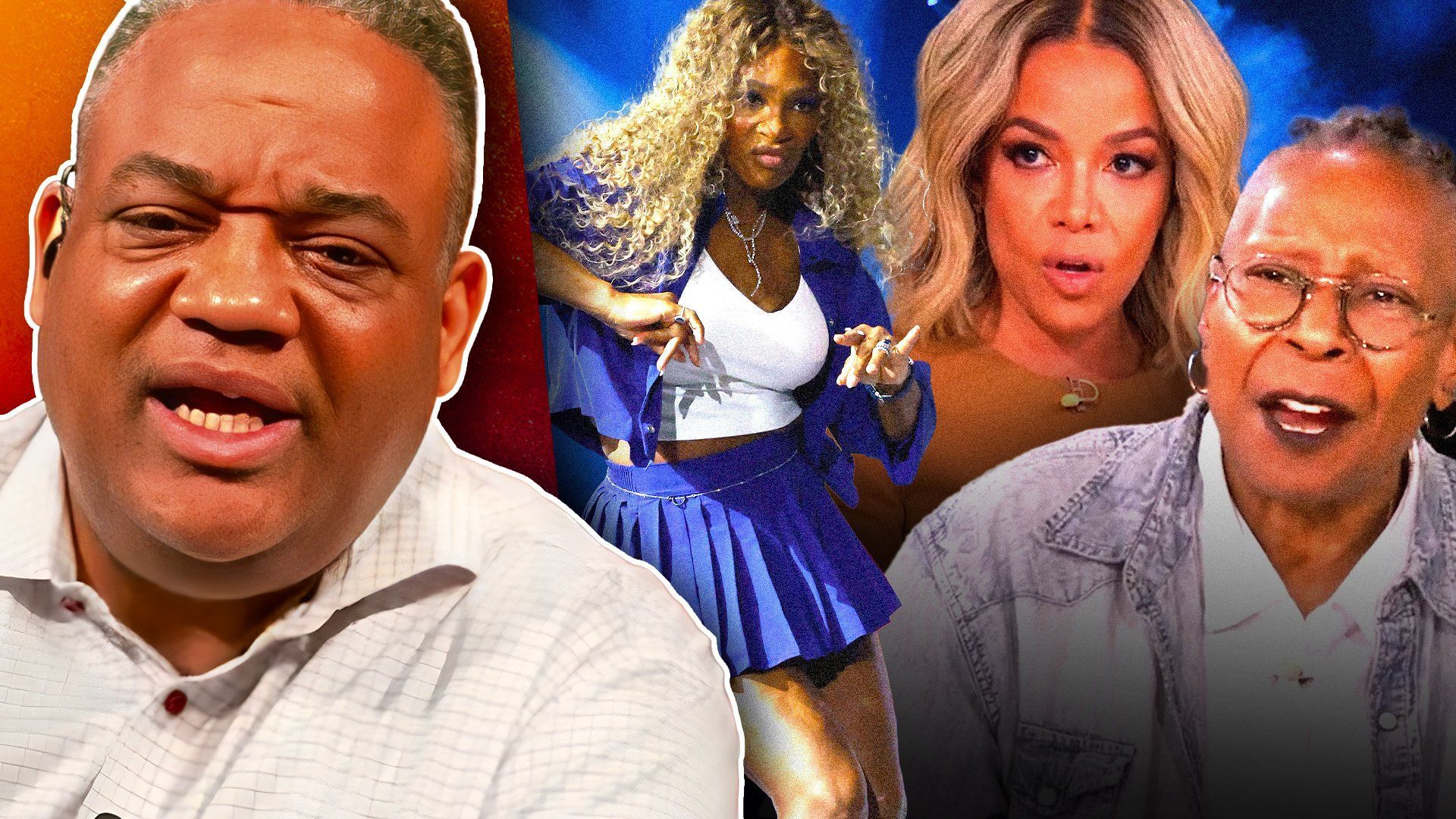
Thirteen years later, Williams took the stage during the Super Bowl halftime show alongside rapper Kendrick Lama and performed the crip walk again. While Jason Whitlock of “Fearless” is far from amused by the display, the hosts of "The View" are lauding the performance as a celebration of “black culture.”

“When she did the same crip walk after she beat Sharapova in the 2012 Olympics, she did that walk then, and it was on Wimbledon grass, and everyone said that it was disrespectful,” Sunny Hostin began.

“What she was doing was being her authentic self, an homage to her roots from Compton, and it was black joy and black excellence. You’ve got the greatest female athlete of all time coming out and enjoying it,” Hostin continued, adding, “This was about Serena being her authentic self and being the essence of black culture.”


“I don't know Sunny Hostin’s background, it’s probably similar to Serena in terms of probably a disconnect from the hood culture that she’s trying to attach herself to,” Whitlock says.

When Whitlock initially saw the clip from "The View," he was “stunned” that everyone “seemed to be in agreement” that crip walking was representative of black culture.

“Can they honestly believe this? Or is this just what they have to say to survive on television?” he asks guest Delano Squires.

“I think it depends on who you ask and in what context you ask it. I’ll say it this way. When a black artist is winning awards, let’s say Beyonce winning a Grammy for her country album or a black athlete is winning an award or a Super Bowl or whatever the case may be, then I think black folks are like, ‘Yes, this is for the culture, this is a win,'” Squires tells Whitlock.

“But when a hip-hop artist is being criticized for the content that they put out there, for the guns, the murder, the ops, the drugs, the degradation and disrespect for women, then that same person will say, ‘Oh no, that’s not black culture, that’s hip-hop, that’s that particular individual,'” he continues.

“I think that dichotomy lives in almost all of us and certainly in the people who are talking heads and have the platforms on TV and mainstream media,” he adds.

Want more from Jason Whitlock?

To enjoy more fearless conversations at the crossroads of culture, faith, sports, and comedy with Jason Whitlock, subscribe to BlazeTV — the largest multi-platform network of voices who love America, defend the Constitution, and live the American dream.

Harris Campaign Paid $100K to Obama for ‘Travel’ and $58K to Rapper Cardi B, Who Claimed She ‘Didn’t Get a Dollar’ From Campaign

Kamala Harris’s campaign paid nearly $100,000 to a shell company for former president Barack Obama to travel to events and roughly $60,000 to rapper Cardi B, who said she "didn’t get a dollar" to appear alongside the failed presidential candidate.

The post Harris Campaign Paid $100K to Obama for ‘Travel’ and $58K to Rapper Cardi B, Who Claimed She ‘Didn’t Get a Dollar’ From Campaign appeared first on .

Macklemore leads 'F*** America!' chant at pro-Palestinian concert


“F*** America!”

So went the chant led by rapper Macklemore at a pro-Palestinian Seattle concert on Saturday night. While the audience responded with glee, others, including Elon Musk, later condemned the "Thrift Store" artist's anti-American rhetoric.

The jarring moment occurred as Macklemore — whose legal name is Ben Haggerty — performed at the Palestine Will Live Forever Festival at the Seward Park Amphitheater in Seattle, Washington.

'It's a genocide, absolutely, and it has been since 1948, and don't get it twisted.'

According to the official Instagram page for the festival: "We resist when we fight, we resist when we educate, we resist when we organize. Our people living under the brutal occupation of the settler colonial project resist in every breath they take. Despite the pain and suffering, our people in Falasteen find a way to LIVE."

Proceeds from the Palestine Will Live Forever Festival went to various groups providing aid to Palestinians, including the controversial United Nations Relief and Works Agency.

Welcome to the terrordome

Last month, the United Nations admitted that 19 United Nations Relief and Works Agency staff have been accused of being involved in the Hamas terror attack on Israel on Oct. 7, 2023, when roughly 1,200 people were killed and another 250 were taken to Gaza as hostages.

Nine of the accused were fired while the U.N. stated that "appropriate measures will be taken" for the remaining 10 employees.

During the Palestine Will Live Forever Festival, Macklemore admitted that he "didn't know" much about the decades-long hostilities between Palestine and Israel until the terrorist attacks on Oct. 7.

Apt pupil

Regarding how he got involved in "the movement," Macklemore told the audience at the festival, "October 7 happens, and I started paying attention. I started learning. I started listening. I start going back and learning the history."

The rapper — who is best known for his 2012 song about shopping at a thrift store — proclaimed that the Israel-Hamas conflict "is actually not that complicated." Macklemore then accused Israel of committing genocide.

"It's a genocide, absolutely, and it has been since 1948, and don't get it twisted," Macklemore told the crowd.

Video shows Macklemore saying, "Straight up. Say it. I’m not gonna stop you. I’m not gonna stop you. Um, yeah, f*** America." The crowd thunderously cheered the anti-American remark.

'What a tool'

There were hundreds of online commentators slamming Macklemore for the disrespectful jibe, including Elon Musk, who said of the rapper, "What a tool."

Others called for boycotts of Adidas and TaylorMade Golf — which have sponsorship deals with Haggerty.

The rapper performed his “Hind’s Hall” song at the festival.

The song praises anti-Israel protests that took place on college campuses. The song is named for the actions of pro-Palestinian activists who occupied Hamilton Hall at Columbia University and renamed the building "Hind's Hall," in honor of Hind Rajab, a young Palestinian girl who was killed in Gaza City during the Israel-Hamas War.

In the song, Haggerty pushes leftist tropes such as: "f*** the police" and a "system that was designed by white supremacy."

The entertainer said all proceeds from the song go to the UNRWA.

Haggerty recently released "Hind's Hall 2," which is another anti-Israel anthem.

The chorus of the song states: "From the river to the sea. Palestine will be free."

The "from the river to the sea" anti-Semitic phrase calls for the establishment of a Palestine state from the Jordan River to the Mediterranean Sea while completely eliminating the state of Israel.

The rapper warns Vice President Kamala Harris that she won't win Michigan in the 2024 presidential election if she doesn't "stop sending money and weapons" to Israel.

The song's lyrics include: "Capitalism killing us that's something we can't afford."

The 41-year-old rapper's net worth is reportedly $25 million.

In August, Macklemore canceled an October concert in Dubai over the United Arab Emirates' alleged role "in the ongoing genocide and humanitarian crisis" in Sudan.

Macklemoron

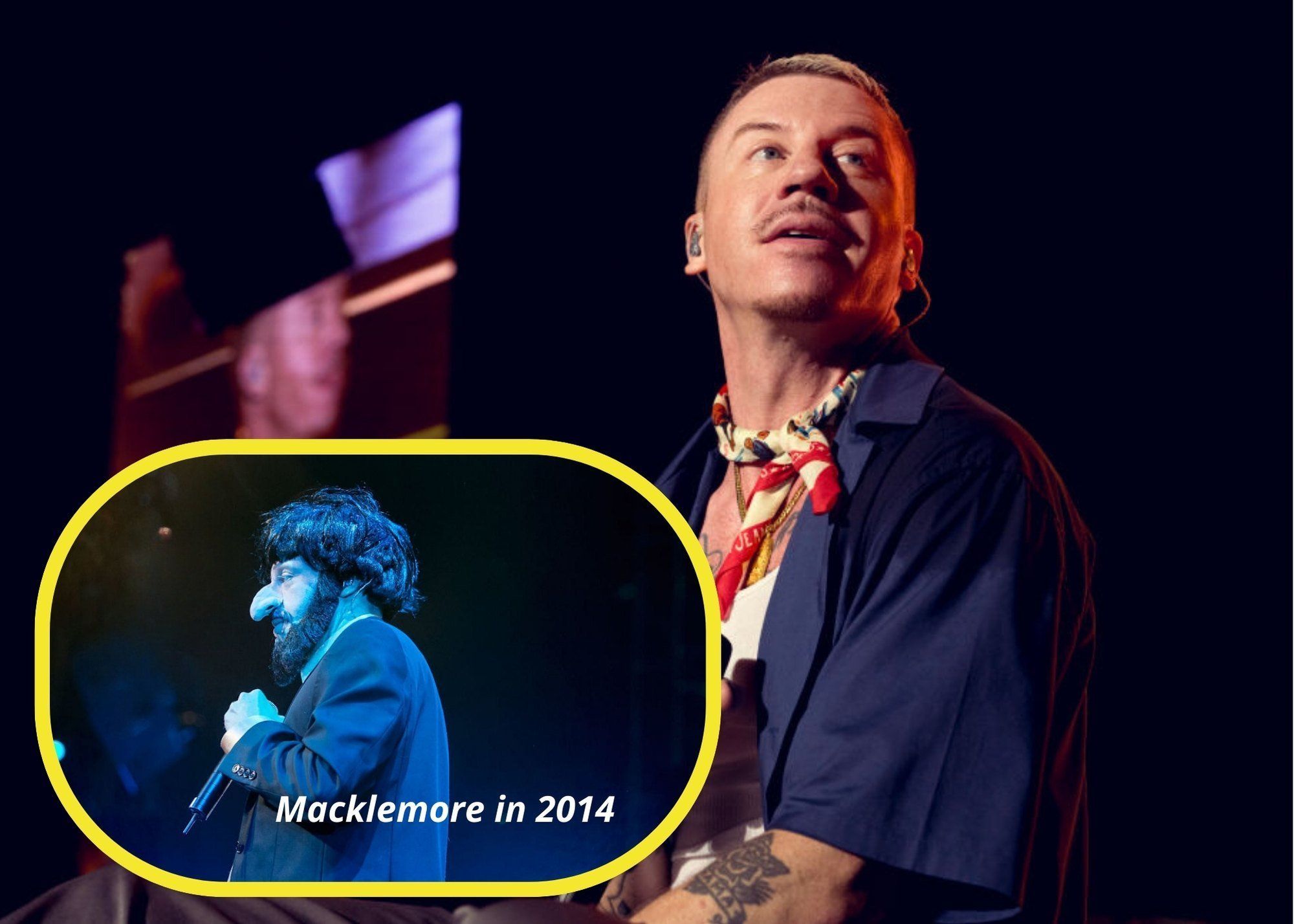
In 2014, Macklemore wore a costume at a Seattle concert that some deemed anti-Semitic and "deeply offensive" because it appeared to be a caricature of a Jewish man.

Haggerty apologized by saying, “I wasn’t attempting to mimic any culture, nor resemble one. A ‘Jewish stereotype’ never crossed my mind.”

“There is no worse feeling than being misunderstood, especially when people are hurt or offended,” the "Same Love" rapper said at the time.

Macklemore claimed it was “surprising and disappointing” that photos of his “disguise were sensationalized leading to the immediate assertion that my costume was anti-Semitic.”

Like Blaze News? Circumvent the censors, sign up for our newsletters, and get stories like this direct to your inbox. Sign up here!

Michelle Obama's Get-Out-the-Vote Drive Targets Fans of Infamous Domestic Abusers

Michelle Obama's voter participation organization is spending big on Facebook ads to ensure that fans of several high-profile domestic abusers have the information they need to vote in the upcoming elections.

The post Michelle Obama's Get-Out-the-Vote Drive Targets Fans of Infamous Domestic Abusers appeared first on .

Whitlock called it: Diddy is the Jeffrey Epstein of the music industry


It gives a whole new meaning to "Bad Boy for Life."

Sean “Diddy” Combs may be adding a new moniker to his lengthy roster of aliases: the eight-digit number assigned to inmates in the federal prison system.

The rap impresario's recent indictment on sex trafficking and racketeering charges has sent shockwaves through the industry, lending credence to Blaze Media commentator Jason Whitlock's speculation that Diddy is the Jeffrey Epstein of the music biz.

After leaving office, Barack Obama was spotted hanging out with Diddy. What were the two men up to — and did it have anything to do with the 1,000 bottles of baby oil the feds seized from the latter's mansion?

Arrested on serious federal charges, the 54-year-old has been denied bail and is currently in solitary confinement at the Special Housing Unit of the Metropolitan Detention Center in Brooklyn. This high-security unit is known for housing dangerous and high-profile inmates like R. Kelly, a man Diddy knows very well, disgraced crypto mogul Sam Bankman-Fried, and Ghislaine Maxwell, Jeffrey Epstein’s right-hand woman.

The indictment accuses the once-untouchable mogul of running a “criminal enterprise” through his vast business empire, with allegations spanning sex trafficking, forced labor, kidnapping, arson, bribery, and obstruction of justice.

Prosecutors argue that Diddy’s continued freedom jeopardizes the integrity of the case, pointing to his previous attempts to contact victims and witnesses as evidence. His legal team will appeal the bail denial before U.S. District Court Judge Andrew Carter. If the appeal fails, Diddy will remain behind bars.

And, many would argue, this is probably where he deserves to be.

Diddy’s dudes

Diddy’s ties to powerful figures in Hollywood and politics are strikingly similar to Jeffrey Epstein’s network. Whereas Epstein had a "thing" for young girls, Diddy appears to have one for young boys — specifically, up-and-coming young talent in the music industry.

www.youtube.com

For example, the resurfacing of disturbing videos showing a 15-year-old Justin Bieber speaking with Diddy raises some very serious questions. In the footage, Diddy can be heard stating, "Where we hanging out and what we’re doing we really can’t disclose. But it’s definitely a 15-year-old’s dream."

Or nightmare.

The 2016 Howard Stern interview with Usher revealed unsettling details about his experience living with Diddy at just 14 years old. Why, one wonders, was a 14-year-old boy residing with a grown man with no ties to his family?

Diddy’s vast network includes high-profile names like Will Smith and Ashton Kutcher, both of whom have also faced controversy in recent times. As you no doubt recall, Smith’s public image was severely damaged when he assaulted Chris Rock at the Oscars. As for Kutcher, his extremely close friendship with Danny Masterson, a Scientology nut and convicted rapist, has drawn widespread criticism and damaged his own reputation.

Then there’s Cuba Gooding Jr. Remember him? Once a Hollywood powerhouse, the actor is best known for his performances in films like "A Few Good Men" and "Jerry Maguire," where he delivered the iconic, "Show me the money!" line. Subsequent roles in "Men of Honor" and "Pearl Harbor" further solidified his status as a leading man — on screen and, it seems, in Mr. Diddy’s life.

In a recent interview with Patrick Bet-David, Gooding Jr. appeared visibly uncomfortable and evasive when questioned about the allegations surrounding the music man. His response was a jittery mess of mumbling and evasion, leading YouTube commenters to speculate that Gooding Jr. might be hiding more about the alleged criminal activities than he’s letting on. His reluctance to offer clear answers has sparked rumors about possible connections to Diddy and whether fear or complicity is driving his silence.

Diddy's diary

Much like Epstein’s infamous black book, Diddy’s Rolodex was supposedly packed with high-profile names. As the New York Post reported, he forged partnerships with billionaire investor Ron Burkle and hedge fund titan Ray Dalio. Diddy’s fashion line hit Macy’s and Dillard’s, and he took major business strides with stakes in Revolt TV and beverage giant Diageo, a collaboration with Estée Lauder heir William Lauder, and he made deals with Zac Posen and Liz Claiborne. He also launched a water brand with Mark Wahlberg and partnered with Marc Benioff of Salesforce to build a marketplace for black-owned businesses.

In the early 2000s, Diddy made a bold move by cold-emailing then-Dallas Mavericks owner Mark Cuban, pitching his idea to design the team’s uniforms. Diddy's gamble paid off, linking his Sean John line with a major sports team. Cuban, known for his nonstop, left-leaning diatribes, has been unusually tight-lipped about this Diddy connection.

But, as always, there’s more.

Diddy's danger?

After leaving office, Barack Obama was spotted hanging out with Diddy. What were the two men up to — and did it have anything to do with the 1,000 bottles of baby oil the feds seized from the latter's mansion?

What we do know, however, is that Diddy didn’t act alone. He was, up until very recently, actively engaged with a network of influential figures. Like Epstein, Diddy built connections with high-profile individuals to protect his own nefarious activities. The multimillionaire's annual White Party, a magnet for the elite of American culture over the past 20-something years, only reinforced his image of invincibility.

Now, it remains to be seen whether Diddy will reveal his accomplices or follow in Epstein’s footsteps, conveniently suiciding himself before he can incriminate anyone truly powerful.

To quote Diddy's one-time protégé Shyne, who recently claimed he was his boss' "fall guy" in the 1999 nightclub shooting that landed him 10 years in lock-up: "Whatcha gonna do when s**t hits the fan, take it like a man or snitch like a b***h?"