The Ultimate Gift Guide For The Trad Wife In Your Life
 Twenty-five gift ideas to make merry every homemaker you're shopping for this Christmas.
There was a time when Thanksgiving pointed toward something higher than stampedes for electronics or a long weekend of football. At its root, Thanksgiving was a public reminder that faith, family, and country are inseparable — and that a free people must recognize the source of their blessings.
Long before Congress fixed the holiday to the end of November, colonies and early states observed floating days of thanksgiving, prayer, and fasting. These were civic acts as much as religious ones: moments when communities asked God to protect them from calamity and guide their families and their nation.
The Continental Congress issued the first national Thanksgiving proclamation in 1777, drafted by Samuel Adams. The delegates called on Americans to acknowledge God’s providence “with Gratitude” and to implore “such farther Blessings as they stand in Need of.”
Twelve years later, President George Washington proclaimed the first federal day of thanksgiving under the Constitution. He asked citizens to gather in public and private worship, to seek forgiveness for “national and other transgressions,” and to pray for the growth of “true religion and virtue.”
Our problems — social, fiscal, and moral — are immense. But they are not greater than the God our ancestors trusted.
Other presidents followed suit. During rising tensions with France in 1798, John Adams declared a national day of “solemn humiliation, fasting, and prayer,” arguing that only a virtuous people could sustain liberty. The next year he called for another day of thanksgiving, urging citizens to set aside work, confess national sins, and recommit themselves to God.
For generations, this was the American understanding: national strength flowed from moral character, and moral character flowed from religious conviction.
In 1863, President Abraham Lincoln — responding to years of lobbying by Sarah Josepha Hale — established the last Thursday in November as a permanent national Thanksgiving. Hale saw the holiday as a unifying civic ritual that strengthened families and reminded Americans of their shared heritage.
Calvin Coolidge echoed this tradition in 1924, observing that Thanksgiving revealed “the spiritual strength of the nation.” Even as technology transformed daily life, he insisted that the meaning of the day remain unchanged.
But as the country drifted from an agricultural rhythm and from public expressions of faith, the holiday’s original purpose faded. The deeper meaning — gratitude, repentance, unity — gave way to distraction.
Today, America marks Thanksgiving with a national character far removed from the one our forebears envisioned. The founders believed public acknowledgment of God’s authority anchored liberty. Modern institutions increasingly treat religious conviction as an obstacle.
Court rulings have redefined marriage, narrowed the space for religious conscience, and removed long-standing religious symbols from public grounds. Citizens have been fined, penalized, or jailed for refusing to violate their beliefs. The very freedoms early Americans prayed to preserve are now treated as negotiable.
At the same time, other pillars of national life — family stability, civic order, border security, self-government — erode under cultural and political pressure. As faith recedes, government fills the void. The founders warned that a people who lose their internal moral compass invite external control.
Former House Speaker Robert Winthrop (Whig-Mass.) put it plainly in 1849: A society will be governed “either by the Word of God or by the strong arm of man.”
The collapse of religious conviction in much of Europe created a vacuum quickly filled by ideologies hostile to Western values. America resisted this trend longer, but the rising influence of secularism and identity ideology pushes our society toward the same drift: a nation less confident in its heritage, less united by a common purpose.
Ronald Reagan saw the warning signs decades ago. In his 1989 farewell, he lamented that younger generations were no longer taught to love their country or understand why the Pilgrims came here. Patriotism, once absorbed through family, school, and culture, had been replaced by fashionable cynicism.
Thanksgiving offers the antidote Reagan urged: a return to gratitude, history, and shared purpose.
RELATED: Why we need God’s blessing more than ever
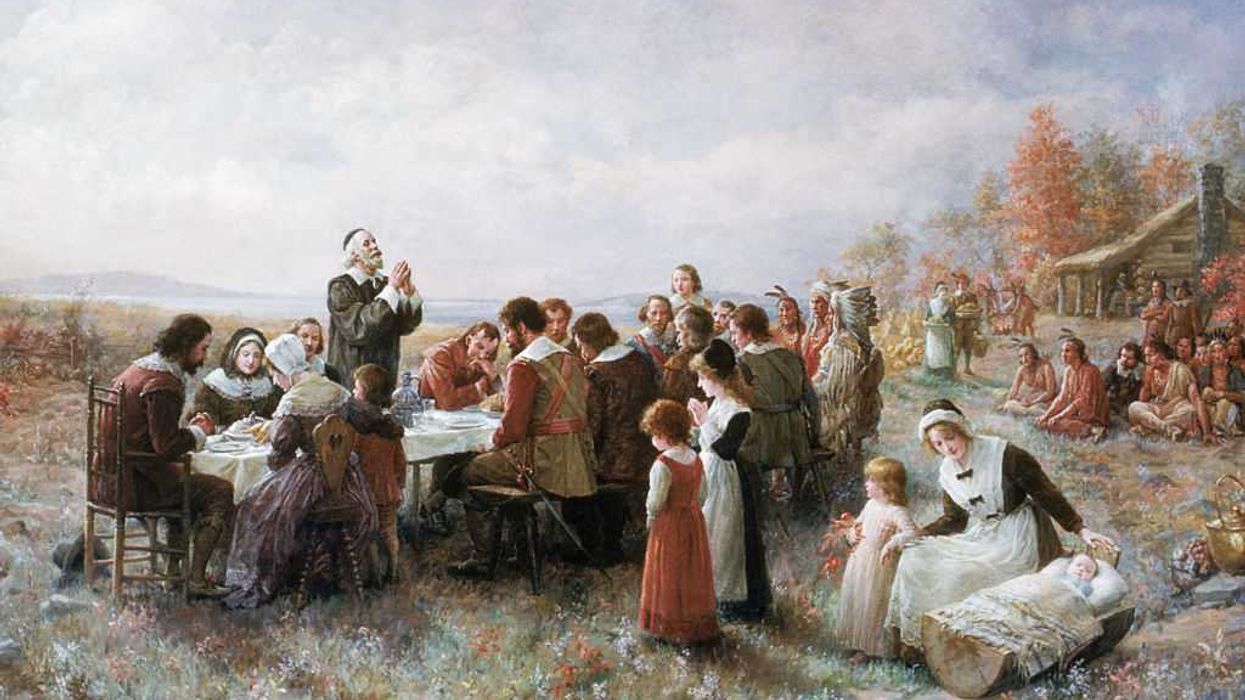
Thanksgiving was meant to be the clearest expression of a nation united by faith, family, and patriotism. It rooted liberty in gratitude and gratitude in God’s providence.
Reagan captured that spirit in 1986, writing that Thanksgiving “underscores our unshakable belief in God as the foundation of our Nation.” That conviction made possible the prosperity and freedom Americans inherited.
Today’s constitutional conservatives must lead in restoring that heritage — not by nostalgia, but by example. Families who teach gratitude, faith, and national purpose build the civic strength the founders believed essential.
Thanksgiving calls each of us to humility: to recognize that national renewal begins with personal renewal. Our problems — social, fiscal, and moral — are immense. But they are not greater than the God our ancestors trusted.
That confidence is the heart of Thanksgiving. It is why the Pilgrims prayed, why Congress proclaimed days of fasting and praise, why Lincoln unified the holiday, and why generations of Americans pause each November to give thanks.
Editor’s note: A version of this article first appeared at Conservative Review in 2015.
Although America’s 250th birthday is still one year away, there is a fun, unique, and mathematical fact about this year's 249th birthday that will help illustrate just how young America is as a nation.
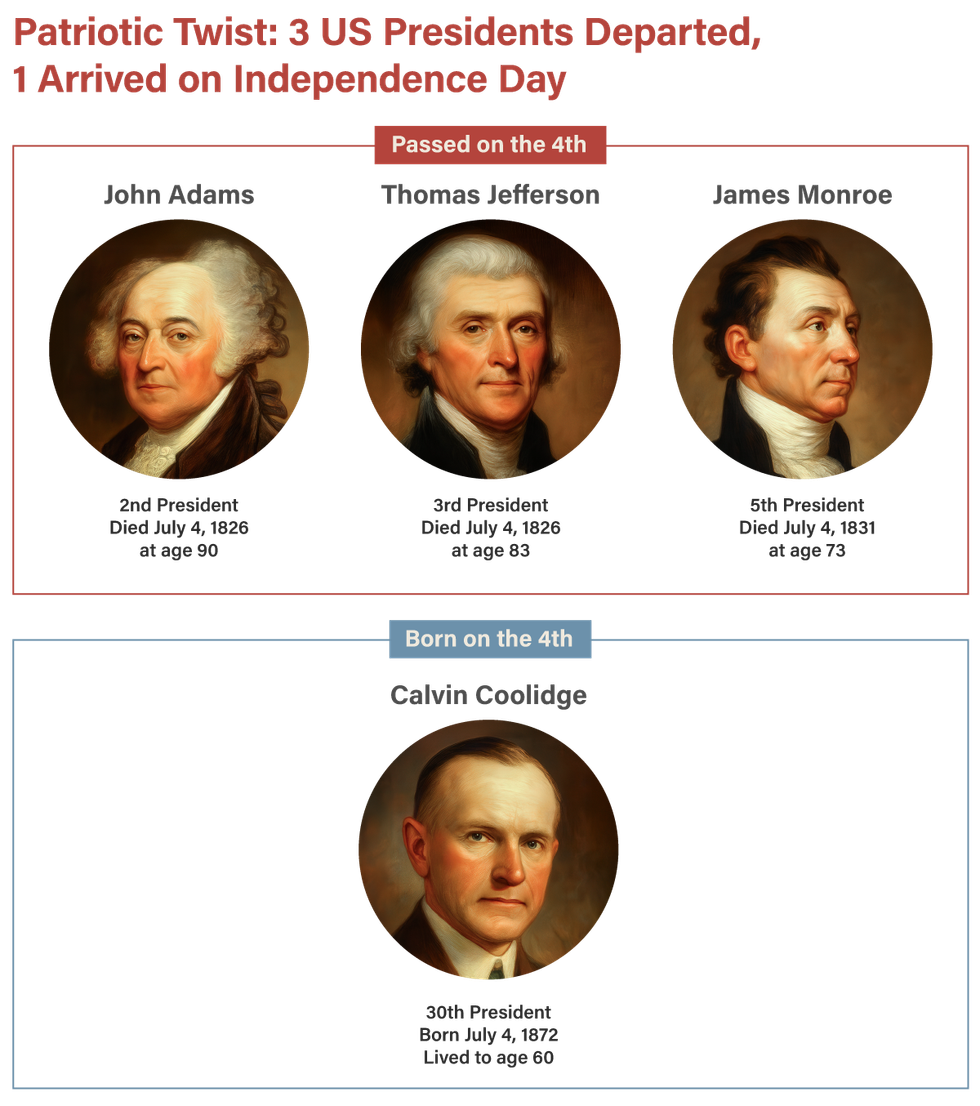
To do that, we can start with the age of President Thomas Jefferson on the day he died — significantly enough, on the day America was celebrating its 50th birthday: July 4, 1826. Jefferson was 83.
Just three 83-year-olds living back-to-back-to-back takes you to the year our nation was founded.
As an interesting aside, our third president was not the only commander in chief whose life was historically tied to America's birthday. President John Adams also died within five hours of Jefferson on July 4, 1826. Five years later, on July 4, 1831, our fifth president and founding father James Monroe also passed away.
Not to be too maudlin, one president was actually born on the Fourth of July. In 1872, Calvin Coolidge came into the world and would grow up to become America's 30th president.
RELATED: Yes, Ken Burns, the founding fathers believed in God — and His ‘divine Providence’
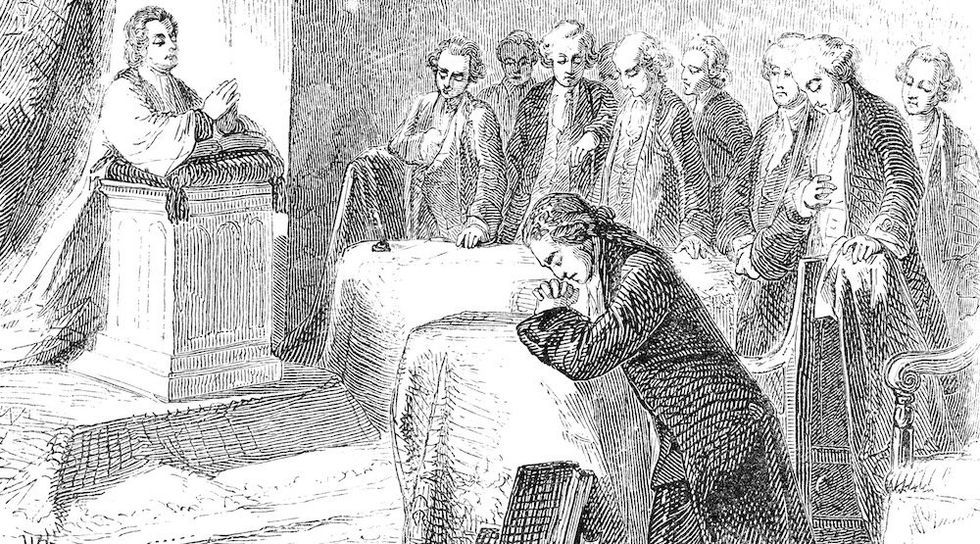
So what does Jefferson’s age of 83 have to do with this year’s national birthday celebration? Well, if you find an 83-year-old person living in America and go all the way back to the year he was born, you would find yourself in 1942. Now, in 1942, find a person who was born 83 years in the past, back to 1859. Finally, find a person born 83 years before that, and you arrive at ... 1776!
Just three 83-year-olds living back-to-back-to-back takes you to the year our nation was founded.
And while we're pondering this age business, it's also fun to look at the relative youth of those who signed the Declaration of Independence, keeping in mind that 56 delegates representing the 13 original colonies actually put their very “lives, fortunes, and sacred honor” on the line when they signed their John Hancock on the document (and, yes, one of them was indeed John Hancock).
Also, with present-day controversy in mind, it is worth noting that none of the representatives signed using an auto-quill.
The average age of the document’s signers was 44 years, which happened to be George Washington's age at the time. And Washington's nemesis across the pond, the other George, King George III of England? He was 38.
The oldest signer of the Declaration was (no surprise) Benjamin Franklin, age 70.
Finally, by now you have probably done the math to figure out the age of Thomas Jefferson — the document’s chief author — when he signed: 33.
Now, enjoy the celebrations and get ready for the biggest one of all, next year’s 250th!
Editor's note: A version of this article appeared originally at American Thinker.
Race relations in the United States have unraveled in recent years, not only because of genuine disagreement, but because many Americans now grow up believing the nation is fundamentally unjust — racist to the core, perhaps even irredeemable.
This idea, once fringe, now enjoys institutional backing. Critical race theory and DEI ideology assert that the U.S. was founded on slavery and white supremacy. And they dominate schools, corporations, and government agencies alike.
Don’t displace the Fourth of July. Don’t divide what should unite us.
As a result, America has seen a quiet comeback of sanctioned segregation. Colleges increasingly host race-based graduation ceremonies. Society encourages people to define themselves first by racial identity, not shared citizenship. That should alarm anyone who once marched for equal rights in the 1950s and ’60s.
When Americans stop thinking of each other as fellow citizens, the glue that holds the republic together dissolves.
Consider one example of this trend: the push for a separate “independence day” for black Americans.
On June 17, 2021, Joe Biden signed Senate Bill 475 into law, establishing a new federal holiday: “Juneteenth National Independence Day.” The bill commemorates June 19, 1865, when Union Gen. Gordon Granger arrived in Texas and issued General Order No. 3, announcing that slaves in the state had been freed by the Emancipation Proclamation — two years after it was signed.
Former slaves in Texas celebrated, and in the years that followed, Juneteenth spread across the South. But it never held central importance in the broader civil rights movement.
Juneteenth did not abolish slavery. It merely marked the day slaves in one state learned they had been legally freed. The Emancipation Proclamation, issued in 1863, applied only to states in rebellion — excluding Union-supporting border states like Kentucky and Delaware, where slavery remained legal until the ratification of the 13th Amendment in December 1865.
Some activists now argue that Juneteenth should serve as “Black Independence Day.” That’s a mistake.
This view implies that African Americans have no rightful claim to the Fourth of July or to the principles of the Declaration of Independence. But those ideas belong to all Americans — not just the descendants of the signers.
It’s true that many historical figures sought to exclude black Americans from the promise of the Declaration. Chief Justice Roger Taney made that argument explicit in the Dred Scott decision. Confederates like Alexander Stephens and John C. Calhoun claimed that “all men are created equal” never applied to African Americans.
They were wrong.
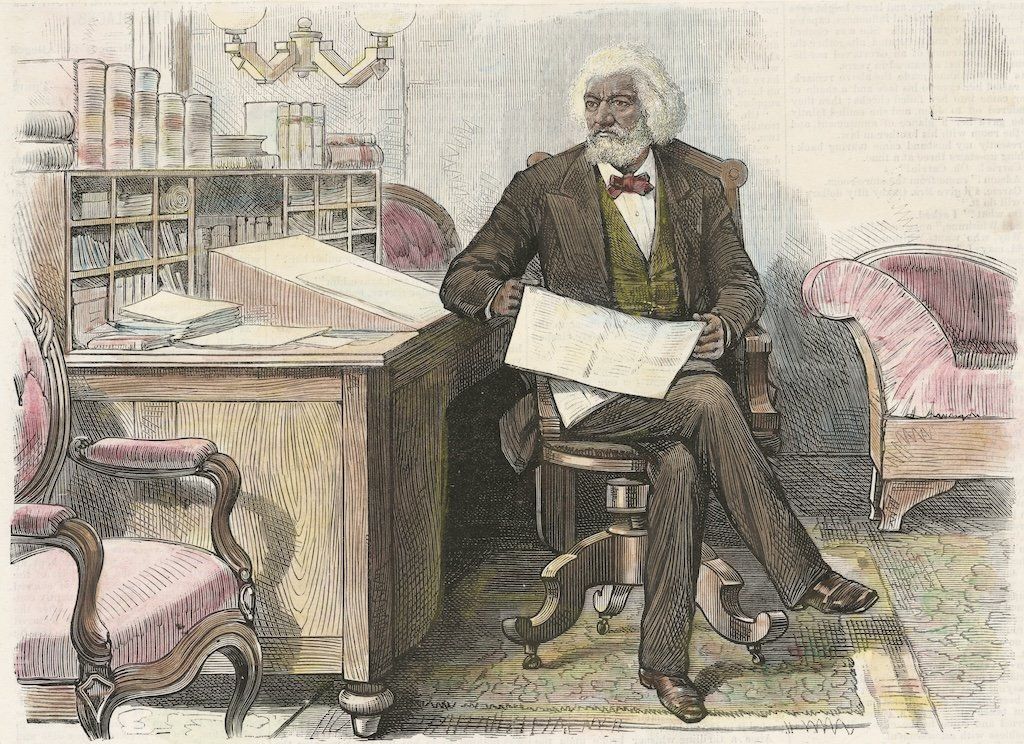
Some cite Frederick Douglass’ famous 1852 speech — “What to the Slave Is the Fourth of July?” — to support the idea that black Americans should reject the founding. But they ignore the full context.
Douglass, speaking two years after the passage of the Fugitive Slave Act, condemned the hypocrisy of a country that declared liberty while tolerating bondage. “What, to the American slave, is your Fourth of July?” he asked. “A day that reveals to him ... the gross injustice and cruelty to which he is the constant victim.”
But unlike Taney, Stephens, and Calhoun, Douglass didn’t reject the Declaration. He upheld it.
RELATED: Frederick Douglass: American patriot
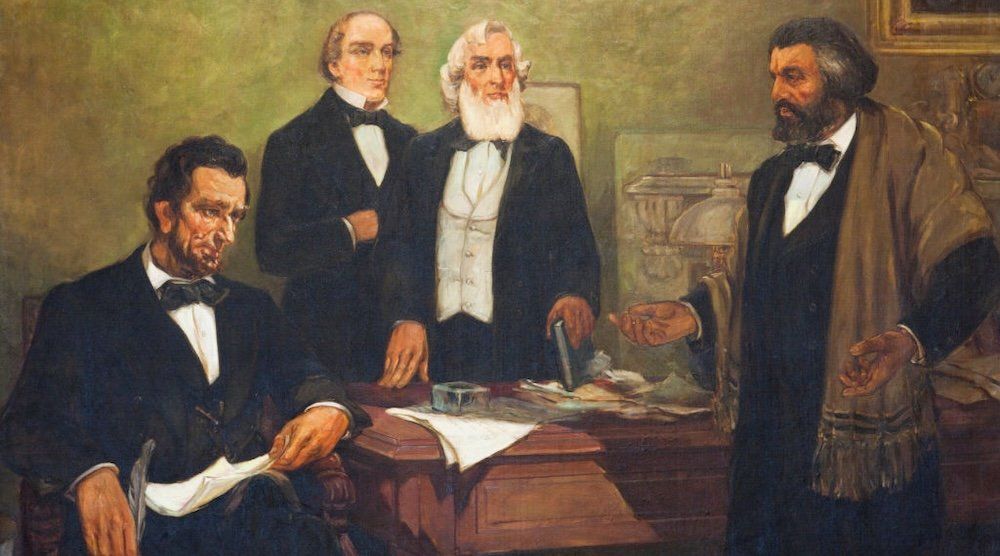
Douglass took hope from the principles it proclaimed and called on America to live up to them. He dismissed the Garrisonian claim that the Constitution was pro-slavery. “Interpreted as it ought to be interpreted,” he said, “the Constitution is a glorious liberty document.”
He believed America’s founding held the moral resources to defeat slavery — and it did.
America’s founders didn’t invent slavery; they merely inherited it. At the time of the Revolution, slavery was a global institution, practiced on every continent and defended by every empire. Slavery, including African slavery, was a manifestation of the argument of the Athenians at Melos as recounted by Thucydides in his history of the Peloponnesian War: “Right, as the world goes, is only in question between equals in power, while the strong do what they can and the weak suffer what they must.” Even Africans sold fellow Africans into slavery.
The Declaration of Independence marked a sharp break from that past. It asserted that all human beings possess natural rights — and that no one may rule another without consent.
Thomas Jefferson famously observed that humanity had long been divided into those born "booted and spurred” and those “born with saddles on their backs.” The founders rejected that model. They established a republic based on equality before the law, not the interests of the stronger over the weaker.
They also knew slavery contradicted those ideals. Many believed the institution would die out — an Enlightenment relic destined for extinction. Still, the political compromises they made to preserve the Union allowed slavery to persist, and it took a war to end it.
The Civil War was not a rejection of the founding. It was a fulfillment of it.
As Harry Jaffa wrote, “It is not wonderful that a nation of slaveholders, upon achieving independence, failed to abolish slavery. What is wonderful ... is that a nation of slaveholders founded a new nation on the proposition that ‘all men are created equal,’ making the abolition of slavery a moral and political necessity.”
The Declaration of Independence lit the fuse that ultimately destroyed slavery.
So let Americans celebrate Juneteenth — gratefully, joyfully, and historically. Let the holiday recall the biblical jubilee it was meant to evoke.
But don’t displace the Fourth of July. Don’t segment America’s founding. Don’t divide what should unite us.
As Douglass said: “I would not even in words do violence to the grand events, and thrilling associations, that gloriously cluster around the birth of our national independence.”
He went on: “No people ever entered upon the pathway of nations, with higher and grander ideas of justice, liberty and humanity than ourselves.”
Douglass understood something too many have forgotten: The genius of the American founding lies not in who it excluded but in the promise that, one day, it would include everyone.
Donald Trump has a rare chance this Juneteenth to deliver Democrats their most painful political blow in 160 years.
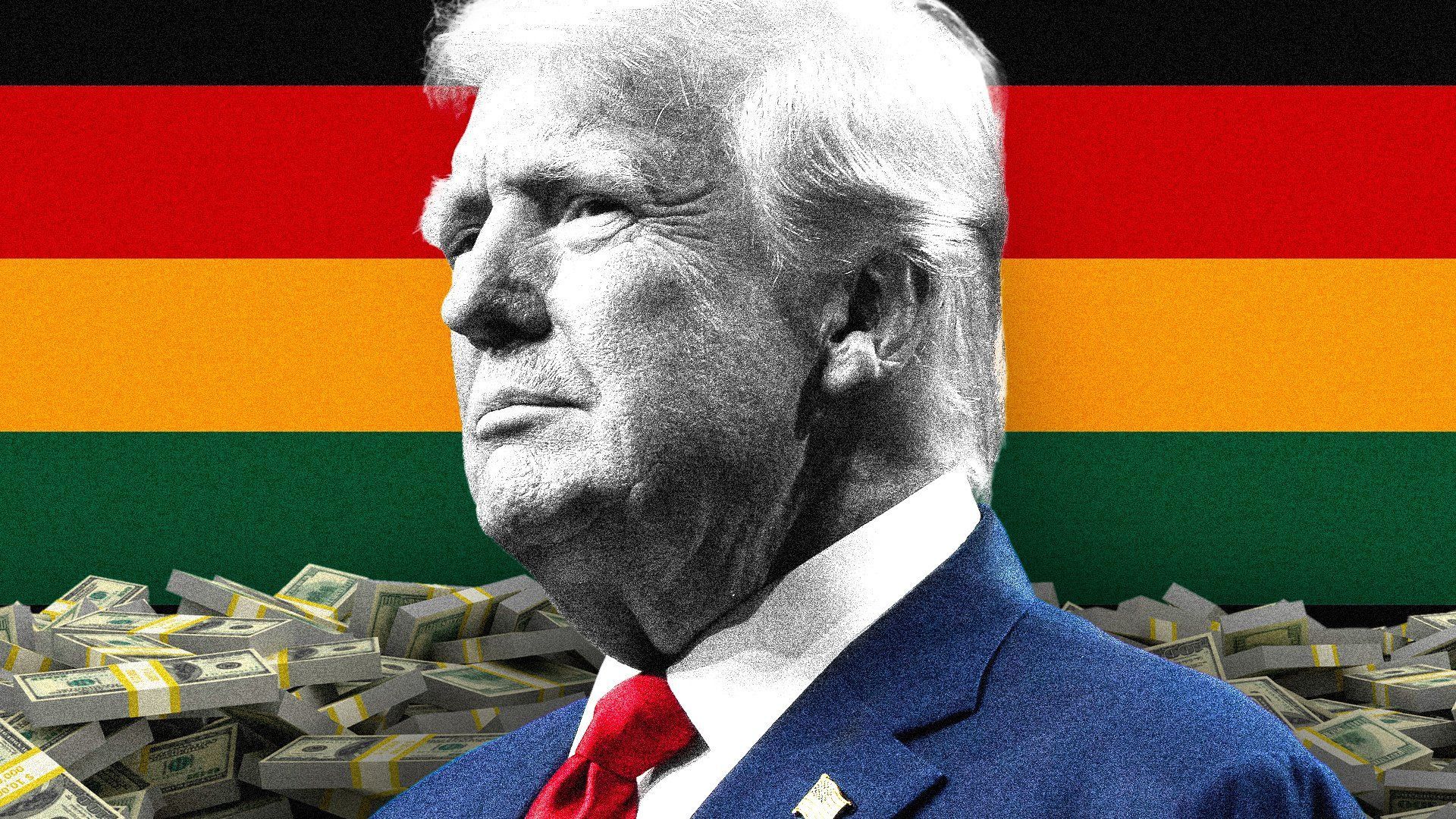
The man hailed by supporters as a master dealmaker could throw the American system into upheaval by proposing a “MAGA-vellian” reparations plan — a bold mix of populist theater and strategic ruthlessness.
If Trump launched the MAGA Fund, he wouldn’t just rewrite political norms — he’d cement his place as the most disruptive figure in modern American history.
Call it the MAGA Democrat Slavery Compensation Fund.
This plan wouldn’t just shake up Washington. It would redraw the partisan map and deal a death blow to the race-peddling civil rights industry by exposing the fraud at the core of progressive politics. And coming from a president who has vowed to restore Confederate base names, the MAGA Fund would remind voters which party fought to keep slavery alive.
Timing is everything.
Trump acknowledged Juneteenth in his first term and pledged to make it a federal holiday during the 2020 campaign. Biden signed it into law in 2021, but the effort quickly became partisan theater. Critics said Democrats only embraced the holiday after the George Floyd riots, hoping to appease Black Lives Matter activists.
Candace Owens called Juneteenth “sooo lame” and “ghetto.” Charlie Kirk dismissed it as a “CRT-inspired federal holiday” meant to compete with Independence Day.
But now that Trump’s back in the White House — more popular among black voters than any Republican since the 1960s — he’s well-positioned to pull off a maneuver that could rattle his ideological base and neutralize his fiercest critics.
The MAGA Fund would benefit only the descendants of American slaves — not black immigrants, not “people of color,” and not members of the ever-expanding LGBTQIA+ rainbow coalition. It would expose the cynical way Democrats — whose party symbol is a donkey — have used black Americans as political mules for every new “civil rights” cause since the 1960s.
Duke economist Sandy Darity estimates full reparations would cost $10 trillion. The MAGA Fund? Just $855 billion. It would draw from corporate donations — a logical move, since more than 1,000 companies pledged more than $200 billion to “racial justice” causes in 2020.
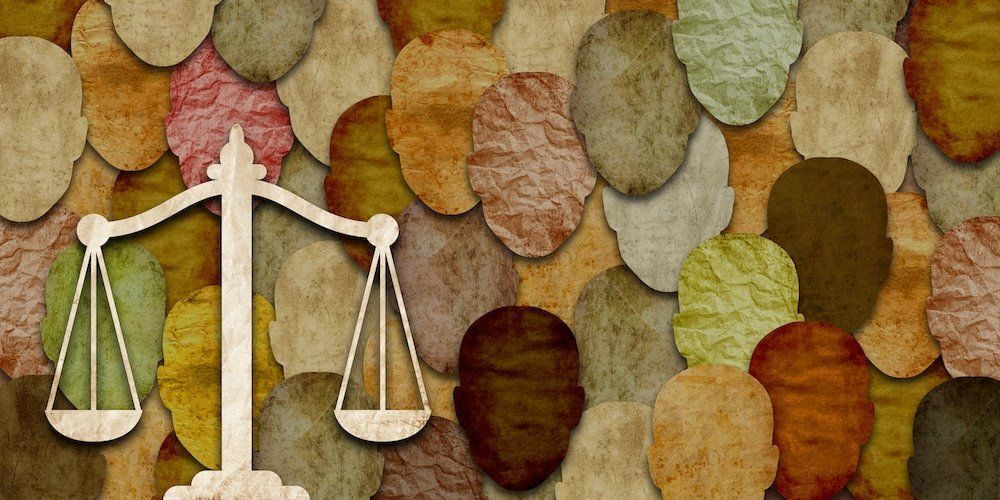
The MAGA Fund would also weaponize the left’s favorite buzzword: equity.
Progressives insist policies must favor the disadvantaged. Why not apply that within the black community? Under this plan, Oprah Winfrey and LeBron James wouldn’t get the same payout as a Mississippi man working three jobs or a single mom raising four kids in the inner city.
Here’s how it would work:
The MAGA Fund would channel the populist energy dominating the right. It would highlight how Democrats, backed by elite institutions, claim to represent the oppressed while serving the powerful. It would force them to either support Trump’s plan or explain why the party of “equity” opposes targeted aid to poor black Americans.
RELATED: Like Black Lives Matter, DEI must die
Even critics like Ann Coulter might back the idea. She’s blasted Democrats for extending black reparations programs to every new “oppressed” group. She’s also listed the conditions under which she’d support reparations.
Of course, Republicans would need to manage their white working-class base. Conservative pundits would rage. But behind closed doors, they could frame the plan as a final settlement — a way to declare the race debate closed. The race hustlers would need a new line of work after Trump stamped the national debt to black Americans “Paid in Full.”
And it wouldn’t just be symbolic.
Put nearly a trillion dollars into circulation and watch what happens. Dave Chappelle joked in a 2003 sketch that reparations would send gold prices soaring, phone bills plummeting, and “8,000 new record labels” starting within an hour. The skit played off stereotypes — but behind the comedy was economic truth.
Studies of universal basic income show recipients typically spend on essentials like food and transportation. A Washington, D.C., program gave low-income moms $10,800. One woman used $6,000 to take her kids and their father to Miami. You don’t need a PhD to know that pumping money into poor communities stimulates demand.
If Trump launched the MAGA Fund, he wouldn’t just rewrite political norms — he’d cement his place as the most disruptive figure in modern American history. Who else but a twice-divorced real estate mogul and ex-Democrat could overturn Roe, win over evangelicals, survive two impeachments and an assassin’s bullet — and then sign big, beautiful reparations checks with a smile?
Will it happen? Probably not.
Politics is too polarized. Corporations would recoil at helping Trump. Professional race merchants would denounce the plan as pandering. The left would lose its mind. The right might lose its nerve.
Still, if the last decade taught voters anything, it’s this: Never bet against the Teflon Don.
Monday night the grill cools, the flag comes down, and you crash on that “half-off” mattress you never planned to buy. By Tuesday morning, America is already scrolling to the next thing. But the moms in Section 60 at Arlington National Cemetery aren’t scrolling — and neither should we.
Treating Memorial Day like a red, white, and blue props department proves a sad stat from a poll conducted by the National World War II Museum a few years ago: Barely one in five Americans could explain what the holiday is actually for.
We must teach the next generation to remember on purpose. If your kids can quote Marvel but not MacArthur, that’s on us.
So let’s talk about Tuesday morning in America and the 364 days that follow. What does it look like to honor our war dead all year long?
We must price-check freedom — every day. Scripture is always an appropriate place to start. In John 15:13 the Bible teaches us, “Greater love hath no man than this, that a man lay down his life for his friends.” This verse is memorialized on headstones form sea to shining sea.
President Reagan reminded the nation at Arlington in 1982 that “freedom is not bought cheaply. It has a cost; it imposes a burden.” That burden extends beyond military service. It demands vigilance. It requires raising children who understand why our flag is folded 13 times — not just how many “likes” a TikTok dance racks up.
We must finish the unfinished work. Abraham Lincoln’s address at Gettysburg was delivered five months after that battlefield fell silent, long after the trending topic had shifted. He challenged the living “to be dedicated here to the unfinished work which they who fought here have thus far so nobly advanced.”
Our unfinished work today is cultural: defending truth in classrooms, fostering marriages that can withstand deployment, protecting girls’ sports from idealogues who would erase biological reality, and pushing back when elites sneer at patriotism as passe.
We must guard the souls who come home. The Department of Veterans Affairs’ most recent suicide-prevention report still lands with a thud: An average of 17.6 veterans take their own lives each day. We flunk Remembrance 101.
RELATED: ‘So that others may live’: The true meaning of the holiday

We cannot claim to honor the fallen if we abandon the brothers- and sisters-in-arms who made it home only to fight invisible wars. That means supporting faith-based counseling (which bureaucrats keep trying to sideline), turning the VA paperwork morass into a mission, helping veterans find meaningful and rewarding post-service careers, and checking on the veteran down the street instead of waiting for Washington to do it.
We must restore the faith they fought for. According to Pew Research, eight in ten Americans now believe religion is losing influence in public life, and roughly half say that’s a bad thing.
The men and women we memorialize took an oath to defend a nation “under God.” When pastors self-censor, when corporate America flies a Pride flag over Old Glory, and when our schools swap the Bible for the 1619 Project, we’re torching the spiritual scaffolding those soldiers died to protect. God bless America.
We must teach the next generation to remember on purpose. If your kids can quote Marvel but not MacArthur (“No man is entitled to the blessings of freedom unless he be vigilant in its preservation”), that’s on us. Take them to a war memorial in July, not just on the last Monday in May. Tell them why “Taps” is 24 notes of holy silence. Ask a Gold Star family to dinner and let the conversation run long. The goal isn’t to glorify war; it’s to glorify virtue — courage, duty, sacrifice — so that when the recruiters call, our sons and daughters know what they’re signing up to defend.
We must live gratefully and live out loud. Gratitude is not a Hallmark feeling; it’s a muscle you flex in public. Fly the flag correctly (sunrise to sunset, illuminated at night). Stand for the anthem even when the stadium lump next to you kneels or leaves his hat on. Support companies that still believe in America like Blaze Media and my podcast, “We the People with Gates Garcia.” And pray for our leaders — yes, even the ones making it hard.
We must trade hashtag for habits. Hashtags flicker; habit forges character. Start small: Write a letter to a deployed Marine, sign up for a volunteer shift at the VA hospital, make a family pledge to read one military biography a year; and if you are blessed with means, cut a check to a veterans’ nonprofit organization. Imagine 20 million American households stepping up to do that. The culture would shift faster than Congress could rename the next great American holiday.
The 365-day test: I love a good cookout more than anyone. That’s part of the freedom they bought us. But the measure of our gratitude isn’t how loudly we celebrate on one Monday — it’s how deliberately we lie on all the rest. Reagan’s challenge, Lincoln’s unfinished work, and Christ’s supreme definition of love converge on a single question the fallen silently ask us every dawn: Are you living a life worthy of my sacrifice?
One day a year it’s fine to say, “Happy Memorial Day.” But on those other 364, make sure you live like you’re worth that sacrifice.
Your son has been a Marine for what feels like an eternity. Only those who have watched their children deploy into war zones can truly understand why time seems to freeze in worry. What begins as concern turns to panic, then helplessness. You live suspended in a silent winter, where days blur and dread becomes your constant companion.
Then, in an instant, it happens. What you don’t know yet is that your child — your most precious gift — fell in combat 60 seconds ago.
This is a day for sacred remembrance, for honoring those who laid down their lives.
While you go about your day, unaware, military protocol kicks into motion. Notification must happen within eight hours. Officers are dispatched. A chaplain joins them. A medic may accompany them in case the grief is too much to bear.
Three figures arrive at your door. One asks your name. Then, by protocol, they ask to enter your home. You already know what’s coming. You sit down. He looks you in the eye and says:
The commandant of the Marine Corps has entrusted me to express his deep regret that your son John was killed in action on Friday, March 28. The commandant and the United States Marine Corps extend their deepest sympathy to you and your family in your loss.
This moment has played out thousands of times across American soil. In 2003 alone — just two years after 9/11 — 312 families endured it. In 2007, 847 American service members died in combat. In 2008, 352. In 2009, 346. The list goes on. And with every name, a family became a Gold Star family.
For most Americans, Memorial Day means backyard barbecues, family gatherings, maybe a trip to the lake or a sweet Airbnb. There’s nothing wrong with enjoying these things. But we must never forget why we can.
Ask any veteran who lived when others did not, and you’ll understand: Memorial Day is not just another holiday. It is a solemn day set apart for reverence.
So this weekend, reach out to a Gold Star family. Acknowledge their pain. Ask about their son or daughter. Let them know they’re not alone.
This is a day for sacred remembrance, for honoring those who laid down their lives — not for accolades but for love of country and the preservation of liberty. “Greater love hath no man than this, that a man lay down his life for his friends” (John 15:13).
They died for the Constitution, for our shared American ideals, and the worst thing we could do now would be to betray those ideals in a spirit of rage or division.
We cannot dishonor their sacrifice by abandoning the very principles they died to protect — equal justice, the rule of law, the enduring promise of liberty.
This Memorial Day, let us remember the fallen. Let us honor their families. Let us recommit ourselves to the cause they gave everything for: the American way of life.
They are the best of us.
Want more from Glenn Beck? Get Glenn's FREE email newsletter with his latest insights, top stories, show prep, and more delivered to your inbox.
Last year, as millions of Americans were preparing to celebrate the Resurrection, President Biden took the opportunity to add a new holy day to the national calendar.
March 31, 2024 — previously known as “Easter” — would now double as the “Transgender Day of Visibility,” Biden’s proclamation declared. (This was a separate event from the Transgender Day of Remembrance, which fell on November 20.) “Today, we send a message to all transgender Americans,” the president wrote. “You are loved. You are heard. You are understood. You belong.”
One year later, as Christians gathered again to celebrate one of Christianity’s most holy holidays, a new president issued a very different proclamation.
“During this sacred week, we acknowledge that the glory of Easter Sunday cannot come without the sacrifice Jesus Christ made on the cross,” President Trump wrote. “In His final hours on Earth, Christ willingly endured excruciating pain, torture, and execution on the cross out of a deep and abiding love for all His creation. Through His suffering, we have redemption. Through His death, we are forgiven of our sins. Through His Resurrection, we have hope of eternal life.”
What a difference one year can make.
The Trump administration’s commemoration of this Holy Week didn’t just strike a contrast with Biden. President Trump has taken Easter more seriously than any other president in modern American history. That’s a good thing. Easter is the holiest day on the Christian calendar, “celebrating the crucifixion and resurrection of our Lord and Savior, Jesus Christ — the living Son of God who conquered death, freed us from sin, and unlocked the gates of Heaven for all of humanity,” as the president’s proclamation put it.
This is not a radical idea. Nor is it some boutique left-wing micro-holiday, dreamed up five minutes ago in a sociology classroom.
Even more broadly, Easter is deeply rooted in the traditions and folkways of the American nation itself. Some 80% of Americans celebrate this holiday — a larger number than the nearly two-thirds of Americans who identify as Christian.
Last week, I introduced legislation that would establish Easter Monday as a federal holiday. This is long overdue. Easter Monday is already recognized as a public holiday in Canada, Australia, New Zealand, and most of Western Europe. The United States is one of the only nations in the West that doesn’t formally recognize it as such.
My bill, which I was proud to introduce with Rep. Riley Moore (R-W.V.), would fix that, giving millions of Americans the chance to more fully celebrate the defining moment of the faith that shaped our nation.
This simple addition to the federal holiday calendar is pro-faith, pro-family, and pro-worker. March and April are the only back-to-back months without an official federal holiday. A federal holiday would add a three-day weekend to the two-month stretch from Presidents' Day to Memorial Day, providing American workers and families a much-needed opportunity to gather and relax.
At the same time, it comes with its own economic benefits. Easter weekend already generates around $15 billion for our economy. A three-day weekend could boost that by an estimated 10% to 15%, adding up to $2 billion in economic activity.
This is not a radical idea. Nor is it some boutique left-wing micro-holiday, dreamed up five minutes ago in a sociology classroom, commemorating “Trans Visibility” or “Indigenous Day of Mourning.” It is a federal recognition of a tradition that is inextricably linked to our way of life itself — a tradition that already unites more than three-quarters of Americans.
For generations, many American school calendars gave students the day off for both Good Friday and Easter Monday. We already have a “National Day of Prayer,” signed into law by Missouri’s own President Harry Truman. A federal Easter Monday holiday would go a step farther, allowing Americans to celebrate one of the most extraordinary days in world history: Easter — the day of Christ’s Resurrection.
Our holidays and traditions are part of the story we tell about ourselves. This is not a partisan idea. Easter is not a “Republican” or “Democrat” holiday. Easter is an American holiday. It’s time our federal calendar recognized it as such.



 The meaning of Christmas is not in us or anything we do. It is only in Christ and what He did.
 Christmas gift exchanges can be fun, but they need to come with rules. There can't be any attendees who aren't in the proper holiday spirit.
 www.theblaze.com