![]()
Any thrill I might have experienced upon learning an “East of Eden” adaptation was in the Netflix pipeline was rapidly extinguished by memories of the latest screen desecrations of beloved classics.
Earlier this year, provocateur Emerald Fennell turned Emily Brontë’s Gothic tragedy “Wuthering Heights” into cheap fodder for the smut-obsessed. This summer, Netflix retconned Laura Ingalls Wilder’s “Little House on the Prairie” — complete with culturally fluent pioneers and a DEI-mandated American frontier.
They are systematically eliminating our clearest portraits of evil because behind them lies the Christian realities that inspired them.
As for Christopher Nolan’s “Odyssey,” I thought it was a cinematic success, but it still made the face that launched a thousand ships a lesson in representation, while casting transgender “Elliot” Page as the Greek warrior Sinon, who’s not even a Homeric character.
I’m already recoiling thinking about the heresy that animates feminist auteur Greta Gerwig’s upcoming “Narnia” reimagining, which intends to emasculate Aslan and turn Lewis’ sacrosanct creation myth into a secular 1950s “rock opera.”
I could go on, but that’s enough to make plain the pattern of Hollywood’s utter disregard for adapting the literary canon faithfully. Always it must infuse its warped catechisms, lest we plebeians forget where it stands.
But being the masochist I am when it comes to these matters, I watched Netflix’s “East of Eden” anyway, and I have to tell you, I was genuinely gutted by what I witnessed. Not annoyed by predictable woke tropes, although those were there too. No — gutted.
My visceral shock, however, was less about the revision of John Steinbeck’s perennial Cain and Abel allegory and more regarding what that deliberate modification reveals about the dismal state of our culture.
Will the real Cathy Ames please stand up?
If you haven’t read Steinbeck’s “East of Eden” (and please do!), I’ll take the liberty of giving you a little teaser: The novel's antagonist, Cathy Ames, is certainly one of the most heinous villains in American literature, if not in the entire Western canon.
The book introduces her with this haunting bit of prose: “I believe there are monsters born in the world to human parents.”
And that’s an apt entrance for Cathy. She is a monster at birth, a mutant at the soul level, a fiend cloaked in human flesh. Modern-day psychologists would diagnose her as an incorrigible sociopath who takes pleasure only in the torture, humiliation, and demise of other people.
Cathy is also what critics call a “static character”: She undergoes virtually no meaningful change over the course of the novel. More unsettlingly, she remains almost impossible to relate to at a human level. Steinbeck gives her no humanizing backstory that draws our sympathies, no redeeming ethical or moral arc, no thing we might point to and say, “See, that’s why she behaves so horribly.”
Static characters are almost humorous in their simplicity, and they serve a variety of purposes in literature. But in Cathy’s case, her function is symbolism. She is an emblem for unadulterated evil, and that’s neither my nor the literary authorities’ verdict. It’s Steinbeck’s. In a letter, he called Cathy Ames “a total representative of Satan.”
It’s a tailor-made description, given she frames two young boys for sexual abuse, drives a man to suicide, and burns her parents alive all by the age of 16 and the end of the chapter that introduces her. In hopes you will read the book for yourself, I won’t spoil the rest of the unspeakable horrors that unfold at Cathy’s polluted hand.
But as sinister as she is, Cathy Ames plays a paramount role in this story. “East of Eden” is a moral epic, meaning it’s not just an entertaining tale about fictional people and events. It actually employs those things for the explicit purpose of drawing our attention to the cosmic war between good and evil, heaven and hell, God and the devil. Cathy, as I’ve already noted, represents the dark side of that epic struggle. Humanize her in any way and you collapse the entire framework.
But surprise, surprise — that’s exactly the sin the makers of Netflix’s “East of Eden” committed.
A moral epic gets the Hollywood makeover
Writer Zoe Kazan told Reuters, "We wanted our audience to be able to identify with every single character, the ones that are good on the surface and the ones that are evil on the surface because if we think about people that are evil or bad as being not human, we don't learn anything about ourselves."
A pleasant sentiment, except no logical reader could conclude that Steinbeck’s Cathy Ames is evil “on the surface.” He makes it unmistakably clear from the outset that she is not just a perpetrator of evil but the embodiment of evil itself. “A malformed soul” are his exact words.
So to correct Ms. Kazan, Cathy is nonhuman in that she lacks the very qualities that make one so — empathy, moral quandaries, regret, emotional baggage, anything that would resonate with a real human being. The Bible gives Lucifer no domesticating backstory, so why should his literary stand-in have one?
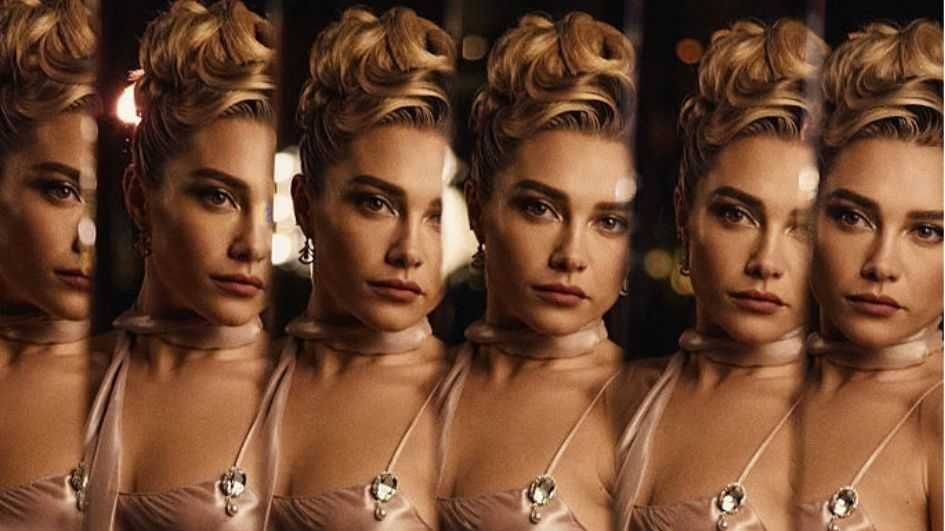
Actress Florence Pugh, who plays Cathy in the series, had her own nauseating comments: “She can still make terrible decisions and face awful consequences, but there can also be ... an understanding of her history and her past, which makes her the way that she is.”
Except being a static archetype, there’s literally nothing in Cathy’s history or past to explain her savagery. The fact that she is inherently and incurably evil is the entire point of her character.
But that won’t do for Hollywood. It must tinker and snip at a classic until it creates its desired Frankenstein's monster. Thus Kazan gave the diabolical Cathy Ames a tragic backstory, turning her from a Satan figure into a woman we can pity, even as she destroys. She suffers abuse, acquires trauma, is driven to desperation, and, of course, experiences the cold hand of misogyny. It’s not even worth delving into. Suffice it to say it’s a lie. More important to me is the "why" behind it.
When killers get poignant backstories
The show's egregious misreading of Cathy raises an important question: Are the makers of this blasphemous series just stupid, or are they up to something?
That’s a rhetorical question. You know as well as I do there’s an agenda at play. What might surprise us is how ugly it is.
Obviously, these Hollywood revisionists are well aware Steinbeck’s Cathy Ames is not a sympathetic character in any sense of the term. But they chose to rewrite her as one anyway — and it has nothing to do with the audience wanting to “learn something about themselves,” as Kazan sold it.
"Introspection" is a reasonable sop to satiate the masses, but it’s a ruse. Cathy must be remade, for she represents the very thing the progressive left wants to retroactively undo. As long as objective evil breathes, it stands as a barrier to their dark vision for the world: a dystopia ruled by moral relativism, where one man’s act of slaughter is another man’s tragic mental break.
Or should I say woman’s? After all, the morally intact part of the nation has been watching, mouths agape, for months now as thousands of people (most of them mothers) fought for a woman who admitted to methodically strangling her three young children to death in a basement. “Postpartum psychosis” was an evocative enough backstory to tip the pity scales in Clancy’s favor.
A similar and equally disturbing trajectory of events surrounded the premeditated stalking and murder of United Healthcare CEO Brian Thompson. His admitted killer, Luigi Mangione, was made into a sympathetic vigilante by radicals who cheered his “courage.” His chronic pain, denied claims, and manifesto then made him an ideal mascot for progressives’ agenda to blame “the system” rather than the criminal.
Karmelo Anthony, the “good kid” who stabbed an unarmed student after a verbal confrontation, claimed self-defense, and was cast as a victim of racism, is yet another example.
There is a pattern here, and it reveals a dark truth: There is much power to harness when you give a killer a poignant backstory.
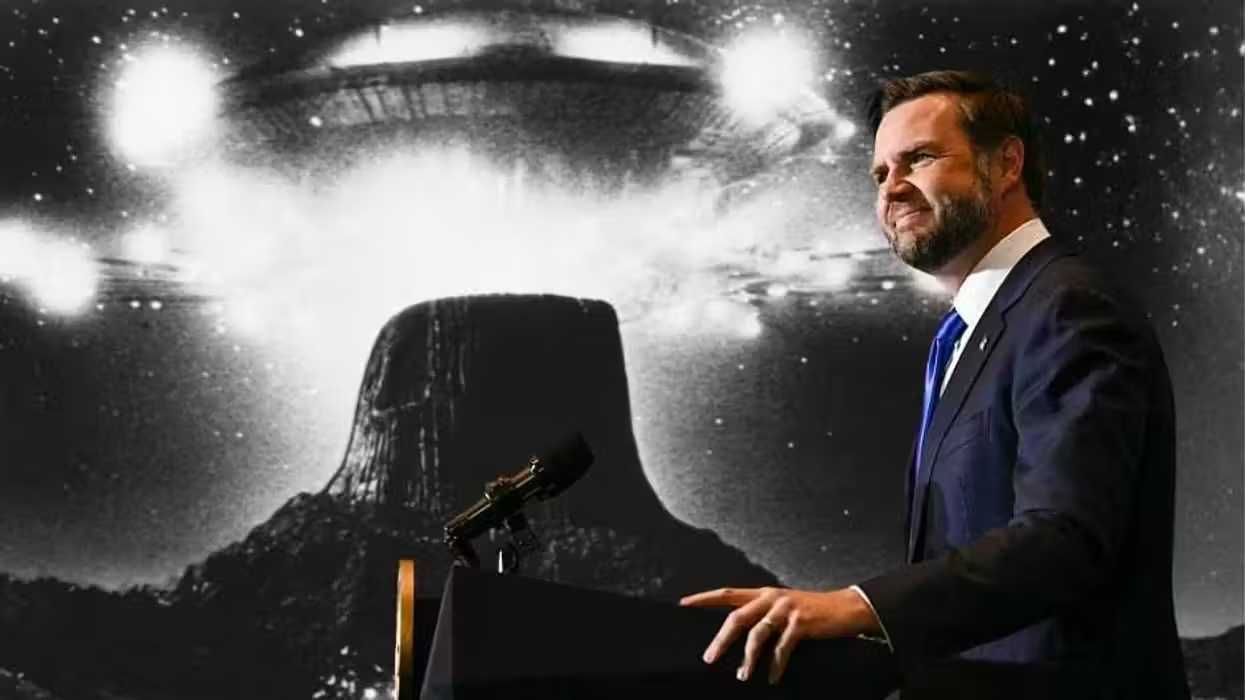
RELATED: 'I think they're demons': Why JD Vance refuses to downplay supernatural evil
![]() Silver Screen Collection/Kent Nishimura-Pool/Getty Images
Silver Screen Collection/Kent Nishimura-Pool/Getty Images
Television tells a vision
But backstories, even those belonging to killers, are not off limits. On the contrary, they are the lens that allows us to see the gray, the nuance that tempers dichotomous thinking. Much good results from understanding motive so long as the line of objective morality remains unblurred — because for every degree it fades, Pandora’s box opens a hair more. And then suddenly, the demons are too numerous to count. And they do not go back in the box willingly.
But Steinbeck’s Cathy Ames is designed to make us look at those bloodthirsty demons, not the complexities of real people living in a broken world. To adapt her character, or any similar character, in this way is a calculated attempt to corrupt what C.S. Lewis called the “Law of Human Nature,” the idea that man is born with a moral radar.
No doubt entertainment has been powerful in the dulling of man’s intrinsic moral compass. Under the guise of artistic license, it surreptitiously conditions the masses. True to its name, television tells a vision — in this case, that evil is really just the manifestation of trauma or poverty.
By turning a Satan symbol into a tragic figure, a Netflix series becomes propaganda for the progressive push for absolution. And of course, the communists are cheering. Explaining away evil is their vision too, you know. The only difference is their endgame isn’t equity or decarceration; it’s dominion.
Christianity in the crosshairs
I initially thought it was ironic they chose a famous moral epic — the least fitting vessel — to undermine the idea of pure evil. But then I realized that’s exactly why they chose “East of Eden.” They are systematically eliminating our clearest portraits of evil because behind them lie the Christian realities that inspired them. If your goal is to unmake evil, Christianity is where you must aim the arrow.
Steinbeck’s 600-page epic boils down to a single word. After God rejects Cain’s offering in Genesis 4, he tells the soon-to-be fratricidal murderer: “Sin lieth at the door ... and thou shalt rule over him.” After a long spiritual journey, the character Lee discovers that the Hebrew translation for “shalt” — timshel — is less of a command and more of a gracious offering.
Despite Satan and his wicked pull on the hearts of man, “thou mayest” rule over evil. That is the lesson Cathy’s son Cal — who fears he has inherited his mother's malevolent nature — walks away with.
But when you get rid of objective evil, what is there to rule over? That’s what really guts me. By painting evil as buried trauma, the series offers a secularized, counterfeit timshel. Biblical permission to recognize and deny Satan’s influence turns into a therapy session on handling our misfortunes better than our forebears. It would be a decent message if it didn’t obscure precisely the cosmic war between good and evil that “East of Eden” seeks to illuminate — a darkness our culture exploits for any number of nefarious ends.
The war is real, however, and there's no opting out of it. You can distort works like "East of Eden" to pretend that it isn't, but you remain a combatant nonetheless. Just one who's chosen to fight for the losing side.

 Silver Screen Collection/Kent Nishimura-Pool/Getty Images
 Ellen DeGeneres/Twitter/Sunset Boulevard/Getty Images
 Lou Rocco/Boston Globe/Getty Images
 Primetime is the perfect example of how far our society has fallen.
 Netflix’s upcoming adaptation of 'East of Eden' trades literary truth for cheap moral ambiguity.

 Cem Genco/Anadolu Agency/Getty Images
 Karla Ann Cote/NurPhoto/Getty Images
 www.theblaze.com
 thefederalist.com
 www.theblaze.com