![]()
In a world where millions claim to be Christians while living lives indistinguishable from anyone else, it’s critical to understand the importance of authentic faith. It’s a bit more than “all you have to do is believe” (explained here), which is an unsupportable position according to scripture and Jesus’ own words.
But a companion misunderstanding is that you should never question your own faith. Some even say it’s a sin to do so.
As you examine your thoughts and attitudes and actions in the clear light of scriptural teaching, the Spirit will show you things to work on — guaranteed.
But again — that’s not what the Bible says.
The apostle Paul, writing to the Corinthians, told them to test themselves to see if they were in the faith — “examine yourselves!” he exclaimed (2 Corinthians 13:5). It’s never wrong to thoughtfully examine our own hearts to ensure we’re on the right track.
So having established that it’s not wrong — and in fact, it's desirable to examine ourselves — let’s answer the million-dollar question: How do we know we are saved?
1. Understand what happens at salvation
Obviously, you won’t know if you’re saved if you don’t know what being saved means. It means that God has freely given you:
- Eyes to see the truth of the gospel. You sincerely believe that Jesus lived, died, and rose again to pay for your sins.
- A heart to repent. You recognize your sin separates you from a holy God, and you want to pivot to a life in relationship with your creator. You want to align with His plans for your life, not your own.
In that moment when those things happen, God does a miracle:
- He brings a dead person to life.
- He wipes your slate clean (even the sins you’ll still commit) because they were all nailed to the cross, so you are now justified — you are officially “righteous” because you are cleansed.
- You are saved from eternal separation from God (hell).
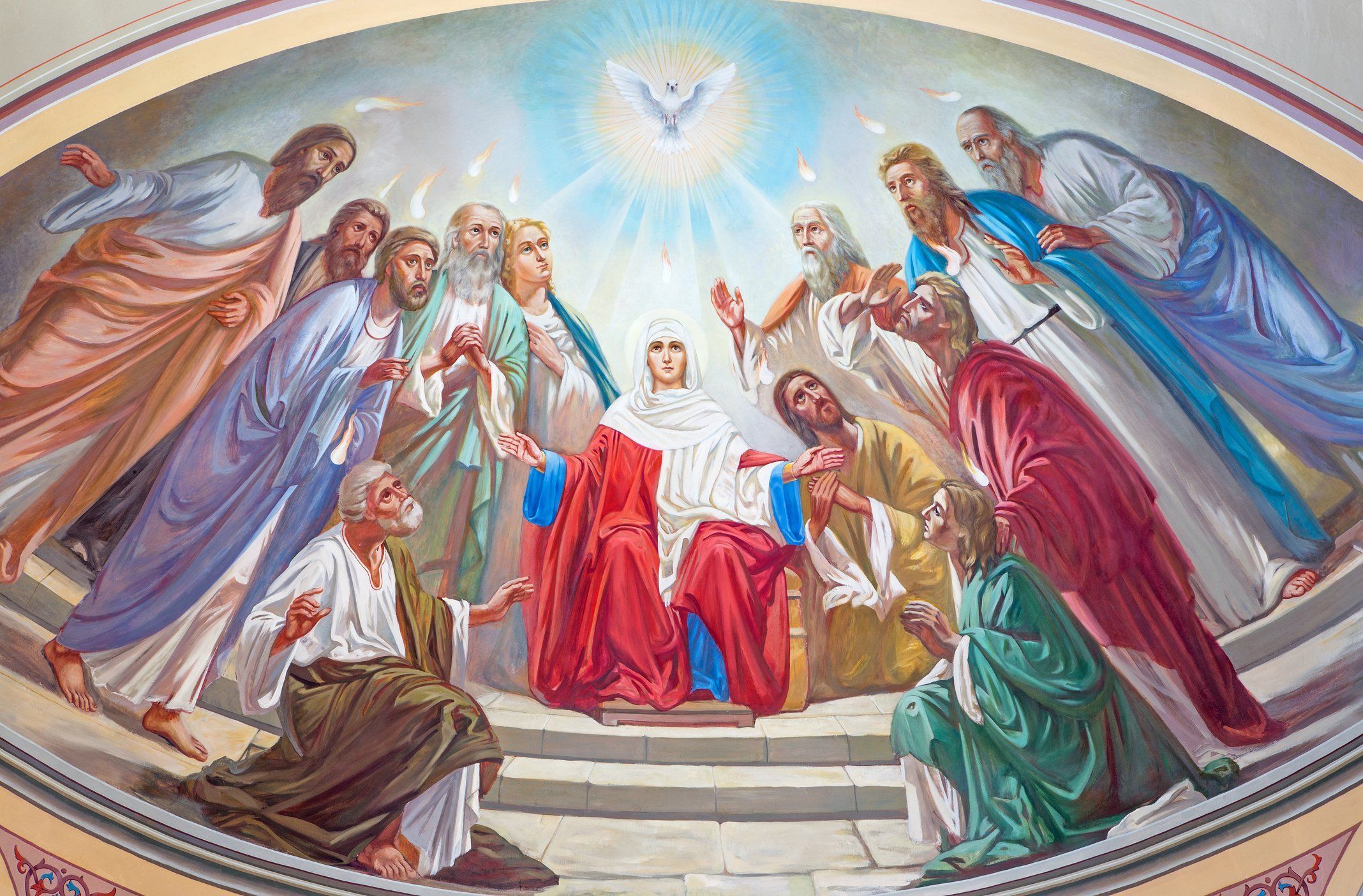
- God Himself, the Holy Spirit, comes to dwell in you, and the process of your sanctification (becoming more like Christ) begins. (It will take your whole life!) The Holy Spirit also seals you in Him, which means you will never lose this salvation.
- You are promised that one day you will be glorified, which means when you die, you will be free of all worldly cares and sins and will be in the very presence of Jesus.
So in light of the mind-boggling gifts you, the new believer, have just been granted — how else do you know you’re saved?
2. Learn to recognize the presence of the Holy Spirit
In his letter to the Ephesians, Paul says:
In Him, you also, after listening to the word of truth, the gospel of your salvation — having also believed, you were sealed in Him with the Holy Spirit of promise, who is given as a pledge of our inheritance, unto the redemption of God’s own possession, to the praise of His glory. (Ephesians 1:13-14)
The Bible is clear that the Holy Spirit indwells us at the moment of salvation. It is not something that comes later, as some mistakenly teach. His presence in us is indeed proof of our salvation:
However, you are not in the flesh but in the Spirit, if indeed the Spirit of God dwells in you. But if anyone does not have the Spirit of Christ, he does not belong to Him. (Romans 8:9)
And later in that same chapter:
For as many as are being led by the Spirit of God, these are sons of God. ... The Spirit Himself testifies with our spirit that we are children of God. (Romans 8:14, 16)
So — the Holy Spirit in us helps us know that we belong to God. How, exactly?
Well, are you different than you were before you believed? Or more accurately, do you desire to be different, to love and serve the God who saved you? (Because it’s always about the heart’s desire, not some perfect behavior.)
If you want to change your life to align with God, that prompting is coming from the Holy Spirit. The Spirit’s assurance works in tandem with something else though.
3. Use scripture as a mirror
Are you reading and studying the Bible? Again — more precisely — do you have the desire to do so, even if you struggle to find a place for that in your busy schedule? Because the Holy Spirit will convict you of your need to be in the Word. If you’re feeling that prodding, that is itself an assurance of salvation. The Holy Spirit is in you, working.
And when you obey that prompting, He will illuminate the Bible for you to help you begin to become more like Jesus. As you examine your thoughts and attitudes and actions in the clear light of scriptural teaching, the Spirit will show you things to work on — guaranteed.
If you are wanting to be in the Word and wanting to obey the Spirit’s leading to change as you learn — that is a powerful assurance of your salvation.
RELATED: The laws freaked-out AI founders want won't save us from tech slavery if we reject Christ's message
![]() Photo by Bloomberg/Getty Images
Photo by Bloomberg/Getty Images
4. Seek out other believers
Are you in relationships with other believers? Are you going to or at least looking for a church? This life can’t be lived sitting on the sofa watching screen church — it requires real human interaction due to (among other things) the commandment Jesus gave us to love one another, which is impossible from your comfy couch.
Again, it comes down to obedience. The Spirit will prompt you to seek out other believers, because God designed us to be in those relationships, serving and loving each other, and being served and loved.
If you’re obeying Him in this, that is also a powerful assurance that you are saved, because stepping into an entirely new group of people we’ve never met before —which is how most of us start finding a church — does not come particularly easy to anyone.
5. Check your life for 'fruit of the Spirit'
The Bible brims with teaching about fruit — we’re supposed to produce good fruit as followers of Jesus. More on this here, but for now, let’s look at what the Bible explicitly calls out as the “fruit of the Spirit” living in us (Galatians 5:22-23):
- Love
- Joy
- Peace
- Patience
- Kindness
- Goodness
- Faithfulness
- Gentleness
- Self-control
John MacArthur calls this “attitude fruit” — the attitudes we should begin to exhibit once we are saved. So that’s the fruit of the Spirit — attitudes the Spirit helps us develop.
But in that same chapter of Galatians, Paul also lists some opposites. “Deeds of the flesh” he calls them, which include:
- Sexual immorality
- Impurity
- Sensuality
- Idolatry
- Sorcery
- Enmities
- Strife
- Jealousy
- Outbursts of anger
- Selfish ambition
- Factions
- Envying dissensions
- Drunkenness
- Carousing
- “and things like these”
So are you more characterized by deeds of the flesh or the Spirit?
Or again let’s ask the right question — which do you desire to be more characteristic in your life? If it’s the good stuff, that is a desire implanted by the Holy Spirit within you — again, an assurance of salvation. And He will help you transform that desire more and more into reality, which will strengthen your assurance as well.
6. See how others have tackled this question
Q: What are some of the signs of genuine saving faith?
A: From the excellent website gotquestions.org
Q: What kind of things do and do not prove the genuineness of saving faith?
A: From Grace to You, John MacArthur’s website
7. Take heart from the words of Jesus
As I’ve written before, the question isn’t “will you believe in Jesus?” The question is “will you follow Jesus?”
If you repented and believed (described above), and now your desire is to follow Him and become more like Him — that desire is from the Holy Spirit within you, and you are assuredly saved. As Jesus said:
My sheep hear My voice, and I know them, and they follow Me; and I give eternal life to them, and they will never perish — ever; and no one will snatch them out of My hand. My Father, who has given them to Me, is greater than all; and no one is able to snatch them out of the Father’s hand. I and the Father are one. (John 10:27-30)
A version of this essay previously appeared on She Speaks Truth.


 Photo by Bloomberg/Getty Images





 www.theblaze.com
 thefederalist.com
 www.theblaze.com