Fed Study: Illegal Immigration Caused 30% Of Home Price Spikes While Deflating American Wages
 The Fed Reserve paper found illegal immigration drove up housing costs without increasing available housing and decreased wages.
The housing crisis shows no signs of slowing, and some home builders are saying that more immigration could help ease Americans' home woes.
The Trump administration has argued that tightening immigration enforcement would open up units currently housing illegal aliens and other immigrants, but some in the business argue otherwise.
'We’ve got to create a visa system for people who want to work legally in this country, in the construction industry.'
"Labor is one of the largest and most expensive inputs when it comes to home production and land development," said National Association of Home Builders CEO and president Jim Tobin to Fox News Digital.
A shortage in skilled labor means costly delays and higher expenses for builders, who pass on the costs to homebuyers.
Tobin added that there's a "persistent shortage" in construction labor, which has expressed itself as a labor gap of as many as 400,000 workers in busy times.
"This shortage adds nearly two extra months to building timelines, inflating costs and delaying delivery,” said Home Builders Institute President and CEO Ed Brady.
About one-third of the home-building workforce is made up of immigrants, according to the National Association of Home Builders. Tobin said the industry struggles to replace skilled tradespeople who retire.
"It’s not only about training more people to come into the industry as our current generation ages out of the skilled trades, but it’s also the immigration problem that we have in this country," he added.
He went on to call for pathways to legalization for workers already in the country.
"We’ve got to find a way to modernize our immigration laws," Tobin continued. "We’ve got to create a visa system for people who want to work legally in this country, in the construction industry."
That is unlikely given the opposition to amnesty in the current administration and in the electorate. A recent poll showed that 46% of Americans supported the president's policies on enforcing immigration, and he has made mass deportations a key promise of his second term.
RELATED: Mamdani housing official decries 'white middle-class homeowners' for stalling 'renter justice'
However, Americans also want action on housing affordability. The Trump administration announced a plan to ease the housing crisis, but increasing construction labor through immigration was not a part of that plan.
One part of the plan included easing zoning and building restrictions in order to increase the housing stock and give Americans greater options in choosing a home.
Meanwhile, the latest annual report from Harvard’s Joint Center for Housing Studies revealed very little good news for renters and homeowners, who are strained by high rents and very little housing cost relief.
Tobin went on to conclude that affordability is likely to worsen unless the labor-shortage crisis is resolved.
Like Blaze News? Bypass the censors, sign up for our newsletters, and get stories like this direct to your inbox. Sign up here!
The U.S. House of Representatives will soon vote on a housing bill that supposedly addresses the nation’s very real affordability crisis and, even more important, lets politicians claim they are doing something about it.
The Senate passed the 21st Century ROAD to Housing Act in March by an 89-10 vote. Democrats backed it almost unanimously, and all but one of the no votes came from Republicans, even though President Donald Trump pushed hard for the bill.
States have the right to be stupid or smart. The federal government has no constitutional authority to make that choice for them.
One provision separates the Senate and House versions, and it matters a great deal.
The Senate bill would require investors who own more than 350 single-family rental properties to sell the excess after seven years. It exempts large institutional investors that build or buy new single-family homes for the rental market, but even they would have to sell those properties to individual homeowners after seven years.
The House bill drops that provision. That may be its best feature.
The Senate’s ownership cap is not only arbitrary and unfair; it is economically backward. Driving investors out of the market would raise prices, not lower them. It would shrink the pool of potential investors, reduce incentives to build and maintain housing, and leave buyers competing for a smaller supply of homes.
Those effects would push housing prices higher.
The only Democrat to vote against the Senate bill, Sen. Brian Schatz of Hawaii, blasted the seven-year forced-sale provision on the floor, calling it “bananas” and “a very bizarre thing” to restrict ownership by businesses other than hedge funds. The bill “demonize[s] people who want to build rental housing,” Schatz said.
He was right. The Senate version would do serious damage to housing supply. As Schatz put it, “This is positively Soviet.”
The two versions reflect sharply opposing views not only of housing, but of markets and government power in general. The real question is whether housing unaffordability reflects a “market failure” requiring federal and state correction, or whether markets work best when government limits itself to preventing force and fraud.
RELATED: When your ‘rich’ neighbor can’t afford furniture
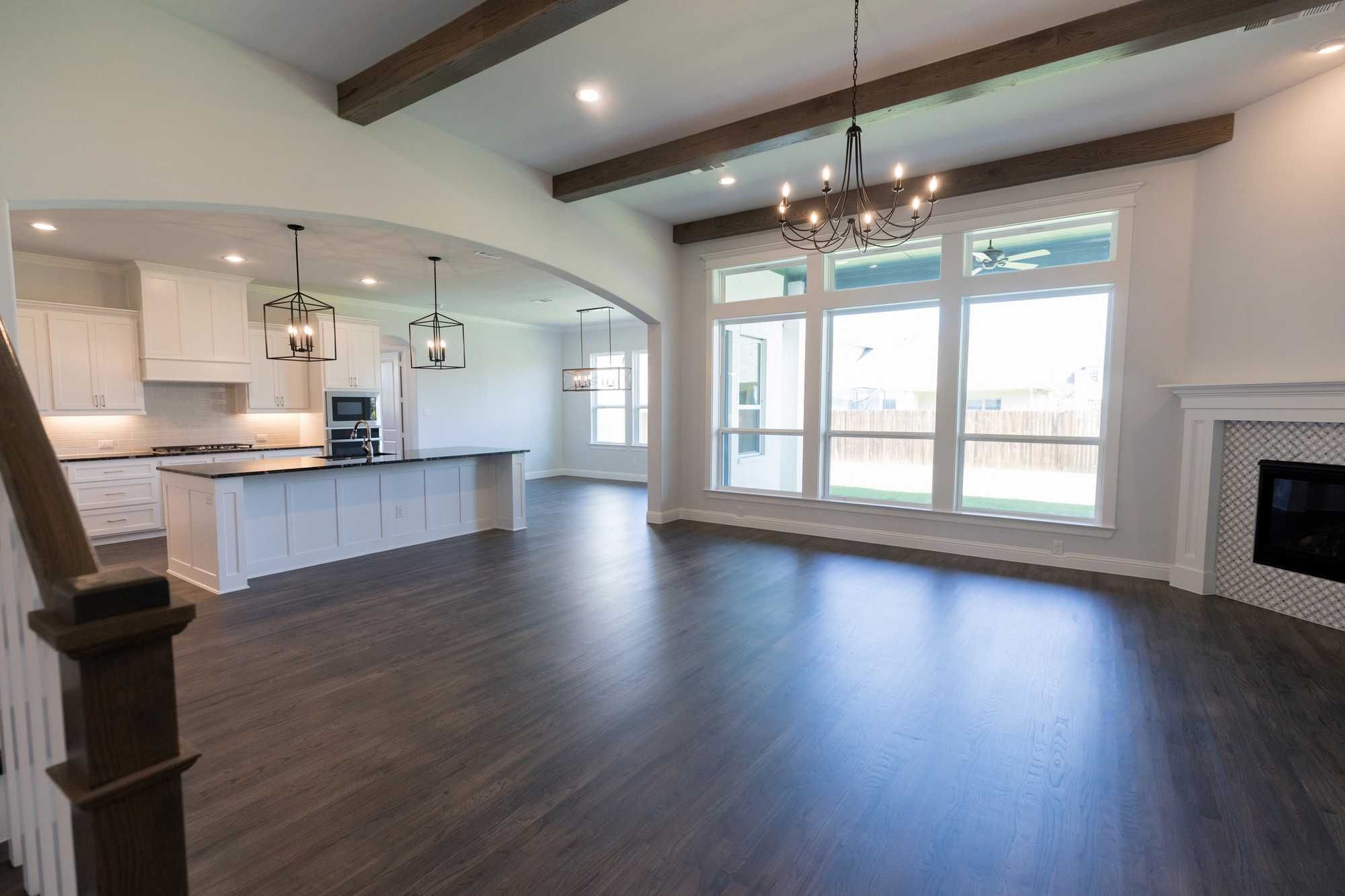
Today’s housing crisis is not a market failure. It is the product of government interference.
As I explain in my new Heartland Institute policy study, “Housing Affordability: America’s Short-Term Crisis and Long-Term Problem,” the immediate affordability crunch began with the rapid rise in federal spending starting in January 2021. The Federal Reserve accommodated that spending by expanding the money supply, helping ignite inflation across the economy.
Housing prices rose sharply and crossed into statistical unaffordability in May 2021. They then surged further as inflation spread throughout the economy. The Federal Reserve later raised interest rates to contain the damage, which only made housing less affordable as mortgage rates climbed to levels not seen since the early 1980s.
At the same time, the country was already suffering from years of weak housing-stock growth after the 2008 financial crisis, another disaster created by the federal government and the Fed. Add a rapidly rising population driven by mass immigration, along with Millennials and then Gen Z entering prime homebuying years, and a long-running squeeze turns into a full-scale crisis.
That is the mess Congress and Trump now want to address.
Their answer is to tweak some federal regulations in the hope of encouraging more construction. That may help at the margins. It will not do much to expand supply, and it will do nothing to address the inflation that turned a difficult market into a crisis.
As I write in the policy study, “The solution to the inflation-inflicted affordability problem is significant cuts in federal spending,” though such cuts appear to have little political support.
The long-term solution is straightforward: Build more houses.
Here again, government is the main obstacle. Zoning restrictions, taxes, overregulation, rent control, urban-growth boundaries, land rationing, impact fees, excessive building-code requirements, and countless other local barriers have choked construction and sales.
Those policies mostly come from states and localities. The federal government, however, encourages them through housing and urban-development spending.
RELATED: Trump needs to denounce the Dignity Act

Both versions of the current bill try to reduce some of that federal encouragement of excessive state and local regulation. That is the right direction because under the Constitution, housing regulation belongs to the states.
States have the right to be stupid or smart. The federal government has no constitutional authority to make that choice for them. Congress and presidents have usurped that authority for decades and should relinquish it entirely.
The proper remedy is simple: The federal government should confine itself to the powers the Constitution actually grants. That would mean no federal spending on housing at all.
Such a change would end Washington’s manipulation of the housing market, a game that always favors major players and hurts ordinary people. It would also reduce federal spending and ease inflationary pressure.
Both versions of the bill include a provision blocking the Federal Reserve from issuing a central bank digital currency through 2030. That is a good provision, though House fiscal conservatives wanted a permanent ban. They were right.
In practical economic terms, the solution to the housing crisis is simple: Build more homes and stop inflating the currency. Politically, however, that solution remains unlikely.
To Congress and the president, the bill’s most important function is political. It will do little to calm public anxiety about housing affordability, but it will let politicians say they acted. In Washington, that usually matters more, and costs much less, than doing something useful.
The American dream of owning a home — a yard, a fence, a stake in the neighborhood — is slipping out of reach for many young adults. Policymakers keep treating this as a pure affordability problem. Prices, interest rates, and down payments are all important, but the real culprit lies beneath the numbers: family formation, especially marriage.
First-time buyers made up just 21% of home purchases last year, the lowest share on record. The median first-time buyer is now 40 — up from 33 in 2021 and 29 in 1981. Census data show homeownership for Americans ages 25-34 at about 35%, roughly 19 percentage points lower than in 1980, when mortgage rates were much higher.
We keep treating the symptoms and ignoring the disease.
Affordability helps explain some of that decline. Housing is cyclical, and prices will soften if government stops inflating asset bubbles. But a newer analysis argues the bigger driver is cultural, not fiscal: the drop in marriage.
American Enterprise Institute scholar Scott Winship analyzed census data for the Institute for Family Studies and found that most of the generational decline in young homeownership tracks the collapse in marriage. While overall homeownership among Americans under 35 sits around 35%, the rate for young married couples remains about 63%.
“As recently as 2023, 63% of young married couples were homeowners,” Winship wrote. “That was the same as in 1983 and only 3 percentage points lower than at the height of the 2000s housing bubble. The 2023 rate was also higher than in any year through 1970 and any year from 1985 to 1999.”
That should change the argument. The big generational slide in homeownership hasn’t hit married couples the same way. The bigger collapse is marriage itself. The share of Americans ages 25-34 who are married fell from about 67% in 1980 to about 37% in 2025 — a 30-point drop. That’s the hole in the bucket.
So the answer shouldn’t just be “more programs.” It should address the cultural drivers behind the marriage collapse — because no housing bill can substitute for family formation.
That’s why the usual Washington approach misses the point. After decades of affordability initiatives dating back to the Clinton era, homeownership still hasn’t surged. Yet Republicans in the Senate just passed Elizabeth Warren’s housing bill — another expansion of HUD programs that would rope more people into an inflated market while rewarding the same political class that helped inflate it.
RELATED: Elizabeth Warren’s housing fix could make home buying even tougher
We keep treating the symptoms and ignoring the disease.
In the long run, the country won’t face a shortage of houses. The baby boom generation holds a huge share of the housing stock. Those homes will enter the market as boomers age and pass away, often transferring to heirs. The deeper question is whether the next generation will form families stable enough to buy them — and want them.
So, why is marriage declining?
Contrary to a popular assumption, it’s not mainly the housing crisis depressing family formation. The bigger driver is spiritual and cultural: a rejection of God and biblical values. Rising costs can pressure families at the margins. But a slightly higher child tax credit won’t reverse a collapse that began generations ago with the decline of worship and the rise of a culture that treats marriage as optional.
Europe has run the experiment. Many countries tried generous incentives — paid leave, universal child care, expanded benefits — and still can’t restore stable birth rates. Money can ease sacrifice. It can’t create the desire for marriage and children.
But faith can.
Institute for Family Studies senior fellow Brad Wilcox has noted that the birth rate for religiously oriented people has never fallen below replacement. A large Harvard study found that frequent religious service attendance (more than once a week) correlates with a 50% lower divorce rate compared with those who never attend. Strong marriages create the conditions for stable family life — and stable homeownership.
Anyone raised in an orthodox Christian or Jewish home learns the opening chapters of Genesis early: Marriage and children aren’t lifestyle accessories. They’re duties bound up with meaning, responsibility, and love. Faith-based communities also create thicker social bonds and clearer norms — including a dating pool that doesn’t feel like a battlefield.
A new Pew Research survey shows worship and practice dropping across every region over the last two decades. In the South, only 51% say they pray daily — still the highest region, but down 14 percentage points in a decade. The share of religiously unaffiliated Southerners rose to about a quarter of the population. In the West, 35% report no religious affiliation.
That decline makes the marriage decline easier to understand — and it helps explain why young homeownership is falling with it.
If we want more young Americans to buy homes, we should stop pretending this is only about interest rates and HUD programs. We need cultural repair. We need marriage. And to rebuild marriage, we need to rebuild the house of God.
Democratic Rep. Maxine Waters of California and Treasury Secretary Scott Bessent got into a rhetorical tussle during a congressional hearing Wednesday, and the White House weighed in on the incident.
Waters and Bessent were debating whether illegal immigration had a deleterious effect on the housing crisis when the Democrat called on the chairman of the House Financial Services Committee to "shut him up" after her time expired.
'Mr. Chair, will you let him know that when I ask you for time ... can you shut him up?'
Waters challenged Bessent on his previous comments linking tariffs to inflation, and he countered by citing studies that said tariffs were not inflationary. She went on to the housing crisis and blamed tariffs on lumber and steel for some of the housing price increases.
Bessent tried to argue with her, but she interrupted him and continued.
"Trump single-handedly made housing more expensive, and once again, you know it. As Axios has reported, you were planning to lift tariffs on housing production goods," she said.
She went on to criticize Trump's policies on immigration and argued that deportations had hurt the housing construction industry by deporting their source of labor.
"I ask you, Secretary Bessent, will you be the voice of reason in the administration and urge Trump to stop waging a war on American consumers and on housing affordability?" she asked.
When Bessent launched into an explanation, she interrupted numerous times.
"Will you be the voice?" she shouted. "Will you be the voice?"
He tried to talk over her, but she persisted in interrupting.
"Reclaiming my time!" she interrupted. "Mr. Chair, will you let him know that when I ask you for time ... can you shut him up?"
"Can you maintain some level of dignity?" Bessent fired back.
"Gentlelady's time has expired," the chairman said.
"No, my time has not expired!" she protested.
Waters accused the chairman of protecting Bessent before they moved on.
RELATED: Jasmine Crockett stumbles when confronted with her past comments insulting Latino voters
The White House Rapid Response account fired back at Waters on social media, calling her "rude and low IQ" and quoting from Bessent's testimony.
"Adding 10 to 20 million new people demanding housing, Congresswoman, is what caused a great deal of housing inflation for working Americans — so you and the Biden administration should be ashamed," he said.
Like Blaze News? Bypass the censors, sign up for our newsletters, and get stories like this direct to your inbox. Sign up here!
President Donald Trump said in a statement on social media that he is moving to ban institutional investors from buying single-family homes and that he wants Congress to "codify" the ban into law.
The president has made easing the housing crisis a goal of his second term, and many have pointed to institutional investors as a large source of the problem.
'People live in homes, not corporations.'
In a post on Truth Social Wednesday, Trump mentioned banning institutional housing purchases and hinted at other solutions to ease the housing crisis.
"For a very long time, buying and owning a home was considered the pinnacle of the American Dream. It was the reward for working hard, and doing the right thing, but now, because of the Record High Inflation caused by Joe Biden and the Democrats in Congress, that American Dream is increasingly out of reach for far too many people, especially younger Americans," he wrote.
"It is for that reason, and much more, that I am immediately taking steps to ban large institutional investors from buying more single-family homes, and I will be calling on Congress to codify it," the president added. "People live in homes, not corporations."
Trump did not provide details about these "steps" in the post.
He went on to say that he would discuss the policy at a speech in Davos, Switzerland, during the annual meeting of the World Economic Forum.
Housing prices skyrocketed during the pandemic, when interest rates were lowered to encourage economic activity and many Americans moved to larger homes to take advantage of work-from-home policies. While interest rates have returned to historic averages, housing prices continued to climb, albeit at a slower pace.
Many have blamed companies like BlackRock for purchasing single-family homes as part of their investment portfolios, but some say institutional investors make up a small portion of the market.
Others say that encouraging more housing construction would lower housing costs by easing regulations and increasing supply to meet the demand.
BlackRock's stock slid by 2.3% in the wake of the announcement.
Like Blaze News? Bypass the censors, sign up for our newsletters, and get stories like this direct to your inbox. Sign up here!
 By separating the spatial effects and then measuring the indirect “spillover effects," this research paints a clearer picture of immigration's overreach into communities, theoretically spread over the whole country.





 Affordability, immigration, and the sanctity of life emerged as top issues for young voters who attended AmericaFest.
 Rather than rent control and subsidies, there’s a real solution: addressing the critical shortage of skilled workers in construction.
 www.theblaze.com
 thefederalist.com
 www.theblaze.com
 www.theblaze.com