Trump's FTC gets a big win, but the job is far from over

Hours before trial was set to begin last month, the Federal Trade Commission and five state attorneys general settled their antitrust case against Zillow and Redfin. While this was a major success, and the FTC should be proud, there is still more to be done.
More than 30% of American households rent. For most of them, the search begins and often ends inside one company's ecosystem, which is a major violation of antitrust principles and laws.
The solution does not actually touch the cost of rent for average people.
To be clear, the government was able to achieve much. In a $100 million deal, Zillow had paid Redfin to shut down its multifamily rental-advertising business, transfer its customers and salesforce, and stay out of the market for as long as nine years. That deal is now dead. Instead, Redfin will have to restart its former business within six months and display Zillow's listings under a partnership that will continue through at least 2030.
This remedy is superior to potential alternatives, such as a fine, which often does not actually solve the problem. Gigantic monopolies can usually absorb these fines and continue to violate antitrust law. Requiring actual change goes a long way toward solving the problem.
This was, to be clear, a rather easy antitrust case. The Zillow-Redfin deal was a blatant violation of the core principles of antitrust. The companies literally signed an agreement not to compete, with a nine-figure bribe thrown in.
The FTC was also not alone in its demands against Zillow and Redfin. Virginia, Connecticut, New York, Washington, and Arizona all joined in. After securing the required changes, FTC Chairman Andrew Ferguson hailed the result as a critical part of the Trump administration's housing agenda.
This last framing, however, is a problematic framing for supporters of antitrust. The issue only dealt with property managers as it concerned postings for renting. The solution does not actually touch the cost of rent for average people. Essentially, a housing-advertising case is being sold as a housing-affordability case.
Consider what the settlement leaves standing.
Zillow still operates Zillow Rentals, Trulia, and HotPads. Restoring Redfin is a major success, but eliminating the deal does not solve the issue because there is so much more to do.
Even worse, Zillow’s dominance extends beyond rental listings into the homebuying transaction itself through alleged "tying" tactics. In ongoing class action antitrust litigation against Zillow, plaintiffs allege that Zillow leverages its monopoly over buyer leads to force real estate agents into steering clients toward Zillow Home Loans. By tying access to critical consumer leads to whether an agent pressures clients to use Zillow’s lending arm, the platform squeezes independent lenders out of the market and deprives buyers of competitive mortgage rates.
RELATED: The GOP can’t blame Biden forever for pain at the pump

Then there is Redfin itself, which is owned by Rocket Companies. Rocket Companies also owns Mr. Cooper, one of the country's largest mortgage servicers, another potential antitrust violation. This sketchy alliance has already raised the ire of some in Congress.
This is not to say that the FTC was wrong to make this settlement. It’s only to say that the job is not yet finished.
Because yes, renters may eventually pay a little less than they do now, as the trickle-down effect occurs. But that would take a long time and is the most indirect way possible to lower rent or limit increases.
There are three ways the federal government can build on its success.
First, use its 6(b) (of the FTC Act) authority to study the rental listing market as a whole: the pricing, exclusivity arrangements, syndication terms, and leverage, including illegal tying mechanisms between lead generation and home financing.
Second, the agency should make clear that trading preferential access for exclusivity should not be automatically safe simply because no money changed hands. What Zillow and Redfin did would have been illegal even if Zillow had not bribed Redfin.
Finally, Congress and state regulators should pay attention to what unfolds, particularly as 2030 gets closer. Zillow and Redfin are going to use the next four years to figure out how they can legally reconstruct their partnership; it is up to elected officials and regulators to keep them from being successful.
The FTC started off strong, but still has a long way to go. Over the next few years, it is critical that the agency turn its sights toward anti-competitive tying and finish the fight for housing affordability.


 JDawnInk/Getty Images
 Cemile Bingol/Getty Images



 Photo by Joe Raedle/Getty Images
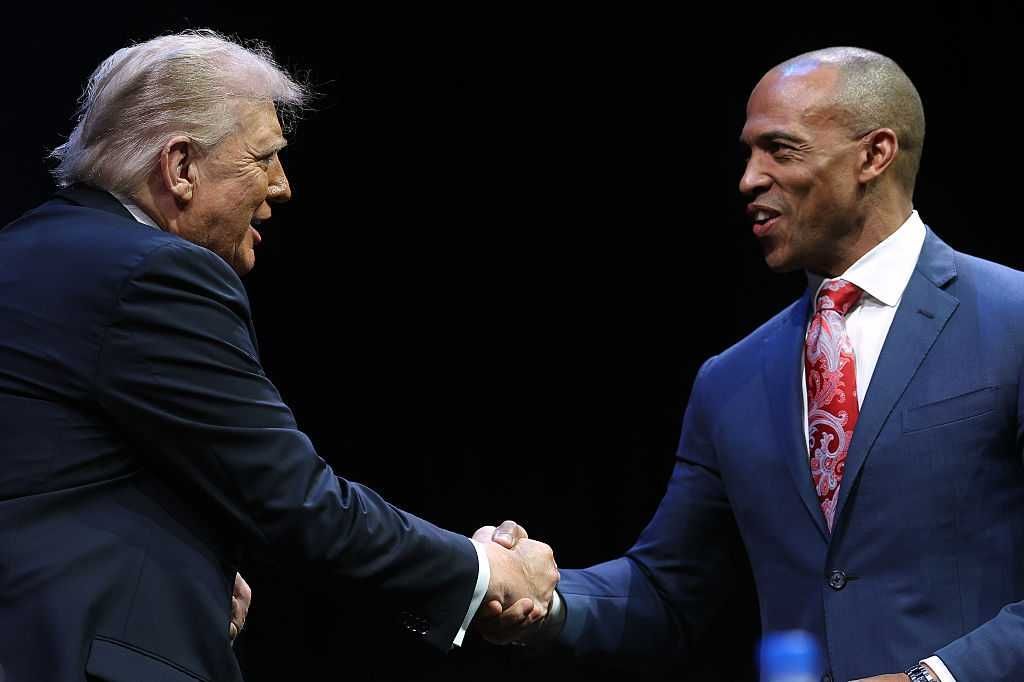 President Donald Trump, Housing and Urban Development Secretary Scott Turner. Photo by Win McNamee/Getty Images

 Photo by Douglas Rissing via Getty Images

 Photo by e-crow via Getty Images

 www.theblaze.com
 thefederalist.com
 www.theblaze.com
Civilizational collapse: Less than 15% of 30-year-olds are married homeowners
Americans used to settle down and start families in their 20s, but according to a chart that went viral all over social media this past weekend, that’s not even happening once they hit 30.
The chart revealed a steep drop-off from 1990, where it sat around 45%, plummeting to under 15% in 2025.
“This is a loss. ... This is like how ‘WALL-E’ happens. No exaggeration. This is the death of a culture. This is without spiritual revival. You cannot materialistically return from this,” BlazeTV host Steve Deace says, horrified.
“If you’re the Chicoms, you don’t need to risk a nuclear war. Just wait this thing out, man,” he adds.
And Deace has a few theories as to why there has been such a significant decline in married homeowners by the age of 30.
“This is unrecoverable. Percentage of 30-year-olds who are both married and homeowners in the last 75 years. You won’t dig out of that. And there’s all kinds of reasons. There’s economic reasons that are very valid. Cultural reasons that are very valid. Familial reasons — where are the dads that modeled this? Very valid,” Deace says.
“Legacy gone, responsibility gone, the family unit gone. If that is not fixed or course-corrected, I’m just going to tell you right now, your kids and grandkids — and I’m talking about my own — they’re going to live in a communist country and/or need to know Arabic. You are not going to Netflix-and-chill your way past that,” he continues.
“So that graphic right there, my friends,” he adds, “is where the rubber hits the road.”
Want more from Steve Deace?
To enjoy more of Steve's take on national politics, Christian worldview, and principled conservatism with a snarky twist, subscribe to BlazeTV — the largest multi-platform network of voices who love America, defend the Constitution, and live the American dream.