America First means knowing when to drop a lawsuit
President Trump’s second-term antitrust message couldn’t be clearer: Corporate monopolists who rig markets against working families, small businesses, and American interests have no place in a free economy.
That message found an early test last week — not through a bold new initiative, but by killing off a weak, leftover lawsuit from the Biden administration that threatened to derail Trump’s strategic antitrust agenda before it gained traction.
The Trump administration sent a clear message: America’s antitrust vision defends free markets and strong competition — not bureaucratic box-checking.
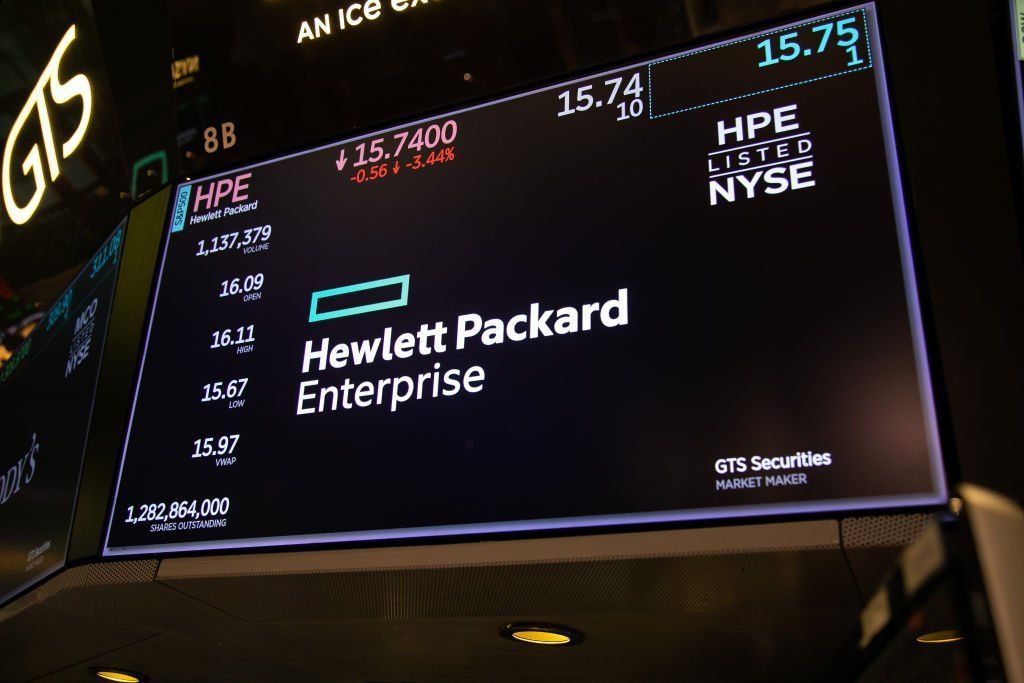
On Friday, the Trump Justice Department moved to dismiss the government’s misguided attempt to block the merger between Hewlett Packard Enterprise and Juniper Networks. The lawsuit, filed in the final hours of the Biden administration, posed risks far beyond its narrow legal merits.
Had it gone to trial, it likely would have been dismissed — not because antitrust enforcement is unimportant, but because the case itself rested on flimsy legal grounds. That kind of early defeat would have undercut the Justice Department’s credibility just as Trump’s new antitrust team gets to work.
As a former state attorney general and an America First-minded lawyer, I know the value of strong antitrust enforcement. But strength requires discernment. Pursuing a weak case does more harm than good. It invites judicial setbacks, undermines future enforcement, and wastes political capital needed for tougher fights ahead.
The lawsuit was also strategically reckless. I dealt with the threat posed by Chinese state-controlled telecom giant Huawei during my time at the Department of Homeland Security. Huawei, closely tied to the Chinese military, aims to displace U.S. firms and infiltrate global infrastructure. That’s why the U.S. banned the company, and our allies followed suit.
The HPE-Juniper merger would strengthen America’s ability to counter Huawei’s dominance. Blocking it would have weakened two U.S. companies trying to compete globally — and handed a gift to both Huawei and entrenched domestic players like Cisco.
Even viewed narrowly under U.S. antitrust law, the case faltered. The merged company wouldn’t control even 25% of the relevant domestic market and would still trail Cisco in key sectors like wireless local area networks. Analysts found no credible evidence of future price hikes or innovation slowdowns. On the contrary, the merger could spur real competition — especially against Cisco, whose dominance persists despite lackluster performance.
The European Union, no friend to large corporate combinations, approved the deal. EU regulators found widespread agreement among competitors, distributors, and customers that the merger posed no anticompetitive threat. Cisco would remain twice the size of the new entity in WLAN, with at least seven other players still in the market — and recent entries showing the sector’s low barriers to entry.
RELATED: America First antitrust isn’t ‘socialism’ — it’s self-defense
That context matters. Cisco’s market power, despite inferior performance, reflects broader integration advantages — not consumer preference alone. Importantly, WLAN sales represent just one-sixth of the merged company’s total revenue.
Antitrust should focus on competitive strength across the industry, not just the size of the firms involved. As FTC Commissioner Mark Meador argued in his recent paper, “Antitrust Policy for the Conservative,” the key question is whether other firms can still compete — and they can. Market analysts agree this merger would promote, not stifle, competition and innovation.
The Justice Department should never have filed this case. That it came from the Biden team, just before Trump’s leadership arrived, makes its dismissal all the more welcome.
Had it gone forward, the lawsuit could have weakened America’s antitrust credibility, emboldened foreign adversaries like China, and limited future enforcement under Section 7 of the Clayton Act, which prohibits mergers where the effect “may be substantially to lessen competition, or to tend to create a monopoly.” Judges don’t forget weak cases.
The consumer welfare standard still matters — and by that measure, the merger passes easily. Consumers surveyed by European regulators expressed no concerns about pricing or choice. The Biden Justice Department’s complaint contradicted the very principles now guiding Trump’s antitrust revival.
Dropping the case is both sound policy and smart politics. The Trump administration avoided a legal embarrassment, protected national security interests, and sent a clear message: America’s antitrust vision defends free markets and strong competition — not bureaucratic box-checking.
Kudos to the Trump Justice Department for making the right call.
 Rubio's visit to Panama resulted in the first foreign policy victory for the Trump administration, but there is more to be done.
 China has likely upgraded and expanded its spying facilities in Cuba, posing potentially severe implications for the U.S.
 As the specter of a Chinese invasion of Taiwan looms, the need to safeguard America’s interests has never been more pressing.
 www.theblaze.com
 thefederalist.com
 www.theblaze.com
 www.theblaze.com
 www.theblaze.com
Levin: Foreign regimes have been pumping money into American universities for decades
Authoritarian countries like Qatar, China, and Russia have been pumping billions of dollars into American colleges and universities since 2001 — and the mainstream media has remained silent.
“It’s been going on for decades, right under our noses,” Mark Levin says, adding, “the ruling class in America has failed us, so horrendously.”
According to a December 19 report from OffThePress.com, “Foreign nations have donated $43 billion to American universities since 1990.”
Elite universities have “massively underreported” the funding.
Why fund American universities as a foreign country?
“They’re buying minds, hearts, and souls,” Levin explains, and it shows.
According to a recent study, higher levels of campus anti-Semitism and a decline in free speech norms are associated with the underreported funding. The increase in anti-Semitism across universities has hit an astounding 300%.
This increase has been “linked to $13 billion in undisclosed foreign funds from 2014 to 2019” by “governments in the Middle East, China, and Russia.”
Harvard, Yale, and Georgetown were among the top recipients.
These foreign countries are using this funding “to promote terrorism, to buy the minds of our people in our own schools and to buy politicians in this country,” Levin says.
Despite the clear money trail and influence on American students, the mainstream media seems unbothered.
“Isn’t this breaking news? That academia has been bought and paid for by communist, fascistic, Islamist regimes by monarchies? Isn’t that important to know?” Levin asks, adding, “these colleges and universities have become Stalinist-like rat nests.”
Want more from Mark Levin?
To enjoy more of "the Great One" — Mark Levin as you've never seen him before — subscribe to BlazeTV — the largest multi-platform network of voices who love America, defend the Constitution, and live the American dream.