The anti-Christian radicalization on college campuses couldn't be more fragile
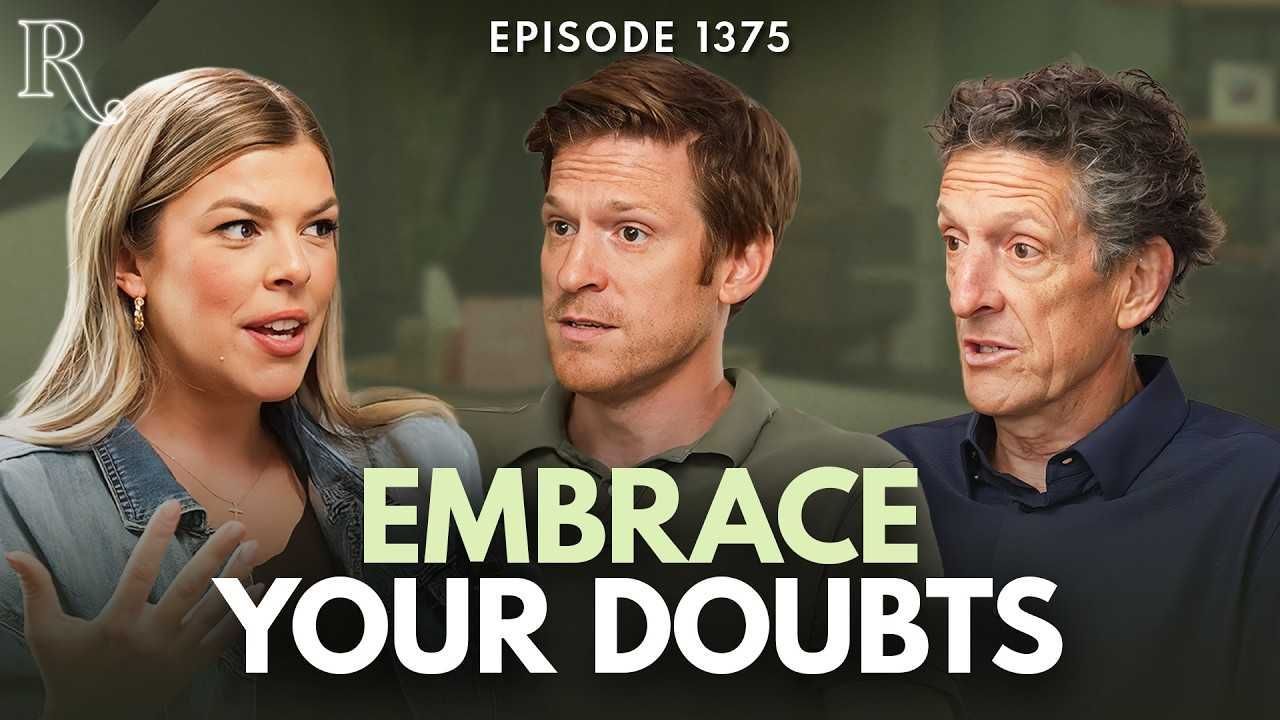


Evangelist Cliffe Knechtle has spent decades facilitating open-air dialogues about Christianity on college campuses, and what he’s noticed is a massive change over the years.

“People are more emotionally fragile today than they were when we began back in the '80s and '90s,” he tells BlazeTV host Allie Beth Stuckey on “Relatable.”

While his father grew up in Switzerland, “sat up in the Alps with a gun,” and watched Hitler’s army march toward his country — his grandfather was defending on the frontlines.

It was anything but fragile.


“Today, when Donald Trump wins the election, university students go to a crying room to get counseling. Give me a break. What emotional fragility. What an incredible emotional weakness today compared to the young 18-year-olds who fought against Adolf Hitler,” Knechtle explains.

But that’s not all that’s changed.

“Sexual immorality is embraced in a way that it’s not sexual immorality. It’s normal. So moral relativism and sexual immorality has become so commonplace, that if you stand against that, you are really, really, weird.”

Lastly, he says, “What has become too firmly entrenched is unless you can prove it scientifically, it’s not true.”

“I don’t care if you’re a liberal, you know very well that your critique of the conservatives is a moral, ethical critique. You’re not letting enough immigrants in. You’re elitist. And the conservatives are the same way. And you live a sexually twisted life, a perverted life,” he explains.

“So both are appealing to the moral argument, which I think is exciting because it really shows that we do have consciences, which means there really is a God,” he continues.

His son, Stuart Knechtle, recalls a moment when he was cornered by group of progressives who were distraught that he believed a suicidal 16-year-old girl should be saved.

“That’s devaluing her freedom and autonomy. If anything, you should aid in her decision to kill herself,” he says, mimicking their argument.

“I was shell-shocked, completely shocked,” he says.

“Sure enough, we kind of got around to the point of, ‘Do you guys really mean this?’ ... I think they go to the point of starting to realize just what they were saying. And they were relativizing morality, objective value,” he explains.

“That’s the one that I see where personal autonomy and freedom is considered really the top idea and thing to pursue even more so than the value of human life,” he adds.

Want more from Allie Beth Stuckey?

To enjoy more of Allie’s upbeat and in-depth coverage of culture, news, and theology from a Christian, conservative perspective, subscribe to BlazeTV — the largest multi-platform network of voices who love America, defend the Constitution, and live the American dream.
At its core, the abortion debate is very simple


For decades, the abortion debate has revolved around a single question: When does life begin? Scientists are asked to answer it. Legislators argue over it. Courts try to define it. Activists debate heartbeats, brain waves, viability, and development.

But while this question is important, it is not the most important question. The real question is what gives human life value.

The abortion debate will never be settled by science, politics, or emotional arguments. It is ultimately about where human value comes from.

If human life has no intrinsic value, then it does not really matter when life begins. And if human life does have intrinsic value, then the moment a human life exists, it must be protected. The entire issue hinges not on biology, but on value.

Biology shows life, not value

Modern science has made one fact undeniable: from the moment of conception, a new human organism exists. This is basic embryology. A distinct human life begins at fertilization with its own DNA, its own development, and its own biological trajectory.

Science is very good at describing life. It can measure heartbeats, detect brain activity, and observe development in remarkable detail. But science has a limitation: It can describe life, but it cannot assign value to it.

A microscope cannot tell us that murder is wrong. DNA cannot tell us that humans have rights. A heartbeat cannot tell us that a life is sacred.

Science describes what is. It cannot tell us what ought to be. Value, morality, and justice must come from somewhere else.

The image of God

The Bible answers the value question in the very first chapter. Genesis 1:27 says that God created man in His own image. This is one of the most important statements in all of Scripture, because it explains why human life has value at all.

Human beings are not valuable because they are intelligent, strong, independent, or useful. Human beings are valuable because they are made in the image of God.

This is not poetry. It is ontology — a statement about what man is. The image of God is the foundation of human dignity, human rights, and justice itself. Remove the image of God, and there is no objective reason why humans should be treated differently from animals. Rights become preferences, and justice becomes power.

The image of God is what makes human life sacred.

RELATED: We must resist a culture that redefines death as dignity

Mininyx Doodle/Getty Images

Value comes from what something is

One of the great errors of modern thinking is the idea that human value comes from ability or development. Our culture often assigns value based on intelligence, awareness, or productivity. But abilities exist on a spectrum. Some humans are more intelligent than others. Some are stronger than others. Some are more developed than others.

If value comes from ability, then human rights belong only to the strong, the intelligent, and the capable. But justice requires something far more stable than ability. Justice requires that human value be tied to what a human is, not what a human can do.

And what is man? Man is the creature made in the image of God.

The image of God does not grow over time. It is not earned by development. It is not granted by government. It does not appear at birth or increase with intelligence. It is inherent to what man is from the moment he exists.

If a human exists, the image of God exists

Once we understand that human value comes from the image of God, the abortion debate becomes much clearer. The question is no longer about heartbeats or brain waves or viability. It becomes much simpler: When does a human begin to exist?

And the answer to that question is at conception. All things begin at their beginning.

We do not say a tree begins halfway through its growth or that a river begins miles downstream. Things are defined by their beginning, not by later stages of development.

From the moment a human exists, the image of God exists, human value exists, and justice demands protection for that human life.

The issue is not development, location, or independence. The only issue is what the child is: a human being made in the image and likeness of God.

RELATED: James Talarico found a verse — and twisted the meaning

Danielle Villasana/Getty Images

The debate is about value

This is why the abortion debate will never be settled by science, politics, or emotional arguments. It is ultimately about where human value comes from.

If value comes from society, then society can decide who has value and who does not. If value comes from ability, then the strong will always rule over the weak. If value comes from preference, then power decides everything.

But if value comes from God, then every human life — born or unborn, strong or weak, wanted or unwanted — has equal worth because every human bears the image of the Creator.

Once we understand that human value comes from the image of God, the conclusion becomes unavoidable. To destroy that life is not merely to end a biological process — it is to destroy a human being who reflects the Creator Himself.

The doctrine of the imago Dei does not allow for partial justice, developmental value, or conditional protection. The image of God demands that every human life be treated with equal justice from the moment that life begins.

Because human value does not come from development, ability, or location. Human value comes from God.

80 Years After Nuremberg Condemned Nazi Research, Doctors Are Still Committing Atrocities

Perpetuating false definitions of the earliest stages of life mirrors the dehumanization that enabled Nazi experiments on the 'subhuman.'

Charlie Puth Tacitly Disavows Abortion Advocacy With Musical Musings On His Unborn Child

Regardless of whether he would affirm it outright, Charlie Puth's musical reflections shine on the dignity of human life at all its stages.
Saul Loeb/AFP/Getty Images

Judge’s abortion pill opinion tells the truth about ‘unborn humans,’ and the left can’t stand it

In his 67-page straight-talking opinion, Judge Matthew Kacsmaryk stuck to the facts — something Americans desperately need to hear after decades of euphemistic discussions about abortion.

The Dobbs Debate That Democrats And The Media Cartel Don’t Want Americans to Have

The debate over abortion concerns the circumstances under which the law should permit or prohibit the intentional killing of a human while in utero.

No, NYT, The Difference Between Abortion And A Miscarriage Is Not The Mother’s Feelings

'Why do we talk about miscarriage differently from abortion?' Probably because we usually talk about things that are completely different completely differently.

Archbishop Cordileone: It’s Not Political, Catholics Must Fight Abortion Like They Fought Segregation

When the 'blood of 60 million innocent American children cries out for justice,' pastors cannot speak quietly, reducing the murder of babies to a 'culture of choice,' Cordileone said.