College towns bred the next plague on rural America: The fail-lib
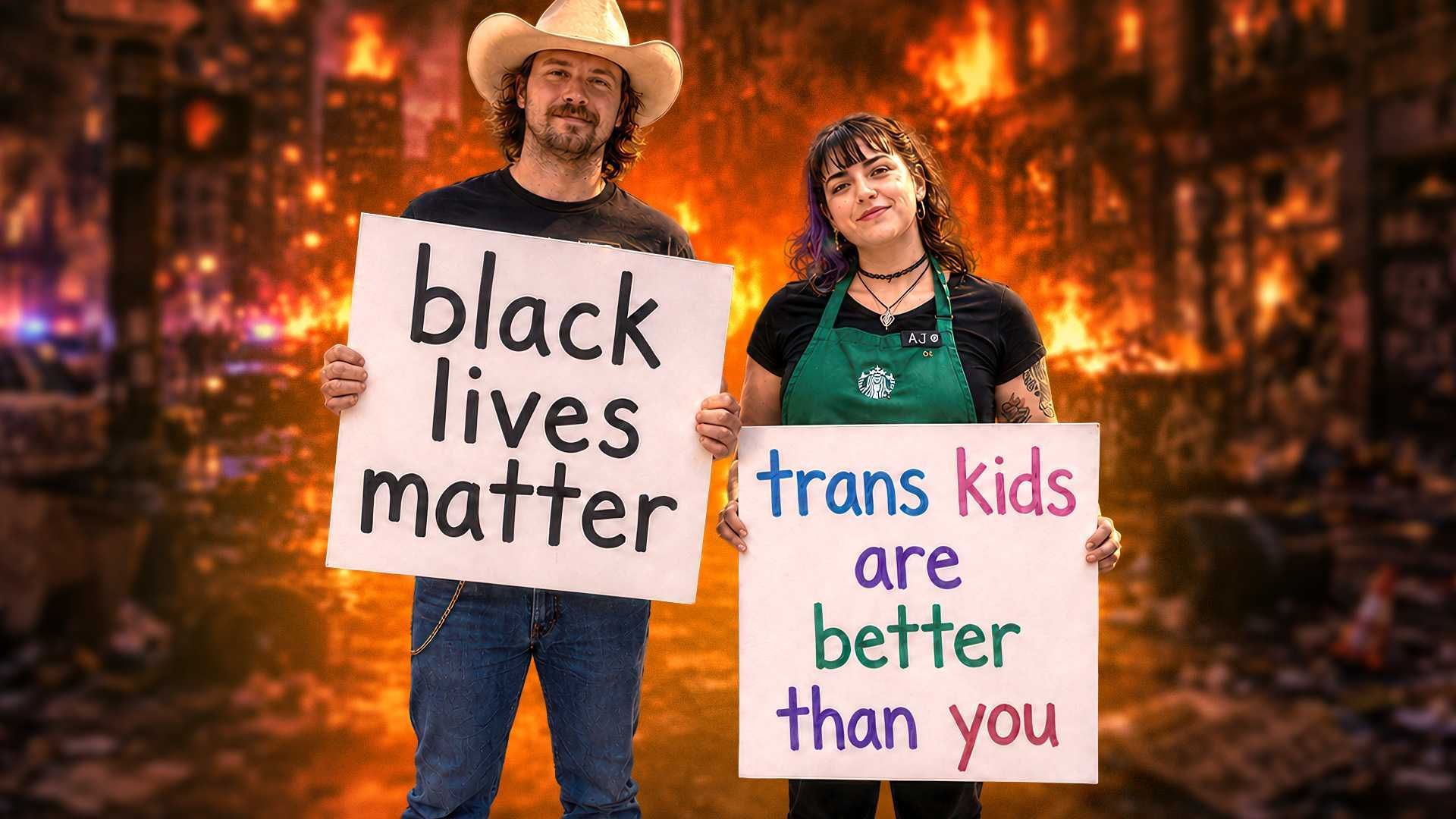


Traditionally, one advantage of living in rural America was the ability to escape insufferable leftists. The trade-offs were obvious: fewer jobs, fewer restaurants, less entertainment, and fewer institutions built for upward mobility. But distance from liberal cultural centers meant the average community could preserve a sane, conservative, patriotic outlook — the kind of place where normal people could still breathe without asking permission from their urban cultural commissars.

That escape has narrowed. As media and universities became more radical, their disciples moved into rural America through government-mandated institutions like schools and libraries. Progressivism became harder to avoid no matter how far someone moved from the city. Thus the hicklib was born.

The fail-lib was promised luxury and elite influence. Now she serves people she despises while searching for any opportunity to make their lives worse.

The hicklib is usually a social outcast, a failson who needs a moral explanation for why he hates the community he never fit into. His resentment searches for a theory that will dignify his rage, and the progressive missionaries installed in local institutions are happy to provide one.

Teachers tell the hicklib his country is evil. His family and neighbors are racist, sexist, backward religious fanatics destroying the lives of minorities who do not even live in town. The white Christian culture that dominates rural America is primitive and responsible for the evils of the world. The hicklib’s failure to fit in becomes proof of moral superiority.

So the hicklib shows up at town council meetings in a Black Lives Matter shirt to denounce minority oppression in a community with no actual black people. That absence, naturally, becomes further proof of the town’s intolerance. He loudly organizes Pride events attended by two other hicklibs. The clique stages protests, distributes flyers, and imitates urban activist rituals.

By practicing the sacraments of their faith, they hope to summon the spirit of the age to judge their reactionary little town.

The hicklib has become one of rural America’s petty plagues. But as the value of college degrees collapses, a new breed is emerging: the fail-lib.

The fail-lib worked hard in high school and gave progressive teachers every approved answer. She wrote her college entrance essay on the oppression of transwomen of color in coal mining. On campus, she became an activist. She secured a degree in some woke humanities discipline and earned straight A’s by repeating everything her communist professors told her.

The path to success was laid out before the fail-lib was born. She followed it perfectly. All that remained was the cushy corporate HR job and her rightful place making ordinary people miserable.

Then the plan failed.

RELATED: Your enemies aren’t mentally ill. They apparently just want to kill you.

Blaze Media Illustration

The college degree that cost $100,000 was supposed to guarantee success. The debt would be worth it because the credential would deliver a salary large enough for an apartment, a car, and monthly student loan payments. But the degree was not merely about financial security. It was also a symbol of status. College graduates were supposed to rule over the simple plebs who never left home.

The degree would confer wealth, power, and privilege. Instead, it turned out that too many people held degrees and too few jobs required them. Corporations began cutting HR departments that wasted resources and reduced productivity. Poor oppressed immigrant workers somehow found work while the fail-lib remained unemployed, though a good progressive would never complain. She could never explain how, but she knew the white Christian patriarchy was responsible for this injustice.

Earlier generations of college students had an insult for the ordinary residents of college towns: townies. The townie was contemptible because he was not merely passing through before collecting a credential and moving on to rule the world. He belonged to the place the student planned to use and abandon.

The arrogance required to insult the permanent residents of a community while you are a temporary visitor is staggering, but the slur was common. It revealed the sneering condescension of the would-be liberal elite. Now the tables have turned.

The college degree was once a ticket to the top. Now it is an expensive lottery ticket with worsening odds. More graduates emerge from extended stays in higher education with mountains of debt and few prospects.

The fail-lib spends a year unemployed, desperately seeking even the entry-level positions her fancy degree was supposed to let her bypass. After burning through savings and taking on more debt, she accepts a management job at the local Starbucks or retail outlet. If she gets lucky, she might run the local Apple Store.

The hicklib may be insufferable, but the fail-lib is worse. She was destined to leave the college town behind and move to a big liberal city like New York. She was supposed to be the person ordering lattes and $30 burrito bowls for important work lunches, not the person making them. Once, she mocked the parochial townies trapped in their backward existence. Now she is stuck among them with no escape.

RELATED: Almonds feed a people. AI feeds a machine.

Blaze Media Illustration

The fail-lib is not merely trapped in the backwater town. She is poor and low-status. A management job at Target might provide a decent life in a small town where prices remain low, but the fail-lib has a mountain of student debt she can never repay on a retail wage.

Plumbers, cops, firefighters, and mechanics all seem to make more money and enjoy more status in the community. The fail-lib was promised luxury and elite influence. Now she serves people she despises while searching for any opportunity to make their lives worse.

Artificial intelligence will intensify the problem. The bureaucratic make-work jobs progressive college graduates once dominated are among the easiest to automate, consolidate, or eliminate. The bitter entitlement of a psychology major with $100,000 in debt helping you find the cereal aisle will become more common.

The fail-lib may make less money than you. She may be less respected than you. She may even be despised by the townies she once mocked. But in her heart, she knows she is superior.

Nothing could convince her otherwise.

And she will spit in your burrito just to remind you who was supposed to be in charge.

My court fight over DEI at Arizona State isn’t culture-war noise


“Who will rid us of this meddlesome philosopher?”

Arizona State University hopes the Arizona Supreme Court will. I’m confident that my case against required diversity, equity, and inclusion training raises issues far larger than one professor or one ideological program. Fundamental questions about employee rights, public accountability, and the rule of law hang in the balance.

If I succeed in showing that ASU bears legal responsibility — and that employees can hold it accountable — the implications reach far beyond one HR program.

Why would the largest state university in the country defend mandatory DEI training in court? Why would it spend thousands — likely tens of thousands — defending its “inclusive communities” training, a program that teaches employees about the alleged moral and social failures of “whiteness” and “heteronormativity”?

The answer defies common sense. Yet ASU presses forward. In doing so, it has turned what many dismiss as a culture-war skirmish into an employment-rights case with statewide consequences.

Most people hear “DEI” and instantly map the political lines. This case deserves a different reaction. Required ideological training should make any employee — left, right, or indifferent — pay attention.

First, the training relies on racial essentialism. It instructs ASU employees to view themselves and others primarily through skin color, then assigns moral weight and collective guilt on that basis.

Second, it attacks traditional Christian moral teaching, especially marriage as the union of a man and a woman.

Either flaw should have pushed administrators to retire the program long before I raised formal objections.

A third issue should unite every employee, regardless of where they stand on DEI: ASU treated this as an employment matter. The university did not admit error, revise the program, and move on. It hired Perkins Coie to defend racial essentialism. Yes, Perkins Coie — the firm widely associated with the Hillary Clinton-era Steele dossier controversy. ASU employs a full team of in-house attorneys. Why pay a nationally prominent and politically charged firm to defend a training program many already viewed as controversial — and, I argue, unlawful?

ASU’s posture gets stranger. The university has since taken down the required training, yet it continues paying lawyers to defend it in court. When this ends, Arizona lawmakers and taxpayers will want a number: How much did ASU spend on legal fees, and which administrators approved the contracts?

RELATED: Feds probe ASU for racial bias — will other universities be held accountable?

Just_Super via iStock/Getty Images

ASU’s legal strategy aims at dismissal. The university claims I lack standing. Put plainly, ASU argues that an employee cannot hold his public employer accountable for violating state law. At that point, the dispute stops being about DEI and becomes about every employee in Arizona. If ASU wins at the Arizona Supreme Court, employees across the state lose a crucial tool for legal accountability.

Professors to my political left may sneer at my critique of DEI. They should still worry about the precedent.

Imagine a scenario pulled from their nightmares: A future administration takes over ASU and imposes mandatory ideological training from the opposite end of the political spectrum — required ICE-themed training, or MAGA-themed training. If that training violated Arizona law, those same professors would demand the right to sue. ASU’s argument would bar them. This case concerns enforceable employee rights, not just contemporary politics.

ASU’s first bid to dismiss the case failed. A lower court rejected the university’s argument. ASU appealed, and the appellate court sided with the university. That posture put the case on a path to the Arizona Supreme Court.

RELATED: A gay whistleblower just punked Colorado’s DEI machine

AndreyPopov via iStock/Getty Images

Two facts matter here. The Arizona Senate and the state representative who authored the law I claim ASU violated have filed an amicus brief supporting my position. Their message is simple: A public employee has standing to hold a public employer accountable for breaking the law. The statute prohibits the kind of racial blame and collective guilt that ASU’s training promoted. The principle should not require explanation: Don’t assign moral fault to entire groups based on skin color.

So why does ASU defend this?

Because ASU does not view this fight as one training module that can be swapped out and forgotten. Race-based blame sits near the center of the contemporary left’s approach to education. If I succeed in showing that ASU bears legal responsibility — and that employees can hold it accountable — the implications reach far beyond one HR program. ASU’s initiatives aimed at combatting “whiteness” would come under scrutiny. Its embedded social justice goals face legal challenge and public examination. Students could follow with suits over race blame in a “decolonized curriculum.”

“Who will rid us of this meddlesome philosopher?” ASU really hopes the Arizona Supreme Court will.

Every employee in Arizona should watch what happens next. The outcome will determine whether public institutions answer to the law — or whether employees must comply silently, no matter what ideology administrators impose from above.

A gay whistleblower just punked Colorado’s DEI machine


In the comic books, Galactus devours worlds without discrimination. In real life, that role belongs to the Democratic Party.

You can see it play out in Minneapolis right now. Colorado offers its own case study. That’s where Rich Guggenheim is under attack inside the Colorado Department of Agriculture because he thought being a plant health programs manager meant focusing on — stay with me — plants, not pronouns.

Most people choose comfort. They tell themselves they agree with freedom, but they live like they don’t. They fear conflict more than they fear losing the country.

Last November, Guggenheim logged into a virtual meeting with roughly a dozen department heads. One agenda item covered a grant report tied to pest surveys, “inclusive leadership,” and employee participation in a program called “Colorado for All.”

Because when I think about protecting America’s food supply from pests, my first concern always involves the state’s ideological diversity metrics.

Guggenheim wanted to keep plants healthy. He didn’t have patience for the ritual. He typed a short comment into the group chat: “DEI on steroids.”

That was enough to trigger a full-blown response from Plant Industry Division Director Wondirad Gebru. Gebru paused the meeting and labeled the comment “inappropriate” in front of colleagues. Gebru told Guggenheim to mute his microphone.

Guggenheim did something better. He turned on his camera and accused Gebru, on the record, of viewpoint discrimination.

See, that’s how it’s done, folks. No excuses. Just a jawbone of an ass wielded without apology. Take stupid out to the woodshed and bludgeon it.

“They are trying to frame me as disruptive,” Guggenheim said. “But how can they do that when the topic is actually on the agenda?”

Next, Guggenheim told Gebru via private chat that he would file a formal whistleblower disclosure with U.S. Attorney General Pam Bondi at the U.S. Department of Justice. The letter he sent that same day alleged First Amendment violations through viewpoint discrimination and compelled speech, retaliation, and disregard for President Donald Trump’s executive order directing federal agencies to stop promoting, requiring, or funding diversity, equity, and inclusion initiatives that impose ideological preferencing.

He filed additional complaints with the Justice Department’s Civil Rights Division and the Office of Special Counsel whistleblower channel; an Equal Employment Opportunity Commission inquiry; a Colorado Civil Rights Division/State Personnel Board consolidated appeal; and a state whistleblower complaint.

A month later, Guggenheim received notice of a workplace investigation. The notice offered no specifics about the allegations, the complainant, or the policy at issue. The state hired an outside group to conduct the investigation.

That process is under way as Guggenheim pursues a federal lawsuit against a state whose political class has built a reputation for using institutions as weapons.

Colorado Secretary of State Jena Griswold tried to keep Trump off the presidential primary ballot before investigators examined her office’s election-security failures. Last year, lawmakers also advanced a regime of pronoun policing and gender ideology that reaches into schools and families and invites the state to play commissar.

RELATED: The taboo conservatives refuse to confront

Blaze Media illustration

Colorado’s leadership class doesn’t merely govern. It disciplines.

“Destruction of Western civilization is what queer theory is all about,” Guggenheim said.

Guggenheim is 46. He doesn’t sound demoralized. He sounds ready. He believes Colorado has boxed itself in legally, which left him with a choice: comply, stay quiet, and keep his head down — or put the issue on the record and force a confrontation.

Most people choose comfort. They tell themselves they agree with freedom, but they live like they don’t. They fear conflict more than they fear losing the country.

Guggenheim’s refusal to be emotionally bullied by the pronoun police should shame the rest of us. He didn’t beg for approval. He didn’t bargain. He didn’t self-censor to keep the peace. He documented the coercion and escalated through the proper channels.

One detail makes the story even harder for the usual activists to process: Guggenheim is openly gay.

He still drew the line. He still confronted ideological coercion in the workplace. He still chose risk over submission.

That’s the right standard. What’s your excuse?

Jennifer Sey’s HR rebellion is just what America needs


Jennifer Sey struck a nerve when she declared that her company, XX-XY Athletics, operates without an HR department.

“They produce nothing,” Sey said at Freedom Fest earlier this month. “They monitor our words. They tell us what we can and cannot say. They inhibit creativity. It’s bad for business.”

The DEI bureaucracy has hijacked creativity and initiative across American institutions. The answer is more vision, more empowerment, and more responsibility.

That viral moment — now with more than 5 million views on Instagram — and her subsequent op-ed resonated for one simple reason: She’s right. HR’s bureaucratic grip is choking American innovation. The diversity, equity, and inclusion bureaucracy is killing creativity. Worst of all, it’s draining the humanity from the workplace.

At the Texas Public Policy Foundation, we’ve embraced a different path. We ditched the traditional HR model and built a self-governing culture grounded in vision, empowerment, and personal responsibility. And it works.

We’re a 100-person organization working across nearly every area of public policy. Every legislative session, we help pass dozens of reforms in Texas. We do this without the heavy hand of HR.

The typical HR regime — endless training sessions, speech policing, pronoun mandates, and risk-averse hiring filters — doesn’t just waste time. It demoralizes bold thinkers. It cultivates mediocrity.

Instead, we’ve built a culture on three pillars.

1. Vision

Every member of our team knows why we’re here: to advance liberty, opportunity, and prosperity through principled policy. We don’t need compliance officers to enforce that vision. It’s clear. It’s motivating. And it’s shared.

A 2016 study in the International Journal of Economic and Administrative Studies backs this up. Researchers Gary S. Lynn and Faruk Kalay found that clarity of vision — meaning shared understanding and communication around goals — had a significant positive effect on performance.

In plain English: Clear goals drive real results. Ditch the hall monitors. Trust your people.

2. Empowerment

We replaced top-down control with radical trust. No mandatory seminars. No endless policy reminders. Just continuous mentorship, honest feedback, and the freedom to take risks — even fail.

This culture empowers innovation. We hire people with integrity, not compliance credentials. And we trust them to deliver.

RELATED: Trump deep-sixed DEI — but is it undead at major federal contractors like Lockheed Martin?

Photo by Andrew Harnik/Getty Images

When someone missteps, we don’t need HR to issue a demerit. The team steps in — graciously but directly — with shared accountability.

As Sey put it, HR’s approach produces “mediocre people with no opinions.” We hire big thinkers with strong character. Then we let them run.

3. Personal responsibility

A self-governing culture demands ownership. No hall monitors or permission slips. Each person knows his or her role — and takes it seriously.

This attracts the kind of people who actually get things done. It’s the reason we’ve succeeded in passing bold, controversial policies despite heavy opposition. We don’t wait for permission. We build.

Jennifer Sey’s stand against HR’s dead weight is more than a media moment. It’s a call to action.

The DEI bureaucracy has hijacked creativity and initiative across American institutions. But the answer isn’t more rules. It’s more vision, more empowerment, and more responsibility.

At TPPF, that formula has unleashed our team’s potential — and it can do the same for any organization willing to stop cowering before rule-makers and start trusting risk-takers.

The soul of your business — and the soul of America — depends on it.

Biden’s HR Czars Cost Taxpayers Millions Annually As They Work To Diversify Federal Workforce

High-ranking bureaucrats tasked with advancing “racial justice” in federal hiring and retention practices are raking in hefty salaries — and costing taxpayers millions. The heads of human resources at 22 different federal agencies and cabinet departments collectively drew in about $4.2 million a year as of 2022 in taxpayer-funded salaries, according to data from Open The Books […]

I’d Like To Call Human Resources On Hostile HR Thought Police

The nation’s current deficit in the tools of discourse paved the way for a cultural capture of the West at the hands of confessional Marxists.

What The Next Conservative Administration Can Learn About Personnel From Musk’s Twitter Takeover

Elon Musk’s plans are clear, strategic, and applicable to a takeover of any bureaucracy — particularly when it comes to replacing hostile staff.

Companies Eager To Subsidize Abortion Because They Think Only Childless Women Are Profitable

By subsidizing abortion, corporations show how they evaluate women’s worth and working potential based on the state of their wombs.

Thanks To Leftists, The Black Talent Companies Seek To Hire With Racial Quotas Doesn’t Exist

Lack of representation in corporate board rooms is not because of mythical white privilege. It is due to the breakdown of the black family.

Kmele Foster Is Right: Banning Critical Race Theory Isn’t Going To Stop It

Declining to publicly fund certain speech is not censorship, and people as smart as Kmele Foster should stop making that utterly false claim. That's also why critical race theory bans aren't anywhere near enough.