Yale Professor Couple Under Fire for Attending Chinese Conference, Guided Tour in Brutally Repressed Xinjiang Region: Prof Praised China for ‘Respect for Minority People’

Two Yale faculty members are facing scrutiny for traveling to an "academic forum" in China's far-flung Xinjiang region, where China has been accused of rampant human rights abuses against the ethnic Uyghurs, including locking them up en masse in re-education camps. The forum's organizers and accompanying tour included institutions linked to a Communist Party "paramilitary organization sanctioned by the U.S. government," according to a new investigation by the intelligence firm Strategy Risks.

The post Yale Professor Couple Under Fire for Attending Chinese Conference, Guided Tour in Brutally Repressed Xinjiang Region: Prof Praised China for ‘Respect for Minority People’ appeared first on .

U.K. Bans Bishop, Lawmaker Convicted Of ‘Hate Speech’ For Agreeing With The Bible

It’s the latest in a long escalation of European repression of free speech and peaceful religious expression not just in Europe but across the globe.

At its core, the abortion debate is very simple


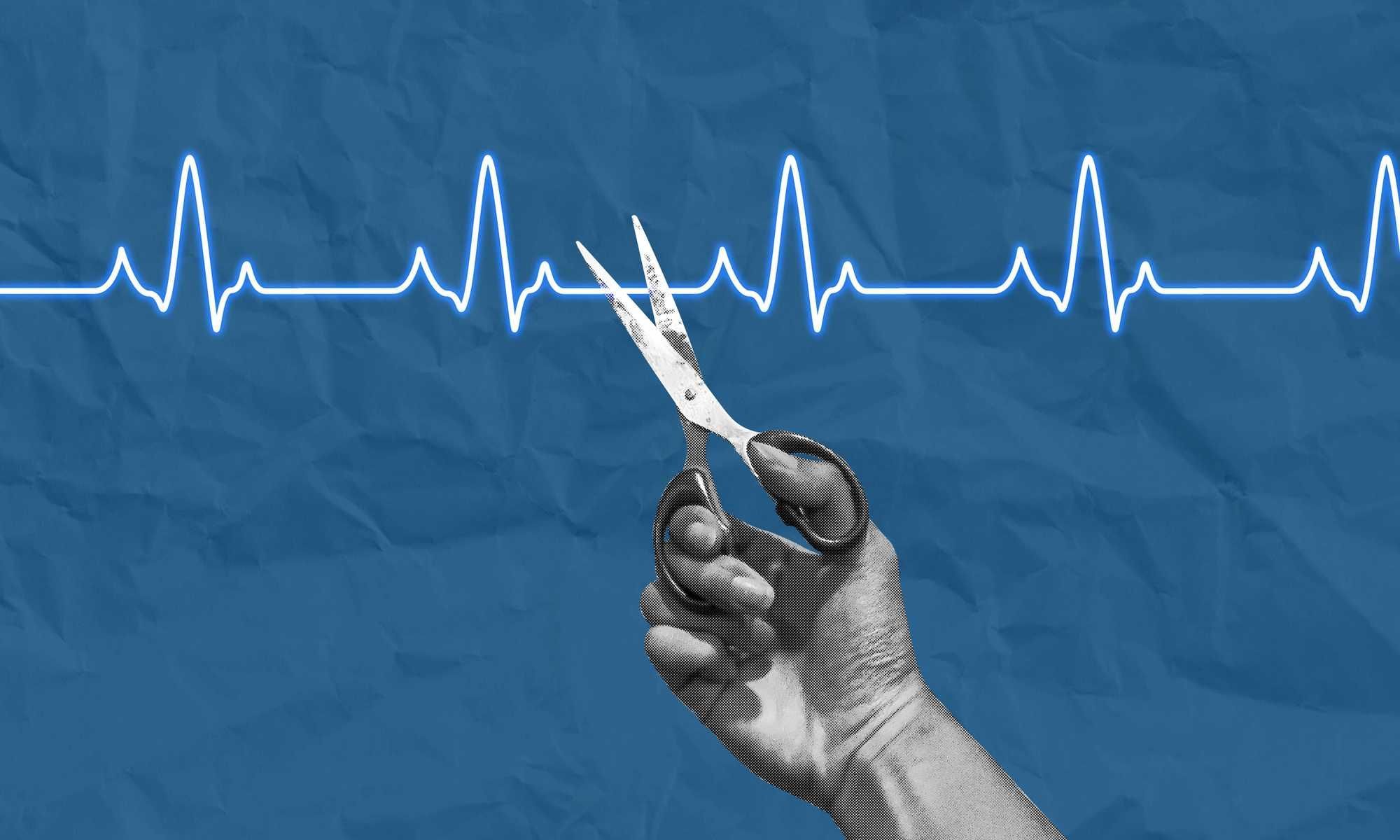
For decades, the abortion debate has revolved around a single question: When does life begin? Scientists are asked to answer it. Legislators argue over it. Courts try to define it. Activists debate heartbeats, brain waves, viability, and development.

But while this question is important, it is not the most important question. The real question is what gives human life value.

The abortion debate will never be settled by science, politics, or emotional arguments. It is ultimately about where human value comes from.

If human life has no intrinsic value, then it does not really matter when life begins. And if human life does have intrinsic value, then the moment a human life exists, it must be protected. The entire issue hinges not on biology, but on value.

Biology shows life, not value

Modern science has made one fact undeniable: from the moment of conception, a new human organism exists. This is basic embryology. A distinct human life begins at fertilization with its own DNA, its own development, and its own biological trajectory.

Science is very good at describing life. It can measure heartbeats, detect brain activity, and observe development in remarkable detail. But science has a limitation: It can describe life, but it cannot assign value to it.

A microscope cannot tell us that murder is wrong. DNA cannot tell us that humans have rights. A heartbeat cannot tell us that a life is sacred.

Science describes what is. It cannot tell us what ought to be. Value, morality, and justice must come from somewhere else.

The image of God

The Bible answers the value question in the very first chapter. Genesis 1:27 says that God created man in His own image. This is one of the most important statements in all of Scripture, because it explains why human life has value at all.

Human beings are not valuable because they are intelligent, strong, independent, or useful. Human beings are valuable because they are made in the image of God.

This is not poetry. It is ontology — a statement about what man is. The image of God is the foundation of human dignity, human rights, and justice itself. Remove the image of God, and there is no objective reason why humans should be treated differently from animals. Rights become preferences, and justice becomes power.

The image of God is what makes human life sacred.

RELATED: We must resist a culture that redefines death as dignity

Mininyx Doodle/Getty Images

Value comes from what something is

One of the great errors of modern thinking is the idea that human value comes from ability or development. Our culture often assigns value based on intelligence, awareness, or productivity. But abilities exist on a spectrum. Some humans are more intelligent than others. Some are stronger than others. Some are more developed than others.

If value comes from ability, then human rights belong only to the strong, the intelligent, and the capable. But justice requires something far more stable than ability. Justice requires that human value be tied to what a human is, not what a human can do.

And what is man? Man is the creature made in the image of God.

The image of God does not grow over time. It is not earned by development. It is not granted by government. It does not appear at birth or increase with intelligence. It is inherent to what man is from the moment he exists.

If a human exists, the image of God exists

Once we understand that human value comes from the image of God, the abortion debate becomes much clearer. The question is no longer about heartbeats or brain waves or viability. It becomes much simpler: When does a human begin to exist?

And the answer to that question is at conception. All things begin at their beginning.

We do not say a tree begins halfway through its growth or that a river begins miles downstream. Things are defined by their beginning, not by later stages of development.

From the moment a human exists, the image of God exists, human value exists, and justice demands protection for that human life.

The issue is not development, location, or independence. The only issue is what the child is: a human being made in the image and likeness of God.

RELATED: James Talarico found a verse — and twisted the meaning

Danielle Villasana/Getty Images

The debate is about value

This is why the abortion debate will never be settled by science, politics, or emotional arguments. It is ultimately about where human value comes from.

If value comes from society, then society can decide who has value and who does not. If value comes from ability, then the strong will always rule over the weak. If value comes from preference, then power decides everything.

But if value comes from God, then every human life — born or unborn, strong or weak, wanted or unwanted — has equal worth because every human bears the image of the Creator.

Once we understand that human value comes from the image of God, the conclusion becomes unavoidable. To destroy that life is not merely to end a biological process — it is to destroy a human being who reflects the Creator Himself.

The doctrine of the imago Dei does not allow for partial justice, developmental value, or conditional protection. The image of God demands that every human life be treated with equal justice from the moment that life begins.

Because human value does not come from development, ability, or location. Human value comes from God.

America First foreign policy gets an Office of Natural Rights


Last month, Secretary of State Marco Rubio executed a sweeping restructuring plan to implement an America First foreign policy in the State Department. Although many offices were either eliminated or combined, a few new ones were created. Among them is the Office of Natural Rights.

The very name has drawn the usual harrumphing from establishment voices who insist that “human rights” is the only proper diplomatic term. While human rights terminology is significant, the State Department has long been blind to an even more critical truth behind such language: Without human nature, human rights don’t exist.

Without reference to the inherent limitations of our shared human nature, the argument over rights becomes a mere yelling match.

If our rights are not grounded in a shared nature, they are founded simply on the will of the government. If the government grants us rights at one particular moment, it may arbitrarily retract them at the next.

The Trump administration has observed this phenomenon with great alarm. Vice President JD Vance argued that this is Europe’s greatest threat in his now-famous Munich speech, and the State Department weighed in with an official article shortly thereafter.

U.S. officials are rightly concerned about natural rights abroad — not because they are Republicans, but rather because they are Americans. The recognition of natural rights is the foundation of our own government.

Conflicting rights

Our founding fathers pledged their lives, fortunes, and sacred honor to uphold the truth that “all men are created equal” and are “endowed by their Creator with certain inalienable rights.” Today, the founders’ fledgling nation is the oldest constitutional republic on earth and the foundation of a peaceful and prosperous world order. While conflict has not been eradicated — and never will be — America stands as a beacon of liberty due to our status as a natural-rights republic.

A right is a powerful thing. It is an absolute claim that cannot be questioned or curtailed except in the most dire and limited circumstances. Any law that denies a natural right is unjust on its face. Politicians who threaten natural rights threaten society itself.

Nonetheless, over the last several decades, the concept of rights has become untethered from its grounding in human nature, leading to an inflationary crisis of rights. Today, we suffer from violent clashes over the pecking order of a multitude of conflicting rights people claim for themselves — often at the expense of others.

Without reference to the inherent limitations of our shared human nature, the argument over rights becomes a mere yelling match, devoid of moral content and determined by sheer power. That is why the fiercest proponents of novel rights always impose them on society through force, such as angry protests and public shaming rather than true debate.

Such imposition poses a threat to the free exercise of genuine rights in our societies. True natural rights are, like the rest of nature, ordered and mutually compatible. They rarely conflict and do so only at the margins. The introduction of so-called human rights destroys that balance and often pits new “rights” directly against the old.

Free speech in particular has been trampled in many countries in order to make room for an oppressive and dictatorial version of “tolerance.” Just ask the 12,000 Brits imprisoned for “hate speech” every year. Foundational rights to person, property, and self-defense are likewise under threat from diversity, equity, and inclusion fanatics who are eager to enact judgment on the basis of race rather than character.

Rooting out imposters

We urgently need to distinguish between true natural rights and the imposter rights pushed on us by fractious groups pursuing their own ends. The following three criteria can help distinguish genuine rights from modern imposters: functional universality, necessity by nature, and corresponding duty.

First, functional universality means that the right can be secured without vast government interference. Free speech is universally attainable; free college less so.

Second, necessity by nature means all people must be free to do what nature has designed them for: working to provide for themselves and their children and associating freely with others for the purpose of mutual support, inquiry, and worship. Though just government is built on the recognition of man’s nature, it cannot promise to all what cannot be practically provided to all.

RELATED: Trump administration making the Second Amendment great again in DC

Photo by Win McNamee/Getty Images

Finally, all authentic rights have corresponding duties. The right to private property implies the duty to respect others’ property as well. Any right with no corresponding duty is just a handout by a different name.

By applying these and similar criteria, the Office of Natural Rights will bring crucial clarity to our foreign policy and end the tyranny of special interests masquerading as human rights. So-called rights that do not fit this framework might involve good and desirable ends for individuals and society — but they cannot be allowed to claim the mantle and privileges of a natural right.

Editor’s note: This article was originally published at the American Mind.

How Top Companies Bankrolled a Qatari Influence Op

In 2021, Pfizer and Amazon earned perfect scores on the Corporate Equality Index, a rating of how well companies treat their LGBT employees. Overseen by the Human Rights Campaign, which seeks to ensure that "LGBTQ+ people" are treated "as full and equal citizens … around the world," the index grades companies on their "workplace inclusion" and "support for LGTBQ equality under the law."

The post How Top Companies Bankrolled a Qatari Influence Op appeared first on .

Human Rights Groups Refuse To Condemn Iran’s Strike on Israeli Hospital

Amnesty International, Human Rights Watch, and other prominent human rights groups that frequently launch baseless attacks against Israel have so far declined to condemn Iran’s strike on an Israeli hospital that injured at least 80 people.

The post Human Rights Groups Refuse To Condemn Iran’s Strike on Israeli Hospital appeared first on .

Harvard 'Human Rights' Lecturer Fawned Over ‘Hero’ Hamas Leader

A Harvard University faculty member who teaches courses on human rights law and international "negotiation skills" recently praised the slain leader of Hamas as a "hero" and called the terrorist organization a "movement for freedom, for liberation."

The post Harvard 'Human Rights' Lecturer Fawned Over ‘Hero’ Hamas Leader appeared first on .

America’s faith in ‘free trade’ empowered China’s apartheid machine


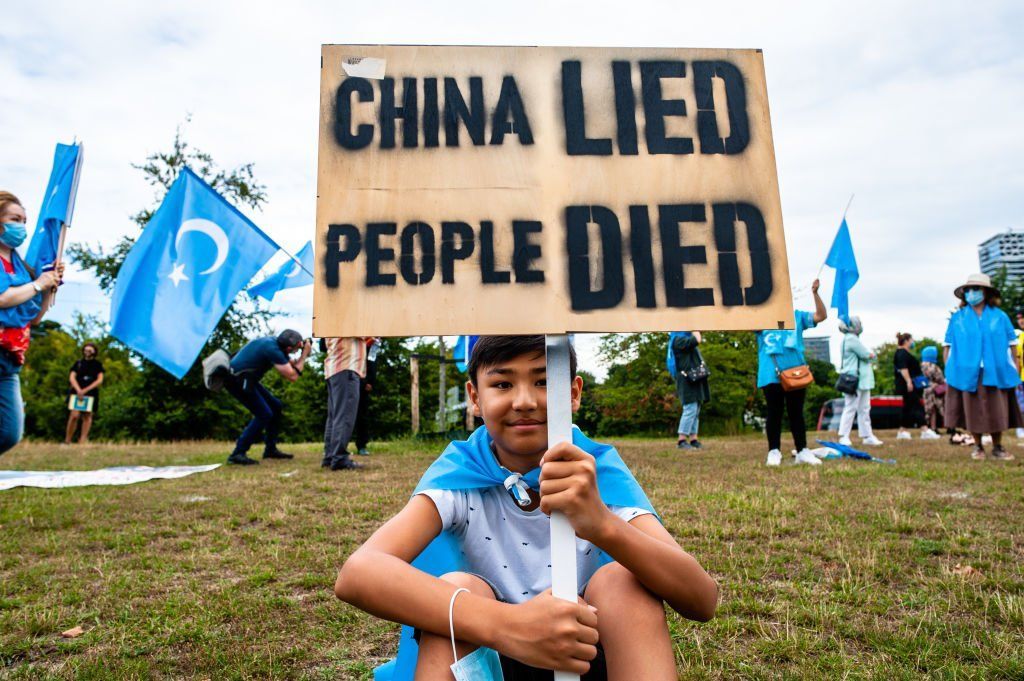
Like the “Free Tibet” campaign of the late 1990s, concern for China’s Uyghur population has faded into the background. In the mid-2010s, Beijing faced a short-lived wave of international criticism after General Secretary Xi Jinping created a vast network of internment camps. Nearly three million Uyghurs have been detained and subjected to brutal conditions.

Republicans looking to push back against anti-tariff Democrats should take note. This humanitarian catastrophe continues today, yet receives little sustained attention. It ranks among the most severe human-rights abuses on the planet — and American free-trade policies may have helped enable it. For decades, U.S. leaders embraced open commerce with China while ignoring the costs. That strategic blindness now carries a moral price.

Has our refusal to implement strong tariffs created a monster?

Beijing has long portrayed Xinjiang separatists as Islamic terrorists. This year marks a decade since their last major act of violence — a brutal knife attack at a coal mine that left 50 people dead, mostly Han Chinese workers and police. Horrific as it was, critics argue the assault, like previous incidents, reflected a desperate backlash against the Chinese state’s colonial-style repression.

Since Xi Jinping’s crackdown, no similar attacks have occurred. But the sheer scale of the regime’s response pushes China into apartheid territory — arguably beyond.

Reports estimate that up to three million of China’s 10-million-strong Uyghur population are now detained in so-called re-education camps. These camps aim to strip the Sunni Muslim minority of its identity and recast them as loyal subjects of the Chinese Communist Party.

Other reports indicate that many Uyghurs held in China’s re-education camps are forced to work in factories under conditions tantamount to slavery. Even more disturbing, some evidence suggests that, after “re-education,” Uyghurs are sold online in batches to employers across the country. Xinjiang produces one-fifth of the world’s cotton, and estimates say half a million Uyghurs are forced to pick it. That “free labor” gives Chinese manufacturers a competitive edge — one reportedly tied to the bankruptcy of major U.S. retailer Forever 21.

Democrats may oppose forced labor in theory, but where is the push to penalize what amounts to a 21st-century plantation economy? Would they stay silent if Russia did the same?

One of the most chilling aspects of Beijing’s ethnic campaign is its attempt to re-engineer Xinjiang’s population. This isn’t new. Seventy years ago, Mao Zedong launched a mass migration project to dilute the region’s Uyghur majority. The “Great Leap West,” introduced in 2000, revived the strategy — this time using financial incentives to bring Han Chinese into Xinjiang and offering jobs reserved for Han applicants outside the region. The policy remains in effect, along with forced out-migration of Uyghurs to other parts of China.

Even Western media outlets — usually quick to denounce any effort to reduce immigration — have expressed alarm over Beijing’s demographic engineering in Xinjiang. Many now acknowledge the regime’s mass Han migration into the region as a deliberate attempt to dilute the Uyghur population and strip the minority of any political influence.

More disturbing still are reports of mass sterilization campaigns. Chinese authorities have allegedly targeted Uyghur women to suppress birth rates. In 1990, hundreds of Uyghur men stormed a government building to protest forced abortions — a clash that ended with nearly 20 people dead.

The demographic consequences are staggering. In 1955, Uyghurs made up 90% of Xinjiang’s population. Today, they account for less than half.

Pro-Trump conservatives should grasp the strategic value of highlighting China’s use of migration as a political weapon. Doing so forces the left to confront a reality it usually denies: replacement-level immigration exists, and it carries consequences. Group identity rights don’t just apply to favored minorities — they apply to everyone, including the West.

Consider the demographic parallels. America’s historic, European-descended majority has dropped from 90% after World War II to 57% today. The left has openly — and at times grotesquely — celebrated that decline.

Like Beijing, the Democratic Party understands that demography is destiny. China aims to dominate its non-Han regions. Democrats aim to secure permanent political dominance over what they call “our democracy.”

By exposing the left’s selective outrage — condemning China’s demographic manipulation while applauding similar trends in the West — conservatives can force a reckoning. If it’s wrong in Xinjiang, it’s wrong here, too. And no amount of rhetorical gymnastics can cover up the left’s inconsistency, arbitrariness, and odious bigotry.

China’s mass enslavement of millions should spark outrage at least equal to what the West once directed at apartheid South Africa. That regime was boycotted into submission. Why shouldn’t the same standard apply to Beijing?

As President Trump has rightly asked: Why did we admit China into the World Trade Organization in 2001? What made anyone believe it would ever play by WTO rules — rules it had already vowed to ignore behind closed doors? Was George W. Bush’s administration, along with the now-defunct neoconservative GOP, truly naïve enough to think trade would transform China into a democracy?

More to the point, have we — not just our leaders, but the American people — enabled this? By enriching China through free trade, have we given it the means to carry out apartheid-level abuses against its Turkic Muslim minority?

And has our refusal to implement strong tariffs created a monster?

The anti-Trump, anti-tariff chorus must answer these questions. Its blind faith in globalization didn’t just cost us factories and jobs. It helped fund a regime that builds camps, crushes dissent, and rewrites humanity in its own image.