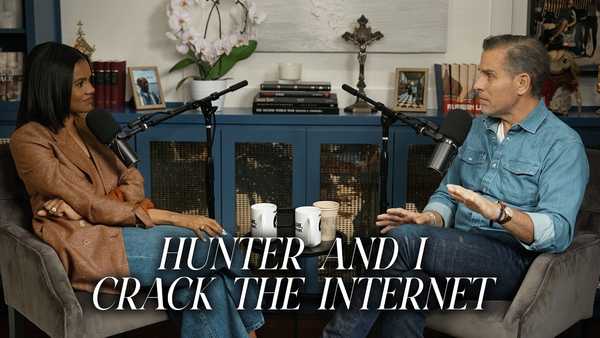
Candace Owens And Hunter Biden Team Up To Spread Trump Assassination Attempt Conspiracy
'They lie to us about things'
Emma Morris was only 27 years old and six months into her employment at the New York Post when she got a call in late September 2020 from former Trump adviser Steve Bannon saying he had a story that would “change her life.”
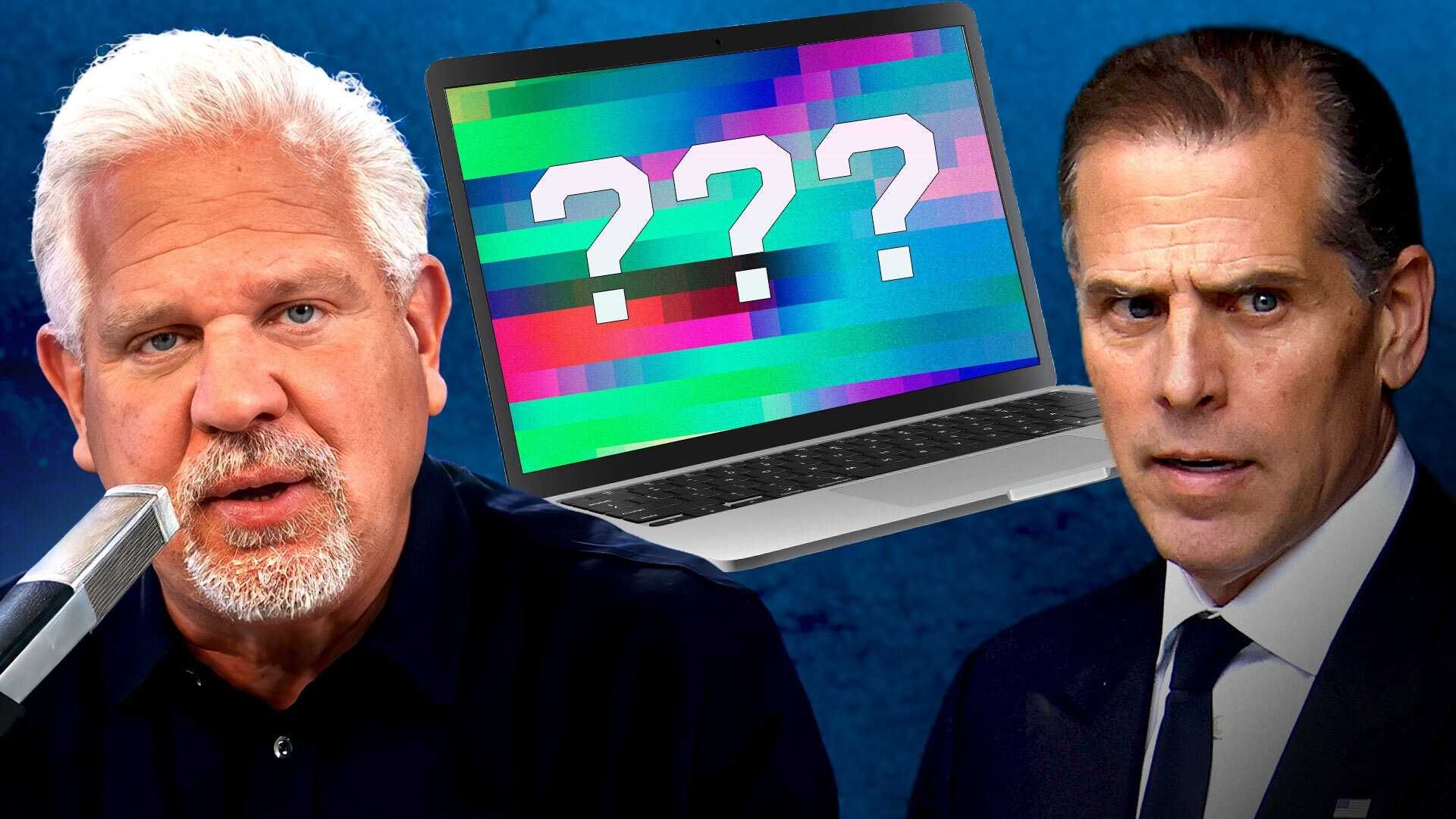
“He says, ‘I have Hunter Biden’s computer,”’ Morris recounts on “The Glenn Beck Program.”
Initially, Emma was “skeptical of the source,” given that both Bannon and Rudy Giuliani (who was in possession of a copy of the hard drive) were campaigning for President Trump. Despite being a dedicated conservative who likes Trump and “wanted the story to be true,” Emma was committed to true journalism and thus determined not to be blinded by her political views.
“My capacity as an editor is to relay the truth as closely as I can, not to campaign for Trump,” she tells Glenn.
When the New York Post gave her the greenlight to pursue the story, Emma was immediately overwhelmed by the sheer volume of documents she had to sort through just to pinpoint the angle the story would take.
“I called my boss, my editor in chief, Michelle Gotthelf, ... and I was like, ‘I don’t know how to make sense of all of this. It’s too much,’” she recounts.
Gotthelf’s advice was brilliant: “Find me where Joe Biden comes into this.”
“And that was when it clicked,” Emma says.
Her search narrowed in on roughly “10 documents” that involved Joe Biden, which then had to be verified for authenticity given the laptop had been through “a chain of custody.”
“The way that we were able to do that was very simple. ... We had the contact lists in his phone book, which was also on the laptop. ... And we just called them and said, ‘Hey, it’s the New York Post. I’m going to read you something. Can you tell me if it sounds familiar?’” Emma says.
As she began making these calls, one thing became clear: “It wasn’t Hunter, you know, scurrying around the world himself.”
“There was business partners, and some of those partners had either been burned, some of them had gone to jail, some of them had realized that this is too much. Everyone was receptive,” Emma says.
The response to the story the New York Post broke was shocking.
“I expected conservative media to pick it up. ... And that wasn’t what happened at all. As it turned out, the CIA was upset,” Emma says.
“We published at 5 a.m. By like 7 a.m. latest, it was completely blacklisted on Twitter. ... Within two hours, it was classified as child porn internally,” she explains.
It later came out that the FBI had been in possession of the physical laptop since December of 2019 and was actively preparing Twitter executives to treat any breaking story about Hunter Biden as Russian disinformation.
To hear more of Emma’s insider scoop, watch the video above.
To enjoy more of Glenn’s masterful storytelling, thought-provoking analysis, and uncanny ability to make sense of the chaos, subscribe to BlazeTV — the largest multi-platform network of voices who love America, defend the Constitution, and live the American dream.
President Donald Trump's administration has recruited Scott Brady, a lead prosecutor from the Hunter Biden investigation, to aid Vice President JD Vance's task force to eliminate fraud.
Brady served as the lead prosecutor against Hunter Biden as well as U.S. Attorney for the Western District of Pennsylvania during Trump's first term, where he focused on prosecuting health care and COVID-era fraud schemes. Brady currently serves as special counsel for the Department of Health and Human Services aiding the crackdown on grant fraud and will now serve as the executive director of the task force.
'Freedom is never more than one generation away from extinction.'
Brady was also handpicked to investigate Hunter Biden's "laptop from hell" where prosecutors looked into corruption charges against former President Joe Biden's son.
“In my investigation of Hunter, despite not having a grand jury, we were the only investigation which found an actual smoking gun detailing bribes to Hunter and then-VP Biden, in the Smirnov FD-1023, which detailed Burisma Chairman Zlochevsky’s $10M bribe to Hunter and Joe Biden,” a online biography of Brady reviewed by the Daily Wire reads.
RELATED: This scandal-ridden Democrat just got one step closer to being expelled from Congress
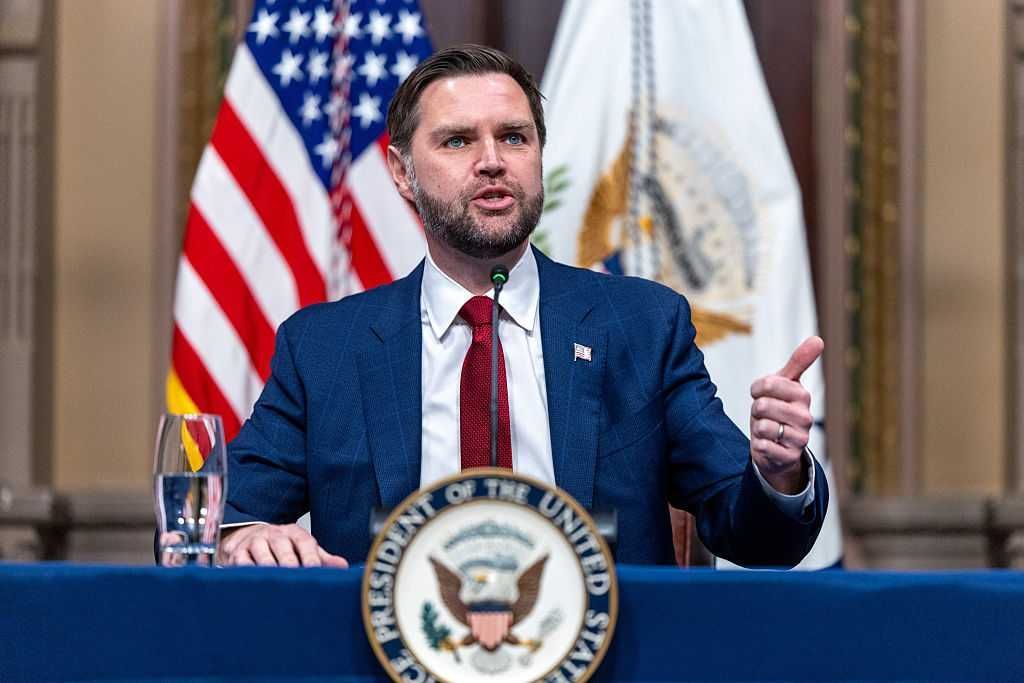
“I am proud to have served under President Trump in his first term, and I am excited to see an unapologetically muscular strategy being executed in the second term,” the bio continues. ”As President Reagan presciently said, ‘Freedom is never more than one generation away from extinction. It has to be fought for and defended by each generation.'”
The task force was first convened last week with Vice President JD Vance at the helm. During the meeting, Vance commended Trump's numerous "anti-fraud protections" implemented during his second term, pointing the finger at the Biden administration.
"This is not just theft of the American people's money," Vance said of the uptick in fraud under Biden. "This is also the theft of critical services that American people rely on."
RELATED: The SAVE America Act won’t be enough to save the GOP from a midterm bloodbath
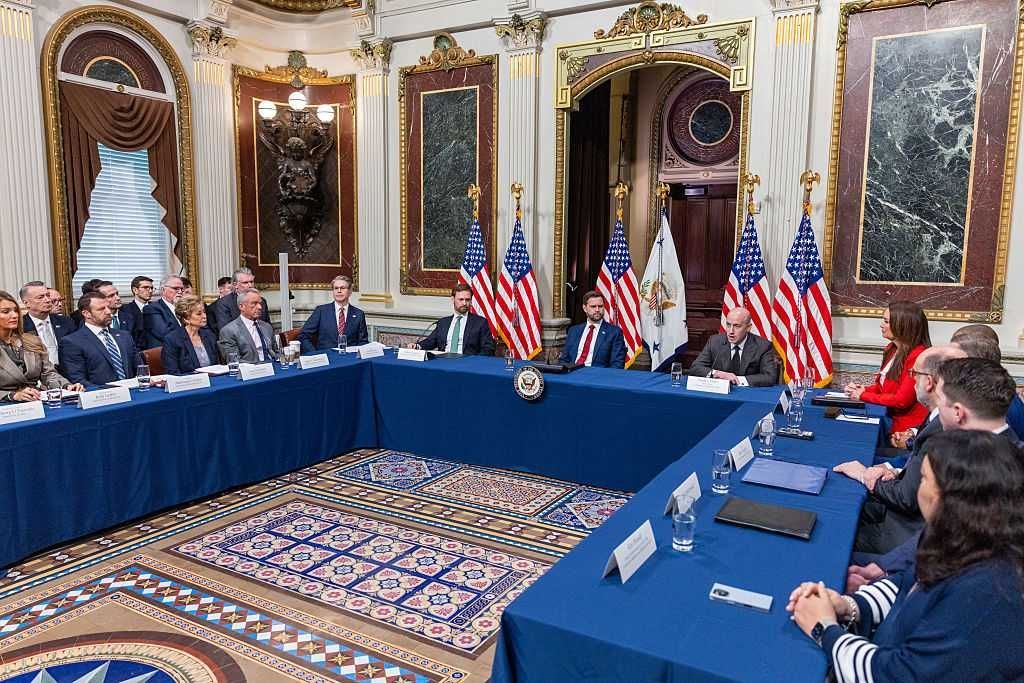
Brady's appointment to the role was made official on Thursday, according to the Daily Wire, and he attended the task force's first meeting on Friday.
Like Blaze News? Bypass the censors, sign up for our newsletters, and get stories like this direct to your inbox. Sign up here!
The term “deep state” has long been dismissed as the province of cranks and conspiracists. But the recent declassification of two critical documents — the Durham annex, released by Sen. Chuck Grassley (R-Iowa), and a report publicized by Director of National Intelligence Tulsi Gabbard — has rendered further denial untenable.
These documents lay bare the structure and function of a bureaucratic, semi-autonomous network of agencies, contractors, nonprofits, and media entities that together constitute a parallel government operating alongside — and at times in opposition to — the duly elected one.
The ‘deep state’ is a self-reinforcing institutional machine — a decentralized, global bureaucracy whose members share ideological alignment.
The disclosures do not merely recount past abuses; they offer a schematic of how modern influence operations are conceived, coordinated, and deployed across domestic and international domains.
What they reveal is not a rogue element operating in secret, but a systematized apparatus capable of shaping elections, suppressing dissent, and laundering narratives through a transnational network of intelligence, academia, media, and philanthropic institutions.
According to Gabbard’s report, a pivotal moment occurred on December 9, 2016, when the Obama White House convened its national security leadership in the Situation Room. Attendees included CIA Director John Brennan, Director of National Intelligence James Clapper, National Security Agency Director Michael Rogers, FBI Deputy Director Andrew McCabe, Attorney General Loretta Lynch, Secretary of State John Kerry, and others.
During this meeting, the consensus view up to that point — that Russia had not manipulated the election outcome — was subordinated to new instructions.
The record states plainly: The intelligence community was directed to prepare an assessment “per the President’s request” that would frame Russia as the aggressor and then-presidential candidate Donald Trump as its preferred candidate. Notably absent was any claim that new intelligence had emerged. The motivation was political, not evidentiary.
This maneuver became the foundation for the now-discredited 2017 intelligence community assessment on Russian election interference. From that point on, U.S. intelligence agencies became not neutral evaluators of fact but active participants in constructing a public narrative designed to delegitimize the incoming administration.
The ODNI report and the Durham annex jointly describe a feedback loop in which intelligence is laundered through think tanks and nongovernmental organizations, then cited by media outlets as “independent verification.” At the center of this loop are agencies like the CIA, FBI, and ODNI; law firms such as Perkins Coie; and NGOs such as the Open Society Foundations.
According to the Durham annex, think tanks including the Atlantic Council, the Carnegie Endowment, and the Center for a New American Security were allegedly informed of Clinton’s 2016 plan to link Trump to Russia. These institutions, operating under the veneer of academic independence, helped diffuse the narrative into public discourse.
Media coordination was not incidental. On the very day of the aforementioned White House meeting, the Washington Postpublished a front-page article headlined “Obama Orders Review of Russian Hacking During Presidential Campaign” — a story that mirrored the internal shift in official narrative. The article marked the beginning of a coordinated media campaign that would amplify the Trump-Russia collusion narrative throughout the transition period.
Surveillance, once limited to foreign intelligence operations, was turned inward through the abuse of FISA warrants. The Steele dossier — funded by the Clinton campaign via Perkins Coie and Fusion GPS — served as the basis for wiretaps on Trump affiliates, despite being unverified and partially discredited. The FBI even altered emails to facilitate the warrants.
RELATED: Durham annex proves Russiagate was a coordinated smear
This capacity for internal subversion reappeared in 2020, when 51 former intelligence officials signed a letter labeling the Hunter Biden laptop story as “Russian disinformation.” According to polling, 79% of Americans believed truthful coverage of the laptop could have altered the election. The suppression of that story — now confirmed as authentic — was election interference, pure and simple.
The deep state is a self-reinforcing institutional machine — a decentralized, global bureaucracy whose members share ideological alignment and strategic goals.
Each node — law firms, think tanks, newsrooms, federal agencies — operates with plausible deniability. But taken together, they form a matrix of influence capable of undermining electoral legitimacy and redirecting national policy without democratic input.
The ODNI report and the Durham annex mark the first crack in the firewall shielding this machine. They expose more than a political scandal buried in the past. They lay bare a living system of elite coordination — one that demands exposure, confrontation, and ultimately dismantling.
 Without Iraq-style lies about Russia, the collusion hoax, the impeachment farce, and the 51 intel officials laundering deception for political gain, there likely would have been no Russia-Ukraine war.
 When other credentialed outlets and journalists spread lies about the Russia collusion hoax, or the Covington kids hoax, or the Kavanaugh rape hoax, or the Ukraine impeachment hoax, or the COVID-19 natural origin hoax, or the peaceful BLM riots hoax, or the suckers and losers hoax, or the Hunter Biden laptop hoax, or the Biden’s-brain-is-totally-fine-you-guys […]
 'Communist China could only dream to do a fraction of the damage ...that this cast of characters have done,' said Sen. Ron Johnson.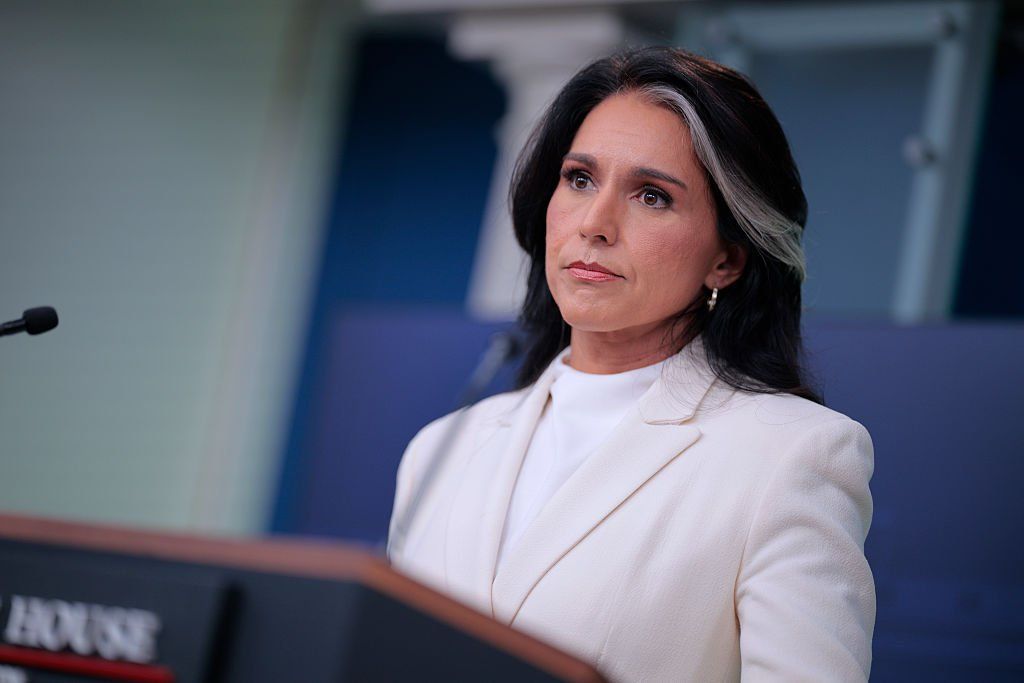
 www.theblaze.com
 www.theblaze.com