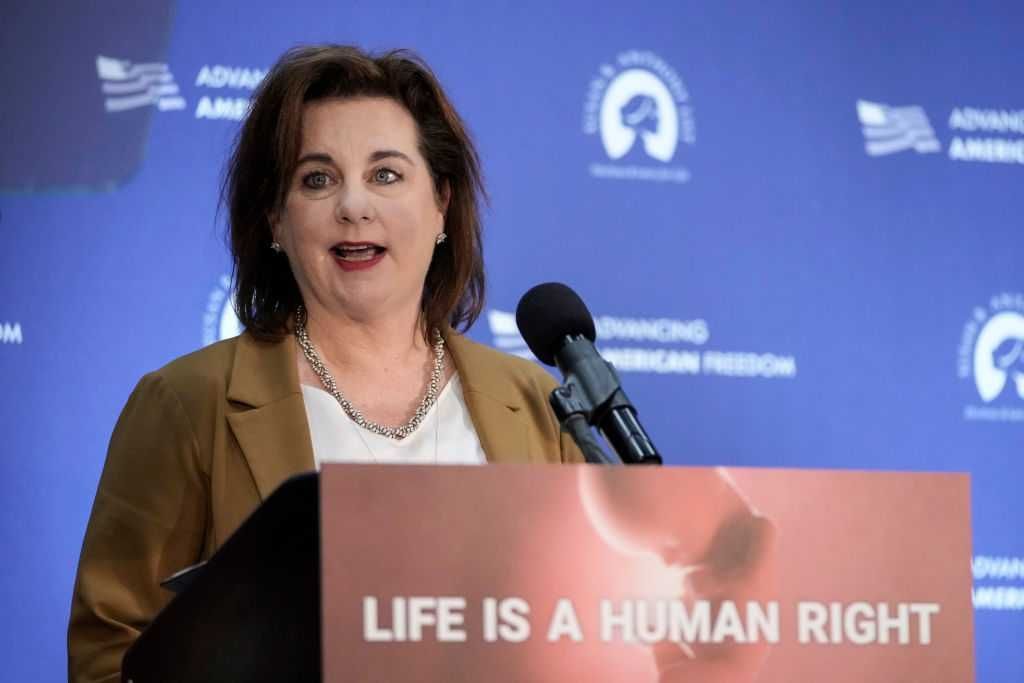
No, President Trump: The sanctity of life is not ‘flexible’


This September marks the 50th anniversary of the Hyde Amendment’s first passage in the House of Representatives — the annual appropriations rider that bars federal funding of elective abortion.

No one should be surprised that Democrats would mark the moment by extending Affordable Care Act subsidies that help enable backdoor abortion funding in blue states. What did surprise pro-lifers was President Donald Trump’s recent declaration that Republicans “have to be a little flexible on Hyde.”

Human lives aren’t negotiable. Neither is the Hyde Amendment.

“We’re all big fans of everything, but you have to have flexibility,” Trump told House Republicans in Washington on Jan. 6. He urged them to “work something” out on health care, a line that seemed to suggest Hyde could become a bargaining chip.

For millions of GOP voters, it cannot.

Just one year ago, the president aligned himself with them. On his fourth day in office, he signed an executive order declaring that “consistent with the Hyde Amendment,” it is the policy of the United States “to end the forced use of Federal taxpayer dollars to fund or promote elective abortion.”

The same president helped overturn Roe v. Wade, restored the Mexico City policy ending funding for overseas abortions, and declared himself the “most pro-life president” in history.

If his position has changed, Americans have the right to know.

The Hyde Amendment is estimated to have saved more than 2.6 million lives over the past five decades. It forbids the use of federal tax dollars for abortions except in cases of rape, incest, or a life-threatening medical emergency.

Yet the abortion lobby found a work-around. Twenty state Medicaid programs cover elective abortions using state funds, and millions of enrollees in those plans receive federal subsidies to help pay their premiums.

In plain terms, federal tax dollars indirectly support abortion in blue states, regardless of Hyde. It’s the same moral and fiscal problem that drove Congress to defund Planned Parenthood in Trump’s One Big Beautiful Bill Act spending package last July. Why cut off one pipeline while leaving another one wide open?

The Jan. 1 expiration of Biden-era enhancements to Obamacare subsidies offered Republicans a chance to close this loophole.

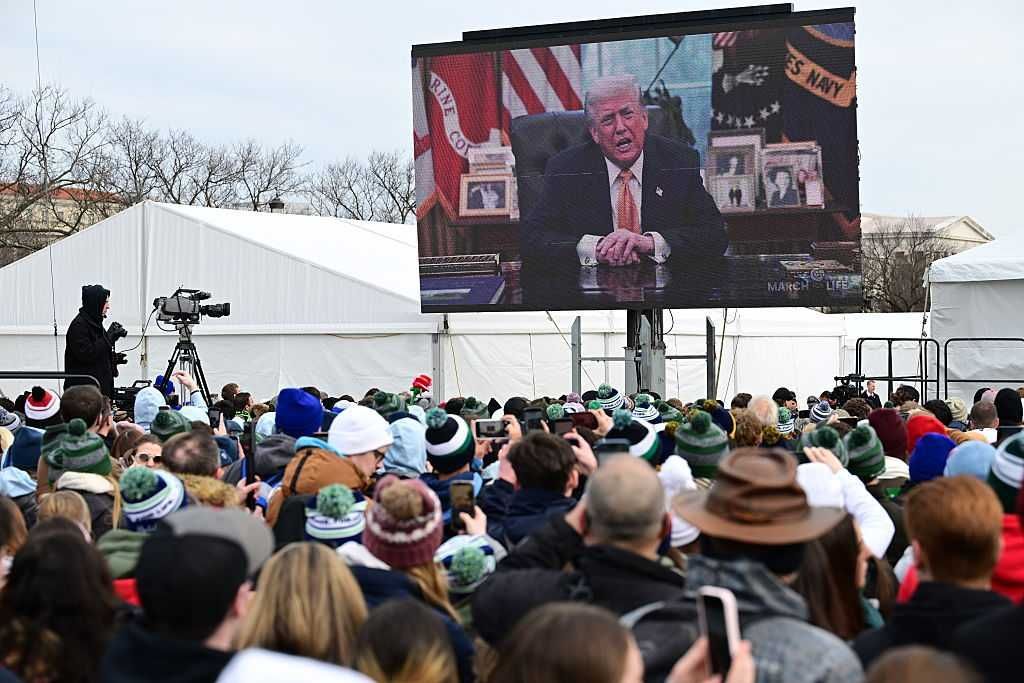
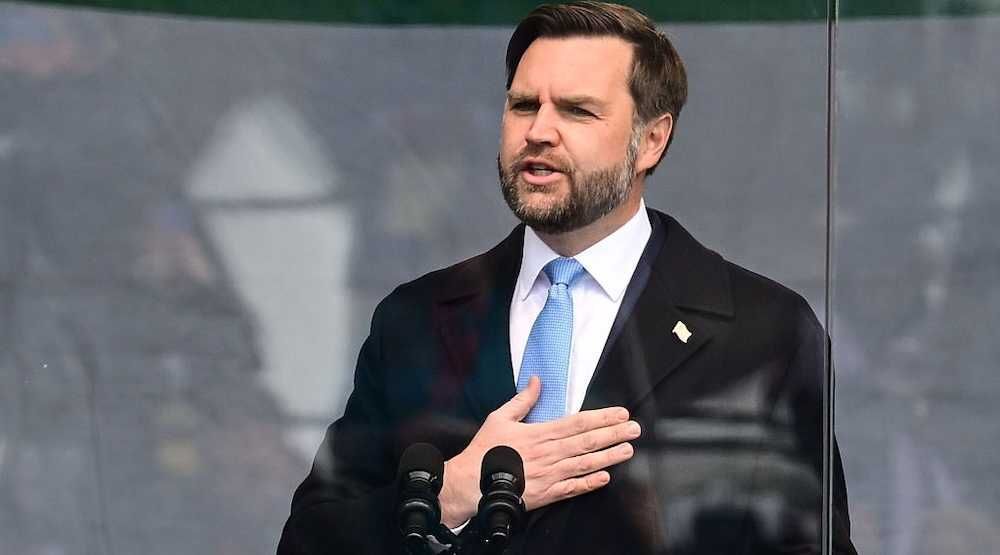
RELATED: ‘Fraud ... for abortion’? Vance announces probe into Planned Parenthood's $88M taxpayer-funded loans at March for Life

Photo by Kyle Mazza/Anadolu via Getty Images

House Republicans, to their credit, tried. In December, they passed H.R. 6703, which would explicitly block federal dollars from helping pay for a Medicaid plan that covers elective abortion. The Congressional Budget Office projects that the bill would lower Obamacare premiums by 11% on average through 2035 — nearly double the estimated reduction in the Democrats’ plan — and shrink the national deficit by $35.6 billion.

Then 17 Republicans defected.

On Jan. 8, they voted with Democrats to force a “clean” three-year extension of Obamacare subsidies with no language protecting taxpayers from subsidizing abortion.

Now the bill moves to the Senate, where negotiations reportedly continue on a bipartisan package. Thankfully, contrary to Trump’s calls for “flexibility,” Majority Leader John Thune (R-S.D.) has signaled that Hyde will remain non-negotiable in any deal.

“We want to ensure that, if we do anything, it’s done in a way that reforms these programs and ... ensures that those dollars aren’t being used to go against the practice that’s been in place for the last 50 years around here, when it comes to taxpayer dollars being used to finance abortions,” Thune told reporters on Jan. 6.

The president — and any Republicans tempted to treat Hyde as disposable — should follow Thune’s lead. Trump may have a gift for “the art of the deal,” but the values at the center of the Republican coalition are not bargaining chips.

The GOP has long cast itself as a party of abolitionists, freedom fighters, and defenders of the vulnerable unborn. It should not compromise those claims for short-term political convenience — and become what it says it opposes.

Respectfully, Mr. President, human lives aren’t negotiable. Neither is the Hyde Amendment.

As Razor-Thin Midterm Margins Loom, Trump Administration Is Alienating The March For Life Coalition

Republicans' 2026 success is tied to energizing and mobilizing the pro-life base that propelled Trump back to the White House in 2024.
Trump urges GOP to be ‘flexible’ on Hyde, but it’s a massive blunder — and not just for life issues


During his speech at the House GOP retreat on January 6, President Trump suggested that Republicans need to be “a little flexible” on the Hyde Amendment — which prevents taxpayer dollars from funding the majority of abortions — to get a health care compromise passed where Republicans could win politically on lowering premiums.

The mere suggestion enraged pro-life America, which sees the Hyde Amendment as the only firewall preventing taxpayer dollars from directly funding the slaughter of the unborn.

On this episode of the “Steve Deace Show,” Deace speaks with one of Iowa’s top evangelical and political voices, Bob Vander Plaats, on why bending on Hyde could collapse the GOP coalition heading into 2026 midterms.

“There are two lasting victories of the pro-life movement,” says Deace.

One of them is the overturning of Roe v. Wade, and the other is the Hyde Amendment.

While Deace and Vander Plaats give President Trump the win for the overturning of Roe v. Wade, as he appointed the Supreme Court justices who took up the case, they condemn his suggestion to soften on Hyde as a catastrophic loss in the fight for life.

But on top of ethics, it doesn’t make sense politically.

“President Trump understands better than anything [that] the taxpayer funding of abortion is not a winning issue for Democrats. This is one of those 70% issues where people don't want your tax dollars going to fund abortions. So why not land on your convictions when it's politically correct as well? Don't negotiate on this thing,” says Vander Plaats.

Any Republican politician dreaming of running for president in 2028, he warns, would be wise to stay far away from the Hyde issue.

“This will just not only blunt your campaign, this will decimate your campaign,” he cautions.

To compromise on Hyde will only further demoralize the conservative base, which already struggles to turn out for special elections and off-year elections — even in red areas the GOP should win, adds Deace, as the right sadly lacks the kind of boots-on-the-ground apparatus that Democrats excel in mobilizing during any election.

“We don't need to be giving our base less reason to vote right now,” he says.

If Republicans want to at least keep the House and prevent Democrats from embarking on an “impeaching palooza,” there are “three kinds of voters” they must inspire to show up for midterms: the MAHA voter, the “Theo Von/Joe Rogan voter who thinks the whole system is corrupt,” and the “traditional conservative,” pro-life voter.

Deace predicts that of the three groups, only MAHA is pleased right now. The Von/Rogan voters are entirely “off the reservation” because they no longer believe that Trump will actually drain the swamp. And the conservative pro-life voter base is teetering on the edge of giving up.

If compromises are made on the Hyde Amendment, this group will almost certainly not show out for midterms.

To hear more of Deace and Vander Plaat’s conversation, watch the video above.

Want more from Steve Deace?

To enjoy more of Steve's take on national politics, Christian worldview, and principled conservatism with a snarky twist, subscribe to BlazeTV — the largest multi-platform network of voices who love America, defend the Constitution, and live the American dream.

Senate GOP Prepares To Hold The Line On Hyde As White House Walks Back Trump’s ‘Be Flexible’ Remark

‘I am absolutely committed to ensuring that no taxpayer funding is used to fund the radical left’s agenda, including abortion,’ Sen. Moreno said.

17 House Republicans Vote To Pass Democrat Obamacare Proposal

17 House Republicans joined Democrats on Thursday to pass a three-year extension of COVID-era Obamacare subsidies that Congress allowed to expire at the end of 2025. The vote, which tallied 230-196, followed a move by nine moderate Republicans who backed a Democrat-led discharge petition to force consideration of the extension over objections from GOP leadership. […]

'Massive betrayal': Republicans, pro-life groups push back on Trump's call to loosen key abortion restriction


President Donald Trump urged Congress to loosen up on a key Republican amendment that prevents taxpayer-funded abortion.

Trump said Republicans need "to be a little flexible on Hyde" in order to make health care a winning issue for the GOP. Notably the Hyde Amendment prevents tax dollars from funding abortion services but makes exceptions for cases of rape, incest, and to protect the life of the mother.

'I'm not flexible on the value of every child's life.'

"You have to be a little flexible on Hyde. You know that. You got to be a little flexible," Trump said Tuesday. "You got to work something. You got to use ingenuity. You got to work."

These remarks were quickly met with pushback from prominent pro-life groups as well as Republican lawmakers who called the amendment a nonnegotiable.

RELATED: 'More corrupt than Minnesota': Trump mocks Newsom after launching California fraud investigation

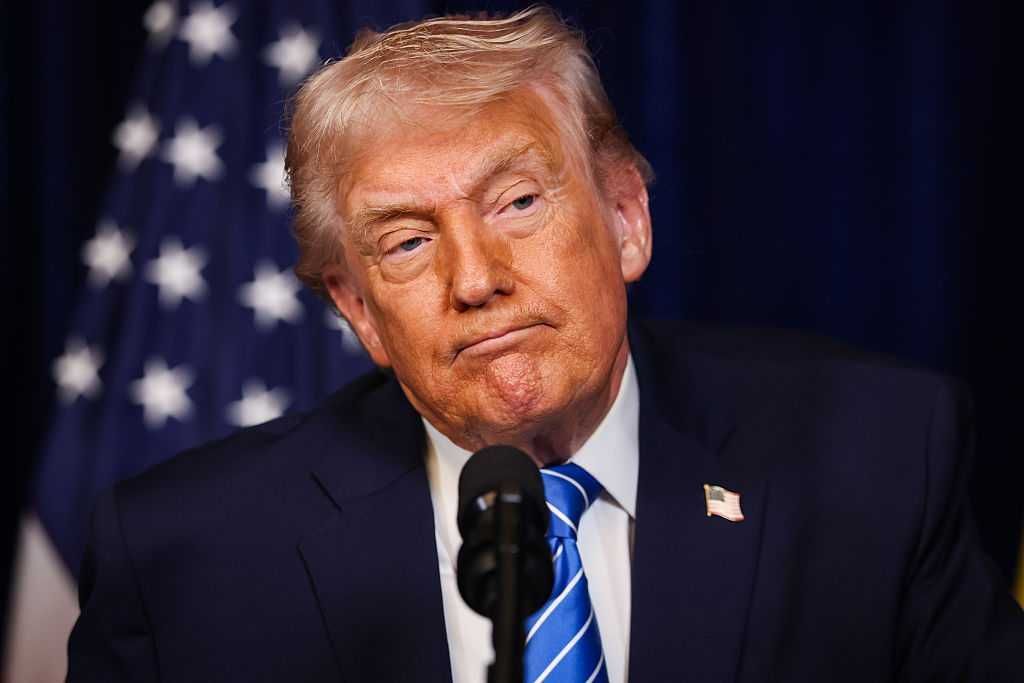
Photo by Anna Moneymaker/Getty Images

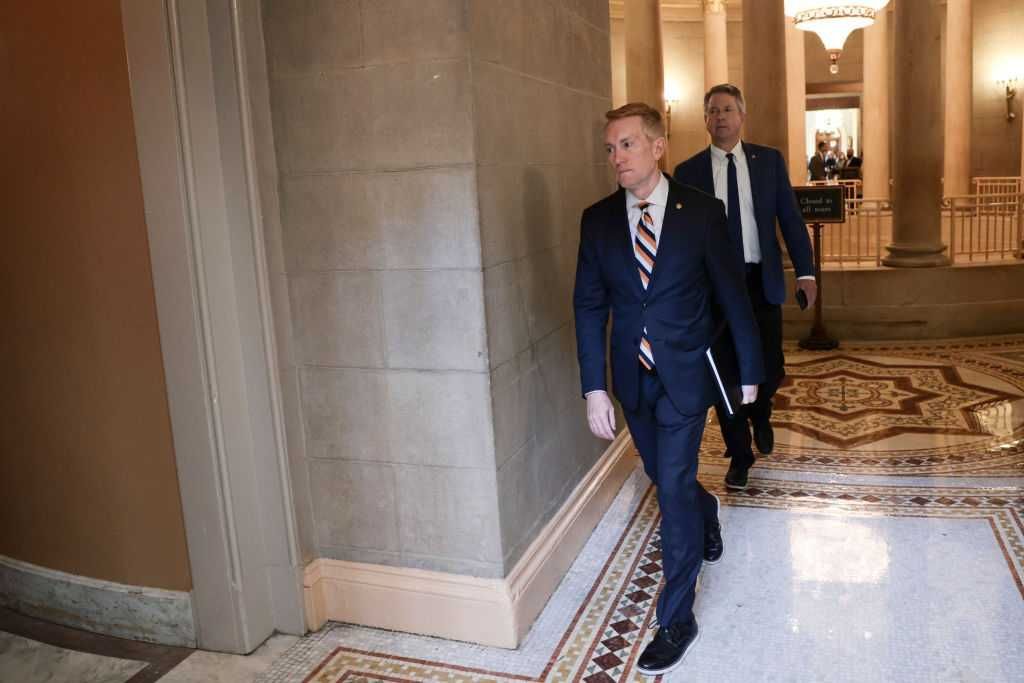
Republican Sens. James Lankford of Oklahoma and Roger Marshall of Kansas both stood firmly against watering down or giving up on the Hyde Amendment despite the pressure from the president.

"I'm not flexible on the value of every child's life," Lankford told Huffington Post.

“I certainly understand where the president's coming from, but I'm unapologetically pro-life," Marshall added.

RELATED: Trump’s agenda faces a midterm kill switch in 2026

Photo by Drew Angerer/Getty Images

Pro-life groups like Susan B. Anthony Pro-Life America pointed to Trump's past support for the amendment, calling it a "minimum standard" for the Republican Party.

"The voters sent a GOP trifecta to Washington, and they expect it to govern like one," SBA President Marjorie Dannenfelser said in a statement. "Giving in to Democrat demands that our tax dollars are used to fund plans that cover abortion on demand until birth would be a massive betrayal."

“President Trump has consistently supported the Hyde Amendment. He pledged repeatedly to make it permanent law, including in health care coverage, and one of his first actions upon taking office last year was prioritizing the reversal of President Biden’s Hyde violations."

Like Blaze News? Bypass the censors, sign up for our newsletters, and get stories like this direct to your inbox. Sign up here!

The hidden hospital scam driving up drug prices, coming to a state near you


Kansas lawmakers are debating whether to expand health care providers’ access to the federal 340B drug pricing program. If passed, Senate Bill 284 would hand even more power to large hospital chains while shrinking consumer choice. It would also deepen the program’s existing problems — lack of accountability, rising costs, and market consolidation — all without helping the patients it was supposed to serve.

The 340B program, created in 1992, was meant to help safety-net providers serving uninsured and low-income patients by requiring drug manufacturers to sell medications at steep discounts. Today, it has ballooned into the second-largest prescription drug purchasing program in the United States, behind only Medicare Part D, costing $66.3 billion in 2023.

The 340B program no longer fulfills its stated purpose. It fuels industry consolidation, drives up costs, and reduces access to care — especially in rural communities.

SB 284 would make that worse. The bill would block drugmakers from denying access to certain drugs, reduce transparency, and discourage innovation. It would do nothing to stop hospitals from exploiting the program. Instead, it would encourage them to expand the same practices that drive up costs for Kansans, small businesses, and rural health care providers.

The 340B shell game

The myth behind 340B is that big health systems use their windfalls to support rural hospitals. The reality is the opposite. As 340B has expanded, rural hospitals have closed by the dozens. The law’s original purpose — to subsidize drug purchases for clinics that serve the needy — has been lost.

What began as a narrow, temporary safety net for vulnerable populations has evolved into a profit engine for massive hospital systems. Many 340B participants today are large urban hospitals, cancer centers, and wealthy institutions that do little charity care. Once a hospital buys an outpatient clinic, it can immediately declare that clinic 340B-eligible, regardless of the patients it serves. Those discounted drugs can then be billed at full price to insurers or government programs, and the hospital keeps the difference.

Federal watchdogs, including the Government Accountability Office and the Office of Inspector General, have repeatedly documented the program’s lack of oversight. Hospitals aren’t required to report how they use 340B revenue or whether they pass savings on to patients.

The rich get richer

Hospitals buy drugs cheap, bill high, and pocket the profits. Those profits fund expansion — not lower costs for patients. The lure of easy money drives hospital consolidation across the country. Smaller, independent clinics — often more efficient and affordable — can’t compete with heavily subsidized giants and are forced to sell out.

This pattern has repeated hundreds of times nationwide, inflating 340B spending and diverting subsidies far from the low-income patients the program was meant to help. Since 2014, when 340B abuse accelerated alongside the Affordable Care Act, nonprofit hospitals have gone on a buying spree, snapping up local clinics, raising prices, and squeezing out independent providers.

Each participating hospital can also contract with hundreds of retail pharmacies, creating sprawling networks that capture 340B discounts far removed from any needy patient. The result is “mission creep” on a massive scale — a program once justified by compassion now serves as a revenue stream for billion-dollar systems.

Instead of cutting costs, 340B creates a hidden subsidy that enriches institutions while obscuring the real price of care. Worse, some hospitals use their freed-up funds to expand abortion and gender-transition services, sidestepping Hyde Amendment restrictions on federal money for those procedures.

RELATED: Dr. Oz exposes the nonprofit lie at the heart of US health care

Photo by Win McNamee/Getty Images

A program beyond saving

The 340B program no longer fulfills its stated purpose. It fuels industry consolidation, drives up costs, and reduces access to care — especially in rural communities. Expanding it in Kansas would cement a broken system, trapping the state in a cycle that benefits hospitals and harms taxpayers.

Congress and the Trump administration are working to reform 340B and Medicare to curb waste and corruption. Kansas lawmakers should follow that lead. Instead of handing big hospital chains another windfall, they should restore accountability, competition, and transparency — so that health care serves patients, not institutions.

Mike Johnson’s Obamacare Squishiness Could Expand Abortion Tourism And Undermine Pro-Life Laws

Republican 'leaders' thinking about playing footsie with Democrats to enact policies that will perpetuate wasteful spending and enrich the abortion industry should think again.

How Trump Could Transcend Reagan To Be The Greatest Life-Affirming President Ever

As dramatic as Trump’s possible pro-life enlightenment may sound, it has happened in the Oval Office once before.