Glenn Beck: This viral family fight reveals what happens when politics becomes your identity


A viral TikTok showing a daughter berating her mother over her support for Donald Trump has struck a chord with Blaze Media co-founder Glenn Beck — but not because of the political disagreement itself.

Instead, Glenn sees something larger at play.

“You made a wrong decision,” the daughter yells in the video. “And if you apologize to me for taking away my rights and the rights of everybody who can relate to me on these videos, then we would be fine. I told you in that text when you apologize for what you’ve done to this whole country, what you’ve had a hand in doing — you had a hand in this.”

“You and your people did this to my country — to all of our countries,” she added.


“That is the problem. You think it’s your country and there’s my way or the highway,” her mother responded.

“Murder is wrong! Racism is wrong! You know, he was sued over seven times for not serving black people,” the daughter yelled. “What do you have to say? What do you have to say to that?”

The daughter then called her mother “racist” and “hateful.”

“If there’s not a man in the house, then she needs to say, ‘Get out of the house. ... You can have different opinions, but you are not going to speak to me that way in this house. Period,’” Glenn says.

“Show some respect. But we don’t do that any more. And the reason why is we’ve forgotten who we are. We’ve completely forgotten who we are. … We’ve lost our story as a nation; we’ve lost our story as a people,” he adds.

Glenn notes that this problem stems from people no longer knowing who they are.

“When you can actually be silent for 20 minutes and just be alone with your own thoughts, you’re comfortable with knowing who you are. But I don’t think most of us even know who we are any more or why we’re here or what life is really for,” he explains.

“We are beginning to think we’re all here for politics. We’re not here for politics, gang. We’re not. We’re not fighting politics. We are fighting the collective versus the individual,” he says. “And that is a God thing.”

Want more from Glenn Beck?

To enjoy more of Glenn’s masterful storytelling, thought-provoking analysis, and uncanny ability to make sense of the chaos, subscribe to BlazeTV — the largest multi-platform network of voices who love America, defend the Constitution, and live the American dream.

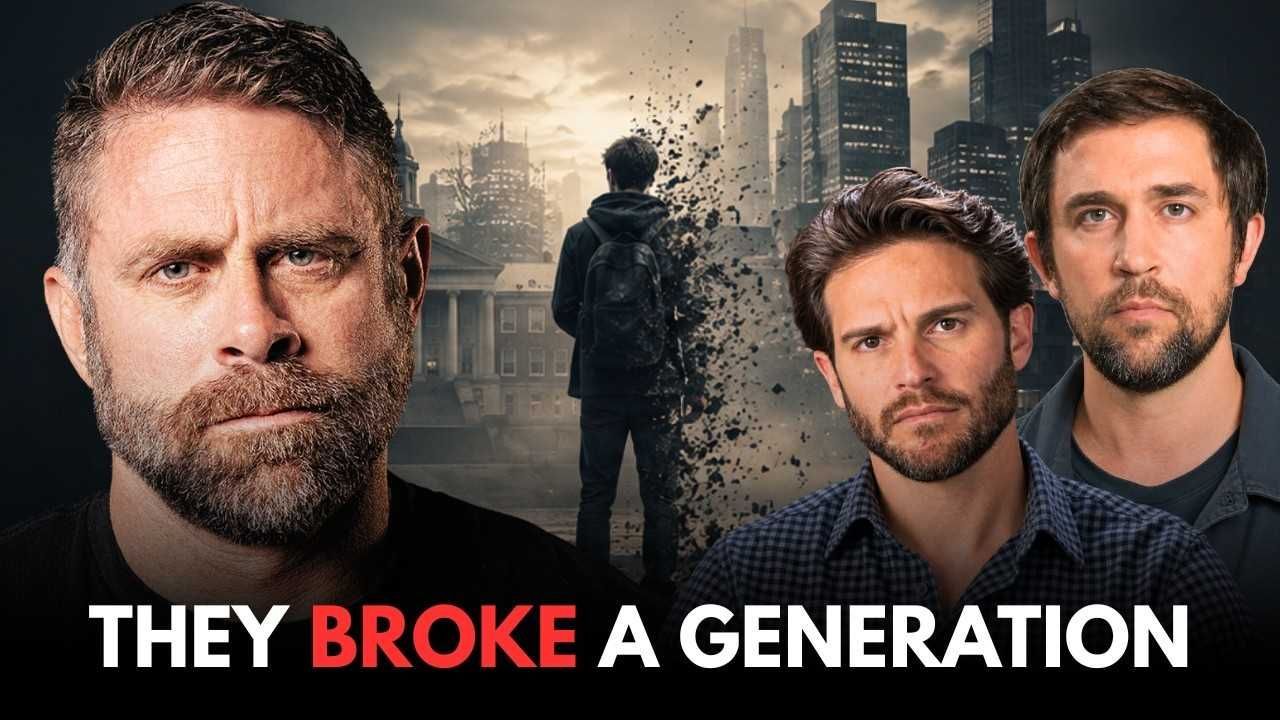
Nick Freitas: Why young men are giving up on modern society


Why are so many young men checking out of modern society? According to Nick Freitas, the answer — unlike what the Gen X and Boomer generations would have you believe — goes far deeper than laziness or a lack of resilience.

Freitas tells Christopher Rufo and Jonathan “Lomez” Keeperman on “Rufo & Lomez” that the first thing to consider is that there is a real problem and it’s “different from what we faced in the past.”

“It’s really easy to point back like, ‘Oh, you think it’s hard now? What about the 19-year-olds that were storming Normandy?’ It’s like, yeah, that was hard. And that’s why we lift up and we celebrate the 19-year-olds that stormed Normandy,” Freitas explains.

“The problem is we have a bunch of 19-year-olds now where first of all, there’s no Normandy to storm, and they’re being told that all of the characteristics or instincts that would have informed the man storming the beach in Normandy are now bad, evil, toxic, horrible, and need to be repressed,” he says, noting that “that’s the part that’s unique.”


“That’s the part that I think Gen X-ers and Boomers have a hard time understanding is that the culture has shifted so much as to deliberately target the very things that young men were designed, I believe, designed by God to be,” he adds.

Freitas notes that it's “confusing and horrific” to attempt to thrive in an environment “where you’re told that all of your instincts are bad and you need to be emasculated.”

In order to deal with this, Freitas explains that “one of the big things” he tells young men is to seek identity through Christ.

“It’s eternal. It doesn’t promise me that everything is going to be going good. But it’s eternal. I believe it’s true. And so in so far as that’s where I get my identity, then all of a sudden I always have identity, meaning, and purpose,” he says.

“I never lose it, and it cannot be taken away from me,” he adds.

Want more from Rufo & Lomez?

To enjoy more of the news through the anthropological lens of Christopher Rufo and Lomez, subscribe to BlazeTV — the largest multi-platform network of voices who love America, defend the Constitution, and live the American dream.

Don't be fooled: This Apple privacy feature won't protect your identity


A 26-year-old man found out the hard way that Apple’s Hide My Email feature didn’t conceal his identity when he threatened the girlfriend of FBI Director Kash Patel in February.

Apparently, that anti-anonymous loophole doesn’t just work for federal officials. New information suggests that Apple’s Hide My Email doesn’t hide anyone’s identity, even from websites and marketers as it was originally intended.

Your real address and name may be visible.

So what went wrong?

Hide My Email's privacy problem

Apple unveiled Hide My Email in 2021 as part of its extended iCloud+ paid subscription. During its WWDC keynote event, then-VP of Apple Cloud Services, Mike Abbott, said, “We’ve all had moments where we’ve thought twice about sharing our personal email address, like when we’re filling out a form on the web. With Hide My Email, you can share a unique random address that forwards messages to your personal inbox, and it’s built right into Mail, Safari, and iCloud settings. So it’s easy to set up as many addresses as you need and delete them at any time, keeping you in control.”

This statement was made during a keynote segment dedicated to “another part of our ecosystem that puts your privacy first,” according to Apple's Senior Vice President of Software Engineering, Craig Federighi. Apparently, that was just marketing fluff.

As reported by 404 Media, Tyler Murphy, co-founder of a personal data removal service EasyOptOuts, unearthed Hide My Email’s one glaring privacy flaw. He made the harsh claim that, “Apple Hide My Email is leaking email addresses that are supposed to be hidden. We reported the issue and replication instructions to Apple over a year ago. We don't know why it hasn't been fixed, but we don't feel comfortable waiting any longer. Hide My Email users deserve to know that it may be possible for attackers to discover their hidden email addresses.” He concluded with a warning, “Free, publicly accessible people-search sites make it easy to link an email address to other personal details, so people relying on Hide My Email for safety may be at risk.”

Apple is reportedly investigating the claim, and despite recent software patches for iOS, iPadOS, and macOS, the problem has not been fixed.

A privacy-first facade

It’s important to note that this issue is different from the story we covered earlier this year involving Kash Patel’s girlfriend (Alexis Wilkins) and the FBI. In this case, the FBI requested that Apple provide the primary email address and name of the person who was sending threats to Wilkins to charge him for a crime. Although this wasn’t known at the time, Hide My Email addresses are not concealed within Apple’s servers, giving them the ability to link alias accounts to their original creators. (So much for privacy first, huh, Craig?)

RELATED: Is Google tweaking Android to listen in on you all the time?

Yuliia Kaveshnikova/Getty Images

Third-party websites and hackers, on the other hand, don’t have access to Apple’s servers and shouldn’t have the power to draw the same correlations. Yet, this is Murphy’s claim: That all Hide My Email aliases can be traced to their creators and the service actually doesn’t do anything at all.

What should you do?

If you’re a Hide My Email user and you’re relying on it for some sense of anonymity on the web, think again. Your real address and name may be visible. Since Apple has failed to fix the problem, it’s best to refrain from using the service for now. There are potential alternative options available through third-party email providers, but if we’re being honest, nothing on the internet is completely anonymous or private, so it’s hard to recommend those either.

If you think this whole thing has class-action lawsuit written all over it, you’re right! A case has already emerged. Filed by Anthony Alvarez, the suit goes after Apple on several counts, including negligent misrepresentation, breach of contract, and fraud.

The suit notes that the vulnerability was originally brought to Apple’s attention in June 2025, an entire year before the problem was revealed to the public by Murphy. Adding insult to injury, the suit claims that Apple reported a fix for the issue in March 2026, yet the problem still remained an active threat, at which point Apple covered up the flaw again.

Only time will tell if Apple gets into any real legal trouble over the Hide My Email debacle. In the meantime, it’s best to stay away from it entirely.

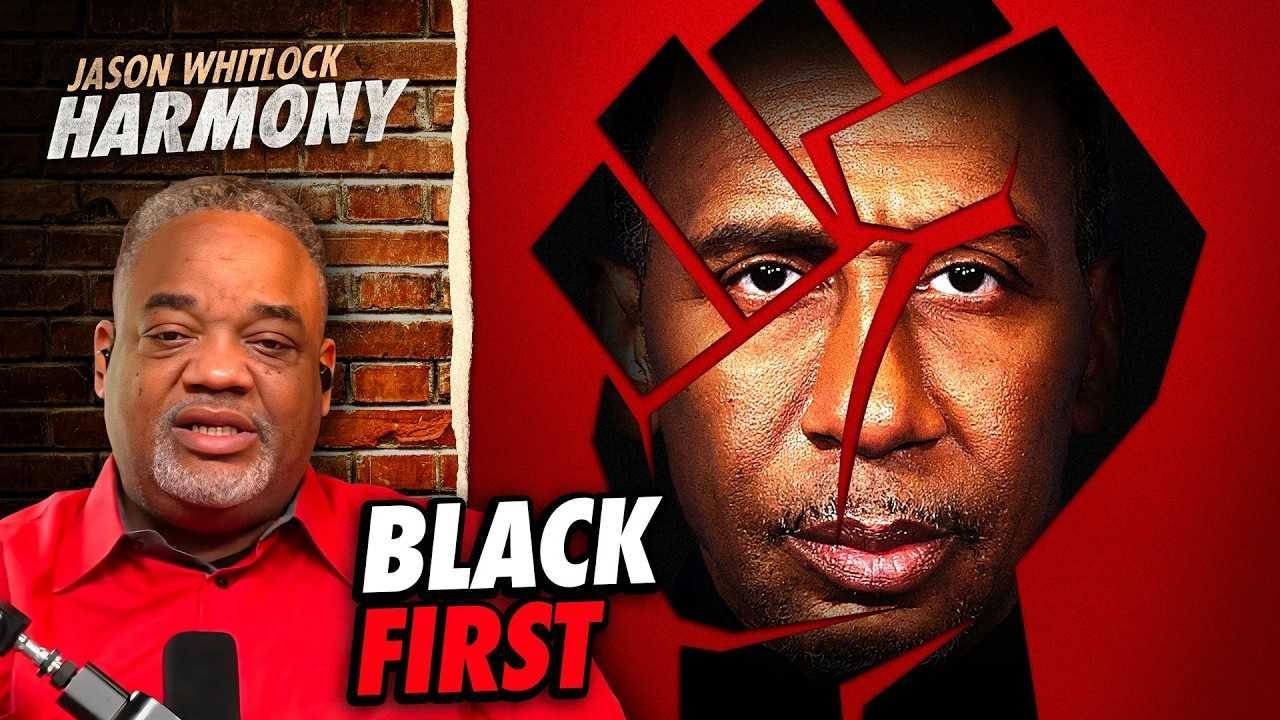
Stephen A. Smith defends the 'black first' identity destroying black Americans


In a recent conversation with Brandon Tatum and Gary Chambers, ESPN host Stephen A. Smith promoted a “black first identity” — which frames black identity through the lens of historical oppression rather than individual agency and achievement.

“What the hell is wrong with looking at yourself as black first before you’re anything else? Black before you’re American. Black before, you know, you’re anything else. What’s wrong with that?” Smith asked Tatum and Chambers.

“Because all black people ain't the same,” Tatum responded. “Like, for instance, we all different. So when I say ‘I’m black,’ what does that mean? The color of my skin.”

“Black people from New York is different than black people from the South. Black people from Africa that came over here as immigrants are very different than African-Americans. We’re diverse like anybody else,” he continued. “When white people say ‘I’m white first,’ what does that mean?”

Smith argued in response that black people should identify with their enslaved ancestors, as they are identifying with the "remnants of that even in today’s society.”


“I’m saying if you identify yourself as black before you identify yourself as American, what you’re doing is saying coming out of the womb, I know I’m going to be at a disadvantage because I’m in America and I’m going to have to scratch and claw and have an uphill climb,” he continued.

While he says that should not be met with a “defeatist attitude,” he goes on to say that it means “you are at least acknowledging that there are historical insidious acts that are associated with this particular nation.”

BlazeTV host Jason Whitlock is not amused.

“Stephen A. Smith is a cancer to the American media. That you could sit there and be paid $20 million a year by ESPN … and be as unqualified as Stephen A. Smith and then make the argument that there’s all these historical disadvantages, uphill climb,” he comments, annoyed.

“Don’t tell me about 150 years ago in slavery, something you did not experience. Don’t tell me about 100, 80 years ago, and segregation, and things you did not experience,” he says.

“When did you run uphill? When you flunked fourth grade? That was a racist plot? That was American racism making you repeat fourth grade?” he continues, pointing out that Smith’s obsession with a “black first identity” isn’t actually a “black first” identity at all.

“That’s a victim first identity. That’s what you just unpacked,” he explains.

“He’s promoting a victim first identity while claiming to be a Christian, while claiming to belong to some church, while claiming to have some sort of biblical worldview. Show me anywhere in the Bible where Christians are supposed to take on a victim first mentality,” he continues.

“Stephen A. Smith and myself grew up at the exact same time,” he says. “We’ve never been victims.”

Want more from Jason Whitlock?

To enjoy more fearless conversations at the crossroads of culture, faith, sports, and comedy with Jason Whitlock, subscribe to BlazeTV — the largest multi-platform network of voices who love America, defend the Constitution, and live the American dream.

Mental illness has become a political identity — and SURPRISE, it's on the left: Study


There have been numerous studies in recent years highlighting correlations between political affiliation and mental health.

A 2021 study published in the journal SSM-Mental Health, for instance, concluded — on the basis of an analysis of depressive attitudes among conservative and liberal 12th graders from 2005 to 2018 — that "conservatives reported lower average depressive affect, self-derogation, and loneliness scores and higher self-esteem scores than all other groups."

'These findings have far-reaching consequences.'

A 2023 study conducted by Gallup on behalf of the Institute for Family Studies found that adolescents with "very conservative parents are 16 to 17 percentage points more likely to be in good or excellent mental health compared to their peers with very liberal parents."

A 2025 study published in the journal PLOS One found that "even after accounting for a variety of other factors, there is a clear propensity of conservatives to provide more positive assessments of their mental health in comparison to liberals" — although the researchers ultimately attempted to credit this tendency to stigma or survey terminology.

The American left's mental health issues show no signs of clearing up. In fact, while conservatives continue to enjoy relatively superior mental health, the sickness on the other side appears to be attracting sufferers into a political identity all its own.

In a study strongly recommending "replication and further exploration" that was recently published in the journal Political Behavior, Lauren Van De Hey of Utah State University found that "mental health identity has begun to function as a political identity for some individuals," particularly among "younger (Gen Z) and more liberal Americans."

RELATED: Actress Elliot Page mocked ruthlessly after trying to define 'healthy masculinity'

Samuel Corum/Getty Images

Utilizing data from the national Cooperative Election Study administered by YouGov in 2022, the Utah researcher determined that a great many people now "categorize themselves as having had a mental illness, the vast majority of whom view mental illness identity and mental illness alienation as important to their sense of self."

"People who have experienced mental illness feel close to others who have experienced mental illness," wrote Van De Hey. "They are also likely to self-categorize as having or having had a mental illness, share a sense of group consciousness with others who have or had mental illness, and recognize the need to work together to change laws that are unfair to people with mental illness."

This obviously has political implications, explained the researcher, as it correlates with "support for increased state spending on health care, education, and welfare."

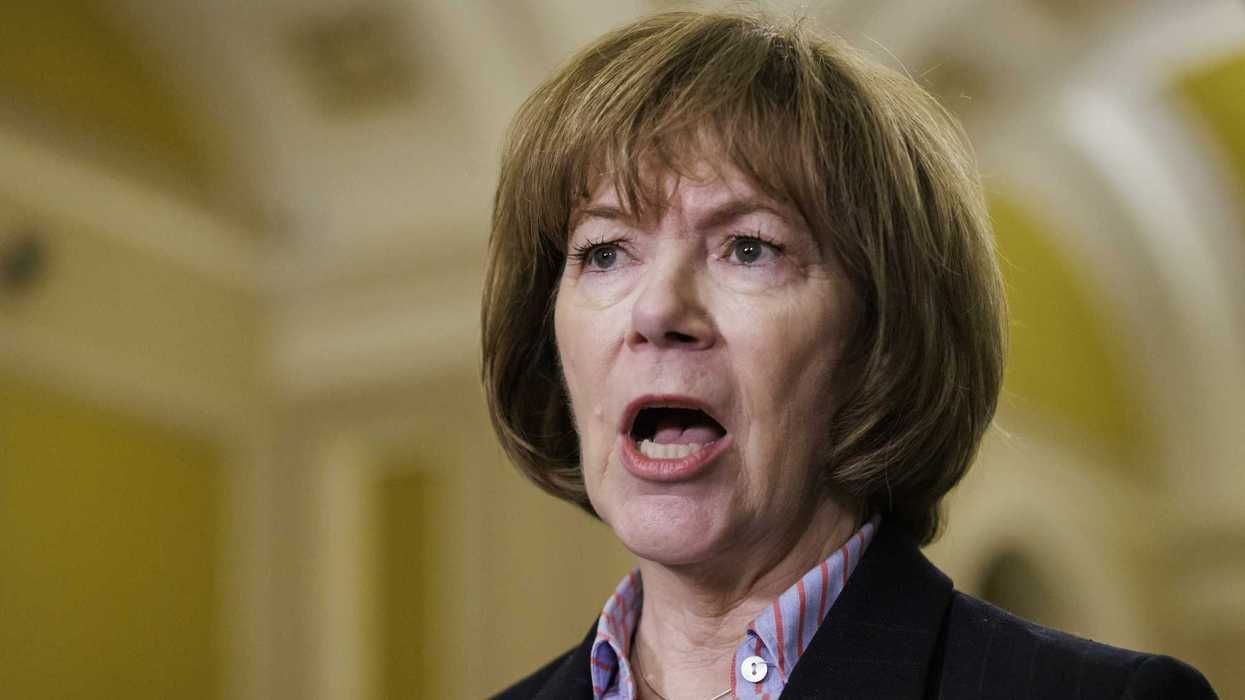
The study cited Sen. Tina Smith (D-Minn.) as an example of a political elite for whom mental health appears to have become a "politicized identity."

Smith has on numerous occasions discussed her past experiences with depression, grouped herself with sufferers, and identified "mental health parity" as a legislative priority.

"Those more likely to categorize as having a mental illness are more likely to have a college degree; be a Democrat, liberal, and white; and have slightly lower family income," said the study. "For both the [Mental Illness] Identity and [Mental Illness] Alienation scales, the only consequential variable is ideology: Those with higher MI identification or MI Alienation are more likely to be liberal."

Van De Hey concluded, "These findings have far-reaching consequences for mental health advocacy and the role mental health identity will play in the political sphere — especially as Gen Z matures as a cohort."

Dealing with a sample of 860 respondents, Van De Hey found that 26% categorized themselves as having had a mental illness in their lifetime, 22% categorized themselves as having had a physical disability, and 168 categorized themselves as having had a serious chronic physical illness.

Of the 220 respondents who said they had mental illness in their lifetime, 70% identified as "liberal" or "very liberal," 24% identified as "moderate," and 32% identified as "conservative" or "very conservative."

Of the same 220 respondents, about half stated that their identity as a person with a mental health illness was "important" or "very important to them."

Like Blaze News? Bypass the censors, sign up for our newsletters, and get stories like this direct to your inbox. Sign up here!

Democrats can’t escape their trans problem


The Democratic Party has a problem: Americans are increasingly repelled by transgenderism.

Between 2022 and 2025, the average American’s favorability toward restrictions on transgender policies rose significantly. Support fell both for requiring insurance companies to cover gender reassignment procedures and for protecting trans individuals from job and housing discrimination.

The Democrats’ only long-term strategy is the faint hope that radical gender ideology will vanish into the cultural ether.

All of this happened as the share of Americans who consider it morally acceptable to change one’s gender has fallen from 46% to 40% since 2021.

This drop in support is seen in younger generations too. Eric Kaufmann found that between 2022 and 2025, the number of trans-identifying college students fell by half. The decline was even sharper at elite institutions: At Phillips Academy in Andover, the number of trans-identifying students fell from 9.2% in 2023 to a mere 3% in 2025.

At Brown University, the number of nonbinary students was nearly halved between 2023 and 2025. The data highly suggests those rates will continue to fall.

The Democrats’ problem grows more acute when considering the opposition to trans ideology from groups like Gays Against Groomers and the LGB Alliance. They are some of the most vocal advocates against drag queen story hours for children, gender reassignment surgeries, and cross-sex hormones for children. Their stand demonstrates to moderates that progressive gender ideology was always a radical, far-left movement.

All of this has put Democrats in an awkward position. The party fought hard to add transgender colors to the Pride flag, pushed to allow men to compete in women’s sports, and declared Easter Sunday “Trans Day of Visibility.” But as Americans withdraw support for transgenderism, the Democrats’ trans advocacy has become an electoral liability.

Though some Democrats like Rep. Seth Moulton (Mass.) argued after the 2024 election that the party’s over-the-top trans activism alienated voters, the party hasn’t backed away. Even as Democrats shift from their “party of empathy” messaging — which was meant to counter Trump’s “fascist,” muscular MAGA movement, now giving way to figures like Maine’s Graham Platner — their support for trans ideology has stayed consistent.

James Talarico, perhaps the Democrats’ last major pure empathy candidate, strongly supports transgenderism, though his stance has become noticeably awkward in his fight against Ken Paxton for the U.S. Senate in Texas. Recent reporting has revealed that Talarico’s church library is filled with pro-trans books aimed at children. And then there are his comments that “God is nonbinary” and that there’s nothing he “loves more than trans kids.”

Meanwhile, the gruff, populist Graham Platner, covered in tattoos and emphasizing his service in the U.S. Marine Corps, has centered his campaign around a Bernie Sanders-like socialist populism. But he still firmly backs trans rights. At a campaign event in 2025, Platner said, “I stand right in the f**king way of anyone who’s going to try to come after the freedoms of the LGBTQIA+ community.”

Though Platner and Talarico are almost complete opposites in aesthetic and presentation, neither is willing to abandon his support for transgenderism, even though it’s an increasingly unpopular issue for the average American voter.

RELATED: Trump’s Justice Department is shining a light on woke universities — finally

Angela Lewis/Bloomberg/Getty Images

Democrats cannot openly denounce transgenderism, because they still have to keep the trans constituency in their electoral fold. They are stuck with people like transgender Rep. Sarah McBride (D-Del.), whose political identity is built on trans advocacy.

The Platner wing of the party, which seeks to represent the average, working-class American, won’t make trans advocacy a key campaign issue. But this wing will never denounce transgenderism either. The Democrats’ only long-term strategy is the faint hope that radical gender ideology will vanish into the cultural ether.

The party can’t admit it was wrong. To do so would mean admitting to being complicit in child mutilation and pushing biological falsehoods. Running against the same ideology the Democrats spent years promoting would alienate the far left, whose support for transgenderism remains staunch.

So the Democrats are scrambling to de-emphasize their trans activism as they shift toward a more populist approach. But their overemphasis on transgender ideology will haunt them for years.

Conservatives need to press the Democrats on why they backed trans so aggressively, championing the stories of survivors and highlighting the lifelong consequences gender reassignment surgeries bring. Woke is not dead, and the trans issue remains a live one for Democrats.

Editor’s note: This article was published originally at the American Mind.

A real nation knows who is in and who is out


After decades of brutal race and gender politics from the left, conservatives began treating identity itself as toxic. That reaction is understandable after fighting a sinister ideology for years, but ignoring identity is not an option. Human beings need a firm sense of who they are and where they belong. Progressives exploited that impulse in twisted, artificial ways, but the impulse remains natural and healthy.

As the United States confronts mass immigration, the question “What is an American?” has become unavoidable on the right once again. It is a question about identity. For the first time in decades, conservatives must navigate one of the most important parts of human life.

Defining American identity will be difficult, but it begins with friction. Borders must be closed and illegal aliens deported. That part is nonnegotiable.

Identity feels dangerous because it is dangerous. From the beginning of time, identity has been something men kill and die for. People can fight over voluntary commitments, but identity largely consists of things we did not choose. We do not choose where we are born or to whom. We do not choose to be a brother, sister, son, or daughter. Even religion, though it requires voluntary practice, is usually inherited before it is chosen.

Identity is what you cannot leave behind, often because you never chose it in the first place.

That is why identity produces existential conflict. Its involuntary nature means people cannot simply opt out when the pressure rises. If someone wants to kill everyone who likes the movie “Jaws,” you can stop being a fan. If someone wants to kill everyone born English, you cannot stop being English. You have no option but to fight.

This explains why the post-World War II consensus tried to suppress as many thick identities as possible. If people lack strong attachments to heritage, tradition, nation, or religion, they are less likely to treat those attachments as matters of life and death. The impulse is understandable. No sane person wants another war of religion or world war fought over nationalism.

But the shift carries a cost. Without the boundaries of nation and religion, we drift toward open-borders globalism, which is deeply unhealthy.

A nation without identity has no coherent sense of the public good. The man whose family has lived in America since the founding has different priorities from a newly arrived immigrant hoping to move his extended family here. The Christian who wants his faith reflected in his ancestral nation has conflicting interests with the Muslim who wants his new home to implement Sharia law.

The state cannot remain neutral between these visions. It must decide which identity takes priority and which public good it will pursue. Neutrality is a lie. Identity is inescapable.

RELATED: Two-tier Britain finally has its George Floyd moment

Blaze Media Illustration

As America tries to unwind the open-borders disaster liberalism produced, the need for concrete identity becomes obvious. Illegal immigration is a massive problem, but legal immigration has also been destructive. If being American means more than obtaining paperwork, uncomfortable lines must be drawn. Identities are inherently exclusive. Some people are in, and some people are out.

That feels dangerous because it is. But we no longer have the luxury of avoidance. Turning a blind eye to these questions created the mess. We will not escape it by doing the same thing again.

Modern people like rigid categories, but identity has always had strong centers with some flexibility at the margins. A traditional biological family is the best outcome and should be preferred above alternatives, but an adopted child can still become part of a family. People know what a woman is, but progressives exploit overly rigid definitions to destroy the category. If you say a woman is someone who can bear children, they immediately point to a sterile female and ask whether she is still a woman.

The rigid category becomes the tool of deconstruction.

Identity should be understood not merely as a scientific fact or a voluntary choice, but as a situated-ness that draws us toward particular ends. Americans are born with inalienable rights, but also particular duties. Our identities as Americans, Christians, sons, brothers, or fathers should cost us something. They are not merely about rights, choices, and freedoms. They are also about limits.

There are things you cannot be when you are a father, a Christian, or an American. These categories are flexible, but they are not fluid.

Our globalist order hates borders and limits because they create friction for economies of scale. McDonald’s wants to sell the same hamburger to everyone the same way. If it must accommodate Hindus or Catholics, or close Sunday in America and Saturday in Israel, efficiency and profitability suffer. Uniformity maximizes scale. That is why governments, corporations, and NGOs work to homogenize every population on earth.

But identity should create friction. People need borders and limits. Only when we know who we are and who we are not can we chart a beneficial course for our nation.

RELATED: The collapse of conservatism nobody wants to admit

Blaze Media Illustration

Defining American identity will be difficult, but it begins with friction. Borders must be closed and illegal aliens deported. That part is nonnegotiable. Legal immigration should be radically limited, or ended altogether, until we work through this crisis. Every tribe has had a path for outsiders to join, but the cost should be steep. If someone is granted the gracious opportunity to become American, it should require real sacrifice.

The Bible gives us a model in Ruth, who abandons her homeland and pledges, “Your people will be my people, and your God my God.” She does not cling to her former identity. She leaves her former people, her former gods, and marries into the tribe.

Becoming part of the Hebrew people involved friction. It came at great cost. That is how you know it was worth it.

To be American is to be distinct and set apart. If anyone is to have the privilege of joining that identity, it should be difficult. Only through sacrifice can a stranger prove worthy of our great nation.

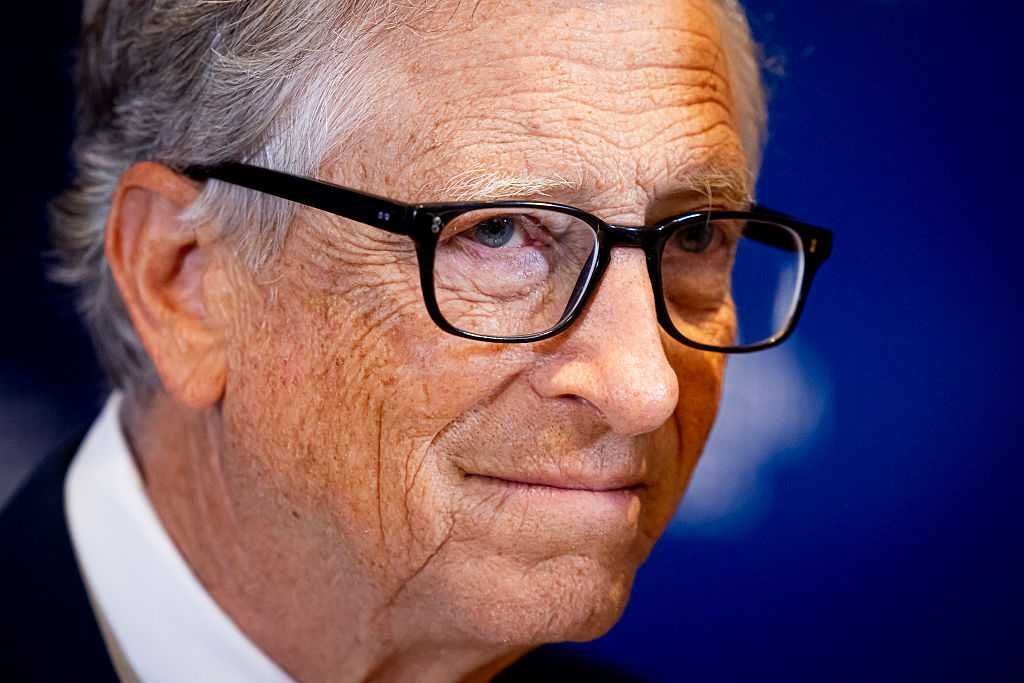
Bill Gates quietly retires climate terror as AI takes the throne


For decades, Americans have been told that climate change is an imminent apocalypse — the existential threat that justifies every intrusion into our lives, from banning gas stoves to rationing energy to tracking personal “carbon scores.”

Microsoft co-founder Bill Gates helped lead that charge. He warned repeatedly that the “climate disaster” would be the greatest crisis humanity would ever face. He invested billions in green technology and demanded the world reach net-zero emissions by 2050 “to avoid catastrophe.”

The global contest is no longer over barrels and pipelines — it is over who gets to flip the digital switch.

Now, suddenly, he wants everyone to relax: Climate change “will not lead to humanity’s demise” after all.

Gates was making less of a scientific statement and more of a strategic pivot. When elites retire a crisis, it’s never because the threat is gone — it’s because a better one has replaced it. And something else has indeed arrived — something the ruling class finds more useful than fear of the weather.

The same day Gates downshifted the doomsday rhetoric, Amazon announced it would pay warehouse workers $30 an hour — while laying off 30,000 people because artificial intelligence will soon do their jobs.

Climate panic was the warm-up. AI control is the main event.

The new currency of power

The world once revolved around oil and gas. Today, it revolves around the electricity demanded by server farms, the chips that power machine learning, and the data that can be used to manipulate or silence entire populations. The global contest is no longer over barrels and pipelines — it is over who gets to flip the digital switch. Whoever controls energy now controls information. And whoever controls information controls civilization.

Climate alarmism gave elites a pretext to centralize power over energy. Artificial intelligence gives them a mechanism to centralize power over people. The future battles will not be about carbon — they will be about control.

Two futures — both ending in tyranny

Americans are already being pushed into what look like two opposing movements, but both leave the individual powerless.

The first is the technocratic empire being constructed in the name of innovation. In its vision, human work will be replaced by machines, and digital permissions will subsume personal autonomy.

Government and corporations merge into a single authority. Your identity, finances, medical decisions, and speech rights become access points monitored by biometric scanners and enforced by automated gatekeepers. Every step, purchase, and opinion is tracked under the noble banner of “efficiency.”

The second is the green de-growth utopia being marketed as “compassion.” In this vision, prosperity itself becomes immoral. You will own less because “the planet” requires it. Elites will redesign cities so life cannot extend beyond a 15-minute walking radius, restrict movement to save the Earth, and ration resources to curb “excess.” It promises community and simplicity, but ultimately delivers enforced scarcity. Freedom withers when surviving becomes a collective permission rather than an individual right.

Both futures demand that citizens become manageable — either automated out of society or tightly regulated within it. The ruling class will embrace whichever version gives them the most leverage in any given moment.

Climate panic was losing its grip. AI dependency — and the obedience it creates — is far more potent.

The forgotten way

A third path exists, but it is the one today’s elites fear most: the path laid out in our Constitution. The founders built a system that assumes human beings are not subjects to be monitored or managed, but moral agents equipped by God with rights no government — and no algorithm — can override.

RELATED: How Bill Gates and friends turned global health into a profit machine — at your expense

AvigatorPhotographer via iStock/Getty Images

That idea remains the most “disruptive technology” in history. It shattered the belief that people need kings or experts or global committees telling them how to live. No wonder elites want it erased.

Soon, you will be told you must choose: Live in a world run by machines or in a world stripped down for planetary salvation. Digital tyranny or rationed equality. Innovation without liberty or simplicity without dignity.

Both are traps.

The only way

The only future worth choosing is the one grounded in ordered liberty — where prosperity and progress exist alongside moral responsibility and personal freedom and human beings are treated as image-bearers of God — not climate liabilities, not data profiles, not replaceable hardware components.

Bill Gates can change his tune. The media can change the script. But the agenda remains the same.

They no longer want to save the planet. They want to run it, and they expect you to obey.

This Independence Day, Ditch The DNA Test And Learn More About Your American Ancestors

In a frustratingly divided nation, we need stories that unite us to a shared American vision of the good life based on our nation’s founding principles.
New Video Series For America’s 250th Teaches Americans Why They Should Love Their History

'We can’t remember it very well if we don’t know it very well. And so, part of the purpose of this series of lectures is to remember.'