Five standout denunciations and warnings in Pope Leo XIV's new papal encyclical
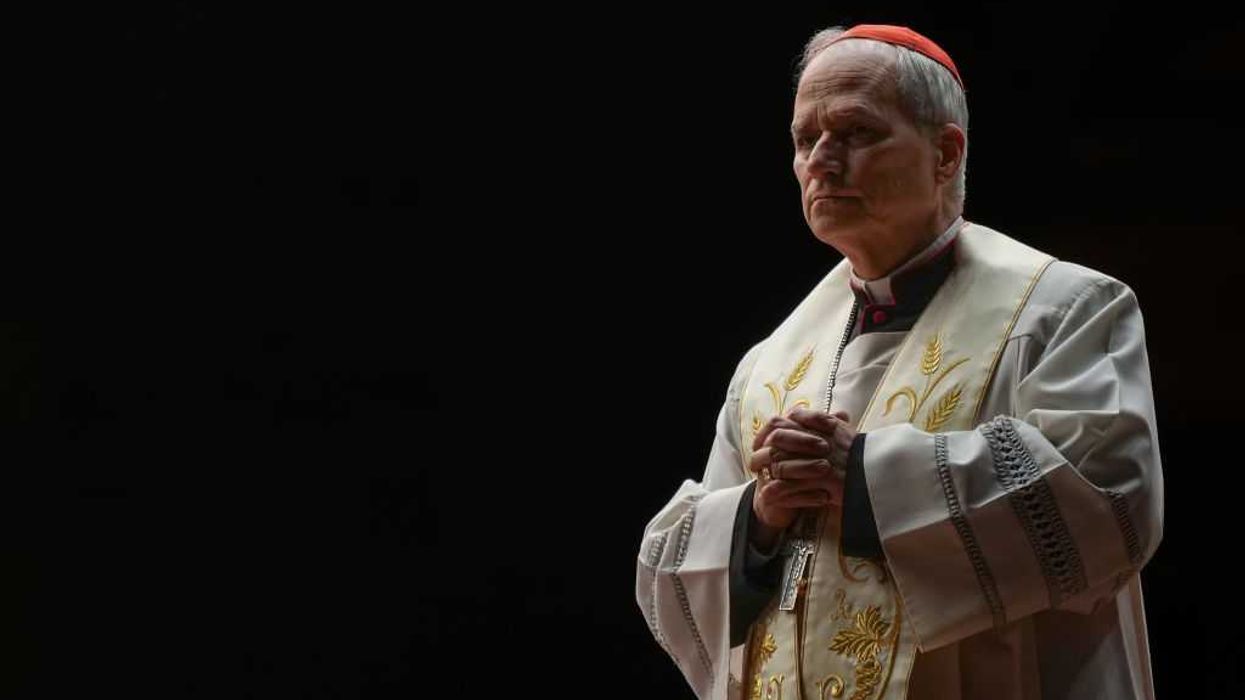


Pope Leo XIII issued a papal encyclical in 1891 titled "Rerum Novarum," which the Vatican notes "became the document inspiring Christian activity in the social sphere and the point of reference for this activity."

In that groundbreaking document about the just ordering of society, Leo XIII applied Catholic doctrines to the modern conditions that manifested as a result of the Industrial Revolution.

Besides rejecting socialism as a means of remedying social ills and setting the stage for localism, the late pope expounded on the Church's doctrine on work, private property, the rights of workers, the obligations of the rich, the dignity of the poor, and other timely terms and issues.

'It can only bring about conflict more quickly and render it more impersonal.'

The current pope, Leo XIV, has set out in his first encyclical, "Magnifica Humanitas," to do for his era what his predecessor did 135 years ago.

The Roman pontiff has, accordingly, scrutinized "the great trends of our time, particularly technological advances," through the lens of the Church’s Scripture- and tradition-based social doctrine — that living "legacy of wisdom, where we find principles for thought, criteria for discernment and judgment, and concrete guidelines for action."

While the pope covers a great deal of ground in his encyclical, five remarks stand out as especially provocative and/or memorable.

1. The two cities

At the outset, Pope Leo XIV raises the questions of where man is going and toward which goal does he wish to orient himself.

Leo XIV notes that in the era of AI, mankind is faced with a choice — not whether or not to embrace technology, which he does not regard as a force intrinsically antagonistic to humanity — but of whether to "construct a new Tower of Babel or to build the city in which God and humanity dwell together."

RELATED: It’s not easy being pope — Leo's big new tech encyclical proves it
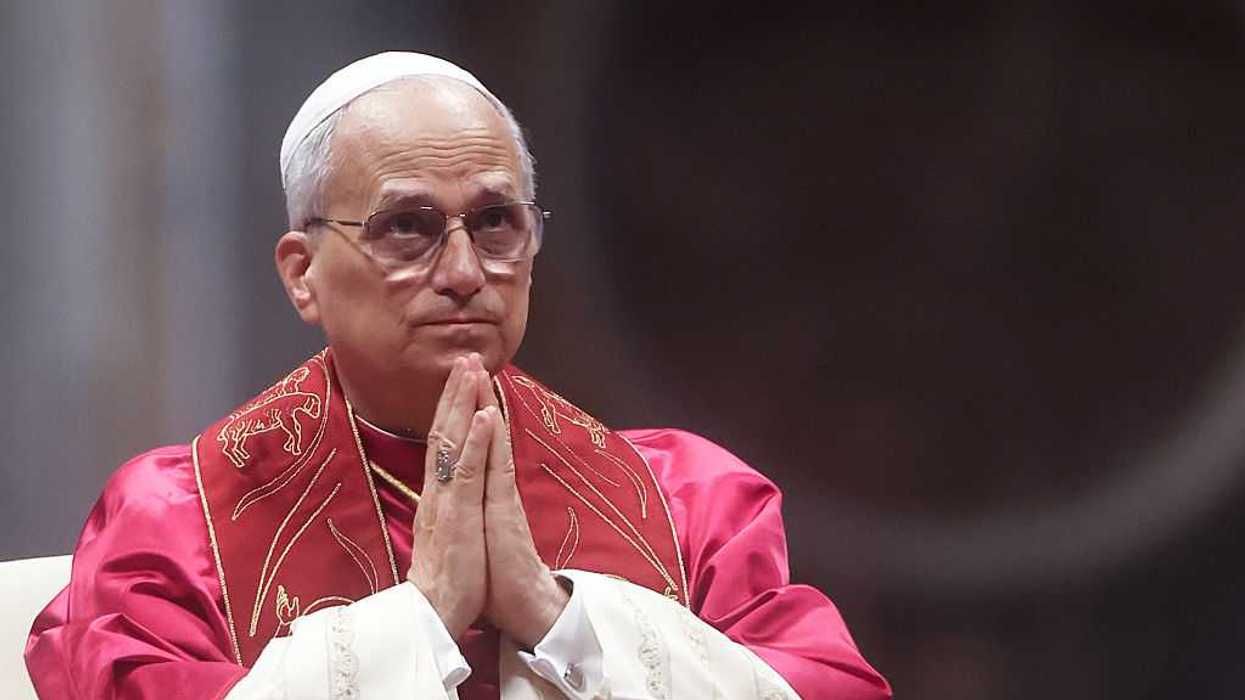
Alessandra Benedetti - Corbis/Corbis/Getty Images

The American pope suggested that the choice will inevitably dictate how the transformative technology of the age is employed, given that this technology takes on the "characteristics of those who devise, finance, regulate, and use it."

Following in the footsteps of Nimrod and choosing the first option would mean giving way to an ancient temptation and pursuing "a single language, a single technology, a single direction"; building a society "on pride and the claim to self-sufficiency"; and working toward a "future that excludes God and reduces the other to a means."

The second option would similarly mean dominating the heavens but rather patiently cultivating a "space in which humanity rediscovers its solid foundations and its final end" — a place "less visible and less spectacular" that is founded on the common good and has for its bedrock a firm relationship with the Almighty.

Building for the common good necessitates resisting the "Babel syndrome" that animates transhumanism and other vainglorious efforts to correct what God has created and instead "accepting the limits and weakness of humanity without considering them an error to be corrected," said the pope.

2. Falling victim to achievement

Leo XIV observed that within the ascendant technocratic paradigm previously denounced by Pope Francis, there is a "tendency to let the logic of efficiency, control, and profit alone shape personal, social, and economic decisions."

'Speed and efficiency should never be the supreme motivating force for the irreversible decisions.'

This contagious way of looking at the world — which threatens to reduce "creation to an object of exploitation and human beings to mere cogs in a system driven toward ever greater efficiency" — has spread in concert with "the expansion of artificial intelligence, cognitive science, nanotechnology, robotics, and biotechnology," said the pope.

Pope Leo XIV warns that unless technological progress advances with corresponding ethical and social progress, "the result may be an increase in means without a growth in humanity: 'having more' without 'being more.'"

3. More dehumanization on the battlefield

Sensitive to the increasing ease of war-making, "tragically marginal" efforts to prevent conflicts, and the "perpetuation of conflict as a source of power and income," the pope discussed the need to rein in and regulate the use of AI where the battlefield is concerned.

Leo XIV noted that moral judgments of a lethal or irreversible nature cannot be reduced to calculation and should not be entrusted to artificial systems.

RELATED: Killer drones have conquered the skies. Can we ever be safe again?
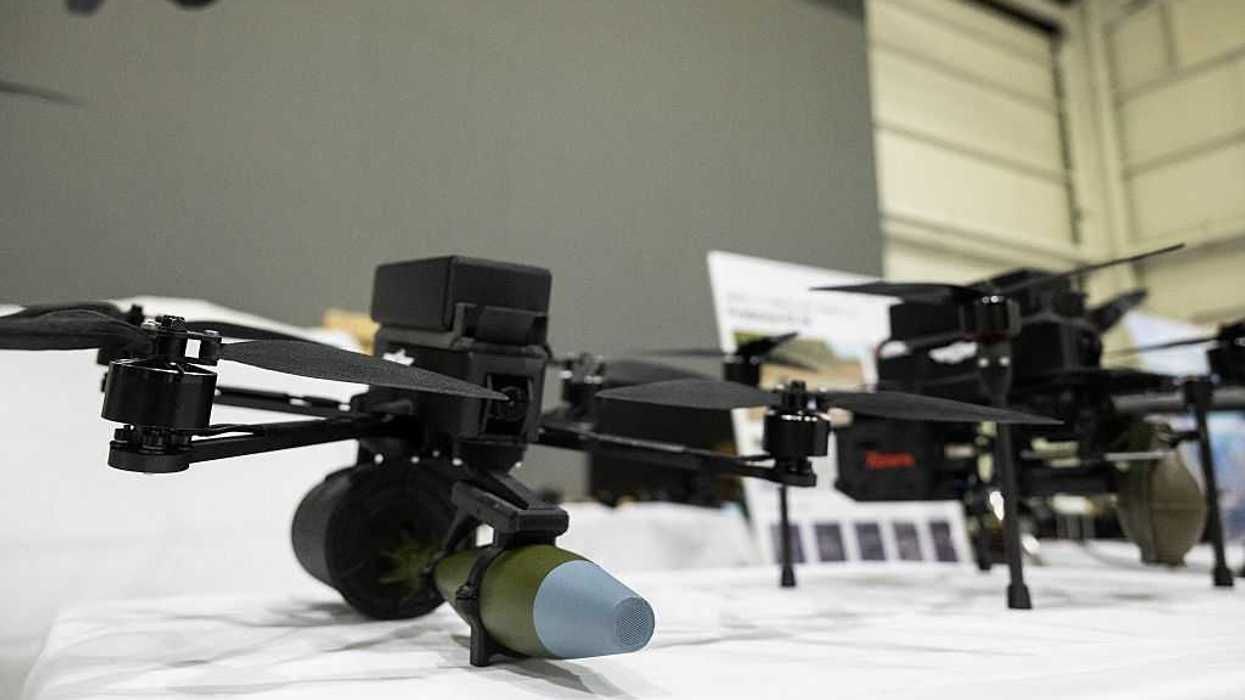
ANDREW CABALLERO-REYNOLDS/AFP/Getty Images

Leaving the work of killing and ruination to machines neither makes war more morally acceptable nor removes the intrinsic inhumanity of conflict, said the pope; rather "it can only bring about conflict more quickly and render it more impersonal, lowering the threshold for resorting to violence, transforming defense into threat prediction and thus reducing victims to data."

'Decisions now seem to be driven almost exclusively by economic calculations, justified through media distortions.'

Where AI and automated systems are involved, the pope advocates for:

  • holding those who design, train, authorize, and employ the technology used in strikes accountable;
  • ensuring that "speed and efficiency should never be the supreme motivating force for the irreversible decisions made in the context of war";
  • requiring technology that facilitates attacks to distinguish between combatants and noncombatants and factor in the impact on defenseless populations;
  • requiring weapons systems to retrace and reconstruct their decision-making processes "so that accountability and blame are not collapsed into 'the machine'";
  • keeping decisions to use lethal force under human control; and
  • avoiding an international AI arms race.

Leo XIV notes, "While AI can enhance the defense and protection of civilians, it can also lower the threshold for the use of force, shield people from responsibility, and foster a culture in which the enemy is reduced to a statistic and the victim to 'collateral damage.'"

4. The new colonialism

After noting that the "Church renews her firm condemnation of all forms of slavery, trafficking, and the commodification of persons," Leo XIV discussed a novel form of colonialism incubated in the digital economy that "appropriates data, transforming personal lives into exploitable information."

The pope railed against the mining, aggregation, and analysis of individuals' data — especially information about their health and genetics — noting that such information affords the powers that be "structural leverage over the future, for they can shape needs and markets. They can also decide, before others, to whom medicines, investments, and protections will be allocated."

The remedy, according to the pope: restore "to individuals not only the data that describes them, but also the ability to decide how it is used, by whom, and for whose benefit."

5. A false realism

The pope rails in his encyclical against realpolitik — politics based on doing what is regarded as expedient rather than what is understood as morally or ethically right — particularly as it relates to war.

Leo XIV, certain that "we live at a time of significant spiritual and cultural blindness," characterized realpolitik as a "truly irresponsible" form of false realism that "sows in consciences and in society an attitude of resignation to the inevitability of war and dismisses peace and dialogue as utopian or irrational positions that ignore the risks at stake."

While stressing that "peace is neither a naïve hope nor merely the absence of war" and is "always possible as the fruit of justice and charity," the pope recognized that the prevailing climate of pragmatism and nihilism has nevertheless set the stage for "new wars that are perhaps even more dangerous than those of the past, since they tend to disregard all ethical limits."

"Decisions now seem to be driven almost exclusively by economic calculations, justified through media distortions, manufactured enthusiasm, and 'dreams' that inevitably shatter, generating frustration and further violence," wrote the pope. "When people come to believe that nothing is genuinely true and that principles are hollow words, then the fuse in their hearts is lit for new eruptions of intolerance and aggression."

Just as he rejects this "false realism," the pope rejects the encompassing "culture of power," highlighting an alternative: the "civilization of love."

"Christians see the darkness and acknowledge it for what it is, yet they do not merely gaze upon it passively, for they know the light and understand that the darkness has not overcome it and cannot defeat it (cf. Jn 1:5)," wrote the pope. "For this reason, even when suffering seems to have the last word, Christians serve the good and are sustained by a theological hope that gives reality both meaning and direction."

Like Blaze News? Bypass the censors, sign up for our newsletters, and get stories like this direct to your inbox. Sign up here!

'Against the Machine' offers playbook for battling leftist lies


How did we end up with modern leftism and all its ills?

For Erik von Kuehnelt-Leddihn, the answer depended on how deep you were willing to dig. For the average person, the problem seems to have started with World War II; the "more informed" soon realize that World War I is when things went wrong.

This battle will not be won on social media, through new platforms, or by means of yet another ideology.

But the "genuine historian," writes von Kuehnelt-Leddihn in "Leftism Revisted," goes further back in history still, all the way to the "mother of most of the ideological evils besetting not only Western civilization but also the rest of the world": the French Revolution.

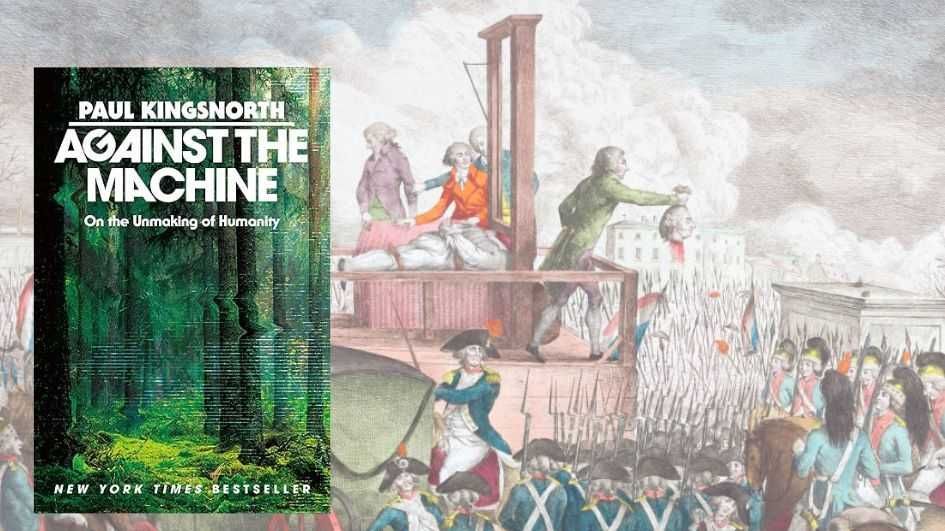
Paul Kingsnorth’s compelling diagnosis of what ails modern man in "Against the Machine: On the Unmaking of Humanity" places him somewhere in von Kuehnelt-Leddihn's third category

The Machine

It’s not that this English writer — a recent convert to the Orthodox Church — dismisses the damage wrought by the 20th century, which shattered the West’s confidence in its animating principles and, in time, killed Christendom — setting in motion a broader campaign of deracination, disorientation, and disenchantment, advanced from both sides of the liberal political binary.

Like von Kuehnelt-Leddihn, Kingsnorth understands that these terrible events are the expression of a sickness that took hold centuries ago, at the storming of the Bastille — an event that ushered in the birth of ideology, the razing of ancient hierarchies, the sacrifice of multitudes in the name of "Reason," and the initiation of the continental variety of the liberal experiment.

Kingsnorth, however, goes a step farther. He does not merely trace the origins of the crisis — he names the thing that now drives it.

That which has demolished "borders and boundaries, traditions and cultures, languages and ways of seeing" is, according to Kingsnorth, a centuries-old "monster that grows in deserts," coming of age in the spiritual wastelands created by the French and Industrial Revolutions.

This insatiable force — what Kingsnorth calls the "Machine," but also "Progress" — has swallowed the world and, in doing so, made it increasingly difficult for those within it to perceive reality except through its own corrupting lens.

What cannot be quantified or digitized — "that irrational, illogical world of beauty, wild nature, and spiritual truth" — is not merely ignored but actively obscured.

Science, self, sex, screen

The Machine’s values — progress, openness, the rejection of limits and borders, therapeutic individualism, universalism, materialism, scientism, and the primacy of market logic — have become so ubiquitous, writes Kingsnorth, that we now treat them "as if they were natural as rain or wind."

These values can be distilled into what he calls the "Four S’s":

  • science, which offers a purely material account of origins;
  • the self, which defines identity and purpose;
  • sex, which anchors meaning in desire; and
  • the screen, "our main source of distraction from reality and the interface by which we are directed into the coming post-human reality of the Machine."

They stand in direct opposition to the older order, grounded in the "Four P's": past, place, people, and prayer.

Where the Four S's dissolve inheritance, the Four P's depend on it.

Care for and attention to the Four P's threaten the Machine’s liberal anti-culture and are therefore treated with suspicion or contempt — dismissed as naive at best and at worst as reactionary, bigoted, or "deplorable."

Recall former President Barack Obama’s remarks about working-class Pennsylvanians who failed to embrace the promises of progress: "It’s not surprising, then, that they get bitter, they cling to guns or religion ..."

Like its supporters, the Machine’s critics are legion. Yet their opposition is often absorbed.

Breaking the framework

Kingsnorth acknowledges that conservatism, at least in theory, comes closest to offering an anti-Machine politics rooted in human reality. It values tradition, centers home and family, affirms religious faith, and resists both centralized power and abstract utopianism.

But the problem, says Kingsnorth — drawing on Roger Scruton and G.K. Chesterton — is that mainstream conservatism operates largely within the same liberal framework it claims to resist.

As Chesterton observed in 1924, "Even when the revolutionist might himself repent of his revolution, the traditionalist is already defending it as part of his tradition."

The result is a politics that conserves the aftermath of revolution rather than the inheritance it displaced.

The goalposts, in other words, were moved long ago — inside the belly of the beast.

Reactionary radicalism

After searching for a label for those who would genuinely resist the Machine — those seeking, as Rod Dreher has put it, to build "networks of resistance" — Kingsnorth arrives at a term deliberately resistant to left-right categorization: reactionary radicalism.

Reactionary radicalism, says Kingsnorth:

aims to defend or build a moral economy at the human scale, which rejects the atomized individualism of the liberal era and understands that materialism as a world view. A politics which embraces family and home and place, loving the particular without excluding the outsider, and which looks on all great agglomerations of power with suspicion. … A politics which aims to limit rather than multiply our needs, which strategically opposes any technology which threatens the moral economy and which, finally, seeks a moral order to society which is based on love of neighbor rather than competition with everyone.

But how, exactly, can this be put into practice?

This battle will not be won on social media, through new platforms, or by means of yet another ideology. These are the Machine’s native terrain — its shock absorbers.

Raw and the cooked

One increasingly widespread act of resistance Kingsnorth highlights is homeschooling, which he calls "the most important thing any parent can do to resist Machine culture."

More broadly, he urges a turn away from the purely rational toward the reasonable; the building of parallel systems resilient enough to resist assimilation; the rejection of technologies that promise freedom while delivering dependence; and a renewed pursuit of transcendence.

In short: a recovery of the Four P's.

To those still enthralled by the Machine, such people will appear as barbarians — unrefined, unassimilable, and threatening.

The question, Kingsnorth suggests, is what kind of barbarian one will become.

The "raw" barbarian has fled the Machine’s reach. The "cooked" barbarian remains within its walls but practices quiet, persistent dissent.

Either way, he has made himself inedible. Enough indigestible barbarians, and the all-devouring Machine may choke to death.

The manual for life is dead and gone — and no one told your kids


A colleague of mine recently told me a story about his grandfather. When he was a boy, his family would wait for the iceman to arrive. The iceman — an actual person — would come to their home with a block of ice for the family’s icebox. It was a regular event, like the milkman or the postman, and part of the rhythm of life.

That story stuck with me — not because it was quaint, but because it triggered a deeper realization.

We are watching in real time the collapse of intergenerational continuity.

My colleague’s grandfather relied on the iceman, and his father probably did, too. And his father’s father? Almost certainly. For generations, their lives likely looked the same. They shared the same routines, occupations, habits, expectations, and assumptions about how the world worked.

The world changed — but it changed slowly. Generational continuity was a given, not a gift. Not so anymore.

My colleague’s own life bears little resemblance to his father’s. He works remotely, reads the news on a device in his pocket, and navigates a culture reshaped by social media, digital platforms, and technologies that didn’t exist when he was born. The pace of change has gone from a gentle trickle to a roaring cascade — and with it, the chasm between generations has widened.

The generational delta

To frame this, let’s talk about what I call the “generational delta”: a rough percentage of how much one generation’s way of life differs from the last.

A thousand years ago, that delta might have been 1%. Your father’s life was your life. You tilled the same land, spoke the same dialect, and obeyed the same customs. You learned how to live by watching your parents and doing what they did. The knowledge they passed down was 99% applicable to your world.

By the early 1900s, that rate picked up a bit. Industrialization, urbanization, and mechanization changed everyday life. Still, the average person’s habits and values bore a strong resemblance to those of their parents. Maybe, the generational delta had climbed to 4%.

In the early 2000s, the pace accelerated. The internet reshaped work, entertainment, and communication. Kids no longer congregated at the mall, and many aspects of daily life were beginning to diverge from the experiences of their parents.

New standards were emerging in work, education, relationships, and even identity as digital life began to supplement — sometimes outright replace — traditional experiences. These shifts, while still gradual, began to create noticeable differences between generations. The generational delta may have risen to around 10%.

Today? It feels closer to 30% — maybe more.

Fading generational relevance

We are watching in real time the collapse of intergenerational continuity. Parents can no longer reliably prepare their children for the world they will inhabit because that world is changing too quickly for wisdom to keep up.

A major reason is the all-encompassing nature of modern digital life. Social media has become not just a pastime but a primary lens through which many people experience the world. Trends, ideas, and cultural norms now evolve at the speed of a swipe.

Add to this the advent of artificial intelligence, which is accelerating shifts in education, employment, communication, and even human relationships. These forces are reshaping society so quickly and profoundly that inherited wisdom, once reliably passed from parent to child, struggles to remain relevant for even a single generation.

Let’s use a metaphor. Imagine that every generation passes down an “operator’s manual” for how to be a functioning, successful adult. This manual isn’t written down but rather transmitted through advice, discipline, storytelling, and observation. It tells you how to find work, how to behave in public, how to marry, how to raise kids, how to handle suffering and success.

It’s not that parents don’t have wisdom; it’s that the world keeps moving the goalposts.

For most of human history, that manual changed very little from generation to generation. The instructions your great-great-grandfather had still worked for your great-grandfather. And the manual your father left you was probably mostly useful. Sure, a chapter here or there might be outdated — maybe the bit about walking uphill to school both ways no longer applied — but most of it was solid.

Today, huge sections of that manual will be obsolete by the time a child becomes a teenager.

A parent warns their child not to spend too much time watching TV — only to realize their child doesn't watch any TV at all but instead consumes algorithmically generated content on three different apps they can’t name. A father explains the importance of in-person communication, while his son is navigating a dating landscape shaped by swipe culture, ghosting, and AI companionship. A mother gives her daughter guidance on writing college essays, unaware that large language models are reshaping the entire application process.

It’s not that parents don’t have wisdom; it’s that the world keeps moving the goalposts.

As this trend continues, something more corrosive begins to happen. Children begin to suspect — not entirely wrongly — that the wisdom of their parents is not only outdated but irrelevant. They stop reading the operator’s manual entirely. They toss it aside and begin writing their own from scratch, guided not by time-tested principles but by whatever voices are loudest in the moment.

This breakdown in generational transmission doesn’t just lead to confusion — it breeds arrogance. When you believe the past has nothing to teach you, you don’t just ignore it; you mock it. Tradition becomes a punchline. Elders become artifacts. The voices of the dead are silent under the noise of the now.

This is not progress. It’s a form of cultural amnesia.

From manual to compass

This is not a Luddite’s lament. I’m not calling for the return of the iceman. I am marveling at — and grieving — a rupture that feels both inevitable and unsustainable. We are now in the strange position of raising children for a world we cannot envision, using tools they no longer recognize.

What, then, are we to do?

Perhaps we return to something older than the iceman, older than the operator’s manual itself: virtue. The habits of heart and mind that transcend technological context. Courage, honesty, discipline, humility, faith — these don’t go out of style. They are not bound to the machinery of the age.

We may not be able to write the next generation’s manual, but we can give them a compass.

Because when the pace of change makes everything else uncertain, what matters most isn’t whether your advice is up-to-date.

It’s whether your children still trust you to give it.

The Abortion Industry Owes Its Success To The Proliferation Of Feminism

If we are serious about helping women and protecting the vulnerable, we must stop believing the lie that feminism has been good for women.

Watch: Mark Levin educates Marxist Democrats on basic economics


The left desperately needs a lesson in economics, and Mark Levin is here to supply it — because Marxists like Robert Reich are failing to do the job.

Reich claims that the “crises” Republicans are concerned about are “totally made up” in order to “distract from the real crises facing Americans” like “growing concentration of wealth” and the “worsening climate crisis.”

“I’m tired of this Marxist claptrap with class warfare,” Levin says, before destroying Reich’s argument.

“According to the Marxists,” he begins, “there’s only one pie. And the more somebody takes out of that pie, the less pie you have to eat. That’s not how market capitalism works.”

“Under capitalism,” he continues, “the pie gets bigger and bigger and bigger except when these masterminds Bernie Sanders, Biden, Reich jump in. And they try and decide who will and who will not succeed.”

This is precisely why the attack on entire industries like automobiles — by “Democratic socialists” like Biden — is going to hurt the economy more than help it.

“The more the government rules over the economy, the harder it is for the economy to grow. And sometimes it begins to shrink,” Levin explains.

Leftists also seem to operate under the belief that there is no middle class in this country.

“We have a massive middle class in this country. Why? Because the government dictated it? No. Because the Industrial Revolution,” Levin says, noting that the Industrial Revolution “was the greatest period of economic growth mankind has ever experienced.”

“Ever since, the Marxists, the Democrats, have done everything they can to it. They hate capitalism,” he adds.


Want more from Mark Levin?

To enjoy more of "the Great One" — Mark Levin as you've never seen him before — subscribe to BlazeTV — the largest multi-platform network of voices who love America, defend the Constitution, and live the American dream.

Ted Kaczynski’s Murderous Legacy Doesn’t Mean His Diagnosis Of The Post-Industrial West Is Wrong

Ted Kaczynski was a tremendously troubled man who shouldn't be celebrated, but he foresaw many of today's problems with clarity.

How Women’s Worthwhile Pursuit Of The Workplace Reduced Them To A GDP Calculation

For much of feminist history, women sought a settlement that valued maternity, care, and interdependence alongside a just measure of economic and political agency and individual freedom.

Mary Harrington’s ‘Feminism Against Progress’ Opens An Escape Hatch For The Sexual Revolution’s Prey

British author Mary Harrington speaks for some of the millions across the globe fleeing leftist soul drones and searching for human happiness.


Microplastics have been recorded in freshly fallen snow on Antarctica


Microplastics have been found in freshly fallen snow in Antarctica for the first time in recorded history.

The Guardian reported that this unnatural development poses a distinct threat to the health of Antarctica’s unique ecosystems and could accelerate the melting of the continents ice and snow.

Microplastics — which are individually smaller than a grain of rice —have previously been found in Antarctic Sea ice and surface water but this is the first time in recorded history that they have been found in fresh snowfall.

Research conducted by Alex Aves, a PhD student from the University of Canterbury, and his supervisor Dr. Laura Revell, chronicled the recent phenomenon.

For his research, Aves collected snow samples from the Ross Ice Shelf in late 2019 to determine whether microplastics had been transferred rom the atmosphere into the snow. Until Aves conducted this research, there had been very little research about the presence of microplastics on the continent of Antarctica.

Dr. Revell said, “We were optimistic that she wouldn’t find any microplastics in such a pristine and remote location.”

Dr. Revell indicated that she had instructed Aves to also collect samples from various established roadways on the continent, where microplastics have previously been recorded, so that “she’d have at least some microplastics to study.”

As it turns out, Dr. Revell’s precautions were unnecessary as plastic particles were found in every one of the 19 samples Aves gathered from the Ross Ice Shelf.

Aves said, “It’s incredibly sad but finding microplastics in fresh Antarctic snow highlights the extent of plastic pollution into even the most remote regions of the world.”

Aves found an average of 29 microplastic particles per liter of melted snow, which is reportedly higher than recorded marine concentrations that were gathered from the surrounding Ross Sea and Antarctic Sea ice.

There were 13 different types of microplastic found in the samples Aves gathered. The most common type found was PET which is commonly used in the manufacture of plastic drink bottles and clothing.

Atmospheric modeling suggested that these microplastics may have traveled thousands of kilometers through the air as it is unlikely that the humans currently residing in Antarctica have caused enough plastic pollution to generate the requisite concentration of microplastics in the atmosphere.

Microplastics and plastic pollution have become remarkably far spread as they reportedly been found at the summit of Mount Everest and in the depths of the planet’s oceans.

People inadvertently eat and breathe microplastics according to some studies and other studies found that microplastic particles cause damage to human cells. One study from 2021 found that airborne microplastics are “spiraling around the globe.”

Students, parents outraged after teacher has class clean raw cotton. The lesson was about the industrial revolution, not slavery.


Students and families at a Spokane, Washington, middle school were reportedly left traumatized and outraged after a social studies teacher brought raw cotton into the classroom for students to clean.

According to KUOW-TV, the lesson was not about slavery, but the industrial revolution and the important role Eli Whitney's cotton gin played in American economics.

Spokane Public Schools is currently working on an "equity policy," which stems from a racial equity resolution the district passed in 2020.

What are the details?

In May, an unnamed eighth-grade social studies teacher at Sacajawea Middle School reportedly pulled out a box of raw cotton, handed it out to students, and told the children they would complete a "fun" activity to see who could clean the cotton the fastest.

Twins Emzayia and Zyeshauwne Feazell, who are 14 years old, stopped attending classes after that lesson, which reportedly left them "hurt, angry, and traumatized."

Emzayia told KUOW-TV, "I didn't understand why she was actually doing this as a teacher. Why she would bring a box of cotton into class."

Zyeshauwne added, "Once I started to realize what we were actually doing, I didn't like it. I didn't want to pay attention and listen to it anymore."

According to the station, the twin sisters "became even more uneasy when their classmates made comments about how they would not have picked cotton if they had been enslaved."

"They didn't have any reaction like we did," Emzayia insisted. "They were just OK."

After school, the twins went home and told their mother, Brandi Feazell, about the lesson, who, in turn, immediately called the assistant principal.

"I had relayed to him at that point what my girls had described to me that transpired, and he immediately went into defense mode," Feazell insisted. "Instead of maintaining his job and defending these children and making sure that their health and their safety, mentally and emotionally was taken care of and being their first line of defense, he did not portray any of that. He was more worried about his faculty."

The administrator, identified by NBC News as Taylor Skidmore, reportedly told Feazell that the teacher was a "very kind and gentle soul" who would never try to hurt any students.

When Feazell told Skidmore that she planned to take the issue to the school district, he reportedly said that the "only thing he could offer me at that point was to 'segregate' my daughters into a room by themselves, so they 'wouldn't have to be around the white teacher.'"

According to the KUOW, the proposal "angered [Feazell] not just because she said he used the word 'segregate,' using a term from Jim Crow times, but because it seemed to her this plan punished her daughters while leaving the social studies teacher's actions unaddressed."

Feazell said that she was hurt and upset that the teacher wasn't facing disciplinary action over the lesson.

The family is now reportedly working with the American Civil Liberties Union of Washington and TeamChild to "determine the resolution they would like to see come from Spokane Public Schools."

The family aims to prevent something like this from happening to other students in the future and demands that the district remove Skidmore from his position. The family is also seeking disciplinary action against the social studies teacher and wants a formal apology from the district.

What is the school saying?

A statement from Spokane Public Schools reads, "Spokane Public Schools recently received a complaint regarding a classroom lesson on the Industrial Revolution at Sacajawea Middle School. Upon receiving the complaint, SPS promptly solicited a third-party investigator to fully understand the situation. We will share the investigation's findings as soon as they are available. SPS is committed to transparency, as well as making sure all our students, families, and staff feel supported and heard."

A press release from the ACLU stated that the lesson was "intended to simulate the experience of enslaved people."

The ACLU's press release also quoted Feazell, who said, "As two of the only three black students in the class that day, my daughters already felt singled out during an activity that required them to clean cotton. Separating them from the rest of the class would only compound their pain and isolation and do nothing to change the racist culture and policies that led to this inappropriate and harmful lesson in the first place."