SCOOP: 2A Organizations Slap Virginia With Complaint Alleging State Defied Court Order With Gun Law
'Immediate and irreparable harm'
Anti-ICE activists' attempts to frustrate federal immigration law enforcement in Minneapolis and elsewhere hit a snag on Wednesday.
The American Civil Liberties Union of Minnesota and three Minnesota-based law firms filed a lawsuit on Dec. 17 against U.S. Immigration and Customs Enforcement, alleging its agents violated the constitutional rights of several anti-ICE activists, including a Minnesota woman and a Somali-American who were both accused of attacking federal agents.
A federal judge who was nominated by former President Joe Biden ruled last week in favor of the radicals.
'A liberal judge in Minnesota tried to handcuff ICE agents.'
U.S. District Judge Kate Menendez prohibited federal agents involved in Operation Metro Surge and related operations in the Gopher State from:
The U.S. Department of Homeland Security promptly appealed the Biden judge's ruling to the U.S. Circuit Court of Appeals for the Eighth Circuit. On Wednesday, the appellate court granted the defendants an administrative stay of Menendez's preliminary injunction.
Attorney General Pam Bondi appeared greatly pleased with the higher court's ruling.
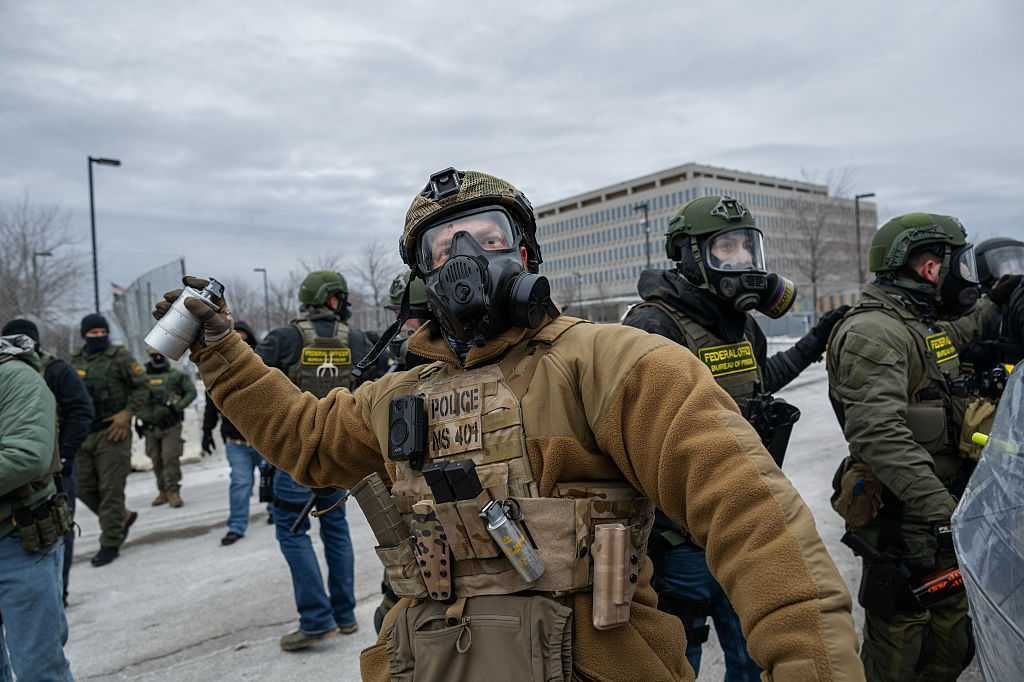
"A liberal judge in Minnesota tried to handcuff ICE agents who are enforcing the Nation’s immigration laws and responding to obstructive and violent interference from agitators," Bondi said in a statement on Wednesday.
"The 8th Circuit just granted an administrative stay HALTING these restrictions, which were designed to undermine federal law enforcement," continued the attorney general. "This DOJ will protect federal law enforcement agents from criminals in the streets AND activist judges in the courtroom."
Federal agents didn't waste any time taking advantage of their restored abilities.
Hours after the ruling, Greg Bovino of U.S. Border Patrol was caught on tape warning a hostile crowd of anti-ICE protesters in Minneapolis that gas was coming, then tossing a gas canister their way.
The Department of Homeland Security indicated that "Border Patrol agents who were in the Minneapolis-St. Paul area as part of a targeted enforcement operation were repeatedly harassed and blocked by hostile crowds while simply trying to take bathroom breaks."
"At each gas station where the agents stopped to use the restroom, groups of agitators appeared, yelled at them, stalked them, and even tried to prevent law enforcement vehicles from leaving, creating unsafe conditions," said the DHS. "At one stop, individuals in the crowd threw food at the agents. At their final gas station stop, someone spit on an agent. When an agent moved to detain the person who spit on him, the crowed tackled and attacked the agents while surrounding them. To safely clear the area agents had to use crowd control measures to disperse the hostile crowd."
Like Blaze News? Bypass the censors, sign up for our newsletters, and get stories like this direct to your inbox. Sign up here!
An Obama judge issued an injunction on Thursday ordering Florida not only to halt the arrival of new detainees to Alligator Alcatraz but to begin dismantling the facility.
The Sunshine State isn't rolling over, and Republican Gov. Ron DeSantis' office indicated that President Donald Trump's deportation campaign will continue as planned.
After DeSantis tasked state leaders with identifying places for a new detention facility to temporarily house outbound criminal noncitizens, Florida Attorney General James Uthmeier made a public pitch in favor of "Alligator Alcatraz" — "an old, virtually abandoned airport facility" in the Everglades that could serve as "the one-stop shop to carry out President Trump's mass deportation agenda."
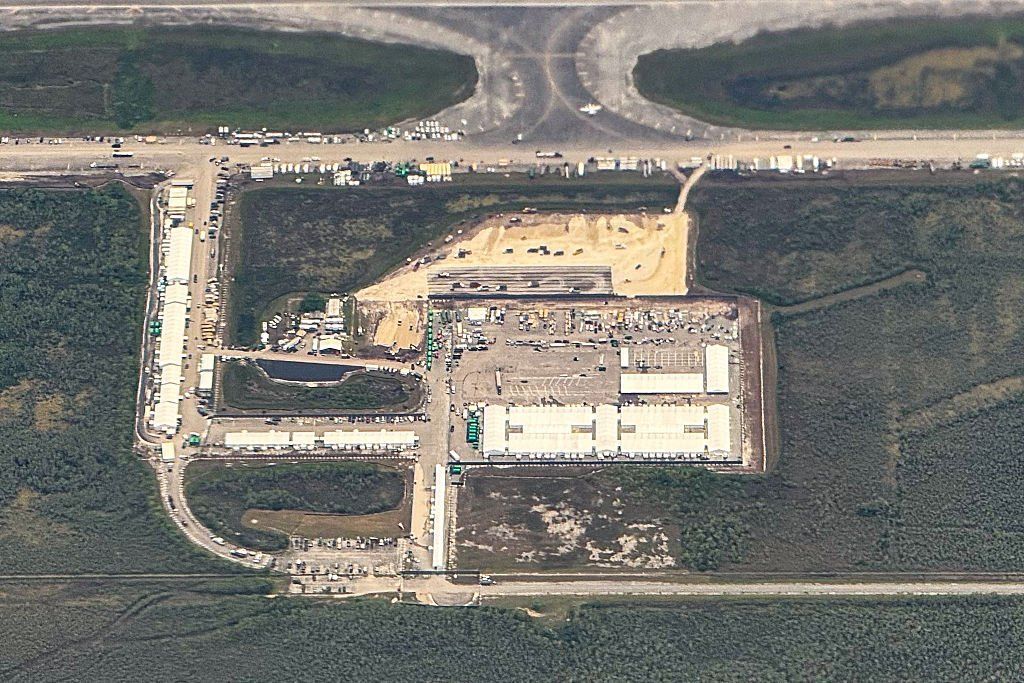
Uthmeier got his way, confirming in June that the Dade-Collier Training and Transition Airport would indeed become home to America's first state-run facility for federal immigration detainees — a facility that the Department of Homeland Security told Blaze News would ultimately house up to 5,000 beds for illegal aliens in soft and hardened structures.
Within weeks, the airport's 10,499-foot runway was crowded with tents and unsavory characters set for deportation.
As with virtually all effective initiatives related to the detention and deportation of criminal noncitizens, Alligator Alcatraz's development was challenged by liberal activists.
RELATED: Florida sheriff: Feds are running out of space because we're arresting so many illegal aliens
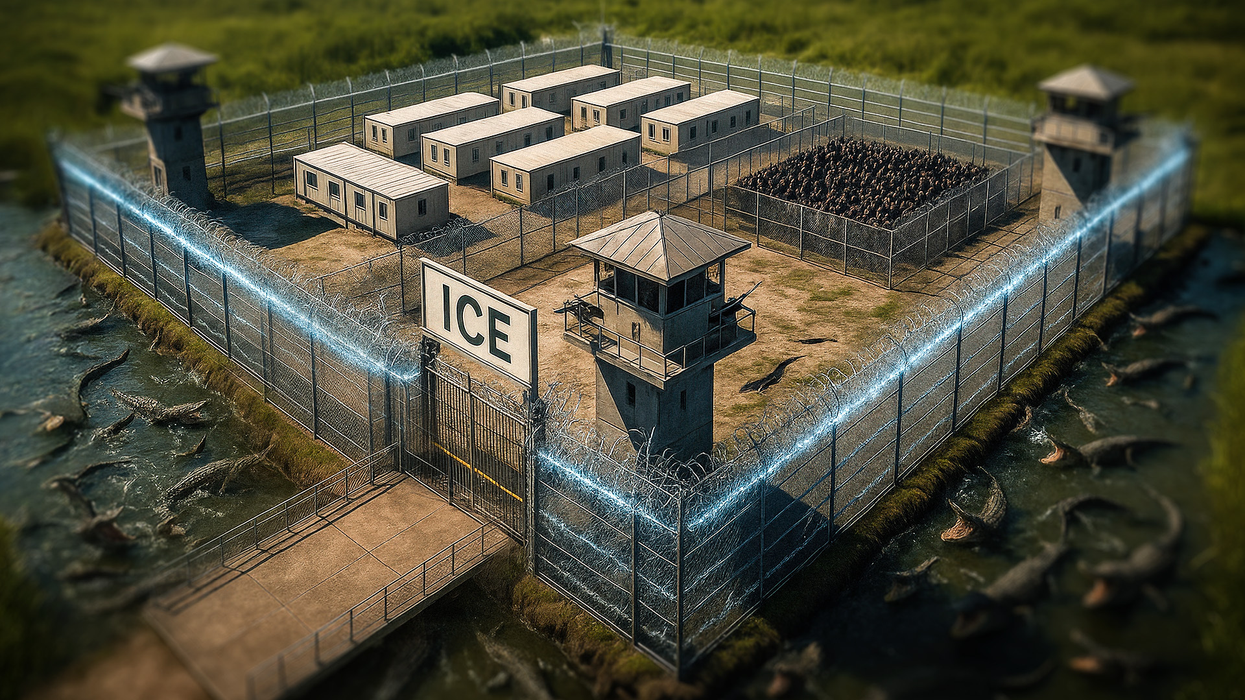
One of the legal efforts to shut down the camp was launched on June 27 by two environmental groups, Friends of the Everglades and the Center for Biological Diversity.
According to the plaintiffs, Alligator Alcatraz was being operated in violation of the National Environmental Policy Act, which requires environmental review processes in cases of federal actions that significantly impact the environment — processes the environmentalists claim had not been undertaken.
Florida Division of Emergency Management Deputy Director Keith Pruett pointed out that the environmentalists' concerns were overblown and that the airport was already active, permanently lit — one of the environmentalists concern-mongered about possible light pollution — and home to existing buildings.
The lawsuit further alleged that Florida's involvement in the project through the Florida Division of Emergency Management exceeded the agency's authority and that Miami-Dade County unlawfully permitted the use of the airport as a detention facility.
U.S. District Judge Kathleen Williams made clear in her 82-page order on Thursday that she was persuaded neither by the Trump administration's argument that "the significant national interest in combating unlawful immigration favors allowing Florida to continue the development and use of [the detention camp]" nor by Florida's assertion that the facility was necessary because other facilities are at capacity.
Williams, an Obama appointee, suggested that the perceived need for Alligator Alcatraz "fails to explicate the decision to place the detention camp in the Everglades."
'We're going to continue to do what we need to do to help the Trump administration remove illegal aliens from our country.'
Having ordered a temporary pause weeks earlier, Williams formally barred both the Trump administration and state officials from installing any additional lighting at the facility; undertaking any expansion efforts, including erecting additional tents or buildings; and bringing any new detainees to the site.
Her order allows, however, for modification or repairs to existing facilities if executed for the sole purpose of "increasing safety or mitigating environmental or other risks at the site."
The Obama judge further ordered Florida and the Trump administration to dismantle the temporary fencing, lighting fixtures, generators, and waste receptacles installed to support the project within 60 days.
RELATED: Trump and the left join forces to herd Democrats into a 2028 disaster
"Every Florida governor, every Florida senator, and countless local and national political figures, including presidents, have publicly pledged their unequivocal support for the restoration, conservation, and protection of the Everglades," wrote Williams. "This Order does nothing more than uphold the basic requirements of legislation designed to fulfill those promises."
Friends of the Everglades celebrated the ruling.
Eve Samples, executive director of the group, stated, "This decision sends a clear message that environmental laws must be respected by leaders at the highest levels of our government — and there are consequences for ignoring them."
DHS Assistant Secretary for Public Affairs Tricia McLaughlin said in a statement to Blaze News, "This ruling from an activist judge ignores the fact that this land has already been developed for a decade. It is another attempt to prevent the president from fulfilling the American people’s mandate to remove the worst of the worst, including gang members, murderers, pedophiles, terrorists, and rapists, from our country."
"This activist judge doesn’t care about the invasion of our country facilitated by the Biden administration, but the American people do," continued McLaughlin. "We have the law, the facts, and common sense on our side.”
Florida has appealed the order to the U.S. Court of Appeals for the Eleventh Circuit.
DeSantis told Fox News he knew the "fix was in" and that Williams "was not giving us a fair shake."
"We totally expected an adverse ruling," said DeSantis. "And we also knew we were going to immediately appeal and get that decision stayed. So we will ultimately be successful in this. It's not going to stop our resolve. We're going to continue to do what we need to do to help the Trump administration remove illegal aliens from our country. You know, that's the mandate that they have. So we anticipated this, but I don't think it's going to be insurmountable in the end."
Blaze News has reached out to DeSantis' office for further comment.
While the fate of Alligator Alcatraz is up in the air, DeSantis' office made clear that there's no slowing down the deportation train.
Alex Lanfranconi, DeSantis' communications director, noted, "The deportations will continue until morale improves."
Like Blaze News? Bypass the censors, sign up for our newsletters, and get stories like this direct to your inbox. Sign up here!The U.S. Court of Appeals for the District of Columbia tossed out the February order of a Biden-appointed district judge on Wednesday and delivered the Trump administration a big win.
President Donald Trump ordered a pause in foreign aid on his first day back in office, eliciting backlash from beneficiaries abroad and vested interests at home.
Trump, convinced that the U.S. "foreign aid industry and bureaucracy are not aligned with American interests and in many cases antithetical to American values," ordered a 90-day pause in foreign aid, affording his administration an opportunity to review relevant programs "for programmatic efficiency and consistency with United States foreign policy."
'The grantees failed to show they are likely to succeed on the merits.'
Secretary of State Marco Rubio subsequently suspended new funding obligations for the State Department; terminated thousands of grant awards; and shuttered the U.S. Agency for International Development.
Grantees of foreign-assistance funds promptly sued to get their hands on nearly $4 billion for global health programs and over $6 billion for AIDS programs that had been appropriated by Congress to be disbursed by the State Department and USAID.
Foreign-born U.S. District Judge Amir Ali helped them in February to keep the gravy train moving.
Ali, a Biden appointee, issued a universal injunction — the kind the U.S. Supreme Court determined on June 27 "likely exceed the equitable authority that Congress has given to federal courts" — that barred the Trump administration from "suspending, pausing, or otherwise preventing the obligation or disbursement of appropriated foreign-assistance funds in connection with any contracts, grants, cooperative agreements, loans, or other federal foreign assistance award that was in existence as of January 19, 2025."
In a 2-1 decision on Wednesday, a three-judge panel of the U.S. Court of Appeals for the District of Columbia did what the Supreme Court refused to do in March: vacate Ali's order.
The majority on the panel — comprising a George H.W. Bush appointee and a Trump appointee — concluded that "the district court abused its discretion in granting a preliminary injunction because the grantees failed to show they are likely to succeed on the merits."
The majority also determined that "the grantees lack a cause of action to bring their freestanding constitutional claim" and "have no cause of action to undergird their [Administrative Procedure Act] contrary-to-law claim."
'We will continue to successfully protect core Presidential authorities from judicial overreach.'
In her dissenting opinion, Judge Florence Pan, a Biden appointee and daughter of Taiwanese immigrants, accused her colleagues of reframing the case to help the government.
"The majority concludes that the grantees lack a constitutional cause of action — an issue that the government did not mention in its opening brief and did not fully develop even in its reply brief," wrote Pan.
The Biden-appointed judge wrote that the government instead argued that the grantees lack a statutory cause of action to force President Donald Trump to obligate the funds in question.
Pan also suggested that the majority opinion "misconstrues the separation-of-powers claim brought by the grantees, misapplies precedent, and allows Executive Branch officials to evade judicial review of constitutionally impermissible actions."
Blaze News has reached out to the State Department for comment.
Attorney General Pam Bondi celebrated the victory, noting, "In a 2-1 ruling, the DC Circuit lifted an injunction ordering President Trump to spend hard-earned taxpayer dollars on wasteful foreign aid projects. We will continue to successfully protect core Presidential authorities from judicial overreach."
"Today’s decision is a significant setback for the rule of law and risks further erosion of basic separation-of-powers principles," stated Lauren Bateman, an attorney with Public Citizen Litigation Group who represented some of the grantees. "We will seek further review from the court, and our lawsuit will continue regardless as we seek permanent relief from the administration’s unlawful termination of the vast majority of foreign assistance."
Like Blaze News? Bypass the censors, sign up for our newsletters, and get stories like this direct to your inbox. Sign up here!
President Donald Trump signed an executive order on his first day back in office titled "Protecting the Meaning and Value of American Citizenship." The order, which was set to go into effect on July 27, made it U.S. policy not to issue citizenship documents to a person whose mother was unlawfully in the country and whose father was neither an American citizen nor a permanent resident at the time of the person's birth.
Liberals, apparently content to cheapen citizenship by dealing it out wholesale to children born to noncitizens on American soil, filed numerous legal challenges to prevent Trump from making good on his campaign promise to end birthright citizenship.
The challengers have won the various legal battles fought to date; however, the outcome of the war over this hot-button issue will likely be decided by the U.S. Supreme Court in short order owing to the 9th Circuit Court of Appeals' Wednesday ruling, which upheld a nationwide pause on the enforcement of the policy.
'This is still at a preliminary stage — not a ruling yet on the merits.'
On Jan. 21, the states of Arizona, Illinois, Oregon, and Washington filed a lawsuit in the U.S District Court for the Western District of Washington claiming that the executive order violates the 14th Amendment of the U.S. Constitution and the Immigration and Nationality Act. The complaint advanced by Democratic state attorneys general suggested further that Trump lacks the authority to determine who should and should not be granted American citizenship at birth.
In a move of the kind that the U.S. Supreme Court would later claim likely exceeds the equitable authority given to federal courts by Congress, Seattle-based U.S. District Judge John Coughenour granted a universal injunction, blocking the law's implementation.
A three-judge panel of the 9th Circuit Appeals Court ruled 2-1 on Wednesday to keep in place Coughenour's injunction.
The two judges in the 9th Circuit majority were both appointed by Bill Clinton. The lone dissenting judge was a Trump appointee who said the states had no legal right to bring the case.
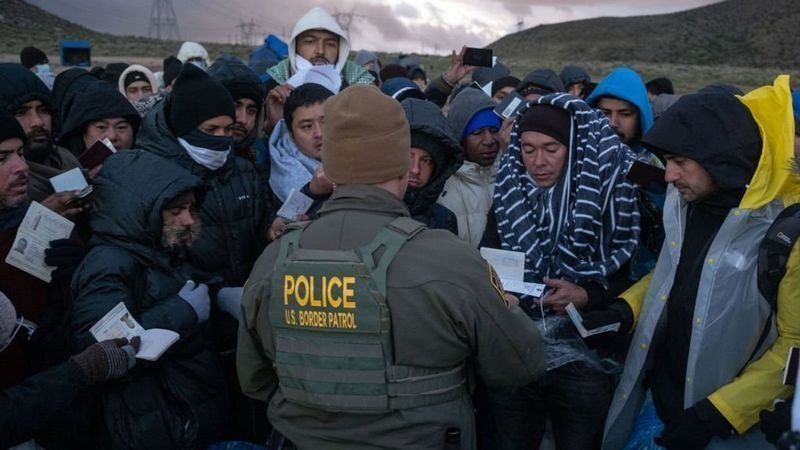
Ronald Gould, one of the Clinton judges, noted in the majority opinion, "We conclude that the Executive Order is invalid because it contradicts the plain language of the Fourteenth Amendment's grant of citizenship to 'all persons born in the United States and subject to the jurisdiction thereof.'''
Gould wrote further that the "district court did not abuse its discretion in issuing a universal injunction in order to give the States complete relief" and that the "universal preliminary injunction is necessary to give the States complete relief on their claims."
The appeals court declined to tackle the individual plaintiffs' claims as they are already covered by a class action in the case Barbara v. Trump.
On July 10, a U.S. district judge in New Hampshire granted class action status to a lawsuit brought by the American Civil Liberties Union challenging Trump's order, certifying the babies of illegal aliens and temporary migrants as a class.
Judge Joseph Laplante, a George W. Bush appointee, then issued a preliminary injunction in Barbara, temporarily shielding the supposed class from the order's enforcement.
Although Laplante paused his decision to allow for the Trump administration to appeal, absent such an appeal, his order has reportedly gone into effect.
Dr. John C. Eastman, founding director of the Claremont Institute's Center for Constitutional Jurisprudence, told Blaze News that "the 9th Circuit decision is still only a preliminary decision, affirming a nationwide preliminary injunction for the States, which it found to have standing. Both of those parts of the decision are somewhat in tension with the Supreme Court’s decision on June 27 in the CASA case, but not entirely foreclosed by it."
'Those born to parents who did not agree to abide by U.S. laws are not citizens.'
"I suspect we’ll see if a request for stay filed with the Supreme Court in short order," continued Eastman. "But again, this is still at a preliminary stage — not a ruling yet on the merits, only on the 'likelihood' of the merits."
In contrast, Gerald L. Neuman, the J. Sinclair Armstrong professor of international, foreign, and comparative law at Harvard Law School, suggested the 9th Circuit Court's ruling "is clearly correct."
"As the opinion explained, the meaning of the Citizenship Clause is well-settled, and Congress shared that understanding when it adopted the INA in 1952," Neuman told Blaze News. "The dissenting judge on the panel did not disagree with this conclusion on the merits of the case, but raised procedural objections to the court’s ability to make its decision in the case before it."
Should the Supreme Court rule in the challengers' favor, Neuman indicated it "might base its decision directly on the constitutional provision, or on the statute, or on both."
When asked about the significance of this case, law professor Gregory Germain of the Syracuse University College of Law told Blaze News, "I doubt that any of these lower court cases will be significant because I believe the Supreme Court will ultimately take the case and settle the question."
"I disagree with the 9th Circuit that the 14th Amendment's citizenship clause is clear on its face," said Germain. "The clause on its face contains a limitation on birthright citizenship, requiring that the child be 'subject to the jurisdiction' of the U.S. Why was that language put in the Constitution if it was intended to be meaningless? So that language means something — the issue is what it means."
Germain noted that the Supreme Court held in the case U.S. v. Wong Kim Ark that:
children born to permanent residents were subject to the jurisdiction of the United States even though the parents were citizens of China. But the Court also held that children of foreign soldiers occupying U.S. land or diplomats (or Indians) were not "subject to the jurisdiction" and not citizens. So the Court recognized that there were some exceptions to birthright citizenship, but did not clearly define them.
The Syracuse University law professor opined that it would be "perfectly rational" to say that children born on American soil to parents who have agreed to abide by American laws are citizens but "those born to parents who did not agree to abide by U.S. laws are not citizens."
Germain said that would be "consistent with Ark, because the parents were permanent residents who agreed to abide by U.S. law to obtain that status, and would rationally distinguish foreign soldiers and diplomats (both of whom are subject to U.S. law in many circumstances, even though they never agreed to abide), but also illegal aliens."
By adopting this approach, German indicated that the Supreme Court would have to "split the baby, so to speak, on Trump's executive order": Kids born to foreign nationals who are legally in the country and who agreed in visa applications to abide by American law would qualify, but children of aliens illegally in the country would not qualify for citizenship.
Like Blaze News? Bypass the censors, sign up for our newsletters, and get stories like this direct to your inbox. Sign up here!
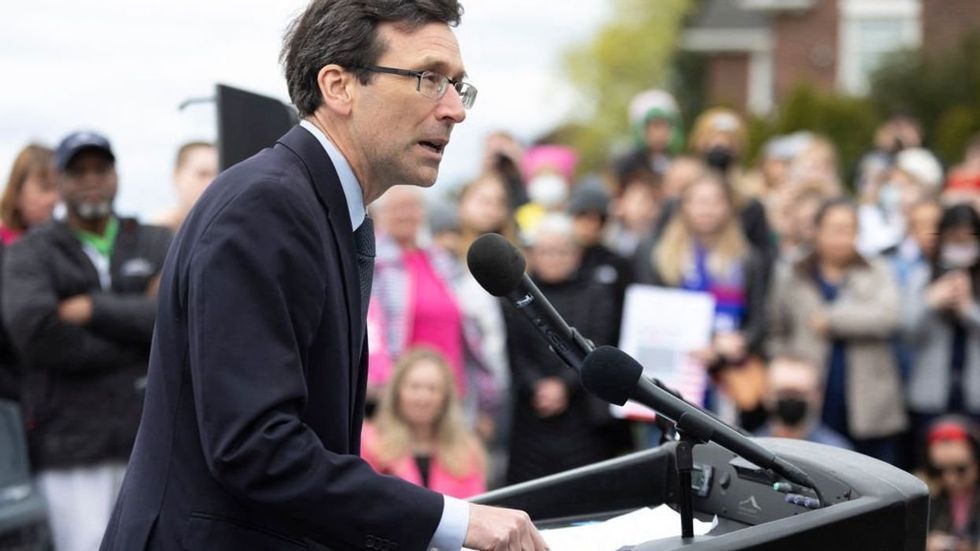
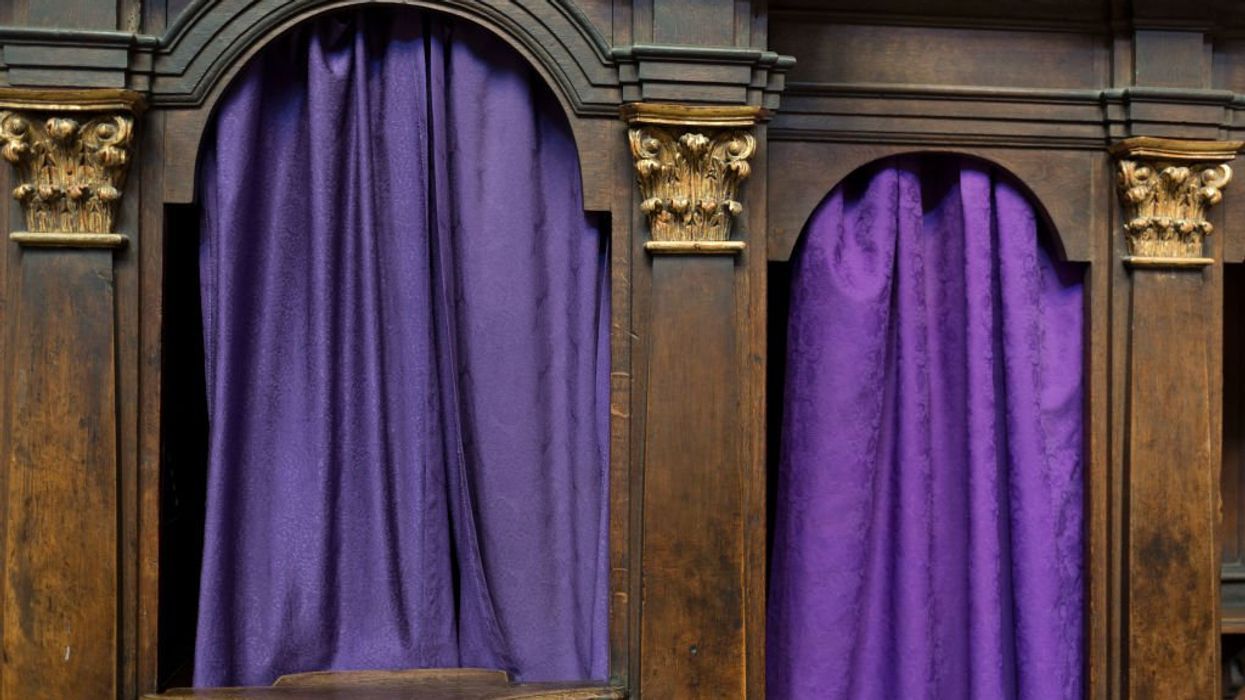
Bob Ferguson, the Democratic governor of Washington state and a self-identifying Catholic, ratified a bill in May that would have compelled Catholic priests to break the seal of confession or face up to 364 days in jail and a $5,000 fine.
As it would invite the government into the confessional and put priests at risk of automatic excommunication, Catholic bishops in the Evergreen State vowed to defy the law, reassured Catholics in their dioceses that the seal of the confession would remain unbroken, and filed suit on May 18, asking a federal court to block Senate Bill 5375.
The Trump Department of Justice joined the fight last month, intervening in the bishops' case against the State of Washington and emphasizing that SB 5375 "deprives Catholic priests of their fundamental right to freely exercise their religious beliefs, as guaranteed under the First Amendment."
'Here, clergy were explicitly singled out.'
A Biden judge broke from custom on Friday, issuing an injunction that hurt rather than aided the Democratic cause.
U.S. District Judge David Estudillo temporarily blocked the law, noting that "there is no question that SB 5375 burdens Plaintiffs' free exercise of religion" by placing clergymen "in the position of either complying with the requirements of their faith or violating the law."
The Catechism of the Catholic Church maintains that "every priest who hears confessions is bound under very severe penalties to keep absolute secrecy regarding the sins that his penitents have confessed to him" and "can make no use of knowledge that confession gives him about penitents' lives."
RELATED: Wake-up call: This is what happens when Christians are afraid to offend
The Code of Canon Law cited in the bishops' complaint similarly underscores the inviolability of the sacramental seal, noting further that a "confessor who directly violates the sacramental seal incurs a latae sententiae — automatic — excommunication reserved to the Apostolic See."
In the amicus brief it filed last week, the U.S. Conference of Catholic Bishops noted that by driving priests into Washington jails or out of the church, Democrats' law "would also be catastrophic for parishioners, who will be left with fewer clergy to administer the Sacrament of Confession to them."
Estudillo appeared to agree with the argument raised by both the bishops and the Justice Department that the law is not neutral and generally applicable.
SB 5375 will require any person operating in an official supervisory capacity with a nonprofit or a for-profit organization who has "reasonable cause to believe that a child has suffered abuse or neglect" to notify law enforcement or the Department of Children, Youth, and Families.
However, as acknowledged in the final bill report, the Democratic law mandates no one except for members of the clergy to report abuse when that information is obtained solely as a result of a privileged communication.
"SB 5375 modifies existing law solely to make members of the clergy mandatory reporters with respect to child abuse or neglect," wrote Estudillo. "However, other groups of adults who may learn about child abuse are not required to report. Parents and caregivers, for example, are not mandatory reporters."
The judge noted that another piece of legislation set to go into effect with SB 5375 on July 27 will also exempt university attorneys from divulging child abuse information if it has something to do with their clients.
"A law is not neutral if the government 'proceeds in a manner intolerant of religious beliefs or restricts practices because of their religious nature,'" Estudillo noted. "Here, clergy were explicitly singled out."
The judge indicated there were likely less restrictive and more effective means of helping protect children and highlighted Catholic Church efforts already underway that go further in the protection of children than required by state law.
As a result of the Supreme Court's ruling in Trump v. CASA Inc., which severely restricted the reach of judicial injunctions, Estudillo indicated he had to limit relief to the individual plaintiffs in the case. There was, however, a catch.
'In a nation where anti-Catholic bigotry is on the rise, this ruling is a hopeful reminder.'
Estudillo noted that the bishops — Archbishop Paul Etienne of the Archdiocese of Seattle, Bishop Joseph Tyson of the Diocese of Yakima, and Bishop Thomas Daly of the Diocese of Spokane — have a responsibility for the administration of the sacraments and the discipline of the priests across their dioceses, and that absent an injunction that applies across all three dioceses, "they — as individuals — cannot fulfill their religious responsibility by ensuring that the priests within their dioceses maintain the sacramental seal."
Accordingly, the judge determined that complete relief in this case must apply to all Catholic priests who fall under the administration of Etienne, Daly, and Tyson. As those bishops run the only three dioceses in the state, Estudillo's injunction effectively protects all priests in the state while the lawsuit proceeds.
Kelsey Reinhardt, president of CatholicVote, called the ruling a "major victory for religious freedom" in a statement obtained by Blaze News.
RELATED: Justice Alito issues reminder of what SCOTUS must do, even if unpopular
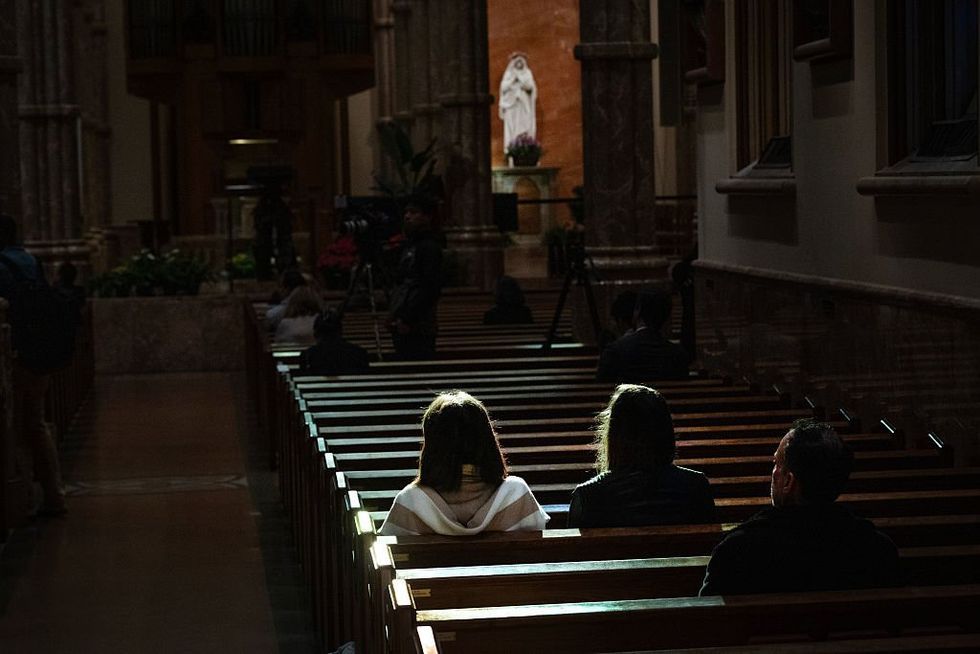
"The Seal of Confession is not only a vital tenet of the Catholic faith, it is a safeguard for the penitent — who must be free to seek God’s forgiveness without fear of exposure," continued Reinhardt. "In a nation where anti-Catholic bigotry is on the rise, this ruling is a hopeful reminder: no American should face criminal penalties for living out their faith. We are grateful for today's ruling and hope that the final outcome of the case similarly reflects our nation's commitment to the First Amendment of all Americans — especially Catholics."
The Becket Fund for Religious Liberty, which represented the lead plaintiffs with the First Liberty Institute and WilmerHale, similarly celebrated the ruling.
"This ruling confirms what has always been true: In America, government officials have no business prying into the confessional," said Becket CEO Mark Rienzi. "By protecting the seal of confession, the court has also safeguarded the basic principle that people of all faiths should be free to practice their beliefs without government interference."
"For centuries, Catholic faithful around the world have sought reconciliation with God through the sacrament of confession," said Jean Hill, executive director of the Washington State Catholic Conference. "This ruling protects that sacred space and ensures that Washingtonians of all religious stripes can live out their beliefs in peace."
The Trump DOJ has separately requested a preliminary injunction, which will be taken up this week.
Like Blaze News? Bypass the censors, sign up for our newsletters, and get stories like this direct to your inbox. Sign up here!
 What’s the holdup? Bureaucratic dysfunction? Always. But the usual muck of politics in the TDS era is at work.
 The Trump administration can effectively end the flow of millions of taxpayer dollars to the abortion giant for one year.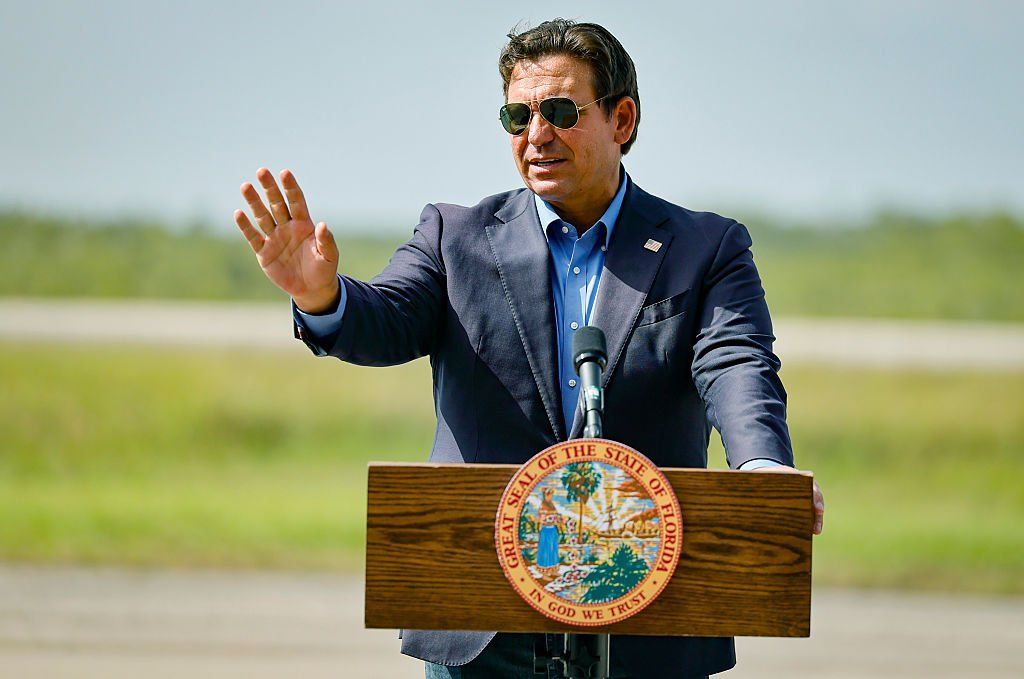
 www.theblaze.com
 thefederalist.com
 www.theblaze.com
 www.theblaze.com
 www.theblaze.com