Reject The System That Stole Your Medical Freedom
 Patients are not free to decide their own care even though medical autonomy is supposedly protected by law.
Used-car buyers beware.
The number you see on an odometer used to mean something. It used to tell a story about wear, usage, and value. Today, that number can be fiction, and you would never know it.
The story the odometer tells should always be compared to the wear on the seats, the condition of the pedals, and the state of the steering wheel.
Modern mileage blockers have changed the game entirely. This isn’t the crude odometer rollback scam from decades ago. This is something far more sophisticated, far more difficult to trace, and far more dangerous for consumers who assume the system still protects them.
This technology doesn’t “roll back” mileage at all. It prevents mileage from ever being recorded in the first place. That is exactly why traditional detection methods fall flat.
These devices plug directly into a vehicle’s Controller Area Network, the digital nervous system that connects every major electronic component in the car. Once installed, the blocker intercepts mileage data before it gets stored across the vehicle’s control modules. The car is still driven, still accumulating wear, still aging in real time, but the digital record stays frozen.
And it is all completely invisible to the usual diagnostic tools. These devices don’t leave evidence because they don’t alter data — they prevent it from being recorded in the first place.
Traditional odometer fraud leaves a trail. Technicians can spot inconsistencies between modules, timestamps that don’t line up, or physical wear that contradicts recorded mileage. But when mileage is never logged, those clues disappear. Every system in the vehicle agrees with itself. The data looks clean, even if it is incomplete.
The result is a whole new way to commit fraud.
Nor do these devices leave any trace behind. They're plug-and-play — no cutting wires or other modifications required. They connect using factory-style connectors and can be removed just as easily.
Be forewarned: The days of “a scan will catch it” are over, especially as this technology gets better. We're already seeing high-end versions engineered for specific vehicles.
The legal line, at least, is clear. Using these devices to misrepresent a vehicle’s mileage during a sale is fraud. It doesn’t matter how advanced the technology is or how undetectable it may be. If the intent is to deceive, it’s illegal.
But the devices themselves exist in a legal gray zone. There are legitimate uses for this technology. Automakers and testing facilities may use mileage blockers during development, performance evaluation, or controlled transport scenarios. In those environments, preventing mileage accumulation can make sense. It preserves test conditions, protects asset value, and isolates variables.
The problem is that non-dealers can easily get hold of these devices too. Federal law bars selling or installing odometer-altering devices with intent to defraud, while California law goes farther — prohibiting any device that causes an odometer to display anything other than true mileage, regardless of intent. In practice, however, variants remain widely available online, typically marketed as diagnostic or testing tools.
RELATED: Illinois wants to track every mile its drivers drive — is your state next?
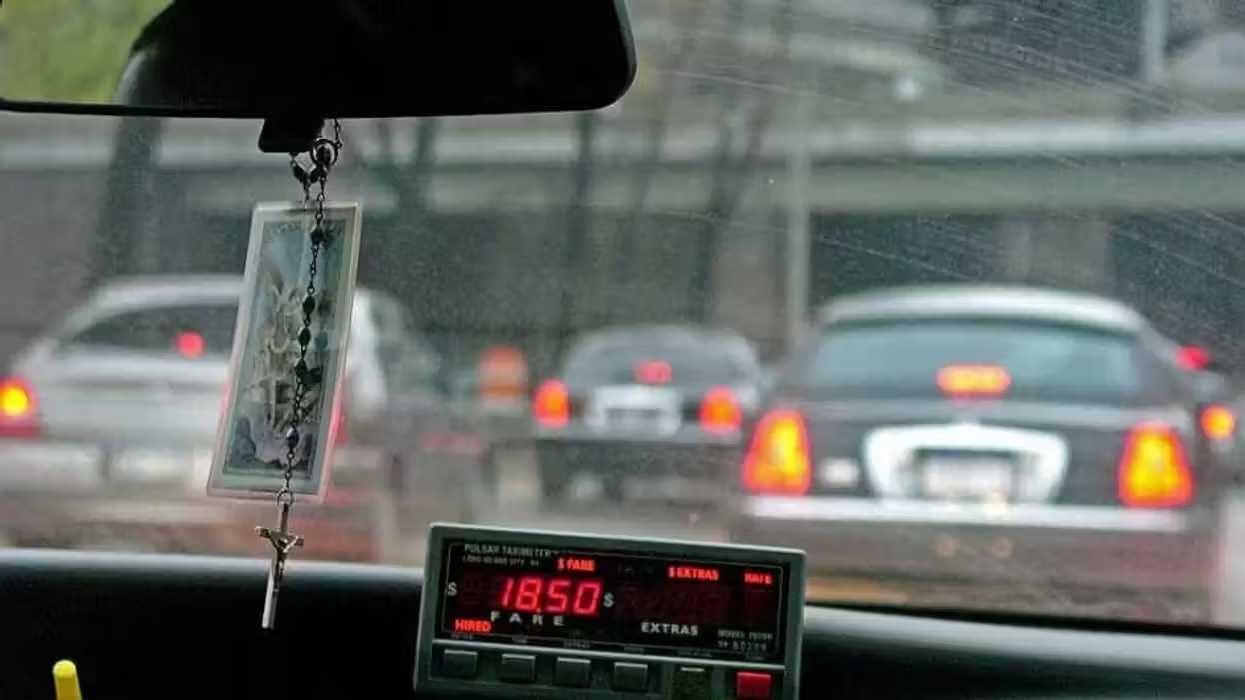
That's why service records, maintenance history, and physical inspection — preferably by a trusted professional — are more important than ever. The story the odometer tells should always be compared to the wear on the seats, the condition of the pedals, and the state of the steering wheel.
Dealers are also feeling the pressure. Liability around mileage accuracy is increasing, and the expectation that a dealership can verify every vehicle’s true history is becoming harder to meet. Insurance companies are adjusting their models as well, particularly when policies are tied to usage or mileage-based risk.
Meanwhile, manufacturers are playing catch-up, exploring new ways to secure vehicle data and detect anomalies that current systems miss. But like every technological arms race, the defense is always reacting to the offense. And right now, the offense has an edge.
The uncomfortable takeaway is this: The number on the odometer is no longer a definitive measure of a vehicle’s life. It’s just one data point, and in some cases, it’s the least reliable one.
That doesn’t mean the system is broken beyond repair. But it does mean consumers need to adjust their expectations. Trust needs to be earned through documentation, inspection, and transparency, not assumed based on a digital readout. Because the technology exists. It works. And in many cases, you won’t see it coming.
Obamacare was supposed to solve the problem of a small minority of people who couldn’t afford health insurance but weren’t eligible for Medicaid. Fifteen years later, Democrats now admit their plans are so expensive that unless taxpayers cover nearly the entire cost, they remain unaffordable.
Instead of regulating and subsidizing the market into insolvency, Republicans should finally offer a bold alternative to the largest sector of the economy and the most expensive line in a household budget.
$40 billion a year goes to insurers to pad numbers and keep insolvent plans alive.
News of a possible government shutdown dominates headlines, but few understand what triggered the standoff over fiscal year 2026 funding. Democrats insist that Biden’s COVID-era expansion of Obamacare subsidies be extended or made permanent. In other words: more debt to prop up a broken system. Just what we need.
Through the 2021 COVID bill and the Orwellian-named 2022 Inflation Reduction Act, Democrats raised the income cutoff for subsidies from 400% of the federal poverty line to 800%. That’s roughly $300,000 for a family of five. The change placed nearly everyone outside employer coverage under government subsidies. Millions now pay nothing for premiums. The bill goes straight to the national debt.
Insurers responded as any vendor feeding at a public trough would: They raised prices. Family premiums have jumped 20%-25% since 2021, with another 6.5% hike expected next year — the largest increase in 15 years. Because government, not consumers, is now the customer, companies treat subsidies as free money. The result: Health care drives the deficit spending that makes everyday living more expensive.
Small businesses suffer most. Employer plans aren’t subsidized, so workers lose potential wage increases to soaring premium costs. Since 2014, family premiums have climbed 52%, the worker’s share 31%. Deductibles for individual plans have surged 53%, reaching $1,787 in 2024.
The grift goes farther. Paragon Institute data shows that nearly 12 million enrollees never used their coverage. Before Biden’s credits, only 4 million filed no claims. Today, 45% of the 24.3 million exchange “enrollees” are phantom accounts — people auto-re-enrolled, some without even knowing it.
Once Biden pushed full subsidies for those earning up to 150% of poverty — 55% of 2025’s enrollees — brokers saw a jackpot. With clients paying nothing, brokers collected thousands in commissions per sign-up. Some pocketed $6,000 per plan. Insurers happily billed the government while HHS looked the other way. Paragon estimates that 6 million people received full subsidies despite earning above the threshold.
That means $40 billion a year goes to insurers to pad numbers and keep insolvent plans alive.
RELATED: Medicaid for millions, misery for the middle class
The real fix is simple: Stop inflating prices with subsidies and break the insurance cartel.
With more than 70 million already pushed onto Medicaid, why not put everyone else into one competitive market where consumers choose freely and insurers compete with unregulated plans?
Trump and congressional Republicans should counter Democrats’ proposal with a market-based plan that:
Federal health spending has ballooned from $85 billion in 1987 to nearly $1.5 trillion today — double since Obamacare. Employer-based insurance, warped by government tax policy, adds another $1.1 trillion. More subsidies will only deepen the hole.
Republicans should seize the chance to present a real alternative: consumer choice, price transparency, and competition. That’s the only way to bring health care costs down without bankrupting families or the nation.
Last week, a bipartisan group of senators introduced legislation on drug prices that specifically targets pharmacy benefit managers, exactly as Big Pharma prefers. Pharmaceutical companies have spent years trying to convince the public and policymakers that PBMs are the bad guys in the prescription supply chain, shadowy middlemen inflating prices and hurting innovation. That narrative is convenient, but it is also wrong. PBMs are introducing competition, eliminating waste, and driving down prices.
Which is precisely why Big Pharma wants them out of the way.
The truth is that pharmacy benefit managers are effective. And that is exactly why drugmakers are going after them.
The pharmaceutical industry spends more money than any other sector to sway government policy. In 2024, it poured $90 million into campaign contributions and nearly $400 million into lobbying — much of it through former government officials now on the payroll. Drugmakers also shelled out a whopping $11 billion on advertising, a sum that conveniently buys more than consumer attention. It pressures media outlets to look the other way, a racket the Trump administration is finally moving to rein in.
After the black eye of the opioid crisis and the COVID-19 debacle, Big Pharma needs a scapegoat for high drug prices. It found one in a quiet, little-known player most Americans have never heard of, much less understood.
But the numbers are clear. A recent study shows pharmacy benefit managers deliver at least $145 billion in net value every year, even after costs. Compared with a system where manufacturers dictate prices, PBMs create an additional $192 billion in value across the economy. That money doesn’t vanish into corporate coffers. It flows back into businesses, households, and the wallets of working Americans.
PBMs accomplish this by negotiating directly with manufacturers and pharmacies. They aggregate buying power for millions of people. They secure rebates and discounts that most individual plans could never get on their own. In 2020, PBM-managed rebate structures created $51 billion in value for patients and plan sponsors. That is a competitive market in action.
PBMs are expected to save health plans and consumers about $1.2 trillion over the next 10 years, averaging $1,154 per person per year. And for every dollar spent on PBM services, the system saves $10 in return. By steering patients toward generics and bio-similars, PBMs helped the health system save $445 billion in 2023 alone. That is what efficiency looks like.
Perhaps more importantly, they improve health outcomes. When patients can afford their prescriptions, they are more likely to take them. That means fewer hospitalizations and fewer emergency room visits. PBM-driven programs have led to as much as a 16% increase in medication adherence and a 10% drop in inpatient admissions.
RELATED:How MAHA can really save American lives

It’s an obvious good to have healthier Americans. But it’s also good for a productive economy.
By lowering premiums and drug costs in public programs, PBMs save taxpayers money as well. This alone accounts for $47 billion in annual savings. And by accelerating patient access to new therapies early in the patent cycle, PBMs support pharmaceutical innovation instead of stifling it.
PBMs currently manage 95% of retail prescriptions and serve 91% of plan participants. That’s because they work. Businesses in the free market use services they value. And they value PBMs because they allow employers to offer more affordable coverage without sacrificing quality.
The truth is that PBMs are effective. And that is exactly why drugmakers are going after them. PBMs bring down net prices and demand accountability. That cuts into Big Pharma’s profit margins. So the industry has launched a campaign to reframe PBMs as a problem rather than a solution.
For example, a Biden-era Federal Trade Commission report that painted PBMs in a negative light should be viewed with skepticism. Even FTC Commissioner Melissa Holyoak emphasized that the report ignores the hard evidence of PBM-driven savings and warned that it was “a premature and deficient report,” adding, “Our job is not to score cheap points for transient political favor.”
“Though facile arguments that rely on ideologically loaded buzzwords such as ‘control’ or ‘power’ may stir emotions and make for entertaining social media posts and television interviews, ideological buzzwords are no substitute for rational, evidence-based research,” Holyoak said.
Sadly, some lawmakers are swallowing Big Pharma’s spin. Bills moving at both the federal and state level would gut PBMs — and hand drugmakers exactly what they want. Even a Brookings Institution analysis found that targeting PBMs won’t lower costs and would only weaken bargaining power against manufacturers.
That isn’t reform. It’s malpractice. Weakening the only players who force price discipline amounts to doing Big Pharma’s bidding at the expense of patients.
This fight isn’t about patients versus middlemen. It’s about competition versus monopoly. It’s about market discipline versus unchecked corporate power.
PBMs work because they negotiate, they drive better drug choices, and they deliver real value. When the most powerful industry in America is desperate to kill them off, you don’t need a think tank study to see what’s at stake. That fact alone tells you everything you need to know.
Americans aren’t stupid. Polls show that only 18% have a favorable view of the pharmaceutical industry, while 60% hold a negative opinion. Though hospitals fare better, their rating is also declining — and it’s no wonder.
Recent reporting from the Guardian has shed light on the predatory tactics used by monopoly hospitals like Parkview Health in Indiana. These institutions exploit patients when they are most vulnerable, charging exorbitant prices with little oversight or accountability.
Banning prior authorization could cost patients and taxpayers billions of dollars.
Rising health care costs are affecting hundreds of Hoosiers. In his 2025 State of the State address, Gov. Mike Braun acknowledged that many families worry about affording necessary medical care. Meanwhile, the reasons behind the relentless price increases have remained unclear — until now.
News reports reveal that regional hospitals have tapped into what they see as “unlimited dollars” by pushing unnecessary, high-cost treatments. These findings help explain why health care prices continue to spiral out of control.
A heroic whistleblower — a former doctor — has revealed one of the health care industry’s dirtiest secrets: Doctors regularly prescribe invasive surgeries for minor issues to secure bigger bonuses. “Somebody comes in with knee arthritis and basically they’re having pain, but they haven’t had any other treatment,” he told the Guardian. “These guys will jump right to a knee replacement surgery.”
Another Parkview employee, an office manager who worked in the system for over a decade, explained why doctors would do such a thing: “The more you code, the higher you code, the more credit you get, which would translate to bonuses.”
This is unacceptable. Hoosier doctors are penalized for choosing safer, lower-cost options over the highest-cost ones — even if they’re harmful to patients — just to pad Parkview’s $1.66 billion in reserves.
This pattern isn’t limited to surgeries. Research shows that 34% of older adults are prescribed potentially inappropriate drugs, which can pose serious health risks and needlessly drive up costs.
Fortunately, prior authorization serves as a critical safeguard against unnecessary and costly medical treatments. This process requires doctors to submit clinical information to a patient’s insurance company before approving expensive or unusual procedures and medications. By rejecting inappropriate requests, insurers help protect patients from unnecessary care and prevent billions of dollars in wasted health care spending.
Some Indiana lawmakers want to ban or severely limit prior authorization despite its benefits. But the state legislature has no reason to hinder or dilute this critical patient protection from the health care industry’s dirty money-making scheme.
While doctors may find prior authorization paperwork frustrating, it plays a vital role in preventing waste, fraud, and abuse — problems that plague the health care system. An estimated 25% of all health care spending, roughly $935 billion annually, is wasted. Eliminating prior authorization in private insurance could saddle Hoosier patients and taxpayers with billions in unnecessary costs, placing an even greater financial burden on working families and small businesses.
Indiana is already experiencing a $1 billion Medicaid shortfall. The state cannot afford an additional $6 billion in health care costs over the next decade by banning prior authorization. Yet the legislature is still considering it.
The Indiana Senate Appropriations Committee has advanced a bill to limit the use of prior authorization in state health plans, but key provisions were stripped from the original proposal due to fiscal concerns.
This problem extends beyond Indiana. Lawmakers nationwide should focus on real solutions to our health care crisis rather than handing out favors to bad actors. Hospitals should be incentivized to serve their communities, not enabled to exploit them.
State Farm announced Wednesday that it plans to drop 72,000 insurance policies in California, citing inflation and several other issues.
According to a recent State Farm press release, the insurance company will either withdraw or not renew tens of thousands of policies "on a rolling basis over the next year, beginning on July 3, 2024." The decision will impact homeowners, business owners, commercial apartments, and residential community associations.
The insurance company stated that it is "working to ensure its long-term sustainability in California," noting that the non-renewals and withdrawals "represent just over 2% of State Farm General's policy count" in the state.
"This decision was not made lightly and only after careful analysis of State Farm General's financial health, which continues to be impacted by inflation, catastrophe exposure, reinsurance costs, and the limitations of working within decades-old insurance regulations," State Farm's press release read.
The company said, "It is necessary to take these actions now."
California Insurance Commissioner Ricardo Lara responded Friday to State Farm's recent announcement.
"This is a real crisis," Lara told KABC's Eyewitness News. He stated that he would like to review the company's finances.
"Insurance companies are not like utility companies," he explained. "By law, they don't have to be here, and when we try to overregulate, we'll see what happened after the Northridge earthquake, when the legislature came in and tried to overregulate, and they no longer write earthquake insurance in California."
According to Lara, the current model insurance companies use to assess risk is "a black box."
"We're going to change that to be much more transparent," he declared. "We bring the risk down in these communities, we keep insurers writing, then you get more insurers writing, you bring down the cost."
Individuals whose policies are impacted by State Farm's latest announcement are encouraged to notify the California Department of Insurance.
"We will make sure we have an insurance expert with you so that we help you transition and connect you with insurance companies who are writing policies in California," Lara added.
Carmen Balber, with Consumer Watchdog, told KABC that the insurance provider's decision to cancel tens of thousands of policies demonstrates that Lara's "plan is not working."
"We have been urging for years now that California require insurance companies who want to sell home or auto insurance in California, sell to everyone who does the right thing and it protects their homes. We urge the insurance commissioner to support that policy change, which needs to go through the legislature," Balber stated.
In 2022, Allstate stopped providing home insurance policies to new California customers, citing increased wildfire risks and an uptick in construction costs, the Associated Press reported.
"The cost to insure new home customers in California is far higher than the price they would pay for policies due to wildfires, higher costs for repairing homes and higher reinsurance premium," Allstate stated at the time.
Like Blaze News? Bypass the censors, sign up for our newsletters, and get stories like this direct to your inbox. Sign up here!

 Republicans should stop playing into Democrats’ hands and start turning their attention toward reducing the underlying cost of health care.

 Gov. Newsom is abusing the Medicaid system to pay for illegal immigrants’ health care and taking more money from taxpayers in other states.
 thefederalist.com
 www.theblaze.com
 www.theblaze.com
 thefederalist.com
 www.theblaze.com