![]()
Iran's streets continue to erupt in one of the most intense nationwide uprisings since the 1979 revolution. Thousands have been killed, tens of thousands arrested, and a brutal regime crackdown with live fire, mass detentions, and a near-total internet blackout has largely smothered visible protests for now. And yet whispers of regime fragility grow louder.
But there's more to this story than meets the eye. Iran’s real vulnerability, says Glenn Beck, lies not in its inability to squash a protest movement but in its oil-dependent economy, propped up by shadowy deals that could unravel overnight.
Glenn breaks it down brilliantly with a simple, chilling apple farmer analogy that exposes how global banks and China's "teapot" refineries have kept the regime afloat through sanction-skirting barter schemes ... until the buyer suddenly says "no more."
Glenn’s story begins with an apple farmer named Mo and an apple buyer named Ming.
“[Mo] starts out small. He has a few trees, a few crates. He works hard and everything, and he reinvests all the time. He plants more trees. He buys more land. He takes out loans for trucks and storage and refrigeration,” Glenn begins.
His business keeps growing and then “one day something incredible happens. A massive single grocery chain [run by Ming] picks up Mo's apples — not a few apples, all of the apples. Which is good because what I didn't tell you about Mo is he thinks he's a good guy, but he's pissed every other apple store off in the world,” he continues.
Ming tells Mo his plans to “refine” the apples into “apple cider and apple juice.” Mo, thrilled that now “demand is guaranteed,” expands even more.
“The trucks are financed. The warehouses are leased. The future looks locked in,” says Glenn.
But then one day, everything comes to a screeching halt. Suddenly “Ming says, ‘Yeah, we can't take any more apples. We're at capacity.”’
This news wrecks Mo’s world – without Ming, there’s nothing to keep his business empire afloat.
Almost immediately, apples begin to pile up, and the trucks loaded with supplies are parked. Then “the police are like, ‘Why are all these trucks on the sides of the roads?’ ... Then they realize, ‘Wait a minute, you don't have a license to ship apples. In fact, you don't have a license on this truck,”’ Glenn continues.
It turns out Mo hasn’t been making any money from his apple farm because Ming has been paying him in equipment and infrastructure the entire time. Mo’s business collapses immediately because he never actually owned anything.
“The banks did,” says Glenn — not because they trusted Mo but because they trusted Ming, who took out the insurance policies.
“Ming is actually the refinery in China, and Mo is the oil in Iran,” he finally reveals.
The banks and insurance companies knew that China couldn’t legally purchase Iranian oil because there’s an embargo on it. But they were perfectly fine with a barter system — where China provided goods, services, and infrastructure in exchange for oil. As long as there was “no money changing hands,” the banks would sign.
This prospect is already enough to give Glenn “a brain aneurysm,” but sadly the story takes an even darker turn.
“The farmer Mo — he has sons, and each one ran a different part of his farm,” he says, returning to his analogy.
Ming’s sudden decision to bail stirs up tension in Mo’s family.
“One son says, ‘Sell the land while it's worth something.’ Another says, ‘No, hold on — the store might come back.’ Another one says, ‘No, you know what? I'm not with either of you’ and starts moving equipment out of the barn in the middle of the night, and he's just going to get onto a plane and disappear at some point,” says Glenn.
“This is when countries go down because each son stops asking how do we save the farm, and they start asking how do I get out before it collapses. The farm doesn't change hands in a ceremony. It just empties out.”
It starts with Mo’s sons, then the farm workers, and then the security team. Protests erupt outside Mo’s gates, and he is forced to cope with the fact that his apple farm has rotted from the inside out.
“This is what's happening in Iran,” says Glenn.
To hear more of his analysis, watch the video above.
Want more from Glenn Beck?
To enjoy more of Glenn’s masterful storytelling, thought-provoking analysis, and uncanny ability to make sense of the chaos, subscribe to BlazeTV — the largest multi-platform network of voices who love America, defend the Constitution, and live the American dream.

 It seems that Western feminists are only interested in discussing women’s rights when they can blame it on Trump or Israel.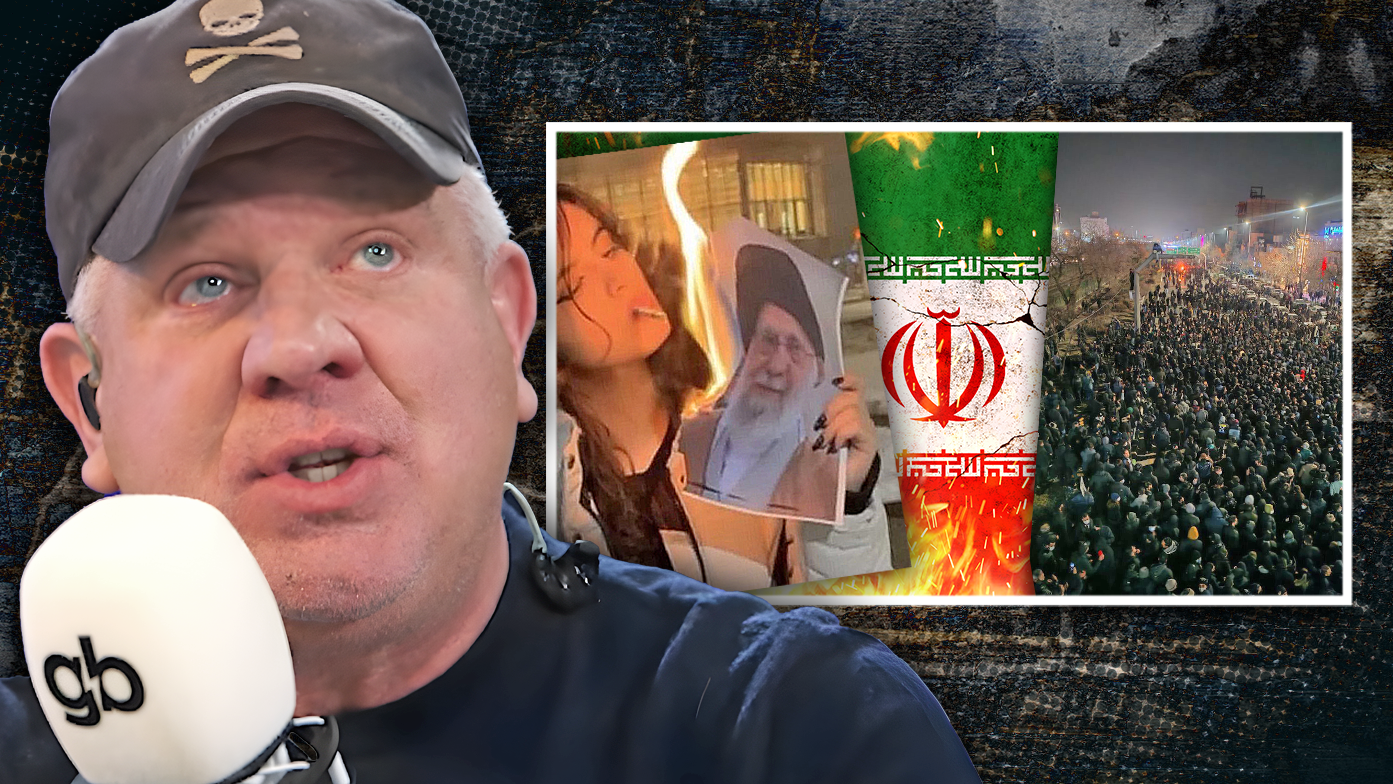
 Corporate journalists have a long history of telling lies that benefit authoritarian regimes to unsuspecting Westerners. This must stop.
 It’s a tactic of our enemies to fan flames of racial division in America to distract from the abuses of their own regimes.
 www.theblaze.com
 www.theblaze.com
 www.theblaze.com