Iran outright rejects Trump's peace plan, calling it 'excessive' and a 'ploy'
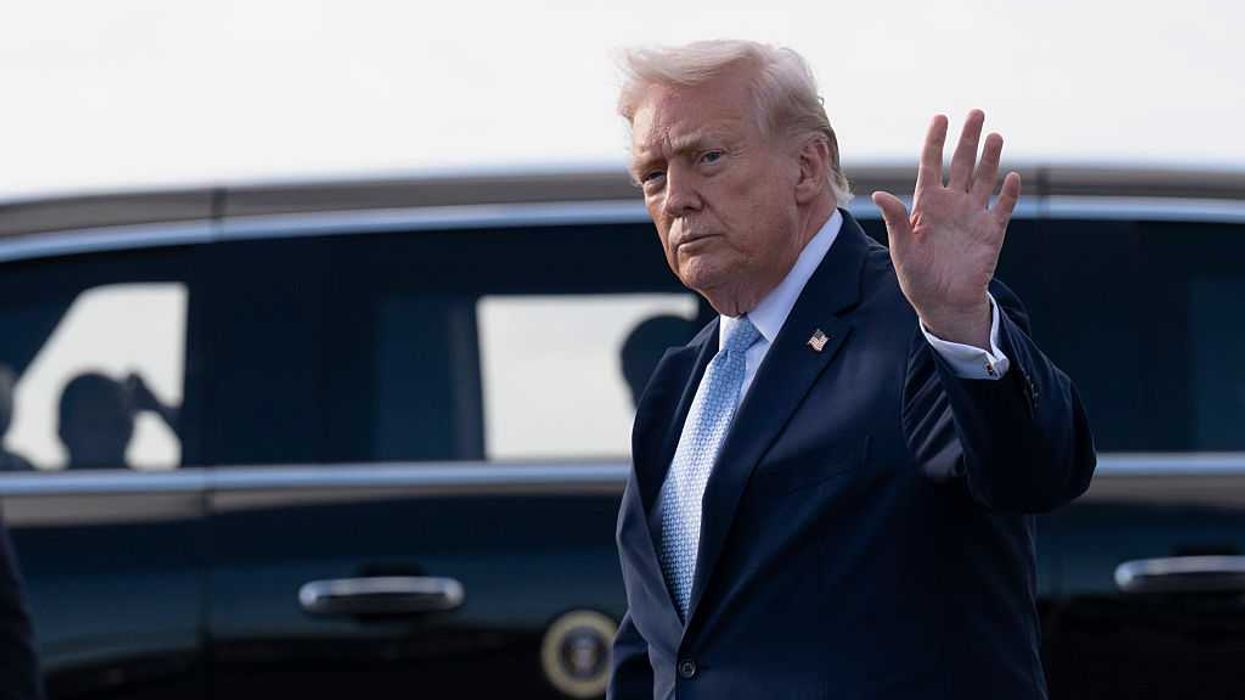


As the conflict with Iran stretches into the fourth week and shows little sign of stopping, the United States has reportedly submitted a peace plan to the Iranians. However, the plan has hardly been well-received by the Iranians, whose spokesperson even mocked the United States' latest actions.

The United States reportedly proposed a 15-point peace plan on Tuesday for the Iranians to consider.

'Have your internal conflicts reached the point where you are negotiating with yourselves?'

The New York Post, citing a report from Israel's Channel 12, gave an outline of the proposed plan. The plan contains 15 points, most of which intend to further proscribe Iran's nuclear capabilities and its projection of power through proxies in the region. It also demands that the Strait of Hormuz remains open.

The United States and its allies would in return offer assurances to Iran in the rebuilding of the country after peace is agreed to.

RELATED: 'TOTAL RESOLUTION': Trump orders temporary suspension amid Iran peace talks
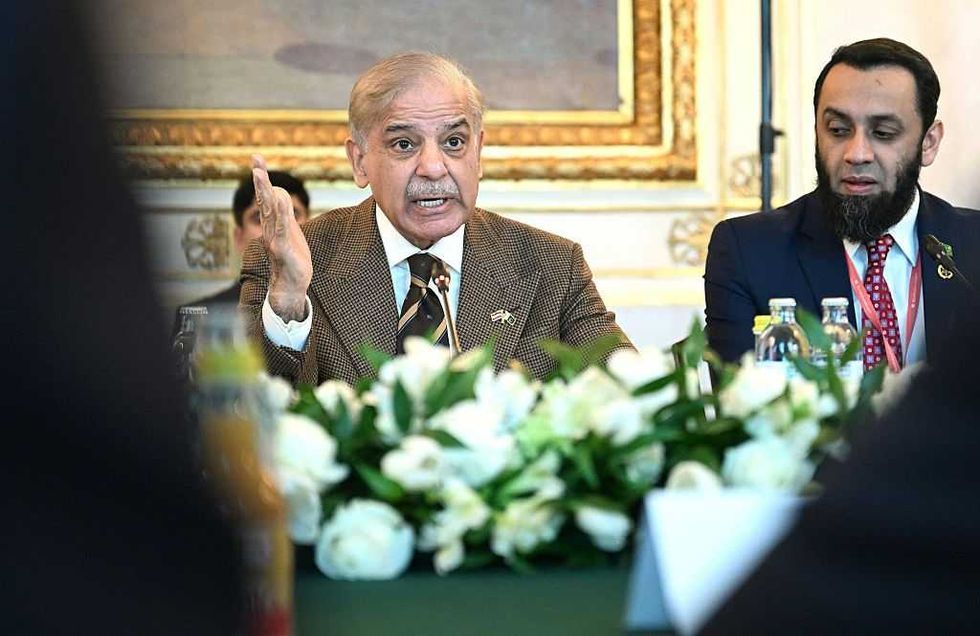
Pakistani Prime Minister Shehbaz Sharif. Photo by HELMUT FOHRINGER/various sources/AFP via Getty Images.

However, an Iranian spokesperson mocked the United States' latest offer to negotiate, saying Iran is unwilling to reach an agreement after being fooled by the current administration's past offers of diplomacy.

According to the Post, Lt. Col. Ebrahim Zolfaghari said on a video shared by the state-run Fars News Agency, "Someone like us will never come to terms with someone like you. Not now, not ever."

“The one claiming to be a global superpower would have already gotten out of this mess if it could. Don't dress up your defeat as an agreement. Your era of empty promises has come to an end," Zolfaghari said.

Zolfaghari reportedly went on, asking, "Have your internal conflicts reached the point where you are negotiating with yourselves?"

Wednesday morning, Axios reported that Iran has officially rejected the 15-point peace proposal, citing Iran's English-language Press TV.

An Iranian official reportedly told Press TV that the Iranians see the proposal "as a ploy," calling the terms "excessive." The official added that the war would only end "on Tehran's own terms and timeline."

Axios, citing Press TV's report, noted that Iran provided a counterproposal that consists of five conditions:

  1. Complete halting of attacks and assassinations by the U.S. and Israel;
  2. The establishment of mechanisms to ensure the war doesn't resume;
  3. Compensation for the damages caused during the war;
  4. Halting all U.S. and Israeli attacks against Hezbollah in Lebanon and pro-Iranian militias in Iraq; and
  5. Receiving international recognition and guarantees for Iran's authority over the Strait of Hormuz.
Like Blaze News? Bypass the censors, sign up for our newsletters, and get stories like this direct to your inbox. Sign up here!

A free Iran starts with women in charge


The death of Ayatollah Ali Khamenei, who ruled Iran with brutality for nearly four decades, has thrown the Persian Gulf country into a historic moment of uncertainty — and possibility. His welcome passing shattered the familiar, oppressive order and forces a question Iran can no longer postpone: What comes next?

That question arises as Iran sits at the center of a deeper shift that may prove historic and generational. Much remains uncertain: how change will unfold, how long it will take, and what form it will assume. One principle, however, should guide every serious observer: Lasting change in Iran must come from within, driven by Iranians themselves and their organized resistance. Anything imposed from abroad or engineered through outside force will fail.

Iran’s destiny will be shaped by Iranians: by students, workers, professionals, and above all by women who refuse to accept a future defined by repression.

For more than four decades, Iran’s clerical establishment has displayed many vulnerabilities. One stands out as both defining and revealing: institutionalized misogyny. This is not merely a social failing. It is a governing doctrine.

That doctrine has become the regime’s weakness.

Women have been among the primary victims of Iran’s repression. They have also become the most dynamic force challenging it. Across the country, women no longer merely participate in dissent. They drive it. In city after city, they confront the regime’s most repressive forces. In many instances, they do not just join protests; they lead them.

One striking feature of this movement is its intergenerational character. Observers rightly note the youth of Iran’s protesters. But mothers march alongside daughters, and that image captures something profound about Iran’s national awakening: The demand for freedom is no longer confined to one age group or social class. It has become a shared national aspiration.

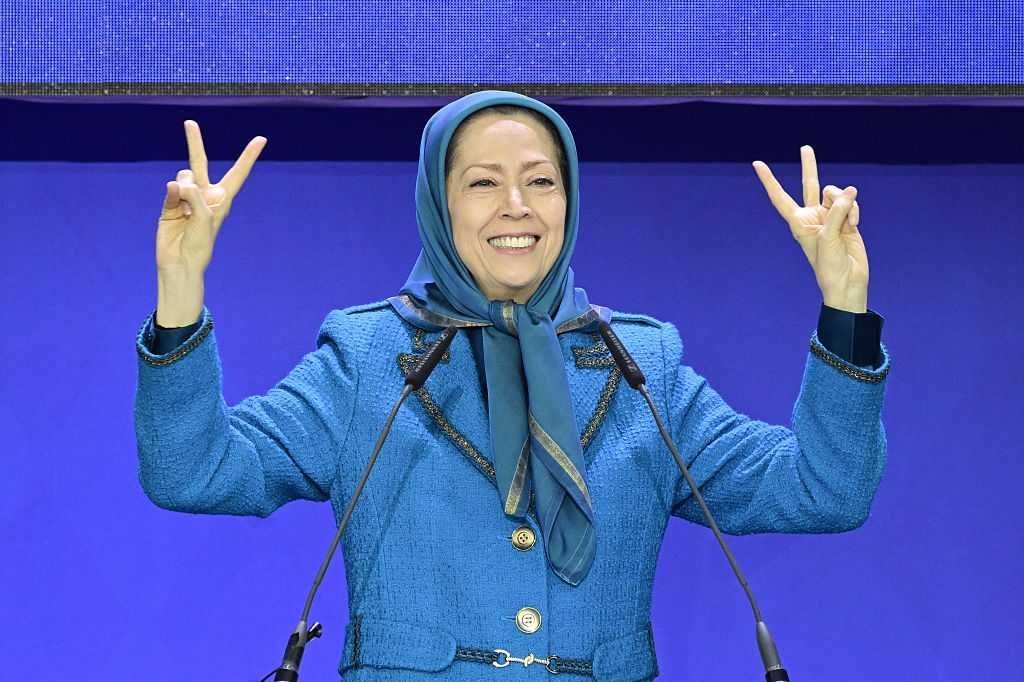
In moments of historic transformation, leaders emerge whose lives embody a movement’s aims. In Iran’s struggle, one such figure is Maryam Rajavi, president-elect of the National Council of Resistance of Iran. For nearly half a century, she has been engaged in Iran’s fight for freedom. Her commitment is personal. She lost one sister to the Shah’s secret police, SAVAK, and another under the rule of the ayatollahs while she was pregnant. Such losses would silence many. For her, they hardened resolve.

Rajavi’s significance lies not only in her story but in her vision. Over decades, she has helped cultivate a generation of women within Iran’s resistance — women who now occupy leadership roles, organize networks, and sustain activism under extreme repression. Tens of thousands of women affiliated with her movement have died in the struggle for freedom. That sacrifice, measured in lives rather than slogans, lends credibility to the movement she represents.

This is not symbolic inclusion. It is a structural transformation. Women at every level of opposition challenge the regime’s core assumption that power must remain exclusively male.

At the center of Rajavi’s platform is a 10-point plan outlining a democratic future for Iran. At its heart sits a principle the current regime finds intolerable: gender equality. In that vision, equality is not a concession. It is a foundation — essential to political legitimacy, economic progress, and justice. Women’s rights are not a peripheral demand; they are a declaration that a future Iran must break with decades of repression.

RELATED: Iran’s freedom fighters put America’s No Kings clowns to shame

Photo by Thierry Monasse/Getty Images

Sometimes a single image conveys what volumes of analysis cannot. Few signals would announce a new era more clearly than the emergence of a modern-minded Muslim woman as a central leader of democratic change. That would mark more than a political transition. It would signal renewal — a break with tyranny and a declaration that Iran’s future belongs to all its citizens.

History offers countless examples of societies that seemed immovable until, suddenly, they were not. Authoritarian systems often look strongest just before they weaken and most permanent just before they dissolve. The forces now stirring within Iran — especially the courage and leadership of its women — suggest the country has entered such a moment.

The lesson for the world is straightforward. Iran’s destiny will not be shaped by foreign intervention or external engineering — and it will not be served by fake leaders like Reza Pahlavi, who rely on social media and bots for relevance. Iran’s destiny will be shaped by Iranians: by students, workers, professionals, and above all by women who refuse to accept a future defined by repression.

Their struggle is not only national. It reflects a universal truth: The desire for freedom, once awakened, cannot be permanently suppressed.

The direction of Iran’s transformation is becoming clearer. And if history is any guide, when that transformation reaches its turning point, it will bear a defining hallmark: It will have been led, inspired, and sustained by women.

FACT CHECK: Video Claims To Show Yemeni Missiles Being Launched At Israel

A video shared on X claims to show Yemeni missiles being launched at Israel. After the launch of suicide drones by #Iranians towards #ısrael, Yemen has also launched missiles at Israel. Tel Aviv is on high alert and Iron Dome is ready. World War III or not, but this will definitely have an impact on oil […]

Iran Grilling Americans On ‘Discrimination’ Highlights The Unseriousness Of Our Racial Outrage Machine

It’s a tactic of our enemies to fan flames of racial division in America to distract from the abuses of their own regimes.

Will Biden And ‘The Squad’ Really Stand Up For Women Like Iranian Mahsa Amini?

A woman’s death in Iran has sparked mass protests but little response from the Biden administration or ‘the squad’ of congresswomen.

Biden Claims To Support Iranian Protesters While Propping Up The Country’s Deadly Regime

Following the death of a young woman detained by Iran's morality police, massive protests have broken out all the across the country.