Abdul El-Sayed Refused To Condemn The Islamic Terror Regime That Persecuted My Family Members
 When I see echoes of the radical movement that destroyed Iran crop up in my home, America, am I going to back down? Absolutely not.
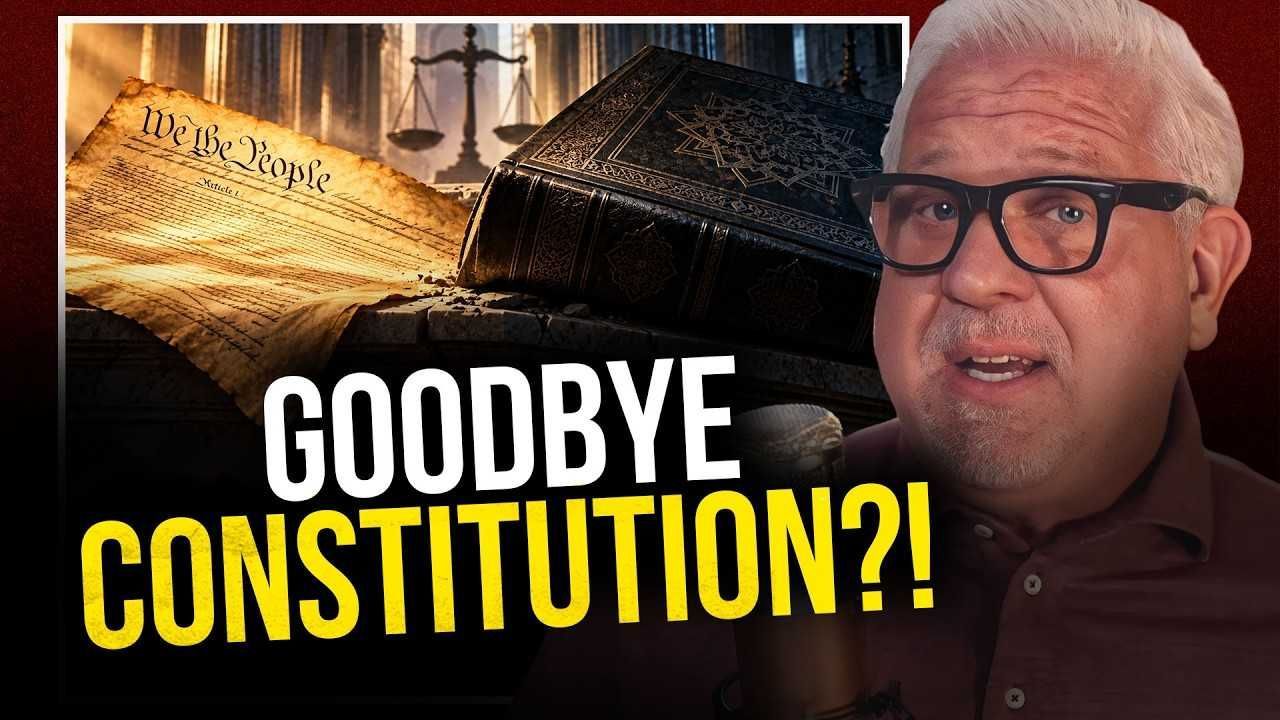
Justin Haskins of the Heartland Institute is sounding the alarm on a recent survey that revealed just how open Americans are to Sharia law.
The poll asked a series of questions regarding the Islamic legal system, and Haskins found that the younger an American is, the more likely he or she is to be in support of it.
“Twenty-one percent of all voters say that they have a somewhat positive view of Sharia law, which is radical. I mean, radical Islam is associated with this,” Haskins tells Blaze Media co-founder Glenn Beck of the first question asked.
“The younger you are, the more likely you are to have a positive view of Sharia law,” he adds.
But the questions only got more intense, and the answers got more alarming.
When they asked, “Would you support a law that requires public schools to teach about the benefits of Sharia law?”
"Eight percent said yes, 76% said no, 16% said not sure," says Haskins
“Which I don’t know how you could not be sure about that. Similar to the last question, the young people's support was much, much higher. Twenty-four percent of 18- to 24-year-olds said yes, they do want that law. Thirty-one percent of 25- to 29-year-olds, around 20% when you get into the late 30s, and it goes down until you get to 3% for people 40 and above,” Haskins explains.
The third question asked was, “If a majority of people in an American town, city, or state were to want Sharia law, would you support a proposal that would allow Sharia to become the legal code for all citizens in that town, city, or state?”
Seven percent said yes, 83% said no, 10% said not sure.
“I mean, this is overthrowing the Constitution. This is overthrowing the rule of law, is overthrowing individual liberty. You have a quarter of young people saying that they would favor that,” Haskins says.
And it’s only downhill from there.
Haskins calls the response to number four “astounding,” which was: “What poses a greater threat to America’s future? Sharia law or America’s alliance with Israel?”
Forty-three percent said Sharia law, while 25% said America’s alliance with Israel.
Bu number five may be the most disappointing.
“Which religious ideology poses a greater threat to America’s future? Sharia law or traditional Christianity?”
“Fifty-five percent said Sharia law. So that’s the majority, but it's only 55%. Thirteen percent said traditional Christianity. Twenty-three percent says neither poses a threat, which I think is a reasonable answer to have. And 9% says not sure,” Haskins explains.
“I mean, this is a pretty straightforward question. It’s either neither, or it's Sharia law. But nobody should be saying traditional Christianity,” he adds.
To enjoy more of Glenn’s masterful storytelling, thought-provoking analysis, and uncanny ability to make sense of the chaos, subscribe to BlazeTV — the largest multi-platform network of voices who love America, defend the Constitution, and live the American dream.
Passengers aboard a Boeing 737 heading to Tel Aviv, Israel, braced themselves when the plane suddenly plunged by 16,000 feet over an alleged hijacking attempt.
A co-pilot stabbed the other pilot on the flight in a 9/11-style attempt to take control of the plane, according to law enforcement officials.
'We’re here during the hijacking of an airplane. At this point, we’ve subdued the terrorists.'
Some of the 174 passengers of the plane, which took off from the United Arab Emirates, recorded cellphone video of the harrowing incident.
"We’re here during the hijacking of an airplane. At this point, we’ve subdued the terrorists," said one passenger on his video.
Some of the videos show passengers with blood on their clothing from confronting the alleged attacker. A passenger said cabin crew and passengers rushed to stop the attack.
"We were either going to crash or be murdered," said another passenger to I24 News. "It was like a terrorist attack in mid-air."
A flydubai spokesperson said in a statement that following the "altercation in the flight deck," the "on-duty flydubai crew travelling on the flight ... diverted and landed the aircraft safely at Tabuk Airport."
"At this early stage, the underlying reasons and motives behind this event are unknown and remain subject to a formal investigation. We urge all parties to refrain from premature speculation while authorities gather the facts," the flydubai statement added.
Sources told the Jerusalem Post that the alleged co-pilot terrorist is believed to be from Oman.
Photos showed that the rudder on the plane was damaged during the landing, which was completed by two off-duty European pilots, the New York Post reported.
"Someone shouted ‘stabbing,’ and my husband understood what was happening and rushed to the front of the plane," a passenger said. "Along with other Israelis, they neutralized the terrorist."
RELATED: NY woman allegedly thanked Allah for 9/11 and plotted to bomb state capitol and White House
The flight was diverted and landed in Saudi Arabia.
Israeli Prime Minister Benjamin Netanyahu confirmed that "all passengers are out of danger" and that "the pilot who stabbed them has been arrested and is currently being questioned by the Saudi authorities."
Some of the videos from passengers can be viewed on social media.
Like Blaze News? Bypass the censors, sign up for our newsletters, and get stories like this direct to your inbox. Sign up here!
Christians need not wait for Washington to settle the immigration debate before sharing the gospel with the people who have already arrived.
Whatever happens next — tighter restrictions or a return to the influxes Democrats encouraged — Hindus and Muslims have made their homes here and established temples and mosques. They are our neighbors. Christians have a duty to evangelize them.
The religions of the world have come to our neighborhoods. We have the honor of sharing Christ with the people who practice them. We should get to work.
We should debate whether a society without a shared foundation can hold together through the modern left’s thin materialistic secularism or resurgent occultism. Obviously, it cannot. We should also challenge what the left proposes to put in place of the Christianity that helped form this country.
But those arguments do not suspend the Christian obligation to share Christ. Hindu and Muslim immigrants have come to a country with a long Christian heritage. They should expect to encounter Christianity here, just as a Christian moving to India would encounter Hinduism or one moving to Saudi Arabia would encounter Islam.
Hindu statues and Islamic calls to prayer now confront Americans with religions they may once have known only from books. What a great opportunity to share Christ!
Evangelism can begin in a conversation at work or school. Christians can visit religious centers, get to know their neighbors, and preach publicly. Whatever the setting, we must understand what the other person believes and explain where Christianity differs.
Hindu traditions include worship of many deities, although Hindu schools understand those deities differently. For some American Christians, a Hindu temple may provide their first encounter with statues used in religious worship rather than displayed in a museum.
We have learned the commandment against making and worshipping idols. Yet our sermons often emphasize spiritual idolatry because bowing before a physical image seems so remote from our lives. Our Hindu neighbors may give us occasion to discuss that commandment in its most literal application.
Some influential Hindu philosophical traditions teach monism: that reality is ultimately one. Advaita Vedanta identifies the true self, Atman, with Brahman, the ultimate reality. The formulation “This Self is Brahman” appears in the Mandukya Upanishad.
Yoga and meditation are practices aimed at realizing the self is God. Reincarnation teaches that our soul has existed from eternity and is on a journey to be freed from the body and reach enlightenment as God.
RELATED: ‘I think they're demons’: Why JD Vance refuses to downplay supernatural evil
The Christian answer to identifying the self with God is direct: God created us. We are not God. Creation had a beginning; only God has existed from eternity. The temptation in Genesis 3:5 promised, “You will be like God, knowing good and evil.”
The distinction between Creator and creation also explains Christianity’s rejection of idols. Paul condemns those who “exchanged the glory of the immortal God for images made to look like a mortal human being and birds and animals and reptiles” in Romans 1:23.
Idolatry calls for repentance. Salvation from that sin comes only through Christ.
Islam presents a different challenge. It has a violent history with Hinduism. It also strongly condemns idolatry. It arose after the Jewish and Christian Scriptures and claims continuity with earlier revelation. Yet it rejects the atonement at the center of the Christian gospel.
Biblical revelation teaches the need for vicarious atonement — a sacrifice on behalf of sinners. In the books of Moses, the Day of Atonement gives this teaching a central place. Passover likewise involves the death of a lamb and the application of its blood so that a household escapes judgment. Christians understand these as signs pointing to Christ, the Lamb of God who takes away the sin of the world.
Islam rejects Christ’s sacrificial death as the means of salvation. The Quran states in 6:164 that no bearer of burdens will bear another’s burden. Muslims emphasize obedience, repentance, and God’s mercy; Islamic teaching also denies that deeds alone secure entry into paradise. The Christian disagreement concerns how God reconciles sinners to himself: through the atoning death of Christ.
The biblical response is that none of our works can ever save us. Even if we became perfectly obedient today — and most of us can admit we cannot — we would still owe a debt for our past sins. Thinking future obedience can erase those sins is like thinking cutting up your credit cards pays off the balance.
God’s perfect justice and perfect mercy must both hold. Simply overlooking sin would leave justice unsatisfied. At the cross, Christ bears the penalty for sin and offers salvation to sinners who cannot save themselves. God remains just while showing mercy.
RELATED: A Christian guide to trolling without sinning

Christianity explains our problem and provides the solution God has given. We need reconciliation with our Creator, and we receive it through Jesus Christ.
Our Hindu and Muslim neighbors may know Christianity chiefly through what their own religious traditions say about it. They may never have read the Bible or heard the gospel explained clearly from Scripture. American Christians can open the Bible with them and make that introduction.
We must prepare for those conversations. Evangelists on social media can make the work look easy, but years of study and practice may stand behind a short video. Read Scripture, understand its teaching, and learn to speak kindly with people who disagree.
Pray for the people you hope to reach. Our duty to share the gospel should lead us to prayer, with fasting when appropriate.
Live the Christian life yourself. You are introducing someone to the true and living God, who offers reconciliation through Jesus Christ. Know that salvation yourself before presuming to explain it to someone else.
Finally, ask questions and listen to the answers. You are speaking with a person. Learn what he believes, what he doubts, and what he understands about Christianity. A religious label cannot tell you all of that.
The religions of the world have come to our neighborhoods. We have the honor of sharing Christ with the people who practice them. We should get to work.
Massachusetts, birthplace of the American Revolution, is considering a new experiment in identity politics. Companion bills in the Massachusetts House and Senate — H.3351 and S.2134 — would establish a permanent commission dedicated to the interests of Muslims in the state. Among its duties would be to “identify and recommend qualified American Muslims for appointive positions at all levels of government, including boards and commissions.” Muslims make up a small percentage of the state’s population of roughly 7 million.
The legislation suits Massachusetts’ identity-politics obsession. It slides effortlessly alongside previous steps to protect the rights of Jews, gays, Asians, and blacks. Except now, lawmakers are proposing to put the state’s imprimatur on one of the world’s most rapacious and cruel belief systems.
The history of Muslim-majority societies offers ample material for examining the relationship among Islam, religious freedom, political authority, and the treatment of minorities.
The proposal should alarm Americans even more than the election of Zohran Mamdani or the proposed development of the Meadow, a mosque-centered, all-Muslim enclave in allegedly red Texas.
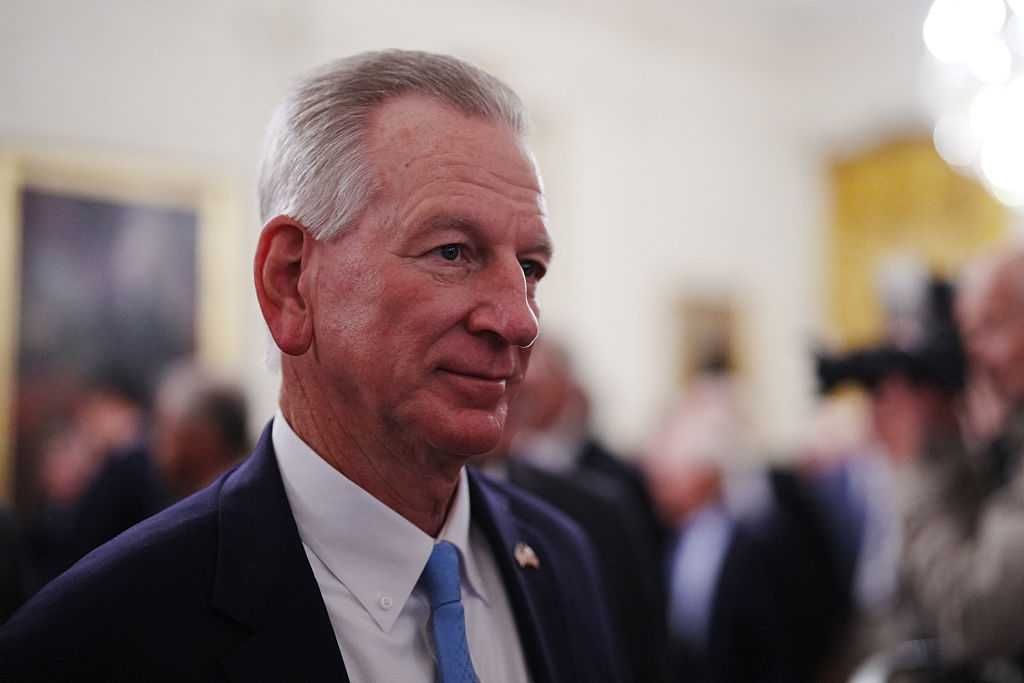
On August 11, former Auburn football coach Tommy Tuberville, a sitting U.S. senator and Republican candidate for governor of Alabama, clapped back at the Massachusetts proposal. He posted on X that no such legislation would ever emerge on his watch in the Yellowhammer State.
Coach Tuberville should do more than post platitudes. If elected, he should seek legislation making Alabama the first state in the nation to formally declare Islamic teaching inimical to the history and tradition of Alabamans and force a constitutional debate over how far a state may go in protecting its religious heritage. And he should be willing to block and tackle for this policy all the way to the Supreme Court.
The Declaration of Independence does not define religious belief alongside its four mentions of a Creator. The Constitution likewise offers no comprehensive definition of religion. American courts have generally avoided establishing a single definition that would determine which faiths count as religions and which do not.
The “history and tradition” approach used by the Supreme Court in other constitutional contexts — most famously in Justice Antonin Scalia’s majority opinion on gun rights in Heller (2008) — offers Tuberville a provocative model for the argument we propose. Heller did not concern religious liberty, and its test does not govern the First Amendment’s religion clauses. But history and tradition are hardly irrelevant to constitutional interpretation.
And the history and tradition of America is deeply Christian. More directly, much of it is Protestant Christian. That is especially true in Alabama, which became a state in 1819 after settlement largely by migrants from other Southern states who brought with them overwhelmingly Protestant religious traditions. Earlier Spanish and French settlement left a Catholic inheritance, particularly around Mobile.
Recent Alabama history gives Tuberville two bright lights to follow. The first is former Alabama Supreme Court Chief Justice Roy Moore. Moore was removed from office in 2003 after refusing a federal court order to remove a Ten Commandments monument from the state judicial building. He was suspended from judicial office again in 2016 over an order concerning same-sex marriage after the Supreme Court’s Obergefell decision. The latter position, by the way, was broadly consistent with the view Barack Obama publicly professed before 2012. As the nation’s biblical foundation crumbles, courts are reconsidering some disputes over Ten Commandments displays, while polling suggests support for some gay-rights positions has plateaued or declined from its peak. Whatever one thinks of Moore himself, arguments once treated as beyond the pale have not disappeared.
The second beacon is Hoover, Alabama, where the Planning and Zoning Commission last December unanimously recommended denial of a rezoning request that would have allowed the Islamic Academy of Alabama and a Muslim prayer center to relocate to Meadowbrook Corporate Park. City planning staff cited concerns including compatibility with the comprehensive plan, traffic, and occupancy projections. The academy subsequently withdrew its application before the Hoover City Council could make the final decision.
The issue should resonate with Tuberville because his erstwhile hometown, Auburn, will soon face its own debate. Tuberville should make clear what role, if any, he believes the state should play when Alabama localities confront such controversies.
In Montgomery, Tuberville could begin by forcing a debate over a history lesson the late Charlie Kirk gave in 2024: America’s founding political culture was overwhelmingly Christian and, more particularly, Protestant. Religious tests existed in a number of states during the founding era. Charles Carroll of Maryland was the only Catholic signer of the Declaration of Independence; Daniel Carroll of Maryland and Thomas Fitzsimons of Pennsylvania were the only Catholic signers of the Constitution.
Second, Tuberville and his legal team should explicitly ask a question existing constitutional law does not answer in the way we would like: How much authority does a state retain to defend its particular religious and cultural inheritance against an ideology it regards as hostile to that inheritance?
Current First Amendment doctrine places formidable limits on what Alabama could do. That is precisely why such legislation would constitute a constitutional challenge rather than an ordinary exercise of existing state authority. The bill could state Alabama’s historical relationship with Christianity and argue that the people of Alabama possess a legitimate interest in preserving that inheritance. Doing so would provoke a major confrontation over the First, 10th, and 14th Amendments and the Supremacy Clause — and force Americans to debate whether existing constitutional doctrine adequately equips states facing potentially existential cultural change.
Third, Alabama could explore the constitutional limits of legislation preventing state courts from substituting foreign or religious law for state and federal law. Any such statute would have to be carefully written: Religious principles can arise in contracts, wills, arbitration, and other private arrangements protected by existing law. The objective should be to establish unequivocally that Alabama courts are governed by Alabama and federal law, not to pretend that current First Amendment doctrine permits the state simply to outlaw references to Sharia.
Finally, Alabama should require serious academic instruction in the Bible’s influence on Western civilization and American history in its public schools, consistent with constitutional limits on devotional instruction. The state cannot do better than to examine the curriculum developed by Hillsdale College.
RELATED: 'I think they're demons': Why JD Vance refuses to downplay supernatural evil
The larger argument concerns Islam itself. Islamic scripture and jurisprudence contain teachings concerning nonbelievers, warfare, conversion, tribute, and political authority that deserve far more scrutiny than contemporary American discourse generally gives them.
Quran 9:5 and 9:29 are among the passages at the center of centuries of argument over jihad and the treatment of non-Muslims. Islamic scholars themselves have long debated naskh, or abrogation — the doctrine that some Quranic revelations supersede others — including the relationship between earlier passages associated with Muhammad’s period in Mecca and later revelations from Medina.
Muslims disagree sharply about what those passages require today. That disagreement should be acknowledged rather than used as an excuse not to examine the texts at all.
What Alabama cannot plausibly do under existing First Amendment law is simply declare Islam “fighting words” and suppress it on that basis. The Supreme Court’s fighting-words doctrine is far narrower than that. But Tuberville could force the more difficult political and constitutional question underneath the phrase: What happens when Americans believe a religious ideology contains not merely private theological claims but a political program fundamentally at odds with the constitutional order?
That is the debate Alabama should provoke.
The history of Muslim-majority societies offers ample material for examining the relationship among Islam, religious freedom, political authority, and the treatment of minorities. Tuberville need not pretend that current constitutional doctrine already gives him the answer. His opportunity would be to ask the question aggressively enough that courts, lawmakers, and voters have to confront it.
Tuberville’s response to Massachusetts was what you do on X. But it was a quip for no gain compared with what a laser-focused, fearless, conservative Christian governor could attempt in office. In Matthew 21:42, Jesus quotes Psalm 118:22 and affirms that He is the cornerstone of the faith.
Make Alabama the cornerstone of America’s anti-caliphate wall.
How Governor Tuberville acts, if voters give him the job, will reveal whether the SEC’s famed Riverboat Gambler has the team and the guts to play smash-mouth legal football.


 'Opposing Islamic migration and the presence of its doctrinal adherents is sober rationality: love of family and community, and the duty to hand children a free Christian nation.'
 www.theblaze.com
 www.theblaze.com