Trump State Dept Nominee Withdraws After ‘White Culture’ Comments
'time-consuming process'
Jeremy Carl, Trump-appointee and author of “The Unprotected Class,” faced a grilling at the United States Senate when Sen. Chris Murphy (D-Conn.) tore into his beliefs on “white identity.”
“You’re now retreating to ethnic identity. You don’t speak about ethnic identity. You speak about white identity. So tell me the values that stitch together white identity and that make it different than black identity,” Murphy asked.
“I would say that the white church is very different than the black church in terms of its tone and style on average. Foodways could often be different. Music could be different, if you look at the Super Bowl halftime show, which was not in English this year,” Carl explained.
Murphy responded, “So our ability to access white churches or white food or white music is being erased?”
“I am concerned with the majority common American culture that we had for some time, that through particularly mass immigration, I think has become much more balkanized, and I think that weakens us,” Carl said.
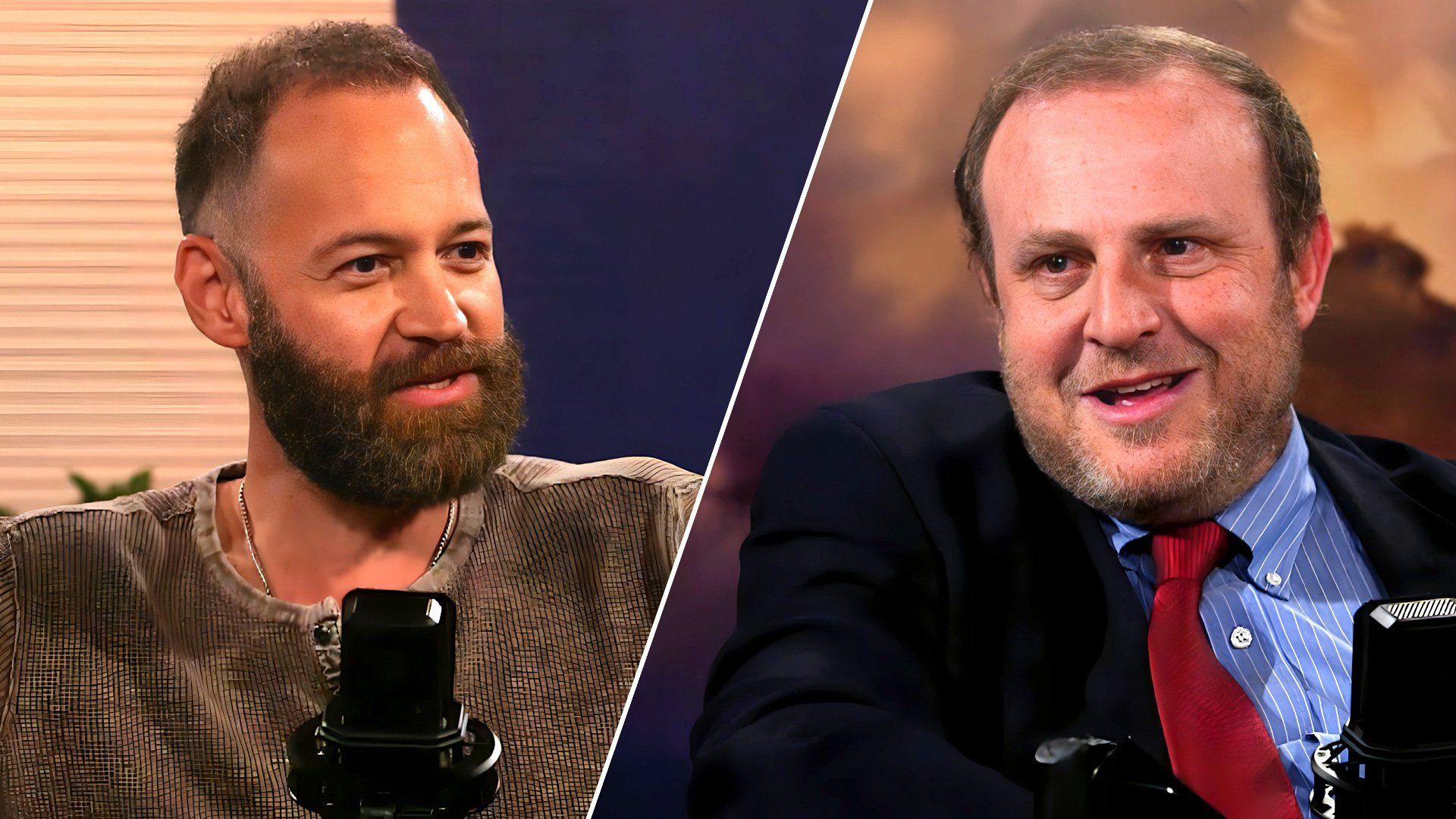
BlazeTV host Jonathan “Lomez” Keeperman is of the mind that Carl is right.
“On second viewing, I mean, I watched this live, and by the way, in the context of this hour-long Senate hearing, he was just getting grilled from all directions ... he was being accused of anti-feminism, he was being accused by [Sen.] John Curtis of Utah [R] for not being, like, sufficiently loyal to Israel. And then there was this white thing,” Lomez tells BlazeTV co-host Christopher Rufo on “Rufo & Lomez.”
“And I think what we saw there was him a little bit stumbling through the answer, but it’s actually the right answer. I mean, he gives the right answer, the specific details,” Lomez continues.
Lomez points out that there are different parts of American culture, and different races have their own piece.
“I’m not saying this, by the way, just to please a liberal listener. It’s all true, OK? This is all deeply embedded in our culture and the common culture as well, but it is predominantly what we might call 'white,'” he explains.
“When you turn on Netflix or something, or like Hulu, or just turn on the TV, there’s BET. There’s Black Entertainment Channel, and there’s black stories to enjoy with your family on Hulu, and then there’s Asian stories, and you know, you get the whole diaspora of all these different groups,” he continues.
“There’s no white channel, there’s no white story section ... because ... that is the baseline culture that these other things are kind of orbiting around and existing within. And what Jeremy is suggesting here is that we are losing that common culture. We are losing that common white culture,” he adds.
To enjoy more of the news through the anthropological lens of Christopher Rufo and Lomez, subscribe to BlazeTV — the largest multi-platform network of voices who love America, defend the Constitution, and live the American dream.
There has been a lot of panic, among the conservative commentariat especially, over the growing desire among younger white Americans to receive representation as a collective political bloc. At some level, that reaction is understandable. Race is not the healthiest fixation when it comes to identity.
But the way conservatives have responded to this trend is deeply misguided.
The only way to lower the salience of race is to stop importing ethnocentric cultures and to eliminate political carve-outs for minority communities already here.
For decades, whites have watched every other group in America successfully demand political action as a bloc from both the left and the right. Democrats build their entire coalition around racial grievance, but even conservatives regularly address the needs of minority communities as collective groups. Despite their hostility to “identity politics,” Republicans eagerly cater to it — just not for their core constituency, white Americans.
If conservatives genuinely worry about the rise of white identitarianism, they should stop lecturing young white Americans and start addressing the behavior of the communities they currently pander to.
First, it helps to define terms. “Race” and “ethnicity” are often treated as interchangeable, but they are not. Race is a broad macro category, while ethnicity operates at a more granular level. Swedes, Italians, Irish, and French are all considered white. Ethiopians, Nigerians, African Pygmies, and Somalis are all considered black.
These categories matter, but ethnos is often a more organic and useful way to understand group behavior.
Ironically ethnocentrism varies widely across populations and tends to be particularly low among white Europeans and their descendants. A society composed primarily of people of European extraction, even with some immigration, tends to be relatively tolerant and open. New arrivals who may initially carry ethnocentric instincts are less able to sustain them when they lack a large co-ethnic base.
Assimilation follows naturally under those conditions.
Identity is also not binary. It consists of nested loyalties that rise or fall in importance depending on scale. In small societies, tribe or ethnos dominates. As civilizations expand and absorb new members, identity shifts toward broader categories — often religion or nationality.
White Americans once lived in sharply defined ethnic enclaves. Irish, Italian, Dutch, and German neighborhoods were common. In some cases, the U.S. government actively broke up German-language communities, forcing children into English-speaking schools. Over time, those European ethnoses dissolved into a shared American identity.
That process breaks down when the government imports large, concentrated populations that share a common ethnicity and have not gone through the same scaling process. These groups face no incentive to abandon ethnocentrism because they can successfully deploy it. Co-ethnics ensure access to jobs, education, marriage, and community without assimilation.
In a system where one group must compete on pure individual merit while others are allowed to operate on collective ethnocentrism, tribalism wins. Once it proves effective, the salience of race explodes. When young whites see every other group using the winning strategy, the question becomes unavoidable: Why are we the only group forbidden from doing so?
The problem is not just that tribalism works. The system has been actively rigged against white males.
RELATED: How anti-fascism became the West’s civil religion

Jacob Savage’s recent article “The Lost Generation” detailed the extent to which universities, media institutions, and corporations have systematically excluded white men. The piece gained attention partly because it came from the left, but conservatives like Jeremy Carl and Heather Mac Donald have been warning about the same dynamics for years.
Whites — especially young white men — are barred from advocating as a group. At the same time, they are punished as a group. Telling them identity politics is immoral while allowing explicit anti-white discrimination guarantees a predictable response.
The conservative establishment’s answer has been a vague denunciation of ethnocentrism that somehow applies only to whites. Conservatives pay lip service to opposing identity politics while courting explicitly racial organizations. They speak seriously to black, Indian, Hispanic, and Jewish advocacy groups and treat their leaders as legitimate representatives.
Donald Trump recently hosted the American Hindu-Jewish Congress at Mar-a-Lago to discuss combating bigotry. You will not see a dinner honoring representatives of a “White American Congress” to discuss anti-white discrimination — despite overwhelming evidence that such bias is widespread.
That double standard is too obvious for young whites to ignore forever.
If conservatives were serious about halting the rise of collective white identity politics, they would stop scolding young whites for noticing reality. They would confront systemic bias in academia and corporate hiring. To its credit, the Trump administration has signaled an intent to act — but far more is required.
RELATED: Culture’s great subversion machine has broken down at last

A serious response would include an immigration moratorium and aggressive prosecution of ethnic cartels. And yes, every tech department staffed entirely by one ethnic group is not evidence that “there were no qualified white applicants.” Conservatives should lecture blacks, Indians, Hispanics, and Jews about ethnocentrism with the same intensity they reserve for whites.
If for no other reason, whites actually vote Republican. Most of the other groups do not.
If conservatives truly fear the rise of collective white politics, they should reduce the number of ethnocentric populations young whites are forced to compete against on pure merit. The only way to lower the salience of race is to stop importing ethnocentric cultures and to eliminate political carve-outs for minority communities already here.
In short, show young whites they can succeed without tribalism by actually punishing the tribalism practiced by everyone else. Summon the courage to confront the behavior you claim to fear — in the groups already practicing it.
According to the propagandists, the “white supremacists” won the 2024 election. What now? As people think about the next four years and beyond, some are fearful that Trump and his administration will strain race relations even farther. However, others believe that Trump’s victory marks a turning point for facing racial problems in our system today.
On “Zero Hour,” Jeremy Carl, political commentator, senior fellow at the Claremont Institute, and author of the new book "The Unprotected Class: How Anti-White Racism Is Tearing America Apart," sat down with James Poulos to discuss racism, the new Trump administration, and the systemic problems that America faces today.
— (@)
On the subject of race in America today, Carl addressed the elephant in the room: DEI policies and discriminatory practices have pushed white people away from many of our institutions. Carl said, "If I want to go to an Ivy League school and I am a white guy without connections, it's pretty much impossible. That is unfortunately the system we're in today."
However, he expressed optimism that the consensus of the 2024 election showed signs that real change could be coming soon: “In some ways, the particularly multiethnic element of this coalition that Trump has put together gives him a unique platform where this multiethnic coalition is saying, ‘No, we’re not going to treat people this way [discriminate on the basis of race].'"
Far from white supremacy, Carl thinks that this “multiethnic coalition” for Trump is a sign that people of other races condemn the mistreatment of whites and want things to change. They gathered in support of Trump, who “was just himself. In the same way that he’s still wearing the suit when he goes to McDonald’s, he didn’t try to put on the work overalls or gold chains like a rapper. He didn’t apologize for being a white Boomer, but he’s like, ‘Hey, I love America, you love America, we can both do our thing here.'”
He added that Trump acted as a lesson for all white people in America today: “He never apologized for who he was.”
To hear more about what Jeremy Carl had to say about racism, the civil rights movement, and the new Trump administration, watch the full episode of “Zero Hour” with James Poulos.
While the left continues to brand everything white as “racist,” at some point in our recent history, white people have actually become the unprotected class in America.
However, President Donald Trump’s recent election has the power to change that.
“I do think that this gives the possibility of folding an anti-white discrimination agenda into, like, an actual thing that is not just about white people but about a kind of multiethnic group of people who don’t want to discriminate on the basis of race,” former Stanford research fellow Jeremy Carl tells James Poulos on “Zero Hour.”
“As people on the left try to comprehend what happened with Trump, you’re going to hear a lot more about ‘multi-racial whiteness,’” Carl continues. “What that basically just means functionally is people who are not white who want to be part of the American project and be perceived as normatively American.”
“Which is, of course, a wonderful thing, and we should encourage this, but this drives the left to rage like almost nothing else,” he adds.
Of course, this is because the left would love for all minorities in America to claim their victim card and look to their white, so-called “anti-racist” leaders for guidance.
But over the past four years under Biden, their opposition has begun to fill up with characters who don’t fit the caricature the left has drawn of the racists supposedly running rampant throughout the country.
“This is now becoming a running joke on the internet,” Poulos says. “Most of those guys are themselves Latinos.”
“I’m almost hesitant to say the word 'Nick Fuentes' because I feel like somebody will come out and attack me," Carl chimes in, adding, "I’m summoning the demon, but it’s sort of funny that the kind of most notorious of these so-called white supremacists today is this guy who is at least partially of Latino descent."
“You have some overcompensation going on, right, and I wouldn’t call it so harmless as to be a joke, but it’s a reaction and frustration to the straight jacket that they’re being put in,” he continues, noting that the way these pro-white characters operate isn’t the best path forward in dismantling the racist DEI caste system.
“This can’t just be a project of white people whining about how they’re oppressed and trying to play a victim class and seeing if they can get something against other people,” Carl explains, adding, “It has to be ultimately, a consensus reality that people of a wide variety of ethnic and racial backgrounds agree that we’ve got this problem and are trying to address it.”
To enjoy more of James's visionary commentary on politics, tech, ideas, and culture, subscribe to BlazeTV — the largest multi-platform network of voices who love America, defend the Constitution, and live the American dream.
Anti-white racism has infiltrated nearly every institution in America — and unfortunately, that includes the church.
“I want to talk about a little more how this is manifesting itself in the church,” Allie Beth Stuckey says to author and senior fellow at the Claremont Institute Jeremy Carl, who wrote the book “The Unprotected Class: How Anti-White Racism Is Tearing America Apart.”
“They perpetuate this narrative that yes, white people, you are collectively responsible for being the initiators of reconciliation because of what some black people at some point in history went through,” Stuckey continues, adding, “This has been 100% accepted, celebrated, glorified, even among conservative evangelicals.”
Carl has noticed the anti-white narrative gaining power in various organizations led by Christians around the country.
“I talk about Christianity Today, the Gospel Coalition, Acts 29 Network — and again, I’m not painting with a broad brush both from knowledge and also not wanting to falsely accuse everybody who is associated with that with engaging in this, but you saw these sorts of problems pop up in these very prominent evangelical spaces,” Carl says.
One senior editor at the Gospel Coalition, Brett McCracken, called on “white Christian leaders to listen to and defer to non-white and nonwestern Christian leaders” in a post on X.
“We see this kind of language over and over again,” Stuckey says.
According to Carl, even the head of the Southern Baptist Theological Seminary admitted to being a racist and declared he would be one until his “glorified body is resurrected.”
“It’s such a virtue signal, because if you’re actually racist, at least in the popular understanding of that, well then you certainly shouldn’t be running the Southern Baptist Theological Seminary,” Carl says.
Stuckey notes that to her knowledge, none of them have come forward to admit they were wrong.
“I haven’t seen any apologies from these people saying, ‘Oh, I don’t think deriding white image bearers of God was the right thing,'” she says.
“I think you’re probably going to be waiting a long time before you get that type of apology,” Carl laughs.
To enjoy more of Allie’s upbeat and in-depth coverage of culture, news, and theology from a Christian, conservative perspective, subscribe to BlazeTV — the largest multi-platform network of voices who love America, defend the Constitution, and live the American dream.


 Jeremy Carl's new book unmasks the pervasiveness of anti-white racism across all levels of American society.
 The legacy media have failed to hold Rep. Zooey Zephyr accountable for the bigoted attack against lawmakers of faith in the Montana Capitol.
 www.theblaze.com
 www.theblaze.com