The nightmare in Nigeria is an urgent warning to America


I have seen the videos. I wish I hadn’t. I wish I could unsee them.

A woman dangling from a rope, a fire kindled beneath her. Allahu Akbar.

Children sawing back and forth with dull machetes to slit the throats of other children while adults scream Allahu Akbar.

Dozens of men kneeling, shackled. A crowd. A dull axe. Heads hacked off and held aloft. Cheering. Allahu Akbar.

Always inconceivable cruelty and suffering. Always blood and death. Always Allahu Akbar.

Britain didn't wake up one morning to find its civilization replaced. It happened in phases — each one normalized before the next was introduced.

These are not rumors or Western propaganda. These are videos filmed by the perpetrators themselves, shared proudly, used as recruitment material.

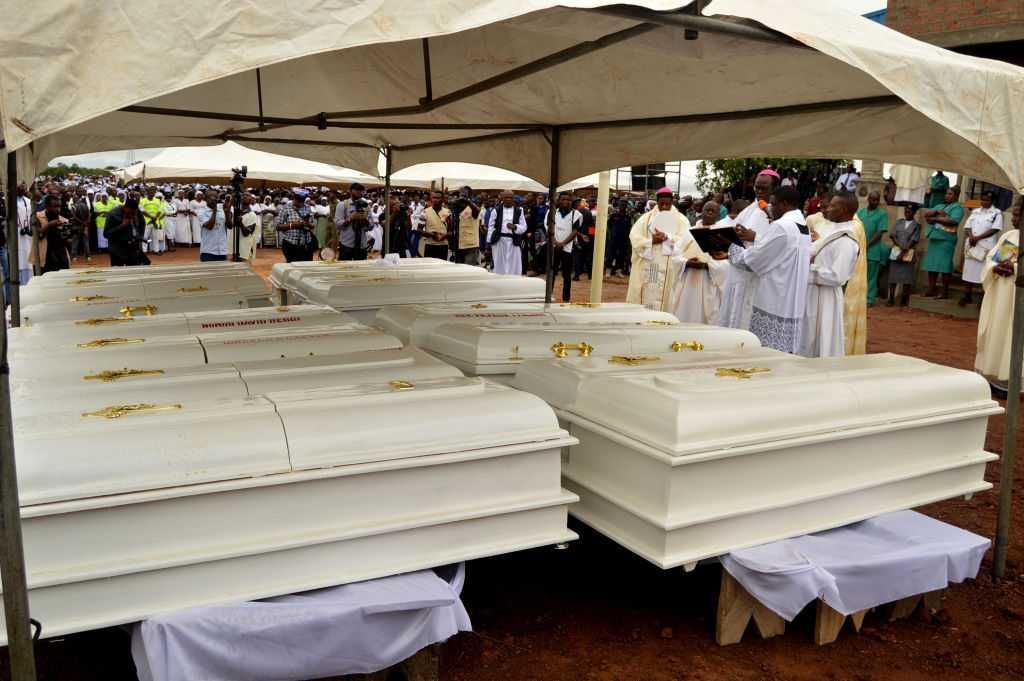
I have watched them because I have to. I'm a former Texas mayor, author, and founder of Africa Arise International. I have made 16 trips to Nigeria since 2010 — built schools in displacement camps and sat with orphans who watched their parents hacked to death. I have delivered congressional testimony. I know this crisis from the inside.

What I know is this: What you are watching happen in Nigeria is coming here. And we are running out of time to stop it without a fight in our own back yard.

Six million dead. Ten million enslaved. Twenty-five million driven from their homes. This all within 222 years. One unbroken jihad — from Usman dan Fodio's 1804 declaration to the AK-47s cutting down Christian farmers in the Middle Belt today. Working with the Nigerian government to end this genocide is like working with the Third Reich to end the Holocaust.

In Nigeria, the nation's own government is not the patient fighting the disease. It is the disease. There is no chemotherapy left — only trying to ease the suffering while you figure out what can be saved.

America is not there yet, but we are closer than we think. And we have a preview nation to learn from.

The fall of England

Britain didn't wake up one morning to find its civilization replaced. It happened in phases — each one normalized before the next was introduced.

The victimhood frame came first. Any examination of Islamic ideology became racism. The host culture's own instinct to protect minorities was weaponized against itself.

Then came parallel institutions — Sharia courts operating alongside civil law, communities answering to a different authority, a state within a state. Eighty-five registered Sharia tribunals now operate in Britain.

Then came the co-opting of every system that should have stopped it. Police leadership pursued diversity metrics while ignoring gang networks. Politicians calculated electoral math and went quiet. The Crown itself has watched in silence as those values were systematically dismantled.

Media outlets that should have been sounding the alarm were busy enforcing the silence. Every lever of institutional power — legal, political, royal, journalistic — was captured, compromised, or cowardly.

Then the cost came due. Rotherham: 1,400 children systematically groomed and raped over 16 years. Police, social workers, and local officials all knew. Nobody acted — because acting meant being called racist.

Then the streets. London now leads Europe in acid attacks. Knife crime has transformed entire neighborhoods. British police advise women not to walk alone in parts of their own capital.

The window for words closed in Britain a decade ago. Britain is past the point of prevention. It is now in the painful, humiliating process of trying to recover what it still can.

RELATED: Trump is quietly preparing to defend Nigerian Christians
Jim WATSON/AFP/Getty Images

The signs we cannot miss

The pattern is the same every time, everywhere. Victimhood before violence. Parallel institutions before parallel law. Lawfare before intimidation. Intimidation before the knife. The knife before the machete.

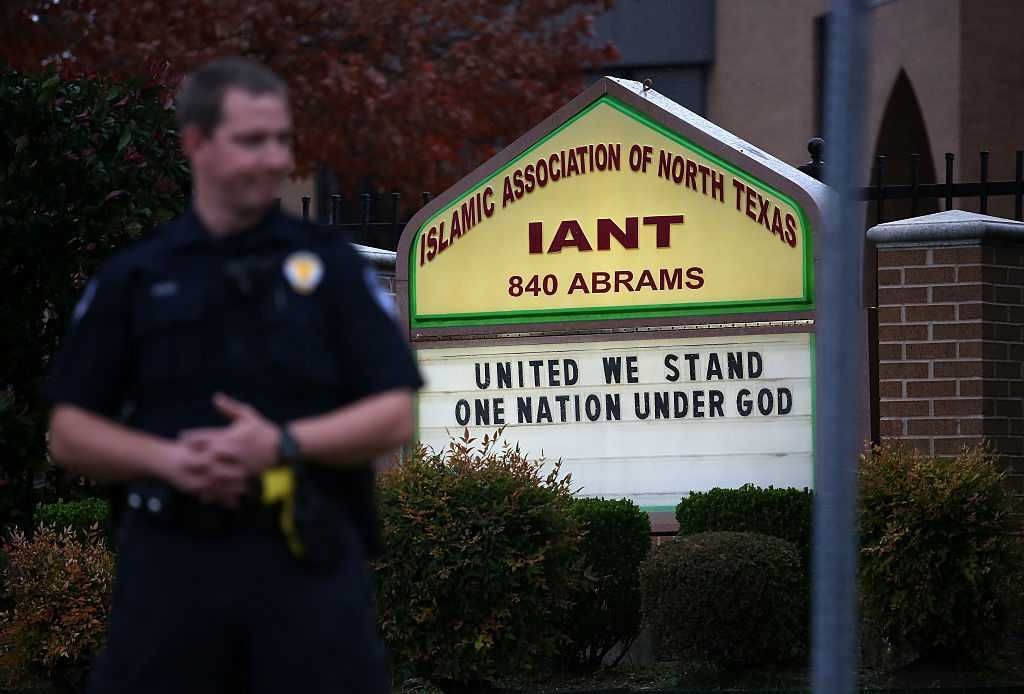
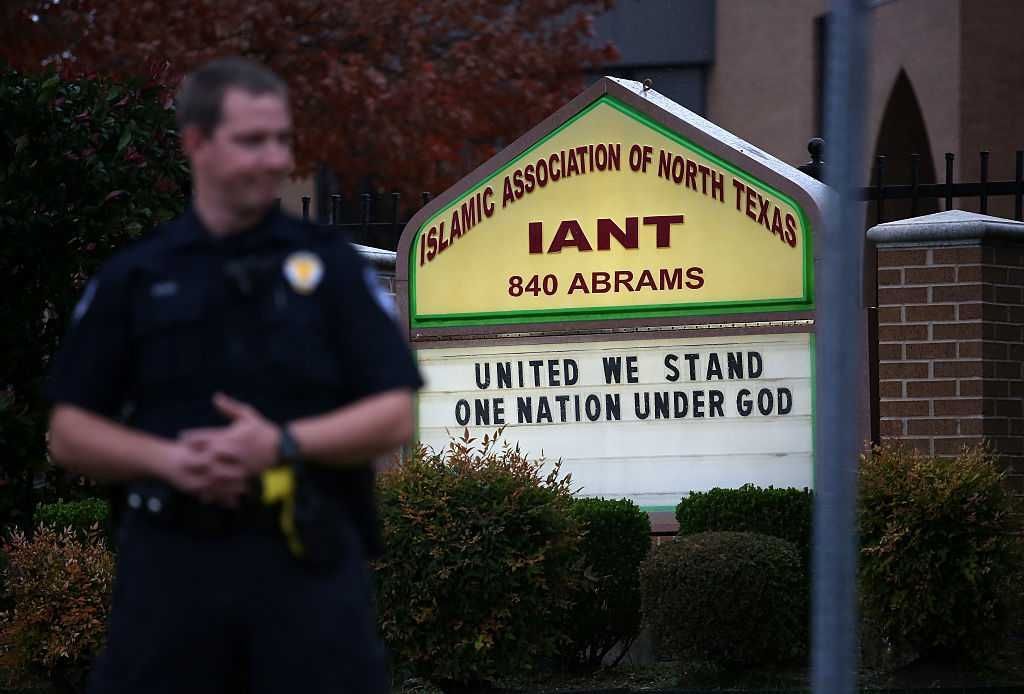
In Dearborn, Michigan, crowds chanted "Death to America" in the streets. Across the country, pro-Hamas rallies blocked traffic, burned flags, and assaulted bystanders — and were met with police escorts and political silence.

And then there is this — the detail that would be darkly comic if the stakes weren't so high. America's LGBTQ political movement has aligned itself with the most violently anti-gay ideology on earth. These LGBTQ advocates march with it. They vote with it. They shout down anyone who points out the contradiction.

Iran ran this experiment in 1979. Gay activists marched alongside Khomeini's revolution — they believed it was about liberation. By April 1979, two months after Khomeini took power, gay men were being executed on rooftops.

That is not a warning. That is a record. The LGBTQ movement in America is committing slow political suicide by making itself the useful idiot of an ideology that has a 1,400-year record of what it does when it wins.

We are not talking about misguided young men who need jobs and dialogue. They are the fully manufactured product of a system specifically designed to produce them — men for whom the severed head and the cheering crowd is not the worst day of their lives. It is the best. They have followed their founder's footsteps.

You do not negotiate with stage 4 pancreatic cancer. You do not dialogue with it. You do not try to understand its perspective. You identify it, name it for exactly what it is, and pursue its total eradication with everything you have.

Because the alternative is your own death.

This ideology is incompatible with human civilization. It always has been. Every civilization that has ever encountered it and survived understood that eventually — and had to fight a war to take back their freedom.

We are not gone yet. But the hour is growing late.
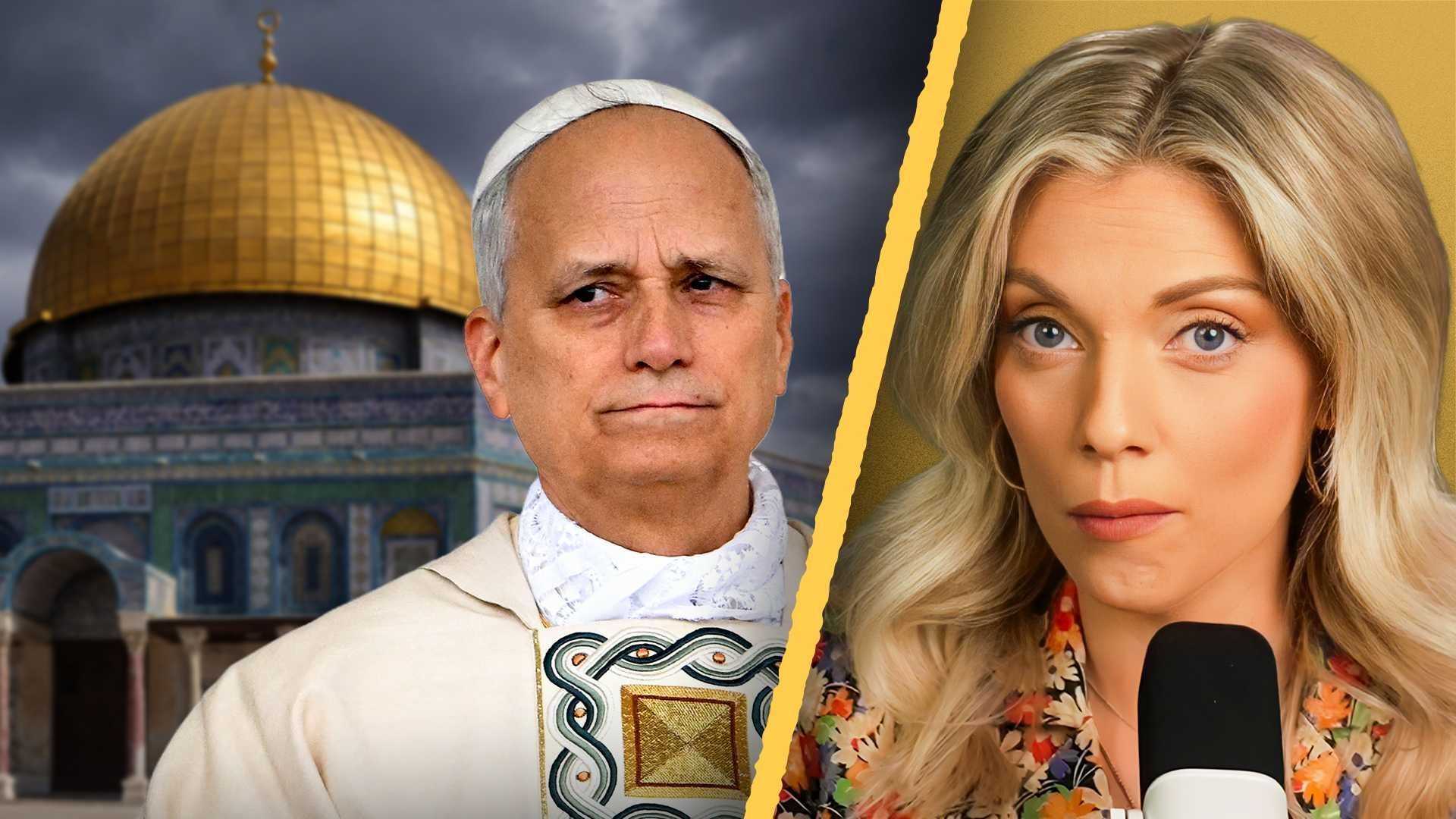
Liz Wheeler drops truth bomb on Pope Leo’s ‘be less fearful’ of Islam comments


An old comment from Pope Leo XIV is circulating widely again on social media amid his ongoing apostolic journey to Africa, where he has been meeting with Muslim leaders and visiting Muslim holy sites, including the Grand Mosque of Algiers.

In December 2025, during an in-flight press conference on the papal plane returning from his trip to Turkey and Lebanon, the pope said, “I think one of the great lessons that Lebanon can teach to the world is precisely showing a land where Islam and Christianity are both present and are respected and that there is a possibility to live together, to be friends.”

He added: “I think those are lessons that would be important also to be heard in Europe or North America. We should perhaps be a little less fearful and look for ways of promoting authentic dialogue and respect.”

Liz Wheeler, BlazeTV host of “The Liz Wheeler Show,” is deeply disappointed to hear “the successor of Saint Peter [articulating] leftist political opinions.”

Liz shares some harrowing statistics: “93% of the 4,849 Christians who were murdered for their faith last year were murdered by Muslims, by Islamists, most of them in sub-Saharan Africa.”

“The pope is visiting Africa as we speak, and I would wonder if he visited the mass graves of the Catholics slaughtered in Africa,” she says, playing a video clip of a Nigerian Catholic priest pleading for Western intervention, as he stands behind the body of a woman murdered for her faith by Muslim radicals.

“[The pope] put a wreath on a Muslim grave yesterday in Algeria to commemorate Algerians that were killed in their war of independence. What he didn't mention was these Algerians who were killed were fighting Catholics. They murdered Catholics,” she continues.

“It is discouraging to hear the pope tell us to be less fearful of Islam as if we're in sin for this — for recognizing the fanatical nature of their religious belief in jihad, which is based on our observation that our differences with Muslims are not relegated to something in the past,” she says.

“It wasn't just a battle during the Crusades centuries ago, but it's happening now. The massacre of Christians is happening today in Africa at the hands of Islamists who are killing in the name of their religion.”

To hear more, watch the video above.

Want more from Liz Wheeler?

To enjoy more of Liz’s based commentary, subscribe to BlazeTV — the largest multi-platform network of voices who love America, defend the Constitution, and live the American dream.

Why America’s enemies always target Western civilization first


Radical progressives love to say the United States has no culture of its own — only whatever happens to be popular at the moment. If America amounts to little more than a consumer brand, then why do so many anti-American activists talk less about tweaking our politics and more about erasing Western civilization altogether?

America isn’t distilled water. It carries a civilizational inheritance. That fact explains why the people who hate the American project so often hate Western civilization writ large.

A country can’t treat open hostility to its civilizational foundations as harmless expression while expecting those foundations to survive.

A case in point: Mahmoud Khalil, the pro-Palestinian activist and apologist for Islamic jihad who led a coalition at Columbia University called Columbia University Apartheid Divest. The group’s stated goal is the “total eradication of Western civilization.” That goal raises the obvious question: Why the West? Why not simply “America”?

Because, for many activists in this mold, America represents the West at full strength — the most successful expression of the Western tradition.

America as the West’s culmination

In “The Roots of American Order,” Russell Kirk argued that the United States fused traditions from key centers of Western thought and life: Jerusalem gave us a Judeo-Christian moral order and the idea of covenant under God. Athens bequeathed reasoned inquiry and ordered thought. Rome passed down republican government and the rule of law. London developed parliamentary practice and secure property rights under the common law.

In Philadelphia, America’s founders combined those inheritances into a constitutional republic built around Judeo-Christian concepts of contract, incorporation, property, and ordered liberty. Put simply, America did not emerge from nothing. It grew out of a specific civilizational soil.

Why the West wins — and gets blamed

Many non-Western societies struggle under political and economic systems that concentrate power, block opportunity, and punish initiative. When institutions work well in those places, they often resemble Western inheritances: stable law, predictable property rights, accountable governance.

Daron Acemoglu and James A. Robinson, the authors of “Why Nations Fail: The Origins of Power, Prosperity, and Poverty,” summarized the phenomenon in more politically correct terms, arguing:

Nations fail primarily because of extractive political and economic institutions that concentrate power and wealth in the hands of a few elites, stifling innovation, incentives, and broad-based economic growth. Unlike inclusive systems that foster prosperity, extractive regimes discourage investment and education, creating a "vicious cycle" of poverty and political instability.

That reality should invite honesty. Instead, it often produces resentment.

Under the reigning narrative, Western culture becomes “colonization,” “genocide,” and “taking” — a catch-all scapegoat for failures at home. That story also ignores inconvenient facts, including that Western colonialism had a relatively brief modern run and that many Western countries ultimately divested themselves of empires while insisting — at least in principle — on freedom and sovereignty.

So the West gets blamed for the world’s troubles, while the West remains the place millions still want to move to.

RELATED: What will replace the old world order?

Milos Bicanski/Getty Images

Importing anti-Western radicalism

That leaves America with a growing problem: activists and migrants who embrace America’s freedoms while rejecting the civilization that produced them.

The Trump administration sought to remove Khalil, arguing that his presence created “adverse foreign policy consequences.” An activist judge later ordered his release from detention, and the useful idiot New York City Mayor Zohran Mamdani (D) publicly celebrated him at Gracie Mansion.

Whatever one thinks of that specific case, the larger principle holds: A country can’t treat open hostility to its civilizational foundations as harmless expression while expecting those foundations to survive.

A nation that loses confidence in its roots will not protect them — and a nation that refuses to protect them will not keep them.

If the United States wants to survive beyond President Trump’s current term, it needs to recover a healthy pride in its Western inheritance and shape immigration policy with that reality in mind. A society that invites people who openly seek its destruction invites its own decline.

Do they hate Trump — or do they just hate America?


Do the protesters angry about Ayatollah Ali Khamenei’s death hate America — or do they hate the fact that Donald Trump pulled it off?

The question sounds simple. Nobody outside Khamenei’s supporters can mourn his death. The answer becomes more difficult because the protesters in question rarely limit their hatred to one target.

Trump’s return tore off the mask. When America acts like America again, the people who resent America stop hiding behind the language of peace.

Almost 15 years ago, U.S. Navy SEALs killed Osama bin Laden in Pakistan. Bin Laden led Al-Qaeda, which carried out terrorist attacks against the United States and others for years. The worst came on Sept. 11, 2001, when Al-Qaeda terrorists hijacked four American airliners, flew three into the Twin Towers and the Pentagon, and crashed the fourth in Pennsylvania. Nearly 3,000 people died.

When President Obama announced bin Laden’s death, he said: “Bin Laden was not a Muslim leader; he was a mass murderer of Muslims. Indeed, Al-Qaeda has slaughtered scores of Muslims in many countries, including our own. So his demise should be welcomed by all who believe in peace and human dignity.”

Nobody marched in grief for bin Laden — at least not publicly outside Al-Qaeda’s circles, which included Iran.

Khamenei’s record goes further. Under his rule, Iran financed terrorism across the region and around the globe. The U.S. State Department reported in 2020 that Iran “has been the world’s leading state sponsor of terrorism,” and for more than 40 years, its “malign behavior and support for terrorist proxies has spread across the region.”

Iran’s clients form a who’s-who of the heinous: Hamas, Hezbollah, the Houthis, Palestinian Islamic Jihad, Shiite militias in Iraq, and others. For nearly half a century, Iran’s regime threatened Iranians first, then the Middle East, then the United States and Israel.

The beneficiaries of that system were predictable: regime insiders, terrorist networks, and pariah states that profit from chaos — Russia, North Korea, Cuba, Venezuela — along with China, which seeks advantage from the disorder Iran helped sow.

So who, exactly, shows up in America to lament Khamenei’s death and denounce U.S. strikes as illegitimate?

The protests arrived quickly in familiar cities: New York, Minneapolis, Portland.

The left-wing Guardian observed that New York’s rally was sponsored by a host of left-wing groups that included the ANSWER Coalition, National Iranian American Council, 50501, American Muslims for Palestine, the People’s Forum, Palestinian Youth Movement, Code Pink, Black Alliance for Peace, and Democratic Socialists of America. Organizers called Trump’s strikes “unprovoked” and “illegal,” warned of “unthinkable death and destruction,” and promised to take to the streets.

RELATED: Hegseth just delivered a precision strike on the legacy media

Photo by Brendan SMIALOWSKI/AFP via Getty Images
They did not explain how action against a regime that has sponsored terrorism for decades and chants “Death to America” qualifies as “unprovoked.”

New York City Mayor Zohran Mamdani (D) went further, calling the strikes a “catastrophic escalation in an illegal war of aggression,” then added: “Bombing cities. Killing civilians. Opening a new theater of war.”

He ignored the war Iran has waged for years through its proxies. He also ignored the brutality Iran’s regime has inflicted on its own people. Reports from within and outside Iran have described mass crackdowns, large death tolls, and systematic violence against dissent. The precise numbers vary — it could top 30,000 — and the regime itself manipulates information, but nobody disputes the core point: Tehran kills its own citizens to preserve power.

Minneapolis offered the same posture. Minnesota Public Radio quoted Andrew Josefchak of the Minnesota Anti-War Committee saying: “These wars don't benefit ordinary people in the U.S., and they certainly don't benefit ordinary people in countries like Venezuela or Iran.” That claim dodges the obvious. Iranians have risked their lives for decades against this regime. Many celebrated Khamenei’s death because they know what his rule meant.

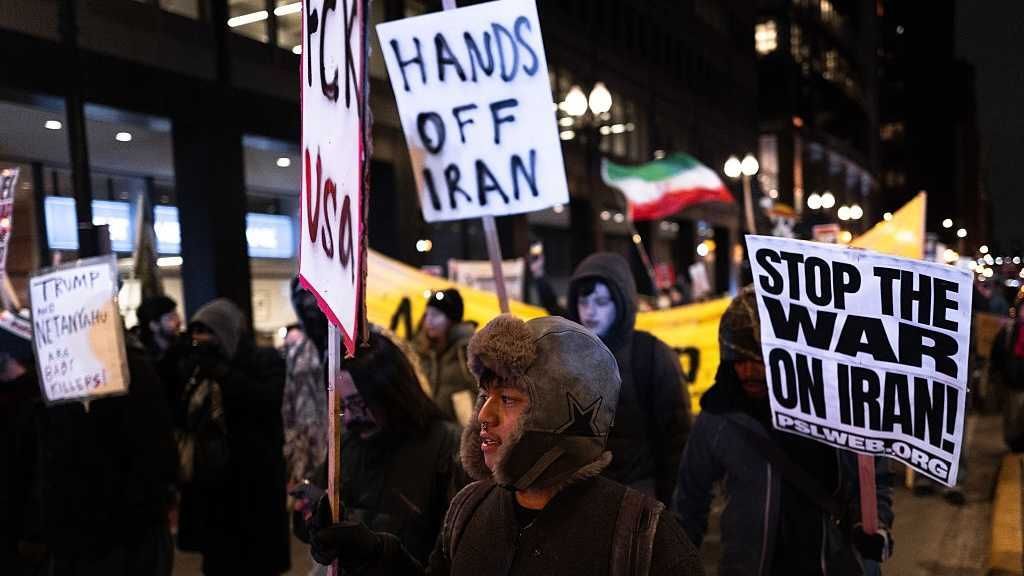
In Portland, a protest organized by Portland for Palestine featured signs reading “U.S. hands off Iran” and “Stop the war on Iran now.” Hamas, Iran’s most prominent Palestinian client, tells you plenty about the moral framing at work.

The sympathies here are not hard to locate. The protesters show little concern for the victims of Iran’s terror machine, whether in Israel, Iraq, or inside Iran itself. Their energy targets the United States — and Trump.

If that judgment sounds harsh, consider a post from a Columbia University group that has organized activism since 2024. Columbia University Apartheid Divest posted “Marg bar Amrika” on X.com — “Death to America” in Persian — then later wrote that the platform forced deletion to regain account access but that “the sentiment still stands.”

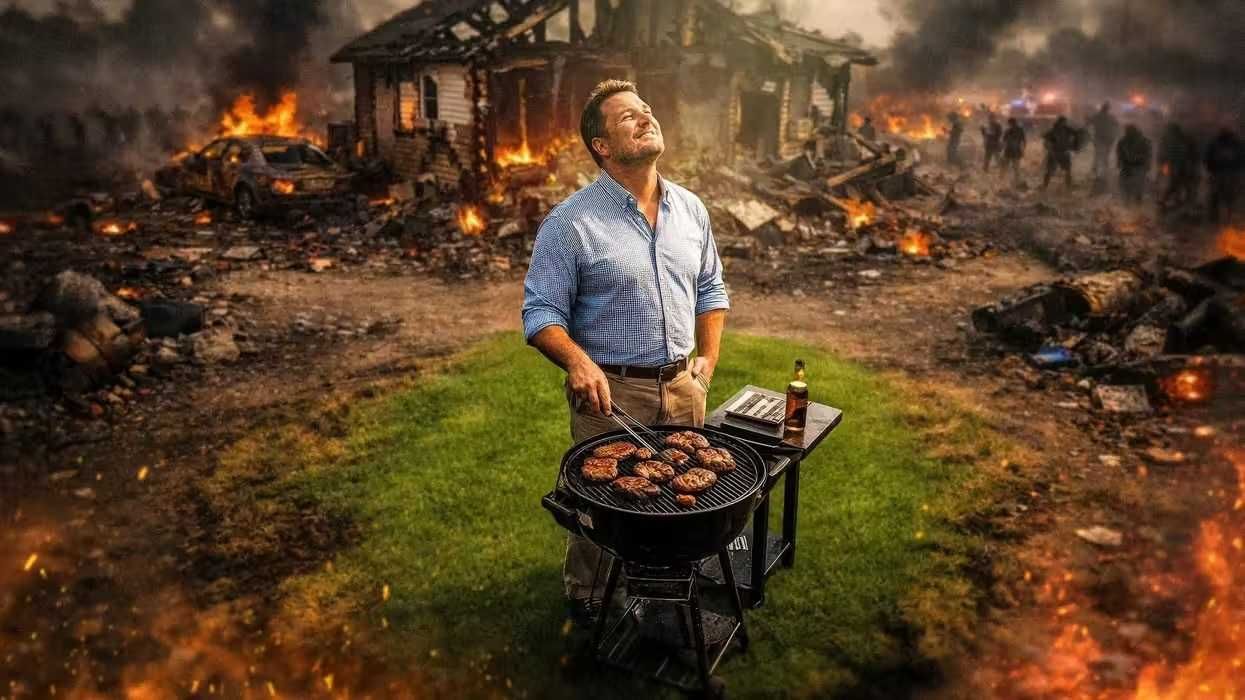
RELATED: Conservatives can’t barbecue their way through national collapse

Blaze Media Illustration

That brings the question into focus.

Iran chanted “Death to America” long before Trump entered politics. The chant softened in elite American spaces when Washington adopted a posture of accommodation. Under Joe Biden and Kamala Harris, the United States projected restraint even as Iran financed proxies and pushed its nuclear program forward. Now with Trump back in office and Khamenei dead, “Death to America” appears on social media feeds tied to elite American campuses.

So what do these protesters hate more: America or Trump?

They carry plenty of hate for both. The better answer may be that Trump’s return tore off the mask. When America acts like America again, the people who resent America stop hiding behind the phony language of peace.

Austin’s ‘Property of Allah’ shooter is immigration failure made flesh


Being president of the United States is a job unlike any other. Wise leadership often goes unnoticed because the public never sees the disasters it prevented. Feckless leadership leaves a paper trail of avoidable tragedy — and nowhere does that trail run clearer than immigration.

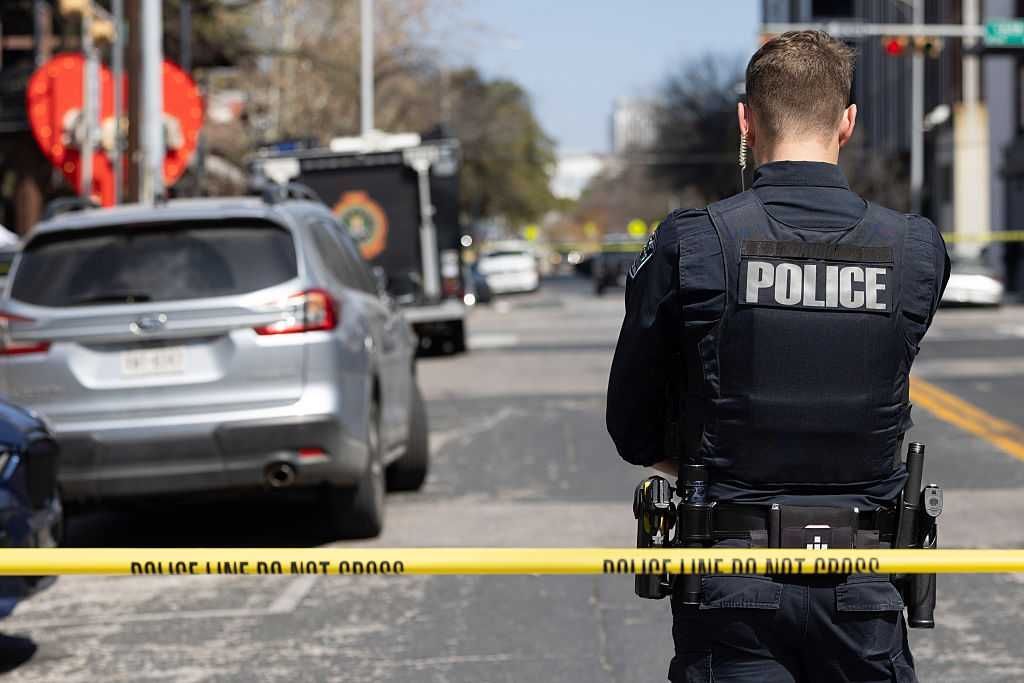
The mass shooting over the weekend in Austin, Texas, offers a grim case study. Ndiaga Diagne opened fire at a popular bar near the University of Texas, killing two people and injuring 14 others before police killed him. The story of how he entered the country, stayed, and ultimately gained citizenship reads like a checklist of missed opportunities for enforcement and vetting.

A government that takes national security seriously screens more aggressively, removes violators faster, and treats immigration law as law — not as a set of suggestions.

Diagne, a 53-year-old naturalized U.S. citizen originally from Senegal, moved through an immigration system that repeatedly rewarded leniency and procedural box-checking over basic security judgment. As the U.S. hardens its defenses amid escalating conflict with Iran, the country should confront these shortcomings and adopt reforms that put Americans’ safety first.

A path to citizenship full of red flags

Diagne’s record raises questions that any serious system should have addressed long before he was granted citizenship.

He entered the United States on a B-2 tourist visa on March 13, 2000, during the Clinton administration. A year later, New York City police arrested him for illegal vending. That offense alone might not have warranted major action, but it marked the beginning of a pattern. Reports also suggest he overstayed his visa, since tourist visas for Senegalese citizens typically allow a stay of six months.

By 2006, during the George W. Bush administration, he adjusted his status to lawful permanent resident through marriage to a U.S. citizen. In April 2013 — during the Obama administration — he became a naturalized citizen, despite earlier signs of disregard for immigration rules and later arrests in New York between 2008 and 2016. Some of those matters remain sealed, and public reporting about the underlying conduct varies, but the volume alone should have triggered deeper scrutiny at every stage.

Reports also describe Diagne as emotionally disturbed. He reportedly applied for asylum years after becoming a citizen — a move that makes little sense on its face and raises further questions about stability, intent, and how carefully officials reviewed his file over time.

The attacker’s presentation added another disturbing layer. He wore a hoodie emblazoned with “Property of Allah” alongside an Iranian flag. Reports about images from his home also claim he kept pictures of Iranian leaders. Even if investigators ultimately draw a different conclusion about motive, the optics underscore the obvious point: When the system admits, legalizes, and naturalizes people with glaring warning signs, the country absorbs the risk.

None of this looks like a one-off error. It looks like a culture of permissiveness — a system that too often treats enforcement as optional and vetting as a formality.

RELATED: The great replacement, American style

piranka via iStock/Getty Images

We’ve seen this pattern before

Austin did not occur in a vacuum. The 2015 San Bernardino terrorist attack left 14 people dead and 22 injured at a holiday party. One perpetrator, Tashfeen Malik, entered the U.S. on a K-1 fiancé visa during the Obama administration. Investigators later said she pledged allegiance to ISIS online before the attack.

San Bernardino revealed the same basic weakness: immigration pathways that assume good faith, overlook warning signals, and fail to connect the dots until bodies lie on the ground.

Now place those lessons in the current context. Iran’s regime has built its influence by exporting terror through proxies such as Hezbollah and Hamas. As U.S. and Israeli strikes pressure Tehran, the regime’s remaining options include asymmetric retaliation. Domestic security officials should treat that risk seriously, especially after reports that the Biden-Harris administration released more than 700 Iranian nationals into the interior. Even if only a tiny fraction pose a threat, the consequences could be catastrophic.

America cannot afford “sleeper” operatives posing as refugees or asylum-seekers from terrorist-sponsoring regimes. A government that takes national security seriously screens more aggressively, removes violators faster, and treats immigration law as law — not as a set of suggestions.

Democrats have opposed border security, tougher deportations, and reforms such as the SAVE Act. They dress up their opposition as compassion. In practice, permissive policies expand the pool of illegal residents, increase pressure for amnesty, and reshape political incentives through reapportionment and election machinery. Americans pay the price. The dead in Austin and San Bernardino paid the price.

Americans should say, with one voice: No more.

Inside Al Jazeera’s Style Guide, Which Forbids Reporters From Calling ISIS a ‘Terrorist’ Organization

Al Jazeera prohibits its staff from referring to al Qaeda, ISIS, and Boko Haram as "terrorist," "Islamist," or "extremist" groups, instead requiring reporters to use "neutral terms" like "fighters" and "armed groups," according to a copy of the outlet’s style guide obtained by the Washington Free Beacon.

The post Inside Al Jazeera’s Style Guide, Which Forbids Reporters From Calling ISIS a ‘Terrorist’ Organization appeared first on .

The Venezuela crisis was never just about drugs


For decades, the United States focused its counterterrorism efforts on the Middle East and Asia. Meanwhile, a dangerous convergence of international terrorism and transnational crime took root much closer to home. Across Latin America — centered in Venezuela — hostile networks quietly expanded. The Trump administration has finally acted. How the United States manages Venezuela’s transition to legitimate leadership now carries direct national security consequences.

The media frames U.S. action against Venezuela as a narco-trafficking problem. The threat runs far deeper.

Allowing hostile powers to entrench themselves in the Western Hemisphere threatens not just economic interests but national survival.

Hezbollah, backed by Iran, began building a Latin American presence as early as the mid-1980s. What started as fundraising and money laundering in the tri-border area of Argentina, Brazil, and Paraguay grew into a sprawling criminal-terrorist network. That network carried out devastating attacks in Argentina during the 1990s. Over time, Hezbollah expanded into recruitment, training, and operational planning, embedding itself across the region.

The threat escalated sharply in 2012, when Iranian President Mahmoud Ahmadinejad forged a strategic alliance with Venezuelan strongman Hugo Chávez. That partnership gave Iran a state sponsor in the Western Hemisphere and dramatically expanded its reach. Iran gained the ability to move money, oil, and personnel throughout the region and even established drone-production capabilities inside Venezuela.

U.S. law enforcement recognized the danger. The Drug Enforcement Administration launched Project Cassandra to investigate Hezbollah’s evolution into a global crime syndicate. The DEA tracked cocaine shipments from Latin America through West Africa into Europe, the Middle East, and the United States. Investigators uncovered a network believed to generate roughly $1 billion annually through drug trafficking, weapons smuggling, and money laundering.

The Obama administration later curtailed Project Cassandra in pursuit of a nuclear agreement with Iran. That decision left much of the criminal-terrorist infrastructure intact. Its consequences persist. Hezbollah-linked networks still operate across the region with minimal interference.

Under Nicolás Maduro, Venezuela functioned as both a failed state and a logistical lifeline for Iran. The regime facilitated the movement of operatives and equipment throughout Latin America and beyond. In return, Iran supplied Venezuela’s oil sector with blending materials and refining equipment, helping Maduro evade sanctions and cling to power.

Venezuela also issued hundreds of passports and national IDs to individuals from the Middle East, including figures linked to Hezbollah. Those documents allowed operatives to travel freely under new identities, posing a direct threat to U.S. and regional security. The ability to move undetected across borders remains one of the most valuable tools available to terrorist organizations, and Venezuela provided it willingly.

Recognizing the gravity of the threat, the Trump administration took unprecedented steps. After imposing an oil blockade and designating the Maduro regime a foreign terrorist organization, U.S. authorities captured Maduro to face justice in the United States.

For the first time in a century, the Western Hemisphere now anchors the U.S. National Security Strategy. The Trump administration’s corollary to the Monroe Doctrine commits the United States to denying non-hemispheric powers — including Iran, Russia, China, and Turkey — the ability to position forces or control strategic assets in the Americas.

RELATED: The pernicious myth that America doesn’t win wars

Photo by AFP via Getty Images

Evidence of coordination with America’s adversaries is not speculative. Russia’s Foreign Ministry openly acknowledged Venezuela as a strategic partner, citing what it called the “deliberate escalation of tensions” around a friendly nation. Russia arms Venezuela’s military, built a Kalashnikov rifle factory inside the country, and protects key installations with S-300 surface-to-air missile systems.

China played a parallel role. Beijing became Venezuela’s largest oil customer and financed more than $60 billion in projects. Roughly 7% of China’s oil imports came from Venezuela, propping up the Maduro regime while fueling China’s economy.

As left-wing governments across Latin America gave way to more pro-American leadership, Venezuela’s isolation only increased its value to hostile powers. It became a forward operating base against the United States.

Consider the implications. Iranian ballistic missiles — capable of inflicting serious damage even without nuclear warheads — stationed in Venezuela would sit on America’s doorstep. Add Russian or Chinese nuclear capabilities, and the risk escalates from strategic challenge to strategic catastrophe.

Allowing hostile powers to entrench themselves in the Western Hemisphere threatens not just economic interests but national survival. The fusion of terrorist and criminal networks inside Venezuela posed a clear and present danger that demanded decisive action.

The United States must remain firm in its commitment to a secure, sovereign hemisphere. Ignoring threats in our own back yard invites disaster. And the regime in Tehran understands that reality better than most — nervously, right now more than ever.

The real question isn’t war or peace — it’s which century we choose


Our world stands at a civilizational crossroads. Again. Nations must decide whether they intend to live in the 21st century or the seventh century. That choice may sound melodramatic, but anyone watching events in the Middle East, across Europe, and increasingly inside the United States understands the stakes.

On the eve of Thanksgiving in Washington, D.C., two National Guard troops were shot by a Muslim jihadist shouting “Allahu Akbar.” One of the soldiers, a young woman from West Virginia, later died. The other survived but has a long road of recovery ahead. Americans once again asked how such an attack could occur in the nation’s capital.

The choice is not between peace and war. It is between confronting an ideology that sanctifies domination or allowing it to advance unchecked under the cover of pluralism.

The answer begins with ideology.

Jihadist doctrine divides the world into two irreconcilable spheres: Dar al-Islam, the “House of Islam,” and Dar al-Harb, the “House of War.” The House of Islam consists of territories governed by Islamic law. The House of War includes every land not under Sharia. That category encompasses Israel, Europe, the United States, and vast portions of Africa and Asia.

For jihadists, this division is not theoretical. The ultimate objective is global submission to Islamic rule. The methods vary. Demographics, migration, political participation, and violence all qualify as legitimate tools of jihad, depending on circumstances.

Modern Sunni jihadist ideology draws heavily from Sayyid Qutb, the Muslim Brotherhood theorist whose book “Milestones” remains foundational. Qutb argued that Muslims should adapt their strategy based on their position within a society. When weak or outnumbered, they should emulate Muhammad’s early period in Mecca, focusing on persuasion and coalition-building. As power grows, they should advance to the next stage, asserting political authority and preparing for dominance.

That framework explains why jihadist movements operate differently across regions. We see the political phase at work in Western cities and institutions, including London, New York City, and Dearborn, Michigan. We see the violent phase in Israel, Nigeria, Europe, and parts of the Middle East.

Qutb held that the Quran justifies violence against non-Islamic governments. That claim draws on classical Islamic jurisprudence and has been codified in influential texts. Sunni and Shia jihadist groups alike act on this logic.

Hamas, Hezbollah, the Houthis, and Iran’s Islamic regime wage war against Israel under its banner. Jihadist violence devastates Christian communities in Nigeria. Terror attacks across Europe and the United States follow the same ideological thread.

The question is not whether this ideology exists. The question is how nations respond.

Governments and citizens must decide whether they will confront a violent, medieval worldview or accommodate it in the name of tolerance and stability. That choice applies both abroad and at home.

Some regimes have already chosen regression. Iran’s rulers prioritize hatred of Israel over the welfare of their own people. The country’s severe water crisis stems not from natural scarcity but from ideological fixation and mismanagement driven by revolutionary dogma.

In Gaza, support for Hamas continues to rise. In Judea and Samaria, Hamas cells plot new attacks. Hezbollah smuggles weapons through Syria while Lebanon’s leaders face a stark decision: Embrace modern statehood or remain trapped in perpetual conflict.

American policy toward the region often sends mixed signals. The proposed sale of F-35 fighter jets to Saudi Arabia and its elevation to major non-NATO ally status were promoted as diplomatic successes. Yet the real measure will come in actions, not assurances. Will Saudi Arabia confront jihadist networks within its borders? Will it normalize relations with Israel? Or will it offer symbolic gestures while tolerating extremism?

Qatar presents an even sharper test. Through Al Jazeera, it shapes anti-Western narratives across the region. It has funded or enabled radical activism abroad and provided safe haven to Hamas and Muslim Brotherhood leaders. Any serious strategy against jihadist ideology must address Qatar’s role directly.

President Trump took a step in that direction by issuing an executive order calling for the designation of Muslim Brotherhood chapters as “foreign terrorist organizations.” That order, however, excluded the International Union of Muslim Brotherhood, based in Qatar, and U.S.-based Brotherhood-linked organizations, including the Council on American-Islamic Relations.

RELATED:Political Islam is playing the long game — America isn’t even playing

Photo by John Moore/Getty Images

Florida Governor Ron DeSantis (R) went farther last week by designating CAIR and the Muslim Brotherhood as foreign terrorist organizations under state authority. That move reflects a growing recognition that ideological warfare does not stop at America’s borders.

The West must choose whether it will dismantle Muslim Brotherhood networks domestically and demand that its allies do the same. It must decide whether it will confront Iran, which remains the central destabilizing force in the region. Five months after a U.S. strike on Iranian targets, the regime continues to threaten Israel, the Gulf states, and Western interests.

These decisions carry consequences beyond diplomacy. They shape the world our children inherit.

The choice is not between peace and war. It is between confronting an ideology that sanctifies domination and violence or allowing it to advance unchecked under the cover of pluralism. The path forward demands clarity, resolve, and an honest reckoning with reality.

The century we choose will determine whether the future belongs to modernity and peace or to ancient grievances enforced by terror.

Political Islam is playing the long game — America isn’t even playing


A political system completely incompatible with the Constitution is gaining ground in the United States, and we are pretending it is not happening.

Sharia — the legal and political framework of Islam — is being woven into developments, institutions, and neighborhoods, including a massive project in Texas. And the consequences will be enormous if we continue to look the other way.

This is the contradiction at the heart of political Islam: It claims universal authority while insisting its harshest rules will never be enforced here. That promise does not stand up to scrutiny. It never has.

Before we can have an honest debate, we’d better understand what Sharia represents. Sharia is not simply a set of religious rules about prayer or diet. It is a comprehensive legal and political structure that governs marriage, finance, criminal penalties, and civic life. It is a parallel system that claims supremacy wherever it takes hold.

This is where the distinction matters. Many Muslims in America want nothing to do with Sharia governance. They came here precisely because they lived under it. But political Islam — the movement that seeks to implement Sharia as law — is not the same as personal religious belief.

It is a political ideology with global ambitions, much like communism. Secretary of State Marco Rubio recently warned that Islamist movements do not seek peaceful coexistence with the West. They seek dominance. History backs him up.

How Sharia arrives

Political Islam does not begin with dramatic declarations. It starts quietly, through enclaves that operate by their own rules. That is why the development once called EPIC City — now rebranded as the Meadow — is so concerning. Early plans framed it as a Muslim-only community built around a mega-mosque and governed by Sharia-compliant financing. After state investigations were conducted, the branding changed, but the underlying intent remained the same.

Developers have openly described practices designed to keep non-Muslims out, using fees and ownership structures to create de facto religious exclusivity. This is not assimilation. It is the construction of a parallel society within a constitutional republic.

The warning from those who have lived under it

Years ago, local imams in Texas told me, without hesitation, that certain Sharia punishments “just work.” They spoke about cutting off hands for theft, stoning adulterers, and maintaining separate standards of testimony for men and women. They insisted it was logical and effective while insisting they would never attempt to implement it in Texas.

But when pressed, they could not explain why a system they consider divinely mandated would suddenly stop applying once someone crossed a border.

This is the contradiction at the heart of political Islam: It claims universal authority while insisting its harshest rules will never be enforced here. That promise does not stand up to scrutiny. It never has.

RELATED: The real danger isn’t immigration — it’s the refusal to become American

Photo by AASHISH KIPHAYET/Middle East Images/AFP via Getty Images

America is vulnerable

Europe is already showing us where this road leads. No-go zones, parallel courts, political intimidation, and clerics preaching supremacy have taken root across major cities.

America’s strength has always come from its melting pot, but assimilation requires boundaries. It requires insisting that the Constitution, not religious law, is the supreme authority on this soil.

Yet we are becoming complacent, even fearful, about saying so. We mistake silence for tolerance. We mistake avoidance for fairness. Meanwhile, political Islam views this hesitation as weakness.

Religious freedom is one of America’s greatest gifts. Muslims may worship freely here, as they should. But political Islam must not be permitted to plant a flag on American soil. The Constitution cannot coexist with a system that denies equal rights, restricts speech, subordinates women, and places clerical authority above civil law.

Wake up before it is too late

Projects like the Meadow are not isolated. They are test runs, footholds, proofs of concept. Political Islam operates with patience. It advances through demographic growth, legal ambiguity, and cultural hesitation — and it counts on Americans being too polite, too distracted, or too afraid to confront it.

We cannot afford that luxury. If we fail to defend the principles that make this country free, we will one day find ourselves asking how a parallel system gained power right in front of us. The answer will be simple: We looked away.

The time to draw boundaries and to speak honestly is now. The time to defend the Constitution as the supreme law of the land is now. Act while there is still time.

Want more from Glenn Beck? Get Glenn's FREE email newsletter with his latest insights, top stories, show prep, and more delivered to your inbox.