Glenn Beck warns: AGI is already here after Andreessen’s bombshell on Joe Rogan


For years, Glenn Beck has warned that artificial general intelligence — a true master of all human intellectual tasks — will completely upend society by the year 2030.

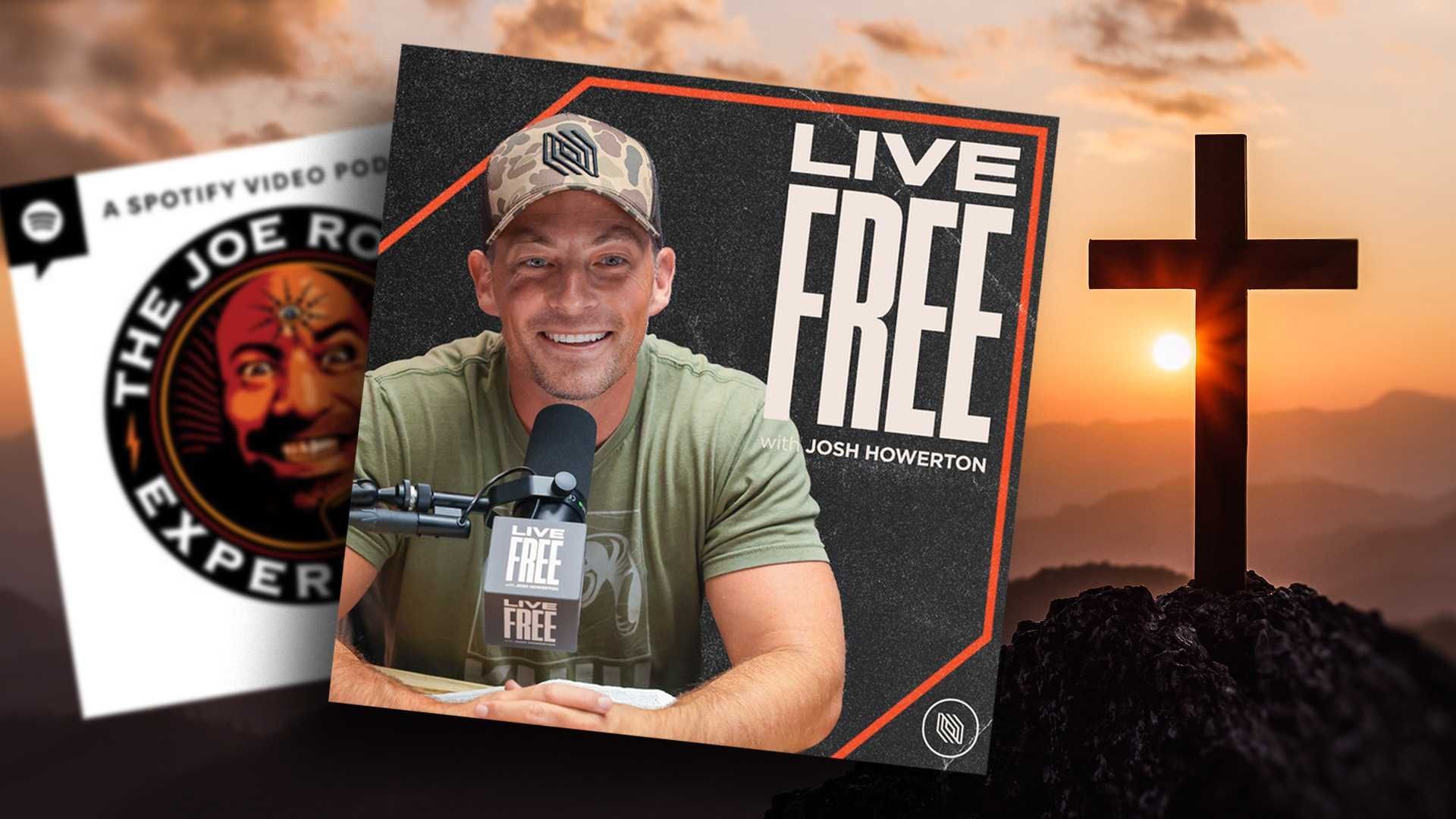
But according to internet pioneer Marc Andreessen, AGI is already here. On a recent episode of “The Joe Rogan Experience,” he claimed that we quietly crossed the threshold with the latest chatbot models like GPT-5.5, Claude Opus 4.6, Grok 4.3, and Gemini 3. Andreessen declared that these models now outperform top human experts in many domains.

Glenn believes this is critical information. Like electricity, telephones, television, the internet, and other general-purpose technologies that are so powerful and broad they fundamentally reshape how society, economies, and daily life function, AGI will revolutionize the world.

Is humanity ready to navigate the rapids, or will it crash on the rocks of blind trust and indiscrimination?

Unlike the aforementioned technologies whose transformative powers were slow, AI is “coming at the speed of light,” Glenn says.

“And because of that, there will be almost no chance to adapt or to stop and think, ‘Wait a minute, what is it we’re losing? And what is it we’re gaining here?’” he warns.

AGI, Glenn explains, will render much of the world’s experts obsolete.

“This is a tool that touches every single field at once: medicine, law, education, programming, finance, therapy, research, media, art, science — everything,” he says.

In his conversation with Rogan, Andreessen claimed that medical doctors are already relying heavily on AI models to assist in diagnosing and treating patients.

“When doctors are using this in examination rooms, you need to pay attention,” Glenn says, “because it’ll reveal something really important that always comes first in history, and that’s this: The experts themselves already know.”

“While we’re sitting here using it as a toy and debating whether AI is useful, the professionals, the ones who have those deep credentials, they’ve already quietly moved on to depending on it,” he continues.

Adoption before disruption, Glenn says, has long been the pattern.

“Factories automate before workers hear about it; banks digitize before the tellers disappear; retailers optimize before the storefronts close. The future arrives inside the institution first,” he explains.

While this seems like apocalyptic news, he acknowledges the bright side: People who learn how to use AGI to their genuine advantage by employing it as their own personal “staff” will not only avoid being replaced; they’ll create new opportunities that were impossible before.

“With AI, if you know how to prompt, a small company can compete against giant corporations. A teenager can launch a product that used to have millions in capital behind it. ... A single mom can get tutoring, legal explanations, business advice, health analysis ... free,” Glenn says. “The upside of this is staggering.”

But there is a dark side that “matters just as much,” he warns.

While access to information has been democratized, judgment remains a skill that must be cultivated with care.

“When everyone has access to infinite information, discernment becomes priceless,” Glenn says.

He fears that those who never learned how to think critically and ask questions will blindly follow whatever AI tells them, perhaps to their demise.

“I can ask AI how to treat symptoms, but do I know the right questions to ask to see if that analysis of what I’m treating is wrong? ... You can ask it legal advice, but do you know when you need a real, actual, physical attorney?” Glenn comments.

When people lose that “living moral compass” inside them — the one that detects manipulation, corruption, and ill advice — we’re in a dark age indeed.

“That’s why I have said you will be lost without the spirit to guide you,” Glenn says, “because [AI arguments are] going to be so overwhelmingly well-crafted, you may not know what is true.”

“The whole thing is not whether machines can think. Yes. The real question is whether humans can still think, and I’m not sure about that.”

To hear more, watch the video above.

Do Joe Rogan and Theo Von care if their audiences go broke?


America's gambling problem has a new face, and it looks suspiciously like yours. Or your brother's. Or the guy next to you at Mass who keeps checking his phone during the homily.

A recent Ohio State University study found that religious affiliation does almost nothing to prevent sports betting. Catholic men ranked among the most enthusiastic gamblers in the dataset. The pew and the parlay, apparently, get along fine.

It trains people to seek deliverance through randomness rather than work, discipline, family, or faith.

Americans love believing that gambling addiction belongs to someone else: the degenerate, the Vegas burnout, the man at the racetrack, clutching losing tickets and emitting fumes that could strip paint.

Bottoming out

That stereotype has expired. Online gambling has democratized self-destruction, and the business of bottoming out is booming.

Personal responsibility matters — nobody disputes this. No app physically forces a man to wager his rent on a Tuesday game between two NBA teams he has never watched or followed and whose rosters he couldn’t name under torture. Adults make choices, and adults must own those choices. But treating this purely as a failure of weak individuals overlooks the scope of the problem.

America built a digital temptation machine that previous generations couldn’t have imagined. Old-school gambling required some effort. You drove somewhere. You walked through doors. You made bets in person. It also carried a healthy stigma: Someone might spot you. Shame had room to operate.

Online gambling vaporized that friction. The casino now follows you to the kitchen, the office bathroom, your daughter's soccer game, and, yes, occasionally a funeral reception.

Value play

The trick of online gambling is that it markets itself as entertainment and finance at the same time. You’re not gambling. No, you are "making picks." "Building parlays." "Finding value." The jargon sounds vaguely like a hedge fund internship for guys in tank tops.

The apps borrow heavily from social media design. Bright colors. Instant dopamine. Notifications calibrated to land at psychologically vulnerable hours. Near-misses engineered to keep users emotionally hostage. Vegas relied on free drinks and flashing lights. Modern sportsbooks use behavioral science perfected by Silicon Valley.

Sports betting hits young men particularly hard because it bonds with masculine identity. Sports have always offered escape, but now they double as a cruel promise of freedom from economic anxiety.

Every game now functions as a financial event. A chance to win. A chance to recover. A chance to prove you outsmarted the algorithm. I say this as someone who enjoys the odd wager, maybe 20 bucks on a soccer match or a UFC fight every few months. Plenty of my friends go harder. A few are clearly addicted, though they would never admit it.

RELATED: Predatory gambling apps are using loopholes to avoid state laws

Gabby Jones/Bloomberg/Getty Images

Undue influence

This is not a male-only problem. Women participate too, in growing numbers. The image of gambling addiction as a strictly male affliction belongs to the era of landlines, fax machines, and Blockbuster late fees. Apps market aggressively to everyone, repackaging an old vice as lifestyle entertainment.

Casual. Social. Empowering. America took compulsive wagering and gave it influencer branding. Lives ruined, families wrecked, mounting debt across every demographic. Yet the celebrity endorsements roll on without a hint of hesitation.

Joe Rogan and Theo Von have both taken DraftKings sponsorships.

Neither man invented gambling. Neither forces a listener to do anything. Both have every right to accept advertisers.

But there’s an important question worth asking. At what point does cultural influence carry moral weight? Both men are multimillionaires. Neither needs the sponsorship money to keep the studio lights on. With tens, perhaps even hundreds, of millions of dedicated listeners, they could sell practically anything. Sneakers, protein powder, trucks, premium tequila, leather wallets thick enough to stop a bullet, ergonomic office chairs, mattresses that promise spinal enlightenment. The list is endless.

But they choose gambling, which is reckless given that many of their listeners are young men who treat an ad read by either of them as an endorsement, a recommendation from a trusted voice, practically a green light from an older brother who has supposedly figured life out. Von, in particular, should know better. He has spoken honestly about his battles with addiction, and yet here he is, reading copy for an industry built on the same psychological hooks.

Gaming addiction

A ruthless and exploitative industry, I might add. The online gambling giants don’t build empires on casual users dropping five dollars on the Super Bowl. Profits come disproportionately from heavy users chasing losses at 2 a.m. while insisting they are "due." America has normalized this sickness into something that no longer registers as strange. Ads run during games, before games, after games, across social media, and occasionally during segments warning about gambling addiction itself. "Call this hotline if you have lost your house. Also, use code TOUCHDOWN for a risk-free bet."

The damage runs deeper than money. Online gambling sells the fantasy that rescue is one lucky bet away. One hit. One miracle payout. It trains people to seek deliverance through randomness rather than work, discipline, family, or faith.

The isolation makes it uniquely dangerous. Alcoholics gather in bars. Drug users move through visible circles. The online gambler hemorrhages money for years beside a sleeping spouse who trusts that everything is under control. Across the country, an increasing number are rolling the virtual dice, each one believing he is the exception.

He is not. The house always wins, and these days the house fits in your back pocket.

Canada’s conservative challenger Pierre Poilievre wins big on Joe Rogan's podcast


Pierre Poilievre may be taking a page from Donald Trump’s playbook. For American audiences, Poilievre is Canada’s Conservative leader and top challenger for prime minister — a sharp-tongued critic of liberal governance who has fused free-market economics with a populist political style.

Trump’s appearance on "The Joe Rogan Experience" podcast was widely credited — fairly or not — with helping him connect with voters outside the traditional media bubble. Now, with his own poll numbers tightening, Poilievre has stepped onto the same stage, betting that a long-form, unfiltered conversation can do what scripted interviews often cannot.

Poilievre didn’t just avoid the risks his critics predicted; he made the format work for him. Like Trump before him, he used Rogan's show not as a gauntlet, but as a platform.

If that was the strategy, it worked.

Worth the risk

It’s hard to pinpoint the high point of Poilievre’s appearance on Rogan's show. There were several.

Before the interview — recorded, not live — Canada’s media class warned that it was a risk. Two-plus hours with Rogan, they suggested, could expose Poilievre to awkward questions or even embarrassment on the world’s most popular podcast, which also commands a massive Canadian audience.

There was little reason for concern.

Rogan opened by praising Poilievre as “a very reasonable, intelligent person” — a rarity in politics, he added — before launching into a broad critique of Canada’s recent direction. It set the tone: friendly, expansive, and largely unhostile.

They quickly turned to the now-famous “apple video,” a viral exchange between Poilievre and a British Columbia reporter that has become political folklore. What began as a would-be “gotcha” ended with Poilievre — casually eating an apple — deflecting accusations of populism and comparisons to Donald Trump. The clip circulated widely, hailed by supporters as a small master class in message discipline.

Poilievre told Rogan he hadn’t thought much of the moment at the time and didn’t even realize he was being recorded, assuming it was a routine print interview. The footage, captured by his own staff, was initially posted online without much notice before suddenly going viral weeks later, turning the exchange into an unlikely political talking point.

Mind your own business

Over two and a half hours, the conversation ranged widely — from martial arts to Canada’s Medical Assistance in Dying program.

On euthanasia, Poilievre struck a more serious tone, arguing that public policy should emphasize helping people endure hardship rather than steering them toward death. He suggested the system should be oriented toward preserving life and ensuring that vulnerable people are not nudged toward assisted suicide as a default outcome.

He also revived a theme he has largely shelved since 2023: the idea of a “mind your own business” approach to government.

Poilievre framed the role of Parliament as limiting state power while expanding individual freedom — focusing government on core responsibilities like infrastructure, defense, and public safety while otherwise leaving people alone to live their lives. He added that if he were to build a party from scratch, it would embody that philosophy.

RELATED: ‘I couldn’t believe it’: BC tribunal orders ex-school trustee to pay $750K over trans 'hate'

David Krayden | NurPhoto/Getty Images

Fight club

At one point, the dynamic flipped. During a discussion of the UFC and martial arts, Poilievre began quizzing Rogan on his own background, demonstrating an unexpected fluency in the subject — and even offering details about Bruce Lee that appeared to catch Rogan off guard.

The performance was confident, relaxed, and at times surprisingly deft.

Poilievre didn’t just avoid the risks his critics predicted; he made the format work for him. Like Trump before him, he used Rogan's show not as a gauntlet, but as a platform.

It’s the kind of appearance he may wish he had done sooner — and one he’ll likely repeat as he continues his bid to become Canada’s next prime minister.

Watch Joe Rogan deprogram Steve-O after stuntman makes claim about transgender 'internment camps'


Wanting to get breast implants as a stunt led to "Jackass" star Steve-O believing transgender-identified people are oppressed.

In 2024, the stuntman planned to get the surgery done for the sake of comedy, telling podcaster Joe Rogan, "This is where the bar is at."

'You can't escape your f**king chromosomes.'

However, the plan fell through when an absent anesthesiologist delayed the procedure. While a doctor was trying to reschedule Steve-O — real name Stephen Gilchrist Glover — the 51-year-old recalled having a change of heart after speaking with a transgender person at a grocery store.

He told Rogan that the "level of oppression" described to him by the person "genuinely f**king broke my heart."

Washroom woes

"They said, 'Hey, let me tell you, I am not allowed to use the bathroom at my own place of work,'" Steve-O claimed before Rogan immediately jumped in.

"That's not true. They're just not allowed to use the bathroom that doesn't align with their biological sex," Rogan began.

Recognizing the reality of "gender dysphoria," Rogan said at least some men were being given a "golden ticket to go into the women's locker room ... and pretend you're a woman when you're just a crazy man and you're actually into women."

He added, "You can't escape your f**king chromosomes ... what you're dealing with is a form of gender dysphoria, which has always been classified as a mental illness until people became much more empathetic and sensitive to people that have this problem."

Camp canard

In one of several cases where Steve-O agreed he had been out-dueled, he then moved on to his next claim: that politicians are trying to put transgender people "in internment camps."

RELATED: Two trans-identifying men file lawsuit against 'dehumanizing' Kansas law that invalidated their driver's licenses

While Rogan agreed there "might be one kook" trying to get attention, he added, "There's no movement to try to put transgender people in internment camps."

Steve-O's claim likely stemmed from reports about Republican Rep. Nancy Mace (S.C.), who was speaking about Charlie Kirk's alleged assassin's alleged transgender partner.

"It was a transgender. ... It was a tranny," Mace said to reporters in 2024. Noting that she has received death threats from transgender activists, she added, "They are mentally ill and should be in a straight jacket with a hard steel lock on it."

As well, Republican Rep. Ronny Jackson (Texas) told Newsmax that transgender people have "legitimate psychiatric issues."

"We have to do something about this, we have to treat these people, we have to get them off the streets, and we have to get them off the internet, and we can't let them communicate with one another."

His statements were also in response to Kirk's assassination, and both his and Mace's remarks were made within five days of Kirk's death. The comments were labeled as calls for institutionalization by some outlets, but there does not appear to be any mention of "internment camps" by any politicians.

Tapping out

During the discussion, Rogan also told Steve-O that transgender people had actually been responsible for more death than Immigration and Customs Enforcement, an agency Steve-O had spoken out against in February.

RELATED: Supreme Court sides with Catholic parents against California on student gender notification — for now

Photo by Axelle/Bauer-Griffin/FilmMagic

"Do you know who's killed more people than ICE this year? Trans shooters. Do you know the majority of these high school shootings have been transgender people?" Rogan asked.

"I did not know that," Steve-O replied.

After Rogan referenced medications and hormones as not being good to mix with "mental struggles," being "ostracized," and propaganda about trans "genocide," Steve-O soon admitted that Rogan was making good points.

"You've convinced me," the stuntman said.

Rogan then summarized his argument by comparing it to a country's borders.

"Can't have an open border. Doesn't mean that all immigrants are murderers. ... But some people that sneak across the border, if you don't check, are going to be murderers. It's just a fact. So you have to have a f**king closed border to check. And you have to have a gender border too."

Like Blaze News? Bypass the censors, sign up for our newsletters, and get stories like this direct to your inbox. Sign up here!