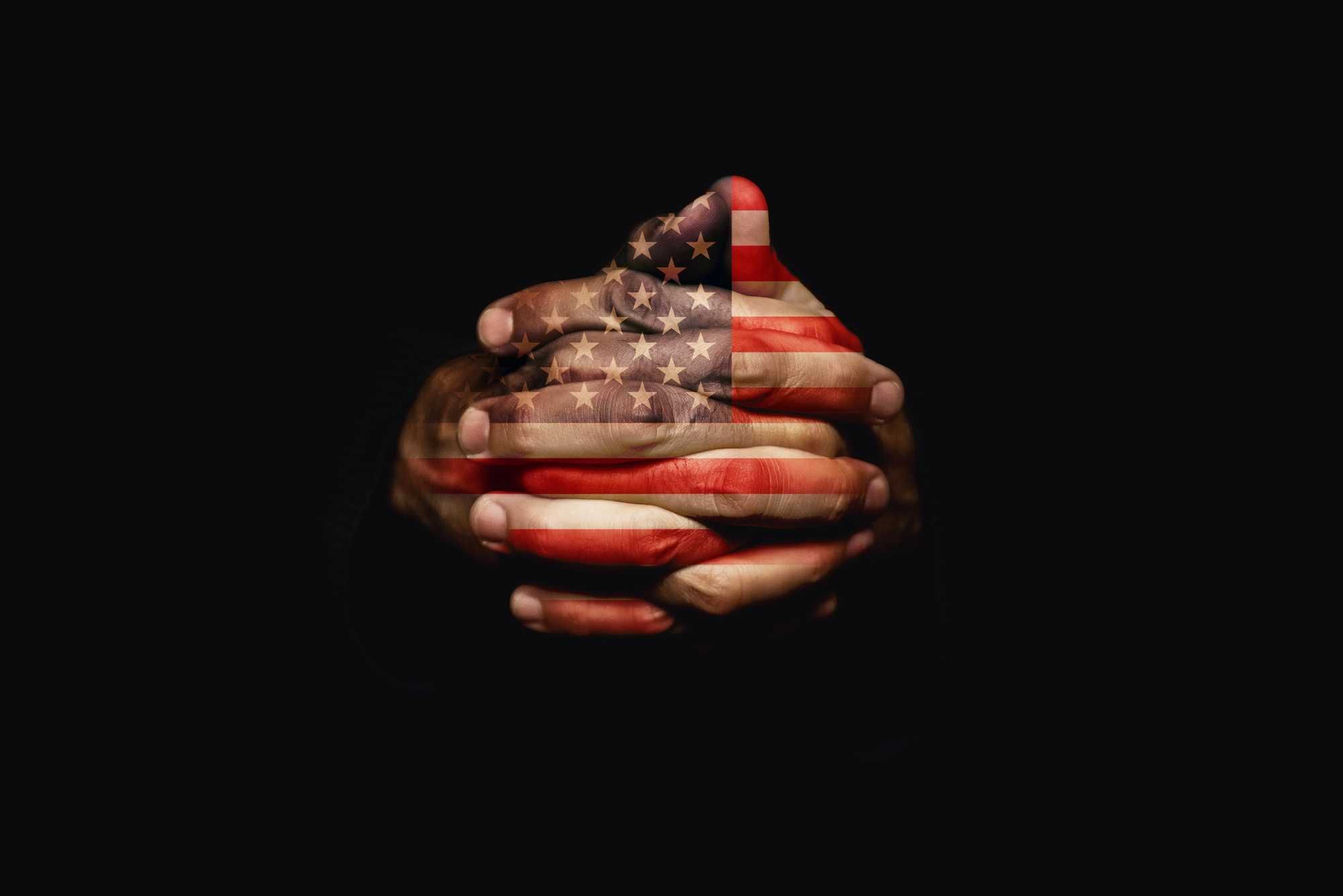
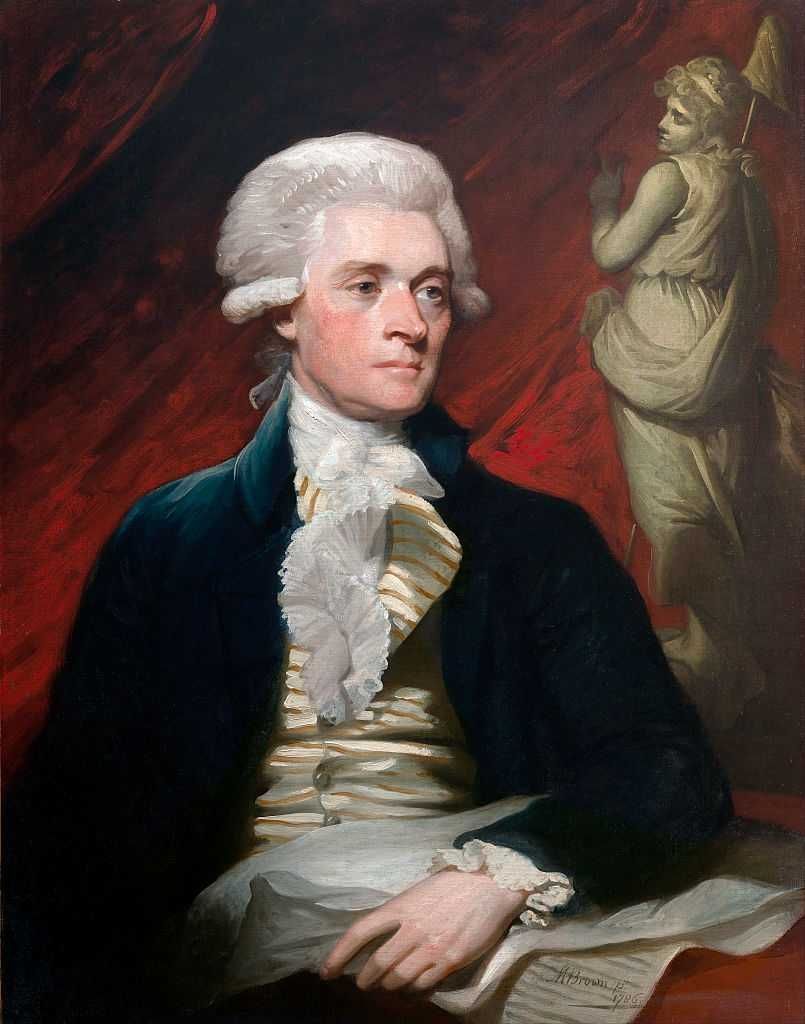
Our forefathers prayed on Thanksgiving. We scroll.


There was a time when Thanksgiving pointed toward something higher than stampedes for electronics or a long weekend of football. At its root, Thanksgiving was a public reminder that faith, family, and country are inseparable — and that a free people must recognize the source of their blessings.

Long before Congress fixed the holiday to the end of November, colonies and early states observed floating days of thanksgiving, prayer, and fasting. These were civic acts as much as religious ones: moments when communities asked God to protect them from calamity and guide their families and their nation.

Grounded in gratitude

The Continental Congress issued the first national Thanksgiving proclamation in 1777, drafted by Samuel Adams. The delegates called on Americans to acknowledge God’s providence “with Gratitude” and to implore “such farther Blessings as they stand in Need of.”

Twelve years later, President George Washington proclaimed the first federal day of thanksgiving under the Constitution. He asked citizens to gather in public and private worship, to seek forgiveness for “national and other transgressions,” and to pray for the growth of “true religion and virtue.”

Our problems — social, fiscal, and moral — are immense. But they are not greater than the God our ancestors trusted.

Other presidents followed suit. During rising tensions with France in 1798, John Adams declared a national day of “solemn humiliation, fasting, and prayer,” arguing that only a virtuous people could sustain liberty. The next year he called for another day of thanksgiving, urging citizens to set aside work, confess national sins, and recommit themselves to God.

For generations, this was the American understanding: national strength flowed from moral character, and moral character flowed from religious conviction.

The evolution of a holiday

In 1863, President Abraham Lincoln — responding to years of lobbying by Sarah Josepha Hale — established the last Thursday in November as a permanent national Thanksgiving. Hale saw the holiday as a unifying civic ritual that strengthened families and reminded Americans of their shared heritage.

Calvin Coolidge echoed this tradition in 1924, observing that Thanksgiving revealed “the spiritual strength of the nation.” Even as technology transformed daily life, he insisted that the meaning of the day remain unchanged.

But as the country drifted from an agricultural rhythm and from public expressions of faith, the holiday’s original purpose faded. The deeper meaning — gratitude, repentance, unity — gave way to distraction.

When a nation forgets

Today, America marks Thanksgiving with a national character far removed from the one our forebears envisioned. The founders believed public acknowledgment of God’s authority anchored liberty. Modern institutions increasingly treat religious conviction as an obstacle.

Court rulings have redefined marriage, narrowed the space for religious conscience, and removed long-standing religious symbols from public grounds. Citizens have been fined, penalized, or jailed for refusing to violate their beliefs. The very freedoms early Americans prayed to preserve are now treated as negotiable.

At the same time, other pillars of national life — family stability, civic order, border security, self-government — erode under cultural and political pressure. As faith recedes, government fills the void. The founders warned that a people who lose their internal moral compass invite external control.

Former House Speaker Robert Winthrop (Whig-Mass.) put it plainly in 1849: A society will be governed “either by the Word of God or by the strong arm of man.”

A lesson from history

The collapse of religious conviction in much of Europe created a vacuum quickly filled by ideologies hostile to Western values. America resisted this trend longer, but the rising influence of secularism and identity ideology pushes our society toward the same drift: a nation less confident in its heritage, less united by a common purpose.

Ronald Reagan saw the warning signs decades ago. In his 1989 farewell, he lamented that younger generations were no longer taught to love their country or understand why the Pilgrims came here. Patriotism, once absorbed through family, school, and culture, had been replaced by fashionable cynicism.

Thanksgiving offers the antidote Reagan urged: a return to gratitude, history, and shared purpose.

RELATED: Why we need God’s blessing more than ever

Photo by Barney Burstein/Corbis/VCG via Getty Images

Thanksgiving was meant to be the clearest expression of a nation united by faith, family, and patriotism. It rooted liberty in gratitude and gratitude in God’s providence.

Reagan captured that spirit in 1986, writing that Thanksgiving “underscores our unshakable belief in God as the foundation of our Nation.” That conviction made possible the prosperity and freedom Americans inherited.

Today’s constitutional conservatives must lead in restoring that heritage — not by nostalgia, but by example. Families who teach gratitude, faith, and national purpose build the civic strength the founders believed essential.

A return to gratitude

Thanksgiving calls each of us to humility: to recognize that national renewal begins with personal renewal. Our problems — social, fiscal, and moral — are immense. But they are not greater than the God our ancestors trusted.

That confidence is the heart of Thanksgiving. It is why the Pilgrims prayed, why Congress proclaimed days of fasting and praise, why Lincoln unified the holiday, and why generations of Americans pause each November to give thanks.

Editor’s note: A version of this article first appeared at Conservative Review in 2015.

Demanding Homage To Islam, Mamdani Proves Migration Without Assimilation Is Just Conquest

During Thursday’s New York City mayoral debate, socialist Zohran Mamdani implied former New York Gov. Andrew Cuomo is unqualified to be mayor because he hadn’t visited a mosque. “He had more than 10 years and he couldn’t name a single mosque at the last debate we had that he visited,” Mamdani said, before going on […]

What if Johnny Carson turned MLK’s murder into a punch line?


What if, in 1968, after the assassination of Martin Luther King Jr., Johnny Carson opened “The Tonight Show” with jibes about how one of King’s own supporters had pulled the trigger? What if he followed with a gag suggesting that President Lyndon Johnson didn’t care much about losing a friend? Or how maybe we need to keep up the pressure on conservatives who think free speech includes engaging those who disagree with them in civil dialogue?

Does anyone believe NBC executives would have shrugged and said, “Let Johnny talk — free speech, you know”? Does anyone think Carson’s 12 million nightly viewers would have treated it as harmless banter and tuned in the next night with curiosity about what he might say next?

Jimmy Kimmel needs to ‘grow a pair,’ take his lumps, and find another venue.

When the members of the first Congress wrote the First Amendment, enshrining freedom of speech, they did it within the context of the words of John Adams: “Our Constitution was made only for a moral and religious people. It is wholly inadequate to the government of any other.”

St. Paul puts it this way: “‘I have the right to do anything,’ you say — but not everything is beneficial. ‘I have the right to do anything’ — but I will not be mastered by anything” (1 Corinthians 6:12).

Sadly, I was included in an email from a dear relative who chided anyone who did not protest Jimmy Kimmel’s firing, citing the First Amendment. My relative felt very strongly about this. In his own words, if you didn't loudly defend Kimmel, you needed to “grow a pair.”

My wife and I had just finished watching the entire eight-hour-long, beautiful, uplifting, and spirit-filled memorial service for Charlie Kirk. Before I went to sleep, I decided to clear out my email inbox for the day. Unfortunately, I opened the email from my relative (thinking it was just the usual newsy missive) and read his thoughts.

He had written his opinions before the service, so I am not sure if he would have sent the same message; he made it clear that what happened to Charlie was certainly serious and evil.

No buts about it

My relative used words I had heard before from those who want to virtue signal, while also insisting that doing bad things is not acceptable. It was a variation of this: Yes, what happened to Charlie Kirk was wrong, terrible! But ...

If you hear people on the left — or even people who consider themselves rational, reasonable people “in the middle” who like to play the both-sides-are-wrong card — you need to push back. Comparing the temporary suspension of a mediocre, inconsequential talent like Kimmel to the assassination of a beautiful, influential man like Kirk — well, they are not in the same arena.

Since I was the only one on the email thread who knew Charlie personally (we had been colleagues at Salem Radio), I felt my comments would carry more weight.

I highlighted the Martin Luther King Jr.–Carson comparison and then focused on the “free speech” aspect from a purely business standpoint.

Jimmy Kimmel loses tens of millions of dollars for the network annually. It's been said that his viewership was so low that if you posted a video on X of your cat playing the piano, you could attract more viewers than Kimmel gets on any given night.

Moreover, the claim that Kimmel was denied his First Amendment rights is simply untrue. Kimmel remains free to say whatever he wants anywhere else. For example, when Tucker Carlson (who had the hottest show on Fox, making millions for the network) was canceled for speaking the truth politically, he launched his own “network.”

The funny thing is (no, not jokes from Kimmel’s opening monologues), unsuccessful shows hosted by people with varying degrees of talent get canceled all the time in the world of television. If that were not so, we would all be subjected to the 59th season of “My Mother the Car,”starring Jerry Van Dyke.

RELATED: I experienced Jimmy Kimmel’s lies firsthand. His suspension is justice.

Photo by Tommaso Boddi/Getty Images for UCLA Jonsson Cancer Center Foundation

Lackluster shows are replaced by something for which the viewing public actually cares to tune in. The public had clearly tuned out of Kimmel’s show a long time ago.

What Jimmy Kimmel needs to do is “grow a pair,” take his lumps, and find another venue. Nevertheless, Kimmel has (viola!) returned after all, because I suppose the network figures it still hasn’t lost enough money — or influence.

Prove Him wrong

Young Charlie Kirk paid the ultimate price for standing against the obvious evil he saw in plain sight. And in the days, weeks, months, and years ahead, many more, unfortunately, may join him.

My relative closed out his email challenging those of us who didn't agree with him to respond à la Charlie: “Prove me wrong,” he wrote.

I closed my email response to him in a way I think the humble Charlie Kirk might have done: “Jesus said, ‘I am the Way, the Truth, and the Life. No one comes to the Father except through Me'” (John 14:6).

“Prove Him wrong.”

Tim Kaine Thinks You’re A Terrorist If You Believe Rights Come From God

The idea that rights come from God, rather than the state, is neither radical nor foreign. It is the foundational principle of the Republic.

Supreme Court Ruling Is A Greenlight For Parents Who Want To Take Back Public Education

Whether through Supreme Court precedent, statutes, or even constitutional amendments, ours is a parental rights moment that demands action to allow parents the right to do their duty and raise their children.

The founders were young and so is America — really


Although America’s 250th birthday is still one year away, there is a fun, unique, and mathematical fact about this year's 249th birthday that will help illustrate just how young America is as a nation.

To do that, we can start with the age of President Thomas Jefferson on the day he died — significantly enough, on the day America was celebrating its 50th birthday: July 4, 1826. Jefferson was 83.

Just three 83-year-olds living back-to-back-to-back takes you to the year our nation was founded.

As an interesting aside, our third president was not the only commander in chief whose life was historically tied to America's birthday. President John Adams also died within five hours of Jefferson on July 4, 1826. Five years later, on July 4, 1831, our fifth president and founding father James Monroe also passed away.

Not to be too maudlin, one president was actually born on the Fourth of July. In 1872, Calvin Coolidge came into the world and would grow up to become America's 30th president.

RELATED: Yes, Ken Burns, the founding fathers believed in God — and His ‘divine Providence’

Wynnter via iStock/Getty Images

So what does Jefferson’s age of 83 have to do with this year’s national birthday celebration? Well, if you find an 83-year-old person living in America and go all the way back to the year he was born, you would find yourself in 1942. Now, in 1942, find a person who was born 83 years in the past, back to 1859. Finally, find a person born 83 years before that, and you arrive at ... 1776!

Just three 83-year-olds living back-to-back-to-back takes you to the year our nation was founded.

And while we're pondering this age business, it's also fun to look at the relative youth of those who signed the Declaration of Independence, keeping in mind that 56 delegates representing the 13 original colonies actually put their very “lives, fortunes, and sacred honor” on the line when they signed their John Hancock on the document (and, yes, one of them was indeed John Hancock).

Also, with present-day controversy in mind, it is worth noting that none of the representatives signed using an auto-quill.

The average age of the document’s signers was 44 years, which happened to be George Washington's age at the time. And Washington's nemesis across the pond, the other George, King George III of England? He was 38.

The oldest signer of the Declaration was (no surprise) Benjamin Franklin, age 70.

Finally, by now you have probably done the math to figure out the age of Thomas Jefferson — the document’s chief author — when he signed: 33.

Now, enjoy the celebrations and get ready for the biggest one of all, next year’s 250th!

Editor's note: A version of this article appeared originally at American Thinker.

Martyrs don’t bend the knee — even to the state


In 1535, Saint Thomas More went to his death, not in defiance of his king but in ultimate service to both God and England. His final words — “I die the king’s faithful servant, and God’s first” — captured the essence of true religious liberty: the freedom to fulfill the duty to worship God rightly. As the patron saint of religious liberty, More challenges lawmakers and church leaders to renew their commitment to defending that sacred duty.

To More, religious liberty wasn’t just freedom from state interference. It meant the freedom to obey God, even at the cost of his life. His last declaration made clear that duty to God comes before any loyalty to civil authority. Pope Leo XIII put it plainly in “Immortale Dei”: “We are bound absolutely to worship God in that way which He has shown to be His will.”

When laws hinder the duty to worship God rightly, they chip away at the foundation of religious liberty the founders meant to preserve.

More lived this principle, choosing martyrdom over surrender to the world. His death makes clear that real freedom begins with obedience to God — a truth rooted in the moral obligations of human nature. To defend religious liberty is to affirm the duty to give God the worship He deserves, a duty no earthly power — not even a king — can rightly deny.

America’s founders understood this well. They saw religious liberty not as license, but as the right to fulfill one’s duty to God. James Madison wrote, “It is the duty of every man to render to the Creator such homage and such only as he believes to be acceptable to him. This duty is precedent, both in order of time and in degree of obligation, to the claims of Civil Society.”

RELATED: Why Trump's religious liberty agenda terrifies the left — but tells the truth

imagedepotpro via iStock/Getty Images

America’s founders drafted the Constitution with the understanding that citizens would practice their religious duties — not as optional acts, but as essential to a free and moral society. As John Adams put it, “Our Constitution was made only for a moral and religious People. It is wholly inadequate to the government of any other.”

That understanding now faces growing threats. When laws hinder the duty to worship God rightly, they chip away at the foundation of religious liberty the founders meant to preserve. Consider the case of Colorado baker Jack Phillips. For refusing to make cakes that violated his faith, Phillips endured more than a decade of legal battles, fines, protests, and business losses. He wasn’t seeking special treatment — he simply wanted to live out his faith. Although the Supreme Court eventually sided with him, the fight drained years of his life and resources. Religious liberty delayed for a decade amounts to religious liberty denied.

True religious freedom, as More and the founders envisioned it, demands strong protections for people and institutions to live out their beliefs in every area of life, not just within a sanctuary or under the narrow shelter of exemptions.

To fulfill the vision of religious liberty embodied by Thomas More and upheld by America’s founders, Americans must renew their commitment to strengthening religious institutions through laws that promote the common good. Elected leaders cannot separate their faith from their public responsibilities. Religious truth shapes just governance.

Having just celebrated Religious Liberty Week, we would do well to recall More’s words: “God’s first.” True religious liberty begins with the duty to worship God as He commands. That duty forms the bedrock of a free and just society.

Yes, Ken Burns, the Founding Fathers believed in God — and His 'divine Providence'


Ken Burns has built his career as America's memory keeper. For decades, he's positioned himself as the guardian against historical revisionism, the man who rescues truth from the dustbin of academic fashion. His camera doesn't just record past events — it sanctifies them.

For nearly five decades, Burns has reminded Americans that memory matters and that history shapes how a nation sees itself.

Jefferson's 'Nature’s God' wasn’t a placeholder. It was a real presence. He sliced up the Gospels but still bowed to the idea of eternal moral law.

Which makes his recent performance on Joe Rogan's podcast all the more stunning in its brazen historical malpractice.

At the 1-hour, 17-minute mark, Burns delivered his verdict on the Founding Fathers with the confidence of a man who's never been wrong about anything.

They were deists, he declared. Believers in a distant, disinterested God, a cosmic clockmaker who wound up the universe and wandered off to tend other galaxies. Cold, clinical, and entirely absent from human affairs.

It's a tidy narrative. One small problem: It's so very wrong.

The irony cuts so deep it draws blood. The man who made his reputation fighting historical revisionism has become its most prominent practitioner. Burns, the supposed guardian of American memory, has developed a curious case of selective amnesia, and Americans are supposed to pretend not to notice.

The deist delusion

Now, some might ask: Who cares? What difference does it make whether Washington believed in an active God or a divine absentee landlord? The answer is everything, and the fact that it's Burns making this claim makes it infinitely worse.

This isn't some graduate student getting his dissertation wrong. This is America's most trusted historical documentarian, the man whose work shapes how millions understand their past. When Burns speaks, the nation listens.

When he gets it wrong, the mistake seeps like an oil spill across the national story, quietly coating textbooks, classrooms, and documentaries for decades.

Burns is often treated as an apolitical narrator of history, but there’s a soft ideological current running through much of his work: reverence for progressive causes, selective moral framing, and a tendency to recast American complexity through a modern liberal lens.

Burns isn't stupid. One assumes he knows exactly what he's saying. If he doesn't — if his remarks on Rogan's podcast represent genuine ignorance rather than deliberate distortion — then we have serious questions about the depth of his actual knowledge. How does someone spend decades documenting American history while missing something this fundamental?

The truth is that Americans have been lied to about the Founders' faith for so long that Burns' deist mythology sounds plausible. The secular academy has been rewriting these men for decades, stripping away their religious convictions, sanding down their theological edges, making them safe for modern consumption. Burns isn't breaking new ground. He's perpetuating a familiar falsehood.

Taking a knee

Let's start with George Washington, the supposed deist in chief. Burns would have us believe the general bowed not to God, but to a kind of cosmic CEO who delegated all earthly duties to middle management. But at least one contemporary account attests that Washington knelt in the snow at Valley Forge — not once, but repeatedly.

He called for the national day of "prayer and thanksgiving" that eventually became the November federal holiday we know today. He invoked divine Providence so frequently you’d think he was writing sermons, not military orders.

His Farewell Address reads more like a theological tract than a retirement speech, warning that “religion and morality are indispensable supports” of political prosperity. Does that sound like a man who thought God had checked out?

John Adams, another Founder often branded a deist, wrote bluntly that “our Constitution was made only for a moral and religious people.”

Adams saw the American Revolution as the outgrowth of divine intervention. As he wrote to Thomas Jefferson in 1813, “The general principles on which the fathers achieved independence were ... the general principles of Christianity.”

And what of Jefferson? By far the most heterodox, even he never denied divine order. His “Nature’s God” wasn’t a placeholder. It was a real presence. He sliced up the Gospels but still bowed to the idea of eternal moral law. Whatever his quarrels with organized religion, he did not believe in a silent universe.

Some of these men were, philosophically at least, frustrated Catholics. They couldn’t fully accept Protestantism, but they had no access to the Church’s intellectual infrastructure. The natural law reasoning that permeates their political thought — Jefferson’s “self-evident truths,” Madison’s checks and balances born of man’s fallen nature — comes straight from Aquinas, filtered through Locke, Montesquieu, and centuries of Christian jurisprudence.

The Founders weren’t Enlightenment nihilists. They weren’t secular technocrats. And they certainly weren’t deists. They were men steeped in a moral framework older than the American experiment itself.

Burns, for all his sepia-toned genius, has a blind spot you could drive a colonial wagon through. His documentaries glow with progressive reverence — plenty of civil rights and moral reckoning, but the Almighty gets the silent treatment. God may have guided the Founders, but in Ken’s cut, he barely makes the final edit.

The sacred and the sanitized

I mentioned irony at the start, but it deserves more than a passing nod. That's because the septuagenarian's own cinematic legacy contradicts the very theology he now peddles on podcasts.

His brilliant nine-part series "The Civil War" captured the moral agony of a nation tearing itself apart, and it did so in unmistakably religious terms. Here Burns treats Lincoln’s Second Inaugural Address — haunted, prophetic, bathed in biblical cadence — with reverence, not revisionism.

The series understood something essential: Americans have always been a biblical people. They see their history not just in terms of dates and treaties, but in terms of sin, sacrifice, and redemption. Sacred story, divine purpose — this was the language of American reckoning.

The Founders weren’t saints, and they weren’t simple. They read Greek, spoke Latin, studied Scripture, and debated philosophy with a seriousness that puts modern politicians to shame. But they weren’t spiritual agnostics, either.

They were men of imperfect but active faith, shaped by the Bible, steeped in Christian moral tradition, and convinced that human rights came not from government but from God.

They didn’t build a republic of personal preference. They built one grounded in enduring truths that predated the Constitution, anchored to the idea that law and liberty meant nothing without a higher law above them.

Burns may deal in memory, but his treatment of religion reveals something else entirely. He doesn’t misremember. He reorders. He filters faith through a modern lens until it becomes unrecognizable.

Memory isn’t just about what’s preserved — it’s about what’s permitted. And when the sacred gets cast aside, what’s left isn’t history. It’s propaganda with better lighting.