Welker Shocked Illegal Aliens Affect Jobs Numbers (And Other Meet The Press Questions)
 Warm or adversarial, these are the questions Kristen Welker asked Republicans and Democrats on Sept. 7's edition of 'Face The Nation.'
Liberty and property are closely linked and inseparable from civilization. A life without private ownership is not truly free.
Property rights are enshrined in the Constitution. So most of us assume that we have a right to repair our own property. But what does that mean in the era of the subscription model, when much of what we own has been dematerialized into the digital?
Apple, John Deere, and various automakers have resisted the right to repair movement, arguing that third-party repairs could compromise safety, security, and intellectual property.
Modern electronics, cars, and farming equipment have become harder to fix due to locked software and complicated ownership boundaries, making us dependent on expensive repairs and unnecessary replacements. The giant corporations make a lot of money off the maintenance and replacement of their products, and they want to keep it that way.
This means citizens increasingly have less claim to their own property.
The right to repair movement arose from the indignation of crafty people, from tech users blocked by Apple’s strict proprietary terms to farmers locked out of repairing John Deere tractors. One of the most promising examples of pushback is iFixit.
iFixit is the libertarian tinkerer’s dream. The organization's motto, “Free repair guides for everything, written by everyone,” has made it the heart of the right to repair movement. Founded in 2003, iFixit empowers consumers with free guides, tools, and parts, fighting against the closed systems of major manufacturers. Its mission is simple: Extend the life of products and return control to the consumer.
This mission was born out of frustration. It all started the way most tinkering does: with a broken machine, no instructions, and a lot of trial and error.
I spoke with Elizabeth Chamberlain, iFixit’s director of sustainability, via email. As Chamberlain shared with me, “Kyle [Wiens, iFixit co-founder and CEO] dropped his laptop off his dorm room bed and couldn’t find a guide for how to fix it. He took it apart himself, wrote a guide, and put it online — and found a ton of other people who’d had the same problem. He teamed up with Luke [Soules, iFixit co-founder and "CxO"] to get people the parts and tools they need to get things fixed.”
Their passion for empowering consumers has grown into a full-fledged movement. iFixit’s founders didn’t just want to fix their own devices — they wanted to inspire others to do the same.
But iFixit is more than just a guide provider. In 2015, after iFixit published a tear-down of a pre-release Apple TV, Apple removed iFixit's app from the App Store for violating its nondisclosure agreement. Instead of backing down, iFixit got stubborn, improving its mobile site and continuing the fight.
In 2022, the company teamed up with Google and Samsung to offer self-repair programs. But it cut ties with Samsung in 2024, citing poor repairability practices — note that iFixit severed the relationship. The Google partnership, however, endures, providing Pixel phone parts and consumer-driven repair.
Rights shield us from external threats, including an unchecked state or, in this case, bloated corporate megaliths.
Unsurprisingly, big corporations like Apple, John Deere, and various automakers have resisted the right to repair movement, arguing that third-party repairs could compromise safety, security, and intellectual property — the typical scare tactics used by powerful entities to maintain control.
Apple claims that unauthorized repairs could void warranties and tamper with its proprietary designs. John Deere uses software restrictions to lock farmers out of fixing their own tractors, citing intellectual property concerns. Automakers keep repair codes locked behind dealerships, warning that unauthorized repairs could affect safety and security.
The right to repair movement counters that third-party repairs, when done correctly, do not compromise security, that consumers should have the right to repair what they own, and repairability can be built into products without infringing on proprietary designs.
Repairability also makes sense economically. Researchers determined that by fixing products instead of replacing them, consumers could save $882 million per year in Colorado alone. This shift supports a circular economy, where products are reused, refurbished, and repaired, rather than discarded.
The right to repair movement has also gained significant legislative traction. New York’s Digital Fair Repair Act opened the door, followed by victories in Oregon, Minnesota, and California.
Colorado has played a particularly valuable role in the fight, and Colorado state Rep. Brianna Titone proudly declared the state a world leader in right to repair. The state’s 2024 Consumer Right to Repair Digital Electronic Equipment Act set a new standard, possibly the most comprehensive defense of right to repair in the country, even gaining support from Google. Apple grudgingly complies.
It is Colorado’s third right to repair law, following earlier wins for farmers’ equipment and powered wheelchairs, and targets practices like “parts pairing,” which manufacturers use to prevent independent repairs.
iFixit has played a pivotal role in shaping these laws, providing expert testimony and educating lawmakers. As Chamberlain noted, “We want to fix the copyright barriers to repair, including the outdated Digital Millennium Copyright Act, which places unfair restrictions on the sale of repair tools. In the best possible world, those restrictions will be lifted and repair access for all products will become standard across the world.”
And the movement’s momentum isn’t just domestic. Laws protecting people’s right to fix their own stuff have passed in Canada, Australia, and the EU. India, Thailand, and Taiwan are developing repair frameworks.
“Right to repair is winning,” Chamberlain told me. “Many other countries are considering possible legislation, too.”
The future of right to repair hinges on continued legislative victories and overcoming corporate pushback. While Chamberlain expressed optimism, saying “We think the right to repair ball is rolling, unstoppably,” she also acknowledged the potential for setbacks if manufacturers tie legislation up in court. Still, the tide seems to be turning toward a more repair-friendly future.
As Chamberlain suggested, everyday people can make a difference by engaging with the movement: “Visit https://www.repair.org/ to learn more about the movement and find out what’s happening in your state.” The call to action is simple — take ownership, take action, and repair what’s broken.
At its heart, the right to repair is about more than just fixing things — it’s about reclaiming control. It’s about breaking free from the corporate grip, slashing repair costs, and reducing the endless cycle of unnecessary data. With iFixit leading the charge, everyday people may have a chance to shape the future — not just by consuming but by repairing its breakdowns.
Conservative filmmaker turned consumer advocate Robby Starbuck was three for three — but he wasn't about to rest on his laurels.
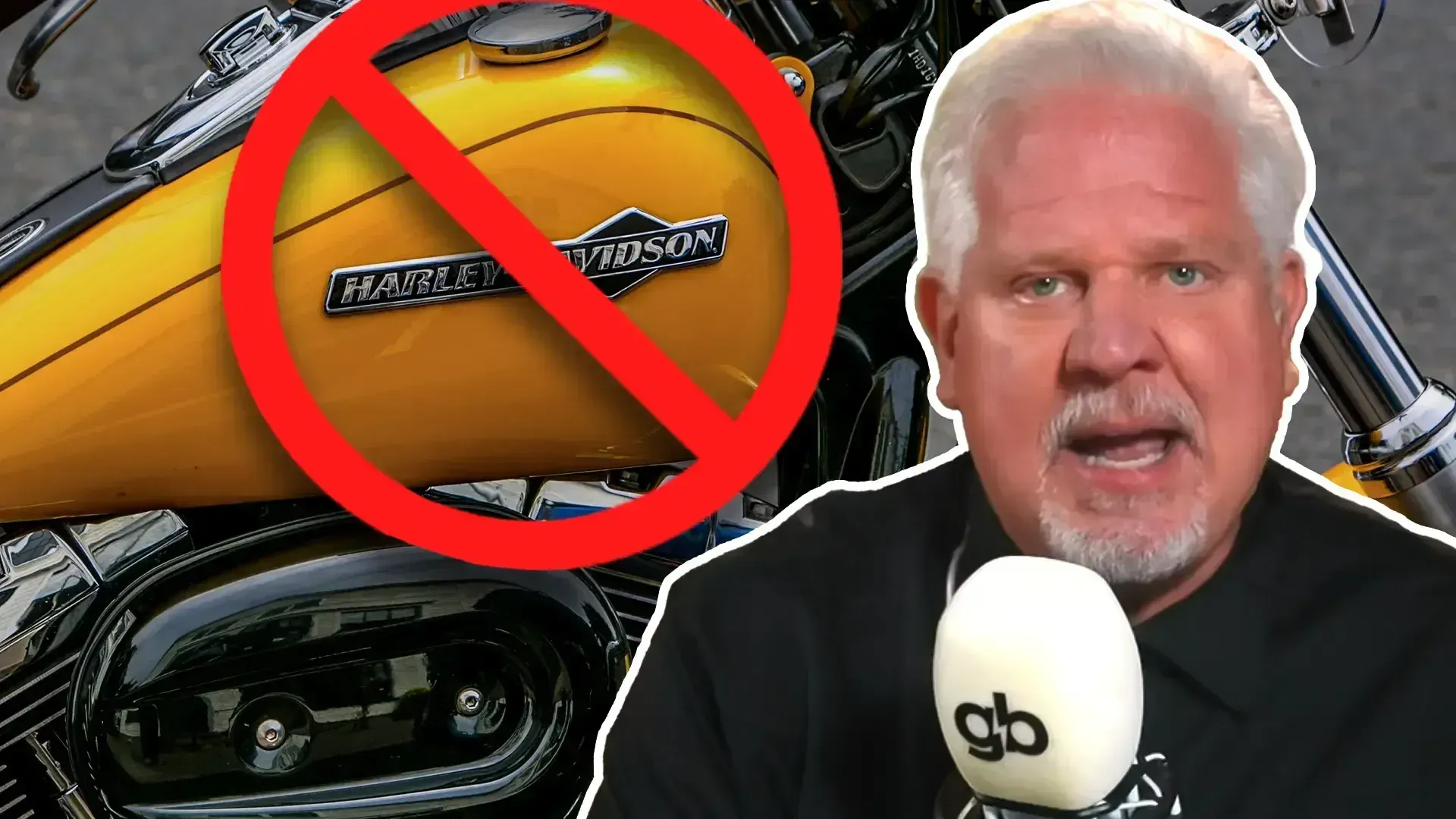
On Monday his social media-fueled boycott of Harley-Davidson convinced the iconic American motorcycle company to walk back various leftist initiatives, including mandatory "LBGTQ+ ally" training for employees and DEI-focused hiring policies.
That same day, he informed Align that he was already working on another big target.
The victory against Harley-Davidson followed similarly effective campaigns against Tractor Supply and John Deere.
Brands like these are so much a part of our history that we can't just let them "go woke, go broke." We owe it to ourselves to preserve them.
The woke desecration of Harley-Davidson has been especially insulting. As Blaze Media co-founder Glenn Beck puts it:
Harley is one of the brands that helped win World War II. The Harley-Davidson WLA carried American GIs to war against the Nazis. The WLA was brought back to the United States, and a new era of motorcycles was born after the veterans began chopping them up for civilians to use. The “chopper” was born.
Veterans returning from war from the 1940s through today have ridden Harleys as both a therapeutic mechanism to deal with what they saw on the battlefield and as an homage to experience the openness of American freedom. And that legacy has been taught and handed down to Harley-Davidson riders from father to son enthusiastically since 1903.
Thanks to Starbuck's efforts, that legacy has been preserved — for now.
- YouTube www.youtube.com
Shortly after Harley-Davidson's capitulation, Starbuck told Align that he and his small team were already at work on the next target.
While he declined to name the company — "We have someone in the field filming and can’t take any risk something accidentally gets out" — Starbuck promised "a powerful takedown" in the near future.
Word did get out. Less than twelve hours later, Starbuck revealed that his intended target — Jack Daniel's — had gotten wise to his plan. Incredibly, the mere threat of exposure was enough to make the company pre-emptively change its DEI-motivated policies.
— (@)
"We are winning and one by one we will bring sanity back to corporate America," posted Starbuck.
It's nothing Starbuck takes credit for personally. "We’re just a megaphone for the anger Americans have towards this divisive ideology," he said.
What started as a grassroots movement has encountered some growing pains as it expands, admits Starbuck: "To be perfectly candid, right now our biggest issue is scaling this. We have well over 1,000 whistleblowers and need to hire some trusted people to get the tips and evidence coming in. To appropriately organize the stories and put them out takes a lot of manpower hours."
Those who want to help with funding Starbuck's work holding companies accountable can subscribe to his X page (@robbystarbuck) for $5 a month.
But your time and attention can also make a difference. "Stay engaged with what we’re posting and take the five minutes to email or call the companies we expose," urged Starbuck. "That time investment is winning our country back."
If there’s one company you’d expect to be exploding with hardcore American values, it’s the famed, American made, tough guy motorcycle manufacturer Harley-Davidson.
Which is why Glenn Beck was absolutely shocked when filmmaker Robby Starbuck exposed Harley-Davidson, among others, for DEI-related policies that flew directly in the face of what being an American means.
“There used to be a time when we took pride in the maintenance of America, the maintenance of American heritage,” Glenn says. “It’s exactly what it was: American heritage. American brands like John Deere, Tractor Supply, Ford, Chevrolet, Indian, and Harley-Davidson.”
“We protected their legacy. We worked on their products in the fields, in our home, garages,” he continues, adding, “There was no agenda here outside of pure American greatness.”
Now, these companies are being infiltrated by people who “get their marching orders from people like Larry Fink at Black Rock” — which becomes obvious when you see what they’ve been supporting.
Harley-Davidson not only got behind the “equality act,” which would allow men into girls bathrooms, sports, and locker rooms, but the company funded an all-ages Pride event that featured a rage room next to the drag queen story time.
In addition, 1800 employees had to finish a virtual training on how to become LGBTQ+ allies, and the CEO signed the CEO action for diversity and inclusion pledge — making February and March “months of inclusion.”
White male employees were sent to a white male-only diversity training program, and the company itself is attempting to lower the number of white suppliers and employees it has.
While the company has apologized and is now walking back its leftist agenda, Glenn believes it's up to Americans to remind these companies of why they’re here and what they stand for.
“Do yourself a favor, do your country a favor. Reconnect your children to the basics of what American products are, what made them so great, why 'American Made' is more than just a slogan,” Glenn says.
“It represents the weary men and women working in factories, in small towns, all across middle America, who are trying to give their kids a better life,” he continues. “Teach your kids that getting their hands dirty is a good thing, something fought, bled, and sweat for has meaningful value.”
“And that’s who we are as Americans. It benefits the family. It supports the community. It spreads that beloved American brand all over the country and the world. That connection goes all the way to the top of the corporate boardroom, that connection that you have, that power that that spirit creates, that’s what globalists fear most.”
To enjoy more of Glenn’s masterful storytelling, thought-provoking analysis, and uncanny ability to make sense of the chaos, subscribe to BlazeTV — the largest multi-platform network of voices who love America, defend the Constitution, and live the American dream.
 There should be more to economic and trade policy than merely the price of goods.
 At the heart of the Right to Repair movement is human agency — the agency to use your property as you see fit.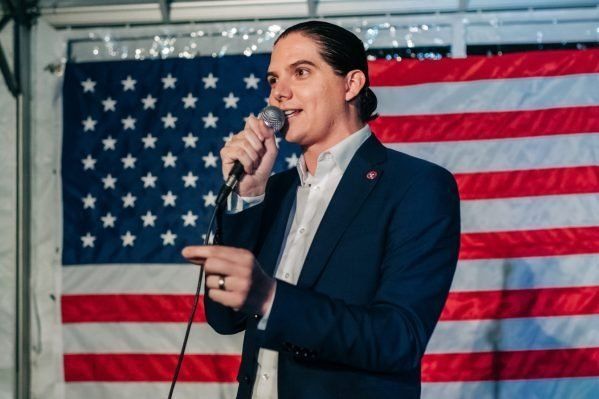

 www.theblaze.com
America's TAX DOLLARS Fueling China's Quest for World Domination