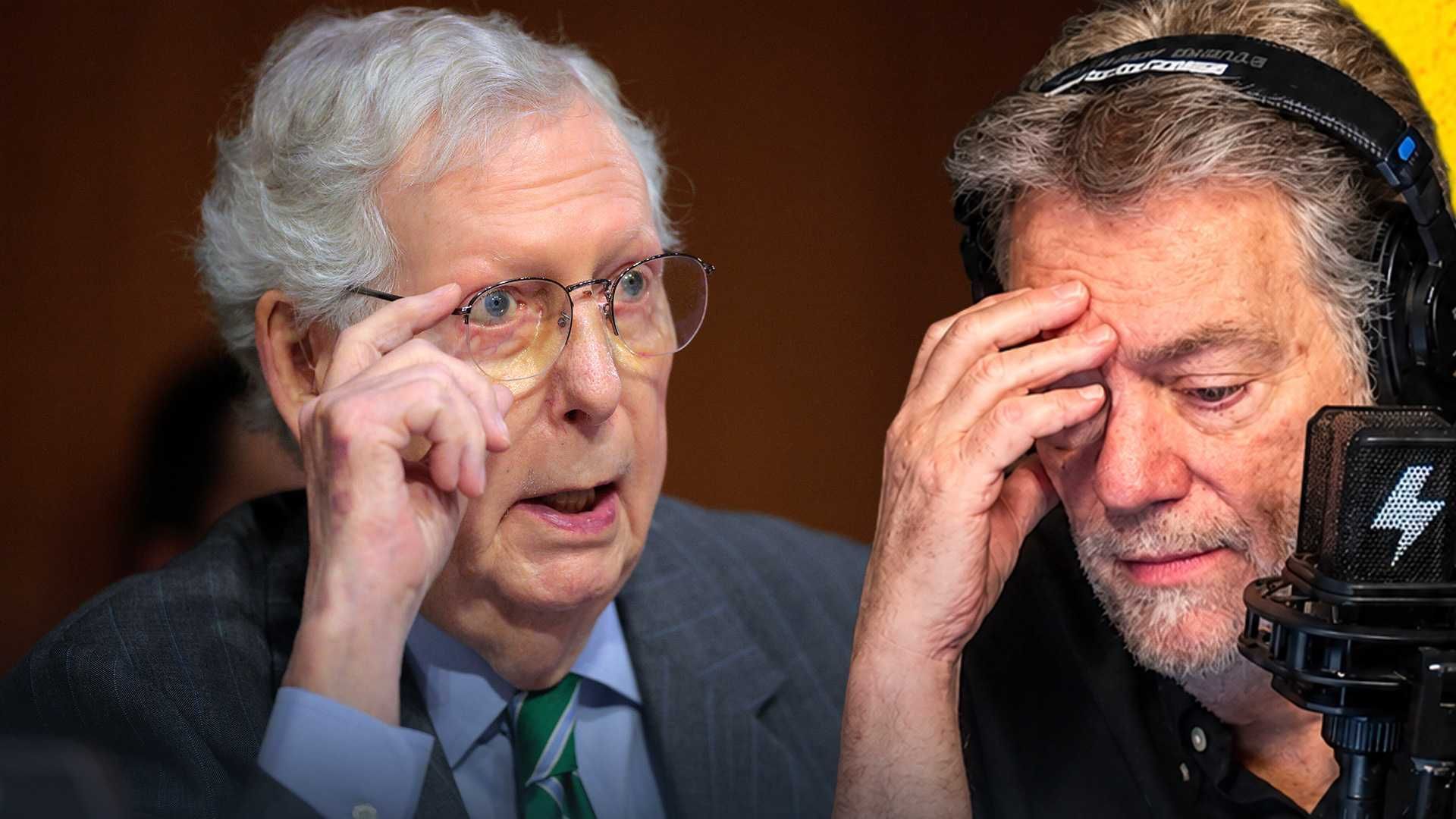
Trump broke decorum. The media broke the truth — again.


Recently, Paul du Quenoy published a necessary piece at Chronicles putting President Trump’s remark after the murder of Rob and Michele Reiner in proper context. In a Truth Social post that went viral, Trump quipped that Rob Reiner had died of “Trump derangement syndrome,” while also offering condolences and praying that the deceased would “rest in peace.”

The media response was instant and hysterical. As du Quenoy notes, legacy outlets erupted in moral outrage, eager to condemn Trump as uniquely depraved. He highlights one of the ugliest examples: a sermon from David Remnick in the thoroughly politicized New Yorker, denouncing Trump as a “degraded” human being.

Trump’s remark was ill judged. The media’s response was dishonest. Only one of those failures is being treated as a permanent moral indictment.

Du Quenoy asks: Where was this moral sensitivity when figures on the left trafficked in venom — or worse — after the assassination of Charlie Kirk?

The answer, of course, is nowhere.

This double standard defines our media culture. When rhetorical excess comes from the left, it is ignored, excused, or rationalized. When it comes from the right — especially from Trump — it is proof of moral disqualification. Etiquette is enforced selectively, always against the same targets. From the BBC to the Los Angeles Times, outlets had no difficulty canonizing Reiner while casting Trump as a cartoon villain.

A fair point must be made: Trump should not have said what he did. A president should observe certain proprieties, and Trump violates them all too often. I supported his policies and voted for him repeatedly, but that does not require defending every avoidable verbal misfire. This one was a mistake.

What deserves closer scrutiny, however, is the media’s attempt to weaponize that mistake. In outlets like People magazine, Trump’s comment was contrasted with Reiner’s allegedly noble reaction to the murder of Charlie Kirk. Reiner, we are told, expressed “horror.” Trump, by contrast, showed cruelty.

This framing collapses under minimal honesty.

After seeing this contrast repeated again and again, I searched for Reiner’s public statements — not about Kirk, but about Trump. What emerges is not a portrait of an angelic figure suddenly besmirched. For years, Reiner unleashed a steady stream of invective against Trump: “mentally unfit,” “con man,” “fascist,” “lying buffoon,” along with a great many four-letter flourishes unprintable here. He pushed the Trump-Russia hoax long after it had been exposed as fantasy. His political obsession was not subtle, incidental, or private.

RELATED: Glenn Beck addresses Trump’s controversial Rob Reiner message

Photo by ANDREW CABALLERO-REYNOLDS/AFP via Getty Images

Yet this entire record has been scrubbed from the story. Media profiles dwell on Reiner’s filmmaking career and his role as a loving father while erasing his lifelong activism and venom toward Trump. The reason is simple: The people telling the story agree with Reiner’s politics and share his hatred of Trump. Presenting Trump’s animus as unprovoked is not journalism. It is narrative laundering.

The comparison with Charlie Kirk’s murder is equally dishonest. Kirk, to my knowledge, never publicly attacked Reiner. There was no shared history, no prolonged feud. Sen. John Kennedy (R-La.) put it plainly: Trump should have said nothing after Reiner’s death, even if Reiner was obsessed with him. Still, pretending that Trump’s reaction should mirror Reiner’s response to Kirk ignores reality. The relationships were not the same.

Nor should Reiner be recast as a purely apolitical figure whose ideology can be set aside for the sake of a tidy morality play. He embraced his identity as a committed leftist as openly as he embraced his Hollywood career. The media’s erasure of that fact mirrors older myths, such as the claim that the “Hollywood Ten” were merely innocent artists with no communist affiliations. You can oppose blacklisting without lying about politics. The left never resists the temptation to lie.

So once again, we are presented with a familiar fable: a gentle, virtuous man smeared by a deranged tyrant for no reason at all. It is nonsense — but useful nonsense. It allows the media to posture as arbiters of decency while ignoring their own complicity in coarsening public life.

Trump’s remark was ill judged. The media’s response was dishonest. Only one of those failures is being treated as a permanent moral indictment — and that tells you everything you need to know.

'The voices in her head are not real': Senator Kennedy issues a hilarious rebuke of Jasmine Crockett


In response to Texas Rep. Jasmine Crockett's newly launched Senate run, Republican Sen. John Kennedy of Louisiana offered a lighthearted analysis of the Democrat's rising star.

Crockett announced her highly anticipated Senate bid in early December after her Democratic colleague Colin Allred opted to run for a House seat instead. Crockett is now expected to face off with Texas state Rep. James Talarico (D) in a contentious primary ahead of the 2026 election.

'She is wrong on every single issue.'

Although Democrats have embraced Crockett as an up-and-coming political leader, Kennedy offered some much-needed advice about the Senate race to his colleagues across the aisle.

"We all have the right to express our opinion," Kennedy said. "You're not free if you can't say what you think, and the congresswoman has a right to her opinion."

RELATED: 'Complete lizard person': Chuck Schumer gives stunningly tone-deaf remarks following Australia attack

Nathan Howard/Bloomberg via Getty Images

"But I have the right to mine," Kennedy added. "And somebody needs to tell the congresswoman, it will be in her best interest, they need to tell her that the voices in her head are not real."

Kennedy pointed out that Crockett's progressive policies combined with her many, many questionable comments will not bode well in a red state like Texas.

"She is wrong on every single issue," Kennedy said. "The people of Texas will never embrace her message. I don't know why she's doing this, but you have the right in America to do dumb things if you want to."

RELATED: ‘Very low-IQ person’: Jasmine Crockett launches Senate campaign with funny video that may give the GOP the last laugh

Photo by Win McNamee/Getty Images

To Republicans' delight, Crockett actually has a shot at winning the Democratic primary. One poll has Crockett ahead of Talarico, a more moderate Democrat, by eight points. Although she is projected to sweep the competition on the Democrat side, her poll numbers against Republican challengers make a GOP victory in 2026 look promising.

Republican Sen. John Cornyn of Texas, the incumbent in the race, is polling a comfortable six points ahead of Crockett. This margin narrows against Republican challenger Ken Paxton, who is currently projected to have just a two-point advantage.

Like Blaze News? Bypass the censors, sign up for our newsletters, and get stories like this direct to your inbox. Sign up here!

John Kennedy Tells Hannity When He Suspected Biden Was Declining

'You saw the beginning of a neurodegenerative disease'

Schumer’s Shutdown Another ‘Desperate’ Attempt To Fend Off Upstart Far Left, Analysts Say

Senate Minority Leader Chuck Schumer deliberately plunged the country into a government shutdown in an effort to improve his standing with his party’s far-left flank and score political points against Republicans amid Democrats’ faltering poll numbers, analysts and GOP lawmakers told the Daily Caller News Foundation. Schumer led Democrats in blocking a GOP spending bill to fund […]

Democrats Have No Plan To Escape Imminent Schumer-Caused Shutdown

Democrats are on the verge of sparking a government shutdown, but are declining to share their exit plan to bring a politically perilous funding lapse to an end.  Senate Minority Leader Chuck Schumer is expected to lead Democrats in filibuster a clean government funding measure to temporarily fund government operations through Nov. 21 later on […]

Republican senator relishes 'cray-cray' Mamdani's success: 'We've gotten lucky'


While New York City mayoral candidate Zohran Mamdani's popularity continues to skyrocket, some Republican lawmakers are embracing it as a blessing in disguise.

Republican Sen. John Kennedy of Louisiana said his party has "gotten lucky" with Mamdani's nomination, arguing that the "cray-cray" candidate is driving more voters away from the Democratic Party.

'That’s bad for New York, but it’s certainly good for Republicans.'

"We’ve gotten lucky — bad for America, good for Republicans — with Mr. Mamdani in New York," Kennedy told NewsNation.

"If I didn’t know better, I would think he was a Republican plant," Kennedy added. "If I didn’t know better, I’d think that Republicans had created Mr. Mamdani in a petri dish in a genomics lab."

RELATED: Hakeem Jeffries pressed for biting his tongue on Zohran Mamdani: 'It's a legitimate issue'

Photo by Michael Nigro/Pacific Press/LightRocket via Getty Images

Critics of Mamdani, including Republicans and even his fellow Democrats, point to his leftist and socialist policies. Because of his extremism, high-profile New York Democrats like House Minority Leader Hakeem Jeffries and Senate Minority Leader Chuck Schumer have refrained from endorsing Mamdani entirely.

Kennedy said that although Mamdani's policies have alienated some voters, his candidacy has ultimately has benefited Republicans.

RELATED: Defeated Democrat senator attempts a long-shot political comeback: 'Voters will reject him again'

Al Drago/Bloomberg via Getty Images

"He’s clearly from what I call the Gary Busey wing — the cray-cray wing — of the Democratic Party," Kennedy said. "That’s bad for New York, but it’s certainly good for Republicans."

Like Blaze News? Bypass the censors, sign up for our newsletters, and get stories like this direct to your inbox. Sign up here!

The same people who took your shoes now want your face


The Trump administration recently ended the Transportation Security Administration’s outdated shoe-removal rule — a long-overdue rollback of post-9/11 security theater. But at the same time, it’s resisting a bipartisan push to rein in something far more intrusive: the agency’s unregulated use of facial recognition technology at airports.

The Traveler Privacy Protection Act — co-sponsored by Sens. Jeff Merkley (D-Ore.), John Kennedy (R-La.), Ed Markey (D-Mass.), and Roger Marshall (R-Kan.) — would set limits on the TSA’s biometric surveillance program at airports.

Facial recognition checkpoints are already being piloted at major airports. TSA officials have made clear that their goal is to replace traditional IDs altogether.

Here’s what the bill does:

  • Restores consent: Manual ID checks would become the default again. Passengers would have to opt in to facial recognition. The TSA would be required to notify travelers clearly that they can opt out.
  • Limits retention: Most biometric data would have to be deleted within 24 hours.
  • Restricts sharing: The TSA could no longer hand over biometric data to other federal agencies or private entities, except in very narrow circumstances.

The legislation follows a bipartisan letter sent in November 2023 to the Department of Homeland Security inspector general, requesting a full audit of the TSA’s biometric collection, retention, deletion, and cybersecurity protocols. The letter was co-authored by Senate Commerce Committee Chairman Ted Cruz (R-Texas).

“TSA has not provided Congress with evidence that facial recognition technology is necessary to catch fraudulent documents, decrease wait times, or stop terrorists from boarding planes,” the senators wrote.

Despite that, the TSA appears to be quietly lobbying against the bill.

When asked directly whether the TSA was fighting the legislation, Kennedy said: “The short answer is yes; the long answer is hell yes.”

Behind-the-scenes pressure

The Senate Commerce Committee had planned to mark up the bill just before the August recess. But at the last minute, the legislation was pulled from the docket.

Officially, the travel industry raised concerns. But Politico reported that behind the scenes, TSA leadership — backed by political appointees — played a central role in derailing the bill. Republican staffers familiar with the process said the agency helped coordinate opposition that ultimately killed the markup.

It’s not hard to see why TSA brass would resist oversight.

Acting TSA Administrator Ha Nguyen McNeill previously served as TSA chief of staff during part of Trump’s first term. After leaving government, she joined BigBear.ai, a company specializing in facial recognition and identity verification powered by artificial intelligence. She eventually became the firm’s president.

Now she’s back — nominated to lead the TSA for the duration of Trump’s administration.

AI, contracts, and civil liberties

Under McNeill’s leadership, the TSA has pushed to expand its use of AI-powered surveillance tools. In 2023, officials openly discussed plans to eliminate boarding passes and photo IDs altogether in favor of biometric scans.

“Imagine embarking on a journey where the seamless orchestration of technology transforms traditional security checkpoints,” said Kristin Ruiz, the TSA’s deputy chief information officer, at an AI summit last year. “AI-powered advancements signify an evolution driven by data science, analytics, and intelligent automation.”

That vision may sound efficient. But it’s also a red flag for anyone who doesn’t want American airports to become nodes in a Chinese-style surveillance state.

The TSA isn’t alone. The Department of Homeland Security has been inking massive contracts with tech companies specializing in surveillance.

Palantir Technologies, co-founded by Trump ally Peter Thiel, has landed a $1 billion contract with the DHS. The company also has similar contracts with the Department of Health and Human Services and the Pentagon, now worth a combined $10 billion.

RELATED: The One Big Beautiful Bill Act hides a big, ugly AI betrayal

Photo by DAVID MCNEW/AFP via Getty Images

Palantir’s market cap now exceeds $400 billion — bigger than Home Depot or Coca-Cola. Since its first DHS deal was announced in April, the company’s stock price has jumped 131%.

It doesn’t need a marketing team. The federal government is its customer.

Palantir has also benefited from the revolving door.

  • Gregory Barbaccia, Palantir’s former head of intelligence, now serves as the chief information officer of the federal government.
  • Clark Minor, a longtime Palantir employee, now holds the same role at HHS.
  • Jacob Helberg, a senior adviser to Palantir CEO Alex Karp, was appointed to lead the State Department’s economic and trade policy.

This is the ecosystem driving the TSA’s resistance to reform: private contractors, political insiders, and intelligence bureaucrats profiting from biometric surveillance — at your expense.

The stakes

Facial recognition checkpoints are already being piloted at major airports. TSA officials have made clear that their goal is to replace traditional IDs altogether. And if this bill fails, there may be no legal limit to how far the agency can go.

Congress has a choice: Protect passengers or protect the Big Tech-Big Government industrial complex.

At the very least, senators should not confirm McNeill without hard, enforceable commitments: clear opt-outs, data deletion requirements, and strict limits on sharing and retention. The federal government should not be harvesting and storing your face just so a contractor can hit its quarterly earnings target.

You don’t build a free society by handing over the keys to Big Tech and hoping the companies don’t abuse them.