A payout scheme for senators deepens the gap between DC and the rest of us


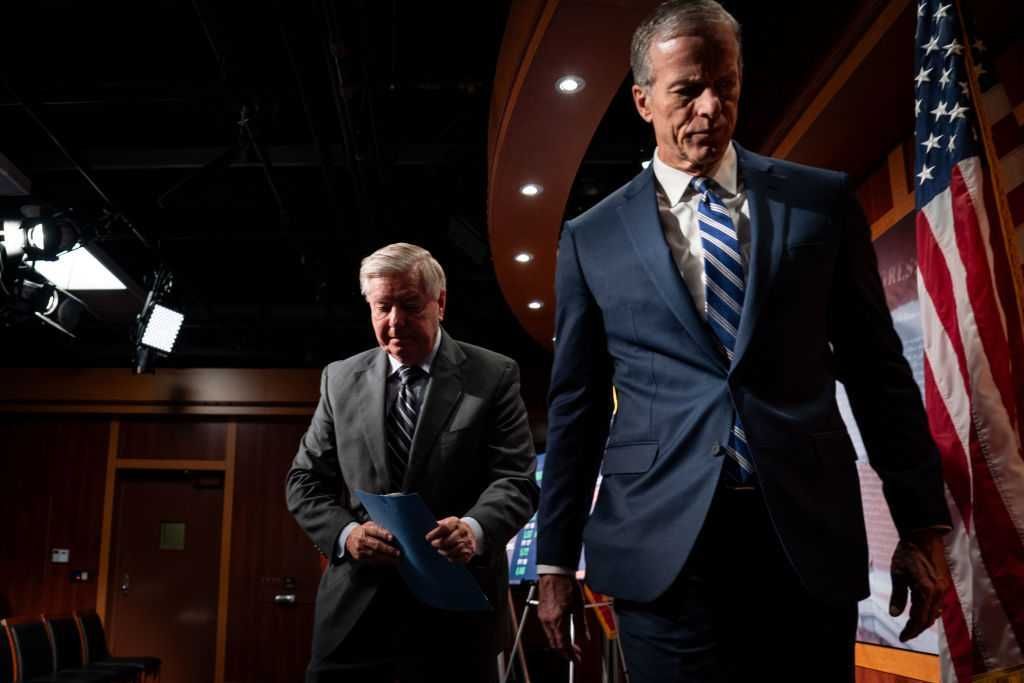
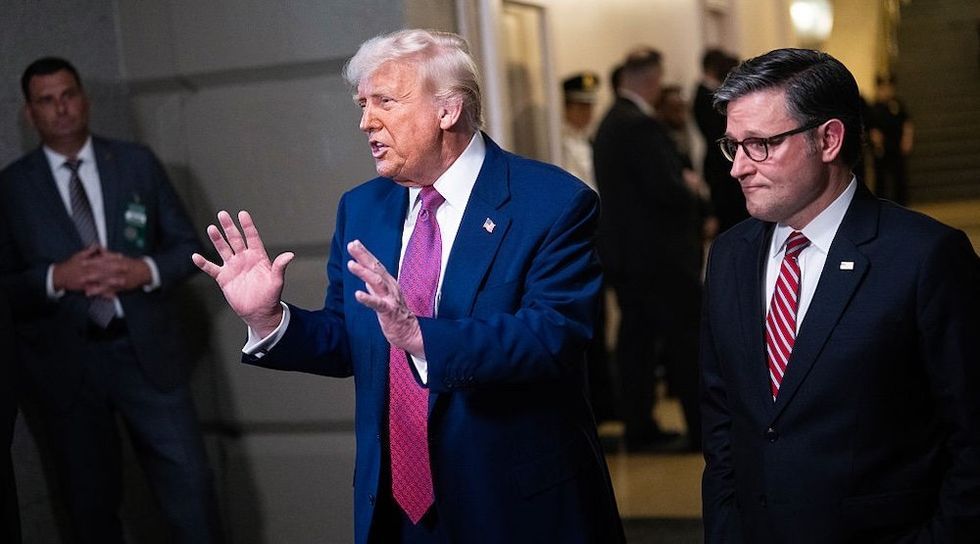
During the final hours of the shutdown fight earlier this month, Senate Majority Leader John Thune (R-S.D.) slipped a toxic provision into the continuing resolution that reopened the government. The clause created a special pathway for select senators to sue the federal government, bypass its usual legal defenses, and claim large payouts if their records were subpoenaed during the Arctic Frost investigation.

The result? About eight senators could demand $500,000 for every “instance” of seized data. Those instances could stack, pushing potential payouts into the tens of millions of taxpayer dollars. That is not an exaggeration. Sen. Lindsey Graham (R-S.C.) has all but celebrated the prospect.

Graham said he wanted ‘tens of millions of dollars’ for seized records while victims of weaponization still face shattered lives.

No one else would qualify for compensation. Only senators. Anyone who spent years helping victims of political weaponization — often pro bono, while prestige law firms chased billable hours — can see the corruption in plain view. The message this provision sends on the central Trump-era promise of accountability could not be weaker: screw the people, pay the pols.

The surveillance of senators was wrong. It should never have happened. But senators did not face what ordinary Americans endured. Senators maintain large campaign accounts to hire top lawyers. They operate out of official offices, armed with constitutional protections such as the Speech and Debate Clause. They do not lose their homes, jobs, savings, or businesses. Thousands of Americans did. Many still face legal bills, ruined livelihoods, and ongoing cases. They deserve restitution — not the politicians who failed them.

Graham helped push this provision forward. As public criticism grew, he defended it. On Sean Hannity’s show the other day, he said: “My phone records were seized. I’m not going to put up with this crap. I’m going to sue.” Hannity asked how much. Graham replied: “Tens of millions of dollars.”

Democrats will replay that clip across every battleground in the country going into an uphill midterm battle in 2026.

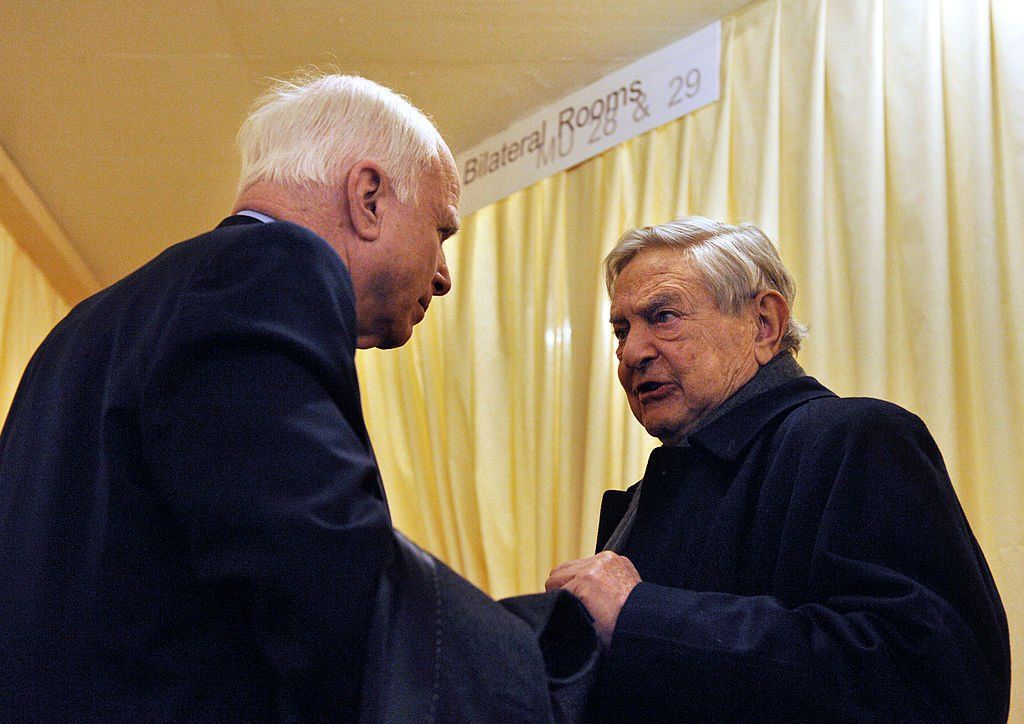
Graham embodies the worst messenger for this fight. He helped fuel weaponization long before he claimed victimhood. He urged the late Sen. John McCain (R-Ariz.) to pass the Steele dossier to the FBI. As chairman of the Senate Judiciary Committee, he did nothing to slow the Justice Department and FBI as they pursued political targets. He even supported many of President Joe Biden’s judicial nominees who later embraced aggressive lawfare tactics. If anyone owed restitution to victims, Graham sits high on the list.

RELATED: Trump’s pardons expose the left’s vast lawfare machine

Photo by Win McNamee/Getty Images

Fortunately, enough Republicans recognize the political and moral disaster of funneling taxpayer funds to senators while real victims remain abandoned. The House advanced a measure today to repeal the provision. Led by Reps. Austin Scott (R-Ga.) and Chip Roy (R-Texas), the House forced the Senate to address in public what it attempted to smuggle through in private.

Thune defended the measure in comments to Axios. He argued that only senators suffered statutory violations and said the provision was crafted to avoid covering House members. He did not explain why any House member who was illegally surveilled should receive no remedy.

The Senate leader also claimed the financial penalty would deter a future Justice Department from targeting lawmakers, citing the actions of special counsel Jack Smith. His emphasis on “future” misconduct glossed over a critical fact: The provision is retroactive and would cover past abuses.

That defense cannot survive daylight. Repeal requires 60 Senate votes, and not a single Democrat will fight to preserve a payout for Graham. Republicans should not try either. Efforts to strike the measure need to begin immediately. Senators — especially Thune — should commit to an up-or-down vote. If they want to send tens of millions of dollars in taxpayer funds to Graham, they should do it in public, with the country watching.

Washington already reeks of grift and self-dealing this year. If senators protect this provision, that smell will spread nationwide.

Democrat Stacey Plaskett Faced Criticism Over Epstein Ties in 2016, Years Before She Claims To Have Learned About Pedophile’s Misdeeds

U.S. Virgin Islands delegate Stacey Plaskett (D.), under scrutiny for texting disgraced pedophile Jeffrey Epstein during a House hearing, has given differing accounts of what and when she knew about the notorious sex predator's crimes, according to a Washington Free Beacon analysis.

The post Democrat Stacey Plaskett Faced Criticism Over Epstein Ties in 2016, Years Before She Claims To Have Learned About Pedophile’s Misdeeds appeared first on .

Obamacare was never affordable — and neither is cowardice


Twelve years ago this week, the federal government shut down over a fight that should have mattered more than any budget squabble in modern history: Obamacare.

In 2013, House and Senate conservatives — led by Sens. Ted Cruz (R-Texas) and Mike Lee (R-Utah) — refused to fund Barack Obama’s budget unless the pending health care law was stripped of its most ruinous provisions. They warned it would crush Americans with skyrocketing premiums and limited choice.

Instead of begging Democrats for a short-term continuing resolution, Republicans should force the debate they’ve been avoiding.

They were right. And today, watching those predictions come true, the defeat still stings. Democrats always stay united on health care. Republicans, even now, act as if the issue doesn’t exist.

The lost fight

In that 2013 showdown, Republicans held the stronger hand. They controlled the House and could have passed a full funding bill minus Obamacare. The law was still unpopular, the website was collapsing, and millions were losing coverage.

Democrats had already lost more than 60 House seats and a generation of state-level power because of their support for the 2009 law. The “dependency” phase hadn’t yet taken hold, but the costs were already exploding — premiums jumped 47% in the first year alone.

Yet GOP leaders sabotaged their own side. After Cruz’s 21-hour Senate filibuster demanding a defund vote, the Republican establishment turned its fire inward.

John McCain scolded Cruz from the Senate floor for comparing the fight to World War II and calling it a “great disservice” to veterans. Sen. Mitch McConnell (R-Ky.) dismissed the strategy as “not a smart play.” Sen. John Cornyn (R-Texas) warned against risking a shutdown “doomed to fail.”

Instead of hammering Democrats for creating unaffordable health care, the GOP obsessed over process. The pressure worked. On October 17, Republicans surrendered unconditionally — and Obamacare became untouchable.

At the time, I wrote:

If we are resigned to letting go of the Obamacare fight in the budget, there is no way it will ever be repealed, even partially repealed. By 2017 ... there will be over 30 million people either willingly or unwillingly dependent on Obamacare. Even if it’s barely workable, it will be the only care they have. We cannot repeal it.

That prediction also came true.

Failure by surrender

Twelve years later, after winning full control of government, Republicans still couldn’t repeal the law. Now, even with a new GOP trifecta, they’re struggling to stop Joe Biden’s insolvent expansion of it.

On paper, Democrats should have the weaker hand today. They control no chamber of Congress and are threatening a shutdown to preserve health care subsidies no one voted for.

Yet they’ve managed to frame the fight around the “cost of health care” — a problem created entirely by Obamacare itself. Republicans’ silence only amplifies the lie.

Democrats are betting that voters no longer remember why premiums exploded or why subsidies now cover nearly every enrollee. They’re counting on a GOP that can’t articulate the obvious: Obamacare made health care unaffordable and fueled the broader inflation strangling families.

Even the Washington Post recently admitted in an editorial that “the real problem is that the Affordable Care Act was never actually affordable.”

A second chance

Republicans now have the opportunity they squandered a decade ago. With control of the White House and Congress, they can finally make the case for repeal and for genuine, market-based reform.

They can remind Americans that we’re paying Cadillac prices for catastrophic coverage — massive deductibles, 33% denial rates, and bloated UnitedHealth plans protected by federal subsidy. They can expose the system for what it is: a monopoly masquerading as compassion.

RELATED:Smash the health care cartel, free the market

Photo by JDawnInk via Getty Images

Instead of begging Democrats for a short-term continuing resolution, Republicans should force the debate they’ve been avoiding. Health care can’t be fixed by tinkering at the edges. It must be freed from Washington’s grip.

Twelve years ago, Republicans claimed they lacked the leverage to stop Obamacare. Today, Democrats have no leverage at all — and they’re the ones complaining about the costs of their own creation.

God doesn’t hand out many second chances, especially in politics. Republicans just got one. They’d better use it.

Trump gave Americans a choice, not an echo


The American Enterprise Institute is an unlikely place to be reminded of why Donald Trump was necessary 10 years ago and is no less needed now. But a comment by Yuval Levin on a recent AEI panel succinctly brought out the difference Trump has made. Criticizing today’s populist, Trump-led Republican Party, Levin said, “The right has to ground its approach to the public in a more conservative message, in a sense that this country is awesome. It is not a festering, burning garbage pile — that is a strange way to talk to the next generation, and it’s not true, even a little bit.”

Trump has never used the words “festering, burning garbage pile,” but he’s used similarly strong language to describe America’s condition in this century under administrations other than his own. Trump’s slogan “Make America Great Again” implies that America hasn’t been great lately, although he and his voters can change that. Whenever Trump alludes to what Levin calls “a festering, burning garbage pile,” he’s referring to the poor leadership our country has suffered from in the not-too-distant past and the results of its misgovernance.

Trump’s task is clear: Restore the people’s power over the elite. Only then will the elite feel compelled to reform.

But that’s not what Levin or other AEI types hear. To them, Trump’s criticisms of the ruling class sound like criticisms of the country.

He upended the system

It would be unfair to guess that Levin simply believes the nation’s elite and the institutions they run are what count as the country itself, but there are precedents for such a view. In traditional monarchies and aristocracies, the rulers are the embodiment of the realm. Our Declaration of Independence was quite radical in breaking away from that understanding, asserting that the people are the realm and that all its institutions are answerable to them, not the other way around.

Levin and other intelligent non-populist conservatives know this, and they’re well aware of the failings of the pre-Trump Republican Party and the country’s political establishment as a whole. But knowing and feeling are different things.

Much of what survives of the pre-Trump conservative movement even now feels that the virtues rather than the vices of the old elite (and the institutions with which they are almost synonymous) ought to be emphasized.

For reasons that are easy to understand, many temperamental conservatives have an abiding fear of demagogues and an irreverent public. However corrupt or incompetent Ivy League-educated leaders may be, they should not be criticized too harshly — likened to flaming rubbish, for example — lest Ivy League education itself be stripped of its mystique. That mystique is part of the decent drapery of republican life, instilling a proper attitude of deference among the public toward those who have the education and lifestyle preparation to lead them.

From the moment he came down the escalator a decade ago, Trump upended this system. He pays no heed to the norms that distinguish America’s leadership class from the rabble the way noble bloodlines distinguished leadership in traditional hierarchical societies.

Elite confusion

Trump draws strength from the weakness of America’s elites and the widening public awareness of their vices. This is why, again and again, he has been rewarded for violating the very norms the elites consider sacrosanct, even to the point of winning the Republican nomination and then the White House last year despite a slew of criminal convictions and many more pending charges.

In three consecutive elections, Trump has not offered voters only a choice of leaders but a choice between systems of government. The capaciousness of our republican Constitution is such that within its framework, more than one kind of regime is possible. The “informal regime” can be considered the regime of society as well as government, or a regime that in operation reflects the real dispensation of authority within the country.

Most Americans have sadly little familiarity with even the letter of the written Constitution, and even most educated Americans have never entertained the thought of an informal regime. Much of the country’s elite (think about the typical writer for the Atlantic, for example) suffers paroxysms of panic over Trump’s words and actions because its members conceive of the informal regime under which they’ve lived their whole lives — and under which people like themselves flourish — as being the only natural outcome of the written Constitution.

RELATED: Trump isn’t hiding a client list — he’s too busy saving the country

Bonnie Cash/UPI/Bloomberg via Getty Images

To violate the “norms” of this regime is to violate the Constitution itself, as far as their understanding can conceive.

It’s rare that voters get to make a choice not just between candidates but between regimes. The greater and lesser George Bush, the male and female Clinton, Bob Dole, John McCain, Mitt Romney, Al Gore, John Kerry, Barack Obama, Joe Biden, and Kamala Harris all represented the same regime and norms. Trump differs from them all not only in policy but in the relationships he represents between the people, elected power, and institutional elites (both inside and outside government).

They delegitimized themselves

Trump at last gave the American people a choice of regimes, with one regime — represented by his enemies, not just in the general election but in the Republican Party, too — operating on aristocratic presumptions and the other being a reassertion of popular self-government, including its characteristic parrhesiaand even vulgarity.

Crude materialists who understand power only in terms of wealth struggle to interpret Trump, because he and many of his associates obviously belong to the same affluent class as his enemies. Yet just as Christ said the poor will always be with us, so too does every regime, formal or informal, have its rich men. The regime is not defined by the existence of a wealthy group; it’s rather about relationships and authority, and that is what Trump has changed.

This change was necessary because the old regime had already destroyed its own legitimacy. It performed poorly for millions of ordinary Americans, but beyond that, it had also grown arrogant. Its norms were not a limitation on its power or abuses but rather a gag stifling criticism from within or below.

The new regime that’s in the making will have its own defects and will need various corrections, but the test of a regime lies precisely in its ability to correct itself. The old elite had lost that ability and would hardly have had the will to exercise the capability even if it had still been there.

Trump is not a revolutionary who has overthrown a healthy order. Rather, he, like the American revolutionaries of 250 years ago, has given the people a chance to be healthy again by ridding themselves of a debilitating regime. Americans had been tricked into living under an aristocracy within the form of a democracy.

Against the phony aristocracy

Thomas Jefferson hoped that voters would freely choose natural aristocrats — leaders of wisdom, virtue, and ability. But in recent decades, the country fell under the rule of an aristocracy against nature: a self-perpetuating elite that governed through institutions immune to the ballot box. Universities, nonprofits, media outlets, the permanent bureaucracy, judges, and political operatives in both parties — each aligned ideologically, broadly liberal — formed a web of power that shut down any real challenge.

Until Trump.

He offered the people a radical choice, and they took it. They rejected the aristocracy.

If America’s ruling class had actually resembled the natural aristocrats Jefferson envisioned, the people might not have turned to Trump. But the elite they faced was an aristocracy of privilege: smug mediocrities, not public-spirited heroes or genuine geniuses. Swapping one set of insiders for another would have changed nothing. Trump gave them a worthwhile alternative.

Even conservatives like Yuval Levin — who value the role of a well-formed elite in a healthy republic — should recognize this moment. America can only return to true aristocracy, the kind America’s founders hoped for, by becoming more democratic and more populist. The people must want an elite — and they will only want one that serves them faithfully, competently, and without arrogance.

Trump’s task is clear: Restore the people’s power over the elite. Only then will the elite feel compelled to reform.

That path won’t destroy American institutions. It will save them.

Editor’s note: A version of this article was published originally at the American Mind.

A Funny Thing About Dave Barry

A long time ago, in a media environment far, far away, an editor walked into my office and dropped a pile of books by Dave Barry on my desk. “Here’s an idea,” he said. “Read these and figure out how he does it.”

The post A Funny Thing About Dave Barry appeared first on .

One bad order could undermine Trump’s strongest issue


Thank God President Trump walked back his misguided order to grant de facto amnesty to illegal alien farm workers. Now he needs to kill the policy for good.

Trump won in 2016 — and again in 2024 — on two core promises: lower the cost of living and stop the third-world invasion of the United States. Since he shows no interest in cutting deficits in a way that might restore pre-COVID price levels, immigration remains the battlefield that will define his presidency. And unless he corrects course, he risks failure on that front too.

No more half measures or donor-driven compromises. No more weakness. Only total war on the policies, programs, and pipelines that keep America under siege.

To his credit, Trump moved quickly to shut off the surge at the southern border during his first week in office. But he did the same in 2017, and the long-term results didn’t last. A future Democrat administration will simply escalate. If Biden brought in 10 million, the next one will aim for 20 million.

Temporary border control and modest deportation numbers won’t solve the crisis. Fewer than a million removals over a four-year term won’t reverse the demographic or economic damage — especially while legal immigration, foreign student visas, and guest worker programs continue at record highs.

Unforced errors

Trump must go beyond symbolic border enforcement. That means neutralizing judicial interference through must-pass legislation — or ignoring illegitimate court rulings outright. He should authorize maritime deportations using ships, suspend most of the 1.5 million foreign student visas — especially from China and Islamic countries — and permanently empower states to enforce immigration law.

Instead, Trump recently unveiled a set of policies that undermine those very goals.

He announced continued access for Chinese nationals to U.S. universities — just as a spy ring was uncovered at the University of Michigan. He expanded his support for white-collar visas for Indian nationals and revived his “golden visa” scheme, which allows wealthy Chinese Communist Party elites to buy their way into U.S. citizenship.

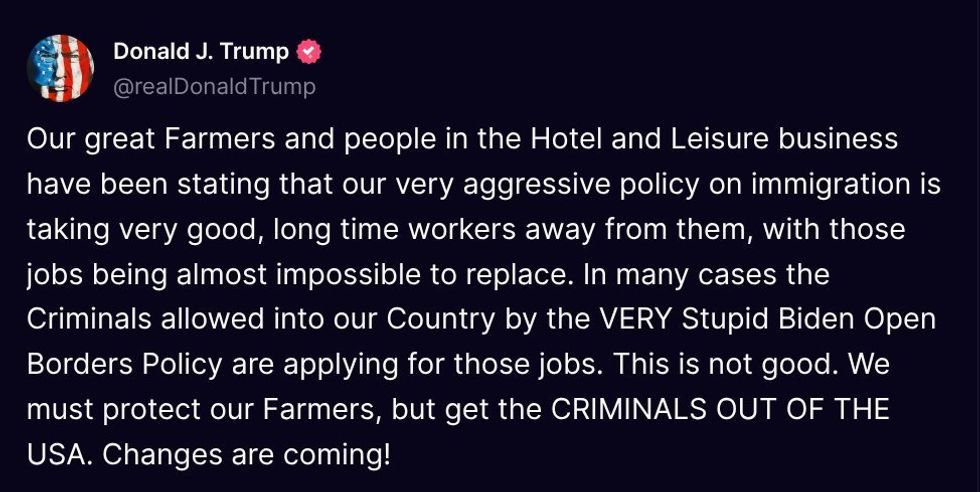
Worst of all, Trump issued an order halting removals of illegal aliens working in farming and hospitality. He later reversed course — but the damage was done.

In pushing for more illegal labor, Trump handed leftists a talking point they had already lost. He lent moral weight to one of their core claims: that America needs illegal immigrants to do the “jobs Americans won’t do.” That argument, long peddled by George W. Bush, John McCain, and the donor-class GOP, was the very reason millions turned to Trump in the first place.

Ten years after calling for a moratorium on illegal immigration and a drastic cut to legal migration, Trump now echoes the talking points he once dismantled. If he keeps this up, he won’t just squander his mandate — he’ll cement the invasion he was elected to stop.

Five points Trump should heed

  1. You can’t re-onshore manufacturing and offshore the workforce. Trump champions tariffs to bring jobs home — but what good is that if those jobs go to foreign nationals here illegally? Patriotism means putting Americans to work on American soil — not just moving the factory.
  2. This isn’t about labor shortages. It’s about labor suppression. Trump wants more white-collar visas even as tech jobs disappear. He supports handing green cards to foreign students. This isn’t policy — it’s donor-class economics wrapped in populist branding.
  3. You can’t modernize with AI while subsidizing human labor. Trump wants to “win the AI arms race” with China. Great. Start by automating farm work instead of importing cartel-affiliated field hands. Cheap labor delays innovation — and the status quo keeps us dependent.
  4. The welfare state distorts the labor market. Trump refuses to shrink entitlements and yet complains that Americans won’t work. Maybe that’s true — but the welfare state is the push, and illegal labor is the pull. Cut both, and you raise wages and get people off the couch.
  5. Illegal labor invites cartel exploitation. Agricultural guest labor provides the perfect cover. In 2019, an exposé by the Louisville Courier Journal revealed how Mexican farm workers served as mules for the Jalisco New Generation cartel. One man, Ciro Macias Martinez, groomed horses by day at Calumet Farm — and ran a $30 million drug ring by night.

The cash-based, transient, and legally vulnerable workforce offers a logistical gold mine for transnational criminal organizations. Cartels use job scams to traffic humans, set up safe houses, and move product. Rural communities lack the law enforcement resources to push back. The result: strategic sanctuary zones for America's most dangerous enemies.

RELATED: Trump shrugs at immigration law — here’s what he should have said

Photo by Tasos Katopodis/Getty Images

When Trump says these workers are “hardworking” and “not criminals,” he ignores the obvious fact that every illegal alien is a criminal. Amnesty for farm workers isn’t just a policy mistake — it’s an operational gift to America’s foreign adversaries.

No room for ambiguity

Trump knows immigration is his strongest issue. The polls prove it. But if he wavers, even slightly, on mass deportations or illegal labor, he opens the door for his political enemies to sow doubt — and for cartel operatives to sow chaos.

He reversed the farm worker carve-out. Now he must bury it. Then, he needs to go farther. No more half measures. No more donor-driven compromises. No more weakness. Only total war on the policies, programs, and pipelines that keep America under siege.

His base expects it. The country needs it. The future depends on it.

Trump keeps endorsing the establishment he vowed to fight


Donald Trump’s endorsement of Karrin Taylor Robson in December marked one of the most baffling moves of his political career. Still riding the momentum of his victory, Trump pre-emptively backed a known RINO for Arizona governor — nearly 19 months ahead of the 2026 primary. The endorsement fit a troubling pattern: early-cycle support for anti-Trump Republicans who hadn’t lifted a finger for the movement, while stronger MAGA candidates waited in the wings.

If Trump wants to deliver on his campaign promises, he needs to reassert deterrence against weak-kneed incumbents and withhold endorsements in open races until candidates prove themselves.

At some point, conservatives must face the hard truth: The swamp isn’t being drained. It’s getting refilled — with Trump’s help.

Arizona illustrates why MAGA must push back hard on Trump’s errant picks. Robson, a classic McCain Republican, publicly criticized Trump as recently as 2022. She ran directly against MAGA favorite Kari Lake in the 2022 gubernatorial primary. Maybe she could merit a reluctant nod in a general election, but nearly two years before the primary? With far better options available?

And indeed, better options emerged. Months later, Rep. Andy Biggs — one of the most conservative voices in Congress and a staunch Trump ally — entered the race. The Arizona drama had a partially satisfying resolution when Trump issued a dual endorsement. But dig deeper, and the story turns sour.

Top Trump political aides reportedly worked for Robson’s campaign, raising serious questions for the MAGA base. Their loyalty seemed to shift only after Robson refused to tout Trump’s endorsement in her campaign ads.

Which brings us to the million-dollar question: Why would Trump endorse candidates so subversive that they feel embarrassed to even mention his support?

The Robson episode is an outlier in one way: Most establishment Republicans eagerly shout Trump’s endorsement from the rooftops. Yet the deeper issue remains. Without MAGA intervention, Trump keeps handing out endorsements to RINOs or to early candidates tied to his political network — often at the expense of better, more loyal alternatives.

A pattern of bad picks

Some defenders claim Trump backs incumbents to push his agenda. That theory falls apart when so many of those same RINOs openly sabotage it.

Take Reps. Mike Lawler (R-N.Y.) and Jen Kiggans (R-Va.). Both received Trump’s endorsement while actively working against his legislative priorities — pushing green energy subsidies and obsessing over tax breaks for their donor class. These aren’t minor policy differences. These are full-spectrum RINO betrayals.

Trump wouldn’t dare endorse Chip Roy (R-Texas) for dissenting from the right, so why give cover to Republicans who consistently undermine his mandate from the left?

And don’t chalk this up to political necessity in purple districts. Trump routinely gives away the farm in safe red states, too.

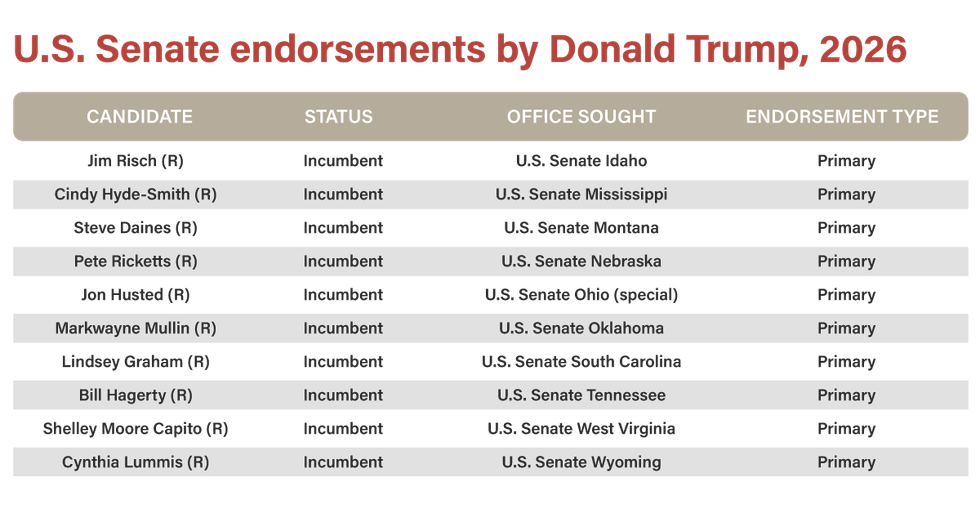
Here's a list of Trump’s Senate endorsements this cycle, straight from Ballotpedia — and it’s not comforting.

You’d struggle to find a single conservative in this bunch. Shelley Moore Capito of West Virginia, Lindsey Graham of South Carolina, Cindy Hyde-Smith of Mississippi, Pete Ricketts of Nebraska, and Jim Risch of Idaho all represent the globalist mindset that Trump’s base has spent years fighting. So why did Trump hand them early endorsements — before they even faced a challenge? What exactly is he getting in return?

Well, we know what his loyalty bought last cycle.

After Trump endorsed Mississippi’s other swamp creature, Roger Wicker, against a MAGA primary challenger in 2024, Wicker walked into the chairmanship of the Armed Services Committee — and now he’s stalling cuts to USAID. That roadblock has helped keep the DOGE rescissions package from reaching the president’s desk.

Wicker isn’t the only one. Several of Trump’s endorsees have publicly criticized his tariff agenda. Whether or not you agree with those tariffs, the pattern is telling. Trump only seems to call out Republicans who dissent from the right. Meanwhile, the ones who oppose him from the left collect endorsements that wipe out any hope of a MAGA primary.

Ten years into the MAGA movement, grassroots candidates still can’t gain traction — and Trump’s endorsements are a big part of the problem.

Instead of amplifying insurgent conservatives, Trump often plays air support for entrenched incumbents. He clears the field early, blasting apart any challenge before it forms. That’s how we ended up stuck with senators like Thom Tillis (N.C.) and Bill Cassidy (La.) — both from red states — who routinely block Trump’s nominees and undermine his priorities.

Trump endorsed both Tillis and Cassidy during the 2020 cycle, even as grassroots conservatives geared up to take them on. In fact, almost every red-state RINO in the Senate has received a Trump primary endorsement — some of them twice in just 10 years. That list includes Moore Capito, Graham, Hyde-Smith, and Wicker.

Saving red-state RINOs

What’s worse than endorsing RINOs for Congress in red states? Endorsing RINOs for governor and state legislature.

Yes, Washington is broken. Even in the best years, Republicans struggle to muster anything more than a narrow RINO majority. But the real opportunity lies elsewhere. More than 20 states already lean Republican enough to build permanent conservative power — if we nominate actual conservatives who know how to use it.

The 2026 election cycle will feature governorships in Alabama, Florida, Georgia, Idaho, Iowa, Kansas, Nebraska, Oklahoma, South Carolina, South Dakota, Tennessee, Texas, and Wyoming, to name just a few. These races offer a chance to reset the Republican Party — state by state — with DeSantis-caliber fighters.

Instead, we’re slipping backward.

RELATED: Reconciliation or capitulation: Trump’s final go-for-broke play

Tom Williams/CQ-Roll Call Inc. via Getty Images

Trump has already endorsed Rep. Byron Donalds for Florida governor — nearly two years before the election. In most red states, Donalds would look like an upgrade. But Florida isn’t most red states. Florida is the citadel of conservatism. It deserves a contested primary, not a coronation. Donalds hasn’t led the way DeSantis has — either nationally or in-state — so why clear the field this early? Why not at least wait and see whether DeSantis backs a candidate?

And don’t forget about the state legislatures.

Freedom Caucuses have made real gains in turning GOP supermajorities into something that matters. But in Texas, House Speaker Dustin Burrows cut a deal with Democrats to grab power — then torched the entire session. Conservative voters are eager to remove Burrows and the cronies who enabled him.

We’ll never drain the swamp this way

This is where Trump should be getting involved — endorsing against the establishment, not propping it up.

Instead, he’s doing the opposite.

Trump recently pledged to back Texas House Speaker Dustin Burrows and his entire entourage of RINO loyalists — just because they passed a watered-down school choice bill that also funneled another $10 billion into the state’s broken public-school bureaucracy.

The same pattern holds in Florida.

The House speaker there, Daniel Perez, has consistently blocked Governor Ron DeSantis’ agenda, including efforts to strengthen immigration enforcement — policies that are now a national model. Despite this, Perez cozied up to Byron Donalds. Donalds returned the favor, but refused to take sides in the Perez versus DeSantis clashes. He also ducked the fights against Amendments 3 and 4. So what exactly qualifies Donalds to become Trump’s handpicked candidate in the most important red state in America?

This new paradigm — where candidates secure Trump endorsements just by parroting his name — has allowed RINO governors and legislators to push corporatist policies while staying firmly in Trump’s good graces. They wrap themselves in the MAGA brand without lifting a finger to advance its agenda.

That’s not the movement we were promised.

At some point, conservatives must face the hard truth: The swamp isn’t being drained. It’s getting refilled — with Trump’s help. We can’t keep celebrating Trump’s total control of the GOP while hand-waving away the RINOs, as if they’re some separate, unaccountable force. Trump has the power to shape the party. He could use it to clean house.

Instead, he keeps using it to protect the establishment from grassroots primaries.

At the very least, he should withhold endorsements until candidates prove they can deliver on the campaign’s promises. Don’t hand out golden Trump cards before they’ve earned them.

Mr. President, please don’t be such a cheap date.
Soros and McCain: The unholy alliance hidden in plain sight


Have we been missing a Soros-McCain family connection in front of our very eyes all this time?

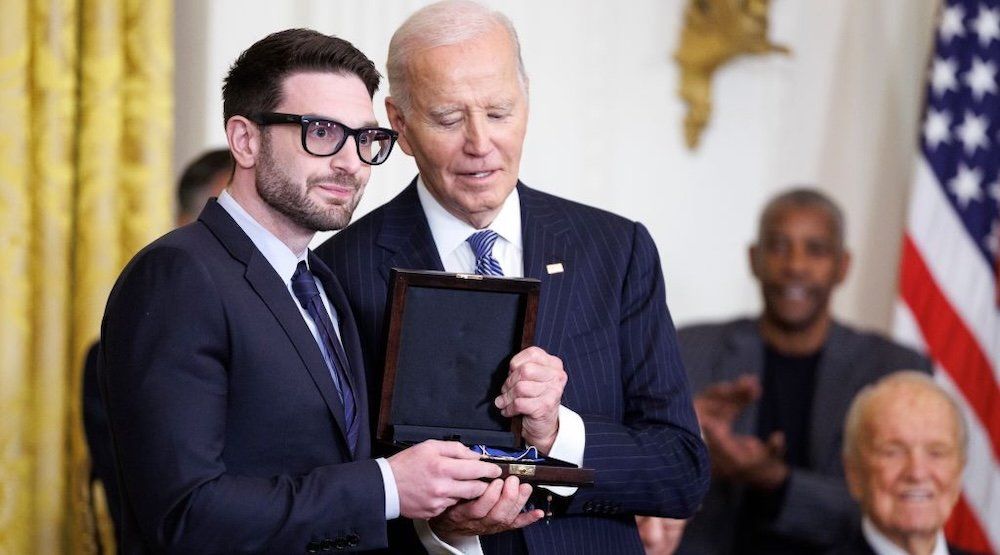
Unlike his father, George, who operated behind the scenes and dismissed scrutiny as conspiracy theory, Alexander Soros flaunts his influence openly on social media. He’s proudly posted photos with Vice President Kamala Harris, Minnesota Gov. Tim Walz (D), Bill and Hillary Clinton, and Democratic leaders like Rep. Nancy Pelosi (Calif.), Sen. Chuck Schumer (N.Y.), and Rep. Hakeem Jeffries (N.Y.) — to name just a few. He’s also showcased meetings with newer faces, including Rep. Jasmine Crockett (D-Texas), whom he called a “rising star.” Let’s hope he’s right.

What started as a quiet alliance between George Soros and John McCain has now become a visible partnership between their heirs, Alex and Cindy.

To paraphrase “The Big Short”: Alex isn’t confessing — he’s bragging.

His photos with high-profile Democrats have grabbed headlines, but it’s his posts featuring Cindy McCain that reveal something even more telling: a decades-long relationship between the Soros and McCain families.

On May 6, 2024, Alex shared a photo with Cindy at the McCain Institute Sedona Forum. The topic of the forum was “Securing Our Insecure World,” which used the “climate crisis” as a backdrop, and had a roster of speakers that included Democrats and RINOs such as Mitt Romney, Janet Yellen, Arizona Gov. Katie Hobbs (D), David Axelrod, and former Secretary of State Antony Blinken.

In another tweet with Sen. Mark Kelly (D-Ariz.), Alex indicated that stopping Trump was a topic of discussion, referring to Kelly as “inspiring as ever and attentive to the threat posed in November if Trump wins.”

Alex has also shared a photo of himself with Cindy McCain and his father at the Munich Security Conference. The two also appear in a photo discussing the World Food Programme. The earliest image of them together dates back to 2020, when Cindy served as chairwoman of the board of the Munich conference and Alex sat on the advisory council, according to the conference’s annual report.

The McCains have never hidden their disdain for Donald Trump or the modern Republican Party — views that earned them the “RINO” tag and de facto exile from today’s GOP.

RELATED: Alex Soros admits he’s more powerful than elected officials

Photo by Tom Brenner/Getty Images

Their ties to the Soros network don't mark a new alliance, but they do prompt questions about how the relationship began. The answer may lead directly back to John McCain himself.

To understand the dynamic between Cindy McCain and Alex Soros, you first need to understand the relationship between John McCain and George Soros.

In 2001, McCain launched the Reform Institute — a nonprofit think tank that operated as a convenient loophole for accepting unlimited, unregulated donations. Many of the Reform Institute’s funders also contributed to McCain’s presidential campaigns in 2000 and 2008 as well as to his Straight Talk America PAC.

Hypocritically, the Reform Institute has claimed it wants to “clean up” campaign finance. In 2008, the Reform Institute even sent out a fundraising appeal blasting George Soros as a Democratic mega-donor. Yet, it was taking Soros’ money as it criticized others for doing the same.

The Reform Institute accepted multiple contributions from George Soros — some as high as $100,000 — as well as from the Soros-backed Tides Foundation. The maverick also took money from Teneo, a firm co-founded by Bill Clinton’s longtime “bag man” Doug Band.

What started as a quiet alliance between George Soros and John McCain has now become a visible partnership between their heirs, Alex and Cindy. Their shared disdain for Trump and mutual investment in globalist initiatives reveal what many prefer to ignore: Real political power often hides in plain sight — until it doesn’t.

With his ascension to the helm of his father’s Open Society Foundations, Alex Soros inherits a political infrastructure from the Democratic Party — and from RINOs like John and Cindy McCain.

Editor’s note: This article, part of a series, has been adapted from Matt Palumbo’s new book, “The Heir: Inside the (Not So) Secret Network of George Soros.”

Why Trump’s Judicial Picks Should Look Different In 2025 Than They Did In 2017

The kind of clerked-for-four-justices-and-the-Pope, writes-poetry-about-calculus nominees Trump needed last time aren’t necessary politically. If Trump wants a tie to go to conservatism and not credentialism, it can.

States Open The Door To Foreign-Born Presidential Candidate On Their Ballots

Shiva Ayyadurai is fighting to get on ballots, but the naturalized U.S. citizen from India fails to meet a key constitutional requirement.