Trump Says He’s Suing JP Morgan Chase For De-Banking Him

'For incorrectly and inappropriately DEBANKING me'

Jamie Dimon’s ‘cockroach’ economy is eating Main Street alive


Jamie Dimon has been running JPMorgan Chase for nearly two decades. The business press still hails him as the man who steered the bank through the 2008 financial crisis.

I’m less impressed. It’s easy to look steady at the helm when you’re floating on a $29 trillion sea of taxpayer bailouts.

This is what half a century of bipartisan corruption produces: a crony capitalist system that privatizes profit, socializes loss, and lets the rest of us drown.

Yes, Dimon saw the 2008 crash coming and made some smart adjustments ahead of the collapse. Credit where it’s due — barely. But once the dust settled, JPMorgan rewarded itself handsomely for surviving the storm.

JP Morgan said yesterday that its earnings "fell short" of their potential last year — but it still felt able to hand its investment bankers a 22 per cent increase in their bonuses.

Kicking off what could be a stormy reporting season, America's second-largest bank paid them $9.3bn, compared with $7.7bn in 2008. Total pay for its 222,315 employees came in at $26.9bn — 18 per cent from $22.7bn the year before — largely because of a sharp increase in bonuses paid throughout the bank. The announced sparked outrage among critics who described the figures as "obscene."

"Obscene" doesn’t begin to cover it.

So when Dimon made headlines a couple of weeks ago with his “cockroaches” comment, I didn’t rush to celebrate another round of supposed insight.

“When you see one cockroach, there are probably more, and so everyone should be forewarned of this one,” Dimon told analysts, referring to the bankruptcies of subprime auto lender Tricolor and auto-parts maker First Brands.

Dimon’s metaphor was awkward enough — he mentioned two cockroaches while warning about seeing just one. But worse, he got caught by the same kind of subprime rot that tanked the global economy in 2008.

“Dimon said that JPMorgan is reviewing its controls after the Tricolor bankruptcy and said the $170 million loss is ‘not our finest moment.’”

No kidding. His “cockroach detector” still doesn’t work.

Now Dimon is back in the headlines again for another round of supposed “foresight.”

“JPMorgan Chase CEO Jamie Dimon warned in an interview that the stock market could be in line for a significant correction within the next few years amid heightened uncertainty. Dimon told the BBC that there is an elevated risk of a stock market correction in the next six months to two years, saying, ‘I am far more worried about that than others.’”

Glad to meet you, Mr. Dimon. Some of us have been worried for decades.

RELATED: America’s debt denial has gone global

Photo by Jemal Countess/Getty Images

Back in 1989, when my high-school history teacher asked the class to name America’s biggest problem, I said “the federal debt.” Not just because debt is bad, but because Washington was pretending deficits didn’t matter — and voters let them.

Nearly 40 years later, nothing has changed. The numbers are bigger. The lies are the same. Ignore a problem long enough, and it grows until it devours you.

Our economy isn’t a Mr. Potato Head toy, where government spending sits neatly apart from everything else. It’s one big pile of money — and the federal government keeps shoveling from the productive side to the wasteful side.

Every dollar borrowed for political vanity projects is a dollar you can’t use to start a business or buy a home. As the federal machine consumes more and more of the pool, it’s not the elites who get crowded out. It’s everyone else.

Poor people’s home mortgages are down 46%. Rich people’s art-collection loans are up 30%.

This is what half a century of bipartisan corruption produces: a crony capitalist system that privatizes profit, socializes loss, and lets the rest of us drown.

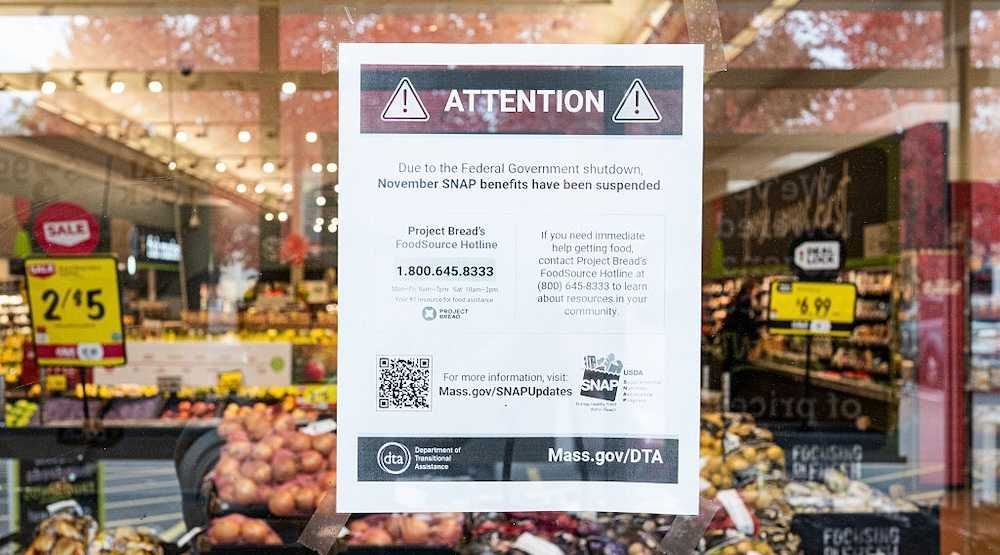
Look at Walmart. The company pulls tens of billions of taxpayer dollars a year through the SNAP program — the same program many of its employees rely on to eat because Walmart won’t pay them enough to live.

Independent research confirms it: Thousands of Walmart workers depend on Medicaid and food stamps.

Big government lets big business pocket our tax money on both ends — profits in private, losses in public. Even their labor costs get offloaded to us.

So when politicians wail about a “government shutdown” disrupting SNAP payments, remember who they’re really worried about. It’s not the families at the grocery store. It’s the corporations cashing in.

RELATED: Trump admin blames Senate Democrats for SNAP debacle: ‘The well has run dry’

Photo by Mel Musto/Bloomberg via Getty Images

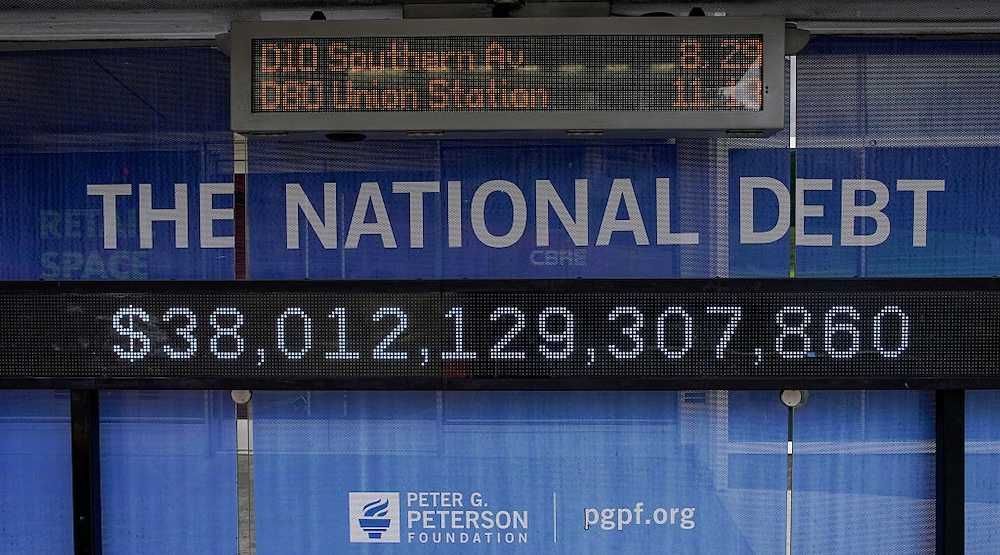
A system this warped can’t last. You can call America the greatest nation in history if you like, but greatness doesn’t square with more than $38 trillion in government debt and record levels of personal debt.

Household debt, credit-card debt, mortgage debt — all at historic highs. Nearly a quarter of Americans are buying food on layaway. And 42% have zero emergency savings.

Meanwhile, Washington keeps inflating Wall Street’s floaties.

Main Street drowns while Big Government keeps Big Business comfortably above the surface.

Jamie Dimon thinks he’s just spotted the first cockroach. But the infestation started long ago — right inside the marble halls of Washington, D.C.

And if no one finally fumigates the place, the rot will force-condemn the entire country.

Finally, A President Is Standing Up To Woke Banks

The American people deserve financial institutions that serve all law-abiding citizens, not just those who align with the ruling class’s preferred ideology.

A brutal wake-up call from America’s most powerful banker


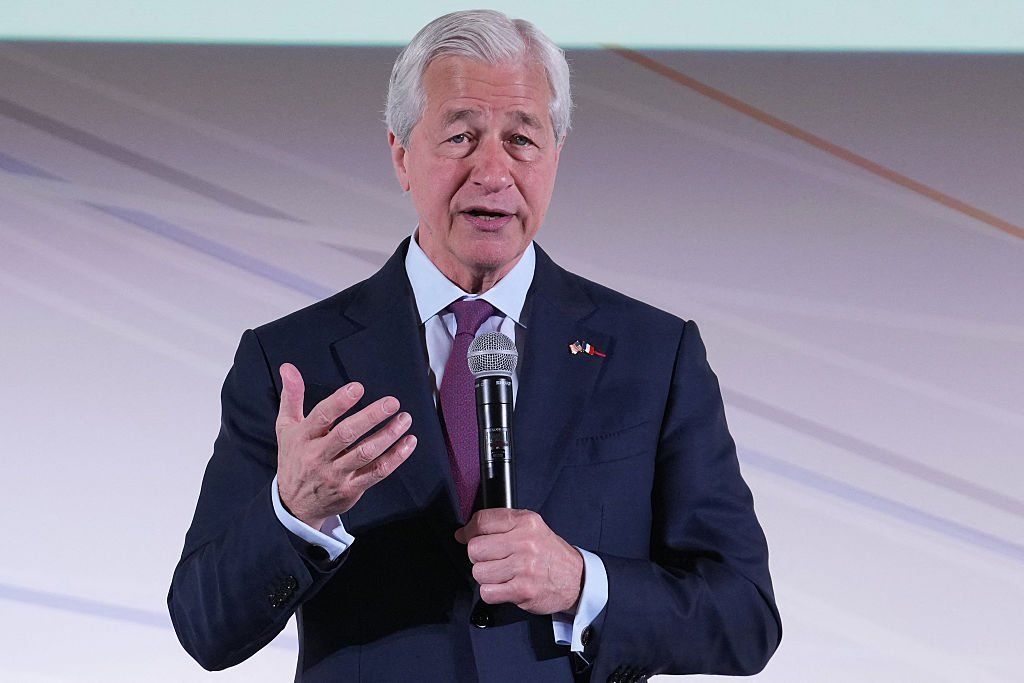
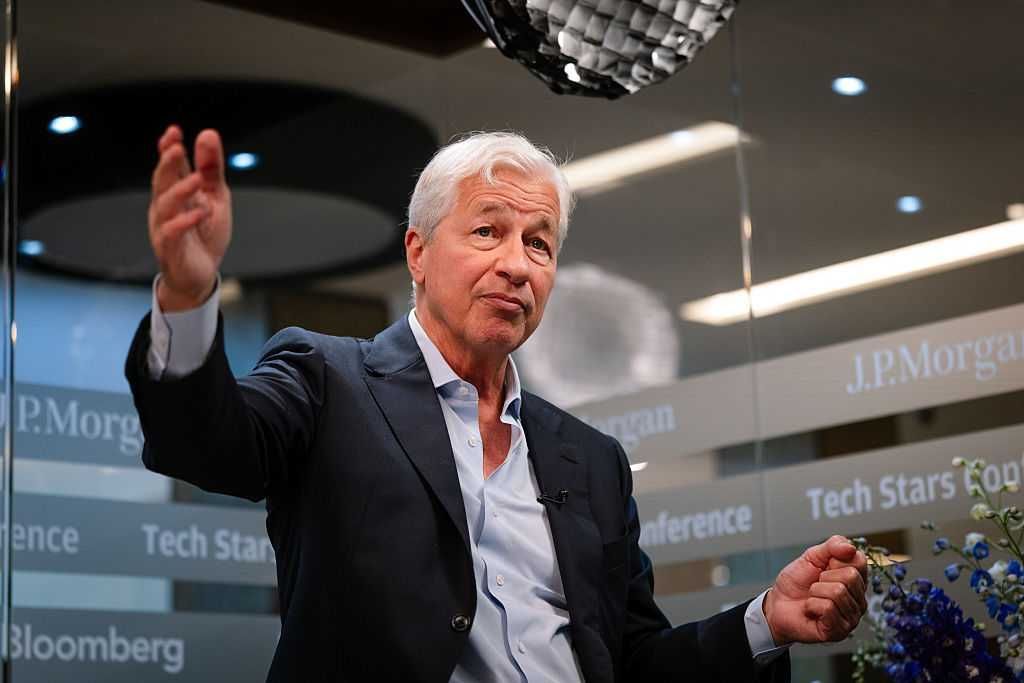
Jamie Dimon, CEO of JPMorgan Chase — one of the most powerful financial institutions on earth — issued a warning the other day. But it wasn’t about interest rates, crypto, or monetary policy.

Speaking at the Reagan National Defense Forum in California, Dimon pivoted from economic talking points to something far more urgent: the fragile state of America’s physical preparedness.

We are living in a moment of stunning fragility — culturally, economically, and militarily. It means we can no longer afford to confuse digital distractions with real resilience.

“We shouldn’t be stockpiling Bitcoin,” Dimon said. “We should be stockpiling guns, tanks, planes, drones, and rare earths. We know we need to do it. It’s not a mystery.”

He cited internal Pentagon assessments showing that if war were to break out in the South China Sea, the United States has only enough precision-guided missiles for seven days of sustained conflict.

Seven days — that’s the gap between deterrence and desperation.

This wasn’t a forecast about inflation or a hedge against market volatility. It was a blunt assessment from a man whose words typically move markets.

“America is the global hegemon,” Dimon continued, “and the free world wants us to be strong.” But he warned that Americans have been lulled into “a false sense of security,” made complacent by years of peacetime prosperity, outsourcing, and digital convenience:

We need to build a permanent, long-term, realistic strategy for the future of America — economic growth, fiscal policy, industrial policy, foreign policy. We need to educate our citizens. We need to take control of our economic destiny.

This isn’t a partisan appeal — it’s a sobering wake-up call. Because our economy and military readiness are not separate issues. They are deeply intertwined.

Dimon isn’t alone in raising concerns. Former Google CEO Eric Schmidt has warned that China has already overtaken the U.S. in key defense technologies — hypersonic missiles, quantum computing, and artificial intelligence to mention a few. Retired military leaders continue to highlight our shrinking shipyards and dwindling defense manufacturing base.

Even the dollar, once assumed untouchable, is under pressure as BRICS nations work to undermine its global dominance. Dimon, notably, has said this effort could succeed if the U.S. continues down its current path.

So what does this all mean?

RELATED: Is Fort Knox still secure?

mphillips007 via iStock/Getty Images

It means we are living in a moment of stunning fragility — culturally, economically, and militarily. It means we can no longer afford to confuse digital distractions with real resilience.

It means the future belongs to nations that understand something we’ve forgotten: Strength isn’t built on slogans or algorithms. It’s built on steel, energy, sovereignty, and trust.

And at the core of that trust is you, the citizen. Not the influencer. Not the bureaucrat. Not the lobbyist. At the core is the ordinary man or woman who understands that freedom, safety, and prosperity require more than passive consumption. They require courage, clarity, and conviction.

We need to stop assuming someone else will fix it. The next crisis — whether military, economic, or cyber — will not politely pause for our political dysfunction to sort itself out. It will demand leadership, unity, and grit.

And that begins with looking reality in the eye. We need to stop talking about things that don’t matter and cut to the chase: The U.S. is in a dangerously fragile position, and it’s time to rebuild and refortify — from the inside out.

Want more from Glenn Beck? Get Glenn's FREE email newsletter with his latest insights, top stories, show prep, and more delivered to your inbox.

JPMorgan CEO delivers brutal reality check straight to the heart of Democrats for attacking Trump supporters: 'Grow up'


JPMorgan Chase CEO Jamie Dimon is trying to offer Democrats and the media political wisdom about Donald Trump.

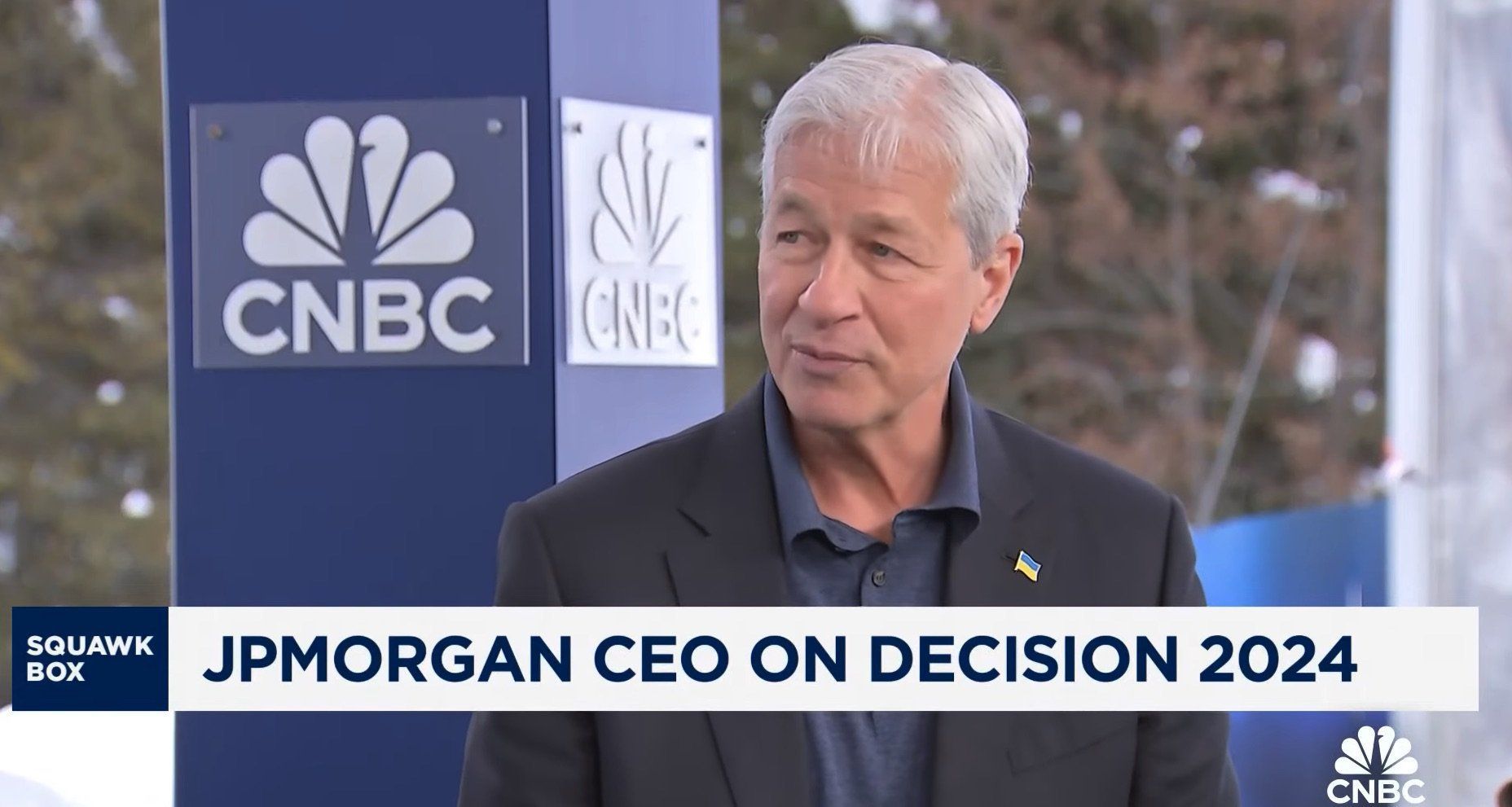
Speaking on CBNC's "Squawk Box," Dimon warned on Wednesday that constantly attacking Trump, his supporters, and the "Make America Great Again" agenda will ultimately backfire on President Joe Biden and the Democratic Party.

"I think this negative talk about MAGA is going to hurt Biden's election campaign," Dimon predicted. "I wish the Democrats would think a little more carefully when they talk about MAGA."

The billionaire banker was referring to the Democratic Party's habit of mocking Trump supporters as "deplorable" or simple-minded Americans who hug "their Bibles and their beer and their guns."

"Can we stop that stuff and actually grow up and treat other people respectfully and listen to them a little bit?" Dimon said. "I think people should be a little more respectful of our fellow citizens."

In fact, Dimon suggested those in the media need to be more introspective and they need try to understand why so many Americans support Trump.

For Dimon — who personally identifies as someone with a "Democrat heart and a Republican brain" — the reasons why Americans support Trump are clear: Trump "wasn't wrong" about some of the most pressing issues impacting America and the world today.

"When people say MAGA, they're actually looking at people voting for Trump and they're basically scapegoating them — that you are like him — but I don't think they're voting for Trump because of his family values," Dimon said.

"If you just take a step back, be honest: He's kind of right about NATO. Kind of right about immigration. He grew the economy quite well," he explained. "Tax reform worked. He was right about some with China. I don't like how he said things about Mexico— but he wasn't wrong about some of these critical issues. And that's why they're voting for him."

During his interview, Dimon also provided his economic forecast and warned against wearing rose-colored glasses.

"I think it is a mistake to assume that everything is hunky-dory," he said.

"When stock markets are up, it's kind of like this little drug we all feel, like it's just great," he continued. "But remember, we've had so much fiscal monetary stimulation so I'm a little more on the cautious side that we are facing a lot of things in '24 or '25 and we mentioned Ukraine, the terrorist activity in Israel, the Red Sea, quantitative tightening ... and obviously the politics."

Like Blaze News? Bypass the censors, sign up for our newsletters, and get stories like this direct to your inbox. Sign up here!
You Can Almost Hear A Pin Drop The Moment John Kennedy Asks Wall Street CEOs One Single, Blunt Question

'Too busy urinating off the top of a hotel, or abusing young women who went to work for the FDIC'

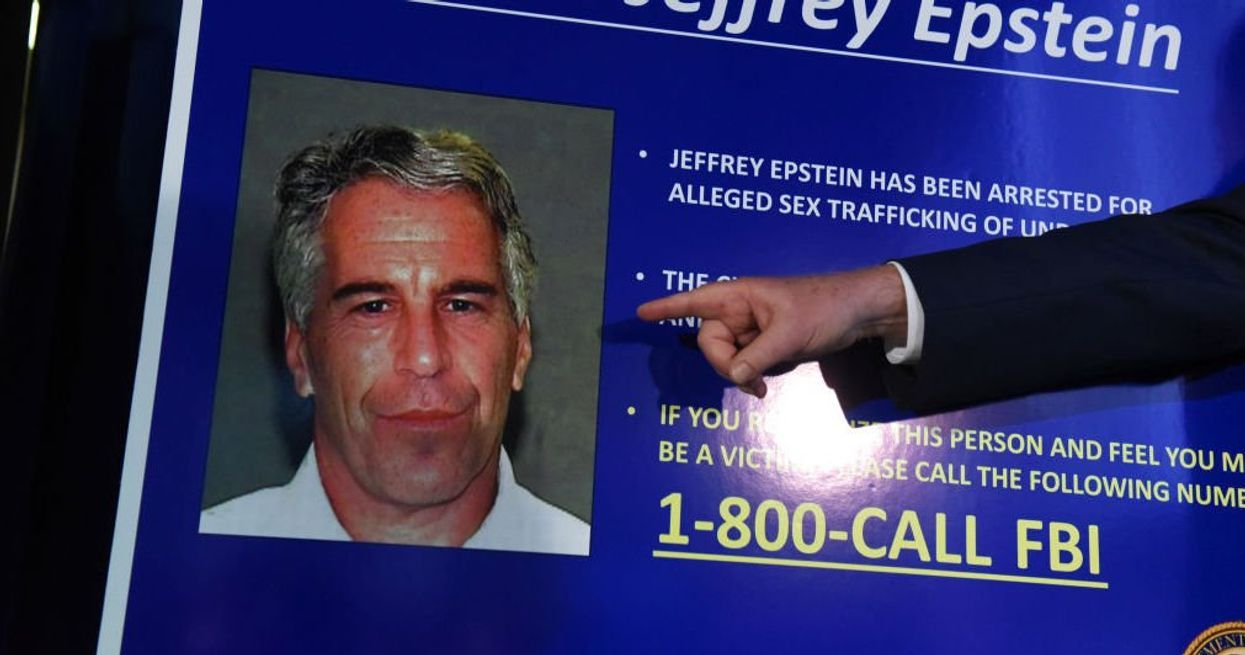
JPMorgan Chase's relationship with Jeffrey Epstein comes back to haunt bank to the tune of $290 million


JPMorgan Chase has agreed to pay Jeffrey Epstein's victims nearly $300 million.

Last November, a victim of Epstein filed a lawsuit in federal court on behalf of victims whom Epstein sexually abused. Many of the victims — a total that may number more than 100 — were teenagers and young adults when the abuse happened.

The bank, the largest in America, provided services to Epstein from 1998 to 2013. The lawsuit claims that JPMorgan Chase maintained its relationship with Epstein, whom the bank designated as a "high risk client," despite rumors that he engaged in human trafficking teenagers and young women for sex. The bank overlooked numerous red flags, the lawsuit alleged, because of Epstein's wealth and his access to powerful people.

In a statement, JPMorgan Chase said:

We all now understand that Epstein’s behavior was monstrous, and we believe this settlement is in the best interest of all parties, especially the survivors, who suffered unimaginable abuse at the hands of this man.

Any association with him was a mistake and we regret it. We would never have continued to do business with him if we believed he was using our bank in any way to help commit heinous crimes," the spokesperson added.

JPMorgan agreed to pay the victims $290 million, disclosed David Boies, one of the attorneys representing the victims. The settlement must still be approved by the court.

News of the settlement comes weeks after Deutsche Bank, which succeeded JPMorgan Chase as Epstein's primary banking institution, agreed to pay Epstein victims $75 million.

JPMorgan Chase CEO Jamie Dimon sat for a deposition in the case last month. During the interview, he denied knowing about Epstein until his arrest for sex trafficking in 2019. JPMorgan Chase officially blames former executive Jes Staley for ignoring Epstein's red flags and maintaining the bank's relationship with Epstein.

The bank has sued Staley, demanding a return of his compensation from 2006 to 2013, which amounts to as much as $80 million. JPMorgan Chase also wants to make Staley financially liable for damages to which the bank may be liable over its relationship with Epstein.

Like Blaze News? Bypass the censors, sign up for our newsletters, and get stories like this direct to your inbox. Sign up here!

JPMorgan downgrades Target's stock, cites 'consumer pressures and recent company controversies'


JPMorgan Chase, the largest bank in the United States, has downgraded Target's stock.

Analysts at the bank downgraded the retailer's stock from "overweight" to "neutral." This means that financial analysts were bullish on Target's stock, meaning they thought its share price was a good value compared to other stocks in its market. Generally speaking, "overweight" stocks are considered strong buys with valuable returns.

A "neutral" stock, then, is one that analysts believe is neither of good nor poor value.

JPMorgan analyst Christopher Horvers attributed the stock downgrade to market shifts and "recent company controversies."

"We continue to believe that the consumer is broadly weakening while the share of wallet shift away from goods (51% of [Target’s] sales) is ongoing," Horvers said, Market Watch reported.

"While still positive on a [three-year] basis, [Target] has been giving back share on a [one-year] view and we believe this share loss could accelerate into back to school and linger into holiday given consumer pressures and recent company controversies," Horvers explained. "This could turn [Target’s] traffic negative after an impressive run of 12 consecutive positive quarters."

Target became the target of backlash last month over an assortment of controversial products, including LGBTQ onesies, "tuck-friendly" bathing suits, drag queen books for children, and clothing promoting satanism.

Target eventually pulled some of the controversial products from its shelves and moved other controversial items to the rear of stores.

The retail giant's stock tumbled for nearly two weeks straight over the backlash. Some observers suggested Target may have faced the same fate as Bud Light. But on Thursday, Target finally snapped the streak of consecutive losing days on Wall Street.

Still, Target's stock has dropped 12% in 2023 despite the S&P 500 index making healthy gains.

Like Blaze News? Bypass the censors, sign up for our newsletters, and get stories like this direct to your inbox. Sign up here!