Stop trying to segregate the American founding


Race relations in the United States have unraveled in recent years, not only because of genuine disagreement, but because many Americans now grow up believing the nation is fundamentally unjust — racist to the core, perhaps even irredeemable.

This idea, once fringe, now enjoys institutional backing. Critical race theory and DEI ideology assert that the U.S. was founded on slavery and white supremacy. And they dominate schools, corporations, and government agencies alike.

Don’t displace the Fourth of July. Don’t divide what should unite us.

As a result, America has seen a quiet comeback of sanctioned segregation. Colleges increasingly host race-based graduation ceremonies. Society encourages people to define themselves first by racial identity, not shared citizenship. That should alarm anyone who once marched for equal rights in the 1950s and ’60s.

When Americans stop thinking of each other as fellow citizens, the glue that holds the republic together dissolves.

Juneteenth and the new segregation

Consider one example of this trend: the push for a separate “independence day” for black Americans.

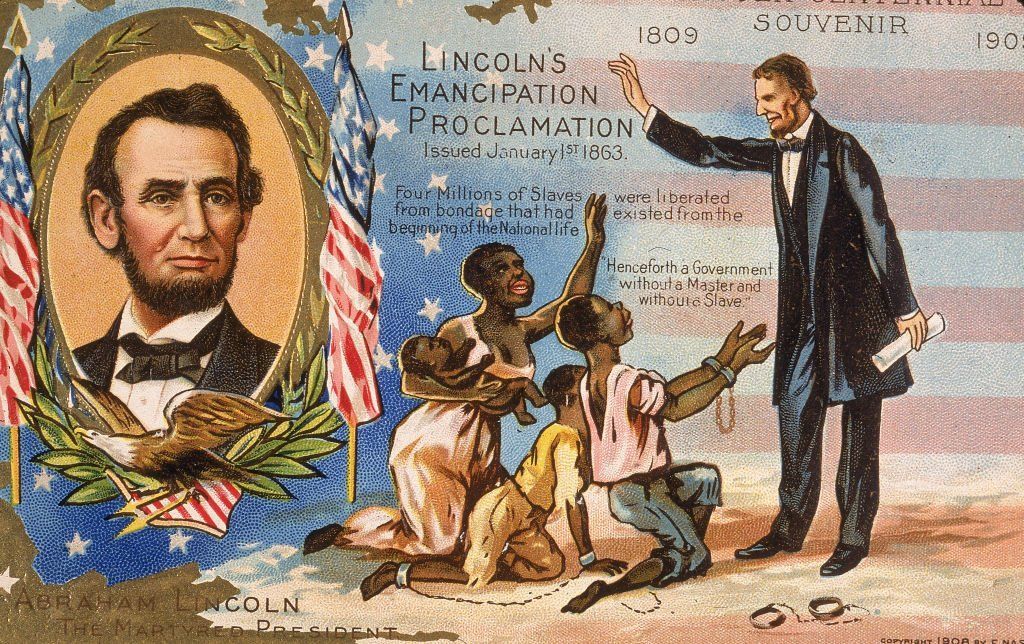
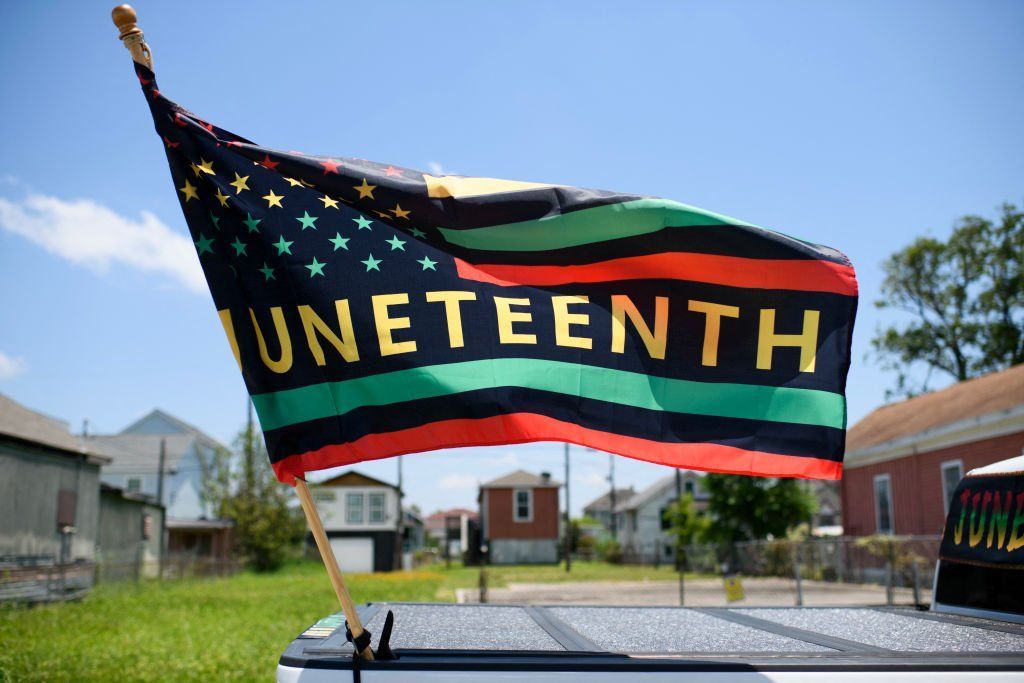
On June 17, 2021, Joe Biden signed Senate Bill 475 into law, establishing a new federal holiday: “Juneteenth National Independence Day.” The bill commemorates June 19, 1865, when Union Gen. Gordon Granger arrived in Texas and issued General Order No. 3, announcing that slaves in the state had been freed by the Emancipation Proclamation — two years after it was signed.

Former slaves in Texas celebrated, and in the years that followed, Juneteenth spread across the South. But it never held central importance in the broader civil rights movement.

Juneteenth did not abolish slavery. It merely marked the day slaves in one state learned they had been legally freed. The Emancipation Proclamation, issued in 1863, applied only to states in rebellion — excluding Union-supporting border states like Kentucky and Delaware, where slavery remained legal until the ratification of the 13th Amendment in December 1865.

A false independence narrative

Some activists now argue that Juneteenth should serve as “Black Independence Day.” That’s a mistake.

This view implies that African Americans have no rightful claim to the Fourth of July or to the principles of the Declaration of Independence. But those ideas belong to all Americans — not just the descendants of the signers.

It’s true that many historical figures sought to exclude black Americans from the promise of the Declaration. Chief Justice Roger Taney made that argument explicit in the Dred Scott decision. Confederates like Alexander Stephens and John C. Calhoun claimed that “all men are created equal” never applied to African Americans.

They were wrong.

What Frederick Douglass really believed

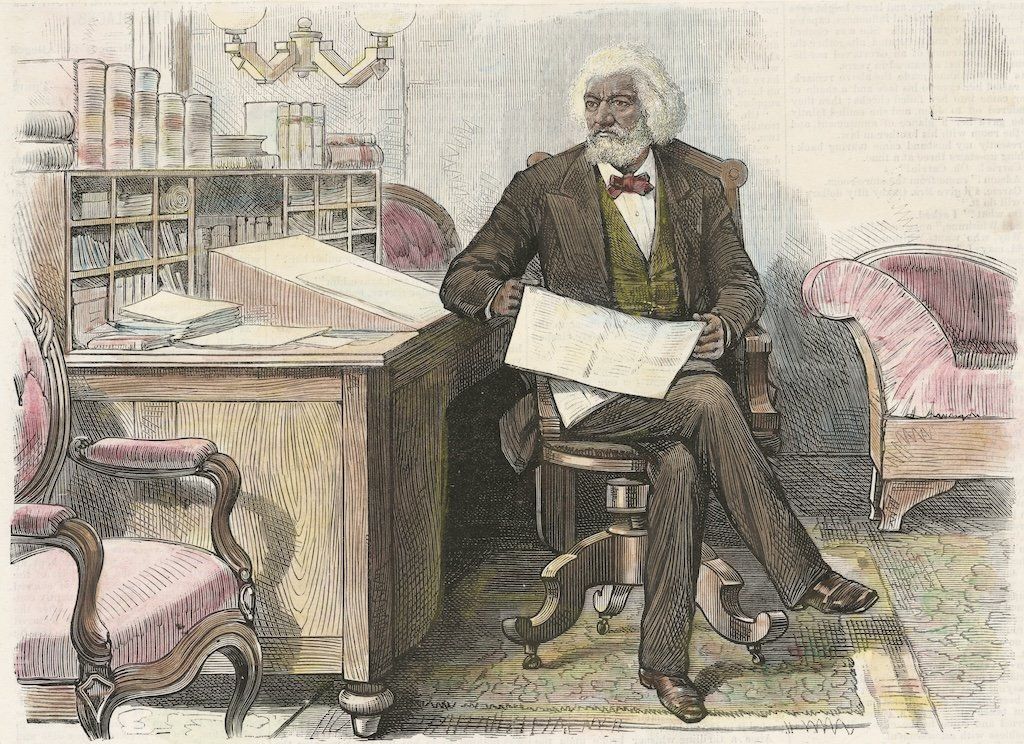
Some cite Frederick Douglass’ famous 1852 speech — “What to the Slave Is the Fourth of July?” — to support the idea that black Americans should reject the founding. But they ignore the full context.

Douglass, speaking two years after the passage of the Fugitive Slave Act, condemned the hypocrisy of a country that declared liberty while tolerating bondage. “What, to the American slave, is your Fourth of July?” he asked. “A day that reveals to him ... the gross injustice and cruelty to which he is the constant victim.”

But unlike Taney, Stephens, and Calhoun, Douglass didn’t reject the Declaration. He upheld it.

RELATED: Frederick Douglass: American patriot
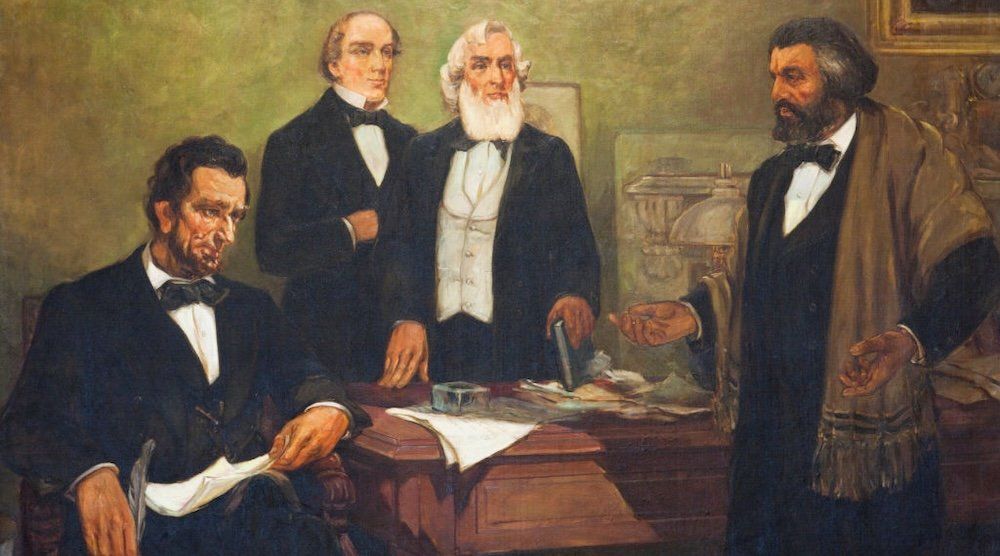
Photo by Carol M. Highsmith/Buyenlarge/Getty Images

Douglass took hope from the principles it proclaimed and called on America to live up to them. He dismissed the Garrisonian claim that the Constitution was pro-slavery. “Interpreted as it ought to be interpreted,” he said, “the Constitution is a glorious liberty document.”

He believed America’s founding held the moral resources to defeat slavery — and it did.

The universal promise of 1776

America’s founders didn’t invent slavery; they merely inherited it. At the time of the Revolution, slavery was a global institution, practiced on every continent and defended by every empire. Slavery, including African slavery, was a manifestation of the argument of the Athenians at Melos as recounted by Thucydides in his history of the Peloponnesian War: “Right, as the world goes, is only in question between equals in power, while the strong do what they can and the weak suffer what they must.” Even Africans sold fellow Africans into slavery.

The Declaration of Independence marked a sharp break from that past. It asserted that all human beings possess natural rights — and that no one may rule another without consent.

Thomas Jefferson famously observed that humanity had long been divided into those born "booted and spurred” and those “born with saddles on their backs.” The founders rejected that model. They established a republic based on equality before the law, not the interests of the stronger over the weaker.

They also knew slavery contradicted those ideals. Many believed the institution would die out — an Enlightenment relic destined for extinction. Still, the political compromises they made to preserve the Union allowed slavery to persist, and it took a war to end it.

Why the founding still matters

The Civil War was not a rejection of the founding. It was a fulfillment of it.

As Harry Jaffa wrote, “It is not wonderful that a nation of slaveholders, upon achieving independence, failed to abolish slavery. What is wonderful ... is that a nation of slaveholders founded a new nation on the proposition that ‘all men are created equal,’ making the abolition of slavery a moral and political necessity.”

The Declaration of Independence lit the fuse that ultimately destroyed slavery.

So let Americans celebrate Juneteenth — gratefully, joyfully, and historically. Let the holiday recall the biblical jubilee it was meant to evoke.

But don’t displace the Fourth of July. Don’t segment America’s founding. Don’t divide what should unite us.

As Douglass said: “I would not even in words do violence to the grand events, and thrilling associations, that gloriously cluster around the birth of our national independence.”

He went on: “No people ever entered upon the pathway of nations, with higher and grander ideas of justice, liberty and humanity than ourselves.”

Douglass understood something too many have forgotten: The genius of the American founding lies not in who it excluded but in the promise that, one day, it would include everyone.
Why I won’t celebrate Juneteenth as a federal holiday


Expect a wave of corporate media pieces today, all aiming to elevate Juneteenth’s importance in the American consciousness. These articles are sanctimonious, astroturfed exercises in progressive virtue signaling — gaslighting the public into believing Juneteenth deserves equal or even greater recognition than the Fourth of July.

But Juneteenth neither marks the beginning of slavery nor its end. Activists have hijacked the holiday to undermine the moral clarity of Independence Day.

Juneteenth has been weaponized to fracture America’s identity through deception and denigration.

Juneteenth commemorates the day Union Gen. Gordon Granger arrived in Texas on June 19, 1865, to enforce the Emancipation Proclamation and declare the end of slavery in the state. Early celebrations called it “Jubilee Day,” marking the delayed but welcome fulfillment of the Constitution’s promise and the Declaration’s revolutionary spirit — at least in Texas.

For decades, Juneteenth remained a Texas tradition. It held official status as a state holiday for 41 years and an unofficial one since 1866. But in recent years, radical activists have repurposed it as a tool to advance a racialist rewrite of American history.

A ‘George Floyd’ holiday

Before George Floyd's death in 2020, few progressives were even aware of Juneteenth's existence. But after Black Lives Matter-led riots caused over $1.5 billion in property damage and left at least 20 dead, the left seized the cultural moment. Activists bullied lawmakers into submission — both figuratively and literally.

That year, members of Congress knelt in kente cloth as a gesture of obedience. The Pentagon renamed military bases to satisfy a new moral order. Corporations slapped critical theory slogans on products. The so-called “black national anthem” was played at sporting events, eclipsing the actual national anthem.

And then came the crowning gesture: the creation of a new federal holiday. Juneteenth became the woke sacrament, signaling America’s supposedly unending racism.

It was ludicrous then. It’s borderline insane now.

Juneteenth is Texan — and that’s all

Texas has every right to honor Juneteenth. The holiday commemorates the fulfillment of America’s founding ideals and the abolition of one of humanity’s most enduring evils. But beyond Texas, it holds no national significance.

Juneteenth doesn’t fall on the date of the Emancipation Proclamation. It doesn’t mark the actual end of slavery in the United States. Activists howl in protest, but the truth remains: Juneteenth has been repurposed to challenge and eventually replace Independence Day.

Most of the people writing solemn op-eds about Juneteenth don’t know its history — and they don’t care. What they do care about is creating a “new” Independence Day, one that fits a progressive narrative. Its placement on the calendar — just weeks before July 4 — is no accident.

This is part of the left’s long march through American institutions. National holidays shape national identity. And Juneteenth now functions as a tool to fracture that identity under the guise of moral progress.

Under the Biden administration, some military installations flew flags calling Juneteenth “National Independence Day.” The Department of Defense distributed official guidance using that exact phrase. Nikole Hannah-Jones, architect of the historically illiterate “1619 Project,” uses Juneteenth to promote her claim that America’s true founding began with the arrival of African slaves, not the signing of the Declaration.

Divide, rewrite, replace

As a former Marine and combat veteran, I recognize these tactics: divide and conquer, rewrite and replace. They follow a playbook.

Juneteenth’s federal recognition aims not to celebrate American emancipation but rather to distract from the actual Independence Day. The broader goal is to erode national unity and advance a Marxist agenda: divide Americans by race, replace shared history with grievance, and erase what came before.

RELATED: We should scrap Juneteenth, aka George Floyd Day, for a holiday commemorating America’s 1865 rebirth

Blaze Media Illustration

I lived in Texas for many years. I’ll celebrate Juneteenth as a Texas holiday. The end of slavery deserves celebration. I would even support a national holiday that commemorates the abolition of slavery, honestly.

But I won’t join in the farce that Juneteenth represents America’s independence. Too many Americans gave their lives to preserve our constitutional republic and the revolutionary idea that all men are created equal and endowed by God with unalienable rights.

Independence Day remains the foundation of this nation. It paved the way for emancipation, the defeat of fascism, the collapse of communism, and the rise of the most prosperous country in world history.

The radical left understands this. That’s why it has targeted Juneteenth as a cultural wedge. Leftists expect Americans to bow at the altar of wokeness and pretend not to notice. And if we object, they call us pro-slavery.

I reject that lie.

I refuse to bend the knee to a movement that seeks to destroy everything good and true about this country. The stakes are too high — and the truth is too important to surrender.

Trump reparations would be Dems’ biggest loss since the GOP took their slaves away


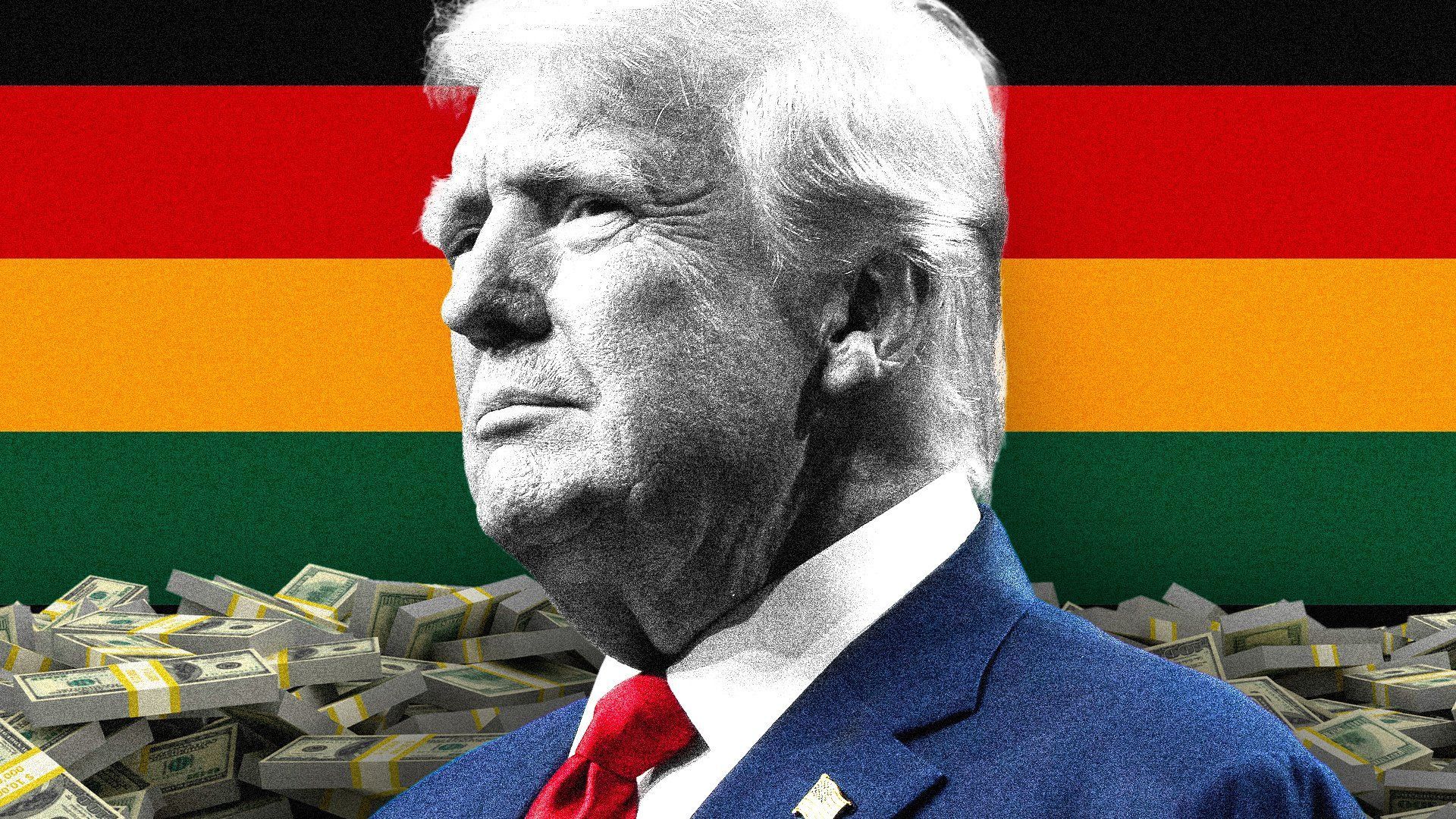
Donald Trump has a rare chance this Juneteenth to deliver Democrats their most painful political blow in 160 years.

The man hailed by supporters as a master dealmaker could throw the American system into upheaval by proposing a “MAGA-vellian” reparations plan — a bold mix of populist theater and strategic ruthlessness.

If Trump launched the MAGA Fund, he wouldn’t just rewrite political norms — he’d cement his place as the most disruptive figure in modern American history.

Call it the MAGA Democrat Slavery Compensation Fund.

This plan wouldn’t just shake up Washington. It would redraw the partisan map and deal a death blow to the race-peddling civil rights industry by exposing the fraud at the core of progressive politics. And coming from a president who has vowed to restore Confederate base names, the MAGA Fund would remind voters which party fought to keep slavery alive.

Timing is everything.

Trump acknowledged Juneteenth in his first term and pledged to make it a federal holiday during the 2020 campaign. Biden signed it into law in 2021, but the effort quickly became partisan theater. Critics said Democrats only embraced the holiday after the George Floyd riots, hoping to appease Black Lives Matter activists.

Candace Owens called Juneteenth “sooo lame” and “ghetto.” Charlie Kirk dismissed it as a “CRT-inspired federal holiday” meant to compete with Independence Day.

But now that Trump’s back in the White House — more popular among black voters than any Republican since the 1960s — he’s well-positioned to pull off a maneuver that could rattle his ideological base and neutralize his fiercest critics.

The MAGA Fund would benefit only the descendants of American slaves — not black immigrants, not “people of color,” and not members of the ever-expanding LGBTQIA+ rainbow coalition. It would expose the cynical way Democrats — whose party symbol is a donkey — have used black Americans as political mules for every new “civil rights” cause since the 1960s.

Duke economist Sandy Darity estimates full reparations would cost $10 trillion. The MAGA Fund? Just $855 billion. It would draw from corporate donations — a logical move, since more than 1,000 companies pledged more than $200 billion to “racial justice” causes in 2020.

The MAGA Fund would also weaponize the left’s favorite buzzword: equity.

Progressives insist policies must favor the disadvantaged. Why not apply that within the black community? Under this plan, Oprah Winfrey and LeBron James wouldn’t get the same payout as a Mississippi man working three jobs or a single mom raising four kids in the inner city.

Here’s how it would work:

  • Black households earning over $100,000 (about 25% of the total) would receive a symbolic $345, referencing the 345 years between the arrival of African slaves in 1619 and the Civil Rights Act of 1964.
  • Households earning $50,000 to $100,000 (roughly 30%) would receive $34,500.
  • Families under $50,000 (about 45%) would receive $103,500.

The MAGA Fund would channel the populist energy dominating the right. It would highlight how Democrats, backed by elite institutions, claim to represent the oppressed while serving the powerful. It would force them to either support Trump’s plan or explain why the party of “equity” opposes targeted aid to poor black Americans.

RELATED: Like Black Lives Matter, DEI must die

Saud Ansari via iStock/Getty Images

Even critics like Ann Coulter might back the idea. She’s blasted Democrats for extending black reparations programs to every new “oppressed” group. She’s also listed the conditions under which she’d support reparations.

Of course, Republicans would need to manage their white working-class base. Conservative pundits would rage. But behind closed doors, they could frame the plan as a final settlement — a way to declare the race debate closed. The race hustlers would need a new line of work after Trump stamped the national debt to black Americans “Paid in Full.”

And it wouldn’t just be symbolic.

Put nearly a trillion dollars into circulation and watch what happens. Dave Chappelle joked in a 2003 sketch that reparations would send gold prices soaring, phone bills plummeting, and “8,000 new record labels” starting within an hour. The skit played off stereotypes — but behind the comedy was economic truth.

Studies of universal basic income show recipients typically spend on essentials like food and transportation. A Washington, D.C., program gave low-income moms $10,800. One woman used $6,000 to take her kids and their father to Miami. You don’t need a PhD to know that pumping money into poor communities stimulates demand.

If Trump launched the MAGA Fund, he wouldn’t just rewrite political norms — he’d cement his place as the most disruptive figure in modern American history. Who else but a twice-divorced real estate mogul and ex-Democrat could overturn Roe, win over evangelicals, survive two impeachments and an assassin’s bullet — and then sign big, beautiful reparations checks with a smile?

Will it happen? Probably not.

Politics is too polarized. Corporations would recoil at helping Trump. Professional race merchants would denounce the plan as pandering. The left would lose its mind. The right might lose its nerve.

Still, if the last decade taught voters anything, it’s this: Never bet against the Teflon Don.

How Abraham Lincoln set the precedent for Trump’s deportation authority


Across the United States, Americans of all backgrounds recognize Juneteenth on June 19, commemorating the day in 1865 when enslaved people in Confederate-held Texas learned of President Abraham Lincoln’s 1863 Emancipation Proclamation.

The same legal reasoning that ended slavery also supports a president’s authority to remove foreign nationals designated as domestic terrorists. President Donald Trump has the constitutional power to act in the interest of national security by deporting those who threaten the country.

When we celebrate Juneteenth, we implicitly acknowledge broad presidential national security powers.

Lawyers and judges study statutes and decide cases, but they rarely confront the true scope of executive power. The Constitution designates the president as commander in chief, but it provides little detail on the extent of that authority.

The closest legal precedent on executive power is Korematsu v. United States (1944), in which the Supreme Court upheld the race-based internment of Japanese Americans during World War II. In 1983, U.S. District Judge Marilyn Hall Patel overturned the decision as applied to Fred Korematsu and others, but the broader question of presidential national security powers remained unresolved.

President Trump does not need to justify his actions under the much-criticized Alien and Sedition Acts of 1798. Instead, he should invoke the same principle that underlies Juneteenth: the federal government’s power to secure liberty by enforcing the law and protecting the nation.

At the time of the Civil War, slaves were considered the property of their owners, and the Fifth Amendment dictated that the government could not emancipate them without due process and just compensation paid to their owners. Additionally, the execrable 1857 Dred Scott v. Sandford decision and the Fugitive Slave Act reinforced legal support for slavery.

Despite those legal obstacles, Lincoln issued the Emancipation Proclamation, freeing slaves only in the Confederate states at war with the Union. Those in Maryland, Delaware, Kentucky, and Missouri remained enslaved because their states were not at war with the country.

As a skilled lawyer, Lincoln understood that his national security powers, implied within his role as commander in chief, superseded constitutional rights in times of war. He did not seek congressional approval, compensate slaveholders, or seek the approval of the courts. In essence, when we celebrate Juneteenth, we implicitly acknowledge broad presidential national security powers.

Historical precedent reinforces this principle. During the Whiskey Rebellion, President George Washington used force to suppress dissent without formal wartime authorization, arresting rebels without warrants. Congress authorized a militia for Washington but did not grant him wartime powers. In his efforts to quell the uprising, he ordered door-to-door searches and forcibly arrested suspected rebels without warrants, bringing several to the Capitol for trial.

The most compelling legal validation of these powers came in United States v. Felt. Mark Felt, the FBI associate director best known as Deep Throat in the Watergate scandal, was later prosecuted for authorizing warrantless searches to track terrorist groups like the Weather Underground and the Palestinian Liberation Organization following the 1972 Munich Olympics attacks.

At his trial, five former attorneys general, President Richard Nixon, and Felt himself testified that presidents and their agents are not always bound by the Bill of Rights when national security is at stake. Their argument underscored a long-standing reality: The executive branch has exercised extraordinary authority to protect the country in moments of national peril.

Felt’s controversial prosecution led to the passage of the Foreign Intelligence Surveillance Act in 1978, which established that national security searches intended to prevent terrorist attacks need not adhere to standard constitutional rights. FISA effectively codified a national security exception to otherwise conflicting constitutional mandates.

Taken together, the Whiskey Rebellion, Juneteenth, FISA, and United States v. Felt demonstrate that national security concerns can, at times, take precedence over constitutional protections.

How does this apply to President Trump’s deportation policy? As commander in chief, he has determined that the Tren de Aragua and MS-13 gangs pose a national security threat. He classified these groups as terrorist organizations, recognizing that they entered the United States with organized criminal intent.

Most Americans would agree that, before a formal declaration of war against Germany, President Franklin D. Roosevelt could have ordered the assassination of Adolf Hitler. Similarly, few would argue against detaining Osama bin Laden or Khalid Sheikh Mohammed before 9/11. The United States need not wait for an atrocity to occur before acting decisively.

We elect the president to make tough national security decisions, not to be second-guessed by judges from another branch of government. The limits of this power remain open to debate, however. While courts may take a restrictive view, the subject is rarely taught in law schools or settled in case law.

Historical and legal precedent suggest that when national security is at stake, terrorists are not entitled to lawyers or pre-deportation hearings. As counterintuitive as it may seem, Juneteenth itself sets a precedent. Again, slaveholders were not granted due process hearings before the Emancipation Proclamation, nor did they receive Fifth Amendment compensation for the loss of enslaved labor.

When dealing with foreign criminal organizations, we should not analyze these disputes through the lens of antiseptic legal theory. National security demands a more hardheaded approach. As the saying goes, eternal vigilance is the price of liberty — swift deportations may be part of that price.

Ilhan Omar’s Daughter Gets Reparations Payments From White Friends

Isra Hirsi, the daughter of "Squad" member Rep. Ilhan Omar (D., Minn.), has received "reparations" payments from her white friends on Juneteenth most years since 2019, the Washington Free Beacon has found.

Both of Hirsi’s parents are Somali immigrants. Reparations advocates, meanwhile, typically push for payments to descendants of African Americans enslaved in the U.S., while Juneteenth commemorates the nation’s 1865 end of slavery.

The post Ilhan Omar’s Daughter Gets Reparations Payments From White Friends appeared first on .

BLM Traded Dr. King’s Christianity For Kendi’s Critical Race Theory

Critical race theory is destroying the traditional Christian legacy of abolition and the civil rights movement.

It’s Time To Ditch LGBT Month For A Holiday We Can All Take Pride In

American Heritage Month is the antidote to the unhealthy identitarian obsessions that characterize modern American culture.

CA professor says being a Swift fan is 'slightly racist,' Chiefs winning Super Bowl is a 'white supremacist conspiracy'


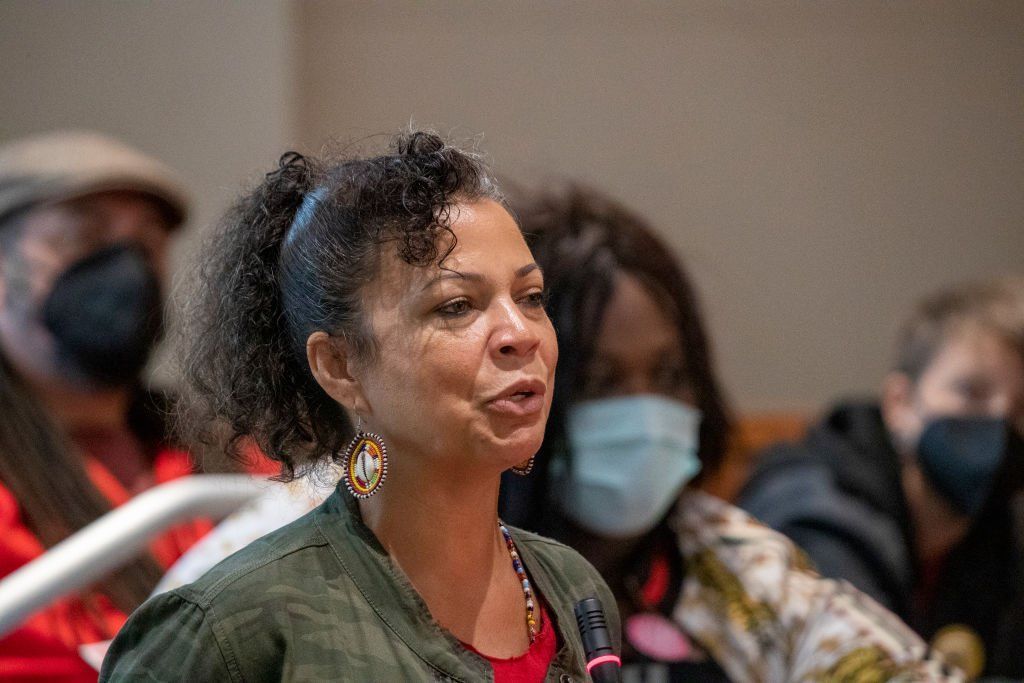
A California professor suggested that it might be racist to be a Taylor Swift fan. The professor, who is no stranger to controversy, made the suggestion after the Kansas City Chiefs' Super Bowl victory over the San Francisco 49ers, according to the New York Post.

Melina Abdullah is a professor of Pan-African Studies at California State University, Los Angeles. She decided to take her views about Taylor Swift to X after the Super Bowl, where she wrote: "Why do I feel like it’s slightly racist to be a Taylor Swift fan?”

— (@)

When another X user claimed "everything is racist," Abdullah simply replied, "Indeed!"

— (@)

According to Abdullah's X bio, she is a "Professor of Pan-African Studies at Cal State LA, #BlackLivesMatter organizer, Pan-Africanist, Hip Hop scholar, daughter of God, womanist, truth-teller, mama." The New York Post also noted that she is a co-founder of the Black Lives Matter's Los Angeles chapter.

When another X user asked Abdullah to clarify what she meant by her original post, she said: “I said FEEL, not think. Kind of like that feeling I get when there are too many American flags.”

Not long after, she followed up her original post with a second one, which read: “Why do I feel like this was some right-wing, white-supremacist conspiracy?!?! Booooooo!!!! #SuperBowl.”

— (@)

However, this is not the first time Abdullah has made questionable statements online. In 2022, she said no white people were welcome to Juneteenth celebrations. She wrote: “Attention white people… Please don’t ask if you can come to the cookout… #Juneteenth is freedom day for Black folks."

“It should be #Reparations day for white folks.”

— (@)

The Post reported that in 2021, Abdullah tried to defend Jussie Smollet after he was found guilty of staging a fake hate crime.

“In our commitment to abolition, we can never believe police, especially the Chicago Police Department (CPD) over Jussie Smollett, a Black man who has been courageously present, visible, and vocal in the struggle for Black freedom. While policing at-large is an irredeemable institution, CPD is notorious for its long and deep history of corruption, racism, and brutality."

Smollet claimed that he was attacked by two white men screaming, "This is MAGA country," in the middle of the night in Chicago. The incident was claimed to have taken place in 2019. But in December 2021, Smollet was found guilty of falsely reporting a hate crime.

Like Blaze News? Bypass the censors, sign up for our newsletters, and get stories like this direct to your inbox. Sign up here!

Georgia's largest hospital system scraps Christmas Eve from paid holiday calendar, adds Juneteenth to ensure 'equitable outcomes for all'


The largest hospital system in Georgia has scrapped Christmas Eve from its paid holiday calendar, effective next year. Juneteenth has been added in its place. This will impact over 24,000 employees.

While the controversial zero-sum swap is purportedly an attempt to support "diverse communities" and ensure "equitable outcomes for all," the system comprising 11 hospitals and over 250 provider locations does not appear to have done anything substantive for workers by virtue of this change.

Atlanta News First reported that employees were let down by what some had anticipated to be an "exciting announcement."

"I think, in general, everyone at Emory is pretty frustrated right now," said one Emory health care provider. "You can’t replace one for the other. It's completely inappropriate. It's essentially pitting a Christian holiday against something that's to be celebratory for everyone – but specifically for our black colleagues."

"Something that should be an extremely joyful and collective celebration has become another reminder of how our black colleagues can’t have anything without sacrifice," an employee told Atlanta News First.

NAACP Dekalb County president Edwina Clanton puzzled over "why they can't do both," suggesting "it will put anger in some hearts."

"Why do we have to do this? Why can't we have our old holidays off?" said Clanton. "Some more consideration, even asking the employees which days you want to give up, that may have worked better."

In his memo to employees last month, Lee reportedly indicated leadership did not want to add another day to the nine paid holidays observed each year.

"For each observed holiday, our clinics and business offices close, which means our patients are unable to make clinic appointments for those days," wrote Lee. "To minimize the impact on patient care, we will not be adding another paid holiday to our calendar."

The Washington Free Beacon reported that Lee had further stressed in his email to employees, "Diversity, equity, and inclusion at Emory Healthcare (EHC) is about creating an environment of true belonging for our patients and team members, while ensuring equitable outcomes for all."

"In response to requests from our care team members over the past few years, we are pleased to add Juneteenth to the holidays we recognize," Janet Christenbury, a spokesman for the health system, told Becker's Hospital Review. "At Emory Healthcare, we strive to support our employees and our diverse communities in recognizing holidays that are meaningful and important to them."

Atlanta News First indicated the system said employees retain the option to use paid time off for Christmas Eve.

Like Blaze News? Bypass the censors, sign up for our newsletters, and get stories like this direct to your inbox. Sign up here!

Emory Healthcare Replaces Christmas Eve With Juneteenth on Paid Holiday Calendar

The largest hospital system in Georgia, Emory Healthcare, has scrapped Christmas Eve from its paid holiday calendar and added Juneteenth. Employees will now have to use paid time off to celebrate the December holiday.

The post Emory Healthcare Replaces Christmas Eve With Juneteenth on Paid Holiday Calendar appeared first on Washington Free Beacon.