The danger of calling the left stupid
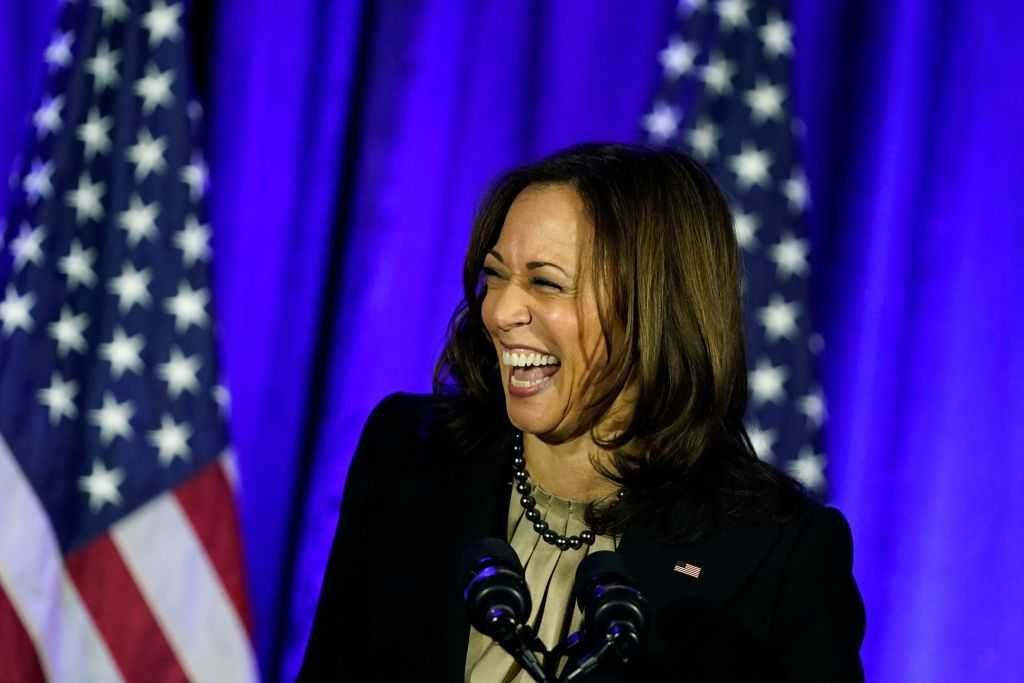
A long list of prominent conservatives have referred to leftists and Democrats as dumb, stupid, incompetent, crazy, and insane. In 2007, Ann Coulter wrote the book “If Democrats Had Any Brains, They’d Be Republicans.” Both Rush Limbaugh and President Trump regularly referred to Democrats as “Dumbocrats.” More recently, the leader of the House Freedom Caucus called Democrats “the crazy party,” and JD Vance framed the contrast between the parties as “common sense vs. crazy.”
Matt Margolis titled a piece in PJ Media this year “Democrats Are Too Stupid to Heed This Warning” and posited that somewhere between the 1990s and today, the Democratic Party lost its mind. Some of this stuff gets a chuckle, but conservatives need to be careful with this narrative.
Calling an adversary’s actions crazy or stupid implies that those actions produce an outcome fundamentally different from what their architects intended.
Conservatives need to understand that this tactic can not only contradict the more serious messages they’re trying to convey about leftist policies, it can also remove responsibility from leftists for their malevolence.
Consider a recent interview in which Rep. Jim Jordan (R-Ohio) explained that the left’s open-border policy was part of a shrewd, long-term plan to bring in new Democrat constituents, with sanctuary-city policies as another step in that plan. Yet in the same interview, he called the policy “just stupid” and “one of the dumbest policies I’ve ever heard of,” and, in a later interview, adding that “just about every single position today’s left adopts is crazy.”
So we are told that leftists are shrewd, long-term planners who are simultaneously stupid and crazy. Which is it? The distinction may seem trivial, but it’s not.
We need to distinguish between leftist leadership and its dominant agenda on the one hand and its useful idiots on the other.
To be clear, there are certainly some dim bulbs among the left — both in leadership and rank and file. Showcase examples include Vice President Kamala Harris, who frequently struggles to articulate coherent sentences; Rep. Hank Johnson (D-Ga.), who worried during a congressional hearing that Guam might “tip over and capsize” if it became too populated; and Rep. Alexandria Ocasio-Cortez (D-N.Y.), who told us that America with defunded police would look just like the wealthy white suburbs.
On a broader scale, consider millions of California voters who knowingly continue to vote for politicians whose policies have devastated the Golden State.
But these examples aside, the overarching leftist agenda — and the people who genuinely understand, subscribe to, and orchestrate it — cannot simply be dismissed as stupid. Doing so is dangerous.
The rise of the New Left
As has often been the case with radical leftist movements in the United States, their stated objective is to dismantle existing American institutions, traditions, and governing structures in favor of a fundamentally different social order. Put simply, they despise America as it currently exists.
Once you understand this premise, their positions look less like harebrained, stupid, illogical, or unworkable ideas, but more like carefully conceived, sometimes ingenious tactics intended to advance that larger objective.
RELATED: Democrats are desperate to 'Europe' our health care system

In this light, things like defunding the police, draconian regulations and carbon taxes, mothballing coal and nuclear plants, wide-open borders, turning a blind eye to Medicaid and NGO fraud, supporting genital mutilation of minors, opposing voter ID, massive expansion of entitlement spending, lowering combat readiness standards in the military in the name of gender equality, and support for adversaries like Hamas can be understood not as disconnected examples of incompetence, but as elements of a broader ideological program.
If it does damage to America and hastens the great realignment, they support it.
Whether one agrees with that interpretation of any particular policy is a separate question. The important point is that conservatives shouldn’t automatically assume destructive policies are the product of stupidity.
In “America’s Cultural Revolution,” Christopher Rufo explains how the radical left’s approach evolved from traditional Marxist class conflict toward an emphasis on race, gender, and identity. Traditional Marxism defined the conflict largely in socioeconomic terms, pitting the working class against the wealthy. In the United States, however, the middle class proved too large, mobile, and invested in the existing system for a conventional class-based revolution to take hold.
Influenced by thinkers such as Antonio Gramsci and Herbert Marcuse, the New Left increasingly emphasized “the war of position,” “the long march through the institutions,” and racial and cultural identity as alternatives to direct political conflict. Barack Obama became a highly consequential figure in this transformation.
During his 2008 presidential campaign, Obama told an audience in Columbia, Missouri, “We are five days away from fundamentally transforming the United States of America.” In the years that followed, he did precisely that.
The media proactively escalated the new narrative, increasing use of the terms racist, racists, and racism by roughly 700% between 2011 and 2019. The phrase “white supremacy” rarely appeared in the media until 2015, but by 2019, the Times and the Post were using it 17 to 18 times more often than in 2014, with similar jumps for “systemic racism,” “white privilege,” “unconscious bias,” and “whiteness.”
Gallup found that the share of respondents who believed black-white relations were “very good” or “somewhat good” plummeted from about 70% to 47% by 2015.
From the perspective of those who designed it, this was a deliberate and consequential political strategy. Arthur Brooks put it well, pointing out that the president ran on optimism and unity but governed on pessimism and division. In 2011, Obama’s Executive Order 13583 cemented DEI language, metrics, and policies across federal agencies. The resulting fallout has been well documented.
RELATED: The right is building its own lawfare defense machine — finally
Stupid or strategic?
To call leftist leaders or their policies stupid is therefore more than an unfortunate choice of words. It can mislead conservatives regarding what they are confronting.
We don’t tend to think of stupid people as evil. Perceived stupidity neutralizes perceived intent and, to some degree, perceived blame. “Stupid” is not the word that comes to mind for figures like Stalin, Mao, or Pol Pot, and it would have done us no favors to describe the Axis powers in World War II as merely stupid or crazy.
Calling an adversary’s actions crazy or stupid implies that those actions produce an outcome fundamentally different from what their architects intended. But what if the opposite is true? What if the policies are producing precisely the disruption their architects sought?
Once upon a time, Democrats and Republicans were two parties with broadly similar hopes for America but sharply different views on how to get there. That time has passed.
Conservatives should not lose sight of what they believe to be the left’s overarching mission. They need to describe political actions, and the consequences those actions produce, not simply as the unfortunate results of incompetent or stupid people, but as those of an underlying ideological agenda.
That doesn’t mean every Democrat is a radical leftist, every leftist is an intellectual strategist, or every controversial policy reflects a coordinated conspiracy. Nor does it mean conservatives should stop pointing out genuinely foolish statements or incompetent decisions. It means something simpler: Stop confusing foolishness with strategy.
Some political actors may indeed be foolish. Others may be highly intelligent and deeply committed to an ideological vision conservatives regard as destructive. Those two categories shouldn’t be confused.
If conservatives want to understand and effectively challenge the modern left, they should focus less on calling its leaders stupid and more on understanding what they’re trying to accomplish. That leadership may be insidious, duplicitous, destructive, morally wrong, and in some cases evil. But dismissing them as stupid or crazy risks missing the point entirely.
Let’s start calling them out on what they actually intend to do.
Editor’s note: This article was originally published at the American Mind.
The Weirdo King Of Anti-Parent Democrats Is Running For Congress
 If a twelve year-old is pregnant, has an STD, or has been raped, Pan argued, of course a doctor doesn't need to mention it to the parents.
Before you ask us to trust again
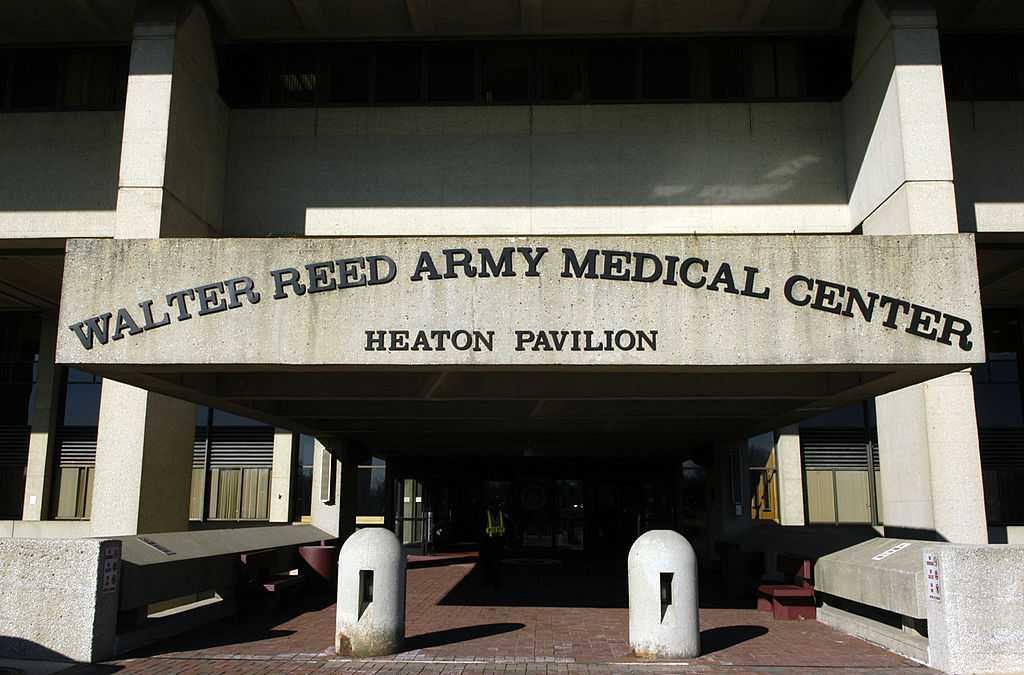
When the Walter Reed scandal erupted in 2007, the officers under fire were more than names in a newspaper to me. I knew many of them. I saw their frustration and outrage as they scrambled to address failures some were only then discovering.
My wife, Gracie, and I were at Walter Reed frequently. A bilateral amputee herself, she had been invited to sing and spend time with wounded warriors, particularly women returning from Iraq and Afghanistan with amputations. The military was struggling to care for troops with devastating injuries, many caused by improvised explosive devices.
We cannot turn the page simply because the people responsible do not want us to read it.
Knowing people working there helped me understand the strain. Knowing more wounded were coming helped me understand why the failures could not wait.
The Washington Post exposed serious problems in outpatient conditions and care, including mold, vermin, bureaucratic delays, and wounded soldiers falling through administrative cracks. The reporting was painful for people I knew. It was also necessary.
I discussed the scandal with my father, a retired Navy captain. The military, he explained, survives by folding painful lessons into its policies, procedures, and institutional memory so others do not have to learn them at the same cost.
That is what an after-action review is for: What happened? Why did it happen? What changes now?
The lesson must outlive the embarrassment.
When our leaders and the media lie, conceal, or confidently tell us something that later proves false, they do the heavy lifting for our enemies. How do we defend the country together when we cannot trust the people describing the danger?
Consider the assurances about President Biden’s capacity. In February 2024, press secretary Karine Jean-Pierre said, “He is sharp. He is on top of things.” In March, MSNBC’s Joe Scarborough went much further, calling the sitting president “the best Biden ever” intellectually and analytically.
Then came the June debate and Biden’s withdrawal from the race in July.
The debate did not establish a medical diagnosis. It did demand an explanation from people who had spent months assuring the public that concerns about Biden’s capacity were misplaced.
In May 2025, Scarborough finally said, “I was obviously wrong.” He explained that his confidence came from extended personal encounters with Biden. Then he added that he was not sure what lesson to take from the episode.
That’s precisely the problem.
What evidence did he discount? What did he see that persuaded him? What did others see that contradicted it? What will he do differently next time?
RELATED: Gavin Newsom invoked Nietzsche. I thought of ‘Blazing Saddles.’
Those questions belong not only to Scarborough but to every politician, aide, reporter, editor, broadcaster, and institution that gave the public confident assurances. An after-action review cannot end with “I was wrong” any more than it can end with “I meant well.”
The next people relying on you need to know what changed.
The border demands the same accounting. In September 2022, Vice President Kamala Harris said, “The border is secure.” In October 2023, Homeland Security Secretary Alejandro Mayorkas testified that more than 600,000 known “gotaways” had evaded apprehension during that fiscal year.
What did “secure” mean? More important, what evidence would have caused the administration to abandon that description sooner?
An honest accounting must distinguish between what officials got wrong and what they knowingly concealed. That requires records, testimony, names, timelines, and decisions. Citizens should not have to settle for whichever explanation best protects a party, an administration, or a network.
We may expect politicians to lie. That does not excuse them. Nor does it relieve journalists of the obligation to test what politicians say rather than repeat it.
Over 40 years of caregiving, I have had plenty of doctors get things wrong. I understand the reluctance to offer a mea culpa. But I take their advice home and live with the consequences. If we are going to continue together, I need to know how the next decision will be better.
RELATED: The fourth bus of the Apocalypse

That was the obligation at Walter Reed. The next wounded soldier needed the previous failure corrected whether anyone responsible felt sorry or not.
“Mistakes were made” leaves the authors conveniently absent. “Turn the page” asks the public to move on while the questions remain unanswered.
We cannot turn the page simply because the people responsible do not want us to read it.
Our enemies benefit from failures we refuse to examine. If those responsible will not come clean, voters should elect people willing to use lawful investigations, public hearings, compelled testimony, and the release of records to establish what happened. Where evidence establishes crimes, pursue prosecution.
But a hearing cannot become the place where accountability goes to die.
The Constitution provides authority. The law provides tools. Voters must supply people willing to use them.
This election, ask candidates whose records they will demand, which decisions they will examine, and whether their own allies will have to answer questions under oath. Anyone can promise to investigate an opponent. The test comes when the evidence reaches a friend.
I owe my preferred candidates and broadcasters that same scrutiny. Excusing them would preserve the very failure I want corrected.
We can disagree on policy and still defend this country shoulder to shoulder. But we cannot make truth optional. Calls for unity ring hollow when the people asking for trust refuse to account for how they broke it.
Our children will inherit whatever we excuse.
Poll: 6 In 10 Americans Oppose Democrats’ Plan To Pack The Supreme Court
 Voters overwhelmingly want to keep the Supreme Court bench capped at nine justices, a new poll found, despite Democrats’ push to pack the court. A new McLaughlin Associates poll found that voters overwhelmingly support keeping the Supreme Court at nine justices and back the “Keep Nine Amendment.” The amendment sought to require that the Supreme […]
Vance: Talarico wears Christianity as a 'skin suit' — and it reveals more than just contempt
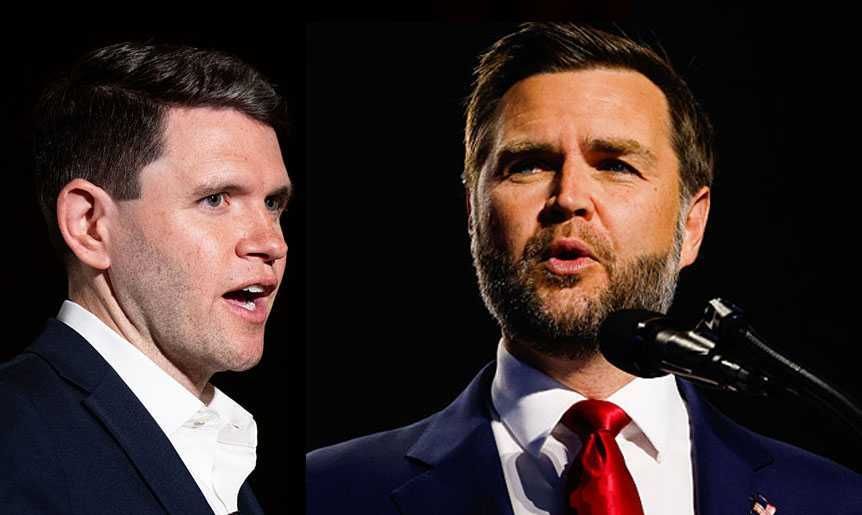
Vice President JD Vance believes "woke is dead," and he thinks recent conduct from Texas Democratic Senate candidate James Talarico demonstrates the point.
In an episode of conservative Vince Coglianese's podcast that aired on Tuesday, Vance sorted through white and black pills pertaining to the midterm election, which is now only five weeks away.
'Democrats are literally running away.'
Vance acknowledged the recent rightist doom-saying about the election, boosted in part by recent polls indicating that the Democrats have a serious edge in multiple races. However, the vice president emphasized that the country "is not going to be saved by what Thomas Paine would have called sunshine patriots."
"You have got to get in there and win these races and make it possible for Republicans to deny a bunch of crazy communists from having positions of power in the United States of America," said Vance. "It's just that simple."
Vance further suggested that the situation may not be as bleak for Republicans as some think, recalling polls from fall of 2024 that indicated that then-Vice President Kamala Harris was going to trounce President Donald Trump and that the Democrats were going to maintain control of the U.S. Senate.
In a Reuters/Ipsos poll published in late September 2024, Harris led Trump 47% to 40%, while an NBC News national poll showed Harris leading Trump 49% to 44%. Trump ultimately defeated Harris in a landslide, securing the popular vote and 86 more Electoral College votes than the Democrat.
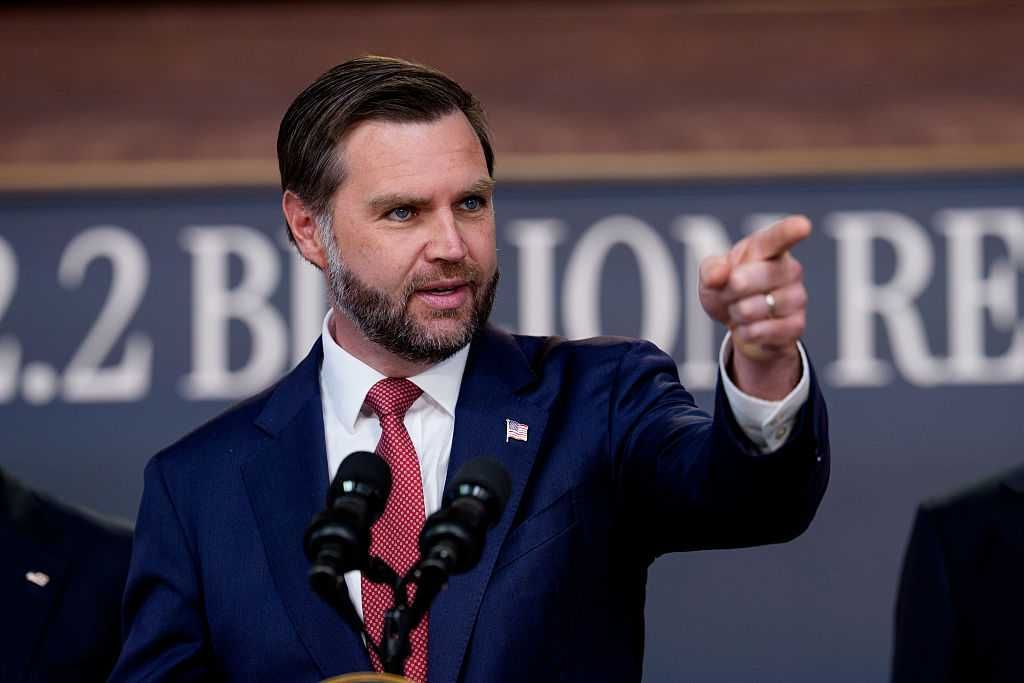
While optimistic that the pollsters may be wrong again, Vance noted there are nevertheless "headwinds" and that seldom does a party that controls the House, the Senate, and the White House maintain its trifecta through the midterm election.
"It almost never happens, but this is very different," said Vance. "Number one, we have a very unique president. Number two, we have a bunch of crazy people running on the other side — yes, people who are promising not to lower your prices or to make your life better. They're promising to trans your kids and steal all your property. Like, that is not what the American people want out of their government."
On the topic of the "lunatics" Republicans must work to deny power, two Democratic names came up: Abdul El-Sayed, who is running for the U.S. Senate in Michigan, and Talarico, who is running against Texas Republican Attorney General Ken Paxton.
Coglianese noted that "Talafreako" appears to be "spending all of his time running away from every insane position he's ever expressed around with a camera" and referenced recently published undercover footage revealing the radicalism and heresy at the Democrat's church in Austin, Texas.
"This is what I think a particular type of hyper-progressive does to Christianity," said Vance. "They don't actually believe in the Resurrection. They don't believe that Jesus died as an atonement for human sin. What they believe is that Christianity can possibly be a useful tool to acquire political power. So they strip your religion of all of its meaning, of all of its truth, and wear it as a skin suit — and they try to trick people into voting for them."
"That's what Talafreako is fundamentally engaged in," added Vance.
The vice president once again identified a silver lining: Whereas Talarico was previously proud of his theological, economic, and moral radicalism, now when "you turn on the TV ... you would think James Talarico is basically a Republican, maybe a moderate Republican — but you would have no idea if you're just a normal Texas voter watching his advertising who this guy is."
Although Talarico's election-time moderation could be read as naked opportunism and deceit, Vance suggested instead that it means "we've won the argument."
"When you've won the argument so thoroughly that the other side is pretending they agree with you on the issues just to get elected, the result is not the black pill," said the vice president.
"The reason I'm super optimistic about just the nature of the country long-term is we have won the argument. Woke is dead. The Democrats are literally running away from things that they said two years ago in an effort to gain political power. That's cynical. It's ridiculous. But the fact that we won the argument is a very good first step."
Talarico — who had a five-point lead over Paxton in a September Texas Public Opinion Research poll and was tied with Paxton in the new Republican-sponsored Stratus Intelligence poll — recently walked back his previous claims that there are six genders and that "God is nonbinary," as well as his support for male transvestites playing in girls' sports.
A lesbian chaplain at Talarico's church in Austin was recently shown in undercover footage claiming that while Talarico has publicly pivoted about God being "nonbinary," "he'll change his tune back to where he was" if elected.
Like Blaze News? Bypass the censors, sign up for our newsletters, and get stories like this direct to your inbox. Sign up here!
Kamala Harris Can Explain To Abdul El-Sayed How Single-Payer Is Political Poison
 Harris plans to campaign with El-Sayed next week. She could explain to him how support for socialized medicine damaged her campaign.
 www.theblaze.com
 www.theblaze.com
 www.theblaze.com
 www.theblaze.com
 www.theblaze.com
LIGHTS OUT: How Democrats are creating an American energy CRISIS