Arizona Primaries Offer Some Serious Reasons For Conservative Hope
 'Republican voters were not subtle.'
On November 9, 2024, the Associated Press called Arizona for Donald Trump. Arizona was the last state the media called — four days after Election Day. As Arizona Senate president, I know that kind of delay can’t happen again. Voters deserve timely results, especially in a pivotal battleground state.
The outcome of the presidential race became clear in the early hours of election night, November 6. But Arizona’s slow count still invited unnecessary angst — and would have fueled mistrust if the margin had been tighter. It doesn’t have to work this way. That’s why we’re looking at common-sense, bipartisan reforms that improve transparency and speed without compromising integrity.
If the governor won’t work with the legislature on meaningful reforms, we will take this directly to the voters in the November general election.
Florida shows what’s possible. Over the past few cycles, Florida has counted the vast majority of ballots within hours of polls closing. Races get called, electoral votes get assigned, and the country moves on.
Florida didn’t arrive there by accident. The “hanging chads” debacle of 2000 forced the state to rebuild confidence through clearer rules and cleaner procedures. In 2024, more than 3 million Floridians voted by mail, more than 5 million voted early, and more than 2.5 million voted on Election Day. Florida counted 99% of those ballots before midnight. That’s a standard Arizona should meet.
So what does Florida do differently?
First, Florida keeps clear lanes for voting: vote by mail, early voting, and Election Day voting. Each lane has its own procedures, and voters understand the differences.
Second, Florida limits Election Day drop-offs. Vote-by-mail ballots can be returned at early voting locations, but on Election Day they must be delivered to the supervisor of elections — Florida’s equivalent of Arizona’s county recorders — not dropped at every polling place.
Third, Florida removes needless envelope handling for in-person early voting. Envelopes belong with vote-by-mail ballots, not in-person voting. Early in-person voters use the same ballots and the same tabulators used on Election Day — they just vote during the early window.
Fourth, Florida posts key numbers on election night. Counties must report how many vote-by-mail ballots they have received and how many remain uncounted. That kind of transparency reduces speculation and stops the “How many ballots are still out there?” spiral that frustrates voters across the country.
RELATED:The common-sense case for nationalizing US elections
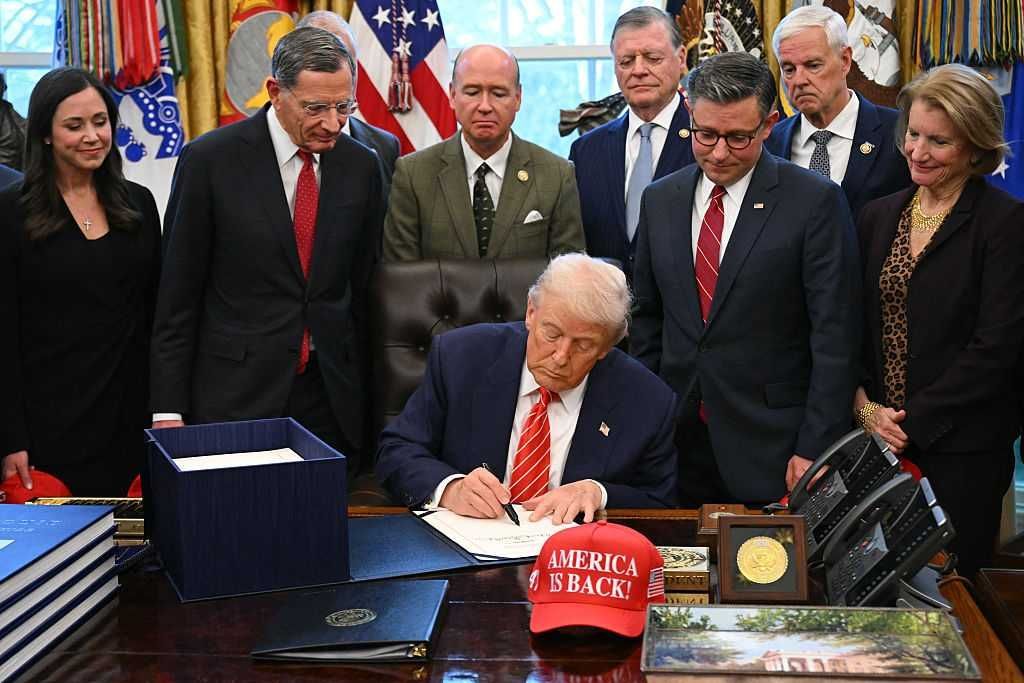
My team and I — joined by state senators, representatives, and county officials — met with Florida’s secretary of state to discuss how Arizona could adopt similar reforms. I hope Democrats and county officials will join this effort. Election integrity, transparency, efficiency, and certainty shouldn’t be partisan. Too often, they have turned into a Republican-versus-Democrat fight, with the left resisting reforms that would give voters more confidence in the process.
Consider a bill my Republican colleagues and I pushed in 2023 and again in 2025. It required voters who held on to their mailed ballots until the Friday before Election Day to meet the same voter ID requirements as other voters when dropping those ballots off. The bill would also have reduced the burden of signature verification on hundreds of thousands of ballots — one major reason Arizona results can take days, even weeks.
Both times, it passed the legislature on party-line votes and Governor Katie Hobbs (D) vetoed it. Her veto message offered little justification, claiming only that the bill didn’t “meaningfully address the real challenges facing Arizona voters.”
That pattern has repeated. Even with growing support for faster election-night results — including an unlikely endorsement from a columnist at one of Arizona’s major newspapers — the governor and her allies have refused to consider reforms that would deliver timely results and clearer transparency.
Arizona voters deserve better than delays and uncertainty. If the governor won’t work with the legislature on meaningful reforms, we will take this directly to the voters in the November general election. If Democrats won’t fix what’s broken, Arizonans will.
Republicans in the Arizona legislature have reintroduced bills to reform our system. We should tailor solutions to Arizona, but nobody should fear mirroring a model that works. Florida proves that speed and integrity can coexist.
Election integrity, transparency, and timely results aren’t red or blue issues. They’re American issues. Arizona has an opportunity — and an obligation — to deliver results voters can trust, on election night.
Kentucky is on track to become the first state where the legislature overrides a governor’s opposition and opts into President Trump’s new school-choice program, part of the One Big Beautiful Bill Act. The federal initiative lets states opt in to tax-credit scholarships that expand options for families without tapping public school budgets.
The Kentucky Senate just passed House Bill 1 by a 33-5 vote. All Republicans backed it, joined by one Democrat. The House had already approved the bill 79-17, with two Democrats voting yes. Now it heads to Democratic Gov. Andy Beshear, a reliable opponent of school choice.
Governors don’t get a permanent veto over school choice when legislatures have the votes — and families are demanding options.
Kentucky’s override rules make this fight different. Lawmakers need only a simple majority in each chamber to overturn a veto — and the vote totals suggest they have it.
Beshear’s own education choices underscore the disconnect. He attended Capital Day School, a private school, for part of his education. He also enrolled his children in private schools for portions of their schooling. He wants those options for his family, but he resists expanding similar opportunities statewide.
North Carolina provides the contrast. Republicans there advanced an opt-in bill to Democratic Gov. Josh Stein, but the state requires a 60% vote in each chamber to override a veto. The GOP lacks that margin, making success unlikely.
In Kentucky’s Senate debate, Majority Floor Leader Max Wise (R) singled out Democratic Rep. Tina Bojanowski for her yes vote. Another senator pointed to Colorado Gov. Jared Polis — the first Democratic governor to opt his state into Trump’s program. Polis called participation a “no-brainer” and said he “would be crazy not to” do it.
Here’s the key design feature: Any U.S. taxpayer can contribute to these scholarships and claim a dollar-for-dollar federal tax credit. Families can access scholarships only if their state opts in. That means residents of opt-out states can fund scholarships in opt-in states — a built-in incentive for governors and lawmakers to join rather than watch their taxpayers’ dollars flow elsewhere.
The program relies on private contributions. It does not divert funds from public schools. That approach likely explains the bill’s wide support — more than 80% of members present and voting in each chamber backed it. Kentucky’s 2024 school choice constitutional amendment never came close to that kind of consensus.
For Kentucky families, the opt-in may be the only viable path right now. The Kentucky Supreme Court unanimously struck down the state’s tax-credit scholarship program in 2022. It also blocked charter schools last month. Unless and until the court’s composition changes, the Trump program offers a practical workaround.
RELATED: When parents pay twice to escape public schools, the verdict is in

That matters because the 2024 ballot measure tried to amend the state constitution to sidestep the court. Teachers’ unions spent millions opposing it. The language confused voters, and constitutional amendments don’t deliver immediate, tangible benefits like scholarships. When ballot measures confuse people, they default to the status quo.
So far, 27 governors have opted their states into Trump’s school-choice program. That group includes 26 Republicans — all except Vermont Gov. Phil Scott — and one Democrat, Polis. Republican-led legislatures in other states are exploring opt-ins and, in some cases, overrides against Democratic governors.
In Arizona, the state senate passed an opt-in bill, but Republicans likely lack the votes to override a veto from Gov. Katie Hobbs. Kansas and Wisconsin are also in play. Wisconsin Republicans don’t have the votes for an override. In Kansas, it remains unclear whether Republicans will unify the way Kentucky’s did.
Kentucky’s move shows why this program has momentum. It expands options without reopening state-funding fights or running into the same court barriers. The tax-credit mechanism encourages private giving while keeping scholarship access tied to states that opt in.
If Kentucky lawmakers follow through, they won’t just deliver scholarships. They’ll set a precedent: Governors don’t get a permanent veto over school choice when legislatures have the votes — and families are demanding options.
Over the past two months, Minnesota’s widening fraud scandals have drawn national attention. Investigators and watchdogs have uncovered what appear to be major abuses of taxpayer dollars tied to fraudulent day care and health care operations, and Democrat officials who oversaw the programs look, at minimum, asleep at the switch.
Minnesota isn’t alone.
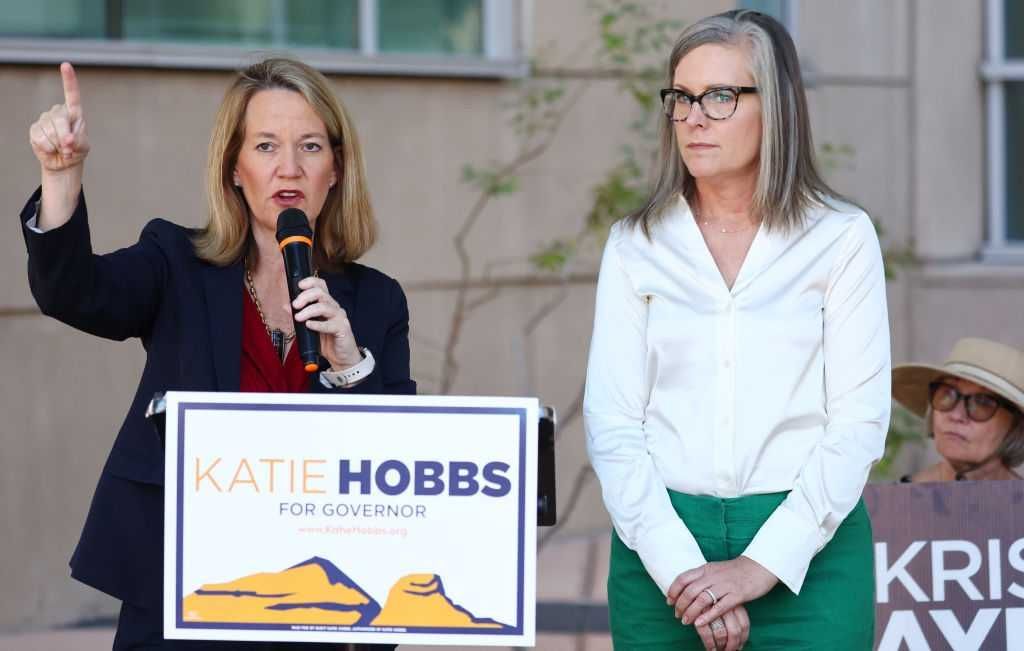
Arizona’s reputation rests on independence and straight dealing. Katie Hobbs and Kris Mayes have replaced that image with stonewalling, favoritism, and excuses.
In Arizona, Gov. Katie Hobbs (D) and Attorney General Kris Mayes (D) have spent the past three years building a record that looks less like competent governance and more like protection for a corrupt status quo. Again and again, their offices have resisted transparency, shielded allies, and resisted oversight — while Republicans in the legislature have tried to drag basic accountability back into view.
Whether in Minnesota, Arizona, or any other jurisdiction across the country, taxpayers deserve better than a government that treats disclosure as optional and oversight as an attack.
Arizona governors often raise private money to cover inaugural expenses and then transfer leftover funds to the state. Hobbs broke that norm. Her office resisted disclosing donor information and withheld more than $1 million that should have gone back to taxpayers, triggering a direct clash with the legislature.
Lawmakers responded by writing the old precedent into law: Future administrations must fully report inauguration fundraising and spending. The bill passed with overwhelming bipartisan support — proof that this wasn’t a partisan gripe. Even Democrats understood that Hobbs had created a mess for herself.
The most serious cloud over Hobbs’ administration is an alleged pay-to-play scandal involving the Department of Child Safety.
The Arizona Republic reported that Sunshine Residential Homes, a for-profit group home operator with state contracts, received a significant rate increase approved under Hobbs’ administration after donating to Hobbs’ inaugural fund. The same request had been denied under the outgoing Republican administration.
The reporting also noted that Hobbs’ DCS did not approve comparable increases for other group homes. At the same time, the DCS ended contracts with 16 group homes — making Sunshine’s preferred treatment look even more suspect.
Mayes announced an investigation, then tried to push Maricopa County Attorney Rachel Mitchell and the Arizona auditor general off the case — even though legislators had asked those offices to investigate. Arizona Treasurer Kimberly Yee publicly rejected Mayes’ attempt and urged the county and auditor investigations to continue.
Since then, Mayes’ office has offered little public clarity. Nearly two years without meaningful updates invites the obvious question: Was the “investigation” a press release designed to run out the clock?
Hobbs then vetoed a bill last session meant to close loopholes and prevent future executives from gaming the system.
The Supplemental Nutrition Assistance Program doles out nearly $100 billion a year. It also attracts fraud. The Government Accountability Office flagged $320 million in stolen benefits between October 2022 and December 2024. The U.S. Department of Agriculture in 2023 estimated that around 12% of SNAP benefits were fraudulent.
That should make anti-fraud measures easy to support.
Instead, Mayes sued the Trump administration over efforts to gather more information from states about SNAP beneficiaries. Hobbs refused to comply with data requests. Whatever one thinks about SNAP’s scope, no serious public servant should block reasonable efforts to root out fraud and protect taxpayers.
When elected officials fight transparency in a program that moves billions of dollars, they aren’t defending the vulnerable. They are protecting a system that invites abuse.
RELATED: Mike Lee reveals the real victims of Somali fraud: ‘It is not the rich people who suffer’
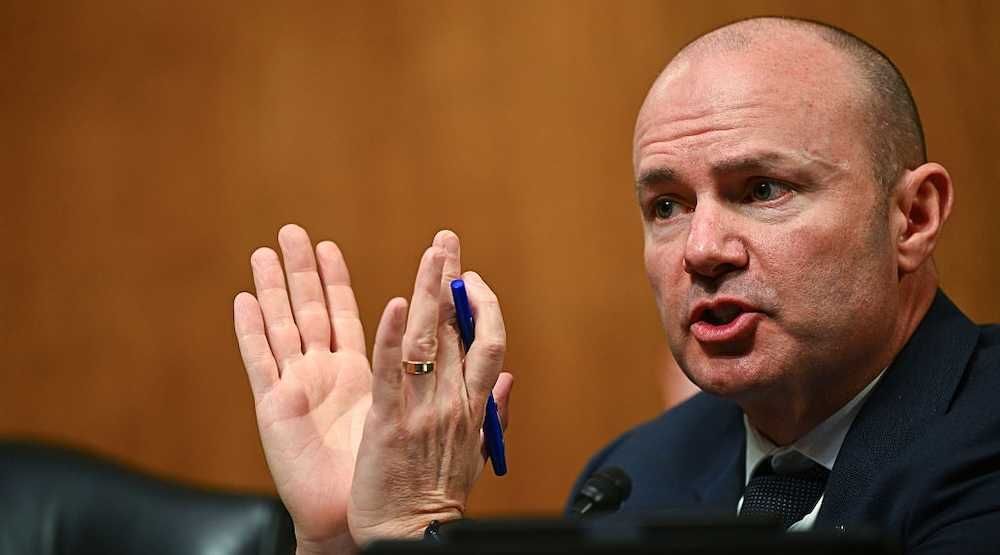
Kris Mayes has other problems.
U.S. Rep. Abraham Hamadeh (R-Ariz.) has asked the Department of Justice to investigate allegations of a pay-to-play bribery scheme involving Mayes and outside political groups, claiming she traded official actions for political benefits.
And late last year, a top official in Mayes’ State Government Division was arrested on charges related to controlling and trafficking stolen property. The city of Peoria had reportedly warned Mayes’ office nearly two years earlier about serious allegations involving that official, yet she remained in a position of authority until her arrest.
Arizona’s reputation rests on independence and straight dealing. Hobbs and Mayes have replaced that image with stonewalling, favoritism, and excuses.
Voters should take note. If Arizonans want honest government, they will have to demand it — at the ballot box and through aggressive oversight — before the culture of corruption becomes permanent.
The Arizona Senate passed legislation in a 17-11 party-line vote last month that would prohibit the communist Chinese regime or one of the enterprises under its direct control from purchasing, owning, or acquiring an ownership interest of 30% or more of property in the state, including property of strategic significance around U.S. military sites.
Lawmakers stressed within the text of the bill that it was necessary to "halt or reverse the influence operation of the Chinese Communist Party that poses a risk to the national security of the United States"; "to protect the critical infrastructure of this state"; and to protect Arizona's "military, commercial and agricultural assets from foreign espionage and sabotage" in order to "place this state in a significantly stronger position to withstand national security threats."
'Governor Katie Hobbs continues to violate her oath of office.'
Democratic Gov. Katie Hobbs evidently disagreed — and that disagreement has earned her more disgust from Arizona Republicans.
RELATED: Agroterrorism plot? Chinese nationals arrested for smuggling potential bioweapon into US: FBI

Hobbs vetoed the bill sponsored by Arizona Senate Majority Leader Janae Shamp, claiming it was "ineffective at counter-espionage and does not directly protect our military assets."
The governor added that the bill "lacks clear implementation criteria and opens the door to arbitrary enforcement."
Shamp lashed out at Hobbs over her decision, noting that "with every politically motivated veto of public safety legislation put on her desk by Republicans, Governor Katie Hobbs continues to violate her oath of office she swore to uphold by endangering the lives and livelihoods of all Arizonans."
"SB 1109 was a commonsense security measure to ensure enemies of the United States would not have easy access to our military bases and critical infrastructure to carry out harm," Shamp continued.
"It is utterly insane that Arizona's top elected official would rather be an obstructionist against safeguarding our citizens from threats than to sign legislation giving our state a fighting chance at proactively preventing attacks," she added.
Beijing has provided America with plenty of cause in recent years to suspect ill will and continued sabotage.
China has, for instance, sent spy craft over the U.S. mainland; operated illegal police stations on American soil; threatened diplomats; dispatched agents to execute espionage and political destabilization missions; reportedly provided terrorist cartels with illicit fentanyl precursor chemicals and pill press equipment; admitted to orchestrating significant cyberattacks on American institutions and critical infrastructure; engaged in numerous military provocations; and watched with interest as party members gobble up American properties.
According to the Annual Threat Assessment report released by the Office of the Director of National Intelligence in March, "China stands out as the actor most capable of threatening U.S. interests globally."
The America First Policy Institute noted last year that the communist Chinese regime's acquisition of American land is accelerating, and Arizona might be a prime target on account of the military installations it is home to, including Barry M. Goldwater Range, Davis-Monthan, and Luke Air Force bases.
'Governor Hobbs’ veto of SB 1109 hangs an "Open for the CCP" sign on Arizona’s front door.'
"Hobbs is a total disgrace," added Shamp.
A statement posted to the X account of U.S. Rep. Abe Hamadeh (R-Ariz.) similarly suggested that Hobbs' "latest insane veto leaves Arizona’s critical infrastructure, including Luke Air Force Base, vulnerable to espionage and surveillance risks from nearby foreign-owned farmland." The statement suggested that state Republicans' goal could alternatively be realized at the federal level.
RELATED: Rubio to 'aggressively' revoke Chinese nationals' student visas to eviscerate CCP's spy invasion
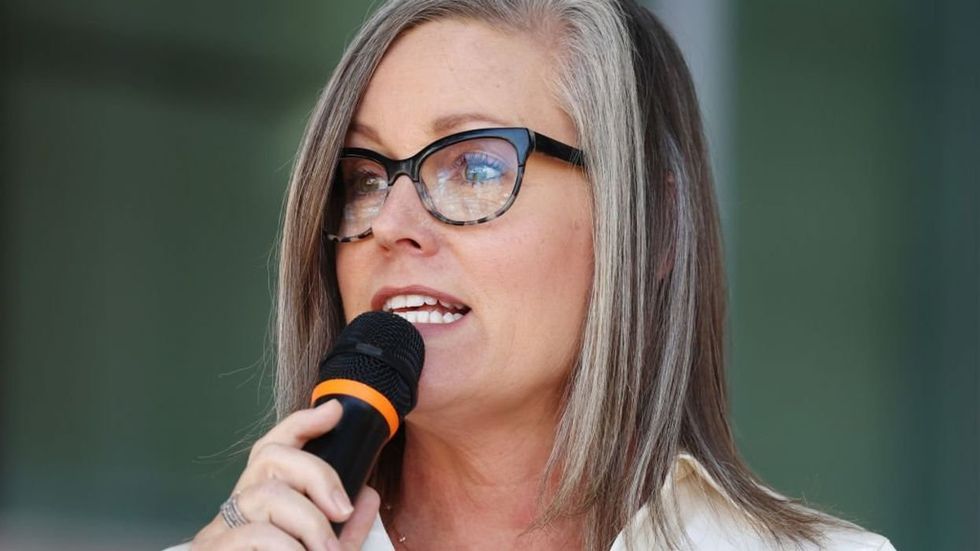
Rep. Dan Newhouse (R-Wash.) introduced the No American Land for Communist China Act in February. The bill, which presently appears to be inert, would prohibit any agent of the Chinese regime and any business under its control from purchasing real estate located adjacent to covered federal lands.
Various other bills have been introduced in recent years that would prevent elements of the Chinese regime from acquiring land, in most cases farmland or land near military sites.
Karrin Taylor Robson, a Republican attorney who is running to unseat Hobbs in next year's gubernatorial election, vowed to prevent the Chinese Communist Party from getting "a single acre" if elected governor.
Michael Lucci, the founder and CEO of State Armor, a foreign policy outfit that helps states combat the influence of the CCP, said in a statement to Fox News, "Governor Hobbs’ veto of SB 1109 hangs an 'Open for the CCP' sign on Arizona’s front door, allowing Communist China to buy up American land near critical assets like Luke Air Force Base, Palo Verde nuclear power plant, and Taiwan Semiconductor’s growing fabrication footprint."
Like Blaze News? Bypass the censors, sign up for our newsletters, and get stories like this direct to your inbox. Sign up here!

 www.theblaze.com
 www.theblaze.com