MEME-FODDER MARK: Carney blew up the trade deal. Now Canada is the punch line.
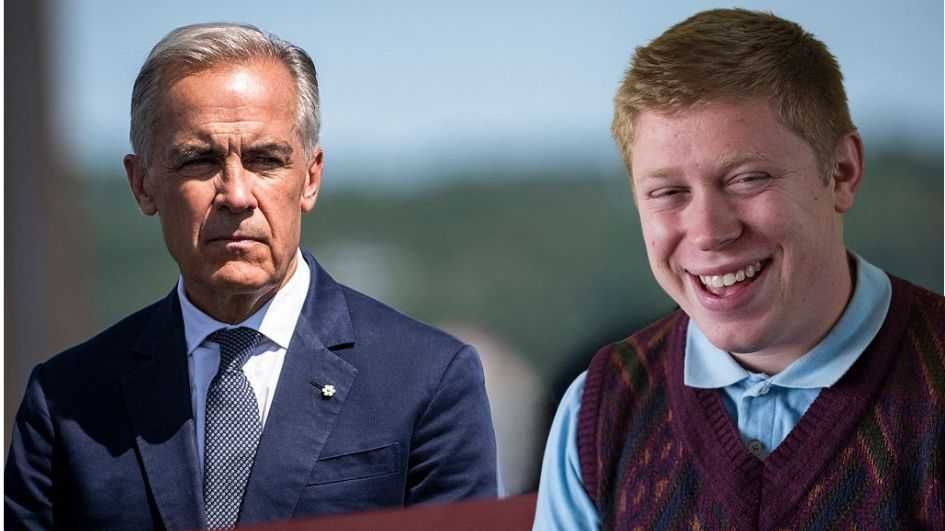


After Canadian Prime Minister Mark Carney declared that Canada was “at war” with the United States and walked away from a proposed trade deal last month, Canada quickly became an object of ridicule in Washington.

But after blowing up the trade deal, Carney has been less eager to explain exactly what happened. He has ignored Official Opposition Leader Pierre Poilievre’s demand to reconvene Parliament or provide the Conservative leader with details of the failed trade negotiations.

'How are we going to be at war with Canada? What, are they going to take their two submarines from the Edmonton Mall and sic them on us?'

Carney has offered a broad explanation for walking away, arguing that Washington was demanding concessions that threatened Canadian sovereignty and could eventually wipe out important Canadian industries, particularly auto manufacturing.

American officials tell a very different story.

'Best deal available'

U.S. Trade Representative Jamieson Greer flatly denied Carney’s allegations that President Donald Trump wanted somehow to interfere with Quebec culture or erode official bilingualism in Canada.

“We had agreed to, as I've shared before in the press, really the best deal available to any country on the planet with respect to Canada,” Greer told CBC News in the aftermath of Carney's withdrawal.

What Carney did emerge to address Tuesday was something else: the memes.

“When the Americans stop doing memes, stop throwing shade, stop trying to be tough, and start being serious about having those discussions, we can have those discussions,” he told reporters Tuesday.

As with all attempts to demand that people on the internet stop making fun of you, Carney’s statement had the opposite effect. Even American officials couldn’t resist a little trolling.

Treasury Secretary Scott Bessent mocked Carney’s claim that the countries were “at war.”

“I think this is very unfortunate that Prime Minister Carney has turned this into a political shouting match,” Bessent said.

“I mean, we're not at war with Canada. How are we going to be at war with Canada? What, are they going to take their two submarines from the Edmonton Mall and sic them on us?”

Looking out for number one?

Then Bessent got more serious.

“He came to power on an anti-American, anti-Trump agenda. He was 20 points behind in the polls, and then he started this.

"It's unfortunate that he's not doing what's best for the Canadian people. He's doing what is best for the Liberal Party, what's best for Mark Carney, and in the long run, the Canadian people are going to see through that.”

Bessent reiterated the administration’s contention that Canada had been offered “the best trade deal of any country on the globe” before Carney walked away from it at "the last minute.”

Carney may not have been the only Canadian politician responsible for blowing up the agreement.

Ontario Premier Doug Ford reportedly pushed for better treatment of Ontario's auto industry and resisted returning American alcohol to the shelves of Ontario's government-owned liquor stores.

Since the deal collapsed, Ford has even suggested that Alberta could cut off oil shipments to the United States — an idea he has floated before.

There was an awkward problem with Ford’s threat: Ontario itself depends on Alberta oil that travels through the United States. Enbridge’s Line 5 crosses Michigan before returning to Canada and supplying Ontario refineries.

Alberta Premier Danielle Smith quickly rejected Ford’s idea, warning that cutting off Alberta energy exports to the United States would be “extremely harmful to Canadians.”

RELATED: MILK MONEY: How Mark Carney chose the dairy cartel — and China — over a Trump trade deal
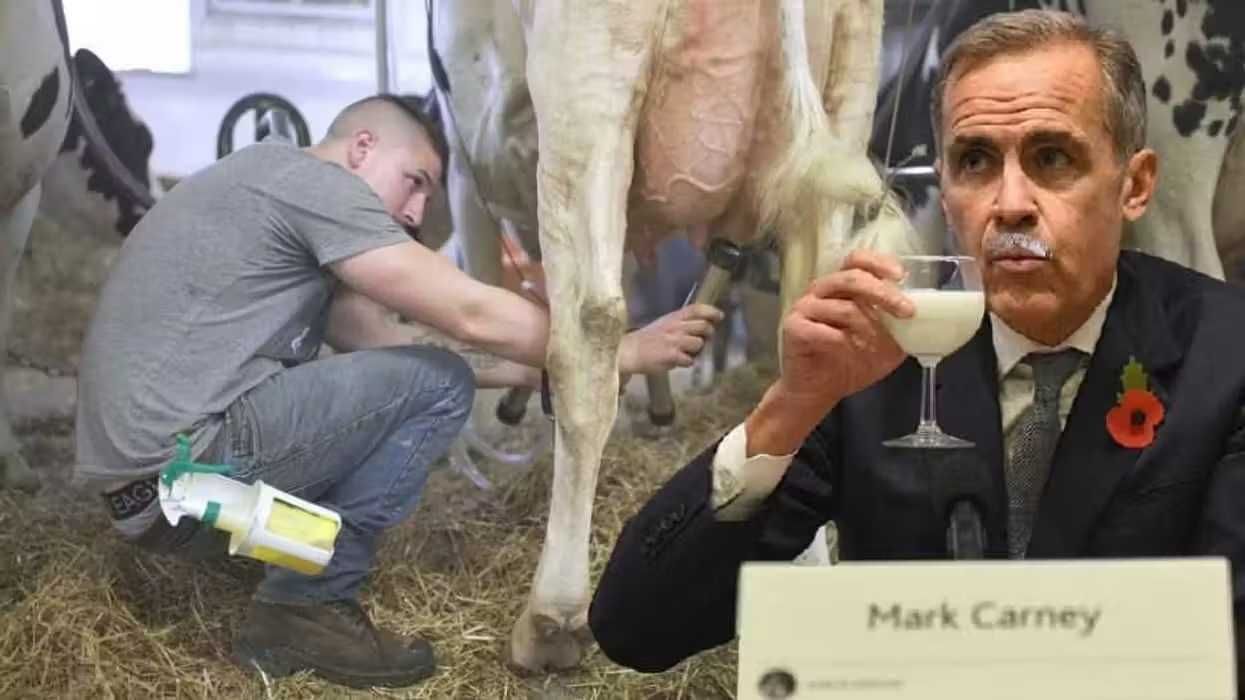
Bloomberg/Kirsty O'Conner/Nuria Gonzalez-Sanchez/Getty Images

Key role for American Democrat

There are also legitimate questions about other sticking points in the failed negotiations. Carney remains committed to Canada's heavily protected dairy sector, opposed to reviving the Keystone XL pipeline, and increasingly interested in expanding trade with China. The Trump administration has also accused Canada of serving as a route for Chinese steel transshipped into the United States to evade American trade restrictions.

And the questions about Carney’s handling of the United States don’t end with the trade deal.

Take Maia Johnson, the American and registered Democrat with ties to the Hillary Clinton, Joe Biden, and Kamala Harris campaigns, whom Carney promoted to the newly created position of chief operating officer in the prime minister’s office. Before the promotion, Johnson held the revealing title of “senior adviser, United States stakeholder strategy” — meaning Carney had already put an American Democratic operative in a key role advising him on how to deal with the United States.

'Manufactured' crisis

Whatever was going on inside Carney’s office, the Trump administration has been remarkably consistent about what happened to the deal.

“Canada was going to have the best trade deal in the world,” Commerce Secretary Howard Lutnick told reporters. “And what happened was that Canada walked away. We had a deal. We shook hands. The president announced it, right? Everybody was positive. Canada made the decision for political purposes. They wanted to walk away.”

Lutnick also rejected Carney's contention that Washington had sought concessions involving Quebec and the French language.

“Do I care about how the Quebecois speak?” Lutnick said. “I mean, what could matter less to America? We don't care.”

“This is manufacturing,” he continued. “That's why the president put out a Truth [Social post] saying it was a complete lie.”
Consumer prices are down — why can’t Democrats admit it?


The latest inflation report is in — and for the first time in nearly five years, the Consumer Price Index has dropped.

According to data released April 10, gas prices led the decline, falling 6.3% from February to March and nearly 10% year over year. That’s real relief for working families.

It’s easy to claim every success as earned and every failure as someone else’s fault. But that’s not leadership — it’s childishness.

But don’t expect Joe Biden to credit Donald Trump. That would mean acknowledging the obvious: These results aren’t from Biden’s policies — they’re from Trump’s.

Psychologists call it the “locus of control.” People with an internal locus believe they shape their own destiny. People with an external one think they’re at the mercy of circumstance.

Most people pick one or the other. But Democrats? They flip depending on who happens to sit in the Oval Office.

When inflation stayed low under Trump, they called it luck. When inflation hit a 40-year high under Biden, they blamed Vladimir Putin. And landlords. And grocery stores. And payment processors. Anyone but Biden.

That spin didn’t pay the bills — especially in minority communities hit hardest by inflation.

Federal Reserve data shows that black and Hispanic households spend a higher share of income on gas, groceries, and rent than white households. In cities like Atlanta, Detroit, and Charlotte, black renters saw double-digit rent hikes between 2021 and 2023.

What did we hear from the White House? Excuses. Deflection. “We’re building back better” — but for whom?

Trump gave us the answer. On day one, he signed executive orders to fast-track energy permits, cut red tape, reopen federal lands for drilling, and establish a new National Energy Council.

The results are clear. Energy prices are dropping. Inflation is cooling. And Americans — at long last — are catching a break.

Biden took the opposite approach. He vowed to “end fossil fuel,” killed the Keystone XL Pipeline, blocked offshore drilling, and even sold oil from the Strategic Petroleum Reserve — to China.

When energy prices surged, he pointed fingers. Biden blamed the war in Ukraine. But by January 2022 — before the invasion — gas prices were already up 40% year over year, and inflation had hit 7.5%.

The “Putin price hike” was a convenient distraction from Biden’s failed energy agenda.

And the scapegoating didn’t stop there.

When inflation hit every corner of the economy, Attorney General Merrick Garland pointed at Visa, accusing debit card fees of fueling the crisis. The fees in question? Fourteen cents on a $60 purchase.

Never mind that businesses willingly pay those standard fees. If they had a real problem with them, they could easily switch to any number of alternative companies or payment methods.

If Garland wanted real answers, he should have looked at Biden’s regulatory agenda. One study estimates those rules will cost the average family $47,000 over a lifetime.

When rents spiked, Biden and the Justice Department pointed fingers at landlords and pricing algorithms. They ignored the real drivers: millions of illegal immigrants increasing demand and federal mandates that jacked up compliance costs for builders. And the algorithms they blame? Those same tools recommend lower prices when inflation and demand cool down.

As grocery bills climbed, Biden blamed “shrinkflation” and greedy grocers and meatpackers. He ignored the real culprits: trillions in wasteful spending from the American Rescue Plan and the so-called Inflation Reduction Act.

This is the pattern: Jack up costs, then blame someone else. Spin doesn’t fill a gas tank in Jackson or put groceries on the table in Memphis. A press release won’t pay the electric bill in Columbia.

It’s easy to claim every success as earned and every failure as someone else’s fault. But that’s not leadership — it’s childishness. No kindergarten teacher would tolerate it. Voters shouldn’t either.

And they aren’t. Democrats are polling at 29% for a reason.

While the media tracks the stock market, Main Street is what matters. When gas prices jump 60%, hedge fund managers don’t suffer. It’s the single mom in Detroit, the delivery driver in Atlanta, and the grandmother in Baltimore stretching her Social Security check.

This isn’t academic. It’s survival.

Americans are done with excuses. They want results — and President Trump is delivering.

He didn’t just talk tough. He cut gas prices, cooled inflation, and restored energy independence. For communities crushed by elite policy failures, those results aren’t just political. They’re life-changing.

How Trump Can Make The Auto Industry Great Again

Some of the world’s largest automakers may not survive our government-created debacle, but collapse of the industry can still be stopped.
Nathan Posner/Anadolu Agency/Getty Images

Is this a joke? Biden says US will need oil ‘for at least another decade’… GOP bursts into laughter

Republicans burst into laughter
Ricky Carioti/Getty Images

Americans shell out or shiver while Biden ships our energy off to Europe

The Ukraine conflict allows the Biden administration to cover up domestic political blunders and be praised by European elites.

Biden Shamelessly Depletes Our Strategic Petroleum Reserve To Buy Midterm Votes For Democrats

Approval of President Biden tends to lag gasoline prices, so expect the Strategic Petroleum Reserve to continue to be used politically.

Here Are The Predictions Trump Got Right About Biden

'He's following the radical left agenda: take away your guns, destroy your Second Amendment,'

Rep. Ro Khanna Explains Why He Thinks Every Democrat Should Go On Fox News

'I’d never think of the weaknesses in my own point of view'

Why Energy Security Is National Security

In December 2008, Marine Corps Gen. James Jones (retired) wrote in a Wall Street Journal article that “You can’t use the word energy independence. It is not a valid phrase. It is designed to excite people. But it is simply not going to happen.” That was a factually unsupported statement then, and remains so. At […]
Poll: 7 in 10 Americans say the economy is in bad shape, divided on who is to blame


About 7 in 10 Americans say the nation’s economy is in bad shape, according to a new poll from the Associated Press-NORC Center for Public Affairs Research.

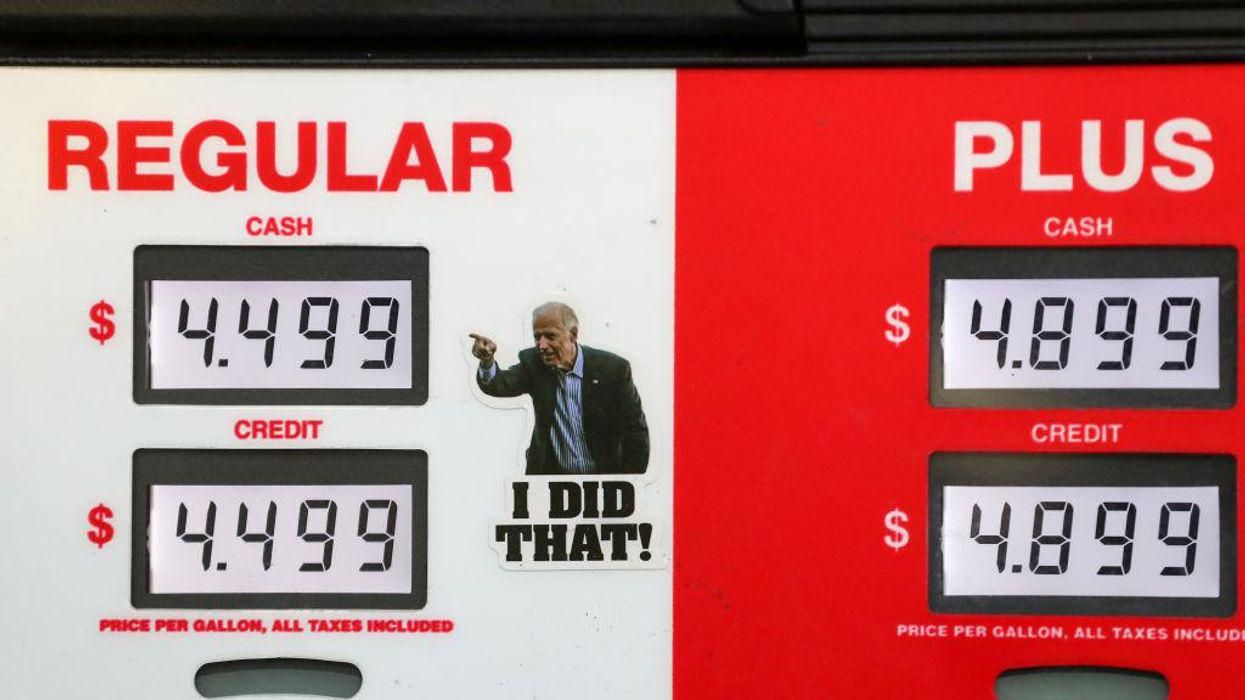
According to the new poll, a majority of Americans do not blame President Joe Biden for high gasoline prices, but they hold his economic leadership in low regard as inflation continues to ravage their savings and spending power.

According to the poll, less than half of surveyed Americans view the jump in gas prices as Biden’s fault. Associated Press reported that this is a “reflection of how the [United States] is processing Russian President Vladimir Putin’s invasion of Ukraine and the resulting increase in oil costs.”

The Associated Press continued by saying that “the polls hint at a paradox in which the public views Biden as being in power without necessarily being in control. [Biden’s] hopes for a lasting economic renaissance have faded as Americans cope with higher food and energy costs. And the promise of a country no longer under the pandemic’s sway has been supplanted by the uncertainty of war in Europe.”

According to the poll, 65% of Americans currently disapprove of Biden’s handling of the economy. 96% of Republicans and 36% of Democrats surveyed disapprove, and the overall number of people saying they disapprove is up from 57% in December and from 47% in July of 2021.

Overwhelmingly, the Americans surveyed were worried about the 40-year-high rates of inflation affecting the rising costs of living.

68% of people surveyed said they were “very concerned” about the rapidly rising cost of gasoline, while 59% said they were the same degree of worried about the rising cost of groceries.

Adam Newago, a 53-year-old truck driver from Eau Claire, Wisconsin, said, “It’s going to get worse before it gets better.”

Newago said that he sees inflation as spiraling out of control as the rising cost of fuel spreads to other parts of the economy, affecting prices across the board for everyone, everywhere.

48% of Americans surveyed in the new poll think that the Biden administration’s policies are hurting the economy while 24% believe that the administration’s policies are helping; 28% of those surveyed think the administration’s policies haven’t made much of a difference.

80% of Democrats say that high gas prices are outside Biden’s control, while 79% of Republicans are specifically blaming his policies for rising costs and limiting energy production.

Generally, there is consensus among Republicans that Biden’s policies are hurting the American economy while Democrats are split between thinking the administration is either helping the economy or not making a difference.