Zach Lahn just changed the Iowa GOP playbook


In the biggest upset of this primary cycle so far, businessman and farmer Zach Lahn defeated four other candidates in the Iowa Republican gubernatorial primary, including U.S. Rep. Randy Feenstra, who received President Trump’s late endorsement.

Lahn won by less than one percentage point and fewer than 1,700 votes out of nearly 215,000 cast. He fused together evangelicals, MAHA voters, a Turning Point USA endorsement, and late encouragement from yours truly for Iowa Republicans to vote strategically against Feenstra, who ran the most cynical campaign I have ever seen.

Even when Trump endorsed against him, Lahn was still the candidate saying the most Trumpian things to the base. That was all that mattered.

Back in February, Brent Buchanan, one of the best pollsters of the 2024 cycle, published research arguing that Republicans’ secret weapon for the 2026 midterms could be a fusion of MAHA messaging with traditional conservative themes. He added that “most Republican candidates are too cautious to grab it.”

Enter Lahn.

His issue-driven success may signal that the personality-driven retail politics that long defined Iowa, thanks to its first-in-the-nation presidential caucus status, is fading.

When I endorsed Adam Steen early in this gubernatorial primary, I had never met Lahn. I had never even heard of him. I chose Steen because he fit the kind of candidate Iowa Republicans have traditionally rewarded: high integrity, strong character, serious faith, and real governing experience.

Steen had essentially been the chief operating officer of Iowa for the past five years. He seemed like one of us during Republican Kim Reynolds’ popular and successful governorship. That level of trust and connectivity is what Iowa conservatives have long craved, and it helps explain why Pat Robertson, Mike Huckabee, and Rick Santorum found success here over the years.

In almost any earlier political era, Steen probably would have been where Lahn is now.

But the electorate has changed. Many evangelicals overlooked Trump’s past because they liked where he stood on the issues. They cared less about the résumé of the salesman than the sales pitch in front of them. In the final month of the primary, more Iowa voters answered the question “Do you know what time it is?” with one name: Zach Lahn.

Even when Trump endorsed against him, Lahn was still the candidate saying the most Trumpian things to the base. That was all that mattered.

Issues, not background.

That is likely where Republican politics will stay as the Fox News generation fades and the GOP gets younger. Younger Republicans include more people from broken homes, more people who have gone through divorce, more people who came to faith later in life, and more voters carrying baggage that no longer fits the old Pleasant Valley Sunday model.

RELATED: Iowa primary: One Trump-backed candidate secures landslide victory, while another is narrowly defeated

Scott Olson/Getty Images

They are not looking for perfect biographies. They want results.

That hunger for results was strong enough to overcome Trump’s 11th-hour endorsement of Feenstra.

And yes, Trump’s endorsement helped. The president took a candidate whose negatives had climbed 20 points in the final three months and, in less than four days, gave him at least a 10-point bump without major media assistance. That should have finished Lahn.

But Iowa Republicans decided, with some irony, that the candidate Trump endorsed could not be trusted on Trump’s own issues as much as the candidate Trump opposed.

To be honest, the risk I took by supporting Lahn in the campaign’s final days had nothing to do with confidence in how that dynamic would play out. But here we are. For the sake of the state where my children are raising my grandchildren, I am grateful it ended this way.

Lahn had enough independent wealth to make himself visible and viable, no matter when or how Trump weighed in. With the right message on the right issues, he found the secret sauce.

So to Iowa Democrats and their Trojan horse candidate Rob Sand, here is our message: Now we fight.

All aboard the Lahn train.

Iowa primary: One Trump-backed candidate secures landslide victory, while another is narrowly defeated


Iowa voters cast their ballots in the primary election on Tuesday, determining two of the state’s highest-profile November matchups, including the open gubernatorial race and an open U.S. Senate seat.

Gov. Kim Reynolds (R) announced in April 2025 that she would not seek a third term. In Sept., U.S. Sen. Joni Ernst (R) announced that she would also not seek re-election.

'We now have the most Republicans ever. ... There is no excuse for [Democratic] turnout to exceed ours here, but if that happens again ... uh-oh.'

Five Republicans faced off in Iowa’s primary election, seeking to succeed Reynolds.

A survey conducted by JMC Analytics and Polling from May 27 to 28 predicted that the Republican gubernatorial primary may head to a convention, with none of the candidates able to secure the required 35% of the vote.

Of those surveyed, 24% stated that they would vote for businessman and former conservative political director Zach Lahn, 22% selected state Rep. Randy Feenstra, 15% selected former director of the state Department of Administrative Services Adam Steen, 8% selected former state Rep. Brad Sherman, and 4% selected state Rep. Eddie Andrews. However, 27% of those surveyed said they remained undecided.

Feenstra was endorsed by President Donald Trump, who called the candidate “MAGA all the way!”

Live ballot tabulations showed Lahn and Feenstra in a tight race on Tuesday evening.

With roughly 90% of the votes counted and Lahn leading by approximately 1,400 votes, BlazeTV’s Steve Deace stated, “I’ve seen enough. @ZachLahn will be the GOP nominee for governor in Iowa.”

Decision Desk HQ projected at 11:30 p.m. Eastern that Lahn would win the election against challenger Feenstra. With 98% of the votes counted, Lahn led Feenstra by less than one percentage point, according to the Associated Press. Lahn secured over 37% of the vote, avoiding a state party convention previously predicted by the polls.

Feenstra reportedly called Lahn Tuesday evening to concede.

Lahn will face uncontested Democratic nominee Rob Sand in the upcoming November 3 general election.

RELATED: A storm is brewing in Iowa — and Republicans should take note: 'There are danger signs'

Ashley Hinson; KC McGinnis/Bloomberg/Getty Images

Former state Rep. Jim Carlin and Trump-backed U.S. Rep. Ashley Hinson went head-to-head on Tuesday seeking to become the Republican nominee to fill Ernst’s open seat in the Senate.

The same poll from JMC Analytics and Polling showed 58% of those surveyed were planning to vote for Hinson and that Carlin trailed behind by 39 percentage points. However, 23% of respondents stated they were still undecided.

On Tuesday, Hinson pulled off a massive victory against Carlin in the election. Roughly 30 minutes after the polls closed, Hinson was projected to be the winner by NBC News and the Associated Press. With 99% of the ballots counted, Hinson won by over 48 percentage points.

State Rep. Josh Turek won the Democratic primary race against state Sen. Zach Wahls to battle it out against Hinson on the November ballot.

RELATED: Pro-life senator announces she will not seek re-election

Zach Wahls; Charlie Neibergall/Getty Images

Heading into Election Day, Deace shared his thoughts on the Iowa races and their national implications.

“We better hope the Democrats follow their heart with Zach Wahls and not their heads with Josh Turek, because the latter has run the best and most inspiring messaging I’ve seen from a Democrat statewide in Iowa in many years,” Deace wrote in a post on X. “Wahls is a construct of every Leftist fetish normies vote against if the economy isn’t totally in the tank. But if Turek is their nominee, the US Senate race in Iowa will be a way tougher pull for our side this fall. He gives normies a reason to vote for him and not just against Trump.”

He noted that Democratic voter turnout nationwide has far surpassed Republicans, which he called an obvious “potential danger sign for November.”

“But here in Iowa, we now have the most Republicans ever and more than a 200,000 voter registration advantage. There is no excuse for their turnout to exceed ours here, but if that happens again ... uh-oh,” Deace added.

Like Blaze News? Bypass the censors, sign up for our newsletters, and get stories like this direct to your inbox. Sign up here!

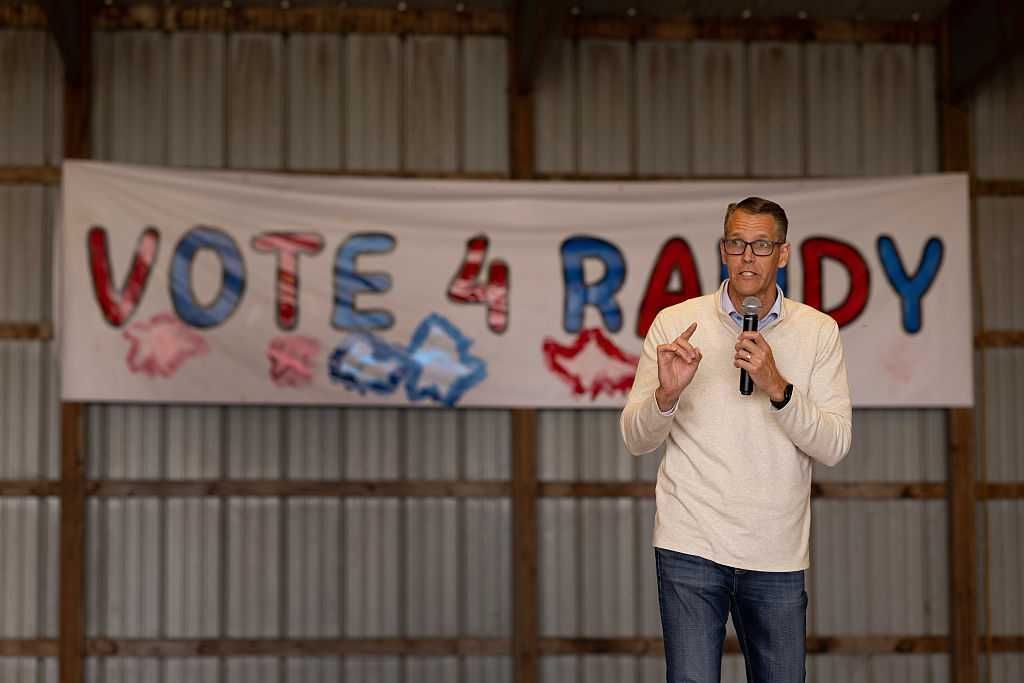
Trump’s endorsement power keeps saving the wrong Republicans


For a decade, not one lukewarm Republican incumbent senator or governor has lost a primary and been replaced by a more conservative challenger under Donald Trump’s leadership of the GOP. That changed Tuesday night.

Four-term U.S. Sen. John Cornyn (R-Texas) did not merely lose to state Attorney General Ken Paxton. He got routed by 28 points.

The Paxton endorsement and Cornyn’s defeat should have marked a turning point in Trump’s political strategy. Instead, they look like the high point of the cycle.

The decisive factor was obvious: Trump finally endorsed the challenger instead of the RINO incumbent. Now, imagine what the party might look like if he had done that over the past five election cycles.

The point is not to dwell on missed opportunities. Upcoming primaries in red states will determine whether conservatives retain any real statewide fighters.

Paxton’s victory proves Trump could finish his term by draining the swamp. Sadly, he more often sides with the swamp or stays silent long enough for moneyed interests to crush more principled candidates.

Most insurgent challengers lack Paxton’s name recognition. But if Trump’s endorsement could move Paxton from a close race to a 240-county rout, it could make lesser-known challengers competitive against weak incumbents. In open seats, a grassroots conservative with Trump’s backing would be nearly unbeatable.

Several upcoming races offer conservatives a chance to make red states actually govern like red states. Too often, Trump is absent or on the wrong side.

Start with Iowa.

Gov. Kim Reynolds is retiring, and Democrats have fielded a credible challenger pretending to be a moderate while running against land grabs. Republicans need a non-corporatist nominee who does not carry the baggage of the status quo Republicans in Congress.

Betting markets have RINO Rep. Randy Feenstra as the heavy favorite for the GOP nomination because he has the most money and name identification. Conservatives have fielded multiple candidates, but with only days until the election, Zach Lahn has the most traction and the clearest message against data centers and land grabs.

Thankfully, Trump has not endorsed Feenstra. But if he endorsed Lahn, Lahn could win outright without a runoff.

The Iowa Senate race shows the opposite problem. Former state Sen. Jim Carlin challenged Sen. Joni Ernst after she obstructed Pete Hegseth’s nomination. Trump should have endorsed Carlin. Instead, he encouraged Ernst to run again. Then, when Ernst retired thanks to Carlin’s hard work, Trump endorsed RINO Rep. Ashley Hinson, ensuring no improvement over Ernst.

RELATED: Trump-backed candidate easily wins primary to replace Sen. Mitch McConnell in Kentucky

Luke Sharrett/Getty Images

Trump made a similar move in Louisiana. Sen. Bill Cassidy was already politically wounded, with conservative challengers in the race. Trump could have helped finish him. Instead, he helped clear the field for Rep. Julia Letlow, a carbon capture supporter backed by major AI money who declined to run when the race looked difficult.

South Dakota presents the next major red-state test.

Sen. Mike Rounds represents everything MAGA claims to hate on social, fiscal, and national security policy. Yet Trump endorsed him last year, clearing the field and guaranteeing no serious opposition. This has become a familiar pattern. A Trump endorsement effectively cancels the primary.

The biggest prize in South Dakota is the governor’s race. After MAGA Inc. promoted Kristi Noem as a conservative champion, many of us warned she was a capricious establishment Republican. Her lieutenant governor, Larry Rhoden, took over the term and now seeks a full one. Rep. Dusty Johnson, former leader of the RINO Main Street Partnership, is also running. So is wealthy businessman Toby Doeden, who claims the MAGA label while pushing data centers.

Speaker Jon Hansen is the only conservative in the race. He led the fight against carbon capture land grabs, helped build a conservative majority in the state House, and fought the abortion amendment, marijuana amendment, and COVID tyranny in South Dakota. Now, he is fighting data centers.

A Trump endorsement would likely win the race for Hansen. Instead, conservatives have to worry that Trump might intervene on the wrong side if the race heads to a runoff.

Anyone who thought Trump’s late endorsement against Cornyn signaled a strategic turning point should look at South Carolina. Trump recently reaffirmed his endorsement of Sen. Lindsey Graham ahead of the June 9 primary against Matt Lynch and several other candidates.

Trump’s endorsements of Graham in 2020 and again now have driven off stronger challengers. That is clearly why, barring a miracle, one of the most obnoxious Republicans in the Senate will probably remain there until he dies.

Even when conservatives cannot defeat incumbent RINOs, they should at least ensure that open seats produce better Republicans. Montana shows how hard the establishment works to prevent that.

Trump and the RINO establishment that runs the Montana GOP helped execute a sleazy scheme around Sen. Steve Daines’ retirement. Daines announced his retirement on the filing deadline while the establishment had U.S. Attorney Kurt Alme lined up to walk into the seat without a primary. The goal was obvious: avoid a competitive race from a member of the Montana Freedom Caucus.

Meanwhile, Gov. Greg Gianforte, another RINO Trump ally, is at war with the state Freedom Caucus and is spending heavily to defeat conservative incumbents in the legislature next Tuesday.

RELATED: JD Vance might be unstoppable in 2028

Matt Rourke/Pool/Getty Images

This pattern keeps repeating. Trump elevates, preserves, and empowers statewide GOP leaders who hate conservatives. Those leaders then turn their guns on freedom caucus members in their own legislatures.

Idaho proved the point last week. Trump’s endorsement of Gov. Brad Little for a third term helped keep him in power. Little then spent hundreds of thousands of dollars helping defeat five conservatives in the legislature.

North Dakota shows the same dynamic. Trump cleared the field for governor two years ago and helped install Rep. Kelly Armstrong, one of the most liberal Republicans in Congress. Armstrong is not up for re-election this year, so he is using his money and clout to target the few conservatives in a legislature with almost no official Democrats but plenty of undocumented ones.

Trump has generally stayed out of state legislative races. But his long shadow of RINO endorsements now creates a greater headwind against conservative candidates than ever before.

And don’t even get me started on Trump’s endorsement of Byron Donalds in Florida to replace the greatest governor of this generation.

The Paxton endorsement and Cornyn’s defeat should have marked a turning point in Trump’s political strategy. Instead, they look like the high point of the cycle.

From here, conservatives have every reason to worry that Trump will return to his old habit: rewarding the swamp, clearing the field for weak Republicans, and leaving the movement’s best fighters to fend for themselves.

National Guard members killed in Syria attack returned to families in Iowa


Earlier this month, two National Guardsmen and an interpreter were killed after they were ambushed in Syria.

On Wednesday, the remains of the two members of the 1st Squadron, 113th Cavalry Regiment, were returned home to Iowa in a solemn Christmas Eve for their grieving families.

Both soldiers were posthumously promoted to the rank of staff sergeant.

The caskets of Edgar Brian Torres-Tovar, 25, and William Nathanial Howard, 29, were returned to Des Moines, Iowa, and greeted by their families on the tarmac.

Iowa Gov. Kim Reynolds (R), U.S. Sen. Joni Ernst (R), and U.S. Rep. Zach Nunn (R) joined senior leaders of the Iowa National Guard at the transfer ceremony, according to the Associated Press.

RELATED: Trump promises 'big damage' after 2 National Guard soldiers killed in Syrian ambush

Photo by ANDREW CABALLERO-REYNOLDS/AFP via Getty Images

The soldiers' remains were first flown to Dover Air Force Base in Delaware, where President Donald Trump paid his respects and met with family members of the deceased.

The Independent reported that both soldiers were posthumously promoted to the rank of staff sergeant.

Following the attack, President Donald Trump promised "a lot of damage done to the people that did it."

Ayad Mansoor Sakat, of Macomb, Michigan, a U.S. civilian working as an interpreter, was also killed in the attack. He was buried in Michigan over the weekend, the AP reported.

Citing the Iowa National Guard, the AP said that soldiers' funerals will take place in the coming days.

Like Blaze News? Bypass the censors, sign up for our newsletters, and get stories like this direct to your inbox. Sign up here!

A storm is brewing in Iowa — and Republicans should take note: 'There are danger signs'


In recent years, Republicans have enjoyed sweeping victories in the red state of Iowa, most recently with President Donald Trump's 13-point statewide victory in the 2024 presidential election. However, there are warning signs that this monumental lead is beginning to erode.

For the first time in three years, Democrats managed to break the Republicans' supermajority after Iowa Democrat Catelin Drey defeated Republican Christopher Prosch for an open state Senate seat on Tuesday. Drey won the district by a jaw-dropping 10 points, which is a dramatic departure from Trump's 11-point victory in the district back in November.

'If it can happen in Woodbury County, Iowa, this can happen anywhere in America.'

Steve Deace, a native Iowan and host of the "Steve Deace Show" on BlazeTV, cautioned that this shift is part of a growing political phenomenon in the Hawkeye State that poses a real threat to Republican leadership.

"This is not an isolated incident," Deace told Blaze News. "They have been doing this to us for several years now. If they can do it in Woodbury County, which Trump won by 23 points in 2024, then they can pretty much do it absolutely everywhere.”

RELATED: Ex-Clinton adviser warns Democrats of dire midterm season: 'Elections have consequences'

Photo by Rebecca S. Gratz for the Washington Post via Getty Images

Normally, Republicans easily sail to victory in Western Iowa, Deace said. They could even nominate "a ham sandwich for Congress" and it would win because "there is no blue area in that part of the state." But now that Trump will no longer appear on the ballot, Republicans may have a tougher time.

"What we have seen as a trend line for the last several years now is that if Trump is not on the ballot, our people just don't turn out. That's just a fact."

After Republican Gov. Kim Reynolds announced she would not seek re-election, her imminent departure opened the playing field to a slew of candidates. Notably, Reynolds endorsed Republican Gov. Ron DeSantis of Florida's presidential bid in 2023.

On the Democratic side, former Assistant Attorney General Rob Sand has pitched himself as a gun-toting moderate in an effort to capture some of the Republican vote. On the Republican side, Congressman Randy Feenstra has been considered the front-runner, but Deace says he "excites no one."

"This is just a complete indictment of the complacency of Republicans," Deace told Blaze News. "There's energy on the other side."

RELATED: The brutal reality Democrats can't ignore

Photo by Caroline Brehman/CQ Roll Call

One source familiar with Iowa's ongoing political battles told Blaze News that the GOP's inability to put forward an energizing candidate is the product of a perfect political storm.

Sand has focused much of his campaign on improving water quality and advocating against the CO2 pipeline projects, echoing the concerns of landowners and farmers. In doing so, Sand and other Democrats have made an effort to make Republicans synonymous with the pipeline, furthering the apparent divide between the GOP candidates and their constituents.

"There is a lot of grassroots to see [Feenstra] as the pipeline guy. ... There's just not excitement for candidates right now," the source told Blaze News.

"Our people are just not motivated, by and large, to vote for the Republican Party brand as a brand anymore," Deace told Blaze News. "And so you've got to prove to them you're worth their time and effort for them to show up. And I think that this is a wake-up call for the next midterm."

RELATED: Defeated Democrat senator attempts a long-shot political comeback: 'Voters will reject him again'

Photo by Chip Somodevilla/Getty Images

The source, who was granted anonymity to speak freely about Iowa's political landscape, said the disconnect between the conservative base and the lackluster candidates is ultimately because of external influence in politics.

"There is a little fatigue," the source told Blaze News. "There are a lot of state senators and state reps who are very good, very conservative, if not the most conservative in the country overall. We're so conservative that the moderates that are in there get more conservative voting records because they just don't want to take the flak."

"But there's a money factor in play," the source added, speaking about lawmakers who ascend to national politics. "There's a reason a bunch of these guys don't want to go to D.C. They want to stay home. They got a farm to worry about."

“There are danger signs," Deace told Blaze News. "Because if it can happen in Woodbury County, Iowa, this can happen anywhere in America."

Like Blaze News? Bypass the censors, sign up for our newsletters, and get stories like this direct to your inbox. Sign up here!

Iowa shocker: GOP voters won’t show for weak frauds


Republicans underperformed in the 2022 midterms. No red wave. Not even close. Since then, special election after special election has gone badly for the GOP. Losses pile up everywhere — like what just happened in deep red Western Iowa. Uh-oh.

Donald Trump won Woodbury County in 2024 by a wide margin, 60% to 37%. But in a special election this week, Democrats carried the county by nine points — a swing of more than 30 points in a place where Democrats don’t even control the election machinery.

Men, spend at least half the time on self-government that you spend on football this fall. Hold your candidates accountable.

That should terrify every Republican. If Donald Trump isn’t on the ballot, or if the candidate isn’t a strong standard-bearer like Ron DeSantis in Florida or Kim Reynolds in Iowa, the GOP struggles to turn out voters. The Republican brand is busted unless tied to someone who transcends it.

Rep. Randy Feenstra (R), the congressman from Western Iowa, is the antithesis of a transcendent candidate. He’s nothing in Washington yet somehow thinks he’s suited to be governor. That is exactly the sort of mediocrity voters are rejecting.

Enough. We cannot accept Republicans who bide their time, hoping Trump passes from the stage, only to drag us back to the timid talking points of 2005. No more Mitt Romneys. The choice is stark: Either embrace Trump’s America First agenda without apology or get out of the way.

The stakes couldn’t be clearer

The Woodbury County loss is a four-alarm fire. If Republicans don’t wake up, Democrats will catch them flat-footed again in the 2026 midterms.

Look north. Minnesota is already succumbing to progressive chaos. The state covers for an Islamic takeover of its largest city. Catholic children were just shot at Mass by a trans terrorist. Politicians there proudly defend the worldview that produces bloodshed, blasphemy, and disorder. And still, red states remain complacent — unprepared for the next wave of evil attacks on faith, family, and freedom.

RELATED: Democrat's shocking victory in Iowa raises alarm for GOP

Photo by Chip Somodevilla/Getty Images
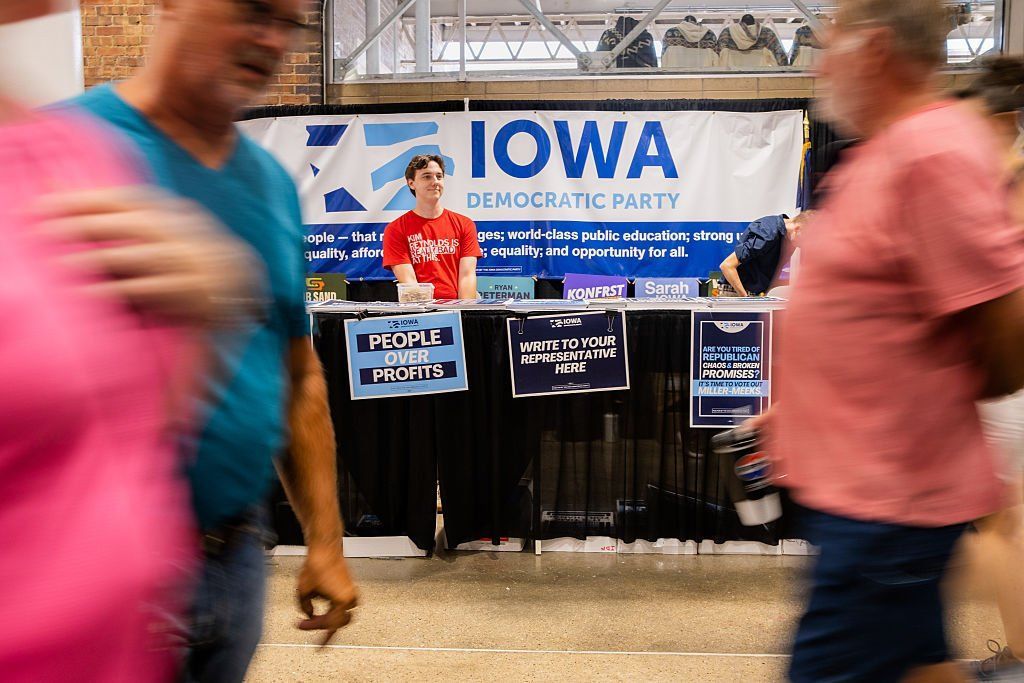
Republicans can’t afford that softness any longer. Too many in the GOP act like the proverbial dog returning to its vomit. That weakness must end. Candidates must raise the stakes, not bury them in cowardice and equivocation. They must be warriors ready to defend this country against every enemy, foreign and domestic.

A challenge to men

So here’s my challenge: Men, spend at least half the time on self-government that you spend on football this fall. Fortify your homes, your churches, and your communities. Hold your candidates accountable.

If you don’t, your sons may not inherit the blessing of football season — or the freedoms you’ve taken for granted.

China’s soft-power trap in your backyard: How the CCP uses sister cities to undermine America


Battles are escalating regarding America's sister-city agreements with China. Critics express concerns about national security, while advocates of sister cities argue that the program fosters relationships that promote world peace.

There are over 100 "friendship" or "sister" city partnerships between the U.S. and China, according to a 2023 membership directory from Sister Cities International. Only Mexico and Japan have more sister-city agreements with the U.S.

'We are being overwhelmed by China on our own soil, so this is indeed an emergency.'

Sister Cities International, a nonprofit, was founded by former President Dwight D. Eisenhower in 1956 as part of his People-to-People program, which he believed was crucial for "helping build the solid structure of world peace."

"If we are going to take advantage of the assumption that all people want peace, then the problem is for people to get together and to leap governments — if necessary to evade governments — to work out not one method but thousands of methods by which people can gradually learn a little bit more of each other," Eisenhower stated during the People-to-People Conference in 1956.

During a 1961 speech at the World Conference on Local Governments, Eisenhower stated that 150 U.S. communities had already "established regular communication with their counterparts in more than 40 countries of the free world."

The sister-city program gained rapid momentum, but the first U.S.-China relationships were not formed until 1979. Although the program was created to promote global harmony, its expansion to communist nations has raised concerns in recent years amid increasing tensions with the CCP.

RELATED: China’s back door into our military? US recruiters use CCP-controlled messaging app to target Chinese nationals

Beijing City Promotion and Beijing-New York Sister City Concert, in New York on June 24, 2024. Photo by Winston Zhou/Xinhua via Getty Images
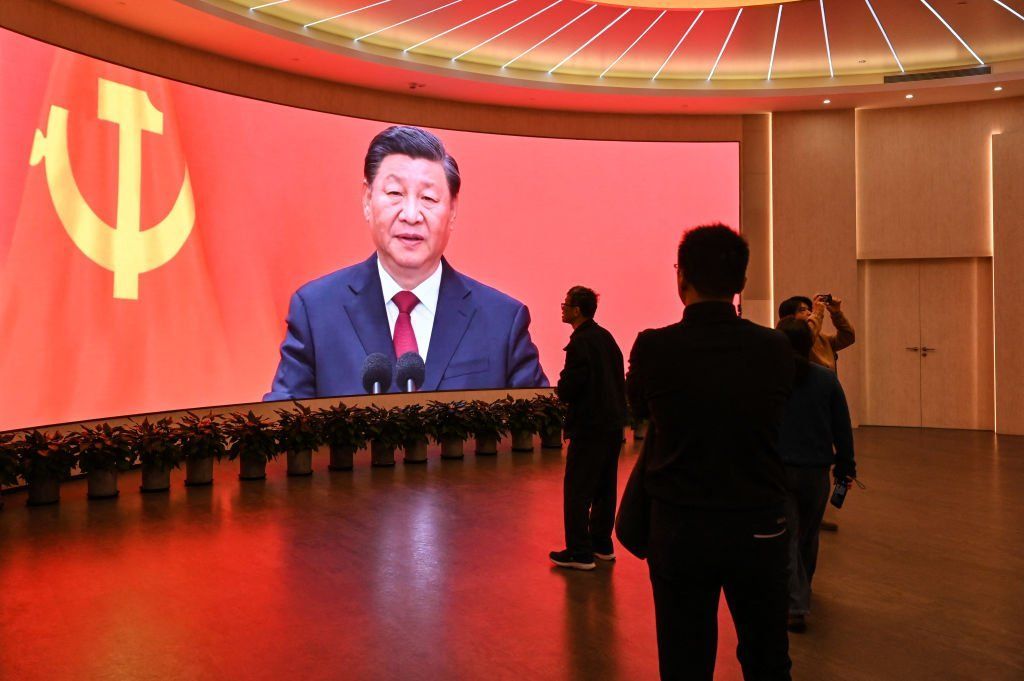
Some politicians and China experts believe sister cities are one of the Chinese Communist Party's many soft-power propaganda methods.

Gordon Chang, a Gatestone Institute senior fellow, told Blaze News, "China uses every point of contact to infiltrate, influence, corrupt, and take down our society. The sister-city relationships seem innocuous, but there is nothing innocent in anything the Communist Party does. Nothing."

"I would like to see President Trump use his emergency powers to prohibit these sister-city tie-ups," he added. "We are being overwhelmed by China on our own soil, so this is indeed an emergency."

One of the most notable spying cases in recent years can be connected to the United States' sister-city program. Christine Fang, also known as Fang Fang — a suspected Chinese spy who infiltrated political circles, allegedly assisted Rep. Eric Swalwell's (D-Calif.) re-election campaign, and even reportedly formed romantic relationships with two mayors — attended the 2014 Sister Cities International conference in Washington, D.C. As a volunteer in the office of former Fremont, California, Mayor Bill Harrison, Fang reportedly coordinated discussions to establish a sister-city relationship between Fremont and a city in China.

Arkansas and Texas draw a line

Arkansas Governor Sarah Huckabee Sanders (R) signed House Bill 1352 into law in April, broadening a previous 2021 law prohibiting higher education institutions from hosting Confucius Institutes. The latest legislation extended that ban to "similar institutes related to the People's Republic of China, including without limitation a Chinese cultural center."

The bill also barred municipalities from having sister-city partnerships with a "prohibited foreign party." The legislation aimed to force Little Rock to end its relationship with Changchun, China, an agreement formed in 1994.

However, instead of complying with the new law, the Little Rock Board of Directors is trying to circumvent it by changing the partnership from a "sister city" to a "friendship city."

According to Sister Cities International, friendship cities are "less formal."

"In some cities, 'friendship city' is often used as a first stage in the relationship, and after it is strengthened and the partners are sure they want a long-term relationship they will become 'sister cities,'" Sister Cities International's website reads.

Sam Dubke, Sanders' director of communications, told Blaze News, "Governor Sanders has been clear Arkansas cities are prohibited from having sister cities in Communist China. The City of Little Rock's rebrand does not make their sister city agreement legal, and Governor Sanders will enforce Arkansas law."

Texas Governor Greg Abbott (R) in June signed similar legislation prohibiting sister-city agreements with any "foreign adversary," including China, Iran, North Korea, and Russia.

The legislation is slated to take effect in September, and it will potentially impact relationships in Austin, Fort Worth, and San Antonio.

Fort Worth City Councilman Michael Crain, who lived in Beijing for eight years, has already opposed the governor's ban, calling the city's partnership with Guiyang "really just a beautiful relationship across the board, because people understand people on a one-to-one exchange."

"Our city council and mayor sanctioned this relationship 15 years ago," Crain told WFAA-TV in May. "Their government is also involved because that's how you do the exchanges, but I think as you unpack it, this is about understanding other cultures, how they operate, and how we operate. That, in essence, we're a global society."

While Texas and Arkansas seek to clamp down on sister-city agreements over potential CCP influence in the U.S., a city in Iowa recently opted to renew its partnership with China despite warnings from its Republican governor.

Davenport Mayor Mike Matson announced in April that the city had signed an agreement to extend its sister-city status with Langfang, China, for another five years, even with Iowa Governor Kim Reynolds (R) expressing concerns last year that China has "grown significantly more aggressive on the world stage, constantly looking for any opening to assert themselves at the expense of our country."

'The history of the program demonstrates that all of China's partnerships aim to deliver asymmetric returns to China.'

Federal-level action

Building on these state-level efforts, federal lawmakers are taking action to address the issue at a national scale. In response to the growing threat from China, Senators Marsha Blackburn (R-Tenn.) and Thom Tillis (R-N.C.) in April introduced the Sister City Transparency Act, which aims to take a closer look at these relationships. If passed, the legislation would direct the comptroller general to conduct oversight of sister-city agreements with countries "with significant public sector corruption," including China and Russia.

Earlier this month, Reps. Elise Stefanik (R-N.Y.) and John Moolenaar (R-Mich.) introduced the Washington Sister Cities Act to prohibit the U.S. Capitol from having a sister-city relationship with "foreign adversarial regimes," including the CCP.

A press release from Stefanik's office noted that the "primary focus" of the legislation is to force Washington, D.C., to end its partnership with Beijing, which was established over 40 years ago. Stefanik argued that the CCP has "weaponized" the sister-city agreements "to advance their malign disinformation campaign," ultimately forming a "pathway to spy on our government."

Moolenaar called D.C.'s relationship with Beijing "troubling," citing China's "worsening human rights conditions."

RELATED: University of Michigan now under fire after Chinese scholars allegedly smuggle bio-weapon

Photo by HECTOR RETAMAL/AFP via Getty Images

China's united front strategy

The CCP's management of its sister-city partnerships has been tied to its United Front Work Department.

According to the U.S.-China Economic and Security Review Commission, the CCP's UFWD is responsible for coordinating influence operations to "neutralize sources of potential opposition" to its policies and authority. A 2018 report from the commission explains that the department "mostly focuses on the management of potential opposition groups inside China, but it also has an important foreign influence mission."

"To carry out its influence activities abroad, the UFWD directs 'overseas Chinese work,' which seeks to co-opt ethnic Chinese individuals and communities living outside China, while a number of other key affiliated organizations guided by China's broader United Front strategy conduct influence operations targeting foreign actors and states," the report reads.

The commission goes on to state, "It is precisely the nature of United Front work to seek influence through connections that are difficult to [publicly] prove and to gain influence that is interwoven with sensitive issues such as ethnic, political, and national identity, making those who seek to identify the negative effects of such influence vulnerable to accusations of prejudice."

Nathan Picarsic, senior fellow focusing on China at the nonpartisan Foundation for Defense of Democracies, elaborated on how China manages its sister-city relationships.

"Sister-city relationships are framed as mutually beneficial artifacts of people-to-people diplomacy," Picarsic told Blaze News. "But as is the case with most of China's international engagements, sister-city ties with a Chinese city trace back to Beijing and the Chinese Communist Party's centralized vision for global influence."

"The Chinese People's Association for Friendship with Foreign Countries (CPAFFC), which is an organ of China's United Front, manages formal sister-city relationships," he continued. "And the history of the program demonstrates that all of China's partnerships aim to deliver asymmetric returns to China: whether that was inbound investment and technology access in the 1990s or subnational influence to subvert national security concerns in the current moment. China looks to use sister cities as a way to cultivate friendly voices and to localize China's arguments on a global basis."

Sister Cities International did not respond to a request for comment.

Like Blaze News? Bypass the censors, sign up for our newsletters, and get stories like this direct to your inbox. Sign up here!

Iowa Becomes 17th State To Secure Elections From Ranked-Choice Voting

Iowa Gov. Kim Reynolds signed several bills strengthening the integrity of the state’s elections on Monday, one of which prohibits the use of ranked-choice voting. The new statute makes Iowa the 17th state to bar the practice. “I commend the Iowa Legislature and Governor Reynolds for recognizing the importance of these bills in strengthening and […]