![]()
Labor Day didn’t begin as a noble tribute to American workers. It began as a negotiation with ideological terrorists.
In the late 1800s, factory and mine conditions were brutal. Workers endured 12-to-15-hour days, often seven days a week, in filthy, dangerous environments. Wages were low, injuries went uncompensated, and benefits didn’t exist. Out of desperation, Americans turned to labor unions. Basic protections had to be fought for because none were guaranteed.
Labor Day wasn’t born out of gratitude. It was a political payoff to Marxist radicals who set trains ablaze and threatened national stability.
That era marked a seismic shift — much like today. The Industrial Revolution, like our current digital and political upheaval, left millions behind. And wherever people get left behind, Marxists see an opening.
A revolutionary wedge
This was Marxism’s moment.
Economic suffering created fertile ground for revolutionary agitation. Marxists, socialists, and anarchists stepped in to stoke class resentment. Their goal was to turn the downtrodden into a revolutionary class, tear down the existing system, and redistribute wealth by force.
Among the most influential agitators was Peter J. McGuire, a devout Irish Marxist from New York. In 1874, he co-founded the Social Democratic Workingmens Party of North America, the first Marxist political party in the United States. He was also a vice president of the American Federation of Labor, which would become the most powerful union in America.
McGuire’s mission wasn’t hidden. He wanted to transform the U.S. into a socialist nation through labor unions.
That mission soon found a useful symbol.
In the 1880s, labor leaders in Toronto invited McGuire to attend their annual labor festival. Inspired, he returned to New York and launched a similar parade on Sept. 5 — chosen because it fell halfway between Independence Day and Thanksgiving.
The first parade drew over 30,000 marchers who skipped work to hear speeches about eight-hour workdays and the alleged promise of Marxism. The parade caught on across the country.
Negotiating with radicals
By 1894, Labor Day had been adopted by 30 states. But the federal government had yet to make it a national holiday. A major strike changed everything.
In Pullman, Illinois, home of the Pullman railroad car company, tensions exploded. The economy tanked. George Pullman laid off hundreds of workers and slashed wages for those who remained — yet refused to lower the rent on company-owned homes.
That injustice opened the door for Marxist agitators to mobilize.
Sympathetic railroad workers joined the strike. Riots broke out. Hundreds of railcars were torched. Mail service was disrupted. The nation’s rail system ground to a halt.
President Grover Cleveland — under pressure in a midterm election year — panicked. He sent 12,000 federal troops to Chicago. Two strikers were killed in the resulting clashes.
With the crisis spiraling and Democrats desperate to avoid political fallout, Cleveland struck a deal. Within six days of breaking the strike, Congress rushed through legislation making Labor Day a federal holiday.
It was the first of many concessions Democrats would make to organized labor in exchange for political power.
What we really celebrated
Labor Day wasn’t born out of gratitude. It was a political payoff to Marxist radicals who set trains ablaze and threatened national stability.
RELATED: Listen: Glenn explains the history of Labor Day – and why it matters for our future
![]() Photo by Photo by Kean Collection/Getty Images
Photo by Photo by Kean Collection/Getty Images
What we celebrated was a Canadian idea, brought to America by the founder of the American Socialist Party, endorsed by racially exclusionary unions, and made law by a president and Congress eager to save face.
It was the first of many bones thrown by the Democratic Party to union power brokers. And it marked the beginning of a long, costly compromise with ideologues who wanted to dismantle the American way of life — from the inside out.
Want more from Glenn Beck? Get Glenn's FREE email newsletter with his latest insights, top stories, show prep, and more delivered to your inbox.
 Democrats who embrace rotten DSA policies festering in their party are paving the way for a nation that would make our founders weep.
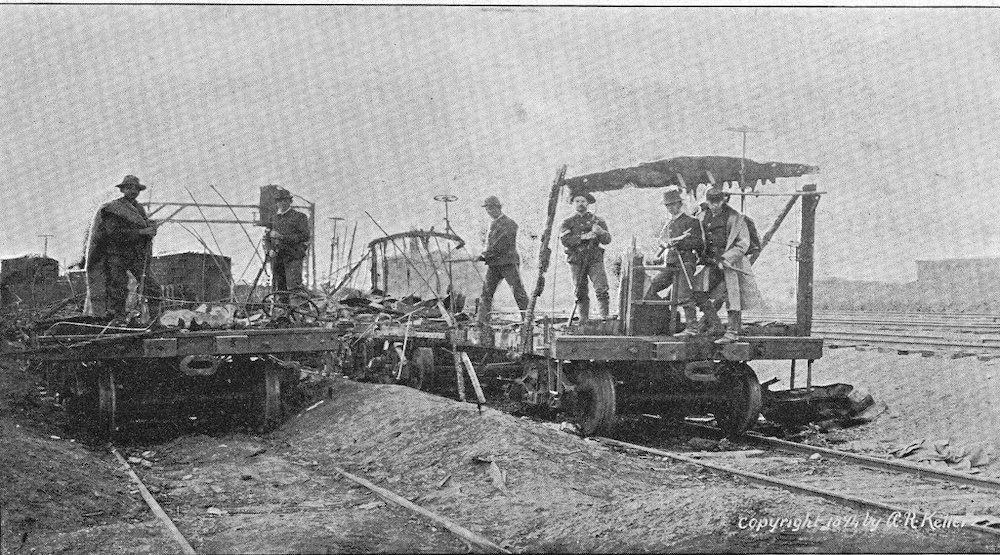 Photo by Photo by Kean Collection/Getty Images
 www.theblaze.com