America has immigration laws — just not in these courtrooms
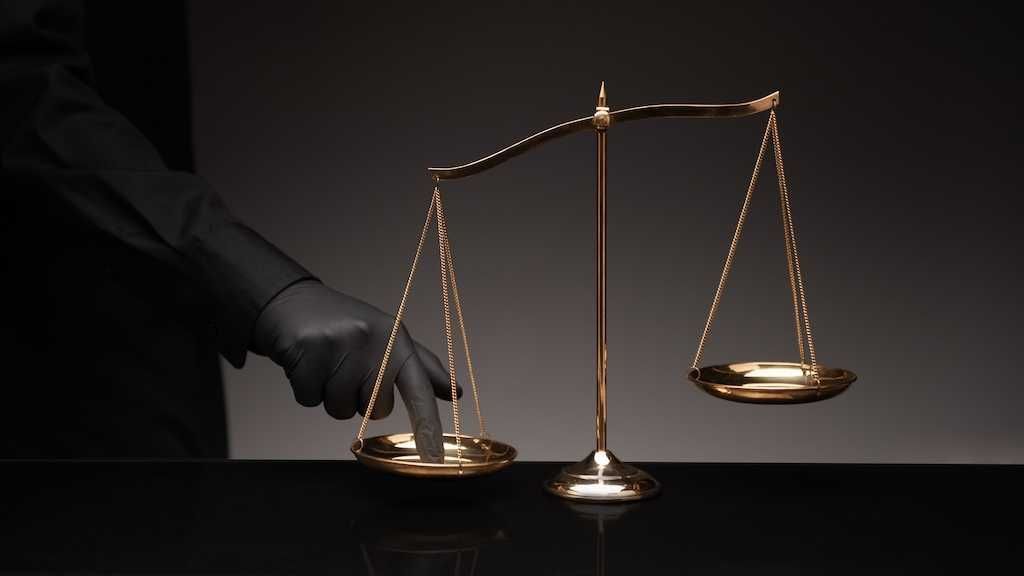


If Donald Trump put on a black robe tomorrow and issued an opinion in an intellectual property dispute between two tech companies, no one would treat it as binding law. So why are we expected to treat judicial policymaking on immigration and national security as untouchable — especially when lower courts now openly defy higher courts?

One of the most damaging misconceptions in American government holds that the Supreme Court is “supreme” over the political branches in all things. At most, its supremacy runs within the judicial hierarchy: It can overrule lower federal courts. The same goes for the courts of appeals, which are supposed to bind district courts within their circuits.

If lower courts refuse deference to their judicial bosses, why should the president keep extending deference to either level when the law is on his side?

That system, however, increasingly operates as a one-way ratchet for left-wing political outcomes.

On February 6, the Fifth Circuit Court of Appeals finally reaffirmed a basic legal principle: Illegal aliens seeking admission are not entitled to enter the country, demand release, and then litigate their way into residency while living freely inside the United States. The court upheld long-standing precedent and the plain text of U.S. immigration law, which requires detention of inadmissible aliens pending disposition of their cases.

Congress enacted that provision in 1996 for an obvious reason: to prevent people from entering illegally, receiving a notice to appear, and then disappearing into the interior.

Unlike American criminals who are entitled to bond hearings, illegal aliens are not being prosecuted for a crime. They can always voluntarily depart and live freely in their home countries. Being detained is a consequence of their initial invasion and their desire to litigate their way into our country.

Then came the district courts.

Just three days after the Fifth Circuit’s ruling, Judge Kathleen Cardone, an El Paso-based George W. Bush appointee, ordered the release of aliens in five cases on the theory that they had “established roots” in the United States. What, then, was the point of the Fifth Circuit ruling? Cardone claimed in one case that it “has no bearing on this Court’s determination of whether [the petitioner] is being detained in violation of his constitutional right to procedural due process.”

Likewise, on February 9, Judge David Briones, an El Paso-based Clinton appointee, reached a similar conclusion. “The Court reiterates its original holding that noncitizens who have ‘established connections’ in the United States by virtue of living in the country for a substantial period acquire a liberty interest in being free from government detention without due process of law,” Briones wrote — about an illegal alien who entered the country in 2024.

Pause there.

The Fifth Circuit had just ruled that detention is mandated by statute even in cases involving aliens who entered long ago (including plaintiffs from 2001 and 2009). Yet a district judge somehow concluded that ruling does not apply to someone who crossed illegally in 2024. Worse, how can a district judge claim the Fifth Circuit did not account for the “constitutional” question when the appeals court’s ruling necessarily presumes ICE’s conduct is constitutional?

RELATED: The Fifth Circuit cracks down on the asylum excuse factory

ozgurdonmaz via iStock/Getty Images

These judges are cherry-picking language from select Supreme Court opinions about aliens with “established ties” while ignoring the far stronger body of law recognizing that illegal entrants have no right to remain in the country against the national will. The idea that someone can break into the country, evade enforcement long enough to create “ties,” and then use that evasion as a legal shield makes a mockery of popular sovereignty and of the Declaration’s first principles.

This also demonstrates, again, why the Trump administration cannot comply its way out of judicial supremacism. Even when it wins in higher courts, lower-court judges can repackage the same result in a new case and keep obstructing enforcement. Why should Trump defer reflexively to congressionally created judges who refuse to defer even to their own superiors within the judiciary?

That point came into focus in Ninth Circuit Judge Lawrence VanDyke’s dissent from his court’s decision to halt the deportation of a Peruvian family while the appeal proceeds. Referring to the Ninth Circuit as a “wackadoo” court, VanDyke described what he said has become an automatic practice: granting stays of removal even when Supreme Court immigration precedent clearly points the other way.

In effect, he argued, the court uses procedural orders and an ever-expanding shadow docket to nullify precedent without formally issuing rulings that openly defy it.

Because of the circuit’s heavy caseload, VanDyke wrote, judges adopted a “convenient, but unwritten, practice” of granting preliminary relief in the form of administrative stays pending review. Those stays often remain in place until the merits are decided. The result, he said, is a system that “disregard[s] Supreme Court precedent and award[s] automatic, extended stays of removal in utterly meritless immigration appeals.”

Defenders of the Ninth Circuit might say the court is overloaded and must rely on lengthy interim stays. VanDyke’s point, however, is that this indulgence appears uniquely generous in deportation cases. As he put it, the Ninth Circuit’s internal dialogue sounds like “a judicial Oprah Winfrey, confused by her own popularity.”

His satirical version of the court’s approach was devastating:

We are… ("You get a stay!")… sincerely shocked… ("You get a stay!")… by the… ("You get a stay!")… number of… ("You get a stay!")… utterly… ("You get a stay!")… meritless… ("You get a stay!")… immigration petitions… ("You get a stay! And you get a stay! And you get a stay!")… that are filed… ("You get a stay!")… in our court. ("Everyone gets a stay!").

That is the point. When it comes to many liberal judges — who still dominate too many panels — law is often just a vehicle for politics. They will reach the result they want by whatever procedural route is available. You cannot simply “out-appeal” a judiciary willing to ignore controlling law while pretending not to.

RELATED: We escaped King George. Why do we bow to King Judge?

Valerii Evlakhov via iStock/Getty Images

A Politico review of thousands of ICE detention cases found that at least 360 judges rejected ICE’s broader detention policies in more than 3,000 cases, while just 27 judges backed those policies in about 130 cases. The overwhelming pattern is plain: Judges are sidelining the text of the Immigration and Nationality Act and the Supreme Court’s plenary power doctrine, which affirms broad executive authority over the detention and removal of illegal aliens.

No Supreme Court ruling, by itself, will stop judges committed to creative procedural sabotage.

Lawlessness begets lawlessness. It is grimly fitting that in an era when invaders are encouraged to dictate terms to citizens, inferior courts now side with them while dictating terms to superior courts.

If lower courts refuse deference to their judicial bosses, why should the president keep extending deference to either level when the law is on his side?

The Anti-American Riots In LA Are Gavin Newsom’s Legacy

Gov. Gavin Newsom. D-Calif., is blaming President Trump for the violence that erupted in Los Angeles this weekend while simultaneously attempting to stop the president from restoring order. This should come as no surprise — Newsom’s legacy is one of complicity in the “mess” his state has become. Newsom is rumored to be posturing for […]

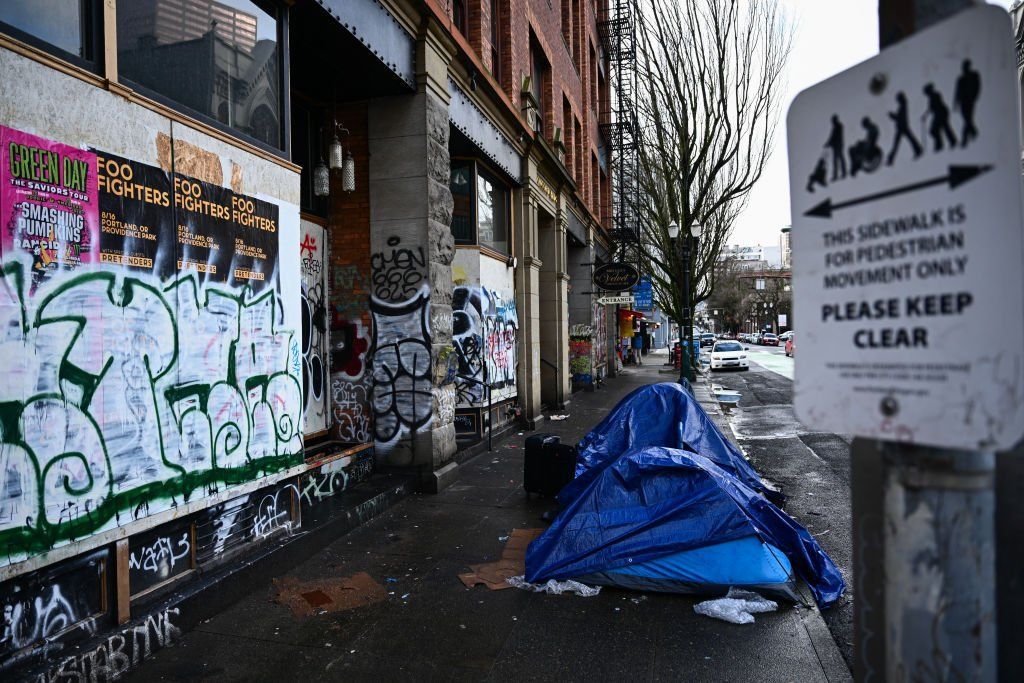

Yet another Oakland street takeover with thugs firing guns caught on video; residents complain cops are nowhere to be found


Just about a month ago, five people were shot during an Oakland street takeover. The lawless gatherings also are known as "sideshows," during which motorists block off intersections and drive in circles, peeling out and burning rubber as large crowds look on and record video.

Well, early Saturday morning, Oakland suffered yet another street takeover, this one an hour long that included participants shooting guns into the air — all caught on video. Shellshocked residents complained that police were nowhere to be found, KTVU-TV reported.

'We know that we don’t have enough police officers. ... We can’t afford it.'

You can view a video report here that includes what appears to be cellphone clips showing individuals firing shots into the air during the sideshow.

Residents told KTVU they're afraid stray gunfire may hurt someone — or worse.

"I just heard gunshots, like gunshots coming from all directions, people trying to hide. They just fire up in the air, and you don’t know where it’s going to land," a neighbor who asked for anonymity told the station.

Indeed, the resident was one of several neighbors who told KTVU that such sideshows outside their homes near 98th Avenue and Empire Boulevard have become commonplace.

"Like a whole hour. No police. I didn’t hear no sirens at all. ... Some people were on top of that house's roof. There were fireworks included. There were blue lasers, green lasers," a neighbor revealed to the station.

Oakland Mayor Sheng Thao and Police Chief Floyd Mitchell have appeared at recent town halls pledging to do more to combat sideshows, KTVU said. Possible solutions include the use of new technology, such as drones and cameras, and the help of the California Highway Patrol, the station said.

"We know that we don’t have enough police officers," the mayor said one recent town hall, according to KTVU. "We can’t afford it, but that doesn’t mean that we use that as an excuse or reason not to be sure that people feel safe."

Mitchell noted that police are "working hard to try to curb this activity. We have a sideshow detail that goes out every Friday and Saturday," the station said.

Mitchell also said redesigned intersections could help, too, but KTVU reported that residents near Saturday's sideshow said they're still waiting to see city leaders keep their promises on this matter.

"I’ve been here my whole life, and it has changed, it has changed so much, and it’s frustrating because it seems like they don’t care," a neighbor told the station.

KTVU said it reached out to police and the mayor's office for comment on the fears and frustrations about area crime that residents have expressed — but the station said it didn't hear back from either in time for its report.

Like Blaze News? Bypass the censors, sign up for our newsletters, and get stories like this direct to your inbox. Sign up here!

Oregon coming around to the realization that drug decriminalization was always a really bad idea


Oregon became the first state in the union to decriminalize possession of hard drugs such as heroin, methamphetamine, and cocaine in 2020. This radical experiment in lawlessness has been an unmitigated disaster.

While initially deaf to the concerns raised by Republicans, recovery specialists, and Christian groups concerning Ballot Measure 110, state Democrats are now poised to re-criminalize drug possession and bring their four-year experiment to an end. After all, the majority of Oregonians want the measure repealed.

How it started

The so-called "Drug Addiction Treatment and Recovery Act" eliminated criminal penalties for possession of various quantities of hard drugs. As a result, junkies can now carry one gram of heroin; 2 grams of cocaine; 2 grams of meth; less than 40 user units of methadone; 1 gram or 5 pills of MDMA; less than 40 user units of LSD; and fewer than 40 pills of oxycodone.

Possession of such quantities amounts to a non-criminal Class E violation, which at most can result in a $100 fine or a recommendation for a health assessment with an addiction treatment professional.

Those caught with even more of these once-controlled substances have also seen penalties softened, such that they now face a misdemeanor charge with less than a year in jail, a fine, or both.

Extra to decriminalizing hard drugs, the measure mandated the establishment or funding of recovery centers throughout the state funded by taxes on marijuana.

According to Ballotpedia, the measure was championed by the Democratic Party of Oregon, the ACLU of Oregon, the ACLU, NAACP Portland, NARAL Pro-Choice Oregon, Planned Parenthood Advocates of Oregon, and various other leftist groups.

"It takes a lot of courage to try something new, and I'm really proud of our sate," Haven Wheelock, a so-called harm reduction specialist who was among the petitioners to file the measure, told Oregon Public Broadcasting. "I'm excited to be a model for other places to show that we don't have to harm people for being sick."

Kevin Barton, the district attorney for Washington County, said, "I am hopeful with this new effort that it will be successful to address addiction, but I think everyone can agree its an experiment."

Measure 110 won with 58.5% of the vote. The decriminalization went into effect on Feb. 1, 2021.

How it's going

In Portland — a Democrat-run city that witnessed an exodus of businesses from its boarded-up and crime-ridden downtown — and across the state, junkies who might previously have been set straight by an arrest are now dying in the thousands.

According to Oregon Health Authority data, fatal overdoses have skyrocketed in recent years. In 2020, there were 824 fatal overdoses. The year M110 went into effect, there were 1,189 fatal overdoses. Preliminary data indicates the number of deaths from overdoses in 2022 was north of 1,100.

Fentanyl is proving especially lethal. OregonLive.com noted that in the year ending September 2019, there were 77 known fentanyl deaths. In the year ending September 2023, there were reportedly 1,268 overdose deaths.

There appears to be a correlation between fatal overdoses and M110.

A University of Toronto study published September in the Journal of Health Economics concluded that "when Oregon decriminalized small amounts of drugs in February 2021, it caused 182 additional unintentional drug overdose deaths to occur in Oregon in 2021."

This accounted for "a 23% increase over the number of unintentional drug overdose deaths predicted if Oregon had not decriminalized drugs."

The promised good associated with M110 has also failed to come to fruition.

Police suggested to OPB that the $100 tickets for possession of fentanyl and other such killer drugs go unpaid and the users never call the treatment hotline number.

"We've talked to exactly two people that have actually called that number," said Sgt. Jerry Cioeta of the Portland Police Bureau.

State auditors revealed that approximately 1% of junkies cited by police called the hotline, reported the Statesman Journal.

Some advocates for the failed policy claim it's too early to know whether it's working.

"We're building the plane as we fly it," Wheelock told the Atlantic. "We tried the War on Drugs for 50 years, and it didn't work[.] ... It hurts my heart every time someone says we need to repeal this before we even give it a chance."

Democratic half-measure

A nonpartisan statewide poll published last April found that 51% of Oregonians believed M110 had proven to be bad for the state. 65% of respondents said M110 made drug addiction worse. 63% said the measure made homelessness worse. 63% said it made crime worse.

With the understanding that the state has failed to adequately make good on its drug treatment programs or distributed cannabis tax revenue while overdoses and criminal activity skyrocketed, 53% of respondents suggested that M110 should be repealed.

An August 2023 Emerson College poll also found that 56% of Oregonians think that M110 should be repealed completely and 50% said it made their communities much less safe.

State lawmakers have introduced various proposals to tweak, replace, or repeal M110.

Democrats are pushing to make small-scale drug possession a Class C misdemeanor offense punishable by a month in jail and a $1,250 fine. Junkies would be afforded the opportunity to beat the charges by instead seeking treatment, reported Reuters.

"It became very, very obvious that what was happening on the streets of Portland, and what was happening on Main Street, Oregon, was unacceptable," said state Senate Majority Leader Kate Lieber (D).

Republicans understand that the proposed legislation, House Bill 4002, signals an understanding on Democrats' part that M110 is ruinous, but say it is altogether toothless.

"We need serious penalties in order to make sure that people are getting into treatment, as opposed to staying on the street," said state Senate Minority Leader Tim Knopp.

The Republican-supported Senate Bill 1555 and Senate Bill 1588 would make drug possession a Class A misdemeanor with penalties of a year in jail for drug possession and a $6,250 fine, reported the Statesman Journal. As with the Democratic alternative, junkies under the proposed Republican bills could receive probation instead of jail time if they pursued treatment.

"The Republican bill restores accountability, ushers addicts into treatment, and makes our streets clean and safe again – none of which will be achieved with the majority's proposal," said state House Minority Leader Rep. Jeff Helfrich (R).

Like Blaze News? Bypass the censors, sign up for our newsletters, and get stories like this direct to your inbox. Sign up here!

Teen delinquents running wild on NYC block in middle of day, firing fake guns, openly smoking pot — and cops, school allegedly aren't doing anything about it


A group of teenage delinquents are running wild on a New York City block on weekdays, firing fake guns and openly smoking pot — and the New York Post said police and the school they're apparently from aren't doing anything about it.

What are the details?

Residents of West 13th Street off 6th Avenue in Greenwich Village told the paper that the teens are frightening them and keeping them indoors.

The Post said that "for at least a year while school is in session, the roughnecks roam from stoop to stoop every day at lunchtime, rolling blunts, getting high, acting out, and taunting anyone who gets in their way."

\u201cGreenwich Village block held hostage by lunchtime rowdies https://t.co/xfbo8hQbaK\u201d
— New York Post (@New York Post) 1664633650

“They are the bane of the block,” Michael Figueroa, a superintendent for two buildings, told the paper, which added that he's chased the trouble-making kids from his locations, cleaned up their trash, and witnessed their behavior firsthand.

The Post said it's checked out the area for itself, and sure enough, for the last two weeks reporters saw the teens "brandishing realistic-looking imitation guns, which they fired at frightened pedestrians."

Residents told the paper that one particular "fake TEC-9 semi-automatic pistol" is "a tragedy waiting to happen."

Figueroa added to the Post that the teens are using multiple home renovations to their advantage: "If they see a door open [they go in to smoke their weed]. I see them constantly. It’s the same guys, it’s the same crew.”

Senior citizen Cheryl Schwartzman in a polite tone of voice recently asked members of the group to move so she could enter her building, and the paper said one of them shouted back, “Suck my d***!” and spit all over her stoop.

“My frustration is that this is an ongoing problem, and no one is here when the teens congregate,” Schwartzman added to the Post.

The paper said the teens have been followed back to Harvest Collegiate High School on West 14th Street.

A retired lawyer, Schwartzman added to the Post that cops have contacted officials at the high school but claimed the principal has yet to take action. The paper said the school did not return messages.

“This is their lunchroom, and they are going to use this as their lunchroom until June,” Schwartzman told the paper of the teens raising hell on her block.

Anything else?

The Post, citing NYPD statistics, reported that major crimes in the 6th Precinct are up 72% this year. Breaking things down, the paper said felony assaults are up 7% (142 from 133), robberies have increased 47% (186 from 127), petty larcenies rose 60% (1,467 from 917), grand larcenies have soared 91% (976 from 510), and burglary has jumped 96% (325 from 166).

Fueled By Two-Tiered Political Justice, The Left’s 1960s Violence Is Back

Threats against the judiciary did not come suddenly. The slouch toward selective law enforcement and politicized violence has a history.
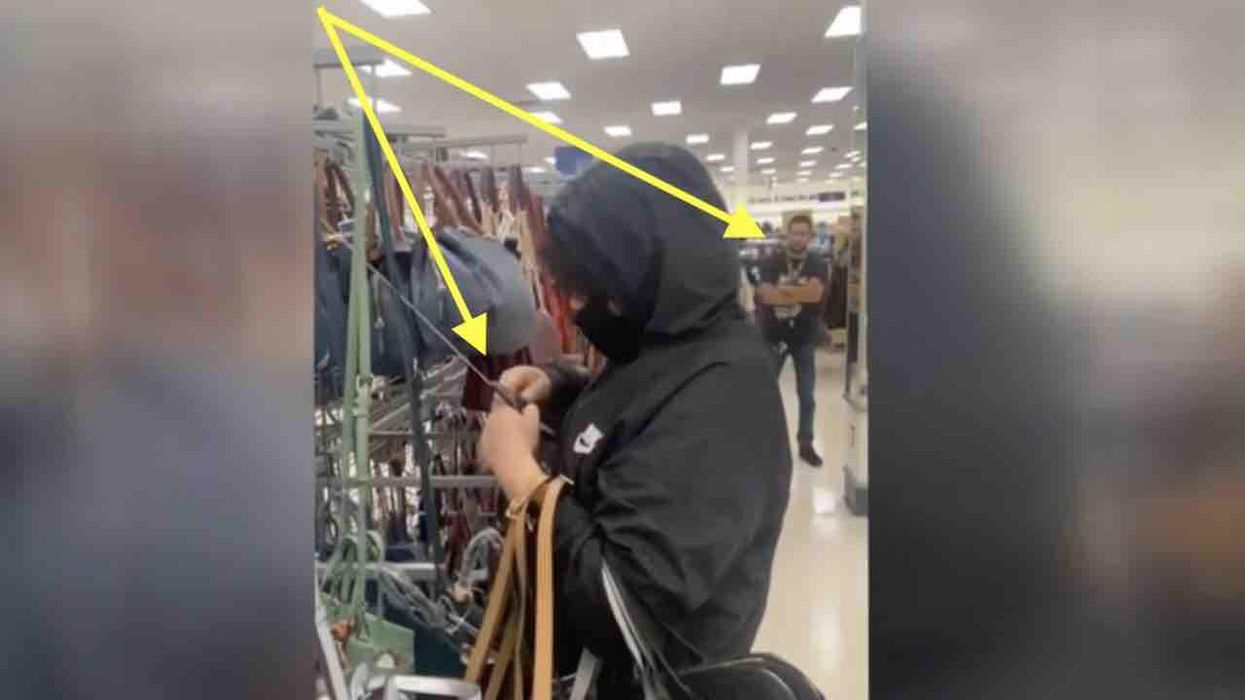
VIDEO: Masked woman uses wire cutters to steal expensive purses attached to security leashes — and one store employee just helplessly watches


Yet another California retail store fell victim to shoplifters who likely were aware that employees were going to do nothing more than watch their lawlessness — and if police bother to get involved, that the worst they'd suffer are misdemeanors.

What are the details?

Lindsey Rodriguez and her husband shot video showing a woman using wire cutters to slice security leashes on expensive purses inside a Marshalls in Hemet, along with a man casually walking out of the store with his arms full of swiped clothing, KNBC-TV reported.

Image source: KNBC-TV video screenshot

The station said Rodriguez and her husband Pancho followed the purse thief outside, but the culprit ran to a dark-colored car that quickly drove off.

She called 911, KNBC said, but Hemet police said the officer who arrived a short time later and ran a license plate didn't see anyone suspicious.

Rodriguez is fed up.

"I worked every single day, 40 hours a week during this whole pandemic, and then I go in and see that, and it's disheartening," Rodriguez told KNBC-TV. "It's not Hemet."

Image source: KNBC-TV video screenshot

She added to the station that customers "were just kind of standing there watching. The only thing I figured I could do was get their identities and their license plates and give them to somebody who will do something with them."

Rodriguez noted to KNBC that while the Marshalls employees "sit there on the clock and watch these people just steal from everybody," she can't figure out why police said no one at Marshalls so far reported the crimes.

"What is this teaching our children?" she asked the station. "I don't want my kids to see that kind of stuff when we are going shopping at 7 o'clock at night."

KNBC said it reached out to Marshalls to find out why no one from the store reported the crimes to police, but the station said it did not hear back from the store.

'We need to start standing up for ourselves'

Rodriguez also told KNBC she's had it with these kinds of crimes, which is why she and her husband posted their videos on social media.

"Citizens have to do something," she added to the station. "We need to start standing up for ourselves because nobody else is doing it right now."

Anything else?

Brazen shoplifters caught on video doing their misdeeds — and getting away with them relatively easily — is becoming quite the phenomenon:

Thieves were caught on video stealing designer handbags from a Neiman Marcus store in San Francisco in July.

In June, a crook filled up a trash bag with merchandise from a Walgreens store in San Francisco and rode his bicycle right past a security guard who was recording the crime.

And after thieves casually strolled out of a T.J. Maxx store in suburban Los Angeles with armfuls of merchandise a few months back, LAPD Sgt. Jerretta Sandoz told KCBS-TV crooks appear to be "winning."

"They didn't even run out, they walked out," she noted to the station. "And so that's sending a message that we, the criminals, are winning." Sandoz added that "if they're caught, they're probably given the equivalent of a traffic ticket, so it's not taken seriously."

Under California's Proposition 47, passed in 2014, felony theft cases are reclassified as misdemeanors if the total amount stolen doesn't exceed $950.

With Biden’s Illegal ‘Eviction Moratorium’ Democrats Openly Embrace Lawlessness

The president knows what he ordered the CDC to do is illegal. He did it anyway to appease the left wing of his party.

Corporate Media And Other Race-Baiters Have Incited More Violence Than Trump Ever Did

When you can convince people racism is rampant, you ignite a flame of division and destruction that can only end with bodies on the ground and cities leveled.