Democrats’ Open Border Policies Will Import A Revolution
 The alien population is the means via which Democratic socialism, an entirely alien form of government, will be ushered into this country.
A long list of prominent conservatives have referred to leftists and Democrats as dumb, stupid, incompetent, crazy, and insane. In 2007, Ann Coulter wrote the book “If Democrats Had Any Brains, They’d Be Republicans.” Both Rush Limbaugh and President Trump regularly referred to Democrats as “Dumbocrats.” More recently, the leader of the House Freedom Caucus called Democrats “the crazy party,” and JD Vance framed the contrast between the parties as “common sense vs. crazy.”
Matt Margolis titled a piece in PJ Media this year “Democrats Are Too Stupid to Heed This Warning” and posited that somewhere between the 1990s and today, the Democratic Party lost its mind. Some of this stuff gets a chuckle, but conservatives need to be careful with this narrative.
Calling an adversary’s actions crazy or stupid implies that those actions produce an outcome fundamentally different from what their architects intended.
Conservatives need to understand that this tactic can not only contradict the more serious messages they’re trying to convey about leftist policies, it can also remove responsibility from leftists for their malevolence.
Consider a recent interview in which Rep. Jim Jordan (R-Ohio) explained that the left’s open-border policy was part of a shrewd, long-term plan to bring in new Democrat constituents, with sanctuary-city policies as another step in that plan. Yet in the same interview, he called the policy “just stupid” and “one of the dumbest policies I’ve ever heard of,” and, in a later interview, adding that “just about every single position today’s left adopts is crazy.”
So we are told that leftists are shrewd, long-term planners who are simultaneously stupid and crazy. Which is it? The distinction may seem trivial, but it’s not.
We need to distinguish between leftist leadership and its dominant agenda on the one hand and its useful idiots on the other.
To be clear, there are certainly some dim bulbs among the left — both in leadership and rank and file. Showcase examples include Vice President Kamala Harris, who frequently struggles to articulate coherent sentences; Rep. Hank Johnson (D-Ga.), who worried during a congressional hearing that Guam might “tip over and capsize” if it became too populated; and Rep. Alexandria Ocasio-Cortez (D-N.Y.), who told us that America with defunded police would look just like the wealthy white suburbs.
On a broader scale, consider millions of California voters who knowingly continue to vote for politicians whose policies have devastated the Golden State.
But these examples aside, the overarching leftist agenda — and the people who genuinely understand, subscribe to, and orchestrate it — cannot simply be dismissed as stupid. Doing so is dangerous.
As has often been the case with radical leftist movements in the United States, their stated objective is to dismantle existing American institutions, traditions, and governing structures in favor of a fundamentally different social order. Put simply, they despise America as it currently exists.
Once you understand this premise, their positions look less like harebrained, stupid, illogical, or unworkable ideas, but more like carefully conceived, sometimes ingenious tactics intended to advance that larger objective.
RELATED: Democrats are desperate to 'Europe' our health care system

In this light, things like defunding the police, draconian regulations and carbon taxes, mothballing coal and nuclear plants, wide-open borders, turning a blind eye to Medicaid and NGO fraud, supporting genital mutilation of minors, opposing voter ID, massive expansion of entitlement spending, lowering combat readiness standards in the military in the name of gender equality, and support for adversaries like Hamas can be understood not as disconnected examples of incompetence, but as elements of a broader ideological program.
If it does damage to America and hastens the great realignment, they support it.
Whether one agrees with that interpretation of any particular policy is a separate question. The important point is that conservatives shouldn’t automatically assume destructive policies are the product of stupidity.
In “America’s Cultural Revolution,” Christopher Rufo explains how the radical left’s approach evolved from traditional Marxist class conflict toward an emphasis on race, gender, and identity. Traditional Marxism defined the conflict largely in socioeconomic terms, pitting the working class against the wealthy. In the United States, however, the middle class proved too large, mobile, and invested in the existing system for a conventional class-based revolution to take hold.
Influenced by thinkers such as Antonio Gramsci and Herbert Marcuse, the New Left increasingly emphasized “the war of position,” “the long march through the institutions,” and racial and cultural identity as alternatives to direct political conflict. Barack Obama became a highly consequential figure in this transformation.
During his 2008 presidential campaign, Obama told an audience in Columbia, Missouri, “We are five days away from fundamentally transforming the United States of America.” In the years that followed, he did precisely that.
The media proactively escalated the new narrative, increasing use of the terms racist, racists, and racism by roughly 700% between 2011 and 2019. The phrase “white supremacy” rarely appeared in the media until 2015, but by 2019, the Times and the Post were using it 17 to 18 times more often than in 2014, with similar jumps for “systemic racism,” “white privilege,” “unconscious bias,” and “whiteness.”
Gallup found that the share of respondents who believed black-white relations were “very good” or “somewhat good” plummeted from about 70% to 47% by 2015.
From the perspective of those who designed it, this was a deliberate and consequential political strategy. Arthur Brooks put it well, pointing out that the president ran on optimism and unity but governed on pessimism and division. In 2011, Obama’s Executive Order 13583 cemented DEI language, metrics, and policies across federal agencies. The resulting fallout has been well documented.
RELATED: The right is building its own lawfare defense machine — finally

To call leftist leaders or their policies stupid is therefore more than an unfortunate choice of words. It can mislead conservatives regarding what they are confronting.
We don’t tend to think of stupid people as evil. Perceived stupidity neutralizes perceived intent and, to some degree, perceived blame. “Stupid” is not the word that comes to mind for figures like Stalin, Mao, or Pol Pot, and it would have done us no favors to describe the Axis powers in World War II as merely stupid or crazy.
Calling an adversary’s actions crazy or stupid implies that those actions produce an outcome fundamentally different from what their architects intended. But what if the opposite is true? What if the policies are producing precisely the disruption their architects sought?
Once upon a time, Democrats and Republicans were two parties with broadly similar hopes for America but sharply different views on how to get there. That time has passed.
Conservatives should not lose sight of what they believe to be the left’s overarching mission. They need to describe political actions, and the consequences those actions produce, not simply as the unfortunate results of incompetent or stupid people, but as those of an underlying ideological agenda.
That doesn’t mean every Democrat is a radical leftist, every leftist is an intellectual strategist, or every controversial policy reflects a coordinated conspiracy. Nor does it mean conservatives should stop pointing out genuinely foolish statements or incompetent decisions. It means something simpler: Stop confusing foolishness with strategy.
Some political actors may indeed be foolish. Others may be highly intelligent and deeply committed to an ideological vision conservatives regard as destructive. Those two categories shouldn’t be confused.
If conservatives want to understand and effectively challenge the modern left, they should focus less on calling its leaders stupid and more on understanding what they’re trying to accomplish. That leadership may be insidious, duplicitous, destructive, morally wrong, and in some cases evil. But dismissing them as stupid or crazy risks missing the point entirely.
Let’s start calling them out on what they actually intend to do.
Editor’s note: This article was originally published at the American Mind.
A recent article from the New York Times alleges that President Donald Trump is cracking down on free speech in the aftermath of the Charlie Kirk assassination — but BlazeTV host Pat Gray says that couldn’t be further from the truth.
Instead of defending free speech, Gray says the Times is excusing the left “as they revel in violence.”
“They had some thoughtful insight into Charlie Kirk’s assassination just a few days after the anniversary of his assassination. And you know, they’ve got all of these reporters who side with all the murderers in our society now,” he says.
“They did the same thing with Mangione and the murder of the CEO from the health insurance company,” he adds.
Gray went on to explain that no one is stopping them from celebrating “the murder of anybody they want.”
However, he says, “It just shows what kind of people we’re dealing with here. It shows that the left has no respect for human life.”
And in a recent poll, it’s revealed that nearly a whopping 60% of Democrats are neutral on President Trump getting assassinated in order for him to leave office.
“Twenty-three percent of Democrats say that would be very positive. Nine percent say somewhat positive," executive producer Keith Malinak says.
"So you’ve got 32% saying it would be very or somewhat positive,” Gray says.
“Fifty-seven percent either positive or they’re fine with it,” Malinak adds.
“The New York Times wants to make this a freedom of speech thing. ... That’s not the issue here. The issue is these people are insane. They’re psychotic. The left has literally gone nuts,” Gray says.
“Violently, frighteningly nuts,” he adds.
To enjoy more of Pat's biting analysis and signature wit as he restores common sense to a senseless world, subscribe to BlazeTV — the largest multi-platform network of voices who love America, defend the Constitution, and live the American dream.
Jason Arday is almost certainly a fraud. But I hope he is something vastly more interesting.
Until very recently, Arday was one of those people liberal institutions put on a pedestal: Cambridge professor, youngest black professor in the university’s history, working-class, autistic, illiterate until late adolescence, scholar of inequality, champion of diversity, ultramarathon runner. And, by every indication, a man of the left.
It’s a fair bet Arday understood liberal institutions well enough to know that their pants-soiling terror of violating ideological taboos left them ripe for manipulation.
That last part I believe. The rest? Well.
Now there are serious questions about plagiarism, his curriculum vitae, fundraising claims, ultramarathon feats, and some of the more lurid tales he fed the press about racist abuse. Cambridge opened an investigation. Arday promptly resigned.
Right on cue came the liberal anguish: What does this mean for black academics? Neurodivergent scholars? Will racists exploit this? Is the scrutiny itself racist?
I have a better question: What if Jason Arday knew what he was doing all along?
Not merely that he lied. Anybody can lie. What if he understood what the people around him feared, understood what they desperately wanted to believe, and fed it back to them until he landed at Cambridge?
I can’t prove that. But I know the type.
Years ago, I had a close friend who was one of the most brilliant people I ever knew. He was black, an artist and journalist, a trickster, and a magnificent pain in the neck. He loved racial games.
He understood white liberal anxiety about race better than most white liberals did. This was a dude who hung a Confederate battle flag in his apartment just to get a reaction. I thought it was hilarious.
He would also have been deeply insulted by any suggestion that he needed affirmative action. He was too good. He wanted to beat his competition straight up, and he did. Over and over.
RELATED: DEI’s favorite trick: Failure proves discrimination

So when I read what Arday told a reporter asking pointed questions, I stopped and smiled: “To be honest with you, I thought you’d just believe me.”
Of course you did, you magnificent bastard! Never give a sucker an even break, right?
Look again at the bio: black, poor, autistic, victimized by racism, couldn’t read, then fell upward and upward until he landed at Cambridge. It’s exactly the kind of story liberal institutions want to tell about themselves.
Look at us! Look how inclusive we are! Look how far we’ve come!
Here a little ideological taxonomy becomes necessary. Conservatives are much too quick to conflate leftism with liberalism. The two overlap, especially in their preference for faux equality and social justice over liberty, but they are not the same. Leftists often look at liberals and see weak, bourgeois, self-congratulatory people who can be bullied with their own moral vocabulary.
Now, I don’t know what to believe about Arday’s biography. My default is to believe nothing at all. But I have little doubt he’s a genuine left-winger. And it’s a fair bet he understood liberal institutions well enough to know that their pants-soiling terror of violating ideological taboos left them ripe for manipulation.
That’s the game. He didn’t need to infiltrate enemy territory. He only needed to know which buttons to push and what gaps to fill.
Did he really hold that job? Did anyone actually read the dissertation? Did he raise those millions? Did he run that far? Was any of it true?
Why are you asking, bigot?
Once Arday became evidence of liberal virtue, liberals stopped looking at Arday and started looking at what he represented. That’s where judgment went limp.
My old friend would have understood that instantly.
He later became severely mentally ill. Last I heard, he was homeless. I don’t know whether he’s alive. Every so often I Google his name, looking for an obituary I pray I never find.
So forgive my limited patience for ritual concern about what Arday’s downfall means for “neurodivergent scholars.” My friend’s illness wasn’t an inspirational bullet point. It wrecked his life.
Maybe Arday really is autistic. I don’t know. But once a man has told enough big stories that prove phony, dubious, inflated, or impossible to verify, he loses the right to say: Trust me on the rest.
RELATED: Cambridge star Jason Arday was the perfect DEI success story. Is that why nobody questioned him?
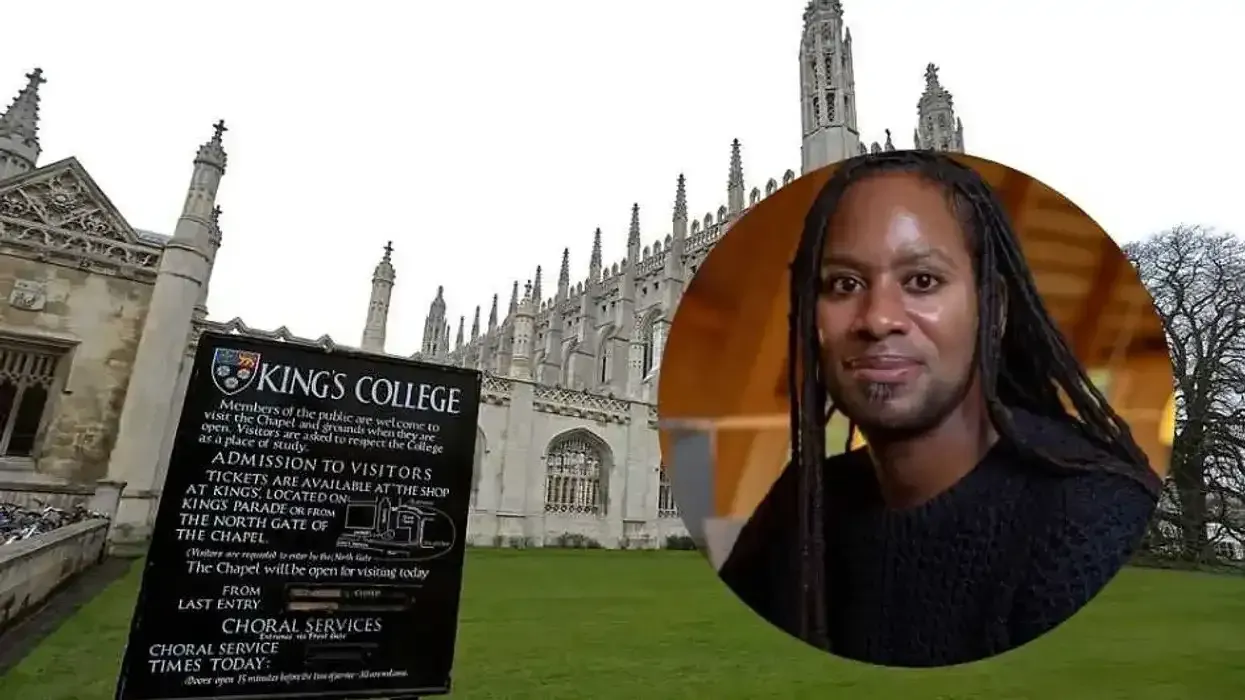
Arday has a memoir coming out this week called “Great and Unfortunate Things.” Simon & Schuster reportedly paid over $1 million for the ghostwritten manuscript. I’m not interested. It probably it belongs alongside James Frey’s “A Million Little Pieces” in the fiction section.
No, the book I want to read will come later and has only one possible title: “I Thought You’d Believe Me.”
I want the confession. I want Arday to tell us he really is a leftist, really does believe the ideology, and nevertheless realized that respectable liberal institutions had made themselves absurdly easy marks.
I want him to tell us he kept pushing and pushing, waiting for somebody to say, “Hold on.”
And for years, nobody did.
If that’s the story, Jason Arday isn’t merely another academic fraud. He’s a world-class trickster.
And somewhere, I hope, my old friend is laughing.
Game recognizes game.
The internet has done an admirable job hobbling the corporate left-wing media’s ability to control the population through a single narrative. But that blessing comes with regrettable costs.
The speed of information and the incentive to push hot takes onto social media mean that when a public figure dies, there is an immediate race to decide which competing narrative will define his legacy.
Was Graham a true convert to MAGA and its values? Unlikely. But politics is not a contest over who believes harder.
When Lindsey Graham died suddenly of heart failure over the weekend, conspiracy theories about foreign assassination plots immediately began to circulate online. Many leftists openly celebrated his death, and the reactionary impulse of conservatives drove others to recast Graham as a stalwart crusader for MAGA.
The truth is more complicated. But in the eternal battle for narrative supremacy, there is little time for reflection, even in response to death.
No one is above criticism. But in a healthy society, some space exists between a public figure’s passing and attacks on his legacy.
That standard now seems quaint, perhaps naive. It is also better for the soul of the nation.
Unfortunately, wishing to live in that kind of society does not make it real. The information war is relentless. Abstaining from the fight only means someone else defines the truth.
The news cycle does not observe a respectable period of mourning. The battle begins the moment the headline drops.
Wild conspiracy theories now seem obligatory whenever a prominent figure dies, and Graham was no exception. The senator toured a Ukrainian weapons factory the day before his death, and several figures speculated that he had really been killed in an attack on that facility or poisoned by the Russians.
Russian philosopher Aleksandr Dugin suggested on social media that Graham had likely been killed by Israel, despite Graham’s long record of advocacy for that country.
This is not to denigrate conspiracy theories in general. One thing we learned after COVID is that such theories can often prove correct. But the narratives around Graham’s death were bizarre.
Graham was a 71-year-old man with a family history of fatal heart conditions who did not take care of himself. His death is sad, but its cause was hardly mysterious.
RELATED: Lindsey Graham’s sister appointed to serve out the rest of his term in the Senate
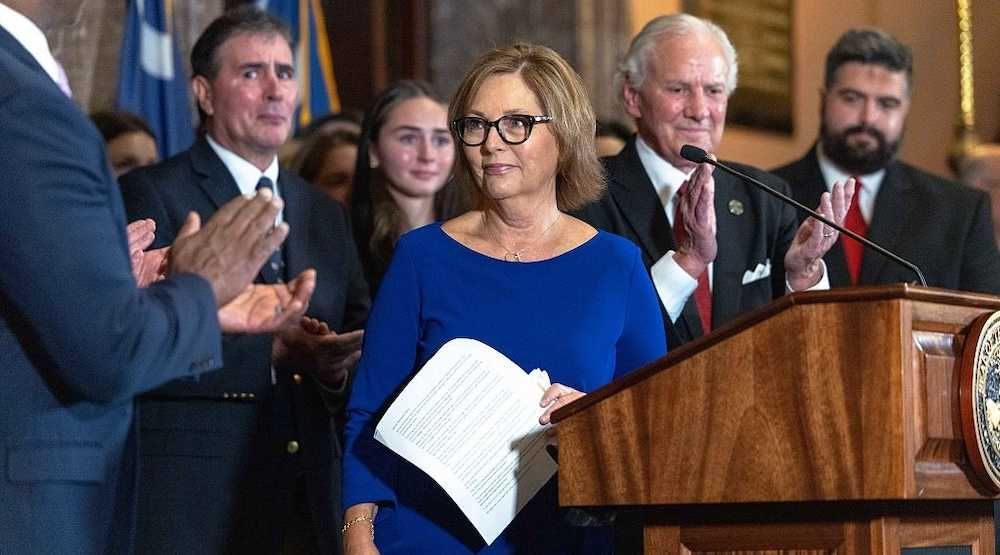
Progressives reacted exactly as expected. There was gloating, celebration, mockery, and even speculation about who should come next.
Graham’s death was nowhere near as visceral or violent as Charlie Kirk’s assassination, but the left’s response carried unnerving echoes. It was a brutal reminder of a lesson conservatives have worked hard not to learn since Kirk’s murder.
Even the average Democrat is emotionally unhinged.
Your progressive neighbor may not be willing to commit violence personally against you over politics. But many are happy to cheer those who do and dance on your grave once you are gone.
The reaction on the right was strange in a different way. Some conservatives rushed to construct a hagiography, transforming Graham into a MAGA saint, a lion who died fighting for the cause.
That impulse may have been an understandable response to the left’s disgusting vitriol. It was not wise.
Graham served in the Senate for 31 years. He supported every disastrous war during his tenure, including the war in Ukraine that Donald Trump ran on ending and the war in Iran now costing the administration dearly.
Graham pushed for the invasions of Iraq and Afghanistan. He backed Barack Obama and Hillary Clinton during military operations in Syria and Libya.
He pushed to send hundreds of billions of dollars to foreign governments while inflation was driving up the cost of living for ordinary Americans. After Graham’s death, Benjamin Netanyahu claimed that when he told the senator Israel should pay for its own defense, Graham insisted that American taxpayers should foot the bill.
On immigration, the core issue of the MAGA coalition, Graham was even worse.
He was part of the Gang of Eight and pushed for amnesty alongside men like Marco Rubio. In 2006, Graham teamed up with John McCain to pursue a similar pathway to citizenship. His attempts to secure amnesty for illegal aliens were so common that he earned the nickname “Grahamnesty.”
Lindsey Graham was, in almost every way imaginable, the essence of the Washington swamp Trump promised to drain.
He was also a savvy political operator.
Graham initially fought Trump tooth and nail. Like many Republicans, he slowly changed his rhetoric. Despite still pushing horrible foreign policy and endless war, the senator became a reliable vote for Trump on many domestic issues. His work advancing the One Big Beautiful Bill Act and the SAVE Act deserves note.
Was Graham a true convert to MAGA and its values? Unlikely. But politics is not a contest over who believes harder.
It would have been unwise to trust Graham. Many Republicans have discovered new respect for Trump to get what they want, only to betray him the moment he stops prioritizing their issues.
RELATED: Conservatives are blowing the easiest political win in America

But Graham delivered votes and support at key moments. That made him politically useful in scenarios that cannot be ignored.
Graham spent most of his career as an institutional neoconservative advancing policies that were disastrous for the country. He eventually corrected course on amnesty and delivered some key votes for the Trump administration. Yet his monomaniacal obsession with war made him one of the central proponents of a foreign policy quagmire threatening to derail the MAGA agenda.
Does his opportunistic support for Trump in the final years of his life make him a true MAGA patriot? No.
Does he deserve the hatred poured on him by the left after his death? Also no.
That is not mercy for a political enemy. It is moral clarity. Refusing to lie about a man’s record does not require joining the mob that cheers his death.
Those are entirely separate moral sins.
In the rush to define the narrative, the complicated nature of Graham’s legacy disappears.
The internet has made immediate judgment mandatory and thoughtful reflection almost impossible. It turns public figures into mascots, villains, saints, and demons before the body is cold.
In the end, the internet makes fictional characters of us all.

 Leftists are trying to weaponize our legal system to bankrupt lawful industries in a last-ditch effort to tear down our capitalist system.
 Democrats might have a messaging problem, but they also have a ground game to render rural America irrelevant in elections.
 For too long, students have been kept in the dark about communism and are now falling for it all over again.
 Leftist donors and insiders control the Kansas Supreme Court. A 'yes' vote on the state constitutional amendment could change that.
 The Left has been discrediting the Founders, and the Founding, for a very long time.
 www.theblaze.com
 thefederalist.com
 www.theblaze.com