Gay adoption: The societal experiment nobody is supposed to question


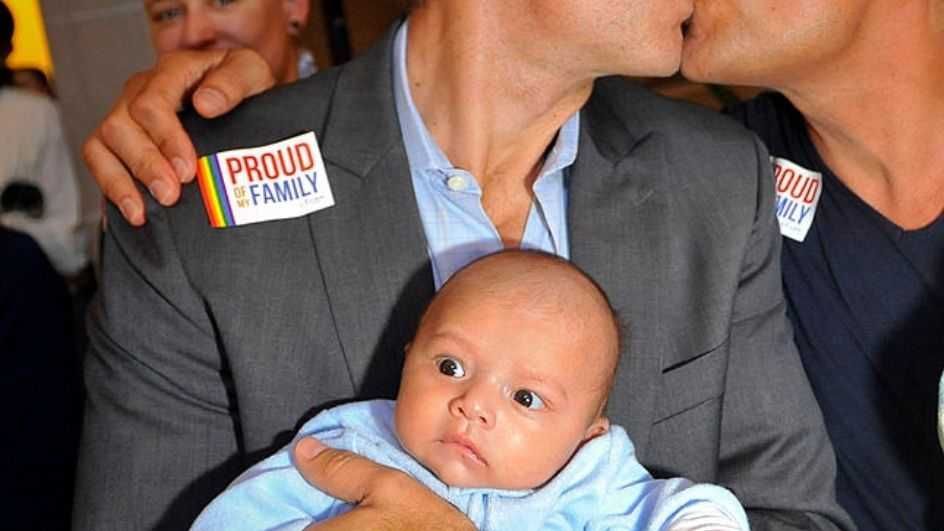
A video recently surfaced online featuring a young American who proudly insisted that same-sex couples make better parents than the boring old bread-and-butter type.

The ferociously fabulous man then casually revealed that he has three lesbian mothers, two gay fathers, and an array of gay siblings.

For thousands of years, human societies operated on the assumption that mothers and fathers were not interchangeable.

Notice how far the argument has traveled. The cultural case for same-sex parenting once rested largely on tolerance: Gay couples could provide loving homes, and their children should not be stigmatized. Increasingly, the claim is something altogether different — that mothers and fathers are interchangeable, perhaps even that dispensing with one sex represents an improvement.

Luxury beliefs

Right around the time the video started circulating, an interactive global map showing where same-sex adoption enjoys full legal approval and where it remains strictly forbidden caught my eye.

The map is fascinating because it presents a hilarious study in regional priorities. Virtually the entire Western world glows a self-righteous green, while moving eastward reveals solid red. Western progressive elites view that field of green as proof positive that we have ascended to the absolute peak of human enlightenment, having successfully dethroned the ancient, oppressive concept of a mother and a father.

But there's a question buried beneath all the celebration that we're increasingly discouraged from asking: Does family structure actually matter to children?

For thousands of years, human societies operated on the assumption that mothers and fathers were not interchangeable. A child ordinarily entered the world through a mother and father and, absent death, abandonment, abuse, or some other misfortune, was raised by them.

Modern Western culture increasingly treats that arrangement as merely one family configuration among many.

According to modern woke gospel, men are the sole source of domestic chaos and toxic aggression. The cultural narrative assures us almost daily that women are inherently more empathetic and nurturing. They are spiritually elevated beings. Taking that logic to its obvious endpoint, a household featuring two mothers ought to function like a conflict-free utopia of artisanal organic snacks and gentle conflict resolution.

The empirical picture, however, is considerably less settled than activists often pretend.

Widespread transformation

What makes this all the more important is that this is no longer a marginal social development. According to the Williams Institute, approximately 5 million American children are being raised by an LGBTQ parent. That figure includes single LGBTQ parents and shouldn't be confused with the much smaller number living with same-sex couples. But it gives some sense of the scale of the transformation.

Within little more than a generation, same-sex marriage went from legally nonexistent to the law of the land. Gay adoption followed. Reproductive technologies now allow children to be deliberately conceived for families in which either a mother or a father will be absent from the beginning.

We have changed not merely laws but one of society's most basic assumptions about the family: that all things being equal, a child should have a mother and a father.

Given the scale and speed of that change, asking what effects it may have on children should hardly be controversial.

RELATED: Florida man allegedly bragged about sexually abusing foster child — cops say he and his husband fostered 23 young boys

Pinellas County Sheriff's Office composite
Regnerus redux

In 2012, University of Texas sociologist Mark Regnerus published findings from the New Family Structures Study, which surveyed nearly 3,000 young adults and reported substantial differences between those who grew up continuously with their married biological parents and respondents whose mother or father had engaged in a same-sex relationship. Among the findings, 23% of respondents in Regnerus' "lesbian mother" category reported having been sexually touched by a parent or other adult, compared with roughly 2% of those raised continuously by their married biological parents.

That finding does not mean the lesbian mother or her partner committed the abuse. Indeed, one of the central controversies surrounding the study was how Regnerus constructed the category in the first place.

Critics argued that Regnerus had defined his categories too broadly. Many respondents classified as having a gay or lesbian parent had spent relatively little time living with that parent's same-sex partner, while many had experienced divorce or repeated changes in family structure. Subsequent re-analyses argued that once those factors were handled differently, many of Regnerus' headline findings lost statistical significance.

For years, that critique was treated as essentially the last word.

Then, in 2025, Cornell sociologists Cristobal Young and Erin Cumberworth subjected the Regnerus data to a much more exhaustive test. In their book "Multiverse Analysis," published by Cambridge University Press, they ran roughly 2.6 million alternative model specifications to determine how much Regnerus' results depended on debatable analytical choices.

They expected the exercise to vindicate his critics. It didn't.

Persistent effects

Young and Cumberworth found that the estimated negative association was often smaller under alternative specifications but remained remarkably persistent. Their conclusion was limited but important: There was room to debate the size of the effect and the quality of the underlying data, but within the NFSS dataset, the negative association could not simply be dismissed as an artifact of Regnerus' preferred statistical choices.

That doesn't establish that same-sex parenting caused the negative outcomes Regnerus identified. But it makes it harder to maintain that the evidence is so settled that questioning whether family structure matters amounts to bigotry.

Other research has produced similar disputes.

Methodological muddle

In 2010, Stanford sociologist Michael Rosenfeld analyzed U.S. census data and concluded that the school progress of children living with same-sex couples could not be statistically distinguished from that of children living with married heterosexual couples.

Two years later, Douglas Allen, Catherine Pakaluk, and Joseph Price re-analyzed the same data. Rosenfeld had restricted his main sample to children biologically related to the household head who had lived at the same address for at least five years. Allen and his colleagues argued that those restrictions removed more than half the available children and made differences harder to detect.

Using the larger sample and controlling for those factors instead, they found that children living in married heterosexual households had 35% higher odds of making normal progress through school than children living with same-sex couples. The difference was statistically significant.

The same census data, in other words, produced different results depending on which families researchers included and how they accounted for biological relatedness and stability.

Biological advantage

D. Paul Sullins encountered a related problem using federal health-survey data. His 2015 analysis of more than 200,000 children, including 512 living with same-sex couples, reported higher rates of serious emotional problems, ADHD, and learning disabilities among children in same-sex-parent households.

When Sullins accounted for whether children were living with their biological parents, however, much of the same-sex-parent disadvantage disappeared.

That raises another question about how these studies are constructed. Two men or two women cannot both be the biological parents of the same child. So when researchers "control" for biological relatedness, they may be removing a confounding variable — or they may be controlling for a difference that is inherent in the family structures being compared.

A 2016 Demography study by Corinne Reczek and three colleagues further illustrates the difficulty. Using federal health data on more than 167,000 children, the researchers found that children living with married same-sex parents were similar to those with married opposite-sex parents on most of the outcomes studied. They did, however, find that children with married same-sex parents were more than twice as likely to be reported as having behavioral problems after demographic and socioeconomic controls.

The study had important limitations. The same-sex sample was small, the behavioral measure relied on parental reporting, and the data could not establish causation. The National Center for Health Statistics also later disclosed classification errors affecting the identification of same-sex married couples during several of the survey years. Sullins subsequently argued that excluding those years materially changed some of the results.

Beyond statistics

None of these studies settles the question. Together, they suggest that the research is much less straightforward than the familiar claim that children do equally well in every family structure.

And family structure matters for reasons that extend beyond statistics. A mother and father offer something that two men or two women, however loving and devoted, cannot: a child's daily relationship with both sexes embodied in the two people from whom that child came.

Recognizing this doesn't require believing that every heterosexual marriage is happy, every biological parent is competent, or every alternative family is dysfunctional. Plenty of biological parents are disastrous. Plenty of adoptive parents perform heroic acts of love by giving children stable homes after circumstances have deprived them of their biological families.

But exceptions don't erase ideals.

The distinction becomes especially important when adoption is involved. Adoption has traditionally existed to find families for children who, through some misfortune, cannot be raised by their biological parents. Increasingly, the debate is framed from the opposite direction: around adults' entitlement to form whatever kind of family they desire.

The interests are not necessarily identical.

The question isn't whether gay people can love children. Nor is it whether children raised in unconventional families can grow into happy and successful adults.

The question is whether mothers and fathers provide children with something distinctive enough that society should continue to regard their union as the ideal environment for raising the next generation.

We have changed our answer to that question with extraordinary speed, and millions of children are now growing up on the other side of that change.

Surely we are still allowed to ask whether we got it right.

America: A nihilistic nursery for kidults of all ages


America is in a schizophrenic mash-up that reverses childhood innocence and adult licentiousness. We treat children as if they were louche, hedonistic adults while we treat grown-ups like they’re still learning primary colors on wooden blocks.

A visit to a restaurant in a tourist town in Vermont crystallized it for me. Stay with me while I set this up, then we’ll take a visit to an eatery I call There Will Be Pictures in Bright, Primary Colors!

I asked a kid of about 14 for a knife. He looked at me blankly. So I went native: 'A sticky-downy sharpie?'

This may be a new thought for some people, this reversal of childhood and adulthood. But it’s easy to see once you have your eyes pointed to it.

'Drag kids'

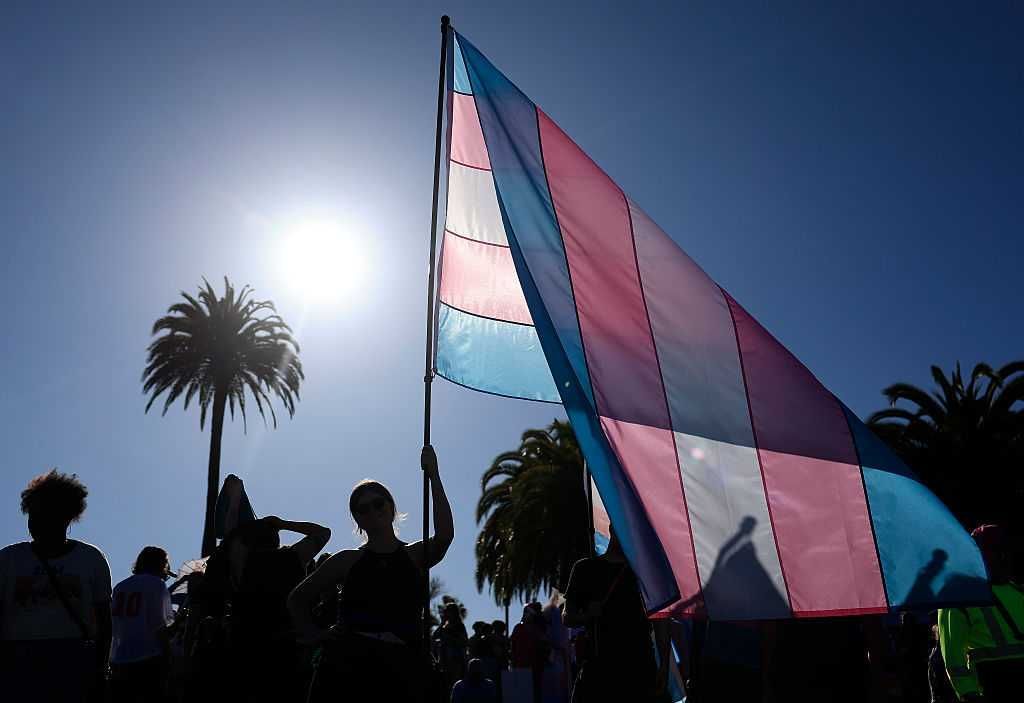
America is a country where it’s legal and socially praised to chemically and sexually mutilate abused children. We call these abused children “transgender kids.”

There’s a reason President Trump had to announce that public schools risk losing federal funding if they participate in this depraved farce. It has indeed become normalized to cry happy tears while we watch parents (nearly always mothers) destroy their children's bodies and minds with hormones, surgeries, and the lie that they can become the opposite sex.

This brutality started with so-called “drag kids”: minor boys dressed up like female prostitutes and paraded in gay bars and before cameras shaking their “moneymakers.” Remember “Desmond Is Amazing,” the “drag kid” featured gyrating and affecting a transvestite hooker attitude? Adults started filming his abuse and putting it on social media in 2015. Within a few years, parents were going beyond dresses and all the way to chemical castration, cross-sex hormones, and actual surgical castration.

Hufflepuff hell

Let’s look at the other side, the childification of adulthood. I started noticing it in the 2010s when fully grown adults were putting bumper stickers on their cars telling everyone what Harry Potter “house” they belonged to. Since when did 30-year-olds cling to a series of children’s books about witches and wizards to “identify” themselves to their grown peers?

We used to look forward to adulthood. But something changed with the Millennial generation: Teenagers were begging to remain children for the first time in history. (Boomers and Gen Xers: This is our fault. We “raised” them.) Sixteen-year-olds once longed for the independence of a driver's license. Today? Why learn to drive when Uber will cart you around like an entitled toddler (car seat not included)?

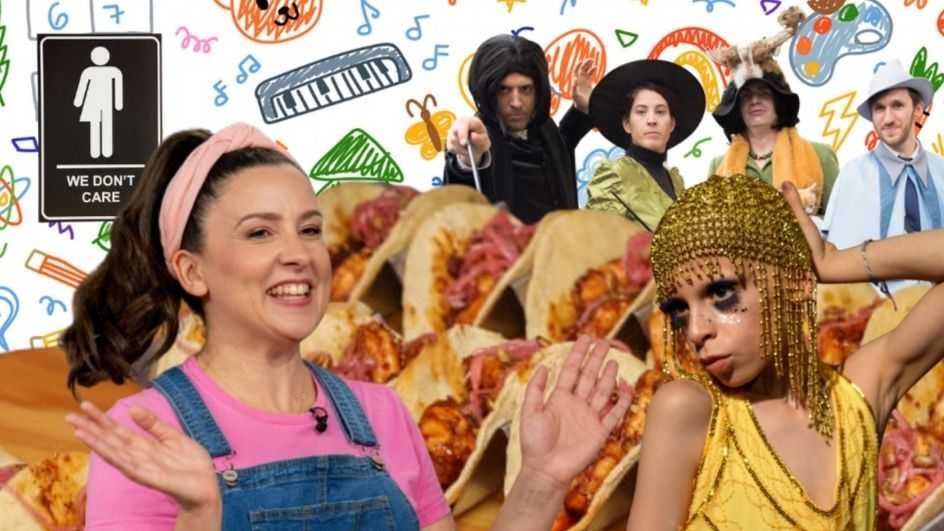
These two inversions — the adultification of childhood and the childification of adulthood — collide in a supernova at a restaurant I recently visited, a taco place in one of those Vermont tourist towns tucked between two peaks of the Green Mountains. Let’s call it Ms. Rachel’s Taqueria and Play-Skool.

'Saccharine babble'

Why “Ms. Rachel’s”? Because the tone of the place is like that awful YouTube woman who sings saccharine babble to babies on YouTube and gets 20 million mothers watching it.

“Ms. Rachel’s” has a lot going for it. The food was great, and the staff were all friendly, which is a rarity in New England these days.

But it’s got a lot going against it too, and that starts with the staff’s stage names. Our waiter was a handsome Irish guy of about 19 years. He announced what I assume is his “Mexican name” to the table behind us.

“Hi there, I’m going to be taking care of you today,” he said to the party next to us. “My name is Hooley-Anne.”

Hooley-Anne’s name was obviously “Julian,” but I suppose that wouldn’t have been “authentic” enough. Hooley-Anne did a great job, but it was impossible to keep a straight face talking to him after this. OK, I confess: I had a giggle attack that had my hands over my face while I cried silently with shaking shoulders.

When the food got there, it arrived on an aluminum baking sheet without utensils.

I asked a kid of about 14 for a knife. He looked at me blankly. So I went native: “A sticky-downy sharpie?”

He brought me a butter knife.

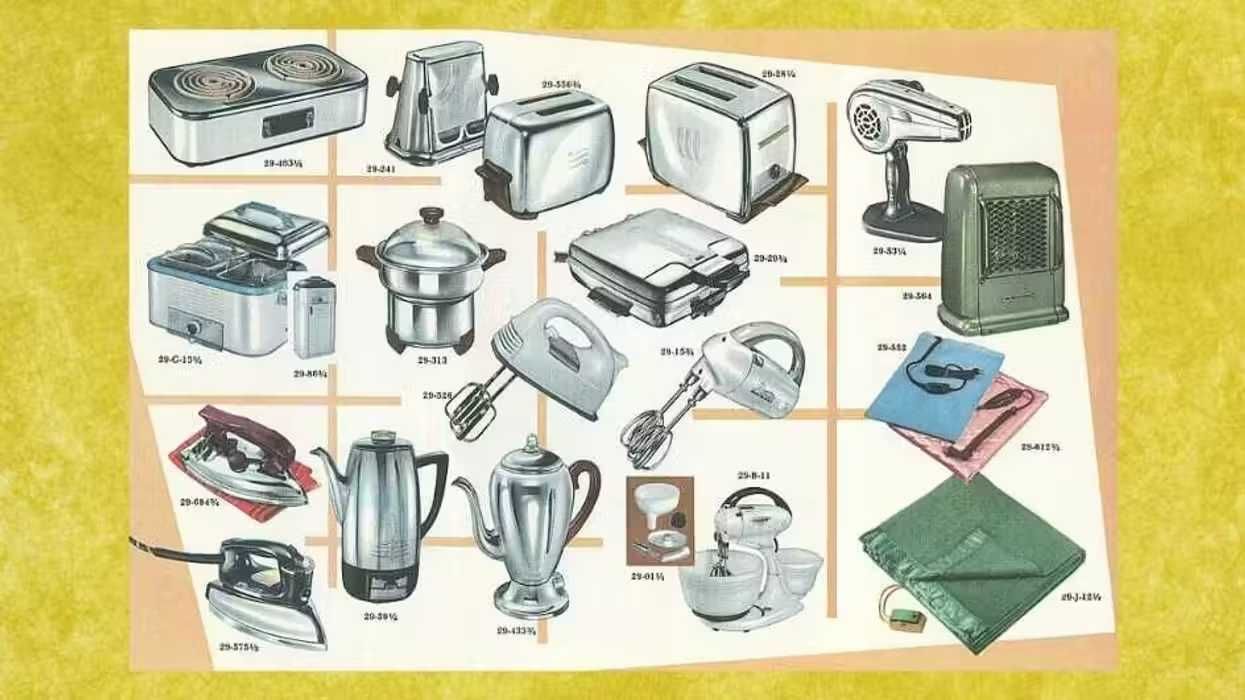
RELATED: Want yesterday’s quality today? Stop 'upgrading' your appliances

Found Image Holdings Inc./smartstock/Getty Images
Tummy trouble

The problems continued with the menus.

“Greens and other fun colors.” “Bevs.”

It got worse when you flipped it over. Apparently adult diners need to be guided through concepts like “appetizers” and “tacos” and “burritos.”

Get it? “Horizontal eats”? In case you didn’t understand special-needs-ese, that means “tacos.” But what about the vertical “eats”?

Tee-hee-giggle-coo! Isn’t it just adorable?

No, it’s insulting. If you’re at least 45 years old, cast your mind back 20 years. I don’t think you remember being regularly spoken to (or written to) in the tone of voice we associate with a "Romper Room" hostess.

Now it’s everywhere. You see it in the ugly faux-cubist “art style” that dominates pamphlets and announcements called “Corporate Memphis.” It’s all over chain restaurant menus that call sandwiches “sammies” (giggle-coo!) or “hand-helds.”

How long until it’s just “eatables”?

Potty humor

The other side of this coin showed up when I went to the bathroom at "Ms. Rachel’s." Remember, these are the same bathrooms that adults and children use.

There are multiple problems.

1. The restaurant is showing off its woke credentials by conspicuously bragging that it doesn't care what “gender” you are — you can even be a Sasquatch or an alien (giggle-coo)!

2. “Cute” vulgarity — a cartoon depiction of feces shaped like soft-serve ice cream in a kiddy drawing style — tells children there’s no such thing as respectable public behavior. Potty humor is just normal now, even in a place where you eat.

Yes, I am saying that I think this kind of display harms children. This is the cultural, visual, and conceptual background that is forming children’s character. The adults have abandoned propriety, and they’re shoving it in children’s faces. This may be less extreme than the broad daylight displays of sexual depravity that people call “Pride parades” for “families,” but it’s only a matter of degree.

But what do I know? I’m just a stupid old Boomer, even though I’m only 52 (everyone goes from hip-mod-with-it-youth to “stupid Boomer” without stopping at Gen X these days). Why can’t I just let people enjoy things?

Hope I haven’t yucked your yum.

My eating disorder got questions. My gender identity got answers.


As the buzz of summer winds down, back-to-school season offers families a fresh start. Kids return to routines and extracurriculars. Moms like me return to schedules, snacks, playdates, forms, and the peculiar relief of getting everyone back on a calendar.

Before we get buried in backpacks and lunch boxes, though, parents need to brace for something harder: our children's mental health.

Our children need adults willing to talk with them, challenge them when necessary, and remain present when the conversation gets uncomfortable.

A recent Wall Street Journal investigation described Oregon as an epicenter of pediatric gender medicine, with diagnoses of gender dysphoria and use of cross-sex hormones among minors rising sharply in recent years. Oregon has only about 1% of the nation’s teenagers, yet its clinics reportedly accounted for roughly 7% of gender-related mastectomies performed on teenage girls from 2019 through 2023.

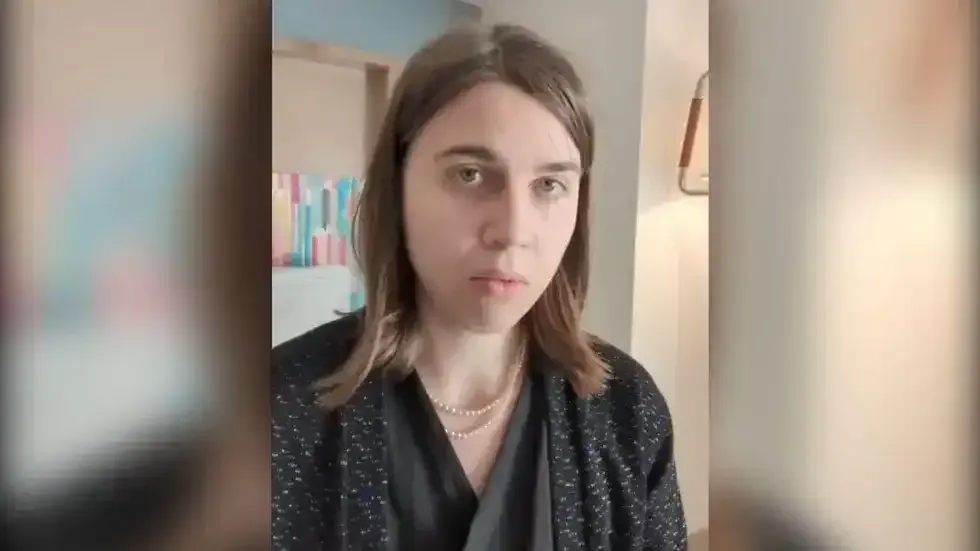
Those numbers are shocking. But behind every one is a child. I was one of those children not very long ago.

When I was 16, I found Tumblr communities full of girls who sounded just like me. They were uncomfortable in their bodies. They struggled with anxiety, depression, isolation, and the feeling that they did not fit. Their stories felt eerily familiar. We fed off one another's pain until many of us came to believe that being transgender explained it — and that changing our bodies might cure our mental distress.

I was already battling anorexia. I hated myself and hated the body I saw in the mirror. That is why the contrast in how adults treated my two forms of distress still haunts me.

When I told doctors and therapists that I was starving myself because I saw myself as overweight, they did not affirm that perception. They treated it as something to question and work through. But when I said my breasts made me uncomfortable, my gender distress was not challenged in the same way. I was told that transition could be the answer. No questions, no pushback.

Looking back, I was not born in the wrong body. I was a hurting teenager looking for belonging, certainty, and an explanation for my pain.

The reality is that adolescence itself is full of unstable explanations. Teenagers are awkward, lonely, impulsive, anxious, obsessive, and desperate to belong. They compare themselves with peers, test identities, reject identities, and search for language that makes their discomfort intelligible. Sometimes the first explanation that feels coherent is not the right one.

RELATED: Detransitioner sues Oregon gender clinics for ‘abhorrent misdiagnosis’ that ‘mutilated’ her body

Image source: YouTube video screenshot

Across the country — consider states such as New Mexico, where schools have adopted policies accommodating students' asserted gender identities — vulnerable children can encounter adults who treat social transition as an appropriate response before parents even understand what is happening.

That should terrify parents, especially when gender distress appears alongside trauma, autism, depression, eating disorders, or a simple discomfort with narrow stereotypes about what girls and boys are supposed to be. Those possibilities should be explored, not hurried past.

Previous generations of girls were told, directly and indirectly, that happiness required becoming impossibly thin. Today, some distressed girls encounter a different promise: Maybe the body itself is the problem. The common thread is not merely social media or “woke” politics. It is vulnerability.

That’s why therapy should help a young person untangle difficult emotions, not merely supply a label for them. “Why do you feel this way?” and “What name and pronouns would you like me to use?” are not interchangeable questions. One opens an inquiry. The other can foreclose it.

As another school year begins, parents should remember that adolescence has always been messy. Teenagers feel awkward and lonely. They try things, fail at things, discover new passions, abandon old ones, experiment with style and music, and slowly begin to understand who they are. That process can continue well beyond high school.

RELATED: The right has a blind spot about young women

Blaze Media Illustration

Our children do not need adults who immediately affirm every explanation they discover online. They need adults willing to talk with them, challenge them when necessary, and remain present when the conversation gets uncomfortable.

Use the dinner table. Talk about your own failures and insecurities. Tell them what helped and what you wish you had understood sooner. Get them outside. A scraped knee from the monkey bars is often healthier than another four hours alone with an algorithm.

Most of all, do not surrender the hard conversations to strangers, schools, influencers, or online communities. Do not let someone else take the reins of your child's life while you are still trying to figure out what happened.

The best back-to-school supply we can give our kids is not another lesson in identity. It is the reassurance that they do not have to change their bodies, their appearance, or every uncomfortable feeling in order to belong.

The Balls Are In The WNBA’s Court

By draft day 2027, we’ll know whether the WNBA takes an L or finally remembers what that W is supposed to stand for.

‘No Child Has Two Moms’ Is Controversial Only In An Anti-Child Society

The furious reaction to two simple sentences reveals just how much effort has gone into teaching Americans to reject the most basic fact of human existence: every child comes from one mother and one father.

Massachusetts Governor Silent On Whether She’ll Kill Law That Protects Babies After 24 Weeks

The law will remove a state law that barred abortion after 24 weeks and make the killing of unborn babies legal up to the very moment of birth.

Woke WNBA Attacks Sophie Cunningham And Her Fans For Supporting Women’s Rights

As Cunningham refuses to back down, the WNBA has revealed massive institutional backing for queer ideology.

People Who Thrust Men Into Girls’ Showers Should Never Babysit Your Kids

The more the Marxist mayor fiddles with New York City parks and rec, the less parents should trust him.

Congress EXPOSES Smithsonian’s taxpayer-funded woke rewrite of American history


Under the leadership of Anthea Hartig, the Smithsonian’s National Museum of American History is using taxpayer dollars to rewrite history in woke terms — and during a recent hearing, Rep. Tim Burchett (R-Tenn.) called the museum out.

“The many examples of politicization of the museum are well-documented in the comprehensive report the White House Domestic Policy Council recently issued on July 4, the nation’s 250th anniversary,” Burchett began.

“The report makes clear that the museum’s woke exhibits and materials reflect a broader vision held by the museum leadership, particularly its director, Dr. Anthea Hartig,” he continued, noting that she “proudly takes credit for changing the museum’s mission statement.”


The mission statement “no longer uses the term ‘American history’ or refers to the infinite richness of that history.”

Instead, Burchett explained, it is “now guided by an interpretive plan that ensures all topics focus on the core issues of our time.”

“Do we want to guess what they are? Race and identity, gender and sexuality, environmental change, immigration and migrations, and economic inequality top the list. Also, a Center for Restorative Justice at the museum created under Dr. Hartig’s watch hosted a decolonization working group to investigate historical harms that result in ongoing systematic oppression,” he continued.

“To remove any doubt about her intentions, Dr. Hartig in her own words states that she views history as a prime tool of social justice,” he added, before playing a clip of Hartig giving a speech.

“Before we begin, let us pause to acknowledge with gratitude the native peoples on whose land we gather today. These are the ancestral homelands of the Piscataway people, joined by the Nacotchtank and the Pamunkey tribes and, of course, their descendants,” she said.

Hartig went on to give respect and gratitude “to all of them for the opportunity to work and to live in their territories.”

“It’s not their territories anymore,” BlazeTV host Pat Gray says on “Pat Gray Unleashed.”

“The peoples don’t own this land. In fact, their own ideology was that nobody can own land, right? So, it’s not theirs,” he adds.

Want more from Pat Gray?

To enjoy more of Pat's biting analysis and signature wit as he restores common sense to a senseless world, subscribe to BlazeTV — the largest multi-platform network of voices who love America, defend the Constitution, and live the American dream.