The Supreme Court finally confirmed what I knew all along
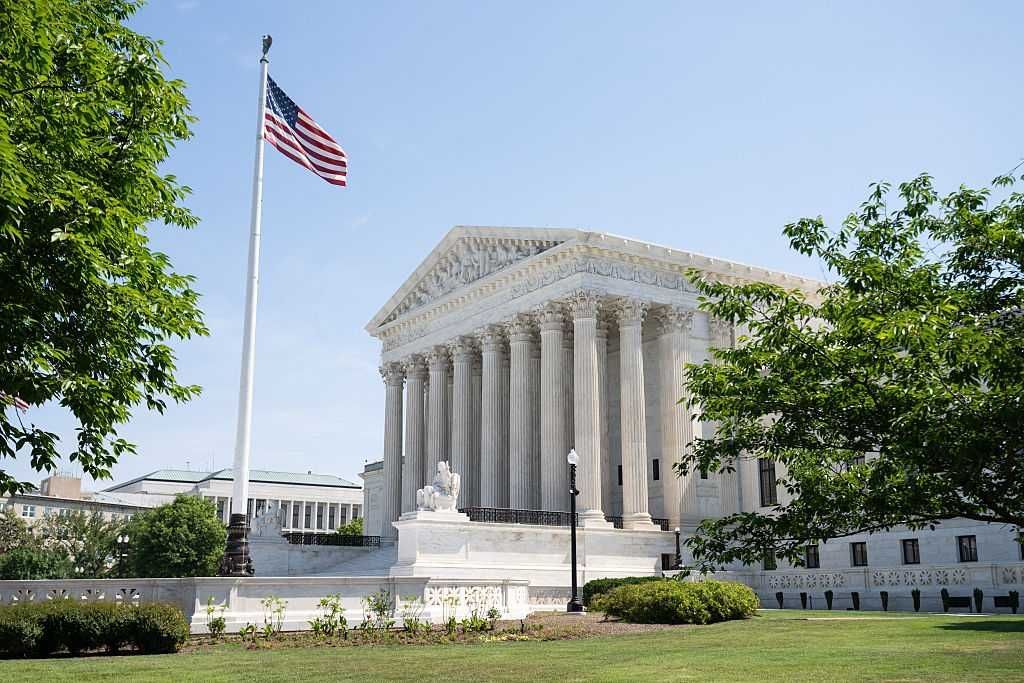


Nobody asked us. Not me, not my teammates, not the 18-year-olds who had just arrived at the University of Pennsylvania and found themselves sharing a locker room with Lia Thomas.

Nobody held a vote, nobody sent an email, nobody knocked on the door and said, "Hey, is this OK with you?" They simply instructed us that a man would be joining the women’s swim team and waited for us to get used to it. We never did.

Somewhere along the way, it became the job of a bunch of college kids to fix something the adults in the room had broken.

Plenty of lawyers and pundits will spend the next several weeks dissecting the Supreme Court's 6-3 ruling in West Virginia v. B.P.J. They will argue about precedent and jurisdiction, but here is what most of them are missing: They were not in that locker room. I was.

Eighteen times a week for an entire season, I changed and showered alongside a male athlete. Eighteen times a week, my teammates and I were expected to act like this was normal.

Voicing concerns was dubbed hateful, and the policy that created this situation in the first place was not. We had earned our spots on the team, but not one person in a position of authority at Penn, the NCAA, or USA Swimming ever pulled us aside and asked how we were handling the situation.

The administration and governing bodies were not interested. The message was quiet but very clear: Your discomfort is not the problem we are trying to solve.

When we tried to raise our concerns, the athletic department told us Thomas’ place on the team was nonnegotiable. Staff members offered us psychological services in an attempt to re-educate us into being comfortable undressing in front of a man. Their solution was not to protect us but to “fix” us.

Somewhere along the way, it became the job of a bunch of college kids to fix something the adults in the room had broken.

That is what I want people to understand when they hear about this ruling: It is not abstract to me. It is not a hypothetical or a talking point. I lived inside the policy the court just ruled states have the right to prohibit.

I can tell you from experience that the "compassionate" framing the other side always reaches for has never once held up to reality.

RELATED: SCOTUS sides with common sense after boys try to play sports with girls
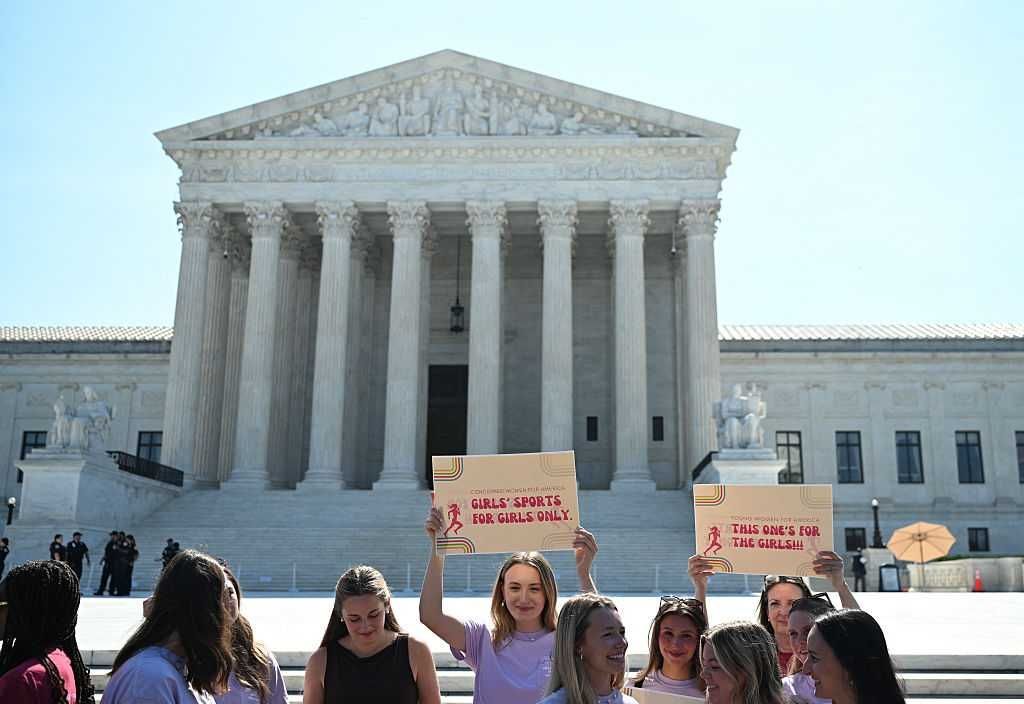
Alex WROBLEWSKI/AFP/Getty Images

Compassion for whom? Not for the female athletes who trained their entire lives and finished one place lower than they should have. Not for the teenager in California who lost a state track title she had earned. Not for my teammates and me who were expected to smile and say nothing while the people making decisions were only concerned about the feelings of one male athlete.

This ruling matters, but it does not automatically fix the issue of the governing bodies and professional organizations that spent the last several years dismantling women's protections one policy at a time.

The NCAA still allows athletes to compete on an amended birth certificate in some cases, a solution you’d come up with if you were never really trying to solve the problem and never had to share a locker room with a fully grown man.

And worse still, 23 states have no law protecting girls at all.

The Protection of Women and Girls in Sports Act has been sitting on Capitol Hill for years. Every member of Congress who let it die in committee now has a Supreme Court majority telling them they had the authority to act and chose not to. It is time to finish the job.

I have been waiting for that moment since I was 19.

The court got it right. I just wish it had not taken this long for the people in charge to catch up to what I knew firsthand in my locker room.

Female Swimmer Beaten By Male Faces Lifetime Competition Ban For Talking About It

'Coming in second to a biological male at a national championship is not fair. That’s not hate. That’s my new reality.'

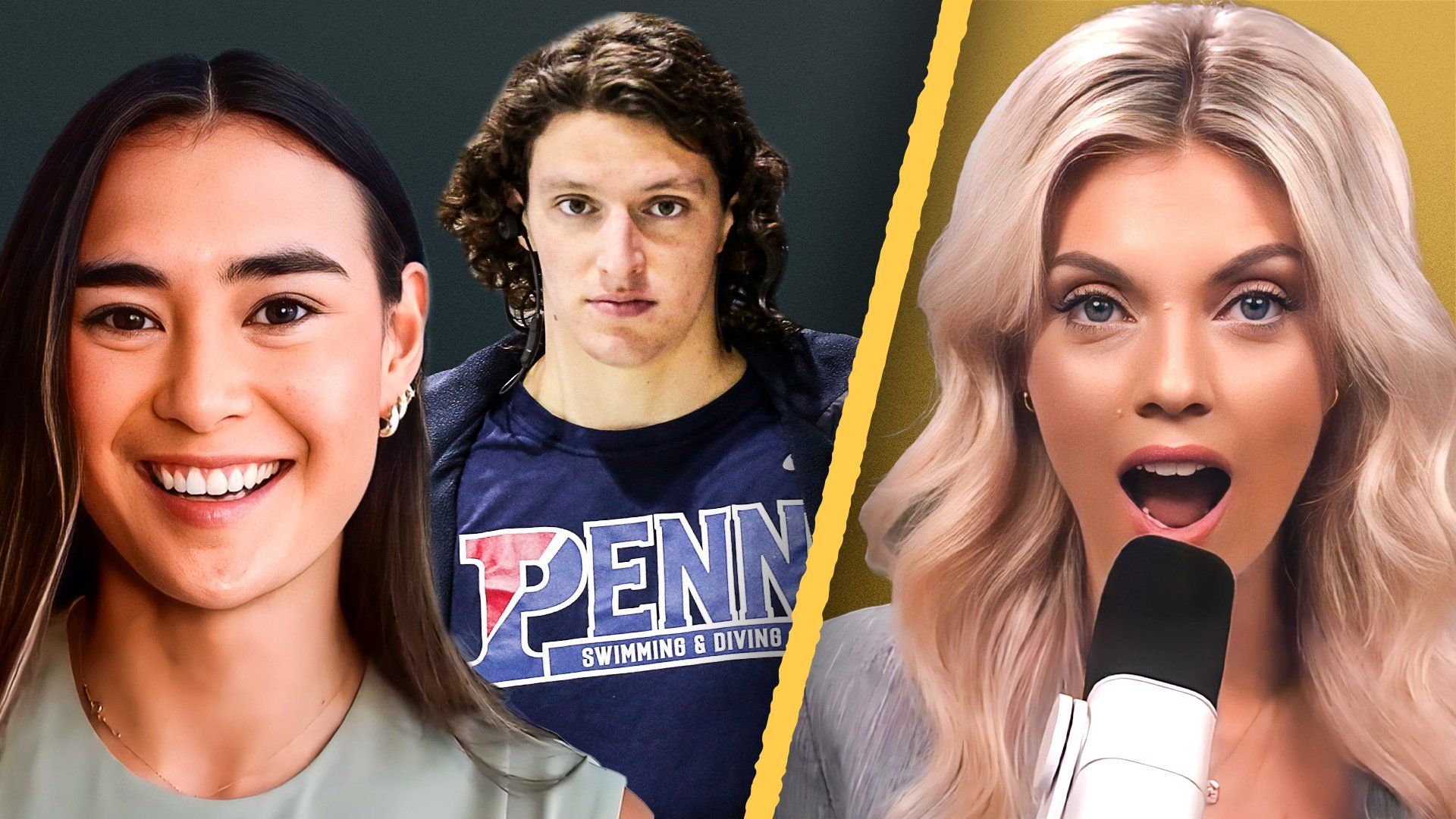
Trump VICTORY: University kicks men out of women's sports


In a massive win for the Trump administration — as well as women's rights — the University of Pennsylvania has modified a trio of school records set by transgender swimmer Lia Thomas as part of a resolution of a federal civil rights case.

Even better, the university will announce that it “will not allow males to compete in female athletic programs” and must adopt “biology-based” definitions of male and female.

UPenn will also send a personalized letter of apology to each impacted swimmer, like Riley Gaines.

“There’s going to be a lot of people that are going to be eating their words on that, which is absolutely fantastic,” BlazeTV contributor Matthew Marsden tells BlazeTV contributor Eric July and BlazeTV host Sara Gonzales on “Sara Gonzales Unfiltered.”


“But, I’ve got to say this, like where are we that we are looking at this as a win, that now we’re saying that a man cannot swim in women’s races? I mean, it is, don’t get me wrong. I’m loving it. I’m loving the fact that Trump has done it,” he continues.

“I mean, some of the conversations that I’ve been having over the last four years, I’m like, ‘Wow, I wouldn’t even have thought we would have had those conversations ever.’ Like even the whole transitioning of children,” July responds, adding, “but for some reason, there’s doctors that are out there still operating, by the way, and performing these surgeries on minors.”

“That is where the world has gone. It is screwed up. Nothing makes sense,” he continues. “It’s more like a course correction.”

Want more from Sara Gonzales?

To enjoy more of Sara's no-holds-barred take to news and culture, subscribe to BlazeTV — the largest multi-platform network of voices who love America, defend the Constitution, and live the American dream.

Lia Thomas’ ex-teammate spills unheard details after UPenn apology and policy flip


On July 1, the University of Pennsylvania was forced to apologize and retract awards from transgender swimmer Lia (Will) Thomas after a federal investigation found the school violated Title IX by allowing him to compete on the women's team. Awards and titles were restored to their proper female competitors approximately three years after Thomas stole them. On top of that, UPenn banned transgender athletes from competing in women’s sports altogether.

Rest assured, “UPenn is not sincere in their apologies,” says Liz Wheeler, BlazeTV host of “The Liz Wheeler Show.” “They're just trying not to have their federal dollars taken away from them by President Trump.”

To get the insider scoop on what it was like to train with and compete against Thomas, Liz invites former UPenn swimmer Paula Scanlan to the show.

Paula recalls the first time she saw Will Thomas, who was a swimmer on UPenn’s men’s swim team before he decided he was a girl. She was a sophomore and only 19 years old when one day, a meeting was called and Thomas was brought before the team.

“He just looks at us and goes, ‘Hey guys, just wanted to let you know I'm transgender; I'll be joining your team next season. Please refer to me now with she/her pronouns, and I'll let you guys know soon what I'm going to rename myself to, but for now, you can keep calling me Will,”’ she says. “I actually thought this was a prank. … I thought [my coach] was just going to say, ‘Gotcha!”’

She quickly found out that it wasn’t a prank when anyone who did not refer to Thomas using female pronouns was labeled “hateful and transphobic.” Many of the female swimmers, however, welcomed Thomas with open arms. “I saw my teammates clapping. They were like, ‘We're so proud of you. We're so excited for you being your authentic self. Thank you for sharing this with us,”’ Paula recalls.

Confused, she looked up the NCAA handbook and sure enough found the “transgender inclusion handbook,” which states that “if a man wants to join a women's swim team, he just has to suppress his testosterone for one year [and] he’s good to go in any women's sport."

The season kicked off, and Paula and her teammates were forced not only to practice with and compete with Thomas, they were also forced to share a locker room with him. “We were dressing in the locker room with him 18 times per week,” she says, noting that swimming is not like other sports in that being naked to change in and out of swimsuits is a requirement.

“That aspect was really, really hard,” she says.

Some teammates raised concerns about sharing a locker room with Thomas, but these complaints were always filed “privately” to avoid being seen as bigoted. Publicly, most swimmers, even the ones who secretly begged coaches not to room them with Thomas at travel meets, cheered that UPenn was “progressing transgender rights.”

Paula, however, was “open” about her opposition to Thomas competing on the women’s team. She even conducted some “anonymous interviews” with media outlets to get the word out about the injustice the UPenn women’s team was experiencing.

But when word got out on the team that she was the one behind these secret interviews, Paula was ambushed by her progressive teammates. One of them sent her the following text message:

— (@)

“Now I think [the message] is funny,” says Paula, but “in the moment, I felt really alone and isolated in dealing with this.”

In the days following UPenn’s apology and restoration of awards to the proper winners, Paula hasn’t heard from many of her teammates. “Most of them agree with me. They just don't really feel comfortable saying that or sharing that,” which “shows why this was something that happened because if no one was willing to speak up, even though we all agreed, that's how the crazies were able to put in these nasty, wild policies.”

To hear more details of Paula’s story and the role she played in advocating for women’s rights, watch the video above.

Want more from Liz Wheeler?

To enjoy more of Liz’s based commentary, subscribe to BlazeTV — the largest multi-platform network of voices who love America, defend the Constitution, and live the American dream.

After UPenn, These Nine Schools Should Apologize For Trans Policies Or Lose Funding

UPenn came to an agreement with the Depart. of Education not because it was the right thing to do but because it could have lost funding.
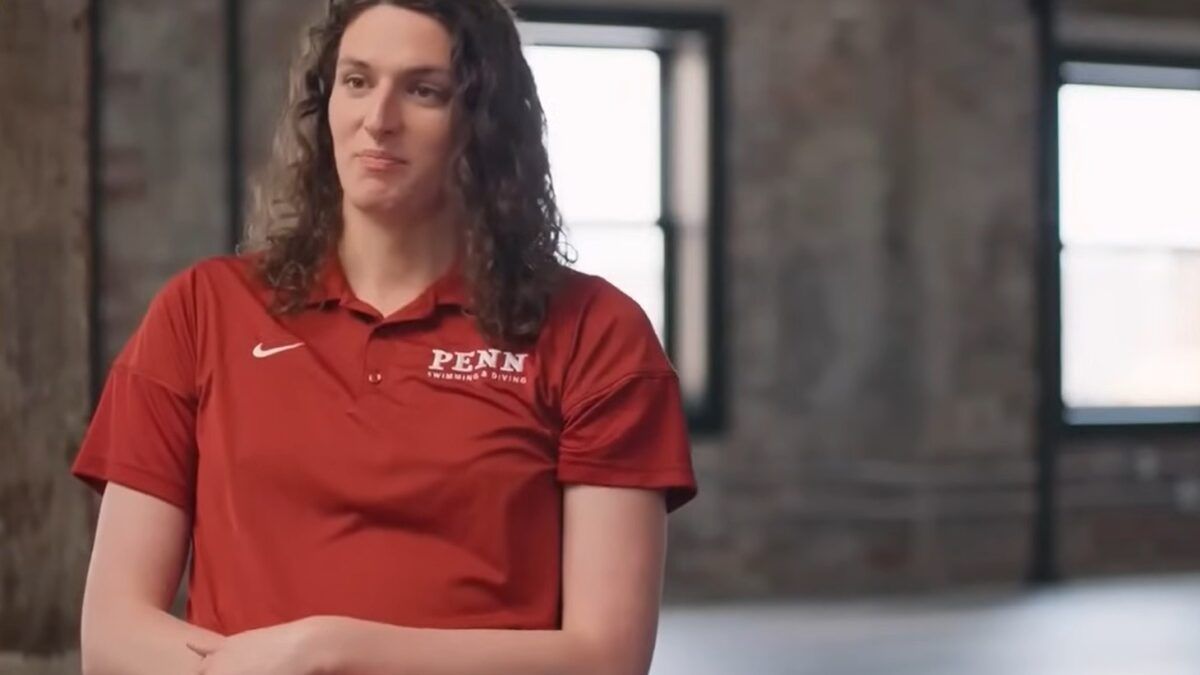
UPenn To Strip Male Swimmer ‘Lia’ Thomas Of Stolen Women’s Championship, Apologize For Civil Rights Violation

The agreement does not just require UPenn to recognize rightful female winners, but also directs the university to acknowledge that 'male' and 'female' are biological realities and change its definitions to cohere with that obvious understanding.
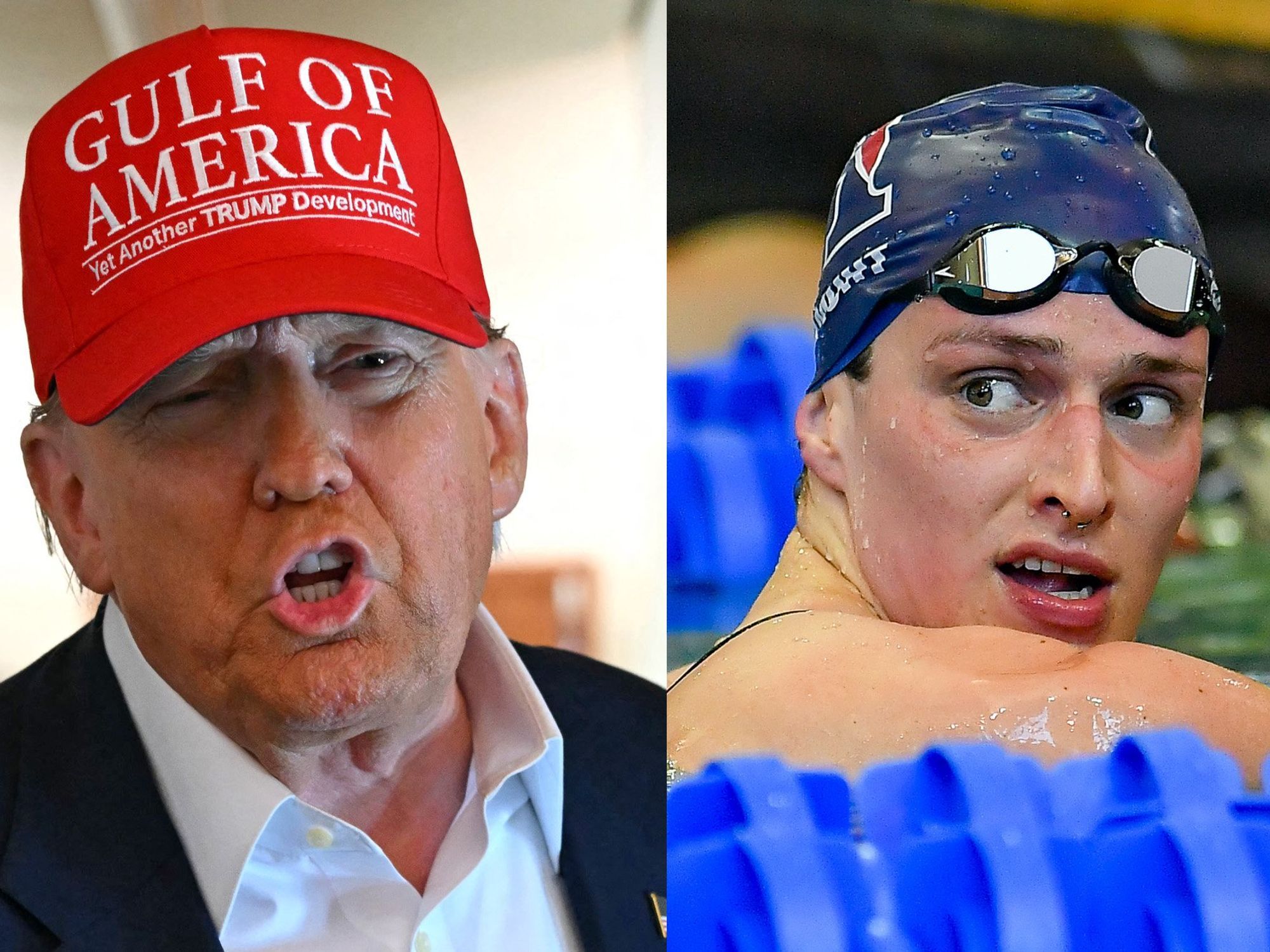
UPenn caves to Trump's demands to strip transgender swimmer of titles and other concessions


The University of Pennsylvania has agreed to a slew of concessions to the Trump administration in relation to transgender athletes in the latest victory of the culture war.

President Donald Trump has made it a focus of his second term to oppose the movement equating transgender athletes to all other athletes, and the university caved to the pressure Tuesday.

'Today is a great victory for women and girls not only at the University of Pennsylvania, but all across our nation.'

The Department of Education announced that it had reached an agreement with the university that included stripping swimming titles from Lia (William) Thomas, a famous transgender athlete.

The university also agreed to ban biologically male athletes from female competitions, to restore all titles that female swimmers lost to Thomas, and to send a personalized apology letter to all swimmers.

"Today is a great victory for women and girls not only at the University of Pennsylvania, but all across our nation," Education Secretary Linda McMahon said. “The Department commends UPenn for rectifying its past harms against women and girls, and we will continue to fight relentlessly to restore Title IX’s proper application and enforce it to the fullest extent of the law."

RELATED: NCAA swimmers say they were told they may have 'psychological' problems if they had issues with Lia Thomas

Thomas won the national college title in 2022 in the 500-yard freestyle swimming event. The former swimmer said in April that he continued to support transgender athletes choosing to compete against the gender they chose.

"It has to be the athletes deciding for themselves where they feel most affirmed and most comfortable," he said. "Having routes that are safe and nondiscriminatory, that allow them access to that."

"Our commitment to ensuring a respectful and welcoming environment for all of our students is unwavering," reads a statement from university president J. Larry Jameson.

"At the same time, we must comply with federal requirements, including executive orders and NCAA eligibility rules, so our teams and student-athletes may engage in competitive intercollegiate sports," he added.

Like Blaze News? Bypass the censors, sign up for our newsletters, and get stories like this direct to your inbox. Sign up here!

In Attempt To Insult Top Women’s Sports Defender, Simone Biles Confirms Difference In The Sexes

[rebelmouse-proxy-image https://thefederalist.com/wp-content/uploads/2025/06/Screenshot-2025-06-07-at-10.53.06 PM-e1749354850639-1200x675.png crop_info="%7B%22image%22%3A%20%22https%3A//thefederalist.com/wp-content/uploads/2025/06/Screenshot-2025-06-07-at-10.53.06%5Cu202fPM-e1749354850639-1200x675.png%22%7D" expand=1]Biles’ public ‘female-only sport for me but not for thee’ approach to the issue is not only hypocritical, but incredibly unpopular.