The Consent Decree Between Paramount And California Is Insane
 Who decides how much product a corporation should produce? California's top prosecutor.
A new bill before Congress claims it will curb lawsuit abuse. It won’t. In reality, it will limit ordinary Americans’ access to civil courts.
The Protect Third Party Litigation Funding from Abuse Act, sponsored by Rep. Darrell Issa (R-Calif.), would force plaintiffs in “any civil action” to disclose “the identity of any person (other than counsel of record) that has a legal right to receive any payment or thing of value” from the case.
Third-party funding is not clogging courts. It expands access to justice.
Plaintiffs would need to provide that information to defendants and the court. Anyone with a functioning brain can see what will happen next: The names leak, activists and corporate PR shops pick targets, and the people financing the lawsuit get punished for it.
If that sounds like a blackmail scheme, it is. And it would be perfectly legal.
Third-party litigation funding works like this: An individual, company, or organization advances money to a plaintiff or law firm to cover the costs of a lawsuit. In exchange, the funder receives a share of any judgment or settlement. If the plaintiff loses, the funder gets nothing.
The arrangement exists for a reason. Lawsuits can be expensive. Complex cases require investigators, expert witnesses, depositions, document review, and months or years of legal work. Deep-pocketed defendants know they can bury a plaintiff under delays, discovery fights, and endless motions while the meter runs at hundreds (sometimes thousands) of dollars an hour.
Litigation funding helps level that field. It gives plaintiffs a fighting chance against defendants who can afford to grind them down.
Issa calls this “abuse” because hedge funds and speculators sometimes fund cases in hopes of a return. “We believe that if a third-party investor is financing a lawsuit in federal court, it should be disclosed rather than hidden from the world,” Issa said when he announced the bill.
That sounds reasonable only if you ignore what trials are for.
A civil trial asks three questions: Did the defendant do what the plaintiff alleges? Did the defendant’s actions cause harm? If so, what were the damages (if any)? The identity of a funder does not help a jury answer any of them. If anything, it distracts from the merits and invites a side show: the defendant arguing the plaintiff is a puppet and the case is illegitimate because someone with money helped pay the bills. That argument deserves no special protection.
What counts is what the defendant did or didn’t do and whether it hurt the plaintiff. Who finances the plaintiff’s lawyers doesn’t change the facts of the case.
RELATED: A one-way national divorce: Anarchy for them, coercion for us
A successful plaintiff also has the right to spend an award as he or she chooses, including paying debts and obligations incurred to bring the case. Issa’s bill would chill that option by scaring off funders through forced disclosure. The bill doesn’t touch defendants, who can hire every white-shoe law firm on the planet. It targets the side that usually needs help.
Issa’s bill also pretends it’s solving a crisis that doesn’t exist. The number of lawsuits filed each year in the United States, at both state and federal levels, has fallen by roughly one-third since 2012, according to Consumer Shield. Meanwhile fewer than 1% of state civil cases go to trial, and fewer than 2% of federal civil cases do. Most settle or get dismissed. Third-party funding is not clogging courts. It expands access to justice.
The bill also reaches far beyond any plausible federal interest. Federal cases account for only about 1.4% of civil litigation nationwide. States already have authority to regulate litigation funding — and some have. As of July 2025, seven states — Indiana, Kansas, Louisiana, Montana, Oklahoma, West Virginia, and Wisconsin — had regulations governing litigation funding, according to the Washington Legal Foundation. The fact that most states haven’t bothered tells you what lawmakers think: This isn’t a pressing problem.
The broader claim — that litigation funding drives frivolous suits — fails under scrutiny. A 2022 report from the U.S. Government Accountability Office found funders vet cases carefully and avoid interfering in litigation. They do that for a simple reason: They get paid only if the claim succeeds. The report put it plainly: “Funders select the most meritorious cases to fund because they only receive returns when claims are successful.”
Economic reality imposes its own discipline. Third-party funding does not “abuse” the system. It democratizes access to it.
Issa’s bill would do the opposite. By threatening people who finance lawsuits, it would tilt the playing field further toward big corporations and the ultra-wealthy — the parties most able to outspend and outlast everyone else.
Like it or not, civil suits help keep a free society free. They allow ordinary people to hold powerful actors accountable for harm. Restricting access to courts doesn’t stop abuse. It increases it — by giving the powerful more insulation from consequences. That’s the kind of “reform” Americans don’t need.
Ten months ahead of November’s midterms, political and economic crosscurrents are colliding. Which of these conflicting trends prevail will greatly shape the next two years. And possibly even longer.
Midterm elections are always important. Besides gauging the country’s political mood, they have proven integral to maintaining America’s political equilibrium.
For good or ill, incumbent presidents and their party own the economy. The question is: Which economy will Republicans own?
They are the “ebb” to the “flow” of America’s political tide. Historically, every four years a large tide of voters go to the polls and elect a president. Then every two years, the large voter flow ebbs back, and the president’s party suffers accordingly.
This midterm is particularly important to Trump because he has proven susceptible to being baited by his opponents. After 2018, Rep. Nancy Pelosi (D-Calif.) returned to the House speakership and unrelentingly harassed Trump over the last two years of his first term. These distractions and obstructions — especially during COVID — were undoubtedly a factor in Trump’s narrow 2020 Electoral College defeat.
Today’s political crosscurrents are pronounced. We know the president’s party historically loses seats. The last two two-term presidents, George W. Bush and Barack Obama, suffered congressional losses averaging 22 House seats and 7.5 Senate seats.
Such losses would hand Democrats control of Congress, giving them a House majority larger than Republicans’ narrow edge and a Senate majority bigger than the GOP’s current six-seat margin. Such outcomes would end Trump’s legislative agenda, and Democrats could set their own. To understand the potential impact, play back the recent funding impasse when Democrats shut the government down for the longest period ever — despite lacking control of either chamber.
While Trump would be able to veto Democratic legislation and Republican numbers would be ample to uphold his vetoes, Democrats would have a formal hand in shaping the political agenda. This could greatly help their 2028 presidential prospects.
RELATED: Republicans are letting Democrats lie about affordability
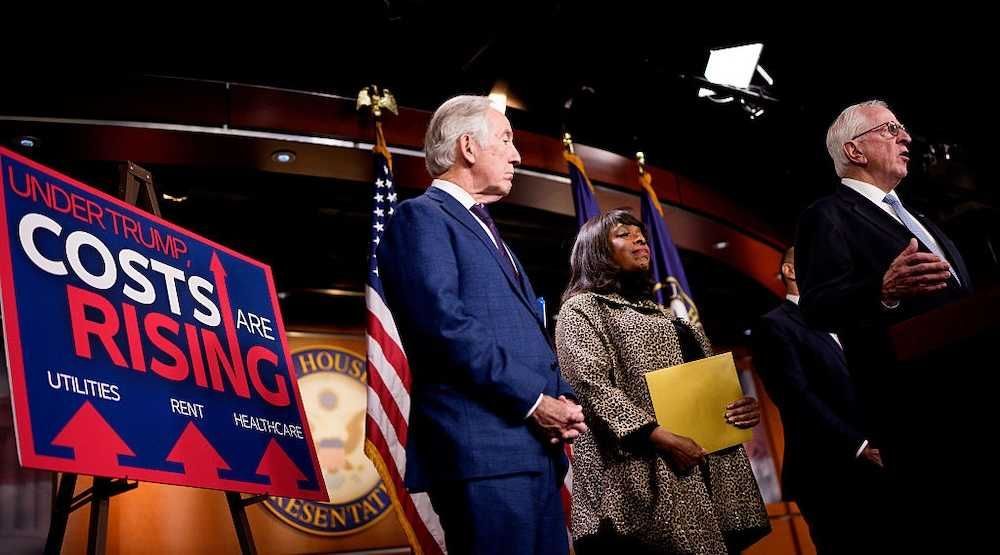
Current politics are blunting the historical midterm flow, however. Trump is divisive, with just a 43.4% favorable rating; however, his job approval rating of 43.1% is higher than Obama’s (42.4%) at the same point in his second term. Further, Democrats are in abysmal shape with just a 32.5% favorability rating.
The current 2026 political map is also favorable to Republicans. While they have more seats (22 to 13) to protect in the Senate, the toss-up seats are evenly split: Republicans with Maine and North Carolina; Democrats with Georgia and Michigan. Mid-decade House redistricting efforts are also likely to favor Republicans somewhat; if the Supreme Court should allow race to be disregarded in drawing House districts when it rules on the Louisiana case currently before it, then even more redistricting could occur and amount to an even greater Republican advantage.
Today’s economic crosscurrents are equally pronounced. For good or ill, incumbent presidents and their party own the economy. The question is: Which economy will Republicans own?
At the micro level, the growing issue is “affordability.” Nationally, this is an overhang of inflation that surged during Biden’s administration and peaked at 9.1% in June 2022 — a 40-year high.
Locally, affordability played well in New York City (which has been plagued by Democratic policies of rent control and excessive taxation, regulation, and litigation) in 2025’s mayoral race. It also played well in Virginia, where it linked powerfully into the record-long government shutdown. Democrats are therefore seizing on the issue with some success — particularly in the establishment media — and are trying to nationalize it.
At the macro level, the economy is a different story. Despite “expert” predictions that Trump’s tariffs, green agenda rollback, attack on illegal immigration, and reduction in government would combine to wreck the economy, the reverse has occurred. In Trump’s first two full quarters in office, GDP is averaging over 4% growth: up 3.8% in the second quarter and 4.3% in the third. Inflation has also been moderate — 2.7% in November — certainly not the spike experts predicted and a far cry from the previous four years.
RELATED: Conservatives face a choice in ’26: realignment or extinction

So politically, depending on your perspective, Republicans look to outperform historically. Their Senate majority looks safe for now, with the chance that Republicans could even gain a seat or two. By contrast, Republicans’ House majority looks vulnerable; this could be offset slightly by current mid-decade redistricting efforts. Yet even just half the average loss of the last two administrations in their second midterms would mean an 11-seat swing and a 226-209 Democratic majority.
Economically, the question is whether the micro or the macro prevails. Can the micro become a national mood outside Democratic areas, or will the macro of strong GDP growth and moderate inflation have time to prevail? Expect political midterm fortunes to respond accordingly.
What is certain is that the midterms will shape the last two years of Trump’s second term. And possibly determine who will run and who will win the presidency in 2028.
Editor’s note: This article was originally published by RealClearPolitics and made available via RealClearWire.
 A rancher creating a bespoke protein product has no direct control over the way his cows become meat.
 A key member of the legal team that convinced the Supreme Court to overrule Roe v. Wade has joined a new law firm to pursue a broader range of appellate and Supreme Court victories. Erin Hawley told The Federalist in a Zoom call Tuesday she’s joining Lex Politica to chair its Supreme Court and appellate […]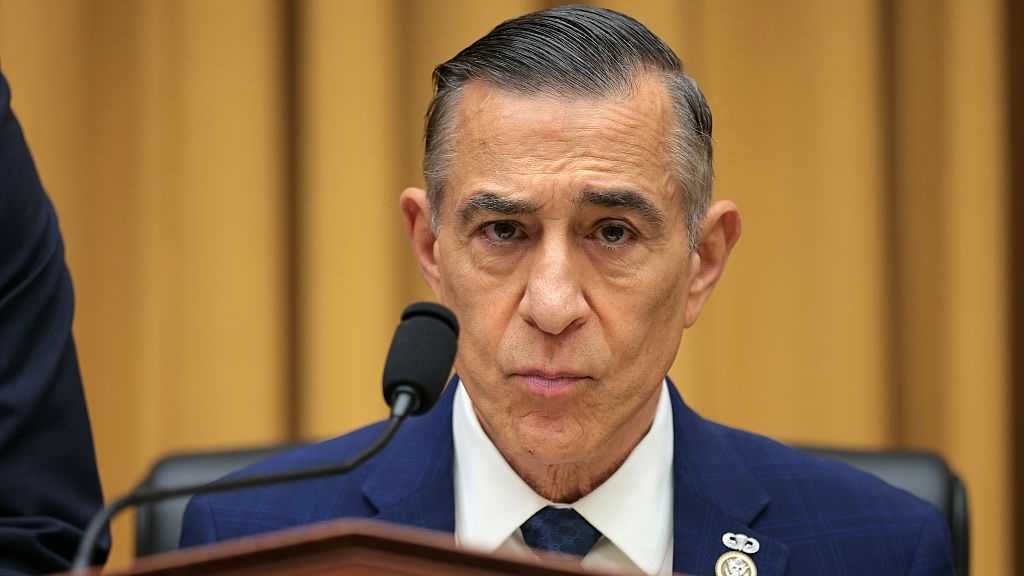

 In U.S. v. Skrmetti, only Justices Alito, Barrett, and Thomas were willing to definitively say that 'transgender' is not a suspect class.
 Trial lawyers and the left deserve a good thrashing (policy-wise), but that isn’t what these bills do.
 Since 2020, hundreds of Republican attorneys have faced challenges to their law licenses for making conservative arguments in court.
 www.theblaze.com